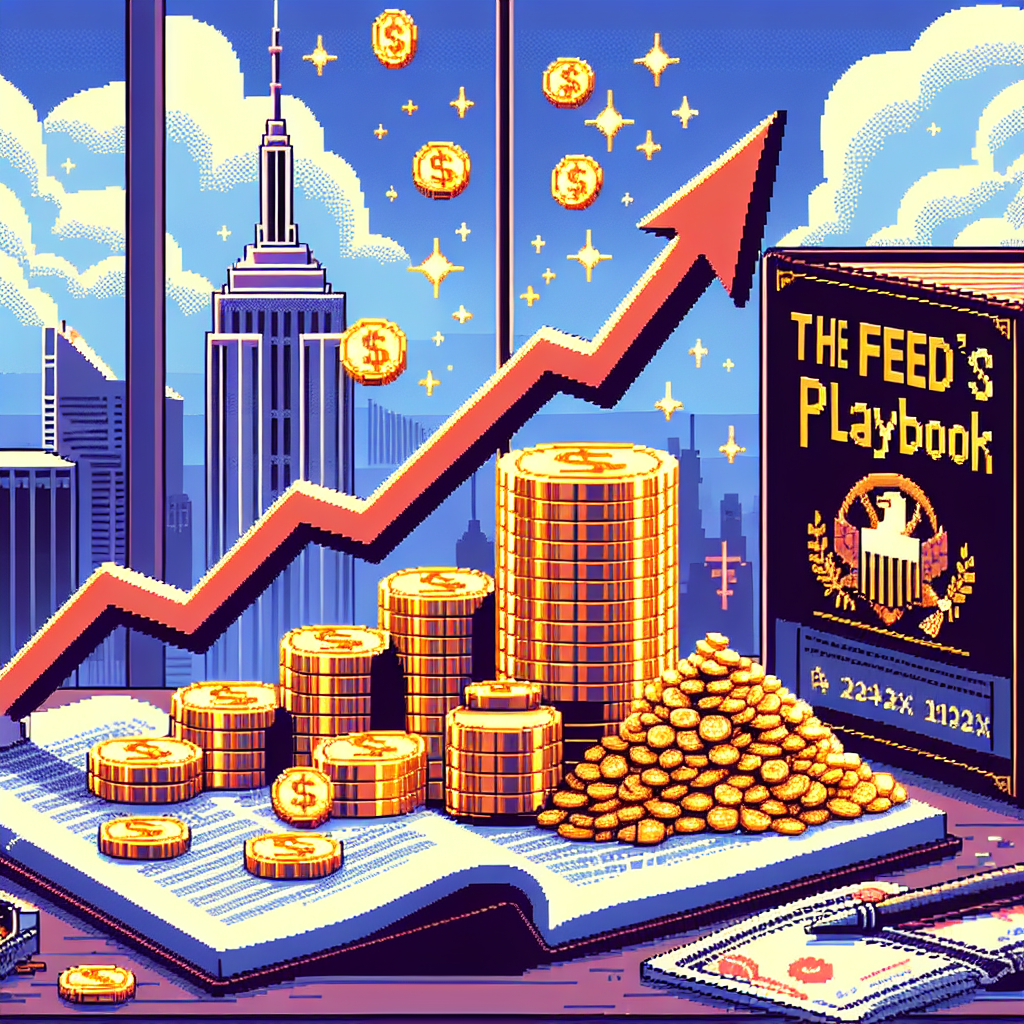
The $14 Trillion US Stock Rally is Seeking a Fed Cut Playbook – Bloomberg.com | Analysis by Brian Moineau

The $14 Trillion US Stock Rally is Seeking a Fed Cut Playbook - Bloomberg.com | Analysis by Brian Moineau

Title: Navigating the Stock Market's $14 Trillion Journey: What Will the Fed Do Next?

As the curtain rises on another pivotal week for the financial world, investors are on the edge of their seats, eagerly anticipating the Federal Reserve's next move. The backdrop? A staggering $14 trillion rally that has propelled U.S. stocks to record highs. But as with any great performance, this rally is approaching an inflection point, with the market eagerly awaiting the Fed's next act: a potential cut in interest rates.

The Plot So Far: A Rally of Epic Proportions

The U.S. stock market has been on an exhilarating ride, reaching new heights and capturing the imagination of investors worldwide. The rally's magnitude is nothing short of spectacular, with $14 trillion added to the value of U.S. stocks. This surge has been driven by a combination of strong corporate earnings, technological innovation, and investor optimism.

But like any good story, there's a twist. As we approach the Federal Reserve's long-awaited monetary policy meeting, investors are at a crossroads. Will the Fed cut interest rates to keep the rally alive, or will they hold steady, introducing uncertainty into the market narrative?

The Fed's Role: The Decision-Makers in the Spotlight

The Federal Reserve, led by Chairman Jerome Powell, finds itself in a familiar yet challenging position. The market's expectations are clear: a rate cut would likely extend this bull market's life, providing a fresh jolt of energy. However, navigating the delicate balance between fostering economic growth and controlling inflation is no small feat.

To get a sense of the Fed's potential moves, it's worth considering their recent history. In 2019, the Fed cut rates three times in response to global economic uncertainties and trade tensions. The move was seen as a preemptive strike to sustain the U.S. economic expansion. Fast forward to today, and while inflation concerns have emerged, the overarching priority remains economic stability.

Connecting the Dots: A Global Perspective

This U.S. stock market rally isn't happening in a vacuum. Across the globe, other central banks are also grappling with similar decisions. The European Central Bank, for instance, has maintained a dovish stance, signaling the possibility of further easing to combat economic slowdown in the Eurozone. Meanwhile, the Bank of Japan continues its ultra-loose monetary policy, battling persistent deflationary pressures.

Moreover, the geopolitical landscape plays a crucial role. Trade relations, particularly between the U.S. and China, have shown signs of improvement, providing a sense of optimism. However, other global tensions, such as the ongoing energy crisis and political uncertainties, continue to cast shadows on the economic horizon.

The Lighter Side: A Financial Soap Opera

As we wait with bated breath for the Fed's decision, it's hard not to see this as a financial soap opera of sorts—complete with twists, turns, and cliffhangers. The stock market's journey has been a rollercoaster, thrilling and sometimes nerve-wracking. Investors, analysts, and everyday folks alike are all part of this unfolding drama, each with their own theories and predictions.

In the spirit of keeping it light, perhaps we can draw a parallel to the world of sports. Just as a coach must decide the best strategy for the big game, the Fed must carefully choose its playbook. Will they opt for an aggressive offense with a rate cut, or play it safe and maintain the status quo? Only time will tell.

Final Thoughts: The Story Continues

As we move forward, one thing is certain: the financial world will be watching closely. The Fed's decision will undoubtedly shape the next chapter of this market rally. Whether you're a seasoned investor or just someone keeping an eye on the headlines, this is a story worth following.

In the grand theater of finance, the Fed's decision is just one act in an ongoing saga. The market will continue to evolve, driven by innovation, global dynamics, and the ever-present human factor of optimism and fear. So, grab your popcorn, sit back, and enjoy the show—it's bound to be an exciting ride.

Read more about AI in Business
Read more about Latest Sports Trends

Read more about Technology Innovations

Lumber Prices Are Flashing a Warning Sign for the U.S. Economy – The Wall Street Journal | Analysis by Brian Moineau

Lumber Prices Are Flashing a Warning Sign for the U.S. Economy - The Wall Street Journal | Analysis by Brian Moineau

Lumber Prices: The Unexpected Crystal Ball for the U.S. Economy

Who knew that our national economic outlook could hinge on something as seemingly mundane as lumber? Yet here we are, with lumber prices stepping into the spotlight as a potential harbinger of the U.S. economy’s future. As The Wall Street Journal’s article "Lumber Prices Are Flashing a Warning Sign for the U.S. Economy" suggests, the fluctuations in the cost of this humble building material might be signaling something more significant than just a seasonal shift in construction trends.

Lumber, the Economic Oracle?

To understand why lumber prices are drawing attention, let’s first dig into their role. Lumber is a fundamental component in home construction and renovation, and its demand often reflects broader trends in the housing market. When prices soar, it can mean high demand and a bustling economy. Conversely, when they plummet, it might suggest slowing construction activity or even broader economic challenges.

The recent dip in lumber prices is raising eyebrows among economists and industry watchers. But why now? The U.S. housing market, which saw a boom during the pandemic as people sought more space and remote work-friendly homes, is now facing headwinds. Rising interest rates, aimed at curbing inflation, have made mortgages more expensive, dampening the demand for new homes and, consequently, for lumber.

Connecting the Dots: Global Context

The situation with lumber isn’t just a U.S. phenomenon. Globally, supply chain disruptions caused by the pandemic and geopolitical tensions, such as the ongoing conflict involving Ukraine, have impacted the availability and cost of raw materials, including lumber. For instance, sanctions on Russia, a significant exporter of timber, have had ripple effects across international markets.

Moreover, the environmental policies aimed at sustainable forestry and reducing carbon footprints also play into the availability and cost of lumber. Countries are increasingly aware of the need to balance economic growth with environmental conservation, which can affect how and where lumber is sourced.

Beyond the Timber: Similar Economic Signals

Lumber isn’t alone in offering clues about the economy. Other commodities, like oil and metals, often serve as economic indicators. For instance, fluctuations in oil prices can signal changes in global economic activity, as seen with the recent volatility due to OPEC decisions and renewable energy advancements.

Interestingly, similar to lumber, the U.S. stock market and consumer spending patterns also provide insights into economic health. For example, luxury goods sales often thrive in a robust economy, while essentials maintain steady demand regardless of economic conditions.

A Lighthearted Reflection

Let’s not forget the humorous side of this lumber saga. Imagine a group of economists huddled around a pile of 2x4s, making predictions as if reading tea leaves. It’s a quirky reminder of how interconnected our world is, where even a simple plank of wood can tell a complex story about global economic dynamics.

Final Thoughts

While lumber prices alone won’t dictate the fate of the U.S. economy, they are a piece of a larger puzzle. They remind us to pay attention to seemingly minor details, which can have significant implications. As always, it’s crucial to consider multiple factors and expert analyses when pondering economic forecasts.

So, next time you pass a construction site or stroll through a hardware store, take a moment to appreciate the humble lumber. It might just hold the secrets to our economic future—or at least make for an interesting conversation starter at your next dinner party!

Read more about AI in Business

Read more about Latest Sports Trends

Read more about Technology Innovations

Why this trade expert says the U.S. economy will stall next quarter — and Apple’s investment claims are inflated – MarketWatch | Analysis by Brian Moineau

Why this trade expert says the U.S. economy will stall next quarter — and Apple’s investment claims are inflated - MarketWatch | Analysis by Brian Moineau

The Great Manufacturing Mirage: Why the U.S. Economy's Next Moves May Surprise You

The economic roller coaster of the 21st century is nothing short of exhilarating. One minute you're climbing a steep incline of growth and prosperity, and the next, you're racing down a decline, gripping the safety bar for dear life. In this thrilling ride, Brad Setser, a recognized trade expert, recently threw a wrench into the works with his assertion that the U.S. economy might stall next quarter. And while at it, he added a pinch of skepticism about Apple’s much-touted investment claims. So, let's unpack this economic Pandora's box and sprinkle in some global context for good measure.

A Renaissance or a Mirage?

Setser has been vocal about the prospects of a U.S. manufacturing renaissance, or rather, the lack thereof. He argues that the idea of a manufacturing comeback, often touted by policymakers and industry leaders, is more mirage than reality. Despite the optimistic rhetoric surrounding a resurgence in American production lines, Setser sees significant structural hurdles that make such a renaissance improbable. The labor costs, supply chain complexities, and competitive global markets are substantial obstacles that can't simply be wished away.

This skepticism isn't isolated. Experts across the globe have noted the challenges faced by traditional manufacturing powerhouses. For instance, Germany, once a beacon of industrial might, is grappling with its own set of manufacturing dilemmas, largely due to energy costs and shifting global demand. The interconnectedness of global economies means that the U.S. cannot simply reignite its manufacturing sector without considering these broader international dynamics.

Apple's Shiny Numbers: All That Glitters Isn't Gold

Turning our gaze to Apple, Setser's critique is a reminder that not all corporate investment announcements shine as bright as they seem. Apple, a company synonymous with innovation and sleek design, recently made headlines with grandiose claims of significant investments in the U.S. economy. However, Setser suggests that these numbers might be inflated, presenting a rosier picture than the reality.

This scenario isn't without precedent. Large corporations often announce investments that, upon closer inspection, include previously planned expenditures, tax incentives, or other financial maneuvers that don't quite translate into new economic activity. It's a bit like promising to bake a dozen cookies for a party, only to bring ten because you ate two on the way — not exactly misleading, but not the full story either.

A Global Connection

The concerns Setser raises find echoes in other parts of the world. In the UK, for instance, post-Brexit manufacturing has faced significant upheaval, with many companies struggling to maintain previous levels of output amid new trade barriers and labor shortages. Similarly, the automotive industry in Japan is navigating choppy waters due to semiconductor shortages and shifting consumer demands.

These global trends suggest that the challenges faced by the U.S. manufacturing sector are part of a larger pattern of disruption and transformation in the global industrial landscape. As nations grapple with these changes, they must also navigate the complex web of international trade relations, supply chain dependencies, and technological advancements.

Final Thoughts: Navigating the Economic Labyrinth

In this age of uncertainty, where economic predictions often feel like fortune-telling, Brad Setser's insights serve as a reminder to approach grand claims with a healthy dose of skepticism. As the world continues to evolve, so too must our understanding of what drives economic growth and the factors that can stall it.

Whether the U.S. economy will indeed hit a pause next quarter remains to be seen. But one thing is certain: in this globalized world, the fate of one nation's economy is inextricably linked to the broader international landscape. So, as we buckle up for the next leg of this economic ride, let's keep our eyes on the horizon and our minds open to the unexpected twists and turns that lie ahead.

As we navigate these uncertain waters, it's essential to remember that while the path may be unpredictable, the journey is what shapes our resilience and adaptability. Here's to the twists and turns that keep us on our toes!

Read more about AI in Business

Read more about Latest Sports Trends

Read more about Technology Innovations