
Oklahoma Sparks U.S. Aluminum Revival | Analysis by Brian Moineau

Oklahoma’s big bet: America’s first new aluminum smelter in nearly 50 years

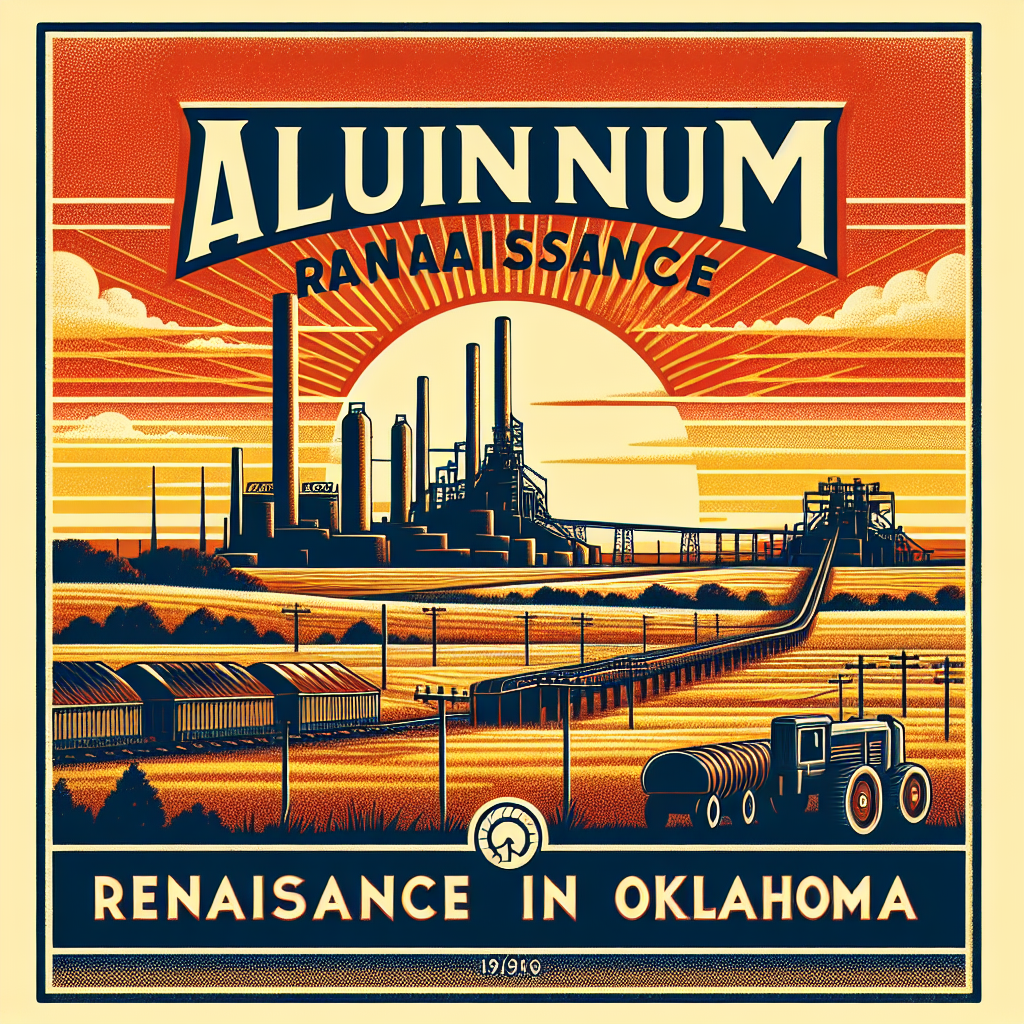
Aluminum makers EGA, Century plan to break ground later this year on facility that would more than double U.S. smelting capacity — and if everything goes to plan, Oklahoma could become the unlikely epicenter of a revival in domestic primary aluminum. The deal announced in early 2026 centers on a joint development between Emirates Global Aluminium (EGA) and Century Aluminum to build a massive smelter at the Port of Inola that proponents say will cut import dependence and boost U.S. industrial resilience. (media.ega.ae)

Transitioning from a headline to the stakes: this is about jobs, power, and the changing logic of heavy industry in an era when supply chains and clean energy policies are reshaping where—and why—smelters get built.

Why Oklahoma — and why now?

For decades the U.S. primary-aluminum industry has been small relative to global production. Building a new greenfield smelter in America hasn’t happened at scale since the 1980s. Two trends converged to reopen the conversation.

  • Global geopolitics and trade frictions have made secure domestic supply chains a strategic priority for defense, aerospace and EV supply chains.
  • Industrial electrification and new low-emissions smelting technologies make large modern facilities both more defensible politically and more attractive economically when paired with competitive power contracts. (apnews.com)

Oklahoma offers a package that matters: available land at the Port of Inola, connectivity for downstream manufacturing, and a willingness from state leaders to incentivize big industrial projects. The state has committed to exploring tax and infrastructure support, and federal attention has followed as the project lines up with broader industrial and climate grant programs. (okcommerce.gov)

Aluminum makers EGA, Century plan to break ground later this year on facility that would more than double U.S. smelting capacity

This is the core: the partners expect the new plant to produce roughly 600,000–750,000 metric tons (estimates vary across announcements) of primary aluminum annually — a volume that would more than double current U.S. primary capacity and reshape domestic supply dynamics. The joint development agreement announced in January 2026 positions EGA as majority developer with Century taking a meaningful stake and Bechtel tapped for initial engineering work. Construction timing has been described as starting in 2026, with first metal targeted by the end of the decade. (aluminummarketupdate.crugroup.com)

  • Expected capacity: ~600k–750k tonnes per year. (apnews.com)
  • Ownership: EGA majority / Century minority partner (reported 60/40 in some filings). (d18rn0p25nwr6d.cloudfront.net)
  • Timeline: preparatory engineering now; construction slated to begin in late 2026; first production by end of 2029. (centuryaluminum.com)

The economics: power, scale, and incentives

A primary aluminum smelter is essentially a giant, continuous electrochemical operation. The two economic levers are scale and low-cost, reliable electricity.

  • Scale: Bigger smelters capture lower per-ton capital and operating costs — which helps when competing with low-cost producers abroad.
  • Power: Long-term, competitive power contracts (ideally clean or low-carbon electricity) are essential. Without them, the math for an American smelter rarely works. Many announcements emphasize securing a competitive long-term power arrangement before final investment decisions. (ima-api.org)

State incentives and federal grants also matter. Oklahoma has discussed tax and infrastructure packages; meanwhile federal industrial-decoupling and decarbonization funds have shown willingness to support projects that promise major emissions reductions relative to older plants. That alignment — state incentives, federal support and private capital — is what makes this project plausible now. (okcommerce.gov)

Environmental framing: cleaner primary aluminum?

Primary aluminum production is energy- and emissions-intensive. But companies and agencies involved in this project are highlighting modern, more efficient smelting technology and the opportunity to pair the facility with low-carbon power to cut lifecycle emissions.

  • The Department of Energy and other federal programs have signaled support for projects that reduce industrial emissions through electrification and efficiency. Project proponents claim the new facility would avoid a significant share of emissions versus older designs when built with cleaner power. (energy.gov)

That said, the environmental case hinges on the actual power mix secured and the emissions intensity of upstream inputs (notably alumina supply). Advocates argue the plant will be far cleaner than many global alternatives if it runs on low-carbon electricity; skeptics will watch power contracts and the lifecycle accounting closely.

What this could mean for supply chains and manufacturing

If the smelter reaches the planned scale, expect several downstream effects:

  • U.S. manufacturers (auto, aerospace, defense) could secure more domestically produced primary aluminum, reducing exposure to import disruptions.
  • An aluminum hub could attract fabricators, recyclers and component makers to the region, amplifying regional economic impact.
  • Prices and supply dynamics in North America would change — potentially tightening markets elsewhere while making American-sourced aluminum more available for “Buy American” procurement and critical-industries planning. (okcommerce.gov)

Risks and watchpoints

Not every big industrial announcement becomes reality. Key risks include:

  • Power contracts: Failure to secure competitive, long-term electricity undermines project economics.
  • Permitting & community concerns: Environmental reviews, water use and local opposition can delay timelines.
  • Capital and market shifts: Rising construction costs, commodity price swings, or changes in policy incentives could alter the investment calculus.
  • Supply of alumina and skilled labor: Integrating upstream inputs and hiring thousands of workers will be operational challenges. (ima-api.org)

Because of these variables, watch for concrete milestones: signed long-term power agreements, finalized state incentive packages, construction permits, and a final investment decision (FID). Those milestones, more than press releases, will determine whether the plant actually breaks ground and when.

What to expect next

Over the coming months expect preparatory engineering and permitting work to accelerate, while state legislators and federal agencies consider incentive packages and grant approvals. If the partners meet their public milestones, construction could indeed begin in late 2026 with ramped production by the end of the decade. Keep an eye on announcements from EGA, Century, Oklahoma commerce officials, and any long-term power agreements. (centuryaluminum.com)

My take

This project is a bold signal: industry, government, and foreign capital are willing to re-shore some of the most energy-intensive steps in critical-metals production — but only if the economics and politics line up. If it happens as planned, Oklahoma’s smelter would not just be an industrial boon for a single state; it would be a test case for how the U.S. can rebuild heavy supply chains while tightening emissions standards. However, the devil is in the details: power and permits, not press statements, will decide the outcome.

Sources


Related update: We recently published an article that expands on this topic: read the latest post.

Related update: We recently published an article that expands on this topic: read the latest post.

Toyota’s $1B U.S. Boost: Jobs and Strategy | Analysis by Brian Moineau

Why Toyota’s $1 billion U.S. push matters — and what it signals for American manufacturing

Toyota to invest $1 billion to increase U.S. production in Kentucky, Indiana plants — that headline lands like a familiar drumbeat, but it’s worth listening to closely. Beyond the dollars, the move is a window into how the world’s largest automaker is balancing electrification, hybrid demand, political pressure to reshore, and the economics of making cars in America. This post unpacks the news, the context, and what it could mean for workers, communities, and the broader auto market.

A quick snapshot of the announcement

  • Toyota said it would invest roughly $1 billion to expand production at its Kentucky and Indiana plants as part of a broader commitment to boost U.S. manufacturing.
  • The investment is tied to Toyota’s multi-pathway approach: increasing hybrid capacity now while preparing for more battery-electric vehicle (BEV) production over time.
  • The move sits alongside a larger pledge — Toyota announced plans to invest up to $10 billion in U.S. manufacturing over the next five years — and a string of other recent investments in U.S. battery and assembly operations. (Sources below.)

Now let’s zoom out and connect the dots.

The bigger picture: why Toyota is accelerating U.S. plant investments

There are at least three big forces pushing Toyota’s decision.

  • Demand dynamics. Hybrid vehicles still command strong buyer interest in the U.S., and Toyota leads in hybrid tech. Investing in U.S. plants to increase hybrid production shortens supply chains and helps meet local demand faster.
  • Policy and geopolitics. Governments on both sides of the Pacific have nudged automakers toward local production and domestic battery supply, from tax credits to trade rhetoric. A visible U.S. footprint helps Toyota remain aligned with incentives and reduce tariff or political risk.
  • Long-term electrification strategy. Toyota’s “multi-pathway” approach — investing in hybrids, BEVs, hydrogen, and battery tech — requires flexible, modernized plants. Some of the funds go to retooling and capacity that can serve hybrid and future electrified models.

Transitioning into electrification while keeping hybrids competitive is an expensive balancing act. The $1 billion is one piece of that puzzle.

What this means for Kentucky and Indiana

  • Job stability and creation. Expansions typically bring both direct manufacturing hires and upstream supplier work. Communities that host Toyota plants can expect a short-to-medium-term boost in economic activity.
  • Plant evolution. Facilities in Kentucky and Indiana have already received substantial past investments; this new money will often target hybrid assembly lines, powertrain machining, paint and body upgrades, and battery pack assembly lines. That makes the plants more flexible for different vehicle architectures.
  • Local economies. Increased plant investment tends to ripple outward — local suppliers, logistics, and service sectors often see gains. State and local governments usually support these moves with tax incentives or workforce training programs.

Yet it’s not an automatic win. Automation trends mean that not every dollar translates into proportionate new hiring, and the type of skills required is shifting toward electrified systems and software.

How Toyota’s strategy differs from rivals

Many automakers have publicly committed massive BEV build-outs. Toyota, by contrast, has been more cautious with an explicit multi-pathway stance. Two differences stand out:

  • Hybrid-first emphasis. While players such as Ford, GM, and Hyundai have accelerated pure BEV programs, Toyota continues to view hybrids as a transitional technology with sustained market demand — hence investment in hybrid capacity at U.S. plants.
  • Measured BEV expansion. Toyota has invested in large U.S. battery facilities and BEV assembly plans, but it hasn’t pivoted overnight. The company is layering BEV investments (battery plants, new assembly lines) on top of expanding hybrid production.

That hedging may feel conservative — but it reduces exposure to a single technological bet as consumer adoption and battery supply chains continue evolving.

Risks and open questions

  • Timing and execution. Announcing dollars is one thing; getting lines retooled, suppliers aligned, and product ramped is another. Delays or cost overruns could blunt the impact.
  • Labor dynamics. Automakers are modernizing plants with more automation; the jobs added may be fewer or require different skills than traditional assembly roles. Workforce training will be pivotal.
  • Market shifts. If BEV adoption accelerates faster than expected, investments tilted toward hybrids could lose value; conversely, if hybrids remain dominant in many buyer segments, Toyota’s emphasis could pay off handsomely.

These uncertainties make each investment a strategic bet, not just an economic one.

Toyota to invest $1 billion to increase U.S. production in Kentucky, Indiana plants — a closer read

This specific $1 billion move is best viewed as tactical within a far larger playbook. It strengthens Toyota’s near-term ability to supply the U.S. market with electrified vehicles that consumers are still buying today (hybrids), while keeping the door open to scale BEV production as battery supply and customer adoption mature.

  • It reduces logistics friction by localizing production.
  • It signals to policymakers and consumers that Toyota is committed to U.S. manufacturing.
  • It preserves product flexibility at key North American plants.

Taken together, the dollars both respond to immediate market needs and buy Toyota time to execute longer-term electrification goals.

My take

Automotive transitions are multi-decade endeavors, not quarterly decisions. Toyota’s latest investment is pragmatic: it shores up capacity where demand exists today while continuing to lay groundwork for tomorrow’s BEV reality. Economically, it’s smart risk management. Politically and socially, it helps anchor manufacturing jobs in U.S. communities that have been partners for decades.

For the regions involved, the announcement is welcome news — but communities, workers, and policymakers will need to push the conversation beyond headlines. Workforce training, supplier development, and local infrastructure planning will determine whether the investment translates into durable prosperity.

Final thoughts

The headline — Toyota to invest $1 billion to increase U.S. production in Kentucky, Indiana plants — captures the money, but the more interesting story is strategy. Toyota is threading a needle: scaling hybrids now, investing in batteries and BEVs for the future, and doing both on U.S. soil. That layered approach won’t satisfy every investor or activist, but it reflects a company trying to manage technology risk, political realities, and market demand all at once.

If the past few years taught us anything, it’s that the auto industry will continue changing fast. Bets like this one reveal which way the wind is blowing — and which communities might ride it.

Sources


Related update: We recently published an article that expands on this topic: read the latest post.


Related update: We recently published an article that expands on this topic: read the latest post.


Related update: We recently published an article that expands on this topic: read the latest post.


Related update: We recently published an article that expands on this topic: read the latest post.

Trump thinks tariffs can bring back the glory days of US manufacturing. Here’s why he’s wrong – The Conversation | Analysis by Brian Moineau

Trump thinks tariffs can bring back the glory days of US manufacturing. Here's why he's wrong - The Conversation | Analysis by Brian Moineau

Title: The Tariff Tango: Nostalgia vs. Reality in US Manufacturing

There’s an old saying that nostalgia isn’t what it used to be. Recently, this sentiment seems to ring especially true in the context of US manufacturing, as former President Donald Trump attempts to reignite the glory of American industry through the use of tariffs. However, as The Conversation highlights in an insightful piece, these actions are driven more by a longing for the past than by the current economic landscape.

A Rose-Tinted Vision of Manufacturing

Donald Trump has always had a flair for the dramatic, and his economic policies are no exception. His approach to reviving US manufacturing often involves imposing tariffs, with the hope that these will encourage domestic production and deter reliance on foreign imports. It’s a strategy that harks back to a time when American factories were bustling, and “Made in the USA” was a ubiquitous label.

However, the world has changed since those days. Global supply chains are complex and intertwined, and a blanket approach to tariffs can lead to unintended consequences, such as higher prices for consumers and retaliatory measures from other countries. The manufacturing sector today is driven by technology and automation, rather than sheer manpower, and this evolution requires a more nuanced strategy than simply looking to the past.

Global Context: A Shifting Landscape

It's not just the US grappling with these economic challenges. Across the Atlantic, the UK is navigating its post-Brexit reality, seeking to strike new trade deals while maintaining economic stability. Similarly, China is strategically positioning itself as a leader in high-tech manufacturing, leaving traditional manufacturing powerhouses like the US in need of innovation rather than nostalgia.

In the tech world, companies like Tesla are redefining manufacturing with their gigafactories, blending cutting-edge technology with production. This shift highlights the need for forward-thinking policies that embrace technological advancements rather than relying solely on tariffs to protect old industries.

A Walk Down Memory Lane with Trump

Donald Trump, known for his larger-than-life persona, often draws from his unique blend of business acumen and celebrity status. His tenure as president was characterized by bold claims and actions that resonated with a segment of the American population yearning for simpler times. Yet, his approach often overlooked the complexities of modern economics.

His nostalgic perspective on manufacturing is reminiscent of his campaign slogan, "Make America Great Again," which taps into a desire to return to an idealized past. However, as the adage goes, you can’t step into the same river twice. The economic landscape has shifted, and so must the strategies to navigate it.

Final Thoughts: Embracing the Future

As we consider the future of US manufacturing, it’s important to acknowledge the power of nostalgia while recognizing its limitations. Tariffs alone cannot turn back the clock to a bygone era of manufacturing dominance. Instead, investment in education, innovation, and sustainable practices will pave the way for a robust industrial future.

The conversation around tariffs and manufacturing is a reminder that while the past shapes us, it is the future that demands our creativity and courage. By embracing change and crafting policies that reflect the realities of today’s world, we can honor our history while building a brighter economic future.

In an ever-globalizing world, the true measure of progress lies in our ability to adapt and evolve. As we move forward, let’s do so with a clear-eyed vision and a commitment to both preserving and progressing the American dream.

Read more about AI in Business

Read more about Latest Sports Trends

Read more about Technology Innovations