TL;DR
- A Business Insider story shows a tech worker broke a 10‑month unemployment streak by bringing doughnuts to an office and introducing himself—an old‑school tactic that cut through an application pile and led to a hire. [1]
- In 2024, Workday reported 173 million applications for 19 million requisitions and said applications grew 4× faster than openings; meanwhile, the BLS puts median jobless spells around 11.5 weeks and the mean near 25.3 weeks, making visibility tactics a rational bet. [2][3]
- The move isn’t universally smart: it works where norms allow small, shared treats and walk‑ins; it backfires in regulated or policy‑heavy orgs that bar gifts—even doughnuts. [4][5]
What the source said
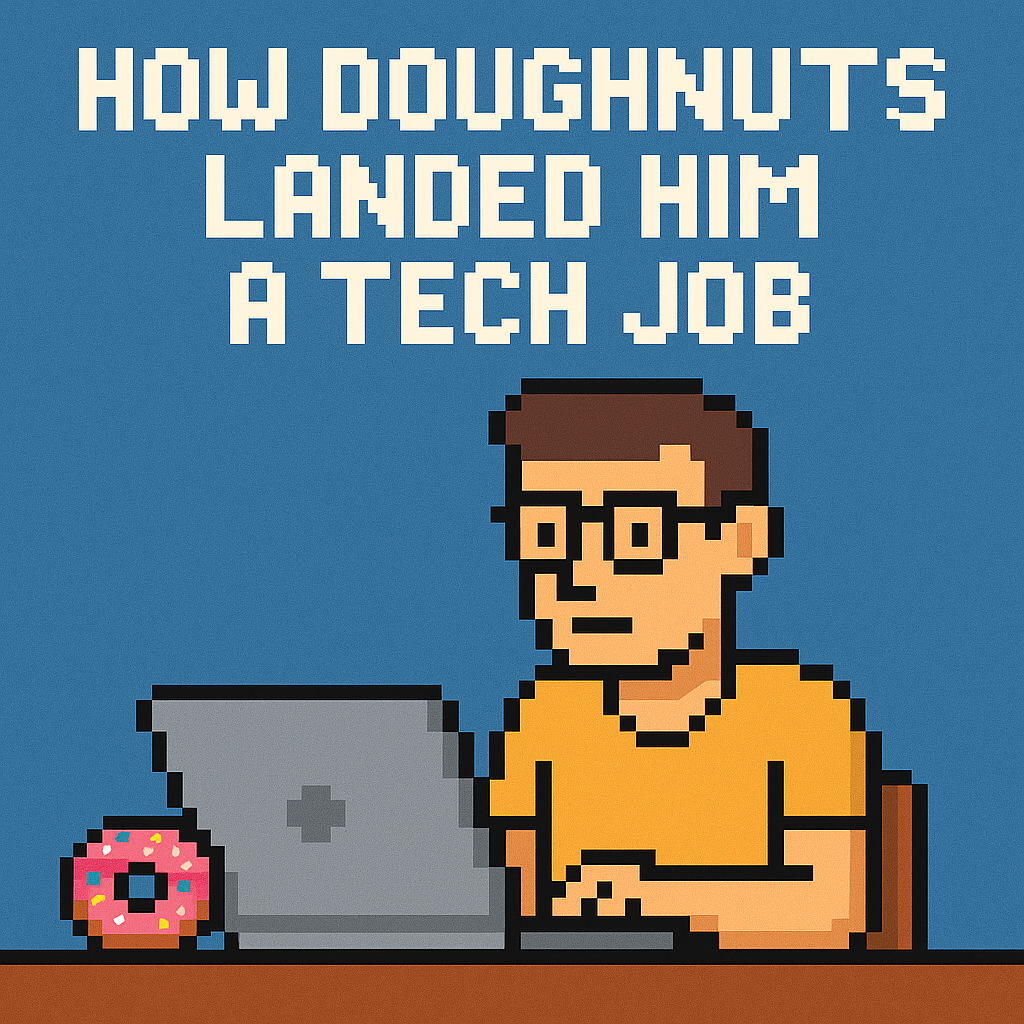
Business Insider recounts how a laid‑off tech professional, after months of ghosting, visited a local employer in person with a box of doughnuts and introduced himself at reception. Staff noticed, conversations followed, HR called that day, interviews ensued, and he landed the job. [1]
His spouse—an ex‑recruiter—had doubted the “drop‑in” approach, assuming it was outdated, yet six months later he’d earned a raise and a strong review. The author frames the doughnuts as a symbol of tenacity and a way to force a personal, human interaction in a process dominated by online applications and AI filters. The story’s moral: when the market is unforgiving, personality and presence can reopen closed doors. [1]
Why it matters
-
Stakeholders: job seekers in crowded funnels; small and midsize employers drowning in résumés; HR teams managing policy and fairness; and platforms (LinkedIn/Indeed/Workday) that intermediate this dance. Workday says customers processed 173 million applications for 19 million requisitions in H1 2024; applications grew 4× faster than openings, so standing out—not just “applying more”—is the constraint. [3]
-
Stakes: money and time. The BLS shows median unemployment at 11.5 weeks and mean at 25.3 weeks in March–April 2026; every week saved is rent, healthcare, and momentum. Employers face non‑executive cost‑per‑hire around $5,475 and screening bottlenecks that add 8–9 days to cycles, which compounds vacancy costs. Moves that ethically surface signal earlier can compress both sides’ costs. [2][5]
Original analysis
Why “bringing doughnuts to an office” works (sometimes)
-
Contrarian read
- Consensus: “Never bring gifts to interviews; it looks unprofessional or like a bribe.” Indeed’s own advice labels gifts inappropriate. [4]
- Counterpoint: The story’s power isn’t the sugar; it’s forced salience plus reciprocity in a low‑stakes, shared format. In sectors that tolerate drop‑ins (local services, SMBs) and where staff can accept nominal food, a polite, five‑minute hello can move you from inbox commodity to remembered human—especially as HR tech scales screening. [3][4]
-
Back‑of‑envelope ROI (candidate)
- Facts: Mean unemployment duration ≈ 25.3 weeks (Mar–Apr 2026). Median usual weekly earnings Q1 2026 ≈ $1,235. [2][6]
- If an in‑person visit advances you by 4 weeks (“top of the pile”), that’s ~4 × $1,235 ≈ $4,940 in regained earnings. A $15–$20 box of doughnuts and a morning of time is trivial against that upside; even a one‑week acceleration yields ≈ $1,235. (Assumes eventual offer; the point is expected value, not guarantee.) [2][6]
-
Back‑of‑envelope ROI (employer)
- SHRM’s 2025 benchmarking pegs non‑executive cost‑per‑hire at about $5,475 and says screening/interviewing alone average 8–9 days. Anything that surfaces a plausible, mission‑fit candidate sooner can trim cycle time and interview hours. [5]
-
The “Visibility × Norms” 2×2 (use to decide if this tactic is smart)
- High‑visibility, loose norms (local services, media sales, many SMB offices): A short, courteous drop‑in with a shared treat for the floor can help. Keep it under five minutes and avoid putting anyone on the spot. [5]
- High‑visibility, strict norms (federal, defense, hospitals, universities with gift caps): Don’t do it. Many orgs treat unsolicited food as a policy issue, and violating policy embarrasses staff and hurts your candidacy. [5]
- Low‑visibility, loose norms (warehouse, trades depots, retail back‑office): A quick hello can still help but target shift leaders; highlight certifications (e.g., OSHA‑10) and availability rather than pastry. [5]
- Low‑visibility, strict norms (finance HQs, regulated utilities, pharma labs): Stick to scheduled appointments, portfolio links, and employee‑referred intros. No food, no drop‑ins. [5]
-
Historical analogue
- In 2016, a San Francisco job seeker delivered résumés inside doughnut boxes to roughly 40 companies and scored 10 interviews—a classic “pattern interrupt” during a competitive tech hiring cycle. Workday’s 2024 finding that applications grew 4× faster than openings describes the same macro condition that makes analog contact effective again. [3][7]
-
Named‑stakeholder implications
- Job boards/ATS vendors (LinkedIn, Indeed, Workday): Expect more “offline hacks” as seekers try to escape high‑volume funnels, increasing pressure to surface human signals (work samples, simulations) earlier. [3]
- SMB employers: Codify front‑desk scripts for walk‑ins and treats: thank candidates, accept or decline per policy, route to a single intake contact, and maintain equity by logging all drop‑ins the same day. [5]
- Candidates: If you try an in‑person nudge, honor compliance (no gifts where barred), make it about shared break‑room snacks—not person‑specific presents—and always pair it with a tailored résumé and online application number.
What others are missing
Coverage spotlights the charm, not the constraint: selection bandwidth. When Workday sees 173 million applications against 19 million requisitions in H1 2024, recruiters triage for sanity, not optimality. That means path‑dependent attention: who crosses a human’s field of view first. [3]
A respectful, policy‑compliant in‑person touch simply reorders the queue. Meanwhile, SHRM’s data shows screening and interviewing soak 8–9 days; a hallway micro‑audition can collapse a step. The doughnuts aren’t magic—they are a low‑friction attention token that converts a cold start into a warm referral inside the same day, which is why this tactic disproportionately benefits SMBs with thinner processes. [5]
What to watch next
- By December 31, 2026, at least two Fortune 100 employers will publish or update public recruiting guidelines that explicitly bar candidate‑provided food or gifts at reception or during interviews.
- By March 31, 2027, Workday (or a comparable HCM vendor) will report that application growth outpaced job openings year over year in at least half of tracked industries for 2026. [3]
- By June 30, 2027, at least one major job board (LinkedIn, Indeed, or ZipRecruiter) will pilot or announce a “verified walk‑in” or “office‑hours” feature to standardize equitable, scheduled alternatives to unsanctioned visits. [3][5]
My take
I’m pro‑“polite stunt,” anti‑“policy violation.” In a market that’s more filter than handshake, a small, inclusive gesture that gets you seen—as long as it doesn’t target a specific decision‑maker or breach gift rules—can tilt odds meaningfully. If I were job‑hunting at an SMB in 2026, I’d pair a skills‑first résumé with a five‑minute lobby intro and a box for the whole floor, not the boss. [3][4][5]
In regulated shops, I’d skip the treats and book posted office hours or ship a two‑minute demo video with measurable results (e.g., “cut cycle time 18% on a 2025 pilot”). The principle scales: earn five seconds of genuine attention, ethically. The doughnuts are just one way to buy those five seconds. [5]
Sources
[1] My husband was unemployed for 10 months. He finally landed a job when he turned up at an office with a box of doughnuts. — Business Insider (https://www.businessinsider.com/unemployed-husband-landed-job-unique-trick-2026-5) — The first‑person account that sparked this analysis.
[2] Table A‑12. Unemployed people by duration of unemployment — U.S. Bureau of Labor Statistics (https://www.bls.gov/news.release/empsit.t12.htm) — Confirms mean (25.3 weeks) and median (11.5 weeks) unemployment durations in March–April 2026.
[3] Workday Global Workforce Report press release (Sept. 10, 2024): “Job applications grew four times faster than job openings… 173M applications vs. 19M requisitions (H1 2024)” — Workday Newsroom (https://newsroom.workday.com/2024-09-10-Workday-Global-Workforce-Report-Job-Market-Tightens-as-AI-Reshapes-Hiring-Processes) — Quantifies the application glut that makes offline salience valuable.
[4] 7 Items To Bring to a Job Interview (FAQ: “Is it appropriate to bring a gift to a job interview? It’s inappropriate…”) — Indeed Career Guide (https://www.indeed.com/career-advice/interviewing/what-to-bring-to-a-job-interview) — Represents mainstream guidance against candidate gifts.
[5] SHRM releases 2025 Benchmarking Reports (screening/interviewing average 8–9 days; cost‑per‑hire benchmarks) — Society for Human Resource Management (https://www.shrm.org/about/press-room/shrm-releases-2025-benchmarking-reports–how-does-your-organizat) — Provides time‑to‑stage and cost context employers face.
[6] Median usual weekly earnings of full‑time workers, Q1 2026: $1,235 — U.S. Bureau of Labor Statistics (PDF) (https://www.bls.gov/news.release/pdf/wkyeng.pdf) — Used for back‑of‑envelope candidate ROI.
[7] Man scores 10 interviews by delivering résumé in a box of doughnuts — Good Morning America (https://www.goodmorningamerica.com/news/story/man-scores-10-interviews-resume-delivered-box-doughnuts-42609704) — Historical analogue showing the same “pattern interrupt” worked in 2016.
Related update: We recently published an article that expands on this topic: read the latest post.
Related update: We recently published an article that expands on this topic: read the latest post.