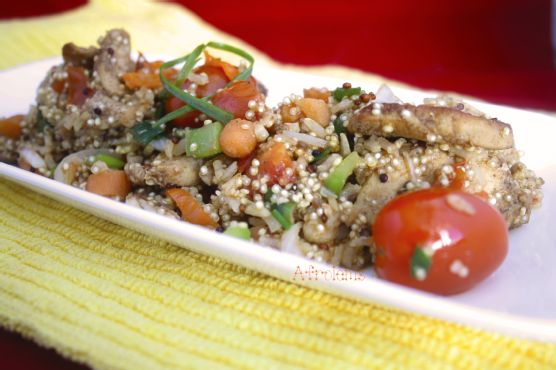
Stir Fried Quinoa, Brown Rice and Chicken Breast | Made by Meaghan Moineau

Stir Fried Quinoa, Brown Rice, and Chicken Breast

Intro

There’s something about the smell of sizzling chicken and vegetables that transports me back to my childhood kitchen. I remember standing on tiptoe to peek over the counter as my mom expertly tossed ingredients into her trusty pan, her laughter mingling with the sound of the spatula scraping the bottom of the pan. This Stir Fried Quinoa, Brown Rice, and Chicken Breast recipe is a tribute to those cherished memories, bringing together wholesome ingredients and vibrant flavors for a dish that’s both nourishing and delicious.

Why You’ll Love It

This recipe is a winner for so many reasons. First, it’s a one-pan wonder, meaning less cleanup and more time to relax. It’s also incredibly versatile; whether you’re an experienced cook or a kitchen newbie, you’ll find this dish straightforward and rewarding to make. The combination of quinoa and brown rice offers a hearty, nutritious base, while the chicken breast provides a lean source of protein. The dish is further elevated by the aromatic suya spice and a medley of fresh vegetables, creating a symphony of flavors and textures.

Ingredients

  • Suya spice
  • Quinoa and brown rice mix
  • Butter
  • Carrots
  • Whole cherry tomatoes
  • Chicken breast
  • Garlic
  • Seasoning cubes
  • Green bell pepper
  • Roma tomato
  • Scotch bonnet pepper
  • Spring onion
  • Vegetable oil
  • Water

Instructions

  1. In a bowl, season the chicken breast with the seasoning cubes and suya spice and allow to marinate for 2 hours, or if you are really hungry, you can use it immediately.
  2. In a pot of boiling water (1 cup), pour in your quinoa mix and the teaspoon of oil and allow to boil till soft, which should take about 5-7 minutes. Pour into a bowl and set aside.
  3. In a pan, heat up the melted butter and pan fry on medium heat the chicken breast, constantly flipping it over so it browns on both sides. Reduce the heat, cover the pan, and allow the chicken to cook properly. If the pan becomes too dry, add 2 tablespoons of water.
  4. Stir in the chopped vegetables into the pan of frying chicken and finally add the quinoa/brown rice mix. Serve hot!

Tips

For the best results, use fresh, high-quality ingredients. Make sure to marinate the chicken for at least two hours if time allows, to let the flavors seep in thoroughly. If you prefer a bit of a crunch, lightly sauté the vegetables instead of cooking them through completely. This will add texture and keep the veggies vibrant.

Variations & Substitutions

If you want to switch things up, try using shrimp or tofu instead of chicken for a different protein option. For a vegetarian version, simply omit the chicken and double up on the vegetables. You can also play around with the spice levels by adjusting the amount of suya spice or adding extra scotch bonnet pepper if you’re a fan of heat.

Storage

This dish keeps well in the refrigerator for up to 3 days. Store in an airtight container and reheat in a pan over medium heat, stirring occasionally to ensure even heating. Add a splash of water if needed to prevent it from drying out.

FAQ

Can I use only quinoa or only brown rice instead of a mix?

Absolutely! You can use only quinoa or only brown rice if you prefer. Just ensure to adjust the cooking time accordingly, as brown rice typically takes longer to cook than quinoa.

Is there a way to make this dish spicier?

Yes, if you love spicy food, consider adding more scotch bonnet pepper or a dash of cayenne pepper. You can also increase the suya spice for an added kick.

Nutrition

This dish is rich in protein from the chicken and packed with fiber and essential amino acids from the quinoa and brown rice. The vegetables add vitamins and minerals, making it a well-rounded meal that supports a balanced diet.

Conclusion

Stir Fried Quinoa, Brown Rice, and Chicken Breast is more than just a meal; it’s an experience that brings together the warmth of home cooking and the excitement of bold flavors. Whether you’re cooking for family or friends, or just treating yourself, this dish is sure to become a favorite. Enjoy every bite, and don’t forget to share the love!

Related update: Stir Fried Quinoa, Brown Rice and Chicken Breast

G7 Emergency Oil Talks: Market Rescue? | Analysis by Brian Moineau

When oil spikes and markets wobble: what the G7 emergency talks mean

The Monday morning jolt was ugly: Brent and WTI leapt above $100 a barrel, global stock indices skidded, and headlines flashed that G7 finance ministers were holding emergency talks about releasing oil reserves. Add to that the news that UK Chancellor Rachel Reeves joined the discussions and said she “stands ready” to support a coordinated release of strategic stocks — and suddenly this feels less like a market hiccup and more like policy coming to the rescue.

Here’s a walk-through of what happened, why leaders are talking, and what it might mean for consumers, markets and policymakers.

Quick snapshot

  • What happened: Oil prices spiked after renewed conflict in the Middle East raised fears of supply disruption through the Strait of Hormuz. Global equity markets fell on the shock.
  • What the G7 did: Finance ministers held an emergency virtual meeting (joined by IMF, World Bank, OECD and IEA leaders) to discuss the surge and possible responses, including coordinated releases from strategic oil reserves.
  • UK role: Chancellor Rachel Reeves participated in the talks and said the UK is ready to support a co‑ordinated release of IEA-held reserves to help stabilise markets.

Why the G7 meeting matters

  • Oil is an input to almost every part of the global economy — transport costs, manufacturing, and even food prices. A sustained jump in crude feeds higher inflation and creates a policy headache for central banks that are already wrestling with sticky price pressures.
  • A coordinated release of strategic petroleum reserves (SPRs) is one of the few tools governments can use quickly to calm a supply scare. When member countries release barrels together it increases immediate global supply and can temper speculative pressure on futures markets.
  • But releasing reserves is not cost-free: it reduces emergency buffers and can send political signals. Countries need to weigh short-term market relief against longer-term energy security and market discipline.

How big a release could make a difference

  • The International Energy Agency (IEA) and policymakers often talk about releases in the hundreds of millions of barrels when trying to blunt a major shock. That scale can temporarily lower prices, but it won’t replace lost daily production indefinitely if shipping routes remain threatened.
  • The market reaction can be as important as the physical barrels — coordinated action reassures traders and can reduce the risk premium embedded in oil prices even before ships arrive at terminals.

Winners and losers in the near term

  • Winners:
    • Oil-consuming households and businesses (if a release reduces pump and wholesale fuel prices).
    • Economies worried about a fresh inflation burst if the move calms markets quickly.
  • Losers:
    • Oil producers and some energy equities if prices retreat.
    • Countries that prefer to keep strategic reserves for true physical interruptions rather than market smoothing.

What Rachel Reeves’ involvement signals

  • Political coordination: Reeves’ participation underscores that this is not only an energy problem but a macroeconomic one. Finance ministers are worried about inflation, growth and financial stability — not just barrels.
  • Pressure to act locally: Reeves also warned retailers against price gouging and stressed measures to protect consumers — an indication that domestic action (price monitoring, consumer support) will accompany international coordination.

Practical limits and second-order effects

  • Timing and logistics: SPR releases take time to flow through the system. Headlines can move markets immediately; physical supply effects lag.
  • Monetary-policy friction: If oil-driven inflation picks up, central banks may face renewed pressure to tighten — which could compound market declines. Conversely, a successful coordinated release that calms oil markets can ease those pressures.
  • Geopolitical uncertainty: If shipping through the Strait of Hormuz remains at risk, any release is a temporary fix unless the security issue is resolved.

What investors and households should watch next

  • Follow official announcements from the IEA and G7 energy ministers about coordinated releases and their scale.
  • Watch immediate price moves in Brent and gasoline; rapid declines after coordinated statements would suggest the market is responding to policy rather than a fundamental supply fix.
  • Track central bank commentary — higher oil can change inflation trajectories and influence rate expectations.

Takeaways to bookmark

  • The G7 emergency talks show policymakers view the oil spike as a macro shock — not simply an energy-sector issue.
  • A coordinated release of strategic reserves can calm markets quickly, but it is a temporary fix and comes with trade-offs.
  • Rachel Reeves’ public stance signals coordinated fiscal/consumer protection measures alongside international action.
  • The market reaction to statements and coordination may be as important as the physical barrels released.

My take

Policy coordination — the kind we saw with the G7 discussions and the UK chancellor’s involvement — is precisely what markets crave in moments of panic. That doesn’t make the choice easy: releasing strategic stocks can soothe prices and sentiment now, but it reduces buffers for a real physical blockade or prolonged disruption. For households and small businesses, the most immediate relief will come from clearer signals (and faster releases) than from longer-term fixes. For investors and policymakers, the lesson is familiar but urgent: when geopolitics threatens pipelines and shipping lanes, markets price in fear fast — and governments are left choosing between short-term relief and longer-term resilience.

Sources