Louisville’s Nasty Bounce-Back Win | Analysis by Brian Moineau

Nasty and Necessary: Louisville Closes the Yum! with a Statement Win over Syracuse

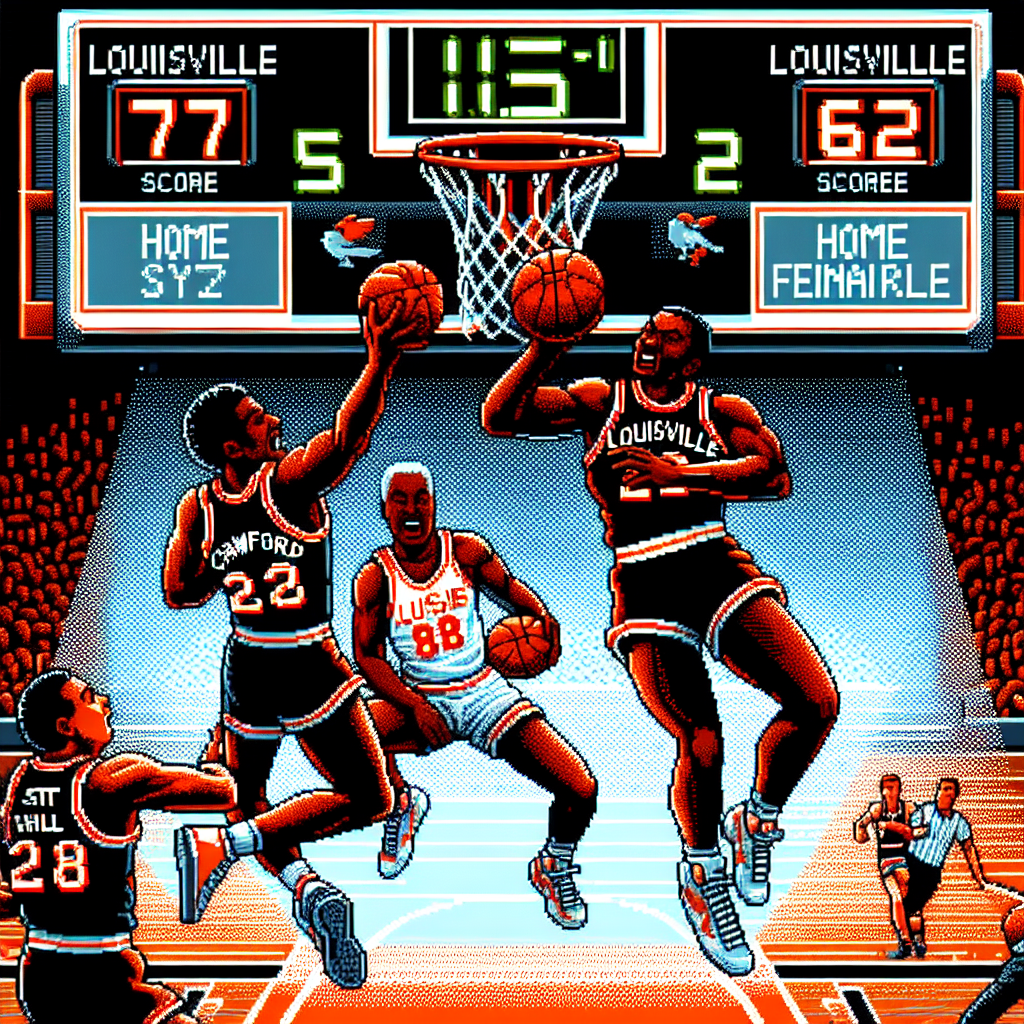
Pat Kelsey used the word “nasty” like he’d found it in a drawer labeled “Things Louisville Has Been Missing” and decided to bring it back into fashion. The result: a 77-62 win over Syracuse in the Cardinals’ regular-season home finale that felt less like punctuation and more like a paragraph break — a clear reset before the chaos of conference tournament time.

The hook: why “nasty” matters

“Nasty” in basketball isn’t just physicality. It’s the scratch-and-claw mentality on defense, the willingness to finish through contact, the gritty plays that don’t show up in highlight reels but swing momentum. Kelsey’s one-word prescription felt like a conscious correction: Louisville hasn’t always been that team this season, but on Tuesday night they were. They defended, they rebounded, they shared the ball, and they protected the home floor when it mattered.

Quick context

  • Final score: Louisville 77, Syracuse 62.
  • Game: Final regular-season home game of the 2025–26 season at the KFC Yum! Center.
  • Why it mattered: After a stretch of uneven results, the Cards needed a confident finish at home heading into the postseason. The win also kept Louisville’s conference résumé intact and gave fans something to cheer about before tournament play.

(Reporting from WDRB and player/coach quotes published after the game provide the basis for this recap and perspective.) (wdrb.com)

What happened — a readable recap

  • Louisville set the tone early with aggressive defense and better execution on offense. Instead of letting Syracuse’s zone create confusion, the Cards attacked the seams, moved the ball, and got looks inside and out.
  • The first half featured strong rebounding and physicality from Louisville, allowing them to build a lead and dictate pace. Syracuse made runs, but Louisville’s toughness repeatedly answered.
  • Down the stretch the Cardinals mixed smart shot selection with assertive drives that forced Syracuse to clamp up, leading to easier baskets and free throws. The 15-point final margin reflected a game where Louisville owned the second half.

Standouts and storyline players

  • Guards who hit timely shots and attacked closeouts helped break Syracuse’s rhythm. Multiple box-score contributors stepped up when the team needed finishing and ball movement. (Postgame quotes and game notes highlighted McKneely’s contributions and other role players who provided lift.) (wlky.com)
  • Pat Kelsey’s coaching: beyond the “nasty” soundbite, the adjustments and motivational tone mattered. The team looked like one that bought into a single-game identity: play tougher than the opponent and the rest follows. (wdrb.com)

What this win tells us about Louisville

  • The Cards can still be a dangerous, physical team. When they commit to that identity they limit the kinds of runs that have cost them in recent weeks.
  • Depth and buy-in are real assets. This wasn’t just star scoring; it was a group performance in which role players help create winning margins.
  • Momentum is fragile — but this game gives Louisville something concrete to carry into the ACC tournament: a confidence-building home finish and a reminder of the style that wins low-possession, grind-it-out conference games.

Three takeaways for fans and bettors

  • Defense first matters: Louisville’s win underscores that when the Cards defend the paint and rebound, they’re difficult to beat.
  • “Nasty” is repeatable when coached: Kelsey’s message — and the team’s response — shows attitude can be a game plan, not just a phrase.
  • Depth wins late: look for bench contributors to be a decisive factor in tournament matchups where every extra possession counts.

My take

This felt like the kind of win that repairs confidence. The scoreline is tidy, but the more important metric is tone: Louisville reclaimed an edge. If the Cards can reproduce the defensive intensity and the willingness to finish through contact, they’ll be tough to handle in the weeks ahead. Keep an eye on how they sustain the “nasty” mentality under tournament pressure — that will tell us whether this was a momentary surge or the start of something steadier.

Sources

World Cup Tension: Iran, War, and Politics | Analysis by Brian Moineau

A World Cup, a War, and a President Who Says He Doesn’t Care

It’s not every day that international sport and geopolitics collide this loudly. With the 2026 FIFA World Cup kicking off in just a few months on June 11, the global spotlight on soccer is supposed to be all about goals, chants and host cities. Instead, a chain of U.S. and Israeli strikes on Iran — and Iran’s own anguished response — has placed Team Melli’s presence in doubt, and President Donald Trump’s brisk reaction to that possibility landed like a cold gust across an already tense field: “I really don’t care,” he told POLITICO when asked if Iran would play this summer. (memeorandum.com)

Below I unpack what’s happening, why this matters beyond sport, and how the World Cup — usually a ritual of global connection — suddenly looks more like a geopolitical test.

The hook: sport as a casualty of escalating conflict

Imagine qualifying for the World Cup — the pinnacle for any footballing nation — and then being told your tournament might be off because your country has been struck and plunged into mourning. That’s the reality Iran faces after airstrikes that killed the country’s supreme leader and triggered a wider confrontation. Iran’s football federation chief, Mehdi Taj, said participation “cannot be expected” in the wake of the attack, citing the national trauma and a mandated 40-day mourning period that disrupts training and domestic competition. (inquirer.com)

Meanwhile, the U.S. president’s terse dismissal — that he doesn’t care whether Iran shows up — turned a sports story into a front-page political flashpoint, because it signals how the administration views the intersection of national security, diplomacy, and even global sporting events. (memeorandum.com)

What actually happened and why it matters for the World Cup

  • Iran qualified for the 2026 World Cup and is scheduled to play group-stage matches in the United States (Los Angeles and Seattle among the venues). (inquirer.com)
  • After the strikes and the resulting instability, Iran’s FA president said preparations and participation are now uncertain; domestic league play and pre-tournament friendlies will be affected by mourning and security concerns. (scmp.com)
  • FIFA has said it’s monitoring the situation, while U.S. officials have suggested exceptions to travel restrictions could be arranged for athletes and staff if necessary — but logistical, legal and security hurdles remain. (inquirer.com)

This isn’t simply a scheduling headache. The potential absence of Iran would reverberate through several arenas:

  • Sporting: lost opportunity for players, fans and federations; bracket integrity and broadcast plans could be affected.
  • Humanitarian and moral: athletes often become symbols in crises — their safety, ability to grieve, or freedom to compete becomes a moral question for organizers and countries.
  • Political messaging: a host nation publicly indifferent to another qualified team’s absence invites accusations of weaponizing sport or trivializing civilian suffering.

Why Trump’s comment landed hard

When a president casually says “I really don’t care” about whether a nation competes in a global sporting event, it does several things at once:

  • It flattens the human element — sidelining athletes, families and fans who see the World Cup as more than geopolitics. (memeorandum.com)
  • It signals to allies and adversaries how sport and diplomacy might be weighed in policy calculus — important when diplomacy, humanitarian concerns, and security are all tangled together. (inquirer.com)
  • It amplifies the narrative in Tehran that the U.S. does not merely disagree with Iran’s government but disdains the country’s place at the global table — making reconciliation or pragmatic solutions politically harder.

Put simply: it’s not just about a match. The remark feeds a broader story line that the U.S. administration’s priority in this moment is military and strategic objectives, with cultural diplomacy — including international sport — treated as expendable. (memeorandum.com)

What FIFA, hosts, and fans face now

  • Contingency planning: FIFA will need to decide whether to allow Iran to withdraw without replacement, find a replacement team (if feasible), or postpone matches — each option carries precedent, legal ramifications, and ticketing nightmares. (global.espn.com)
  • Security and reception: hosting a team from a country currently at war with co-host nations or their allies raises questions about the safety of players, fans and staff, and whether fan travel and visas can be handled without political friction. (inquirer.com)
  • The fan experience: millions already planned travel; rivals, broadcasters and sponsors must weigh reputational exposure against business continuity.

Quick takeaways

  • The Iran national team’s World Cup participation is in serious doubt after U.S.-Israeli strikes and the death of Iran’s supreme leader disrupted preparations. (scmp.com)
  • President Trump told POLITICO “I really don’t care” if Iran plays, a remark that reframes the issue from sport logistics to public diplomacy and political signaling. (memeorandum.com)
  • FIFA and co-hosts face complex choices that mix safety, legal obligations, and optics — and there are no simple or apolitical answers. (global.espn.com)

My take

Sport has a stubborn ability to bring people together — even rivals — in a way that politics rarely does. That’s precisely why the potential absence of Iran from the 2026 World Cup stings: it’s not just a team not showing up, it’s a missed moment for connection at scale. Presidents and policymakers can wage decisions in war rooms, but a World Cup is a global commons where ordinary people — not governments — often find common ground. To shrug at that is to undervalue one of the softest, often most durable tools in international life.

If Iran ultimately misses the tournament, it should be remembered not just as a political footnote but as a human story: players who trained for years, fans who saved to travel, and communities that looked to sport for respite. That loss will be felt in stadiums and living rooms, and its reverberation will outlast any single news cycle. (inquirer.com)

Final thoughts

We’re watching the collision of two powerful realities: the immediacy of armed conflict and the long-simmering global ritual of sport. The outcome is still in flux — and the choices FIFA, the co-hosts, and governments make over the next weeks will tell us how seriously the world takes the idea that some spaces should remain for people, not politics. Even in war, fans want to chant. Even in crisis, players want to play. What we decide about that says a lot about who we are.

Sources


Related update: We recently published an article that expands on this topic: read the latest post.

Thompson’s 4.26 Dash: Speed vs. Substance | Analysis by Brian Moineau

Speed steals the spotlight: Brenen Thompson’s 4.26 40-yard dash and what it really means

You don’t have to be a stats nerd to feel the hair-rise moment when a player explodes out of the blocks at the NFL Combine. Brenen Thompson did exactly that on February 28, 2026 — a blistering 4.26-second 40-yard dash that instantly became the headline of the day. It’s the kind of number that lives forever in highlight reels and draft-room spreadsheets alike. (nbcsports.com)

Why one sprint can sting — and why it often doesn’t

  • For receivers, straight-line speed matters more than for most positions. Deep routes, separation on fly patterns, and the ability to turn a short catch into a long one are all magnified by elite speed. Thompson’s run put him in rarefied air among combine performers. (espn.com)
  • That said, the 40-yard dash has limits. Most football plays aren’t 40 yards of full-speed, isolated running down a lane. Change-of-direction, route nuance, hands, body control, and football IQ are equal — if not greater — determinants of NFL success. The history of fast-but-not-elite careers (and slower players who became stars) reminds scouts to balance metrics with tape. (nbcsports.com)

A quick snapshot of the run and its context

  • Where and when: The performance came at the 2026 NFL Scouting Combine in Indianapolis on February 28, 2026. (espn.com)
  • The number: 4.26 seconds — the fastest at the 2026 Combine, and among the fastest in Indianapolis history, sitting very close to the combine record (4.21). (nbcsports.com)
  • The player: Brenen Thompson, listed at about 5-foot-9 and 164 pounds on combine measurement, who set school receiving marks at Mississippi State and posted a 1,000-yard season in 2025. (espn.com)

How scouts — and fantasy players — will read this

  • Immediate upside: A 4.26 legitimizes Thompson’s role as a vertical threat. It flags him as someone who can stretch defenses, win contested timing routes if paired with the right release technique, and flip field position on a moment’s notice. Teams that prioritize speed in their scheme will take notice. (sportingnews.com)
  • Nuance matters: Speed alone won’t mask heavy route-running flaws, small hands, or issues with separation against press coverage. Expect teams to rewatch his college tape for technique on in-breaking routes, contested-catch ability, and how often he converts speed into separation on game-speed routes. (espn.com)
  • Draft impact: A top-40 workout like this typically improves a player’s stock — especially for receivers who were already on the board. But where Thompson lands will depend on positional needs, interviews, medical checks, and his full collection of drills (shuttle, three-cone, catching drills). (cbssports.com)

What the 40 doesn’t tell you — and why that’s important

  • Route-running and nuance: A receiver’s ability to create separation at five and ten yards — using footwork, timing, and deception — is more predictive of consistent production than raw top speed.
  • Play strength and durability: Thompson’s weight (164 pounds at the combine) raises legitimate questions about how he’ll handle physical NFL defensive backs and press coverage, and whether he’ll maintain his health across a pro season. Game tape and medical evaluations will weigh heavily. (espn.com)
  • Special teams and versatility: For some players, elite speed becomes a roster-saving asset on kick returns and punt coverage. Teams value multi-role contributors, especially later-round picks.

Speed snapshot

  • 4.26 seconds at the 2026 Combine puts Thompson in elite company — a headline-making sprint that can and will move evaluators to reexamine him. (nbcsports.com)
  • Historical note: Combine-era leaders like Xavier Worthy (4.21) and John Ross (4.22) show the spectrum of outcomes — blazing time doesn’t guarantee stardom, but it opens doors. (nbcsports.com)

My take

Numbers like Thompson’s 4.26 are a sports lover’s candy: visceral, quantifiable, and instantly memorable. But the real craftsmanship for teams is in converting that pure athleticism into repeatable football plays. If Thompson pairs that speed with improved route nuance, a little added strength, and reliable hands, he could be a matchup nightmare on day one of camps. If he’s purely a straight-line threat, his role will likely trend toward situational downfield plays and special teams. Either way, the run was a statement — one that demands a closer look beyond the stopwatch.

Sources


Related update: We recently published an article that expands on this topic: read the latest post.


Related update: We recently published an article that expands on this topic: read the latest post.

Day 2 NFL Combine Winners and Losers | Analysis by Brian Moineau

Who Won and Who Lost on Day 2 of the 2026 NFL Combine

The combine is where tape meets timers — and on Day 2 in Indianapolis that collision produced winners and losers in equal measure. Friday’s focus on defensive backs and tight ends turned the spotlight on speed, burst and catch radius, and a handful of prospects answered with headline-making numbers while others left more questions than answers. Here’s a readable take on Chad Reuter’s Day 2 stock report and what it means for the draft board.

Why Day 2 mattered

  • Day 2 showcased cornerbacks, safeties and tight ends — positions where physical testing can dramatically reshape projections.
  • Athletic testing (40-yard dash, 10-yard splits, vertical/broad jumps) matters, but so do on-field drills and how a player’s testing complements his tape.
  • With the draft less than two months away (April 23–25, 2026 in Pittsburgh), a strong combine can vault a mid-round candidate into Day 2 consideration — and a subpar one can push a potential Day 2 pick toward Day 3 or beyond.

Quick hits from the report

  • Daylen Everette (Georgia, CB) ran like a man bringing a clipboard: a 4.38 40 with a 1.54 10-yard split, 37.5" vertical, clean ball skills in drills — an eye-opener that could bump him toward Round 2 if teams buy the athletic testing over middling 2025 tape. (NFL.com)
  • Kenyon Sadiq (Oregon, TE) posted absurd testing for a tight end: 4.39 40 at 241 pounds and explosive jumps — the sort of numbers that turn a positional projection into a fringe first-round conversation. (NFL.com)
  • Conversely, Davison Igbinosun (Ohio State, CB) disappointed in quickness measures and change-of-direction, with a 10-yard split and vertical that left evaluators uneasy about his twitch and hip fluidity. (NFL.com)
  • Max Klare (Ohio State, TE) elected not to run or jump, a decision that puts more burden on his pro day to show athletic upside after a season of lower volume. (NFL.com)
  • The safety room was deep; Emmanuel McNeil-Warren’s testing was fine but buried by multiple elite showings — a reminder that a solid workout alone sometimes isn’t enough in a stacked group. (NFL.com)

Players who boosted their stock

  • Daylen Everette (Georgia, CB)
    • Why it matters: Size + speed + ball skills. Even if 2025 tape wasn’t elite, the combine provided measurable upside that teams can project into coverage roles and special teams. A true jump in perceived upside.
  • Kenyon Sadiq (Oregon, TE)
    • Why it matters: Rare athletic profile for a true Y/T tight end. At 241 pounds with sub-4.4 speed and elite jumping traits, he checks boxes teams love for mismatches and vertical threats.
  • John Michael Gyllenborg (Wyoming, TE)
    • Why it matters: Measured well and displayed athleticism after a 2025 season hampered by injury — good combine + prior tape = a clearer path into Day 2/Day 1 considerations.

(Notes: Other outlets echoed these risers and flagged more CBs and TEs who stood out; strong performances from guys such as Treydan Stukes and Tacario Davis were also highlighted around the web.) (nfl.com)

Players who took a step back

  • Davison Igbinosun (Ohio State, CB)
    • The problem: Stiff hips, a 10-yard split and vertical that didn’t sell starter-level quickness. That combination can flatten an inside/outside projection for Day 2 teams. (nfl.com)
  • Max Klare (Ohio State, TE)
    • The problem: Not testing at the combine hands the narrative control back to teams — and in a deep TE class, missing measurable chances to separate is costly. (nfl.com)
  • Emmanuel McNeil-Warren (Toledo, S)
    • The problem: Solid testing but overshadowed by elite numbers from several safeties; the result is a plateau rather than a springboard. (nfl.com)

How teams will likely react

  • For bigger boards (top-64), measurable athleticism still rules the margins. A player like Sadiq suddenly has first-round buzz because he offers mismatch traits that modern offenses covet.
  • For corners and safeties, scheme fit matters. Teams will weigh hip fluidity and short-area quickness more heavily than dash times alone — but poor short-area testing can still knock a player down boards.
  • Players who skipped events (like Klare) will be triaged: teams will either bet on tape and medicals or wait for pro-day verification. That uncertainty often pushes a player's value down in the pre-draft market.

What to watch next

  • Pro days: Players who didn’t test fully or underwhelmed will get a last chance at their schools. How many will hit new heights on turf they know?
  • Positional comparables: As scouts stack TEs and DBs side-by-side, look at route versatility, contested-catch ability and film on third-down reps — combine numbers are context, not destiny.
  • Team-specific needs: A borderline prospect can leap into Day 2 if a team with scheme alignment believes the testing matches their plan.

My take

The combine remains a noisy but useful market signal. Day 2’s winners were the players whose testing reinforced a believable NFL role: size, burst and clean hands for TEs; size, speed and explosiveness for DBs. But film still matters. If a prospect runs fast but can’t flip his hips in coverage, teams will downgrade him; if a player posts eye-popping numbers but lacks tape, expect conservative, upside-themed drafting.

In short: Day 2 created compelling narratives — some will hold, some will be revised at pro days and in private visits. For draft-watchers, the best strategy is to let the combine refine — not overwrite — what the tape already told you.

Final thoughts

The combine is where certainty is smoothed into probability. A single 40 time or vertical jump won’t determine a career, but it can change the odds. For prospects like Everette and Sadiq, Friday gave them momentum to carry to team meetings and interviews. For others, it set a clearer, humbler path forward. The next month of pro days and interviews will tell us how many of these movements were seismic and how many were just noise.

Sources


Related update: We recently published an article that expands on this topic: read the latest post.


Related update: We recently published an article that expands on this topic: read the latest post.

Paul Skenes: Proudly Wearing USA Colors | Analysis by Brian Moineau

When Paul Skenes Says “I’m Never Saying No,” It’s Not Just Baseball — It’s a Statement

If you thought Team USA’s hockey gold stirred the pot, wait until the World Baseball Classic arrives and Paul Skenes takes the hill. The Pirates’ young ace didn’t offer a tepid, neutral soundbite when asked about representing the United States — he gave the kind of full-throated yes that turns a sports story into something bigger: identity, pride, and the culture wars that keep showing up in sports coverage.

Skenes’ line — effectively, “If I ever get the chance to do this, I’m never saying no” — is simple, direct, and unglamorous. But in 2026, when the World Baseball Classic puts country jerseys back under the spotlight, simple things can become cultural Rorschach tests. OutKick’s take (loud, partisan, and gleefully provocative) frames that answer as fuel for the right’s narrative that “lefty sports media” will be outraged. Other outlets treat it as what it most likely is: a top player eager to compete for his country.

Below I run through the context, why the reaction matters beyond headlines, and what this moment says about sport, fans, and media.

The set-up: Skenes, Team USA, and the WBC stage

  • Paul Skenes is among the game’s brightest young pitchers — a former Air Force Academy cadet turned LSU national champion, No. 1 overall pick, and immediate frontline starter in MLB.
  • Team USA for the 2026 World Baseball Classic has been building star power: Aaron Judge as captain, high-profile pitchers (including Skenes), and a roster meant to fix the pitching shortfalls that dogged the 2023 squad.
  • The WBC is different than the regular season: short tournaments, national jerseys, and emotions that bring out patriotism and critique in equal measure. Players say it feels like playoff baseball; fans and media often treat it like geopolitics in cleats.

(Sources: MLB, CBS, Fox Sports.) (mlb.com)

Why a straightforward “I’ll always say yes” matters right now

  • It underscores a rare thing in modern pro sports: player enthusiasm for international competition. That alone helps legitimize the WBC’s prestige.
  • It invites interpretation. In today’s polarized media ecosystem, a short quote becomes raw material. Outlets on the right will frame it as patriotic defiance; critics will scrutinize the broader symbolism (which players wear the star, what national representation means, etc.).
  • Skenes’ background — Air Force Academy, collegiate national team experience — makes his answer resonate differently than if it came from a player without military ties or prior Team USA history. That personal history amplifies the authenticity people read into his words. (mlb.com)

What we’re likely to see in coverage — and why it matters

  • Polarized headlines: Expect the extremes. Some pieces will paint Skenes as emblematic of unapologetic national pride; others will analyze how the WBC interacts with social and political narratives. OutKick’s headline is an example of the first approach — combative and performative. (outkick.com)
  • Sports-as-culture coverage: The WBC will be less about batting averages for many readers and more about what the event means culturally — unity, protest, representation, or division. That’s not new, but tournaments focused on national teams concentrate those conversations.
  • Player reactions will matter more than ever: If Skenes and other high-profile athletes lean into patriotism-themed messaging, the storylines will feed themselves; if they avoid politics and focus on competition, the coverage may pivot back to tactics and rosters.

What this says about fans and the media ecosystem

  • Fans want narratives. A player who pledges to “never say no” gives them a clean, emotional story to latch onto. National-team competition sells easily because it taps into identity.
  • Media incentives push toward extremes. Outlets that traffic in outrage or confirmation bias will squeeze a soundbite for clicks. Balanced outlets will contextualize Skenes’ quote with his history and the WBC’s competitive stakes. Both approaches coexist — and both shape public perception.
  • The athlete’s control is limited. Skenes can make a heartfelt statement; how it’s amplified is up to dozens of editors, columnists, podcasters, and social-media users. That’s the modern cost (and reach) of five words on a microphone.

Notes on the bigger baseball picture

  • Team USA’s pitching concerns from 2023 were real; adding Skenes addresses that on-paper weakness and raises expectations that the U.S. can contend for gold again. (cbssports.com)
  • The WBC’s March schedule and host cities (including pool play sites) mean the spotlight will be intense and geographically diverse — big markets, international stages, and the chance for narrative-heavy games (e.g., the U.S. versus Japan rematch potential). (mlb.com)

Notes for readers skimming headlines

  • OutKick’s piece uses partisan framing and rhetorical provocation to stoke reaction; other outlets (MLB.com, CBS, Fox Sports) focus more on Skenes’ enthusiasm and the team-building aspect. Read both types of coverage to separate spin from context. (outkick.com)

A few takeaways worth bookmarking

  • The simplest athlete quotes can become cultural flashpoints in today’s media climate.
  • Paul Skenes’ commitment to Team USA is both a purely sporting plus (better rotation) and a flashpoint for national narratives.
  • Expect WBC coverage to mix game analysis with broader cultural framing — sometimes in the same headline.
  • If you prefer calmer coverage, prioritize direct interviews and league reporting over partisan commentary.

My take

I think Skenes’ answer is exactly what most athletes mean when they talk about representing their country: pride, competitiveness, and a rare chance to wear a different uniform. The rest — outrage, triumphalism, hot takes — is a noisy overlay that tells us as much about the media and fans as it does about the player.

If you want hard baseball reasons to care, Skenes’ presence materially strengthens Team USA’s rotation. If you want cultural reasons, his background and the current media moment guarantee the conversation will be louder than the quote. Both are true, and both are interesting.

Sources


Related update: We recently published an article that expands on this topic: read the latest post.


Related update: We recently published an article that expands on this topic: read the latest post.

Raiders’ Price Tag: Two Firsts for Crosby | Analysis by Brian Moineau

“Crosby is available, at the right price” — what the Raiders’ steep asking price really means

Introduction hook

You don’t ask for two first-round picks and a player unless you’re trying to change the timeline of a franchise. When the Las Vegas Raiders reportedly told the league they’d only move Maxx Crosby for “two first-round picks and a player,” the sports world did that rare thing: it paused, re-routed conversations, and started imagining blockbuster scenarios. This isn’t just trade chatter — it’s a statement about value, identity and how teams decide between today’s best edge rusher and the uncertain currency of draft capital.

Why the demand is headline-worthy

  • Maxx Crosby is not just a good player. He’s a franchise-defining edge rusher — multi-time Pro Bowler, game-wrecker, and the kind of disruptive force that can flip playoff games.
  • But asking for a package on the scale of what the Cowboys received for Micah Parsons (two first-rounders plus a player) is aggressive. It signals that the Raiders view Crosby as an asset worth anchoring a rebuild or accelerating a contender — not a role player you move for mid-round picks.
  • The timing is notable: Las Vegas holds the top pick in the 2026 draft and looks poised to draft a rookie quarterback to reset the franchise timeline. Moving Crosby would be a clear pivot toward a multiyear rebuild with draft capital as the currency.

Context and relevant background

  • Crosby signed a big extension in 2025 and has remained an elite pass rusher through the 2025 season. Yet the Raiders’ 2025 campaign fell apart; internal friction (including Crosby leaving the facility after being told he wouldn’t play late in the season) was widely reported and raised the specter of an uneasy split. (nbcsports.com)
  • The precedent matters: the Packers–Cowboys–Parsons/Kenny Clark trade set a recent market benchmark for elite edge rushers. That deal involved two first-round picks plus a starting defensive lineman, and teams around the league are using it as a template. The Raiders’ price mirrors that template. (nbcsports.com)
  • Media and analytic outlets have started producing mock trades and lists of suitors (49ers, Bills, etc.), showing there’s real marketplace interest — but also serious complications like salary-cap math and what “a player” actually looks like in a package. (si.com)

What the asking price actually buys Las Vegas

  • Two first-round picks: draft capital lets the Raiders either (a) restock talent over multiple positions, (b) trade back for roster depth, or (c) acquire young, cost-controlled starters to pair with a rookie QB. High picks = flexibility.
  • A player in the return package: that’s the immediate plug-and-play piece — someone who can replace snaps or contribute right away. For a defense, this is typically a starting DL, LB, or complementary edge who can ease the loss of Crosby’s production.
  • In sum: Las Vegas would be exchanging a short-term superstar for a blended pathway back to sustained competitiveness — a classic “win-now” player swapped for long-term optionality.

How contenders and rebuilders should think about this

  • Contenders with a short window (Buffalo, 49ers, Cowboys-style teams) might justify giving up premium picks if they view Crosby as the missing piece to reach — and win — a Super Bowl. The calculus: guaranteed elite pass rush now vs. gambled future talent.
  • Rebuilders should sniff for picks, not players. If a team is four-plus years away from competing, taking the draft capital and flipping it into more picks or young talent is better than mortgaging the future for a veteran.
  • Salary-cap and contract length matter. Crosby’s extension matters to any acquiring team: paying elite money for a 28–29-year-old rusher changes the calculus on how many picks or players teams are willing to include. (nbcsports.com)

Risks and counterarguments

  • Age and wear: Crosby is in his late 20s. Elite pass rushers can remain dominant into their 30s, but injuries and diminishing returns are a real risk.
  • Changing team dynamics: Trading away a cultural leader and face of the defense can destabilize a locker room — even for a rebuild. Crosby’s footprint in Las Vegas isn’t just statistical; it’s identity.
  • Overpaying based on narrative: The Parsons trade set expectations. But Parsons was younger at the time of that deal and carried a different profile. Some insiders (e.g., Ian Rapoport) have warned that Crosby’s market might not match Parsons’ exactly. (raidersbeat.com)

Possible landing spots and what they’d owe

  • San Francisco: A natural fit defensively; they’ve been floated in multiple mock trades and could offer a combination of picks and role players. But their picks are late in Round 1, changing the value calculus. (si.com)
  • Buffalo: Has the playoff window and might be willing to sacrifice picks and a player to add an immediate game-wrecker for Josh Allen. Cap room and roster construction could complicate the deal. (cbssports.com)
  • Other contenders (teams like Detroit, Dallas-style suitors) could also be in the mix depending on how aggressive they want to be and what they can move without gutting depth.

Practical red lines for the Raiders

  • Don’t accept just quantity of picks — quality matters. Two late firsts are not the same as two early ones.
  • The “player” must be a starting-caliber contributor, or the Raiders should remain resolute and let Crosby walk if the market is insufficient.
  • If the franchise plans to draft a franchise QB with the No. 1 pick, any trade must leave the roster competent enough to give that QB a chance to develop; trading every veteran piece for picks would be self-defeating.

A few scenarios that make sense

  • Championship push: A contender gives two early firsts + starting DL — Raiders say yes to accelerate contention.
  • Balanced rebuild: Two mid/late firsts + a young starting-caliber player + a future pick swap — Raiders negotiate, keep cap flexibility, and restock.
  • No fair offer: Raiders keep Crosby, ride with him and the top draft pick — accept that a core veteran-plus-rookie rebuild can be compelling if managed well.

My take

Maxx Crosby is a rare commodity, but the Raiders’ asking price is as much a narrative plaster as it is a negotiating stance. By demanding two first-round picks and a player, Las Vegas is protecting its ability to reshape its roster while signaling that it won’t settle for pennies on the dollar for one of the league’s premier pass rushers. Teams should pay attention: a deal could reshape multiple rosters this spring, but it will require the right mix of draft capital, a reliable immediate contributor, and the willingness to absorb a significant contract.

Final thoughts

Trades like this are chess, not checkers. Crosby’s availability — “at the right price” — gives contenders a chance to flip a calculus and rebuilders a shot at reloading. Whether the Raiders get their exact asking price or a negotiated variant, the discussion alone highlights how much teams now value elite edge disruption. Expect heavy phone traffic, creative offers, and a price discovery process that will occupy the next few weeks of the offseason.

Sources


Related update: We recently published an article that expands on this topic: read the latest post.


Related update: We recently published an article that expands on this topic: read the latest post.

Cavs Assert Control, Halt Knicks Sweep | Analysis by Brian Moineau

Cavs snap the sweep: how Cleveland stifled the Knicks in a 109-94 statement win

There was a midweek hum at Rocket Mortgage FieldHouse — not the usual buzzy, frantic kind, but the calm confidence of a team that feels itself coming together. The Cleveland Cavaliers weren’t just trying to avoid an ugly statline; they were putting a stake in the ground. On Tuesday night, they did that and more, handing the New York Knicks a 109-94 loss and keeping their season series from ending in a sweep.

Why this mattered

  • The Cavs and Knicks sit shoulder to shoulder in the East standings, and these matchups carry tiebreaker implications and playoff-pacing significance.
  • Cleveland entered with momentum (winning form recently) and used this game to show they can control a heavyweight opponent when it counts.
  • For New York, the loss exposed offensive dryness and a nightmare third quarter that flipped the game.

Game snapshot

  • Final score: Cavaliers 109, Knicks 94 (Feb 24, 2026).
  • Cleveland led 60-54 at halftime, then turned the heat up in the third quarter, outscoring New York 23-11.
  • Donovan Mitchell led Cleveland with 23 points; James Harden added 20. Jarrett Allen finished with 19 points and 10 rebounds.
  • Jalen Brunson had 20 and Mikal Bridges 18 for the Knicks. Mitchell Robinson grabbed 15 rebounds.
  • The Knicks shot 35-of-86 overall (around 40.7%) and struggled from deep (10-of-37, 27%). Their third quarter was brutal: 3-of-24 from the field.

The turning points

  • Third-quarter suffocation: Cleveland held the Knicks to just three field goals in the period. That defensive spasm wasn’t accidental — it was a mix of active help, contesting perimeter shots, and closing driving lanes when Brunson tried to create.
  • Harden + Mitchell in late game flow: Both stars paced the offense through the stretch run. Harden’s ability to control tempo and Mitchell’s scoring on drives and pull-ups kept New York from mounting a comeback.
  • Jarrett Allen’s inside presence: Between scoring and rim protection/rebounding, Allen anchored the paint and limited second-chance opportunities that the Knicks often rely on.

What the numbers tell us

  • Knicks 3-point woes: 10/37 is a killer against a team that has been vulnerable defending the arc. Cleveland’s ability to contest and force tougher looks tilted the efficiency scale.
  • Run timing: Cleveland’s 13-2 burst late in the third into the fourth created a gap New York couldn’t close. When a team converts pressure into a decisive run at that moment, the psychological edge often follows the scoreboard.
  • Standings context: Both teams were 37-22 after the game, but New York would hold the head-to-head tiebreaker if they finished tied after taking two of three meetings. That detail adds late-season significance to the matchup outcomes.

Matchup takeaways

  • Cleveland’s defense showed up when it mattered. They took away New York’s rhythm in the third and prevented the Knicks from finding consistent clean looks.
  • The Cavs’ depth and two-headed scoring (Mitchell + Harden) allow offensive variety; when one draws attention, the other benefits.
  • New York’s late-game issues and cold shooting from three are worrisome signs for a team trying to secure a top-tier playoff seed. They need consistency from their creators and better contingency offense when threes aren’t falling.

What this means next

  • Both teams head to Milwaukee (Knicks Friday, Cavs Wednesday) for important matchups against a conference contender. How each responds on the road will hint at their resilience and playoff readiness.
  • For Cleveland, the win continues a hot stretch (they’d won eight of nine), reinforcing their belief they can be one of the East’s toughest outs down the stretch.
  • For New York, it’s a reminder that margin for error is small — especially in head-to-head series against direct rivals.

My take

This was a classic-leveling moment. The Cavs didn’t merely “escape” with a win; they asserted defensive control at a point in the game when the Knicks have often leaned on offense to stay afloat. Cleveland’s balance — interior toughness from Allen, shot creation from Harden and Mitchell, and timely stops — was the difference. The Knicks will live to play another day, but they can’t afford more quarters like that third if they truly want to run with the East’s elite.

Sources


Related update: We recently published an article that expands on this topic: read the latest post.


Related update: We recently published an article that expands on this topic: read the latest post.

Harbaugh and Schoen: Building Trust | Analysis by Brian Moineau

Harbaugh and Schoen: Learning to “Agree to Agree” at the Combine

The NFL Scouting Combine is where prospects run, jump and answer the questions every scout already knows the answers to. This year, though, the real intrigue in Indianapolis wasn’t a 40-yard dash — it was the developing partnership between John Harbaugh and Joe Schoen. Their message was simple and oddly reassuring: they are figuring out how to work together, and they’re willing to “agree to agree.”

Below I pull apart what that phrase means for the New York Giants, why it matters going into the 2026 draft and free agency, and how this new leadership chemistry could shape the franchise’s near future.

Why the Combine mattered beyond prospects

  • The Combine gave Harbaugh and Schoen a public forum to show alignment after a high-profile coaching hire that altered the team’s power dynamics.
  • Harbaugh arrived with a clear identity shaped by 18 seasons in Baltimore; Schoen brings the front-office continuity and institutional knowledge of the Giants’ scouting and roster work.
  • Both men repeatedly emphasized collaboration — not a surrender of roles or a power struggle, but a practical, united front as the organization rebuilds around young QB Jaxson Dart and the No. 5 pick in the 2026 draft. (bigblueview.com)

The phrase that stole the headlines

“Agree to agree” isn’t slick PR — it’s a management philosophy with roots in Harbaugh’s time in Baltimore. It signals a few things:

  • A shared decision-making baseline where coach and GM align on player traits and organizational direction.
  • A willingness to avoid public infighting by finding collective clarity on priorities early.
  • Recognition that successful franchises marry coaching vision with roster construction, not a sole dictator making every call. (aol.com)

This approach won’t remove hard disagreements, but it sets a pattern: define the desired player profile together, then let scouts and evaluators find the best fits.

Five immediate takeaways from the Combine coverage

  • Harbaugh is taking a commanding role in organizational design. His contract and reporting lines (including the hire of Dawn Aponte in a senior operations role) indicate he’ll heavily influence how football operations are organized. (bigblueview.com)
  • Schoen is publicly upbeat and collaborative. He stressed that the structure on paper “doesn’t matter” compared with the work they’ll do together, even as the realities of decision-making evolve. (newsweek.com)
  • The leadership duo is aligning on player traits. Harbaugh and his staff have communicated the kinds of physical and mental attributes they want; Schoen’s scouting apparatus now has to translate that into draft targets. (aol.com)
  • The PR posture matters. With fans and media scrutinizing any perceived imbalance, both men used the Combine to project unity and blunt narratives of a power struggle. That’s important for locker-room stability and free-agent recruiting. (bigblueview.com)
  • Having multiple experienced play-callers and staffers isn’t a weakness if roles are clear. Harbaugh emphasized systems and role clarity to make sure collaboration among coaches becomes a strength, not a source of friction. (bigblueview.com)

What this means for the 2026 draft and offseason

  • Expect more coach input in the scouting process. Harbaugh wants the staff aligned on the “player we’re drafting” — that’s a head coach shaping evaluation criteria early. (aol.com)
  • The Giants’ top-5 pick will be evaluated not just by athletic upside but by fit within a Harbaugh system. Offensive linemen or playmakers who match the coaching staff’s traits will rise in importance.
  • Free agency conversations will likely be framed by a shared plan: plug immediate holes with veterans who fit the culture and athletic profile the coaches want, while keeping draft capital for foundational pieces.

What could go wrong — and how they can prevent it

  • Risk: Blurred accountability. If “agree to agree” becomes code for vague responsibility, decisions slow and mixed messages follow.
  • Fix: Clear decision gates. Define who has final say in specific domains (e.g., contract signings vs. draft day calls) and communicate them internally and to players.
  • Risk: Cultural clash between long-tenured scouts and a new coaching lens.
  • Fix: Joint evaluations, shared tape sessions, and concrete metrics that translate coach preferences into scout language.

My take

The soundbite “agree to agree” is a mature way to describe the messy work of collaborative leadership. For fans, it’s comforting to see both men choosing public unity over headline-grabbing tension. For the franchise, the real test will be whether that unity produces consistent drafts, coherent roster moves, and on-field improvement. If the Giants can convert talk into disciplined process — one where coach and GM blend vision with roster-building craft — this season’s Combine will look like the moment things started to click.

Where to watch next

  • Pay attention to how the Giants’ boardroom meetings translate into the pre-draft visit lists and pro days.
  • Watch early free-agent signings for players who clearly match Harbaugh’s stated preferences.
  • Track whether the scouting reports start using the same descriptors Harbaugh emphasized at the Combine — that’s where “agree to agree” becomes measurable.

Sources


Related update: We recently published an article that expands on this topic: read the latest post.


Related update: We recently published an article that expands on this topic: read the latest post.

Gutekunst’s Indy Takeaway for Packers | Analysis by Brian Moineau

What Gutekunst Said in Indy — and What It Means for the Packers' Next Move

The NFL Scouting Combine is where drills meet diplomacy: prospects earn headlines with 40-yard dash times, and front-office leaders trade candid soundbites into a media frenzy. When Packers GM Brian Gutekunst took the podium in Indianapolis, he did what he usually does — guarded optimism with a clear blueprint. His comments touched on receivers, pass rush, special teams and the salary-cap landscape. For fans trying to read the tea leaves, Gutekunst’s tone in Indy felt like part reassurance, part challenge: the roster is close, but key upgrades remain necessary.

Quick hits from the podium

  • Gutekunst shrugged off clubhouse friction from Josh Jacobs’ public comments, emphasizing private conversations and Jacobs’ team-first mentality. (packers.com)
  • The GM still prefers developing in-house receivers rather than making a splash external addition — but he’s not blind to the need for a proven No. 1. (packers.com)
  • Health updates: Christian Watson’s ACL rehab is progressing; Romeo Doubs’ concussion history doesn’t appear to be a long-term red flag. (packers.com)
  • Pass-rush production and kicker reliability are explicit offseason priorities. Gutekunst said the pass rush “has to get better” and confirmed competition at kicker. (packers.com)
  • The higher-than-expected salary cap gives flexibility, but Gutekunst framed it as breathing room rather than a license to overspend. (packers.com)

Why the receiver conversation matters (and why Gutekunst sounded measured)

The optics were interesting: running back Josh Jacobs openly said the Packers need a “proven, No. 1” receiver, and that line quickly became the storyline out of Super Bowl week. Gutekunst’s response in Indy defused the drama without dismissing the issue. He reiterated that he’s had private conversations with Jacobs and believes the RB’s comments were rooted in a desire to win, not discord. At the same time, Gutekunst made his evaluation priorities clear: the front office would prefer one or more players on the current roster to step up rather than immediately flipping resources for an established star. That signals two things:

  • Gutekunst trusts the development pipeline and values internal continuity (drafted players getting opportunities). (packers.com)
  • The door remains open for external moves if the right high-value option appears — but not at the cost of destabilizing long-term roster construction. The GM’s posture is pragmatic, not reactionary. (packers.com)

From an SEO perspective: fans searching “Packers receiver need 2025”, “Gutekunst Combine receivers” or “Josh Jacobs comments” will find that Indy didn’t change Green Bay’s strategy — it clarified it.

Pass rush, the hidden keystone

If receivers are the high-profile ask, pass rush is the structural one. Gutekunst explicitly said producing more pressure is crucial if the Packers want to meet their stated championship aims. The Combine is the early-stage marketplace for edge talent, and Gutekunst’s remarks suggest he’s prepared to use draft capital or trades to upgrade that front. Expect the Packers to weigh:

  • Drafting edge help (possibly trading up if a premier rusher is available). (packers.com)
  • Prioritizing players with both size and versatility, fitting the defensive vision Jeff Hafley wants. (packers.com)

For fans, the implication is clear: look for moves that boost pressure generation next to improving coverage. A better pass rush feeds the secondary, masks rough patches at corner, and gives Jordan Love more clean pockets.

Roster depth, contracts, and the salary-cap reality

A surprise jump in the salary cap created headlines around the league. Gutekunst described the windfall as helpful breathing room but didn’t suggest Green Bay will suddenly behave differently in free agency. Key notes:

  • Jordan Love’s contract talks were expected to begin around combine-time, but formal extension rules limit when teams can complete deals. Gutekunst said initial conversations are part of the combine rhythm. (packers.com)
  • Several impending free-agent decisions — from offensive line starters to rotational players — will shape draft and signing priorities. Gutekunst framed the cap boost as flexibility, not a wholesale change in philosophy. (packers.com)

This is smart conservative management: keep flexible while targeting high-impact upgrades rather than overpaying for short-term fixes.

Special teams and other nitty-gritty areas Gutekunst flagged

Two specific small-market but high-leverage items rose in his talk:

  • Kicker Anders Carlson will face competition after a shaky rookie year; Gutekunst expects improvement but also competition. Kicking matters in close games — the Packers are addressing it. (packers.com)
  • Running back depth and role definition: Gutekunst wants a “bigger back” behind Aaron Jones for short-yardage and late-game scenarios, especially if AJ Dillon departs. That’s a targeted roster need that can influence mid-round draft choices or free-agent looks. (packers.com)

These are the kinds of small decisions that swing tight games; Gutekunst’s comments show he’s not ignoring them.

What to expect next — a short roadmap

  • Draft: Look for an emphasis on pass rush and depth — possibly a late-round developmental QB and an OL insurance piece. (packers.com)
  • Free agency/trades: Gutekunst will use the extra cap room judiciously. Big splashes are possible but not guaranteed; priority will be on fit and value. (packers.com)
  • Development: The staff will continue to create opportunities for younger receivers and defensive backs to earn roles — Gutekunst repeatedly credited opportunity as a driver of recent draft ROI. (packers.com)

Midseason checklist for skeptics and optimists

  • Skeptics: Watch for whether Green Bay actually adds a true No. 1 receiver or simply leans on roster development; whether pass-rush production measurably improves; and if kicking issues are resolved. (packers.com)
  • Optimists: Lean into the fact that the cap boost and internal depth give Gutekunst options; a few well-timed moves (edge rusher + reliable kicker) could convert a very good roster into a championship one. (packers.com)

My take

Gutekunst’s Combine appearance felt less like a reveal and more like a status report from a GM who believes the roster is close but incomplete. He balanced faith in homegrown talent with an honest acceptance that targeted upgrades matter — especially in pass rush and at the receiver position. If Green Bay can pair smart additions with the growth already visible on the roster, this offseason could be the bridge between contention and genuine title expectation.

Sources


Related update: We recently published an article that expands on this topic: read the latest post.


Related update: We recently published an article that expands on this topic: read the latest post.

Marina F1 Free-Run: Spectacle and Mayhem | Analysis by Brian Moineau

When a Free F1 Showrun Became a Neighborhood Free-for-All

The roar of an F1 engine turned a Sunday in the Marina into a magnet for tens of thousands — and for a few hours the neighborhood looked less like a carefully managed showcase and more like the edges of a music festival that never got its permits. Red Bull’s free Showrun on February 21, 2026, delivered high-speed spectacle and social-media moments: donuts, skids, and an extra helping of chaos as people climbed roofs, trespassed onto private property, and — yes — urinated in yards. San Francisco police ultimately reported no arrests and called the event “extremely safe,” but neighbors’ accounts and local reporting tell a messier story about planning, public space, and how cities host blockbuster events.

Why everyone showed up (and why that matters)

  • Free access + Formula 1 hype = huge turnout. The Red Bull Showrun in the Marina was advertised as an open, public showcase featuring real F1 cars and drivers, which lowered barriers for attendance and raised expectations for spectacle.
  • The Marina is visually perfect for an F1 promo: waterfront views, a straight stretch of road (Marina Blvd.), and dense urban population nearby. That makes it attractive for organizers — and irresistible for thousands of onlookers.
  • What was missing was infrastructure: elevated viewing platforms, adequate restroom and trash facilities, clear crowd flows, and more visible, active crowd control — all the details that turn a pop-up spectacle into a safely run public event.

Neighborhood accounts vs. official line

  • Residents describe roof-climbing, trampling of landscaping, broken tiles and planters, damaged windows, and people relieving themselves on private property. Multiple accounts to local outlets said the scale of the crowd overwhelmed nearby streets and left behind visible damage. (sfstandard.com)
  • SFPD’s public statement to The San Francisco Standard: “Overall, the event was extremely safe, and there were no major public safety incidents.” The department said it responded to calls but made no arrests. That contrast — a calm official assessment versus vivid resident complaints — is at the heart of the controversy. (sfstandard.com)
  • Social media and neighborhood threads amplified the sense that planning and resource allocation were insufficient: limited policing presence at critical choke points, overwhelmed cell service, and a lack of amenities and signage. (reddit.com)

The mayor’s role and optics

  • Mayor Daniel Lurie donned a branded suit and appeared in promotional clips, a move some called a PR-friendly photo op. He later characterized such disruptions as part of the city’s comeback momentum. That framing — prioritize big events and accept some inconveniences — sits uneasily with residents who faced property damage and sanitation issues. (sfstandard.com)
  • When city officials embrace headline events, they also inherit responsibility for ensuring public-safety planning and neighborhood protections. The lack of clear pre-event coordination and post-event accountability has drawn criticism from local supervisors and community leaders. (sfstandard.com)

What went wrong — and what could have helped

  • Insufficient crowd management: no visible, phased entry points or dedicated bleachers meant people improvised with ladders, signs, balconies, and roofs.
  • Not enough public services: portable toilets, trash capacity, first-aid stations, and on-the-ground marshals were reportedly minimal or poorly signposted.
  • Communications and coordination gaps: residents said they received little advance notice and saw a limited on-site presence of city leadership directing logistics.
  • Traffic and emergency access: gridlock stretched across multiple neighborhoods, raising real concerns about ambulance access and urgent response capability. (axios.com)

Takeaway bullets

  • The formula for a successful free public spectacle requires as much logistics as it does hype — sightlines, sanitation, crowd flows, and emergency planning matter.
  • Official assessments that focus on arrests or major incidents don’t always capture the everyday harms neighbors experience (property damage, unsanitary conditions, feeling unheard).
  • High-profile events offer civic benefits — economic activity, tourism, global visibility — but those must be balanced with advance planning and local protections.
  • City leaders and promoters share responsibility: one provides the platform and visibility, the other must ensure the neighborhood survives the afterparty intact.

My take

Large-scale urban events are a test of civic muscle. The Marina Showrun proved that excitement and spectacle are easy to manufacture; the harder part is engineering for tens of thousands of unpredictable humans in a tight space. Calling the day “extremely safe” because there were no arrests feels incomplete. Safety isn’t just arrests avoided — it’s protecting property, ensuring sanitary conditions, preserving access for emergencies, and leaving neighborhoods as intact as they were before the party.

If San Francisco wants the benefits of world-class, headline-making events, the city needs to match that ambition with event infrastructure: meaningful advance coordination with neighbors, clear sightline solutions (paid or free elevated platforms), designated stewarding crews, and contingencies for crowd overflow. Otherwise the story repeats: thrillers on camera, headaches at home.

Sources


Related update: We recently published an article that expands on this topic: read the latest post.


Related update: We recently published an article that expands on this topic: read the latest post.


Related update: We recently published an article that expands on this topic: read the latest post.

BYU Role Players Steal Spotlight Against | Analysis by Brian Moineau

Don’t let the star steal the story: BYU’s unsung pieces that made the Iowa State upset possible

There are nights when a singular performance steals the headlines — and rightfully so. AJ Dybantsa’s near triple‑double (29 points, 10 rebounds, 9 assists) in BYU’s 79–69 upset of No. 6 Iowa State on February 21, 2026, was one of those nights. But if you watched the whole game, you saw something else: a supporting cast that stepped up in ways the box score and highlights don’t fully capture. That collective lift turned a brilliant individual night into a signature team win. (byucougars.com)

Why this win matters beyond the highlight reel

  • BYU earned its first Top‑10 victory of the season, a marquee result that improves resume and belief. (byucougars.com)
  • Iowa State came in hot — a top‑10 team with national expectations — meaning this wasn’t a fluke; it was earned. (espn.com)
  • The win came after BYU lost a key rotation player (Richie Saunders), so the responsibility shifted to others and they delivered. (991thesportsanimal.com)

The unsung contributions that swung the game

  1. Kennard Davis Jr.: The reliable secondary scorer

    • Davis scored 17 points and provided timely shooting and offensive rebounding that sustained BYU through Iowa State’s runs. His floor spacing and willingness to crash the glass helped maintain possessions that became crucial late. (byucougars.com)
  2. Mihailo Boskovic: Confidence when it mattered most

    • In his third career start, Boskovic delivered a career‑best 13 points — including a big corner 3 with 1:20 left that pushed the lead back to double digits. That’s the kind of shot a freshman forward remembers. (byucougars.com)
  3. Khadim Mboup and the rebound margin

    • BYU dominated the boards (39–28), translating defensive rebounds into transition chances and limiting second‑chance points for Iowa State. Mboup’s activity and the team’s collective effort on the glass were foundational. (vanquishthefoe.com)
  4. Defense and timely stops

    • BYU’s ability to get stops at key moments — including forcing contested possessions on Iowa State’s sharpshooters — created the transition opportunities Dybantsa capitalized on and kept momentum on the home side. Coach Kevin Young highlighted the defensive fight as pivotal. (heraldextra.com)

The narrative shift: from reliance to resilience

Before this game, many narratives framed BYU as “AJ plus helpers.” Saturday’s result showed the helpers are not merely interchangeable pieces; they are decisive contributors. When the Cyclones closed within three late, it wasn’t another Dybantsa hero ball that finished it — it was a sequence that involved drawing defenders, kicking to the open man, a Boskovic 3, and rebounding grit that preserved possessions. That kind of team basketball is what separates one‑off wins from program momentum. (heraldextra.com)

What this suggests for the rest of the season

  • Opponents can no longer schematically focus only on Dybantsa; BYU has shown credible secondary options who can punish over‑help and capitalize on attention. (byucougars.com)
  • Confidence gained from beating a top‑10 opponent at home is intangible but real — it can change how players attack late‑game situations and how coaches deploy lineups. (heraldextra.com)
  • If BYU continues to win the rebound battle and get contributions from its role players, they’re not just dark‑horse candidates — they’re dangerous. (vanquishthefoe.com)

Plays to watch (so you notice the helpers next time)

  • The offensive rebound that turned into a Dybantsa finish at 16:39 of the second half — an example of how extra possessions changed the scoreboard. (heraldextra.com)
  • The late kickout to Boskovic for the corner 3 at 1:20 left — not a highlight that would trend, but a finish that sealed the game. (heraldextra.com)
  • Team defensive rotations on Milan Momcilovic when he got into early foul trouble — the attention on stopping the Cyclones’ sharpshooters bought BYU transition looks. (heraldextra.com)

My take

This wasn’t just a night for AJ Dybantsa — it was a night BYU earned by committee. Stars create separation, but championships and résumé‑building wins are often assembled by the supporting cast: the rebounder who scrapes for seconds, the young starter who drills a corner triple, the wing that takes a contested charge or a late defensive stop. BYU’s victory over Iowa State was a reminder that basketball is a team sport in the deepest sense. Keep watching those quiet box‑score lines; they’re telling a bigger story.

Sources


Related update: We recently published an article that expands on this topic: read the latest post.

Strickland Ends Streak, Calls Out Chimaev | Analysis by Brian Moineau

Sean Strickland’s statement night in Houston: he stops Hernandez and points straight at Khamzat

The Toyota Center was electric on February 21, 2026 — not just because Sean Strickland ended Anthony “Fluffy” Hernandez’s eight-fight surge, but because Strickland left the cage making it very clear what he wants next: Khamzat Chimaev. It was a night that felt equal parts tactical clinic, vintage Strickland aggression, and a loud, unapologetic challenge aimed at the division’s top dog.

What happened (quick recap)

  • Event: UFC Fight Night — Houston, Toyota Center.
  • Date: February 21, 2026.
  • Result: Sean Strickland defeated Anthony Hernandez by TKO (strikes) at 2:33 of Round 3.
  • Significance: Stopped Hernandez’s eight-fight winning streak and delivered Strickland’s first finish in several years while staking a claim for a title shot. (ufc.com)

Why this felt bigger than "just another main event"

There are a few layers to the moment:

  • Strickland’s performance wasn’t fluky. He controlled large stretches with his jab, landed a hard body knee early in Round 3 that visibly changed the fight, and followed with precise pressure until the referee stepped in. That combination of discipline and sudden finishing heat reminded fans why he’s still main-event-caliber. (ufc.com)

  • Hernandez was riding real momentum. “Fluffy” had ripped off eight wins — beating names that had him climbing into title-talk territory. Snapping that streak doesn’t just boost Strickland’s résumé; it reshuffles the middleweight pecking order. (mmamania.com)

  • The verbal angle is unavoidable. Strickland didn’t just celebrate — he publicly called out Khamzat Chimaev, re-igniting a rivalry that’s been building in and around the division. That callout turns a single win into a concrete narrative: Strickland wants the title back and wants to do it against the hottest champion in the weight class. (mmafighting.com)

A main-event finish is always headline material — but the timing (after Hernandez’s streak) and the bold callout make this moment meaningful for the entire 185-pound picture.

The matchup implications: could Strickland vs. Chimaev really happen?

There are reasons it’s a tantalizing matchup and reasons to be skeptical.

  • Why it makes sense:

    • Strickland just added a big win to his ledger and is a former champion with name value; the UFC rewards both.
    • Chimaev is the undefeated face of the division and a promotional favorite for big matchups; a fight between two outspoken, polarizing figures sells. (ufc.com)
  • Why it might not be straightforward:

    • Chimaev has flirted with moving weight classes and has his own career path and priorities, which may or may not align with an immediate Strickland defense.
    • The politics of matchmaking — rankings, previous rematches, and other contenders in line — could delay or detour this pairing. (mmafighting.com)

Bottom line: the matchup is plausible and marketable, but not automatic. Promotion, timing, and both fighters’ willingness will determine whether that callout becomes the next big middleweight fight.

What this means for Anthony Hernandez

  • The loss stings — Hernandez’s eight-fight run (dating back to 2020) was real momentum toward a title push. A loss like this bumps him off the immediate path, but it doesn’t erase the body of work that put him there. Expect him to recalibrate, pick a tough but winnable test, and chase a bounce-back run. (mmamania.com)

Quick takeaways from the night

  • Strickland reminded everybody he can still finish fights and do so against top-tier, in-form opponents. (ufc.com)
  • Hernandez’s streak ends, but he remains a dangerous, top-level middleweight with easy paths back into contention. (mmamania.com)
  • The callout to Khamzat Chimaev turns an impressive win into a storyline with title implications — whether or not it happens depends on both fighters and UFC timing. (mmafighting.com)

My take

Strickland’s win was classic: smart boxing, sudden violence, and a headline-ready post-fight demand. He hasn’t been the division’s most consistent finisher, but on this night he showed he still has that dangerous edge — and just as importantly, the appetite to push the division’s narrative. If the UFC wants intrigue (and pay-per-view eyeballs), matching him with Chimaev would be a gas. If Chimaev prefers different routes, though, expect Strickland to keep leaning into big nights and loud demands until the matchup he wants becomes impossible to ignore.

Sources


Related update: We recently published an article that expands on this topic: read the latest post.

Curling Bronze Showdown: Stolz Returns | Analysis by Brian Moineau

A busy Saturday at the Games: bronze curling, Stolz back on the ice, and more drama

The sound of stones colliding and blades slicing ice — that’s the rhythm of a Winter Games Saturday. Milan Cortina delivered a little bit of everything: an emotional bronze-medal curling matchup between the U.S. and Canada, Jordan Stolz returning to the ice with Olympic expectations on his shoulders, and a slew of results that kept the medal table in constant motion. If you want a snapshot of why these Games feel so alive, this Saturday was your primer.

Why this day mattered

  • Curling’s bronze match wasn’t just another consolation game. Team USA was playing for its first-ever Olympic women’s curling medal — and Canada, led by Rachel Homan, came in as the favorite and a standard-bearer for the sport.
  • Jordan Stolz’s return to competition kept the spotlight on one of the Olympics’ breakout stars. After earlier wins, every race he skated carried the possibility of history — and the inevitable weight of expectation.
  • Beyond those headline stories, Saturday’s slate illustrated a recurring theme in Milan Cortina: veteran experience meeting youthful audacity, and the small margins that separate podium glory from heartbreak.

Highlights from the day

  • Canada beat Team USA 10–7 to claim bronze in the women’s curling. It was a back-and-forth match that turned decisively in Canada’s favor in the middle ends, when a three-point end opened a gap the Americans couldn’t fully close. For the U.S., finishing fourth tied its best Olympic result in women’s curling; for Canada, it was the sport’s long-awaited return to the podium. (See coverage from NBC Olympics and Sports Illustrated.) (nbcolympics.com)

  • Jordan Stolz continued to be the storyline in speed skating. The 21-year-old American—already a multiple-world champion and Olympic gold medalist at these Games—returned to contest additional distances, drawing comparisons to historic U.S. skaters and stoking talk of multi-gold runs. Broadcasters and previews framed him as a potential multi-event champion and a face of these Games. (nbcolympics.com)

  • The day’s action reinforced an Olympic truth: momentum swings fast. One missed draw, one tactical miscue, or one perfectly timed sprint can rewrite a team’s destiny — whether that’s a curling squad aiming for history or a skater chasing another podium.

What the curling result tells us

  • Experience and composure won out. Rachel Homan’s Canadian rink leaned on its pedigree in the middle ends, turning a close early game into a comfortable margin.
  • Team USA showed it belonged in the conversation. Reaching the bronze match — and matching the country’s best Olympic finish in the sport — marks clear progress for U.S. women’s curling and gives the program momentum heading into the next Olympic cycle.
  • The margin for error at this level is tiny. A couple of misses in a crucial end were enough to tilt the game; that’s the kind of lesson teams study for years.

What Stolz’s presence means for the Games

  • He’s both an engine and a measuring stick. Stolz’s run of fast times and record-setting performances has energized U.S. speed skating and raised the competitive bar for rivals.
  • The “Stolz effect” radiates beyond medals. Young athletes and broadcasters alike gravitate to storylines of a young phenom chasing historic marks — which helps put speed skating and these Games in front of a broader audience.
  • Pressure is real — and in sport, it’s a two-edged sword. Exceptional athletes thrive on it, but every return-to-race after a big win invites fresh scrutiny. That tension makes for compelling viewing.

Quick takeaways from Saturday

  • Canada’s women’s curling program remains elite; the bronze was a reminder of depth and consistent execution.
  • Team USA’s fourth place in women’s curling is progress — painful in the short term, promising for the long term.
  • Jordan Stolz is the signature individual story of these Games: potential history-maker, headline magnet, and a focus for both fans and competitors.

My take

There’s something electric about a day that mixes team strategy (curling) with individual brilliance (speed skating). Saturday captured the Olympics’ dual identity: intimate tactical battles where a single shot matters, and broad heroic narratives where athletes chase their place in history. Team USA left Cortina with both frustration and optimism — a fourth-place finish stings, but it also signals that U.S. curling is closing the gap. And Stolz? He’s both a measuring stick for rivals and a reminder that the next Olympic legend can emerge at any age.

Sources

(News coverage and live updates consulted to shape perspective and context for this recap.)


Related update: We recently published an article that expands on this topic: read the latest post.


Related update: We recently published an article that expands on this topic: read the latest post.

Gold Medal Hug: Spotlight on Caregivers | Analysis by Brian Moineau

The hug that changed the narrative: what Elana Meyers Taylor’s embrace of her nanny tells us about caregiving

The image is simple and powerful: Elana Meyers Taylor, gold medal around her neck at the 2026 Winter Olympics, bends down and hugs the woman who helped raise her children while she chased a lifetime dream. The first person she hugged after standing on sport’s highest podium was her nanny. That moment—captured in photos and shared across social media—did more than warm hearts. It pulled a spotlight onto the invisible labor and complex logistics that make elite achievement possible.

Why that hug resonated

  • It interrupts the romantic myth of lone genius and replaces it with a truer story: success is a team sport.
  • It makes visible a caregiver who usually operates offstage, reminding viewers that parenting and elite performance often rely on paid and unpaid support.
  • It humanizes a champion who is also a mother of two children with special needs, showing the emotional and practical stakes behind every training run, flight, and night away from home.

Those reactions aren’t accidental. Commentators, parent advocates, and caregiving experts used the moment to sharpen a conversation that’s been quietly building: when public figures acknowledge their caregiving teams, it can reshape cultural expectations about work, family and who gets credit.

Context: Elana’s story and the caregiving reality

Elana Meyers Taylor’s gold was the culmination of a long career—five Olympics, multiple medals—and a life lived in public and private challenge: managing training, travel, injuries, and parenting two sons who are deaf and require specialized attention. She thanked a wide circle—her husband, her parents, and her nannies—then ran to hug Macy, the nanny who helps care for her children. That photo became shorthand for a larger truth: elite performance often rides on a scaffolding of care. (yahoo.com)

The moment also lands against stark statistics. Care.com’s 2026 Cost of Care Report finds nearly half of U.S. parents say they don’t have enough help, and many families spend roughly 20% of income on child care. The report lays bare the emotional and financial strain of piecing together childcare—something many working parents know intimately. When a world-champion athlete publicly credits her nanny, it validates an experience shared by millions: success frequently depends on paid caregivers and informal village networks. (care.com)

What this moment reveals about caregiving as infrastructure

  • Care is core, not peripheral. From elite sport to corporate leadership, caregiving enables participation and peak performance. Acknowledging that publicly helps destigmatize the practical choices parents make—hiring nannies, relying on relatives, or creating hybrid care plans.
  • Visibility can drive respect. When public figures name caregivers in their victory narratives, they shift how society values caregiving work—encouraging respect, fair wages, and professional recognition rather than secrecy or embarrassment.
  • The gap between gratitude and policy. A hug is symbolic and beautiful; policy change is the structural next step. Families still face unaffordable care, burnout, and career trade-offs. Visibility should be a step toward concrete supports—subsidies, employer benefits, and accessible care options—so gratitude doesn’t remain performative. (care.com)

Cultural ripple effects

  • Normalizing teamwork at home: When athletes and celebrities publicly credit caregivers, it validates building a “village” rather than hiding help. That can reduce shame around paid childcare and encourage parents to ask for the support they need.
  • Elevating caregiver professionalism: Spotlight moments can reframe nannies, family members, and childcare workers as skilled contributors to household stability and professional success—not just “help.”
  • Sparking public conversation: Images from stadiums and podiums travel fast. They can prompt news cycles, op-eds, parenting communities, and policymakers to reexamine caregiving’s social value—and to demand better supports. (yahoo.com)

Practical implications for families and employers

  • For parents: owning your caregiving network publicly (when comfortable and safe) can normalize the reality that no one does it all alone. It also opens conversations with employers about flexible schedules and caregiving benefits.
  • For employers: visible moments like this are a reminder that benefits matter—employer-subsidized childcare, flexible leave, and caregiver resources aren’t perks; they remove barriers that keep talented people from contributing their best.
  • For policymakers: the crisis in care is measurable and costly. Reports show measurable economic harm when caregiving is under-resourced; policy responses (tax credits, expanded subsidies, investment in childcare infrastructure) would reduce that drag. (care.com)

Takeaways worth keeping

  • Public gratitude matters—it humanizes success and makes caregiving visible.
  • Visibility alone isn’t enough; it should fuel respect, better pay and real policy fixes.
  • Caregiving is infrastructure: when it’s stable and affordable, more people can pursue demanding careers, including in sport and other high-performance fields.

My take

That hug on the podium was more than a touching image; it was a quiet rebuke to cultural stories that equate success with singular sacrifice. Elana Meyers Taylor’s embrace acknowledged a truth many parents live: achievement usually rests on a web of relationships, labor, and love. Let that image do more than make us feel good—let it nudge us toward practical change that honors and sustains the caregivers who make so much possible.

Sources


Related update: We recently published an article that expands on this topic: read the latest post.


Related update: We recently published an article that expands on this topic: read the latest post.

Bezos Not Buying Seahawks, Sale Looms | Analysis by Brian Moineau

The Seahawks are for sale — and Jeff Bezos isn’t buying them

You could feel it in the city air: confetti still in the gutters, fans wearing Super Bowl gear, and suddenly the franchise that Paul Allen saved in 1997 is officially on the market. The news has one obvious question trailing it everywhere — will a local billionaire swoop in and keep the team in familiar hands? Short answer, at least for now: not Jeff Bezos.

Why this feels like the end of an era (and the start of a new one)

  • The Paul G. Allen Estate has begun a formal sale process for the Seattle Seahawks, following Allen’s long-stated plan to eventually sell his sports holdings and funnel proceeds to philanthropy.
  • The timing — just after a Super Bowl victory — is dramatic. The team’s value is sky-high, ownership matters more than ever, and expectations from fans, civic leaders, and the NFL will shape how the sale unfolds.
  • Speculation raced immediately to familiar names tied to Seattle wealth and influence. Jeff Bezos — once a Seattle resident and a recent bidder (or at least an interested party) in other NFL ownership scenarios — was an obvious name to attach to the story. But one prominent media insider says he’s not pursuing a bid. (yardbarker.com)

What the “Bezos isn’t buying” update actually means

  • The reporting traces back to media insider Dylan Byers, who relayed that Bezos — who looked at the Washington Commanders sale in 2023 before stepping away — is not pursuing the Seahawks sale. That line quiets one of the louder rumors but doesn’t close the door on other potential deep-pocketed suitors. (yardbarker.com)
  • The Allen estate has engaged Allen & Company and Latham & Watkins to run the process. The NFL will need to approve any eventual buyer, and league approval can be both a speed bump and a gatekeeper for potential conflicts (media ownership, regional ties, league relationships). (spokesman.com)
  • Remember the broader context: NFL franchise prices have surged. The recent Commanders sale set a new floor above $6 billion, and valuations have only climbed since. The Seahawks — with a championship, a large market, and stable stadium lease — could attract a bidding range that surprises even veteran observers. (forbes.com)

The buyer puzzle — what teams, city, and fans should watch for

  • Financial firepower: Any credible offer will need multibillion-dollar capital, whether from a single billionaire or a consortium of investors.
  • Local optics and civic priorities: Seattleites care about the team staying in town. The Allen estate and the NFL will both factor in community ties, stadium lease terms (Lumen Field), and potential public reaction.
  • Conflicts and regulatory scrutiny: Potential buyers with ties to national media platforms, streaming rights, or technology companies can face closer league scrutiny — another reason some high-profile names (like Bezos) may opt out. (washingtonpost.com)
  • Philanthropic legacy: Because the proceeds are intended for charity, the estate’s mandate colors the process; it’s not merely a quick sale but a transfer intended to fuel philanthropy consistent with Paul Allen’s wishes. (fortune.com)

A practical timeline to watch:

  • The sale process was announced February 18, 2026; the estate expects the process to run through the 2026 offseason and will require NFL approval. Watch for an initial slate of bidders and then, several months later, a narrowed group and a finalist. (spokesman.com)

What this says about Bezos and billionaire ownership narratives

  • Bezos stepping back from a bid is not a moral judgment — it’s strategic. Buying an NFL franchise is a unique mix of emotional, civic, and business calculations. Previous interest (like in the Commanders) shows he’s willing to explore the option, but he’s also shown he’ll walk away if conditions aren’t right.
  • Fans’ reactions to billionaire owners are emotional and varied. Some want a civic steward with deep ties to the city; others prefer ownership groups that prioritize the bottom line, competitive roster-building, or community investment. The absence of a Bezos bid narrows one worry for many fans but opens speculation about who else will show up. (ca.sports.yahoo.com)

Things to keep an eye on next

  • Who officially enters the bidding (individuals and consortia).
  • How the estate prioritizes terms tied to philanthropy and community protections.
  • NFL signals on preferred ownership structures and any statements about keeping the team in Seattle.
  • Local reaction from civic leaders and season-ticket holders — their voice matters when a franchise’s location is considered.

Quick takeaways

  • The Seahawks are officially on the market as of February 18, 2026, per the Paul G. Allen Estate’s announcement. (spokesman.com)
  • Media insider reporting indicates Jeff Bezos is not pursuing a purchase of the Seahawks at this time. (yardbarker.com)
  • The sale will likely be complex and public, involving multi-billion-dollar valuations, NFL approval, and community scrutiny. (forbes.com)

My take

There’s a bittersweet poetry to this moment: a franchise saved by Paul Allen now cycles back into the market to fund the causes he cared about. Fans should brace for a months-long process full of rumor, namedropping, and armchair owners. But the practical part of me thinks a deal that keeps the team in Seattle and respects the philanthropic purpose behind the sale is the outcome most people — whether they cheer in the stands or work downtown — will quietly hope for.

Sources


Related update: We recently published an article that expands on this topic: read the latest post.


Related update: We recently published an article that expands on this topic: read the latest post.


Related update: We recently published an article that expands on this topic: read the latest post.


Related update: We recently published an article that expands on this topic: read the latest post.


Related update: We recently published an article that expands on this topic: read the latest post.

Arsenal Blow Lead in Stunning Wolves Draw | Analysis by Brian Moineau

When a Two-Goal Cushion Isn’t Enough: Wolves 2-2 Arsenal and the Title Squeeze

Arsenal arrived at Molineux on February 18, 2026, seemingly in control. Two early blows — Bukayo Saka’s crisp header in the fifth minute and Piero Hincapié’s first goal for the club — had the Gunners cruising toward a crucial three points and, temporarily, a seven-point lead at the top of the Premier League. Instead, they left with a flat feeling and a 2-2 draw after Hugo Bueno’s thunderbolt and a stoppage-time finish from 19-year-old Tom Edozie. What looked like control turned into damage limitation — and the title race suddenly felt a lot more fragile.

Why this result matters

  • It denied Arsenal the chance to open a comfortable gap at the top (they were eyeing a seven-point cushion).
  • It showcased issues that have crept into Arsenal’s season: late-game concentration, defensive calm under pressure, and a tetchy mentality when the margin is small.
  • For Wolves, rock-bottom at the time, this was a galvanizing point — a reminder that league position isn’t destiny and that momentum can flip quickly.

The game in three acts

  • Early control (0–60 minutes)

    • Arsenal’s opener was textbook: quick transition, Declan Rice’s cross, Bukayo Saka’s finish. The early goal set the tone and seemed to allow Mikel Arteta’s side to settle into possession-based control.
    • Hincapié’s second, just after the hour mark, looked to put the result beyond doubt — a composed finish that rewarded Arsenal’s probing play.
  • The momentum swing

    • Hugo Bueno’s strike (61') was a reminder that football is cruelly episodic. A brilliant, swerving left-foot curler from distance suddenly made the game competitive and injected belief into a Wolves side that had been coiled for moments like this.
  • Stoppage-time drama

    • Tom Edozie’s debut goal — a scrappy, opportunistic finish compounded by a defensive mix-up — completed a sensational turnaround. Wolves celebrated like title-chasers; Arsenal left stunned.

Tactical reading: where it went wrong for Arsenal

  • Game management lapse

    • After going 2-0 up, Arsenal’s tempo and focus dipped. Instead of steadying the ship through controlled possession and smart restarts, the team allowed Wolves to find rhythm quickly after the pull-back.
  • Defensive vulnerability to resets and second balls

    • Wolves’ goals came from moments that punished slack moments and loose positioning rather than high-quality sustained attacks. Arsenal looked susceptible to set-piece transitions and rebounds in the box.
  • Substitution choices and timing

    • The game underlined the fine margins of substitutions: a hurried change following a head injury and a late reshuffle coincided with the chaos that led to the equaliser. Fine margins in personnel and timing turned costly.

The title picture: ripple effects

  • Points are points: a draw instead of three feels like two lost points. In a title fight, squandered advantages compound quickly.
  • Psychological swing: instead of tightening the race, Arsenal handed rivals fresh belief. Manchester City (and any chasing sides) now know the leaders can wobble.
  • Momentum matters as much as math: late-season runs are often decided by composure in moments like the 94th minute. Arsenal’s results in the coming fixtures will reveal whether this was an anomaly or the start of a trend.

Players and moments to remember

  • Bukayo Saka: a perfect early finish and a reminder of his importance in decisive moments.
  • Piero Hincapié: his first for the club gave Arsenal breathing room and signaled his offensive threat from defense.
  • Hugo Bueno: a contender for “goal of the game” — a 61st-minute strike that changed the tempo.
  • Tom Edozie: dream debut timing. The kind of late impact that lifts teams and twists title narratives.

What this shows about Arsenal’s growth curve

Arsenal have built a young, dynamic side that pressures opponents and plays with clear identity. But identity alone doesn’t conquer tight end-of-season tests. The Molineux draw is an instructive snapshot: top teams need not just creative structure but also game management, match-wearing discipline, and the cold-blooded ability to close out games. This draw should sharpen, not shatter, their focus — provided the squad and staff treat it as a learning moment rather than a repeatable script.

Closing thoughts

Football is a long story told in many short paragraphs — this was one of those dramatic asides. Arsenal’s result at Wolves doesn’t doom their title chances, but it does remind us how quickly narrative can swing. For Arsenal, the immediate task is clear: translate identity into iron-clad results under pressure. For Wolves, the lesson is to believe — and to keep producing those moments where the game decides to tilt.

Sources


Related update: We recently published an article that expands on this topic: read the latest post.


Related update: We recently published an article that expands on this topic: read the latest post.

Historic Trick, Silver, and Outrage Sparks | Analysis by Brian Moineau

When a Historic Trick Isn’t Enough: The Mac Forehand Silver That Set Twitter Ablaze

An electric moment on the big air ramp — a nose-butter triple cork 2160, a trick the world had never officially seen landed in competition — and yet the scoreboard read “silver.” For a few feverish hours on February 17–18, 2026, social feeds filled with accusations, theories, and calls for an investigation. The drama wasn’t just about a medal; it was about what we expect judged sports to reward when history is made in a single airborne heartbeat.

The moment that broke the internet

  • Mac Forehand, 24, landed what commentators called a never-before-seen nose-butter triple cork 2160 in the men’s Olympic freeski big air final at Livigno Snow Park. The trick includes three flips and six full rotations — staggering in complexity and execution. (nbcconnecticut.com)
  • Forehand’s final-run score (98.25) vaulted him briefly into the lead and ultimately secured him the silver medal with a two-run total of 193.50; Norway’s Tormod Frostad answered with a 98.50 to take gold (199.50). (mediaite.com)
  • Social media users latched on to the narrative that a single judge (identified by some as Norwegian) swung the contest, and many demanded an investigation into judging bias. (mediaite.com)

Why fans felt robbed — and why that feeling spread so fast

  • Spectacle bias: A trick that “has never been done” naturally reads as definitive proof of superiority to casual viewers. Fans see novelty + clean landing = gold, and feel the scoreboard should follow. (sportscasting.com)
  • Lack of scoring literacy: Big air and other freestyle judged events use multiple criteria (difficulty, execution, amplitude, variety, and landing) and combine runs in specific ways (often averaging best scores). To an untrained eye, nuance looks like nitpicking. (nbcboston.com)
  • Narrative optics: When the athlete who attempted the historic trick is American and the gold goes to a Norwegian, national loyalties and conspiracy instincts amplify doubt — especially on fast-moving platforms like Twitter. (mediaite.com)

What the athlete actually said

Forehand himself put a plug in the “robbed” narrative. He called out the chorus of “I got robbed” hot takes common to judged sports and reminded people that those inside the sport — the athletes, coaches, and experts — have a clearer sense of what will score. His comments were pragmatic and grounded: judged events have layers of nuance, and outsiders’ instincts don’t always match technical scoring realities. (mediaite.com)

A quick primer on big air scoring (so the controversy makes more sense)

  • Most big air finals use the best-two-of-three format or an average of the top two scores, meaning one single jump — however historic — must be paired with another high-scoring run to win overall. (en.wikipedia.org)
  • Judges evaluate multiple elements: amplitude (height), technical difficulty (trick complexity), execution (how cleanly it’s landed), and variety across an athlete’s runs. A groundbreaking trick that sacrifices speed, height, or variety elsewhere may not be enough on its own. (nbcboston.com)
  • Small margins decide medals. In this case the difference between gold and silver was 1.75 points on a 200-point-style combined scale — tiny in absolute terms but huge in perception. (mediaite.com)

Lessons from the backlash

  • Social media speeds outrage, not understanding. Viral clips of single jumps lack the scoring context that explains outcomes.
  • Transparency matters. When judged sports clearly communicate how scores are built and why placements change with each run, it reduces the “robbery” narrative.
  • Respect athletes’ perspective. Competitors like Forehand are embedded in the sport’s rhythms and often accept judging verdicts even when the public gets emotional — and their calm can help diffuse conspiracy talk. (nbcconnecticut.com)

What this moment means for freeskiing

  • Progress is happening on the sport’s technical frontier. Landing a nose-butter triple cork 2160 is a milestone that will be replayed in highlight reels and studied by athletes for years. That advancement matters regardless of medal color. (nbcconnecticut.com)
  • Public debates over judging will keep resurfacing as tricks get more complex and margins stay razor-thin. The sport’s growth will depend on preserving both creative risk-taking and scoring credibility. (sportscasting.com)

Key takeaways

  • Historic tricks create headlines, but judged competitions reward a combination of runs and multiple scoring criteria. (en.wikipedia.org)
  • Outrage on social platforms often reflects emotion more than a full understanding of the rules. (mediaite.com)
  • Athletes like Mac Forehand, who acknowledge the sport’s complexity, can help steer the conversation back to performance and progression. (nbcconnecticut.com)

Final thoughts

There’s a raw joy in watching someone push the limits of what’s possible on skis. Mac Forehand’s nose-butter triple cork 2160 was that kind of moment — one that expands the sport’s language. The rowdy reaction online was predictable and, in a way, a tribute to how invested people are in Olympic outcomes. Still, outrage shouldn’t replace context. Judged sports are messy, incremental, and subjective by nature; they’re also where evolution happens. Today the trick becomes legend. Tomorrow someone else will top it — and the cycle continues, scoreboard and all.

Sources


Related update: We recently published an article that expands on this topic: read the latest post.


Related update: We recently published an article that expands on this topic: read the latest post.

Prioritizing Chiefs’ 2026 Free Agents | Analysis by Brian Moineau

How the Chiefs should prioritize their 2026 free agents

The offseason is a delicate balancing act: keep the culture that wins, clear the cap that suffocates, and still put a team on the field that can win next fall. For the Kansas City Chiefs, the 2026 in-house free-agent picture reads like a how-to guide on those tradeoffs — and it forces the front office to choose which emotions to honor and which contracts to let go.

Below I break down the priority tiers the team should follow, why a few names matter more than others, and how cap realities (and a possible Kelce decision) should shape smart moves this spring.

Quick hits you should remember

  • Re-sign Travis Kelce if he wants to play and the price can be engineered to fit; his on-field value and locker-room leadership remain unique. (arrowheadpride.com)
  • Leo Chenal is a niche defender whose role is hard to replace; pay to keep that SAM versatility. (arrowheadpride.com)
  • The Chiefs are fighting cap pressure; big decisions likely mean cutting or letting several veterans walk. (arrowheadpride.com)
  • Prioritize one of the veteran DBs (Bryan Cook or Jaylen Watson) if a fair, team-friendly deal exists — but don’t overpay both. (arrowheadpride.com)

Why tiers make sense: context and constraints

The Arrowhead Pride piece laying out five priority tiers is a useful roadmap because it pairs football value with financial reality: “Keep no matter what,” “Try to keep but don’t overpay,” cost-conscious role players, clear departures, and bring-backs who can compete. Those buckets reflect an important truth — Kansas City simply can’t keep everyone. Some players are replaceable through scheme or the draft; others anchor the identity of the roster. (arrowheadpride.com)

That reality is amplified by the cap: reporting has indicated Kansas City faces a substantial over-cap figure heading into the new league year, which puts pressure on restructures, releases, or trades rather than generous market-rate extensions. Expect the front office to prioritize moves that create immediate space while preserving championship-level core pieces. (arrowheadpride.com)

Tier 1: Must-keep (and why)

  • Travis Kelce — If he wants to continue playing, bring him back. Kelce remains a matchup nightmare and the offense’s glue; beyond stats, his leadership and rapport with Patrick Mahomes are priceless. Do the creative cap work — restructure, bonuses, short-term deals — to make a Kelce return possible if he’s willing. (arrowheadpride.com)

  • Leo Chenal — A rare SAM linebacker who fits the Chiefs’ front and opens unique defensive looks. Teams don’t find many players who do what Chenal does; losing that fit-and-specialist would be costly in playoff matchups against elite run teams. (arrowheadpride.com)

Why this matters: keeping at least one uncompromisable stalwart on offense and one defensive specialist preserves the team’s competitive DNA. Letting both walk would force a philosophical reset.

Tier 2: Keep one if possible, but don’t break the bank

  • Bryan Cook and Jaylen Watson — Both are valuable in the secondary and deserve offers, but market forces may push them past what the Chiefs should pay. The sensible plan is to try to retain one — prioritize Watson for his role versatility, but take the cheaper, still-effective Cook if Watson’s price escalates. (arrowheadpride.com)

Practical thinking: the secondary can be replenished via the draft or cheaper veteran signings, but losing both creates immediate holes. One is worth fighting for.

Tier 3: Cost-conscious re-signings

  • Tyquan Thornton, Kareem Hunt, JuJu Smith-Schuster, Mike Pennel, James Winchester — These are role players who help depth and special situations. The Chiefs should pursue team-friendly, short-term deals for any they view as complementary pieces. Thornton provides vertical juice; Hunt and Smith-Schuster are reliable veterans with clear situational value. (arrowheadpride.com)

Cap-wise: these signings should be structured to minimize dead money and maximize flexibility (one-year deals, incentives, etc.).

Tier 4: Let them walk

  • Hollywood Brown, Isiah Pacheco, Charles Omenihu, Jerry Tillery, Derrick Nnadi, Gardner Minshew — Either their fit is waning, production dropped, or younger/cheaper options exist. Moving on frees space for targeted upgrades. (arrowheadpride.com)

This is not burn-it-down rhetoric — it’s roster math. Some veterans are valuable on the right deals, but not if those deals prevent keeping irreplaceable pieces.

Tier 5: Invite back to compete

  • Dameon Pierce, Joshua Williams, Nazeeh Johnson, Robert Tonyan, Mike Edwards and others — These are players worth bringing in for camp battles and depth. They can be low-cost additions with upside: sometimes competition reveals value, sometimes it points to the draft or the market for replacements. (arrowheadpride.com)

The Kelce factor: decision timeline and leverage

Travis Kelce has been clear in public comments that he may decide his future around the start of the new league year; the team deserves that clarity as it shapes draft plans and free-agent priorities. Whether he returns will dramatically change the Chiefs’ approach:

  • If Kelce signs on: expect cap gymnastics, possible small sacrifices elsewhere, and a one- or two-year deal designed to keep championship window open. (nbcsports.com)
  • If Kelce retires: the Chiefs should pivot to using that salary to rebuild depth and prioritize a long-term tight-end plan through FA or the draft.

Either way, Kelce’s decision is the hinge for much of Kansas City’s offseason choreography. (nbcsports.com)

Cap strategies the Chiefs will (or should) use

  • Restructure veteran deals into signing bonuses to create short-term space.
  • Trade or release one or two high-cap veterans if their roster value is replaceable. (arrowheadpride.com)
  • Prioritize re-signing only the absolute high-impact or unique-fit players; accept replacements elsewhere via draft or cheaper free agents.
  • Use short, incentive-laden deals for role players to preserve upside without long-term commitment.

My take

If Kansas City wants to remain in championship contention while rebuilding from the edges, the correct posture is surgical: re-sign the irreplaceable (Kelce if he wants to play; Chenal for that SAM fit), hold the line on one veteran DB, and let manageable veterans walk so the team has freedom to add younger talent. Emotion matters in Arrowhead, but the salary cap doesn’t — smart compromises and honest evaluations will determine whether the Chiefs can keep contending or face a tougher multi-year reset.

Final thoughts

The 2026 free-agent decisions are less a list of players and more a policy choice. Do the Chiefs preserve a championship core at the cost of short-term roster depth, or do they let a few icons move on to buy broader flexibility? Either route can be defensible — but the franchise’s hallmark should be making pragmatic moves that protect the team’s ability to win now and build sustainably for the next window.

Sources


Related update: We recently published an article that expands on this topic: read the latest post.


Related update: We recently published an article that expands on this topic: read the latest post.

Janocko Named Raiders Offensive Chief | Analysis by Brian Moineau

New Voice in the Silver and Black: Andrew Janocko Takes Over as Raiders Offensive Coordinator

An offseason shake-up just got a fresh headline: the Las Vegas Raiders have officially named Andrew Janocko their offensive coordinator. If you’re into coaching trees, quarterback development or the slow, careful work of rebuilding an offense, this hire deserves a close look — and not just because it continues Klint Kubiak’s habit of importing trusted collaborators.

Janocko arrives after a fast-moving climb through NFL offensive rooms, most recently serving as the Seattle Seahawks’ quarterbacks coach during their 2025 championship season. He brings more than a decade of coaching experience and a reputation for developing quarterbacks and installing detail-oriented, timing-based concepts. For a Raiders offense that finished near the bottom of the league in 2025, the timing feels deliberate.

Why this hire matters

  • Janocko is young but seasoned: his résumé includes stops with the Seahawks, Saints, Bears, Vikings and Buccaneers, plus college coaching early in his career.
  • He’s part of Klint Kubiak’s familiar circle — they’ve worked together at multiple stops — which suggests continuity of offensive philosophy even as the Raiders attempt to change results.
  • This will be Janocko’s first season as a full-time offensive coordinator, but he joins a staff where Kubiak is expected to call plays, which can ease the transition while allowing Janocko to focus on scheme details and quarterback coaching.

Where Janocko comes from

  • Seattle Seahawks (2025): Quarterbacks coach on a Super Bowl-winning staff. The Seahawks finished near the top of the league in scoring and offensive efficiency that season, and their QB play was a key ingredient.
  • New Orleans Saints (2024): Quarterbacks coach, helping veteran Derek Carr produce efficient numbers and a high third-down passer rating.
  • Chicago Bears (2022–23): Instrumental in the development of Justin Fields, working on the balance between Fields’ dynamic rushing ability and his passing growth.
  • Minnesota Vikings and earlier roles: Multiple offensive roles that exposed him to zone concepts, timing-based passing games and player-specific development work.

Those stops illustrate a consistent theme: Janocko has coached or worked alongside quarterbacks at several stages of their careers — young, mobile signal-callers and seasoned veterans alike. That versatility is a useful attribute for a Raiders roster that could blend young talent with experienced pieces.

What to expect schematically

  • Continuity with Kubiak’s offense: Expect West Coast elements, quick timing throws, and a willingness to use RPOs and run-pass complement concepts. Kubiak’s presence means playcalling continuity, with Janocko handling game-planning and QB preparation.
  • Emphasis on quarterback mechanics and decision-making: Janocko’s track record suggests attention to completion percentage, pre-snap reads and third-down efficiency.
  • Adaptability: Janocko has worked with both mobile and pocket passers, which should let the Raiders tailor their approach to the personnel they actually have — and the likely roster additions in the offseason and draft.

The roster fit and implications

  • Quarterback development: If the Raiders are leaning into a young QB (including any 2026 draft pick or recent acquisition), Janocko’s experience with young signal-callers will be central to their progression.
  • Offensive line and run game: The Raiders’ 2025 offense struggled in many areas. Janocko’s arrival won’t instantly fix line play or run-blocking, but his history of integrating passing concepts that help neutralize defensive pressure could buy time for the unit to improve.
  • Coaching continuity: Several members of Kubiak’s Seattle staff are joining Las Vegas, which suggests a cohesive installation process and a quicker ramp-up during spring and training camp.

Things to watch this season

  • How early Janocko’s concepts appear in offseason practices and whether the offense shows cleaner timing and fewer turnovers in the preseason.
  • Quarterback progress on completion rate, third-down conversion and decision-making under pressure — areas Janocko has influenced in prior stops.
  • Play-caller dynamics between Kubiak and Janocko in games: will Kubiak maintain playcalling control, or will Janocko have in-game autonomy on certain packages?

A few data-backed expectations: Seattle’s offense was top-10 in scoring during the Super Bowl season Janocko coached there; Derek Carr’s efficiency numbers under Janocko in New Orleans were notably strong; and Justin Fields’ growth while Janocko was on staff with the Bears showed an ability to coach both the pass and QB mobility into the offense.

Quick snapshot of why fans should care

  • This is a hire that blends familiarity with fresh authority: a trusted Kubiak aide stepping into a coordinator role.
  • The Raiders’ offense needs culture and structure; Janocko’s background suggests he brings both teaching chops and modern schematic ideas.
  • For fans hoping to see a turnaround, this hire raises legitimate optimism — not guaranteed, but sensible.

Immediate takeaways

  • Janocko’s hire signals a continuity-first rebuild under Klint Kubiak’s leadership.
  • He brings strong quarterback development credentials and experience from a recent championship staff.
  • Expect a West Coast/RPO-leaning offense with an emphasis on timing, third-down efficiency and quarterback mechanics.

My take

This is a smart, low-drama hire. The Raiders didn’t bring in a headline-grabbing, high-variance play-caller; they added a detailed-minded coach from a successful staff who knows how to teach quarterbacks and install structure. For a team that needs foundational upgrades more than flashy schematic changes, Janocko fits the checklist: familiar to the head coach, proven in player development roles, and experienced across multiple offensive systems. The bigger question remains the same — can the Raiders fix the offensive trenches and give Janocko a quarterback and line that let his concepts breathe? If they do, this hire could look very shrewd by season’s end.

Sources


Related update: We recently published an article that expands on this topic: read the latest post.


Related update: We recently published an article that expands on this topic: read the latest post.

Clingan and Hansen Shine at Rising Stars | Analysis by Brian Moineau

Two Trail Blazers Stood Tall at All‑Star Weekend

The Rising Stars Challenge at the 2026 NBA All‑Star Weekend wasn’t just another playground for prospects — it was a stage where Portland’s young frontcourt made a case. Watching Donovan Clingan and Yang Hansen trade highlights felt like a snapshot of a team that’s quietly building a new identity: physical, hungry, and not afraid to show personality on a national stage.

Setting the scene

  • Event: Castrol Rising Stars Challenge during NBA All‑Star Weekend, Feb 13–15, 2026 (Intuit Dome, Inglewood, CA).
  • Format: Mini‑tournament — two semis (race to 40) and a final (first to 25), with NBA rookies/sophomores and a G League team mixed across squads.
  • Portland representation: Donovan Clingan (Team Melo) and Yang Hansen (Team Austin, representing Rip City Remix / G League).

This wasn’t a conventional box‑score night for the Blazers’ bigs so much as a collection of memorable moments — pump‑fakes, pull‑up threes, and a defensive presence that still has opponents guessing.

What jumped out

  • Clingan’s physicality and confidence. He opened things aggressively — winning the tip, scoring the first seven points for Team Melo in the semi, and finishing the semi with nine points. He carried that energy into the final, hitting two early threes and finishing as a presence on defense even when the offense dried up. (Blazer’s Edge)(blazersedge.com)
  • Hansen’s poise and versatility. The 7‑footer (and G‑League standout) came off the bench and immediately changed the flow: a made three, a classic three‑point play, and a highlight drive where he sold a shoulder fake on Clingan before gliding to the rim. He shot efficiently (80% in the semi) and played every minute after checking in. (Blazer’s Edge, ClutchPoints)(blazersedge.com)
  • The human moment that matters. Hansen faking out Clingan and finishing at the rim is the kind of play that does more than move the scoreboard — it gives fans and teammates something to tweet about, laugh about, and remember. It’s chemistry in public. (ClutchPoints)(clutchpoints.com)
  • Results and context. Team Melo advanced from the semis 40–34 (Clingan and Reed Sheppard led with nine apiece), but Team Vince ultimately won the tournament. Still, both Portland players left a national mark — notching minutes, highlights, and useful tape that matters for how teams and fans perceive them. (NBA.com, LA Times, Blazer’s Edge)(nba.com)

Why this matters for Portland

  • Validation of frontcourt investment. Portland has invested draft capital and development time in size and rim protection. Seeing two recent bigs perform — in different contexts (Clingan in the NBA rookie/sophomore mix, Hansen representing the G League) — suggests the frontcourt pipeline is producing tangible returns.
  • Developmental signals. Hansen’s efficiency and comfort with multiple actions (three, drive, free throws) hint at a high upside if coached and given reps. Clingan’s willingness to step out and attempt threes shows a modern center’s toolkit, even if it wasn’t all falling on this stage.
  • Fan and locker‑room momentum. Small moments — a smirk after a highlight, a teammate sold on a move — translate into confidence that carries back to regular‑season minutes.

Quick stat snapshot

  • Donovan Clingan: semi — 9 points, 2 rebounds, 1 block; final — early 6 points (two threes), ended with limited counting numbers but notable defensive contest on the final play. (Blazer’s Edge)(blazersedge.com)
  • Yang Hansen: semi (Team Austin) — 10 points, 2 rebounds, 80% shooting in his minutes; key plays included a three and a three‑point play after a drive. (Blazer’s Edge, NBA summary)(blazersedge.com)

My take

All‑Star exhibitions can be silly, but they’re also a rare live audition with a national audience and simpler scouting tape. Clingan looks like a menacing, modern rim protector who’s learning to stretch the floor; Hansen looks like a fast‑rising two‑way project with legitimate touch and instincts. For Portland fans wondering how the team’s long‑term blueprint will take shape, these two moments — one a pump‑fake‑and‑drive, the other a contested block and early threes — are part of the same story: a team leaning into size, versatility, and a new generation of identity.

Final thoughts

The Rising Stars Challenge wasn’t the definitive answer to everything about the Blazers’ future, but it was an encouraging footnote. Both Donovan Clingan and Yang Hansen left Inglewood with more than highlights — they left with momentum. If the season ahead is about growth, those little flashes at All‑Star Weekend become the kindling.

Sources


Related update: We recently published an article that expands on this topic: read the latest post.