Louisville’s Nasty Bounce-Back Win | Analysis by Brian Moineau

Nasty and Necessary: Louisville Closes the Yum! with a Statement Win over Syracuse

Pat Kelsey used the word “nasty” like he’d found it in a drawer labeled “Things Louisville Has Been Missing” and decided to bring it back into fashion. The result: a 77-62 win over Syracuse in the Cardinals’ regular-season home finale that felt less like punctuation and more like a paragraph break — a clear reset before the chaos of conference tournament time.

The hook: why “nasty” matters

“Nasty” in basketball isn’t just physicality. It’s the scratch-and-claw mentality on defense, the willingness to finish through contact, the gritty plays that don’t show up in highlight reels but swing momentum. Kelsey’s one-word prescription felt like a conscious correction: Louisville hasn’t always been that team this season, but on Tuesday night they were. They defended, they rebounded, they shared the ball, and they protected the home floor when it mattered.

Quick context

  • Final score: Louisville 77, Syracuse 62.
  • Game: Final regular-season home game of the 2025–26 season at the KFC Yum! Center.
  • Why it mattered: After a stretch of uneven results, the Cards needed a confident finish at home heading into the postseason. The win also kept Louisville’s conference résumé intact and gave fans something to cheer about before tournament play.

(Reporting from WDRB and player/coach quotes published after the game provide the basis for this recap and perspective.) (wdrb.com)

What happened — a readable recap

  • Louisville set the tone early with aggressive defense and better execution on offense. Instead of letting Syracuse’s zone create confusion, the Cards attacked the seams, moved the ball, and got looks inside and out.
  • The first half featured strong rebounding and physicality from Louisville, allowing them to build a lead and dictate pace. Syracuse made runs, but Louisville’s toughness repeatedly answered.
  • Down the stretch the Cardinals mixed smart shot selection with assertive drives that forced Syracuse to clamp up, leading to easier baskets and free throws. The 15-point final margin reflected a game where Louisville owned the second half.

Standouts and storyline players

  • Guards who hit timely shots and attacked closeouts helped break Syracuse’s rhythm. Multiple box-score contributors stepped up when the team needed finishing and ball movement. (Postgame quotes and game notes highlighted McKneely’s contributions and other role players who provided lift.) (wlky.com)
  • Pat Kelsey’s coaching: beyond the “nasty” soundbite, the adjustments and motivational tone mattered. The team looked like one that bought into a single-game identity: play tougher than the opponent and the rest follows. (wdrb.com)

What this win tells us about Louisville

  • The Cards can still be a dangerous, physical team. When they commit to that identity they limit the kinds of runs that have cost them in recent weeks.
  • Depth and buy-in are real assets. This wasn’t just star scoring; it was a group performance in which role players help create winning margins.
  • Momentum is fragile — but this game gives Louisville something concrete to carry into the ACC tournament: a confidence-building home finish and a reminder of the style that wins low-possession, grind-it-out conference games.

Three takeaways for fans and bettors

  • Defense first matters: Louisville’s win underscores that when the Cards defend the paint and rebound, they’re difficult to beat.
  • “Nasty” is repeatable when coached: Kelsey’s message — and the team’s response — shows attitude can be a game plan, not just a phrase.
  • Depth wins late: look for bench contributors to be a decisive factor in tournament matchups where every extra possession counts.

My take

This felt like the kind of win that repairs confidence. The scoreline is tidy, but the more important metric is tone: Louisville reclaimed an edge. If the Cards can reproduce the defensive intensity and the willingness to finish through contact, they’ll be tough to handle in the weeks ahead. Keep an eye on how they sustain the “nasty” mentality under tournament pressure — that will tell us whether this was a momentary surge or the start of something steadier.

Sources

BYU Role Players Steal Spotlight Against | Analysis by Brian Moineau

Don’t let the star steal the story: BYU’s unsung pieces that made the Iowa State upset possible

There are nights when a singular performance steals the headlines — and rightfully so. AJ Dybantsa’s near triple‑double (29 points, 10 rebounds, 9 assists) in BYU’s 79–69 upset of No. 6 Iowa State on February 21, 2026, was one of those nights. But if you watched the whole game, you saw something else: a supporting cast that stepped up in ways the box score and highlights don’t fully capture. That collective lift turned a brilliant individual night into a signature team win. (byucougars.com)

Why this win matters beyond the highlight reel

  • BYU earned its first Top‑10 victory of the season, a marquee result that improves resume and belief. (byucougars.com)
  • Iowa State came in hot — a top‑10 team with national expectations — meaning this wasn’t a fluke; it was earned. (espn.com)
  • The win came after BYU lost a key rotation player (Richie Saunders), so the responsibility shifted to others and they delivered. (991thesportsanimal.com)

The unsung contributions that swung the game

  1. Kennard Davis Jr.: The reliable secondary scorer

    • Davis scored 17 points and provided timely shooting and offensive rebounding that sustained BYU through Iowa State’s runs. His floor spacing and willingness to crash the glass helped maintain possessions that became crucial late. (byucougars.com)
  2. Mihailo Boskovic: Confidence when it mattered most

    • In his third career start, Boskovic delivered a career‑best 13 points — including a big corner 3 with 1:20 left that pushed the lead back to double digits. That’s the kind of shot a freshman forward remembers. (byucougars.com)
  3. Khadim Mboup and the rebound margin

    • BYU dominated the boards (39–28), translating defensive rebounds into transition chances and limiting second‑chance points for Iowa State. Mboup’s activity and the team’s collective effort on the glass were foundational. (vanquishthefoe.com)
  4. Defense and timely stops

    • BYU’s ability to get stops at key moments — including forcing contested possessions on Iowa State’s sharpshooters — created the transition opportunities Dybantsa capitalized on and kept momentum on the home side. Coach Kevin Young highlighted the defensive fight as pivotal. (heraldextra.com)

The narrative shift: from reliance to resilience

Before this game, many narratives framed BYU as “AJ plus helpers.” Saturday’s result showed the helpers are not merely interchangeable pieces; they are decisive contributors. When the Cyclones closed within three late, it wasn’t another Dybantsa hero ball that finished it — it was a sequence that involved drawing defenders, kicking to the open man, a Boskovic 3, and rebounding grit that preserved possessions. That kind of team basketball is what separates one‑off wins from program momentum. (heraldextra.com)

What this suggests for the rest of the season

  • Opponents can no longer schematically focus only on Dybantsa; BYU has shown credible secondary options who can punish over‑help and capitalize on attention. (byucougars.com)
  • Confidence gained from beating a top‑10 opponent at home is intangible but real — it can change how players attack late‑game situations and how coaches deploy lineups. (heraldextra.com)
  • If BYU continues to win the rebound battle and get contributions from its role players, they’re not just dark‑horse candidates — they’re dangerous. (vanquishthefoe.com)

Plays to watch (so you notice the helpers next time)

  • The offensive rebound that turned into a Dybantsa finish at 16:39 of the second half — an example of how extra possessions changed the scoreboard. (heraldextra.com)
  • The late kickout to Boskovic for the corner 3 at 1:20 left — not a highlight that would trend, but a finish that sealed the game. (heraldextra.com)
  • Team defensive rotations on Milan Momcilovic when he got into early foul trouble — the attention on stopping the Cyclones’ sharpshooters bought BYU transition looks. (heraldextra.com)

My take

This wasn’t just a night for AJ Dybantsa — it was a night BYU earned by committee. Stars create separation, but championships and résumé‑building wins are often assembled by the supporting cast: the rebounder who scrapes for seconds, the young starter who drills a corner triple, the wing that takes a contested charge or a late defensive stop. BYU’s victory over Iowa State was a reminder that basketball is a team sport in the deepest sense. Keep watching those quiet box‑score lines; they’re telling a bigger story.

Sources


Related update: We recently published an article that expands on this topic: read the latest post.

Stanford Rally Stuns No. 14 North Carolina | Analysis by Brian Moineau

Upsets, Runs and a Freshman Breakout: Stanford 95, North Carolina 90

There are games that feel like a yard-by-yard slog and then there are those where momentum flips so fast you can almost hear the rim rattling from coast to coast. Wednesday night at Maples Pavilion was the latter. Stanford rallied from a double-digit deficit and knocked off No. 14 North Carolina 95–90 on January 14, 2026 — a high-octane, three-heavy affair that left both teams with plenty to chew on.

Why this game mattered

  • North Carolina arrived with Top-15 respectability and national expectations; Stanford wanted to prove last season’s upset wasn’t a fluke.
  • The result further highlighted defensive concerns for the Tar Heels (particularly perimeter defense and late-game stops).
  • For Stanford, the win underscored the rise of a freshman who can carry an offense and the potency of a modern perimeter attack.

What stood out

  • Ebuka Okorie’s emergence
    • The Stanford freshman exploded for a career-high 36 points and added nine assists. He created off the dribble, got to the line, and kept the Cardinal offense humming when UNC clamped down early. His 36 points set a freshman record for Stanford in a single game and felt like the difference-maker on the final run.
  • Heat check: Stanford’s 3-point barrage
    • Stanford drained 16 three-pointers on the night — an enormous number against a program that usually takes pride in defending the arc. That barrage erased North Carolina’s cushion and proved decisive down the stretch.
  • North Carolina’s collapse from the perimeter
    • The Tar Heels made only six threes and went nearly four minutes without a field goal during the decisive stretch. Carolina’s inability to close out on shooters and its struggles at the free-throw line (20-of-32) turned a game they led for large stretches into a nail-biter they ultimately lost.
  • Late-game poise and clutch shooting
    • Jeremy Dent-Smith hit the go-ahead triple with about a minute left, and Ryan Agarwal’s follow-up three effectively sealed the deal. Stanford found the right shooters in the right moments; UNC could not respond.

Game flow snapshot

  • First half: North Carolina built an early 12-point lead behind Henri Veesaar and Caleb Wilson, taking advantage of transition opportunities and efficient looks.
  • Second half: UNC extended that advantage to 12 early on, but Stanford chipped away — led by Okorie’s creativity and a hot perimeter stroke from Agarwal and Dent-Smith.
  • Final minutes: A 7–0 Stanford run, timely threes, and steady free-throw shooting closed out a classic conference upset.

Breaking down the matchups

  • Backcourt battle
    • Caleb Wilson and Henri Veesaar combined for 52 points for UNC, but point production alone couldn’t compensate for team defensive lapses. Okorie’s dual threat — scoring and playmaking — forced UNC to alter its rotations and defensive matchups.
  • Perimeter defense vs. modern spacing
    • Stanford’s success underlined a broader truth: if you don’t respect the three-point line, you’re asking to be burned. UNC’s missing closeouts and the sheer volume of Stanford’s catch-and-shoot opportunities created a mismatch the Tar Heels couldn’t overcome.
  • Rebounding and transition
    • While not the headline, control of the glass and rebounding position in late possessions shaped the final possessions — Stanford got the offensive rebounds and extra chances that kept pressure on UNC’s defense.

Implications for both teams

  • For Stanford
    • This win builds confidence for a team that is starting to brand itself as a dangerous ACC opponent when its shooters are hot and Okorie is in rhythm. That combination — a dynamic freshman and multiple reliable shooters — gives Stanford staying power in close games.
  • For North Carolina
    • The Tar Heels need to address defensive fundamentals: closeouts, rotation communication, and late-game defensive discipline. Free-throw consistency is another nagging issue; making more of those 32 attempts would have swung the scoreboard margin in their favor.

What to watch next

  • Can Okorie sustain this level of play against top defenses? Consistency from a freshman is rare, but if he keeps creating, Stanford turns into a real problem for opponents.
  • Will UNC tighten perimeter defense and correct late-game lapse patterns? The schedule doesn’t get much kinder; immediate adjustments will be required to avoid a skid.
  • Three-point volume: Are we seeing an outlier night or a shift in Stanford’s identity toward “let it fly” when shooters are hot?

My take

This was college basketball in one concentrated blast: star-making performance, momentum swings, and the sort of late-game drama that keeps fans awake. Stanford didn’t just outscore North Carolina — they exposed a set of tactical vulnerabilities (closeouts, late rotations, and free-throw execution) that any smart opponent will exploit. For Carolina, the talent is there — Wilson and Veesaar proved that — but elite teams find ways to stop the bleeding when shots stop falling.

Stanford’s victory feels less like a lucky night and more like a statement: when your freshman can orchestrate and your shooters heat up, even blue-blood programs are beatable.

Sources


Related update: We recently published an article that expands on this topic: read the latest post.

LSU Shocks No. 2 Texas in PMAC Win | Analysis by Brian Moineau

Upset at the PMAC: LSU Topples No. 2 Texas, 70–65

The Pete Maravich Assembly Center was electric — sold out, loud and pulsing with that particular kind of belief that only a packed college arena can generate. On January 11, 2026, LSU’s women’s basketball team fed off that energy and delivered a signature victory: a 70–65 win over No. 2 Texas. It wasn’t a blowout highlight reel, but a gritty, full-team performance that felt like the kind of game that can define a season.

Why this mattered

  • Beating a top-two team at home changes perception. LSU’s 70–65 victory over an 18–0 Texas squad isn’t just one in the win column — it’s a statement that LSU can compete with the nation’s elite.
  • Momentum and confidence are contagious. LSU had stumbled recently; this win provides a reset and shows resilience under Kim Mulkey’s leadership.
  • The SEC shook a little bit. Texas remains a program to respect, but conference standings and March narratives are subtly different after a home upset like this.

The game in moments

  • Slow first quarter, competitive first half: The teams traded baskets early and the first quarter ended tied 11–11. LSU closed the half with a buzzer-beater by Jada Richard to carry a five-point lead (30–25) into halftime. (LSU finished the half shooting 12-of-31.)
  • Second-half toughness: LSU stretched its lead in the third and managed the Longhorns’ late rally in the fourth. Texas chipped away — including a 13–3 run that put the pressure on — but LSU hit the critical plays down the stretch to hold on.
  • Paint and boards won it: LSU’s ability to rebound and convert inside proved decisive. The Tigers won the rebounding battle and limited Texas’s second-chance opportunities at key moments.
  • Standouts: Mikaylah Williams led LSU with 20 points on 7-of-13 shooting and two 3s. For Texas, Madison Booker poured in 24 points (10-of-16), and Kyla Oldacre posted a 16/16 double-double in a losing effort.

Takeaways for fans and followers

  • This was a full-team effort, not a one-player miracle. Multiple Tigers contributed double-figure scoring and timely defense.
  • LSU’s home-court energy is real. A sold-out PMAC was a tangible advantage and the Tigers used it to control momentum at crucial stretches.
  • Texas remains a top program — their late surge showed why they’re ranked — but LSU exposed vulnerabilities and earned a resume-boosting win that will matter on selection Sunday and in the polls.

Impact on both teams

  • LSU: The win moves the Tigers to 16–2 and restores confidence after a couple of SEC stumbles. It validates Kim Mulkey’s message about toughness and should galvanize the roster for the stretch run.
  • Texas: Falling to 18–1 halts an undefeated run and answers some questions about how the Longhorns respond to adversity away from home. They still have depth, star scoring and an elite resume, but this loss will give opponents hope and scouting material.

My take

Upsets like this boil down to more than X’s and O’s — they’re about identity and belief. LSU didn’t just outscore Texas; they played with a renewed edge and grabbed extra possessions when it mattered. That kind of win can be transformative, especially in a league as deep and competitive as the SEC. If LSU builds on this and tightens a few loose moments, they’ve shown they can be a dangerous team in March. And for Texas, the loss is a reminder that dominant records bring targets — and the best teams respond by learning fast.

Sources


Related update: We recently published an article that expands on this topic: read the latest post.


Related update: We recently published an article that expands on this topic: read the latest post.

Spartans’ Second-Half Surge Tops | Analysis by Brian Moineau

Late-Game Grit: Michigan State’s Second-Half Surge Over Northwestern

There’s something about the Breslin Center that stretches late leads into victories and tests freshmen nerves — and on January 8, 2026, Michigan State reminded everyone why. Trailing by seven at halftime, the No. 12 Spartans flipped the script, outscoring Northwestern 48-31 in the second half to walk away with a 76-66 win. It was a night of momentum swings, timely threes, and the kind of physical rebounding that turned opportunity into points.

Game flow and what mattered

  • Michigan State trailed 35-28 at the break but dominated after halftime, finishing with a 76-66 final.
  • The Spartans outhustled the Wildcats on the glass, winning the rebound battle 42-25 and producing 16 second-chance points.
  • Jaxon Kohler’s two big threes in the second half (one to take the lead) and Jeremy Fears Jr.’s 15 second-half points were the turning points.
  • Northwestern’s Nick Martinelli poured in 28 points, but he got little support — the Wildcats had just one other player in double figures.

Why the second half swung to MSU

  • Rebounding edge: Michigan State’s 42 rebounds (11 offensive) created extra possessions and pressure. When a team converts offensive boards into second-chance points, late deficits become manageable.
  • Clutch shooting from unexpected spots: Kohler — normally a paint presence — stepped out and drilled two threes that erased Northwestern’s halftime cushion and swung momentum.
  • Free-throw calm: After a sloppy first half at the line, MSU steadied itself in the second half (making 17 of 22) when the game tightened late.
  • Bench and role-player contributions: Carson Cooper’s efficient scoring (6-of-6 from the field) and Coen Carr’s highlight plays helped keep the Spartans’ attack balanced.

Northwestern’s deja vu problems

  • Overreliance on Martinelli: He was sensational with 28 points, but the Wildcats lacked complementary scoring. Depth and scoring balance continue to be weak links in early Big Ten play.
  • Defensive lapses on the perimeter: Leaving Kohler open for multiple threes was costly. In the modern game, forwards who can mark the arc punish teams that don’t adjust.
  • Second-half execution: Northwestern’s defense faded when it mattered most and the rebounding gap allowed Michigan State to control tempo.

Moments that mattered most

  • Kohler’s first go-ahead 3 midway through the second half — a possession that flipped the lead and the crowd’s vibe.
  • A late stretch where Fears converted a layup and Cooper hit clutch free throws to push MSU back ahead after Northwestern cut it to two with about two minutes left.
  • MSU’s ability to limit turnovers in the second half relative to the first, and to convert on free throws when pressure rose.

Game stat snapshot (highlights)

  • Final: Michigan State 76, Northwestern 66.
  • Rebounds: MSU 42 — NU 25.
  • Leading scorers: Nick Martinelli (NU) 28; Carson Cooper (MSU) 18; Jeremy Fears Jr. (MSU) 15 (all in 2nd half); Jaxon Kohler (MSU) 15.
  • Record impact: MSU improved to 14-2 (4-1 Big Ten); Northwestern fell to 8-7 (0-4 Big Ten).

Three quick takeaways

  • Momentum is a fragile thing in the Big Ten; MSU showed again that depth + rebounding can erase an early deficit.
  • Northwestern needs another reliable scoring option — relying on a single high-volume guard is a tough blueprint across league play.
  • Versatile bigs who can hit threes (like Kohler) change matchups and force defensive adjustments that many teams struggle to execute on the fly.

My take

This felt like a classic Tom Izzo game — physical, opportunistic, and with players stepping into roles when the moment demanded it. Michigan State didn’t overcomplicate things: they grabbed rebounds, attacked the paint when it opened, and trusted veteran instincts in the closing minutes. Northwestern showed fight and a future building block in Nick Martinelli, but the Wildcats’ early Big Ten record makes it clear they need better offensive balance and mental toughness late in games.

Looking ahead

  • Michigan State: The Spartans will want to build off this second-half blueprint — keep crashing the glass and keep role players ready to make plays beyond the arc.
  • Northwestern: The Wildcats must find consistent secondary scoring and tighten perimeter defense to survive the Big Ten gauntlet.

Sources


Related update: We recently published an article that expands on this topic: read the latest post.


Related update: We recently published an article that expands on this topic: read the latest post.

Will Audi Crooks Return vs. Kansas? | Analysis by Brian Moineau

Iowa State without its scoring engine — but for how long?

There are few storylines in women’s college basketball right now as compelling as Audi Crooks’ season. She’s not just piling up points; she’s reshaping how opponents game-plan against the Cyclones. So when the nation’s leading scorer sat out Iowa State’s 81-53 win over Northern Iowa on Sunday, it felt like a reminder of how fragile momentum can be — and how deep this Cyclone roster might be when tested.

What happened (and why it matters)

  • Audi Crooks, averaging about 27–28 points per game and leading Division I in scoring, did not play in the Cyclones’ Sunday win over Northern Iowa. (espn.com)
  • The injury stems from a head impact Crooks suffered in Iowa State’s upset-style win over No. 11 Iowa earlier in the week; the school didn’t disclose specifics beyond saying she would finish return-to-play protocol early this week. Coach Bill Fennelly suggested Crooks could be available when Iowa State opens Big 12 play against Kansas next Sunday. (espn.com)
  • In Crooks’ absence, junior Addy Brown stepped up with 28 points and 12 rebounds, underscoring that the Cyclones can still find ways to win without their superstar — at least in the short term. (kcci.com)

Why this is more than a one-game story

  • Audi Crooks isn’t just a top scorer; she’s a central matchup problem. Teams defend Iowa State differently because of her: double teams, collapse-and-kick strategies, and adjustments that free up teammates. Losing such a player — even temporarily — forces a different offensive identity. (espn.com)
  • How a team responds when its focal player is out reveals coaching, depth, and culture. Sunday’s 81-53 win showed resilience: balanced scoring, efficient 3-point shooting, and role players stepping into meaningful minutes. That matters most when the schedule tightens in conference play. (kcci.com)
  • There’s also the player-health dimension. Head injuries and RTP (return-to-play) protocols are unpredictable; hoping for a return “next Sunday” is different from guaranteed availability. Managing Crooks’ health now could affect not just one game but the team’s season-long prospects.

What to watch this week

  • Official updates from Iowa State on Crooks’ return-to-play status. The timeline the school gave is early this week, with optimism about availability next Sunday versus Kansas — but expect conservative, stepwise progress. (espn.com)
  • How coach Bill Fennelly adjusts minutes and rotations if Crooks is cleared: will she return to starter minutes immediately, or will Iowa State ramp her up off the bench to limit contact and ease rhythm?
  • Continued emergence of secondary scorers — Addy Brown’s performance Sunday matters. If Brown and others can sustain high-level contributions, Iowa State is less likely to be derailed by an absence. (kcci.com)

A few quick takeaways

  • The Cyclones showed they can win convincingly without Crooks, which is a credit to their depth and coaching. (kcci.com)
  • Crooks’ injury appears to be head-related; RTP protocols are in place and Iowa State is cautious — that’s the right call for a player of her importance. (espn.com)
  • Her anticipated return versus Kansas would be a key early Big 12 moment; whether she plays could swing that matchup and set the tone for conference play. (espn.com)

My take

Talent like Audi Crooks’ is rare: elite scoring efficiency, game-to-game consistency, and the ability to change matchups. But the best teams aren’t only great when their superstar is healthy — they’re great enough that a star’s absence becomes an opportunity for growth. Iowa State showed glimpses of that Sunday. If Crooks returns fully healed, the Cyclones will be scarier. If her return is delayed, this team has taken an encouraging step toward being a true collective in 2025–26.

Sources


Related update: We recently published an article that expands on this topic: read the latest post.


Related update: We recently published an article that expands on this topic: read the latest post.

Michigan’s Rise Shakes Up AP Top 25 | Analysis by Brian Moineau

Michigan’s rise, rivalries revived: Why the AP poll shake-up matters

A week ago Michigan was quietly climbing; now it’s standing tall at No. 3 in the AP Top 25. That leap — fueled by a dominant Players Era Championship run that included a 40-point drubbing of No. 12 Gonzaga — isn’t just a blip on the board. It’s the kind of statement that reshuffles narratives, wakes up rival fanbases, and forces the rest of college basketball to take notice.

What happened (the short version)

  • Michigan moved up to No. 3 in the Dec. 1, 2025 Associated Press Top 25 poll after sweeping the Players Era Championship in Las Vegas.
  • Purdue and Arizona remain No. 1 and No. 2, respectively; Michigan collected 15 first-place votes.
  • In the same poll, Michigan State rose into the top 10 (No. 7) and Iowa State climbed to No. 10 following strong early-season showings.
  • Several other teams shifted around after early-season tournaments (Houston dropped, Vanderbilt jumped, USC debuted).

Why this jump matters

  • Momentum and perception: Early-season tournaments like the Players Era give teams a national stage. Michigan didn’t just win — it dominated marquee opponents. Voters rewarded that dominance by vaulting the Wolverines into elite company.
  • Rivalry fuel: Michigan State’s re-entry into the top 10 adds heat to a Michigan-Michigan State season that already had regional bragging rights and bigger implications for conference pecking order and recruiting narratives.
  • Depth of the field: With Purdue and Arizona holding the top two spots, Michigan’s rise highlights that the 2025–26 season looks like a multi-team chase rather than a two-team race. The poll reflects that balance: lots of movement, lots of contenders.
  • Tournament-proofing: Non-conference tournament wins (and lopsided ones) build a résumé that can protect teams in March evaluation — the kind of performance that matters when the committee weighs quality wins and neutral-site success.

What to watch next

  • Can Michigan sustain this level on the road and in Big Ten play? Early-season tournaments are useful, but the grind of league play exposes depth, matchups, and coaching adjustments.
  • How will Michigan State’s defense and physicality translate across the Big Ten? The Spartans’ jump suggests they’re more than a local pulse — they could be a league-circuit breaker.
  • Iowa State’s climb into the top 10 is a reminder that the Big 12 will be competitive; their style and tempo could give marquee teams trouble.
  • How voters react to any slip-ups: early-season polls swing quickly. A loss to an unranked team or an underwhelming conference start can erase weeks of momentum.

Early-season takeaways

  • Michigan’s players and coaching staff are delivering in high-leverage moments; star performances in neutral-site games have real poll power.
  • The Big Ten and Big 12 depth is keeping the national picture fluid — multiple top-10 entrants from those leagues mean fewer “easy” non-conference resumes.
  • Purdue and Arizona still command respect at the top, but the gap is not insurmountable. Voters are open to rewarding clear, dominant showings.

My take

There’s something energizing about a mid-season narrative reset. Michigan’s leap to No. 3 feels both earned and revealing — earned because the wins were emphatic, revealing because it shows how quickly perception can change when a team seizes a national stage. For fans, it’s validation; for opponents, a target. The real story will be whether Michigan can convert this early acclaim into consistency through the slog of conference play. If it can, we might be watching a team that uses the Players Era as the launching pad for a deep run.

Sources


Related update: We recently published an article that expands on this topic: read the latest post.


Related update: We recently published an article that expands on this topic: read the latest post.

BYU’s Streak Ends in Bitter Marriott | Analysis by Brian Moineau

When the roof fell a little: BYU’s loss to Texas Tech and what it means

There’s a particular kind of silence that settles in the Marriott Center when a win streak finally snaps — the collective inhale of a crowd that thought they had the momentum, followed by the slow realization that the game slipped away. That’s exactly the feeling from BYU’s 72-67 loss to Texas Tech on Jan. 7, 2025: a tight contest that unraveled in a few brutal minutes and left more questions than answers. (deseret.com)

A quick snapshot

  • Final score: Texas Tech 72, BYU 67.
  • The loss ended BYU’s 14-game home winning streak at the Marriott Center. (espn.com)
  • Texas Tech’s trio (Elijah Hawkins, Darrion Williams, Chance McMillian) combined to shoot the lights out and did the damage late. BYU’s defense struggled to close possessions in the final stretch. (deseret.com)

Why this game stings

  • The timing. BYU took a one-point lead with 6:50 to play and then watched Texas Tech score on six of the next seven possessions over about four minutes. That stretch turned a winnable game into a gap BYU couldn’t erase. It wasn’t a season-defining collapse, but it was a reminder: good teams close possessions when it matters. (deseret.com)

  • The three-point dagger. Texas Tech shot over 40% from deep in the second half, and Elijah Hawkins hit six threes en route to a 22-point night. When an opponent’s shooters get hot in a hostile arena, defenses need answers — and BYU didn’t have enough of them that night. (deseret.com)

  • Free throws and finishing. The box score tells part of the story: missed free throws and a relatively cold perimeter night from BYU contributed to the final five-point margin. Those are small margins that add up fast in close conference games. (deseret.com)

Three honest takeaways

  • BYU’s late-game defense needs to be more disciplined under pressure. A good defensive stop or two in that 6:50–3:00 window changes the narrative; instead the Red Raiders found rhythm and BYU lost theirs. (deseret.com)

  • Production from role players matters. Egor Demin flashed playmaking (12 points, six assists) but shot 4-of-12 and still looks like a work-in-progress offensively. When freshmen or secondary scorers are inconsistent, the burden shifts and defenses can key on the top options. (deseret.com)

  • This is a useful reality check — not a derailment. BYU had been riding a wave of confidence at home; losing a close game to a quality Texas Tech squad exposes areas to tighten up but does not erase everything the team has done well. Use the loss to get better, not as proof everything is broken. (deseret.com)

What to watch next

  • How Kevin Young’s squad responds in practice — specifically late-possession defense, switching on screens, and free-throw focus. Those micro-details are the quickest fixes and the ones that flip close games in your favor.

  • Egor Demin’s development. He showed flashes of a facilitator who can create for others; turning those flashes into consistent scoring and smarter defensive reads will pay dividends.

  • Bench scoring and rebounding balance. If the Cougars can get consistent minutes and reliability from their second unit, close games will tilt back their way.

A few bright spots amid the disappointment

  • BYU still competed; this wasn’t a blowout. Fousseyni Traore led the effort and the team had stretches where it looked the part. Those moments are building blocks.

  • The loss provides clearer diagnostic data than a comfortable win would. When things go wrong in specific ways — poor late-game defense, missed freebies, an opponent heating up from deep — coaches and players have precise problems to solve.

Final thoughts

Losing the home streak and a close game to a quality opponent stings — and it should. But it’s also a moment: a reminder that margins are small in Big 12 play and that growth often comes from tightening details. BYU’s season isn’t defined by one loss; it’s defined by how the team learns and adjusts. If the Cougars use this like film study fuel rather than a hangover, the Marriott Center will feel a lot different next time Texas Tech rolls into town. (deseret.com)

Further reading

  • BYU’s official game recap. (byucougars.com)
  • Deseret News’ three takeaways piece that framed the defensive breakdown and player notes. (deseret.com)
  • AP/ESPN recap with box score and play-by-play detail. (espn.com)

Sources


Related update: We recently published an article that expands on this topic: read the latest post.


Related update: We recently published an article that expands on this topic: read the latest post.

Boswells 31, Freshmen Spark Illini Blowout | Analysis by Brian Moineau

A night of breakout flashes: Illini roll past FGCU 113–70 without Ivišić

Freshman energy, a career night from a sophomore guard, and depth that felt more like a statement than a supporting act — Illinois treated the State Farm Center crowd to a blowout Friday night. With Tomislav Ivišić sidelined before tipoff, the No. 17 Illini didn’t just survive; they surged, outscoring Florida Gulf Coast 113–70 and giving fans an early-season glimpse of a team that might be deeper and more versatile than many expected.

Why this game mattered beyond the box score

This was supposed to be a routine nonconference contest, but it quickly became a litmus test. Ivišić — a returning interior presence who looked poised for a big role — was lost to a knee issue in practice. That could have been a glaring problem. Instead, Illinois turned the potential weakness into an opportunity: Kylan Boswell exploded for a career-high 31 points and 10 rebounds, while freshmen Keaton Wagler and David Mirkogic again showed they belong on a stage much bigger than “freshman showcase.”

The result: not just another win, but a reminder that Bruce (Brad) Underwood’s roster construction this fall put several players in position to shine when asked.

Standout moments

  • Kylan Boswell — career-high 31 points and 10 rebounds. His ability to finish inside and stretch the floor early shifted the game’s tone and kept defenses honest.
  • Keaton Wagler — 22 points and seven rebounds. The freshman’s scoring burst validated offseason buzz about his shooting and composure.
  • David Mirkogic — 17 points and 11 rebounds. Another double-double for a skilled, heady big man who rebounds and moves the ball.
  • Zvonimir (or Zvonomir) Ivisic — 16 points, nine rebounds and an eye-catching seven blocks — filling the defensive paint in Ivišić’s absence.
  • Team shooting at the stripe and dominance on the glass (outrebounded FGCU 51–30) crushed any chance of a comeback.

What this win reveals about Illinois

  • Depth matters early. Losing a projected starter on short notice exposed how well Illinois’ bench and rotation players have been prepared. That’s recruitment and coaching paying off.
  • Freshmen are ready. Wagler and Mirkogic aren’t just role players waiting their turn; they’re contributors capable of shaping outcomes. That bodes well for consistency across the season.
  • Two-way identity intact. Even with personnel changes, Illinois defended the paint, forced low-percentage shots, and converted at the line — the hallmarks of a disciplined Underwood squad.
  • Guard play is ascending. Boswell’s 31/10 is more than a hot night; it suggests he can be a primary scorer who also rebounds and initiates offense when needed.

The questions that linger

  • How serious is Tomislav Ivišić’s knee issue, and how long might he be out? Early reports from the game broadcast and local coverage suggested the injury wasn’t season-ending, but availability for upcoming higher-profile matchups (like a scheduled game against a ranked opponent) will be key.
  • Can the freshmen sustain this level against tougher competition? Dominance over FGCU and Jackson State is encouraging, but Big Ten play and true midseason tests will more accurately measure their growth.
  • Rotation balance — with several wings and bigs producing, how will minutes shake out when everyone’s healthy? Managing minutes and chemistry will be an ongoing puzzle for coaching staff.

Early-season implications

  • Confidence boost: Wins like this build the locker-room belief that the team can absorb setbacks and still impose its style.
  • NBA/transfer watch: Strong showings from underclassmen attract attention, which is good for program visibility but adds the usual offseason churn risk.
  • Seeding and perception: A pair of dominant openers (both 113-point outputs) makes a loud statement to poll voters and future opponents alike.

My take

This wasn’t just a comfortable win — it was a revealing one. When a team loses a projected rotation piece right before a game and responds with balanced scoring, energetic freshmen play, and rim protection, it signals more than surface-level strength. Illinois looked like a team with multiple avenues to win: veteran scoring, aggressive young talent, and interior defense that can alter shots and pace. The next few weeks — especially matchups against higher-caliber teams — will tell us how much of this is sustainable, but for now, Illini fans have reason to be excited.

Sources


Related update: We recently published an article that expands on this topic: read the latest post.


Related update: We recently published an article that expands on this topic: read the latest post.

Syracuse gets commitment from Georgia Tech guard Naithan George – Syracuse.com | Analysis by Brian Moineau

Syracuse gets commitment from Georgia Tech guard Naithan George - Syracuse.com | Analysis by Brian Moineau

Syracuse Orange Scores Big with Naithan George: A New Era of Assists Begins


In a collegiate basketball landscape that constantly seeks fresh talent and dynamic playmakers, the Syracuse Orange has made a noteworthy addition by securing a commitment from Naithan George, the Georgia Tech guard who led the ACC in assists last season. This move not only enhances Syracuse’s lineup but also marks a significant shift in their strategic play for the upcoming season.

Naithan George, a name that resonates with precision passing and court vision, has been a standout figure in the ACC. Last season, his ability to orchestrate plays and deliver timely assists made him a crucial asset for Georgia Tech. With an average that topped the conference, George’s playmaking skills were not just about statistics, but about controlling the tempo of the game and setting his teammates up for success.

The Impact of George’s Arrival at Syracuse


Syracuse has long been a breeding ground for basketball talent, with its vaunted 2-3 zone defense and history of producing NBA players. However, in recent years, the team has struggled to find that perfect balance between offense and defense. Enter Naithan George, who can be the catalyst Syracuse needs to revive its offensive prowess.

George’s commitment to Syracuse signals a potential shift towards a more dynamic offensive strategy. His ability to read defenses and create opportunities for his teammates aligns perfectly with Syracuse's need for a strong playmaker who can navigate through the tightest defensive setups.

A Broader Perspective: Basketball and Beyond


George’s move to Syracuse also reflects a broader trend in college basketball where players are increasingly making strategic decisions to enhance their careers. This trend parallels the global shift in workplaces where mobility and the pursuit of growth opportunities are becoming the norm.

Interestingly, George’s journey can also be seen as a microcosm of the current sports world where the emphasis is on adaptability and skill enhancement. Players are no longer just sticking with one team or strategy but are exploring options that offer them the best platform to showcase and develop their talents.

A Personal Touch: Who is Naithan George?


Off the court, Naithan George is known for his leadership qualities and work ethic. His commitment to his craft is evident not just in his game but in his approach to teamwork and mentorship. At Georgia Tech, he was not just a playmaker but a leader who inspired his teammates to elevate their game.

George's decision to join Syracuse speaks volumes about his ambition and desire to leave a lasting impact. It will be interesting to see how he not only adapts to the Orange's system but also contributes to its evolution.

Final Thoughts


Naithan George’s commitment to Syracuse is a promising development for both the player and the team. It represents a fresh beginning and an exciting opportunity for Syracuse to re-establish itself as a formidable force in college basketball. As we look forward to the upcoming season, all eyes will be on George to see how he integrates with his new team and continues to redefine the role of a modern point guard.

In the ever-evolving world of sports, where change is the only constant, Naithan George is set to be a key player in Syracuse’s journey back to prominence. For fans and basketball enthusiasts alike, this is a story worth following.

Read more about AI in Business

Read more about Latest Sports Trends

Read more about Technology Innovations

Duke back in Elite 8 behind Flagg’s 30-point clinic – ESPN | Analysis by Brian Moineau

Duke back in Elite 8 behind Flagg's 30-point clinic - ESPN | Analysis by Brian Moineau

Duke's Destined Dance: Cooper Flagg Leads Blue Devils Back to the Elite Eight

In the world of college basketball, few programs boast the storied legacy of the Duke Blue Devils. Known for their relentless pursuit of excellence, they’ve once again stamped their ticket to the Elite Eight, thanks to a dazzling performance by freshman phenom Cooper Flagg. In a high-octane matchup against Arizona, Flagg lit up the court with a jaw-dropping 30-point performance, supplemented by 6 rebounds, 7 assists, and 3 blocks, leading Duke to a thrilling 100-93 victory.

To put Flagg’s performance into perspective, it's worth noting that this isn’t just any ordinary freshman we’re talking about. Hailing from the basketball-rich state of Maine, Flagg has been turning heads ever since he set foot on campus. His court vision, tenacity, and ability to control the game have drawn comparisons to Duke legends like Grant Hill and Zion Williamson. Flagg's recent showing not only ignites excitement among Duke fans but also elevates the conversation about his potential future in the NBA.

Beyond the stats, Flagg's play embodies a blend of old-school fundamentals with a modern twist. His ability to not only score but also facilitate and defend at a high level makes him a triple threat on the hardwood. Watching him orchestrate Duke’s offense with such poise and confidence is reminiscent of a maestro commanding an orchestra, each play a symphony of athletic prowess and strategic brilliance.

Flagg’s performance comes at a time when the sports world is buzzing with young talent making waves across various disciplines. Just as Coco Gauff took the tennis world by storm with her resilience and skill, Cooper Flagg is carving his niche in college basketball, proving that age is but a number when it comes to talent and determination.

In the broader context, Duke’s return to the Elite Eight marks their second consecutive appearance, a testament to the program’s enduring tradition of excellence. Under the guidance of head coach Jon Scheyer, who is swiftly making a name for himself as a worthy successor to the legendary Mike Krzyzewski, the Blue Devils are once again a force to be reckoned with in the NCAA tournament. Scheyer’s emphasis on fostering a team-oriented culture, combined with his strategic acumen, has been pivotal in Duke’s successful season thus far.

As we revel in Duke's triumph, let’s not forget the other exciting developments in the world of sports. The ongoing NBA season has seen a dramatic shift in power dynamics with rising stars challenging seasoned veterans, while the world of soccer is abuzz with anticipation as teams prepare for upcoming international competitions.

In conclusion, Cooper Flagg’s performance is a reminder of the exhilarating unpredictability of sports. It’s a world where hard work meets opportunity, where young talents rise to the occasion, and where history is written with each passing game. As Duke marches on in the tournament, one can only wonder what other feats of brilliance await us on this thrilling journey through March Madness. Here's to more unforgettable moments on the court and beyond!

Read more about AI in Business

Read more about Latest Sports Trends

Read more about Technology Innovations

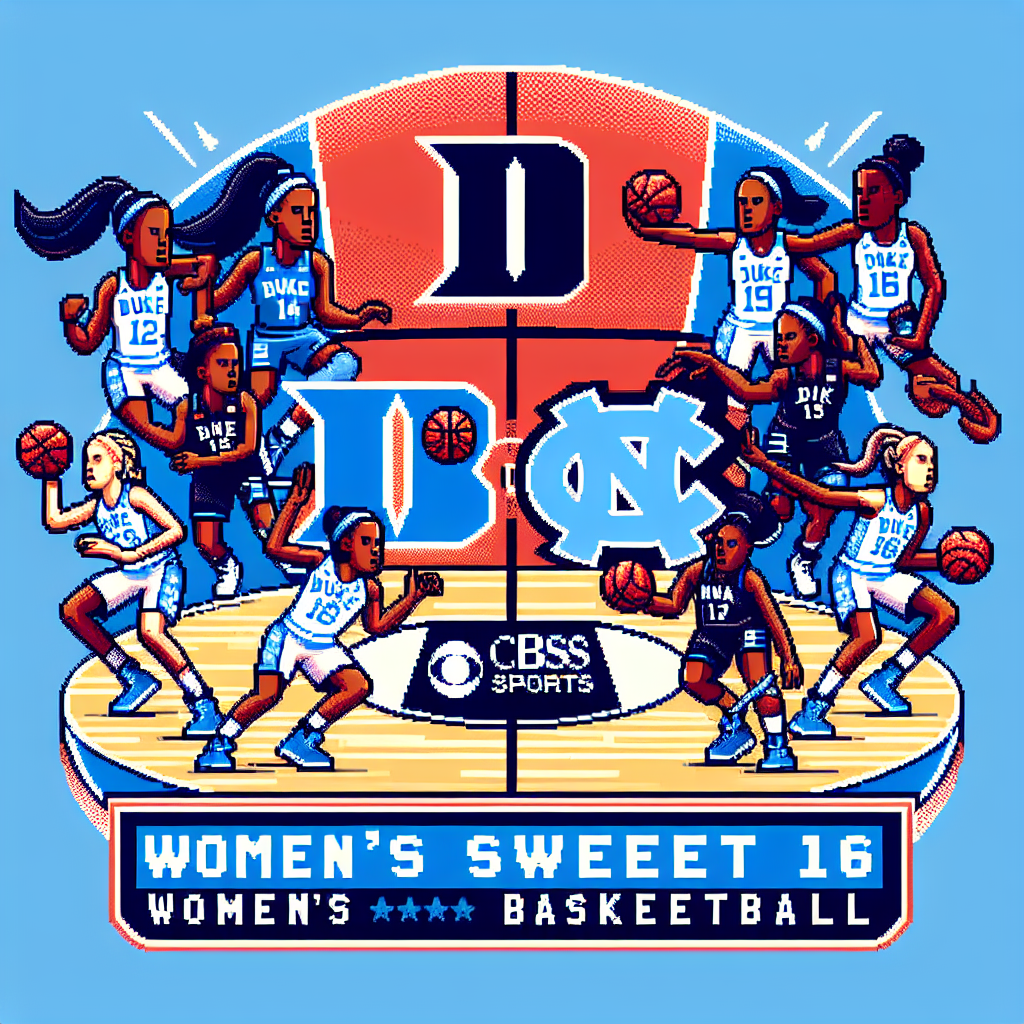
Ranking every women’s Sweet 16 matchup: Duke vs. North Carolina among the most interesting games to watch – CBS Sports | Analysis by Brian Moineau

Ranking every women's Sweet 16 matchup: Duke vs. North Carolina among the most interesting games to watch - CBS Sports | Analysis by Brian Moineau

Sweet 16 Showdown: A Dance of Drama, Rivalry, and Redemption

March Madness is upon us, and this year's women's Sweet 16 promises to be nothing short of a thriller. With storylines that could rival a Shakespearean play, the third round is set to deliver drama, excitement, and some good old-fashioned rivalry. The CBS Sports article highlights these matchups, particularly the tantalizing face-off between Duke and North Carolina, a rivalry that has defined college basketball for decades.

The Art of Rivalry: Duke vs. North Carolina

The Duke-North Carolina rivalry is one of the most storied in college sports, transcending the game itself to become a cultural phenomenon. This year's Sweet 16 encounter is no exception. Both teams have carved out impressive paths to get here, showcasing talent, grit, and determination. Duke, under the guidance of Coach Kara Lawson, has been a force to reckon with. Lawson, a former WNBA champion and Olympic gold medalist, has imbued her team with her winning mentality and tactical acumen. Her journey from player to coach is a testament to the evolution of women in sports, breaking barriers and setting new standards.

North Carolina, led by Coach Courtney Banghart, brings a blend of youthful exuberance and seasoned strategy. Banghart, with her Ivy League roots and a reputation for building strong teams, has turned the Tar Heels into a formidable contender. Her focus on developing players both on and off the court is a refreshing take in the competitive sports landscape.

Beyond the Court: Echoes of Change

This Sweet 16 isn't just about basketball; it's a reflection of broader societal movements. The increasing visibility and competitiveness of women's sports mirror the ongoing push for gender equality across various sectors. The WNBA, for instance, has seen a surge in popularity and viewership, thanks in part to players like Sue Bird and Diana Taurasi, who have become icons not just in sports but as advocates for social justice. The current NCAA tournament is another step forward in showcasing the talent and tenacity of women athletes, inspiring future generations to dream big.

Moreover, the intense rivalries and passionate fanbases remind us of the power of sports to unite and inspire. In a world that often feels divided, events like March Madness provide a common ground where differences are set aside, and the love for the game takes center stage.

Final Thoughts: The Sweet Symphony of the Sweet 16

As we gear up for these riveting matchups, it's important to savor the moments of triumph and heartbreak, the unexpected upsets, and the last-minute heroics. The women's Sweet 16 is not just a series of games; it's a celebration of talent, perseverance, and the indomitable spirit of competition. Whether you're rooting for Duke, North Carolina, or any of the other teams in this thrilling chapter of March Madness, one thing is certain: the journey will be as rewarding as the destination. So grab your popcorn, settle in, and let the sweet symphony of the Sweet 16 play on.

Read more about AI in Business

Read more about Latest Sports Trends

Read more about Technology Innovations

Xavier hiring Richard Pitino: Musketeers move quickly, hire New Mexico coach after Sean Miller’s departure – CBS Sports | Analysis by Brian Moineau

Xavier hiring Richard Pitino: Musketeers move quickly, hire New Mexico coach after Sean Miller's departure - CBS Sports | Analysis by Brian Moineau

Xavier Makes a Bold Move: Richard Pitino Joins the Musketeers Amidst a Family Rivalry

In a move that has the college basketball world buzzing, Xavier University has swiftly appointed Richard Pitino as their new head coach following Sean Miller's departure. Known for his energetic coaching style and strategic acumen, Pitino, 42, brings a wealth of experience from his 13-year tenure as a Division I head coach. But beyond the basketball court, this hiring adds an intriguing narrative: Richard will now compete directly against his father, Rick Pitino, in the fiercely competitive Big East conference.

Richard Pitino's coaching career has been a fascinating journey. After cutting his teeth as an assistant under his father at Louisville, he quickly ascended the coaching ranks, leading the charge at Florida International and making a significant impact at Minnesota. His most recent stint at New Mexico saw him revitalizing the program with his trademark blend of defensive tenacity and offensive innovation. Now, as he takes the helm at Xavier, fans are eager to see how he will imprint his philosophy on the Musketeers.

The narrative of familial rivalry adds an extra layer of drama to this appointment. Rick Pitino, a legendary figure in college basketball with a Hall of Fame career, currently leads St. John's. The prospect of father and son clashing on the court not only tugs at the heartstrings but also promises electrifying matchups. It's a storyline reminiscent of other famous family duels in sports, like the Harbaugh brothers in the NFL or the Williams sisters in tennis.

In a broader context, the Pitino hiring reflects a trend in the sports world where legacy and lineage play a significant role in shaping careers. It's a testament to the enduring influence of familial ties in professional sports, where names are not just labels but legacies to uphold. This trend extends beyond basketball; for instance, consider the recent surge of second-generation athletes in the NBA, such as Stephen Curry and Klay Thompson, who have carved out their own paths while honoring their fathers' legacies.

As Richard Pitino steps into his new role, he faces the dual challenge of succeeding in one of college basketball's toughest conferences and carving his own niche separate from his father's towering shadow. Yet, if his past is any indication, he's more than capable of rising to the occasion. Xavier fans can expect a dynamic, hard-nosed team under his leadership, one that will undoubtedly make waves in the Big East.

In a world where sports stories often mirror larger societal themes, the Pitino saga at Xavier offers a compelling narrative of legacy, rivalry, and the pursuit of greatness. As the basketball season unfolds, all eyes will be on the Pitinos, not just for their coaching prowess but for the rich tapestry of human interest their story weaves.

Final Thought: In the high-stakes world of college basketball, coaching changes are par for the course. Yet, every so often, a hire transcends the X's and O's, offering a storyline that captivates both diehard fans and casual observers. Richard Pitino's arrival at Xavier is one such moment, promising not only a fresh chapter for the Musketeers but a captivating saga of family, competition, and the relentless pursuit of excellence. As the season tips off, let's savor the drama and celebrate the beauty of sport, where every game is a new tale waiting to be told.

Read more about AI in Business

Read more about Latest Sports Trends

Read more about Technology Innovations

Michigan State basketball on doorstep of Big Ten title after win, Michigan loss to Illini – Detroit Free Press | Analysis by Brian Moineau

Michigan State basketball on doorstep of Big Ten title after win, Michigan loss to Illini - Detroit Free Press | Analysis by Brian Moineau

**Michigan State Basketball: On the Cusp of Glory and the Magic of March**

Ah, March! The time of year when basketball fans everywhere feel a tingling in the air, much like the first whiff of spring. And for those loyal to the Michigan State Spartans, this March brings with it a particularly sweet scent—victory. With a crucial win and a little help from a Michigan loss to the Illini, the Spartans find themselves on the doorstep of the Big Ten title, a position both thrilling and nerve-wracking.

Now, let’s talk about that win. It wasn't just any victory; it was a strategic masterpiece orchestrated by head coach Tom Izzo, a name synonymous with college basketball excellence. Known for his ability to develop players and maximize their potential when it matters most, Izzo is the Gandalf of the hardwood, leading his team through trials and tribulations to the very edge of greatness. This season, his team has shown resilience and determination, qualities that have become hallmarks of Izzo-coached squads.

The Spartans' success this season can be attributed to a blend of seasoned leadership and youthful exuberance. Players like Tyson Walker have been instrumental, showcasing not only skill but also the kind of tenacity that turns games around. Walker, with his quick feet and sharper mind, has delivered clutch performances, reminding fans why they fell in love with Michigan State basketball in the first place.

But let’s not forget the broader landscape in which this drama unfolds. As the Spartans inch closer to clinching the Big Ten title, the world continues to spin with its own stories of triumph and challenge. Consider, for instance, how sports can offer a much-needed respite in these complex times. Whether it’s the competitive spirit of the Olympics or the camaraderie seen in global events like the FIFA World Cup, sports bring us together, transcending borders and differences.

On a more localized level, the Spartans' journey serves as an inspiration, reminding us of the power of perseverance. In a world increasingly driven by technology and digital connections—a world where you can subscribe for huge savings to stay updated on sports, entertainment, and more—there remains something fundamentally human about the physicality and emotion of a basketball game. It’s a reminder that while we can read about games, nothing quite compares to the palpable energy of a live match.

As we wait to see if the Spartans will seize the Big Ten title, let's take a moment to appreciate the broader narrative. This is more than just a basketball season; it's a testament to teamwork, resilience, and the enduring allure of sports as a unifying force.

In conclusion, whether you’re a die-hard Spartan fan or a casual observer, this season offers lessons that extend beyond the court. It’s about seizing opportunities, rising to challenges, and savoring each victory, no matter how small. As Michigan State stands on the precipice of a Big Ten title, we too are reminded to stand tall, embrace the moment, and keep our eyes on the prize. Here's to the Spartans, and to the magic of March. Go Green!

Read more about AI in Business

Read more about Latest Sports Trends

Read more about Technology Innovations

College basketball rankings: Texas Tech rises to No. 15 after gritty win over Houston on the road – CBS Sports | Analysis by Brian Moineau

College basketball rankings: Texas Tech rises to No. 15 after gritty win over Houston on the road - CBS Sports | Analysis by Brian Moineau

Title: Texas Tech’s Gritty Road Victory: A Lesson in Defying the Odds

In a world where statistics and odds often dictate the narrative, Texas Tech’s recent triumph over Houston serves as a refreshing reminder that heart and determination can still tip the scales. The Red Raiders, despite being shorthanded, managed to snap the Cougars' impressive 33-game home winning streak—a feat that speaks volumes about the character and resilience of this team.

Texas Tech’s rise to No. 15 in the college basketball rankings is not just a reflection of their skill on the court, but also their ability to persevere under challenging circumstances. This victory was not just another win; it was a showcase of grit and tenacity. Faced with adversity, the Red Raiders dug deep and delivered a performance that will be remembered for its sheer audacity and spirit.

This win is emblematic of the broader theme of overcoming the odds, something we've seen echoed in various spheres lately. Consider the recent breakthroughs in space exploration, where private companies are pushing the boundaries of what's possible, or the stunning resurgence of traditional industries through innovative technologies. In both cases, like Texas Tech, the underdog narrative resonates strongly.

Head Coach Mark Adams deserves a nod of appreciation here. His ability to rally the team, instill confidence, and execute a strategic game plan under less-than-ideal circumstances is commendable. Adams, who has been with Texas Tech since 2021, is no stranger to the concept of resilience. His journey from junior college coaching to leading a top-tier program is a testament to his passion and commitment to the sport. Under his guidance, Texas Tech has become synonymous with defensive toughness and strategic brilliance.

The victory over Houston is also a reminder of the unpredictable nature of sports—a theme that often parallels life itself. Just as the Red Raiders defied expectations, so too do individuals and communities around the world, proving that with determination and a little bit of grit, one can overcome almost any obstacle.

In a time where headlines are often dominated by the predictable, Texas Tech’s win is a beacon of excitement and unpredictability. It’s a story that encourages us to root for the underdog, to believe in the power of perseverance, and to celebrate those who dare to defy the odds.

Final Thought: As we celebrate this remarkable victory, let it serve as a reminder that success is not solely measured by talent or resources but by the heart and determination to overcome challenges. Whether on the court or in life, the Texas Tech Red Raiders have shown us that grit can indeed change the game. As they continue their journey this season, fans and spectators alike will eagerly await their next move, hopeful for more moments of courage and triumph.

Read more about AI in Business

Read more about Latest Sports Trends

Read more about Technology Innovations