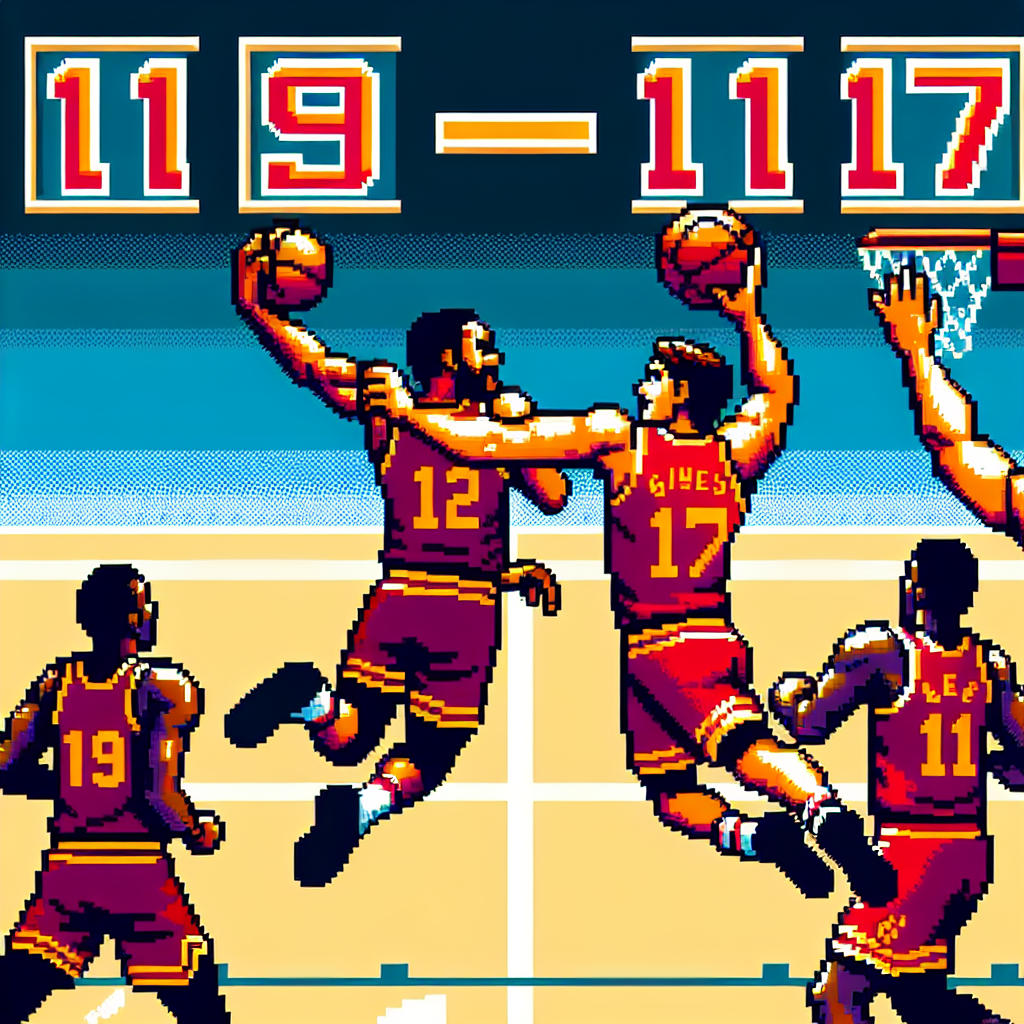
A thriller in Denver: Mitchell and Harden seal a statement road win for the Cavs
There are games that feel like a turning point — the kind that leave you buzzing on the flight home and convinced you just watched a team discover a new gear. Monday night’s 119-117 Cleveland win over the Denver Nuggets at Ball Arena was one of those games. Donovan Mitchell’s late composure and James Harden’s improbable step-back three turned what looked like another uphill battle into a punctuation mark on a long, successful road trip.
Hook: the scene in the final minute
With 32 seconds left, the Cavs trailed and the scoreboard read tension, not confidence. Harden — in just his second game with Cleveland — drilled a contested, step-back three to knot the game at 117. Then, with .9 seconds remaining, Mitchell drew a foul on Jamal Murray and calmly sank two free throws. Cue pandemonium: Cavaliers 119, Nuggets 117, and an exhale that felt like the whole roster owed it to the fans.
Why this mattered beyond two points
- This wasn’t just another win on the road. It was the finish of a five-game Western road trip that Cleveland completed with grit and poise.
- Harden’s arrival (acquired Feb. 4) has not been incremental — it’s reshaped Cleveland’s late-game profile and playmaking in a matter of nights.
- Beating the reigning-champion-core Nuggets in Denver is no small feat; Nikola Jokic still posted a triple-double, but the Cavs answered with balanced star power and timely defense.
The context: what Kenny Atkinson meant when he said he “knew what Cleveland was up against”
Cavs coach Kenny Atkinson’s comment before the game underlined the obvious: Denver is heavy on experience, size and playoff toughness. Nikola Jokic is a walking mismatch, Jamal Murray can hit shots from anywhere, and the Nuggets have a playoff DNA that pushes opponents to the brink. Atkinson’s warning wasn’t fear — it was respect. He knew his team would have to absorb pressure, survive runs, and then impose its own late-game identity. That’s exactly what Cleveland did.
- Cleveland leaned on Donovan Mitchell’s fearless creation: 32 points and 10 assists, including the free throws that decided the game. Mitchell is still the team’s engine.
- Jarrett Allen was a force inside (22 points, 13 rebounds), providing finishing and rim protection against a tough matchup.
- Harden brought spacing, craft and a veteran cold-bloodedness that altered the Nuggets’ end-of-game calculus.
Key observations from the game
- Late-game duo work: Mitchell and Harden already look like a complementary clutch pairing — Mitchell creates and finishes, Harden spaces, rebounds and makes plays under pressure.
- Depth and role clarity: Beyond the stars, guys like Jarrett Allen and the role players stepped up at crucial moments, which is crucial for playoff durability.
- Defense still matters: Jokic still had a triple-double (22/14/11), but turnovers and missed outside shots by Denver opened the window for Cleveland’s comeback.
- Coaching and adjustments: Atkinson’s game plan navigated Denver’s threats and kept the Cavs composed in the final possessions — a small coaching win that matters down the stretch of a season.
Memorable sequence (play-by-play feel)
- Cavs claw back from an 11-point deficit in the fourth after methodical offense and strong interior play.
- Allen’s lob dunk off Mitchell’s pass swung momentum and tightened the gap.
- Harden’s step-back three with 32 seconds left — contested, improbable, and perfectly timed — tied the game.
- Mitchell drew the foul with under a second remaining and hit both free throws. Jokic missed a buzzer-beating three. Final: 119-117.
What this suggests about Cleveland’s trajectory
This game isn’t a silver bullet, but it is the kind of chemistry-accelerator win that elevates belief. Harden’s addition was always about more than numbers — it was about late-game gravity and veteran instincts. When those traits combine with Mitchell’s explosiveness and Allen’s interior presence, the Cavs look like a multi-dimensional team capable of surviving hostile environments and closing out tight games. If they want to be taken seriously in the conference picture, wins like this are how they prove it.
My take
If you asked me which Cavs snapshot I’d frame from the last few nights, it’d be Harden stepping back with a hand in his face and Mitchell calmly sinking the pressure shots. The roster shifts this month were dramatic, but chemistry sometimes happens in a single play — and Cleveland got a handful of them in Denver. That’s the sort of game that can cement trust between new teammates, and between a team and its coach. Atkinson said he knew what they were up against; what he might not have known is how quickly this group would start answering that challenge.
Final thoughts
Wins like this do more than pad the standings. They teach a roster how to win together under duress. The Cavs leave Denver with a narrow road victory, renewed momentum, and a clearer sense of identity that could matter when the real stakes arrive in the spring.
Sources
Related update: We recently published an article that expands on this topic: read the latest post.
Related update: We recently published an article that expands on this topic: read the latest post.

When the Cardinals Waited to Plug In: Why Late Tech Adoption Can Be a Winning Playbook
There’s a slightly counterintuitive feeling that comes when you watch a team that’s known for tradition—like the St. Louis Cardinals—lean into modern performance tech. It’s comforting and a little thrilling at the same time: the same franchise that treasures history is now measuring spin efficiency in Jupiter and tracking ground reaction forces in the batting cages. But the bigger story here isn’t just “the Cardinals use tech.” It’s about timing: how waiting to adopt new technology can sometimes be an advantage rather than a handicap.
The hook: innovation without the bruises
Imagine buying a brand-new gadget on day one versus buying it after a year of updates, bug fixes, and user feedback. Early adopters get the flash and the bragging rights, but they also wrestle with early faults, awkward workflows, and expensive pivots. Late adopters—if they pick wisely—get the polished version plus a map of what works and what doesn’t.
That’s the thesis behind a recent piece on Viva El Birdos, which walks through the tech the Cardinals are using (and slowly integrating) and argues the club’s later, deliberate approach may spare them many missteps common to teams that plunged in too fast. (vivaelbirdos.com)
Why the Cardinals’ timing looks smart
- They avoid teething problems. Early versions of hardware and software often change dramatically. Wait long enough and vendors iterate toward reliability, better documentation, and sensible workflows.
- They learn from others. By the time a tool reaches them, there’s often a body of case studies—what injuries it predicted poorly, which metrics were noise, how coaches actually use the dashboards.
- They get more interoperable systems. Early sports tech tended to be stovepiped: one vendor’s files didn’t play nicely with another’s. Later entrants often adopt common standards or offer integrations with the ecosystem (TrackMan, Rapsodo, etc.). (trackman.com)
- Budget discipline. Waiting lets a club prioritize spending on proven solutions and the right people to interpret the data, instead of chasing every shiny thing.
The tech the Cardinals are (or likely are) using
Viva El Birdos’ roundup reads like a checklist of modern baseball performance tools—most of which are now common across MLB clubs, though the timing and depth of deployment vary: (vivaelbirdos.com)
- Force plates (e.g., Forcedecks) to measure drive and deceleration forces in pitchers.
- Arm-care and range-of-motion sensors for release-point strength checks and daily self-testing.
- TrackMan for full ball-trajectory and spin metrics—the workhorse of stadium and practice analytics. (trackman.com)
- Rapsodo systems and newer PRO devices for portable, detailed ball-flight and spin data useful in both hitting and pitching work. (rapsodo.com)
- Trajekt pitching simulators that emulate live pitcher release and pitch shapes for hitters.
- Kinatrax and other markerless motion-capture tools that let teams analyze in-game biomechanics without body markers.
- Edgertronic high-speed cameras for frame-by-frame spin and release detail.
- NordBord and groin/hip strength testing rigs to quantify rotational power and injury risk.
- Wearables and embedded sensors (sleeves, shoe plates, GPS/IMUs like Catapult) for workload and fatigue management.
Together, these tools create a matrix of data: mechanical forces, joint kinematics, ball flight, internal workload, and recovery indicators. The real art—and major expense—is turning that matrix into actionable, human-led decisions.
Late adoption: the tradeoffs and practical gains
- Reduced trial-and-error: The Cardinals (and teams that follow this path) can skip failed experiments other teams used as public beta tests.
- Better vendor maturity: Hardware durability, battery life, cloud reliability, and analytics UI often improve significantly after a product’s first 12–24 months on the market.
- Smarter hiring: Rather than hiring a stack of generalists, a team can recruit specialists who know the refined tools and workflows that actually move outcomes.
- Focused integration: Rather than attaching every sensor to every uniform, a later adopter can implement a streamlined stack that interoperates and produces clean signals for coaching and medical staff.
- But: late adoption risks missing early competitive edges and the institutional learning that comes from building expertise over time. The solution is selective adoption—waiting for evidence while experimenting in controlled ways.
How measured adoption looks in practice
- Start with high-signal tools. TrackMan and Rapsodo have become standard for a reason: they provide clear, reproducible metrics that feed scouting, player development, and in-game adjustments. (trackman.com)
- Pilot niche tech where risk is low. Try force plates and markerless capture with a small group (rehab pitchers, minor-league staff) before scaling.
- Build data ops and human interpreters first. Devices generate numbers; the value comes when physiotherapists, pitching coaches, and data scientists translate numbers into biomechanics and training plans.
- Use tech to augment, not replace, judgment. Advanced cameras and sensors illuminate details that were once invisible—use them to inform decisions rather than dictate them.
Lessons for other teams and organizations
- Timing is strategic. You can treat the adoption curve as a resource allocation problem: when do you spend on hardware vs. talent vs. integration?
- Expect consolidation. Vendors consolidate and best practices emerge; buying into a mature standard often means less technical debt.
- Invest in explainability. Coaches need interpretable metrics. If a metric can’t be explained in plain terms (what to change, how to change it, and why it matters), it’s probably not ready for daily use.
- Measure ROI beyond wins. Quantify effects on injury reduction, player availability, and rehab timelines—not just spin rate or exit velocity.
What this means for fans and those who follow the Cardinals
- You’ll see more subtle changes than instant results. Technology rarely instantaneously turns prospects into All-Stars, but it can steadily reduce injury rates, optimize workloads, and eke out small, repeatable performance gains.
- The narrative won’t be “we bought X and won.” It will be slower: better-managed pitchers, smarter rest schedules, individualized development plans—incremental advantages that compound.
A few practical cautions
- Beware metric inflation. More numbers often mean more noise. Teams must test whether a metric predicts outcomes (health, performance) or merely correlates superficially.
- Privacy and player buy-in matter. Wearable tracking and health monitoring require trust, clear consent, and good communication about how data is used.
- Don’t let tech short-circuit human relationships. The best results come when coaches use data as a conversation starter—not a final verdict.
My take
The Cardinals’ approach—methodical, observant, and willing to adopt proven tech rather than chase every novelty—feels like a franchise-calibrated strategy. It leverages one of the club’s true strengths: institutional patience. In a league where marginal gains matter and injuries can derail seasons, late-but-intelligent adoption can deliver a cleaner, sustainable path to competitive advantage.
If you squint, it’s the baseball version of “buy quality after the bugs are fixed.” You still need to spend—and you still must staff the right people—but when done thoughtfully, waiting can be an edge, not a delay.
Quick practical takeaways
- Waiting can be smart—if you use the pause to study outcomes, vendors, and integrations.
- Prioritize high-signal tools (ball flight + workload tracking) before adding niche hardware.
- Invest in interpreters (trainers, biomechanists, data analysts) as much as devices.
- Use pilots to scale safely and won’t overwhelm players or staff.
Sources
Final thought: technology won’t replace baseball’s human core, but the right timing—and the right people interpreting the right signals—can make the difference between expensive experiment and consistent improvement.
Related update: We recently published an article that expands on this topic: read the latest post.
Related update: We recently published an article that expands on this topic: read the latest post.
Related update: We recently published an article that expands on this topic: read the latest post.
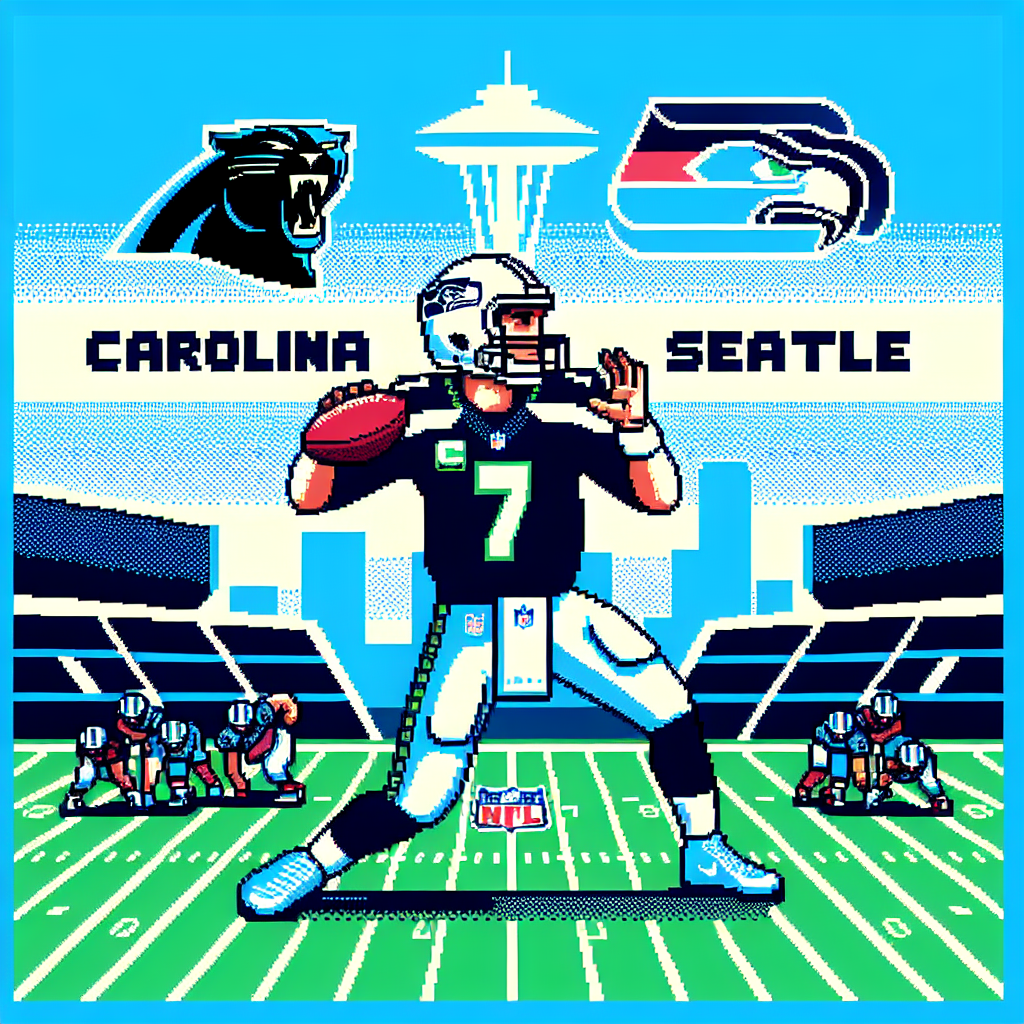
Sam Darnold Goes Back to Carolina — and It Feels Different This Time
There’s something poetic about a quarterback walking back into a stadium where he once had to re-find himself. For Sam Darnold, returning to Bank of America Stadium isn’t a trip down memory lane so much as a checkpoint on a journey that’s gone from “what if” to “why not.” Once the Panthers’ stop on a rocky early-career path, Carolina helped reshape him into the player who’s now a two-time Pro Bowler and a legitimate NFC contender with the Seattle Seahawks.
Why this visit matters
- It’s more than nostalgia. It’s a concrete example of how short chapters can change a career arc.
- Darnold’s story reframes the “bust-to-breakout” narrative into something cleaner: development, patience, and context.
- The contrast between his two stints in Carolina (a starter-in-waiting role in 2021–22) and his current form shows what coaching, learning behind a veteran, and a little momentum can do for a quarterback’s confidence.
A quick timeline that matters
- 2018: Darnold is drafted No. 3 overall by the New York Jets and struggles early in his career.
- 2021–2022: Traded to the Carolina Panthers. He starts games, battles injuries, and finishes strong late in 2022 — a small stretch that mattered more than it looked at the time.
- 2023: Spends a season in San Francisco as Brock Purdy’s backup, learning in a strong offensive system.
- 2024: Breakout year with the Minnesota Vikings — strong statistics, a Pro Bowl nod, and widespread recognition as an improved quarterback.
- 2025: Signs with the Seahawks and returns to Carolina as an established starter, playoff-bound and riding the momentum built over the previous seasons.
How Carolina “paved the way”
Darnold’s comments before the Seahawks’ December 26, 2025 game capture the essence of what those Carolina years meant to him: being around good teammates, weathering adversity, learning the offense, and coming through injury to finish the season on an upswing. That late-2022 stretch — where he helped the Panthers go 4-2 down the stretch and posted multiple games with a passer rating over 100 — became a kind of quiet audition. It didn’t solve everything overnight, but it seeded belief.
Three practical ways Carolina helped:
- Rebuilding mental resilience: The Panthers stint forced Darnold to cope with setbacks and rebuild confidence in-game.
- Learning from teammates and coaches: Exposure to different systems and veteran players gave him new tools to add to his repertoire.
- Creating momentum: Playing well late in the 2022 season opened the door for the next steps — a learning season in San Francisco and the breakout year in Minnesota.
The bigger picture: player development and second chances
Darnold’s arc is a useful case study about NFL careers that aren’t linear. Talent alone rarely tells the whole story; context, coaching, scheme fit, health, and timing all matter. Teams (and players) who are patient and intentional about development can turn perceived “busts” into reliable starters. For Darnold, the time in Carolina didn’t instantly rewrite his narrative — it supplied the pieces he later used to build it.
- Players can rebrand their careers with incremental wins and learning opportunities.
- Backup years (like his time in San Francisco) can be less about sitting on the bench and more about refining decision-making.
- Short hot stretches — the kind Darnold had in Carolina — matter because they provide evidence that a player can win when given the right support.
What to watch when Darnold plays in Carolina
- Poise under pressure: Does he show the same command and decisiveness that powered his 2024 season?
- Pocket movement and quick reads: Those were hallmarks of his improvement in Minnesota and will be critical against Carolina’s schemes.
- Leadership cues: How he interacts with teammates on and off the field shows whether the growth is sustained beyond stats.
Things that make this narrative compelling for Seahawks fans
- Darnold’s success is also a win for Seattle’s offensive staff and the broader rebuild: they signed a quarterback who’s earned momentum and now must prove it again in a new environment.
- If the Seahawks keep winning with Darnold at the helm, his road through Carolina will look less like a detour and more like a necessary milepost.
- The human element — friendships, locker room lessons, and hard-earned confidence — is what converts raw talent into consistent performance.
My take
Sam Darnold’s return to Carolina reads like one of those sports stories you don’t notice until it’s fully formed: a player who kept working, learned from imperfect opportunities, and used them as leverage for a genuine career revival. The Seahawks’ decision to bank on him wasn’t just about stats from one breakout year — it was betting on a player who’s shown the capacity to grow. Whether he cements a long-term legacy in Seattle or continues evolving, that trip back to Bank of America Stadium is a reminder that development often happens in unexpected places.
Sources
Related update: We recently published an article that expands on this topic: read the latest post.
Related update: We recently published an article that expands on this topic: read the latest post.
Closing the Year with Purpose: The Cowboys’ Unexpected Summer of Hope
There’s a particular kind of stubborn optimism in football — the kind that refuses to let the season end quietly even when the playoffs are out of reach. After the Dallas Cowboys were officially eliminated from playoff contention in late December 2025, head coach Brian Schottenheimer didn’t send the veterans home early or pivot fully into audition mode. Instead he doubled down on one message: they’re still building something special.
This is not the self-delusion of an owner desperate for headlines or a coach covering for mistakes. It’s a deliberate cultural stance, a claim about identity and process when the scoreboard stings the most.
Why Schottenheimer’s stance matters
- It reframes the end of a disappointing season as an investment period rather than an admission of failure.
- The approach protects the delicate balance between player development, veteran stewardship, and organizational continuity.
- It gives the franchise a narrative heading into 2026: learning, accountability, and sustained standards.
Schottenheimer has been clear: this is year one of a project. That matters for teams that want to avoid the “blow-it-up” cycle and instead create long-term winning habits.
What Schottenheimer actually said
- He emphasized the immediate focus — “playing the Commanders” and taking each game seriously.
- He stressed that players still want to play, want to win, and care about one another.
- He framed culture as intact: practice effort, locker-room cohesion and accountability remain, even if the win-loss column doesn’t show it yet.
- He acknowledged coaching and execution need fixing, calling out that the record shows “we’re not playing good enough football” and “I’m not coaching good enough football,” while insisting culture is not the problem. (DallasCowboys.com)
This mix of accountability and faith in the locker room is a classic leadership posture — own the failures, but insist on the foundations that will allow you to fix them.
The practical choices behind the rhetoric
- Managing veterans: Schottenheimer signaled cautious handling of veteran stars (like Dak Prescott) when games get out of hand, balancing player health with momentum-building.
- Division focus: He pointed out the realistic chance to “go potentially 5‑1 in the division,” reframing the remaining slate into a tangible target that matters to fans and players.
- Play and practice standards: He highlighted that the team continues to practice and prepare hard — the kind of consistency that helps teams rebound faster in Year Two.
These are not poetic platitudes — they’re operational decisions that shape roster usage, coaching priorities in the offseason, and how the front office evaluates progress.
The broader context
- This was Schottenheimer’s first year as head coach, a season with notable roster moves and upheavals (including high-profile trades earlier in 2025) and uneven results on defense and offense.
- Owner Jerry Jones has been publicly intent on “competing now,” which adds pressure to turn culture into wins quickly.
- Despite the misses, Dallas still landed notable individual recognition (e.g., Pro Bowl nods), underscoring that talent exists even if synergy didn’t consistently follow.
Taken together, the season reads like a classic transitional campaign: flashes of high-level play, recurrent structural issues (especially on defense), and a coach trying to install a long-term identity while under immediate-results pressure.
Nuggets for fans and skeptics
- This stance isn’t an excuse: Schottenheimer explicitly took coaching responsibility where due. That kind of candor can buy credibility if next season shows measurable improvement.
- Culture alone won’t win games. The Cowboys will need tangible fixes — schematics, personnel, situational coaching — to translate the “special” rhetoric into wins.
- The remaining games of the 2025 season were being framed as momentum-building opportunities, not consolation prizes. That matters when evaluating offseason momentum and front-office decisions.
What to watch in 2026
- Coaching adjustments: Will Schottenheimer change his staff or scheme emphases to stop the defensive slide?
- Roster moves: Will the front office prioritize pass rush and secondary help to address persistent defensive shortcomings?
- Player development: Can young and new pieces (and veteran leaders) convert late-season effort into early-season cohesion next year?
If the organization truly believes this is a sustainable build, those are the levers they’ll pull.
A short verdict
You can be skeptical — and you should be. “We’re building something special” is a bold claim from a first-year coach whose team missed the postseason. But there’s credibility in Schottenheimer’s blend of ownership and optimism: he admitted coaching shortcomings, praised the locker-room culture, and set practical goals for the remaining games. If Dallas converts that cultural bedrock into clearer strategic fixes (especially on defense), the phrase won’t sound like wishful thinking next fall.
Final thoughts
Good culture is necessary and messy stuff is inevitable. The true test for the Cowboys will be whether the lessons of 2025 produce measurable change in 2026. Fans don’t just want hope — they want progress. For now, Schottenheimer has given the locker room a direction and the franchise a baseline: finish strong, protect the core, and turn culture into consistent execution. That’s a start worth watching.
Sources
Related update: We recently published an article that expands on this topic: read the latest post.