TL;DR
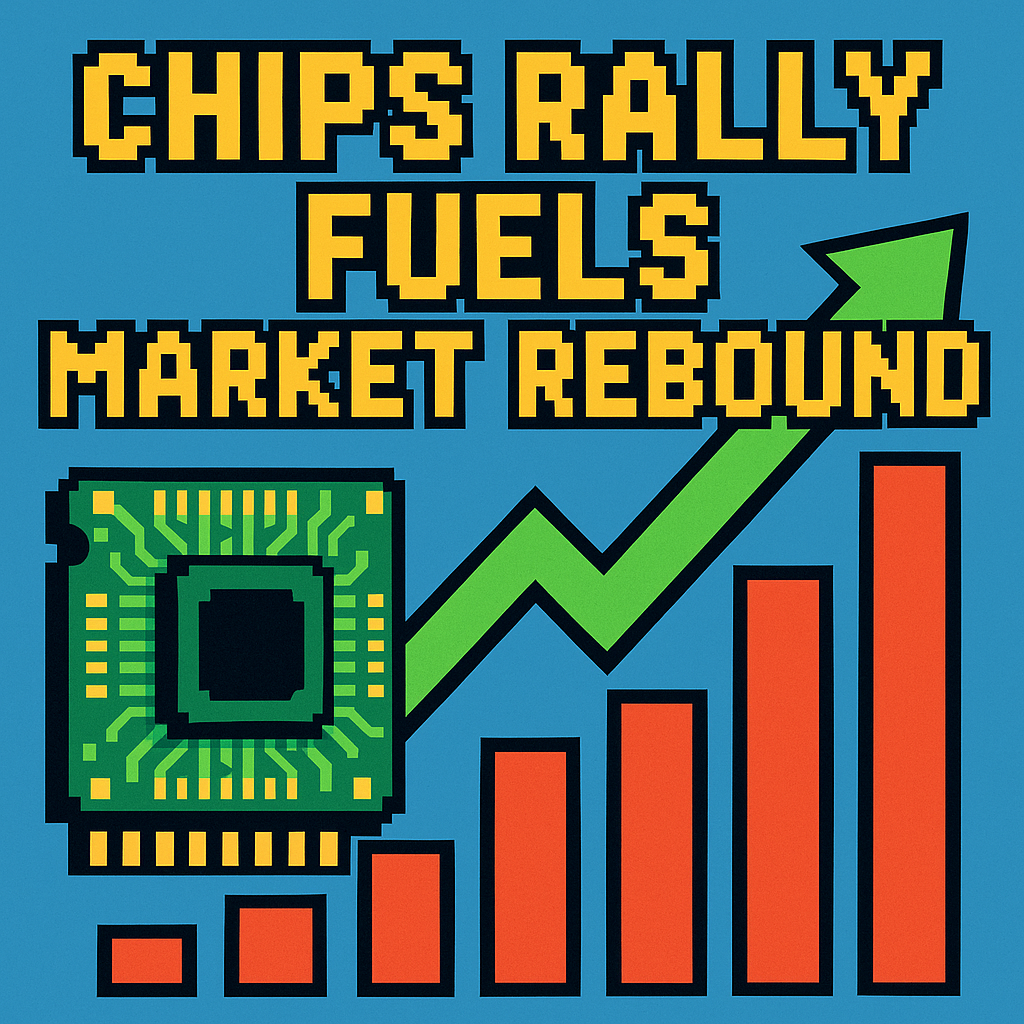
- Chips led a rebound from the Fed-led sell-off as semiconductors ripped and the Nasdaq rose 1.91%, while the S&P 500 gained 1.08% on June 18, 2026; energy lagged as WTI crude slid to $73.58 on reports of a U.S.–Iran détente. [1][4]
- Breadth improved under the surface: the Russell 2000 outperformed with nearly a 2% gain, while defensives wobbled—classic risk-on when oil and rate fears cool together in New York trading. [1][2]
- The tape says “AI back on,” but the investable takeaway is rotation: lower crude compresses energy earnings while easing input and financing costs for power-hungry data center suppliers and small-cap borrowers in the U.S. market. [1][3][4]
What the source said
CNBC’s live blog logged a broad rebound after the Fed-driven slump: the S&P 500 closed up 1.08% to 7,500.58, the Nasdaq rose 1.91% to 26,517.93, and the Dow added 0.14% to 51,564.70 on June 18, 2026. Semiconductors led; Intel drew positive chatter linked to Apple, and AI-adjacent names such as Corning jumped 7%. The Russell 2000 outperformed with nearly +2% on the day, while the S&P energy sector fell almost 2% as WTI dipped to $73.58 on U.S.–Iran agreement headlines. Individual movers included Enphase (+10%), Corning (+7%), and Exxon/Chevron (−2%+), while Kroger slipped after a one‑cent EPS miss despite a revenue beat. [1]
Why it matters
Two policy levers—rates and oil—just loosened their grip on risk assets after a midweek hawkish Fed tone and a Thursday oil slide to the low‑$70s per barrel, as reported by Axios and Reuters from Washington and Tehran angles. If crude holds near $73–$76 through August 2026, gasoline and freight costs ease, trimming the inflation impulse that pressured multiples in Q2. In that setup, equity buyers can re-risk into growth stories (chips/data centers) without fighting duration headwinds. [2][3][4]
Small-cap industrials and services tied to diesel and short-term borrowing—think Russell 2000 constituents in trucking, tools, and regional services—gain operating and financing relief when oil dips and yields stabilize into Q2 2026 quarter‑end. Conversely, energy producers face a valuation headwind as futures reprice supply risk lower on a U.S.–Iran thaw around the Strait of Hormuz. Active managers entering June 2026 month‑end must choose between chasing AI beta or leaning into a breadth turn that favors cyclicals and balance‑sheet repair. [1][2][4]
Original analysis
Contrarian read: June 18, 2026 looked more like rotation than a pure AI melt-up in New York.
- Consensus: “The AI trade is back—buy chips because the Fed sell-off was a blip.” The CNBC live blog framed the day that way while the Fed’s June messaging lingered. [1][6]
- My case: Semis ripped, but the simultaneous pop in the Russell 2000 and slump in energy are cleaner breadth tells than another megacap surge. After a chip “bloodbath” earlier in June, next‑day rebounds often fade unless credit and input costs improve together; WTI at $73–$74 plus a Friday Juneteenth holiday that curbs catalysts tilts flows toward cyclicals over narrow AI leaders. [1][2][4][6]
Back‑of‑envelope calculation: Kroger’s miss was optical, not fundamental, in Q1 FY2026.
- KR printed $1.58 in Q1 EPS vs. $1.59 expected—a $0.01 shortfall, or ~0.63% below consensus (0.01/1.59). Revenue was $46.12B vs. $45.59B, a $0.53B beat—about 1.16% above expectations (0.53/45.59). A 7% intraday drawdown on a one‑cent EPS miss—even as revenue outperformed—implies punishment for guidance quality or margin mix, not headline growth, and sets up mean reversion if fuel and promo costs moderate into H2 2026. [1][5]
Named‑stakeholder breakdown: the week’s winners and losers map to oil and AI.
- Intel (INTC): Re‑rating risk tilts positive near term. A “brand upgrade” narrative tied to Apple chatter and a broad semi bounce catalyzed gains; sustained upside needs data center share wins, not just headlines. Tactically constructive into June month‑end while SOX momentum runs. [1][3]
- Apple (AAPL): Bank of America nudged FY26E EPS to $8.63 as pricing offsets memory tightness; a $100 Pro/Pro Max hike is the tell. Risk: elasticity in a stretched replacement cycle for premium iPhones in the U.S. and China. [1]
- Enphase (ENPH): IQ9S microinverter traction plus a Barclays upgrade produced a 10% jump; if oil stays soft and residential paybacks stabilize in H2 2026, backlog conversion can carry shares. [1]
- Exxon/Chevron/Occidental: Oil’s downdraft—linked to U.S.–Iran détente talk and Hormuz passage risk easing—compresses near‑term cash yields and de‑rates beta. Discipline on 2026 capex versus buybacks will decide multiple support. [1][3][4]
- Corning (GLW): A stealth AI beneficiary via glass, optics, and fiber; a 7% pop signals the market’s hunt for second‑order suppliers with real EBITDA tied to data center builds in places like Arizona and Ohio. [1]
Historical analogue: 2013’s mini “taper tantrum” flipped once rates found a level, and small caps plus cyclicals staged a summer catch‑up while energy lagged on supply comfort; 2026’s hawkish Fed tone followed by a breadthy risk‑on day with softer crude rhymes with that script. [2][4][6]
2×2: Who wins if chips lead while WTI stays below $80 into Q3 2026? [4]
- High energy use + AI adjacency (cooling, power, optics suppliers): Win big—margin tailwinds and top‑line growth.
- High energy use + no AI tie (airlines, trucking): Win moderate—cost relief without multiple expansion.
- Low energy use + AI adjacency (software): Mixed—sentiment help, limited operating leverage.
- Energy producers (upstream, oil‑beta): Lose near term—lower realized prices and weaker narrative carry.
Net: Thursday’s bounce is more than chips; it’s a breadth tell powered by cheaper oil and “good enough” macro into late June 2026. Position sizing should reflect that—add to cyclicals and small caps with operating leverage to sub‑$80 WTI, keep AI but prefer second‑order suppliers over crowded leaders. [1][2][4]
What others are missing
Coverage fixates on index points and AI tickers, but the oil‑tape linkage—with the Strait of Hormuz explicitly in play via a U.S.–Iran ceasefire framework—carries second‑order consequences for June–July CPI prints in the United States. That supply relief pushes WTI toward the mid‑$70s, compresses energy earnings, and boosts P&Ls for energy‑intensive end markets like glass, optics, cooling, and logistics tied to U.S. data centers. If crude sticks near $73–$76 instead of $85, multiples expand more for small caps and capital goods than for an already‑prized AI complex. Watch oil first; it’s the breadth key. [2][3][4]
What to watch next
-
By August 15, 2026, WTI crude trades below $70 intraday at least once as supply risk premia fade on further clarity around the U.S.–Iran framework. [4]
-
Between June 24 and September 30, 2026, the Russell 2000 outperforms the S&P 500 by at least 300 bps, reflecting falling fuel costs and improving breadth in U.S. equities. [1][2]
-
By Q3 2026 earnings season (reported October–November 2026), at least two of Exxon, Chevron, or Occidental guide capex lower or slow buybacks versus H1 2026 cadence, acknowledging weaker realized prices. [1][4]
My take
Chasing semis after a big green day is easy; leaning into energy‑sensitive cyclicals and quality small caps while WTI sits at $73.58 is harder but smarter for Q3 risk. I’ll keep core AI exposure, but I’ll add to second‑order suppliers (glass, optics, cooling) and borrowers with high operating leverage to cheaper fuel. If a credible U.S.–Iran détente holds and crude drifts to the low‑$70s, the next leg won’t be five tickers—it’ll be 500 across the Russell 2000 and U.S. cyclicals. I’m buying the rotation, not the headline, with a 2026 lens on breadth. [1][2][4]
Sources
-
S&P 500 closes higher, Nasdaq climbs nearly 2% as chips fuel comeback from Fed sell-off: Live updates — CNBC (https://www.cnbc.com/2026/06/17/stock-market-today-live-updates.html) — Primary live blog with index closes, sector moves, and notable stock drivers including energy weakness and small-cap strength.
-
How major US stock indexes fared Thursday 6/18/2026 — AP News (https://apnews.com/article/411ec68891aa5dc7d7f684e0305e2aa3) — Confirms the broad rebound, notes calendar effects around Juneteenth, and frames weekly context.
-
Wall St advances as Iran deal optimism offsets hawkish Fed; Intel soars — Reuters via Investing.com (https://au.investing.com/news/economy-news/wall-st-futures-bounce-back-as-usiran-deal-optimism-balances-hawkish-fed-intel-up-4494347) — Corroborates semiconductor leadership and market balancing of Fed messaging with geopolitical tailwinds.
-
Oil prices sink on announcement of Iran deal — Axios (https://www.axios.com/2026/06/14/oil-prices-us-iran-war-hormuz-strait-peace-deal) — Details on the U.S.–Iran agreement, Strait of Hormuz implications, and the associated drop in WTI.
-
Kroger (KR) Q1 Earnings Miss Estimates — Zacks (https://www.zacks.com/stock/news/2939171/kroger-kr-q1-earnings-miss-estimates) — Confirms the $1.58 EPS vs. $1.59 consensus and revenue outperformance, enabling the calculation.
-
June Fed Meeting: Updates and Commentary — Kiplinger (https://www.kiplinger.com/news/live/fed-meeting-updates-and-commentary-june-2026) — Documents the midweek Fed‑led sell‑off and rate tone that set up the rebound dynamic.
Related update: We recently published an article that expands on this topic: read the latest post.