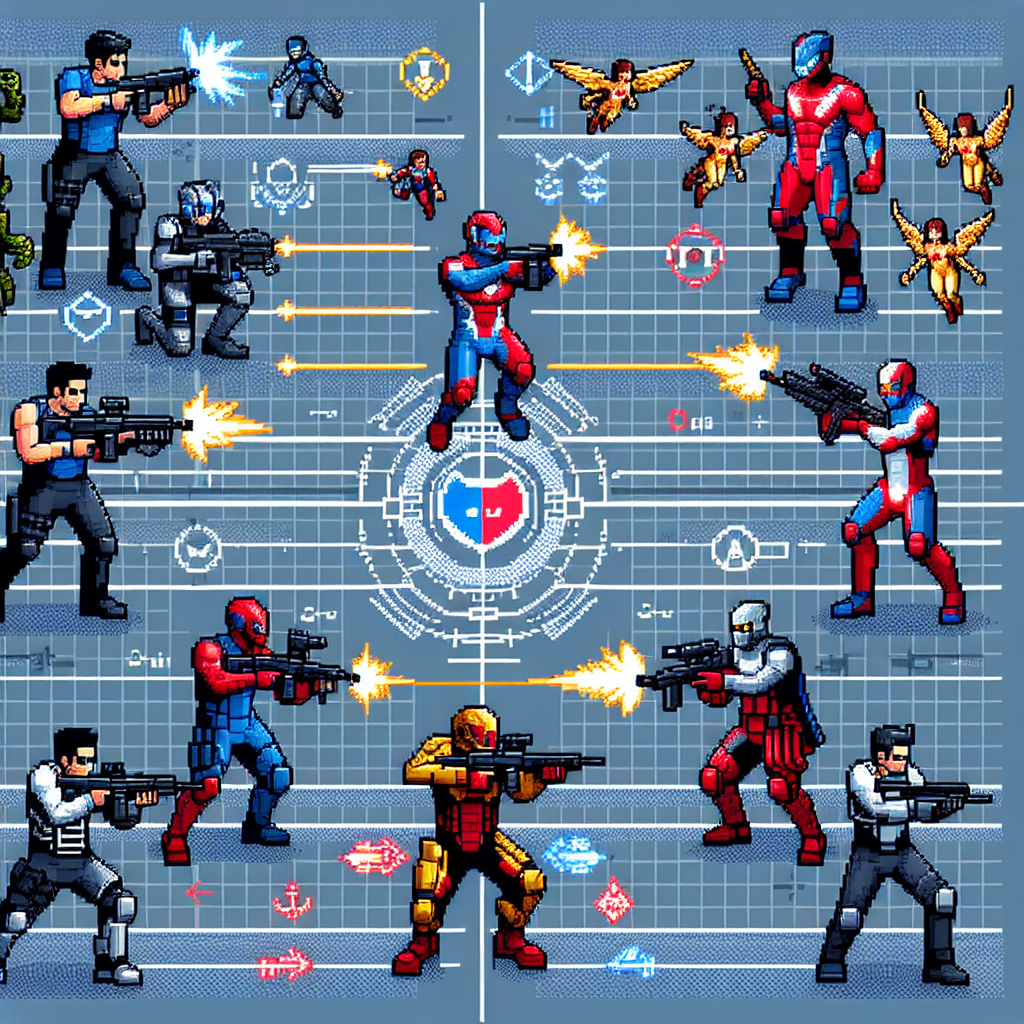
Ignite the Battle: Why Marvel Rivals Feels Like a Fresh Superhero Playground
Marvel Rivals lands like a gust of energy: flashy powers, crunchy third-person shooting, and the kind of fan-service roster that fills voice channels with excited squeals. Marvel Rivals invites players to "Play for free now! Get ready to Ignite the Battle with Marvel Rivals!" and, honestly, it delivers more than the usual hero-shooter checklist. From its 6v6 PvP core to growing PvE ambitions, this game feels less like a single product and more like the start of a living Marvel festival.
What Marvel Rivals is — and what it wants to become
At its core, Marvel Rivals is a free-to-play, team-based PvP shooter built around iconic Marvel characters and quick, ability-driven combat. Matches emphasize combos, positioning, and dramatic supers — the kind of moments where a perfectly timed skill turns a chaotic fight into a highlight clip.
However, developers at NetEase and Marvel Games are already signaling bigger goals. Rather than staying a straightforward 6v6 shooter, they intend to expand Rivals into broader experiences: seasonal content tied to MCU-inspired themes, PvE events (including a zombies mode), and even long-term plans that stretch toward 2027. In short, Rivals aims to be a game that evolves into more than "just a shooter." (marvelrivals.com)
Quick highlights
- Fast, movement-friendly third-person combat with superhero abilities.
- A rotating seasonal model that adds characters, modes, and themed content.
- Free-to-play access with a robust hero roster at launch and ongoing updates. (marvelrivals.com)
Why the free-to-play hook matters now
Free-to-play means low friction: anyone with a PC or console can jump in and try combinations of heroes without a paywall blocking access. That accessibility helped Marvel Rivals amass a big player base shortly after launch, which in turn fuels matchmaking, stream visibility, and the ecosystem required for a live service to thrive. Players get instant access to heroes and can focus on learning kits and team synergies rather than grinding to unlock characters. This is a design choice that suits a hero shooter’s social momentum.
Moreover, keeping heroes broadly accessible encourages experimentation — and experimentation makes for community-driven meta shifts and highlight-worthy plays, both crucial for a game that lives or dies by its moments.
Marvel Rivals: evolving beyond PvP
Transitioning from purely competitive 6v6 matches to hybrid content is smart. NetEase has started introducing PvE content — most notably a Marvel Zombies mode — which mixes PvP-style heroes with cooperative encounters and boss battles. These modes broaden appeal: players who prefer co-op or story-driven events get something to sink their teeth into, while PvP veterans find new ways to test builds against AI and bosses. PC Gamer’s coverage of the Zombies announcement highlights how the game can leverage Marvel’s vast alternate-universe stories to create playful, sometimes bizarre experiences (yes, there’s a shark guy). (pcgamer.com)
Looking ahead, the creative director has spoken about plans that run through 2027: more modes, tie-ins inspired by the Infinity Saga, and an aesthetic evolution that he describes — cryptically — as moving toward a "moving anime" experience. Whether that becomes hyper-stylized cinematics, larger narrative events, or an overhaul of presentation, the ambition signals long-term thinking. If developers execute carefully, Rivals can avoid the "flash in the pan" trap many live-service shooters face. (gamesradar.com)
The gameplay loop that keeps players coming back
The action loop in Marvel Rivals is straightforward and addictive: pick a hero, learn a kit, master ability combos, and sync with teammates. Short matches make the game friendly for daily sessions, while frequent seasonal updates add new heroes and tweaks to spice up the meta.
Rewards and events support this loop. Timed events, cosmetic drops, and limited-time modes create immediate reasons to log in. Because Marvel Rivals shipped with all heroes unlocked at launch and maintains a steady cadence of content, players feel rewarded for trying new characters instead of being locked behind a progression wall. (marvelrivals.com)
The balancing act: challenge and community
Any hero shooter must balance complexity and accessibility. Rivals walks that line by giving characters distinct personalities and unique systems without forcing a steep learning curve. Still, balance patches and quality-of-life updates will be crucial as the roster grows — something the team seems aware of, given their regular patch notes and roadmap updates.
Community engagement also matters. When a game ties itself to a cultural behemoth like Marvel, expectations soar. Listening to players, addressing bugs, and offering transparent roadmaps will decide whether Rivals becomes a beloved destination or a well-intentioned experiment that fragments under competing expectations. (marvelrivals.com)
Key takeaways
- Marvel Rivals blends quick 6v6 PvP with superhero spectacle and broad accessibility.
- Developers are expanding beyond PvP toward PvE, seasonal tie-ins, and longer-term content through 2027.
- Free-to-play and unlock-every-hero approaches boost experimentation and community growth.
- Success depends on balance updates, content cadence, and responsive community management.
My take
Marvel Rivals delivers the core joys of a hero shooter: heroic powers, satisfying ability interactions, and those highlight-reel plays you want to show off. Its biggest strength is also its biggest risk — the ambition to become more than a shooter. If NetEase and Marvel Games keep a clear roadmap, maintain balance, and keep the community in the loop, Rivals can grow into a diverse, long-running hub of Marvel content.
On the other hand, live-service fatigue is real. The difference will be how Rivals uses Marvel lore: as surface aesthetics, or as a deep well for event design and modes that feel fresh rather than recycled. So far, moves like the Zombies PvE mode and a steady seasonal plan suggest they understand this distinction. (pcgamer.com)
Sources
-
Marvel Rivals Launches December 6th with All Heroes Free-to-Play & Gamescom Overviews!
https://www.marvelrivals.com/news/20240821/40185_1174687.html -
Marvel Rivals will become a "'moving anime' experience" by 2027, says creative director, as devs evolve past PvP with PvE, Infinity Saga updates, and more game modes | GamesRadar+
https://www.gamesradar.com/games/third-person-shooter/marvel-rivals-will-become-a-moving-anime-experience-by-2027-says-creative-director-as-devs-evolve-past-pvp-with-pve-infinity-saga-updates-and-more-game-modes/ -
Marvel Rivals is getting a PvE zombies mode | PC Gamer
https://www.pcgamer.com/games/third-person-shooter/marvel-rivals-is-getting-a-pve-zombies-mode-so-you-can-finally-know-what-it-feels-like-to-cleave-through-hordes-of-the-undead-as-a-cute-little-shark-guy/ -
Marvel Rivals — The Ultimate Superhero Team-Based PvP Shooter Game (official site)
https://marvelrivals.net/
Ignite the battle and see which hero combos spark a new favorite — Marvel Rivals wants you in, and it’s shaping up to be a surprisingly ambitious place to play.
Related update: We recently published an article that expands on this topic: read the latest post.