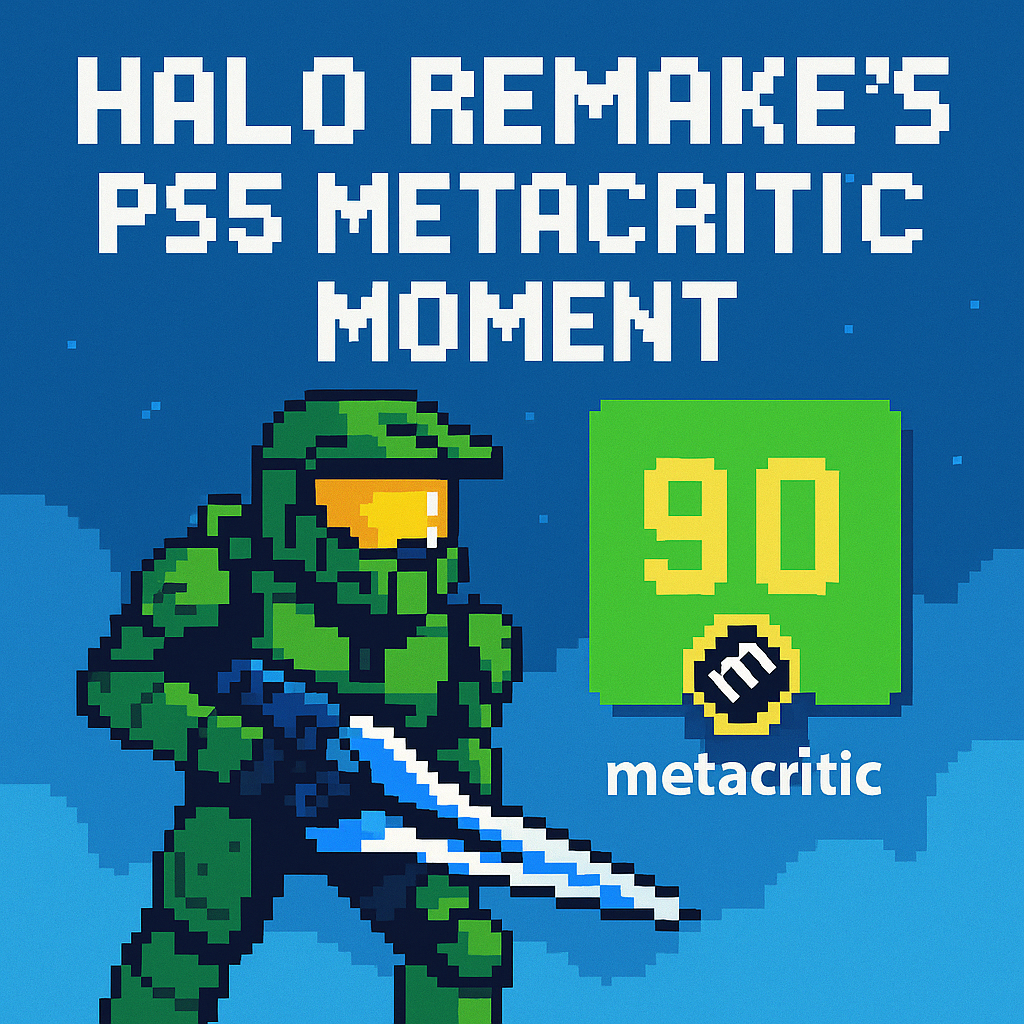
Halo Remake’s PS5 Metacritic Moment | Analysis by Brian Moineau

TL;DR

  • Halo: Campaign Evolved lands on PlayStation 5, Xbox Series X|S, and PC with Metacritic scores at 81 (PS5), 84 (Xbox), and 77 (PC) as of July 24, 2026; PS5 pulled the most published reviews in early tracking. [1][2][3][4]
  • Microsoft’s day‑and‑date PS5 launch is a multiplatform revenue test while Xbox leadership (Matt Booty, 2024–2026) narrows future exclusives to select titles and keeps many multiplayer projects cross‑platform. [4][10]
  • The bigger story isn’t the score; it’s the funnel: a UE5 remake that onboards PS5’s ~93 million‑strong base into an Xbox account, cross‑play, and cross‑progression loop without PvP baggage. [6][4][5][9]

What the source said

Forbes reports Halo: Campaign Evolved—Microsoft’s Unreal Engine 5 remake of the 2001 Halo campaign—has “generally favorable” Metacritic scores, with the PS5 version drawing the most critic attention and individual outlet scores ranging from VGC’s 10/10 to Game Informer’s 8.5 and Insider Gaming’s 7/10. The piece situates the launch inside Microsoft’s 2026 multiplatform posture and notes there’s no dated plan for the next mainline Halo. The article underscores that this is a solid release but not a substitute for a brand‑new installment. [1]

Why it matters

Two camps care most here. Microsoft’s Xbox leadership and finance teams want incremental cash flow in 2026 without further cannibalizing Series X|S hardware, so they’re testing “selective exclusivity” alongside multiplatform launches like this UE5 campaign. If the PS5 SKU drives material revenue without denting Xbox‑side unit sales, it validates a 2026–2027 portfolio split. [4][10]

Sony’s platform economics group gets a prestige FPS on PS5 in July 2026, but the trade‑off is a one‑time Microsoft account link that pipes identity and progression into Xbox Services. Commerce closes on PSN, while data gravity and friends graphs accrue to Microsoft’s ecosystem in Redmond. [5]

Original analysis

Consensus view: “Halo on PS5 is a one‑off nostalgia play with decent Metacritic; the real fight is the next, truly new Halo.” My read: this remake is product‑market research disguised as fan service, and it sets up a services funnel in 2026, not just a retro victory lap.

  • What the numbers say today. As of July 24, 2026, Metacritic shows PS5 at 81 with 43 critic reviews and Xbox Series X at 84 with 26; PC sits at 77 per Forbes’ roundup, with fewer critic reviews than console. That confirms “generally favorable” sentiment and shows Sony’s platform drawing the widest critic participation, a tell for August retail awareness on PS5. [2][3][1]

  • A back‑of‑envelope revenue test on PS5 (with shown work).
    Assumptions: PS5 cumulative sell‑in/sell‑through ≈ 93 million as of March 31, 2026; price is $49.99; console store fee ~30%. [6][7][8]
    • 2% attach: 93,000,000 × 0.02 = 1,860,000 units. Gross: 1,860,000 × $49.99 ≈ $92.98M. Net after 30% fee: $92.98M × 0.70 ≈ $65.09M.
    • 3% attach: 93,000,000 × 0.03 = 2,790,000 units. Gross: 2,790,000 × $49.99 ≈ $139.47M. Net after 30% fee: $139.47M × 0.70 ≈ $97.63M.
    Even a low‑single‑digit PS5 attach tees up $65M–$98M net, before royalties and marketing amortization. That scale explains the 2026 day‑and‑date decision despite no competitive multiplayer and a sub‑$70 MSRP. [6][7][8][16]

  • Historical analogue with a year: MLB The Show’s 2021 jump. When Sony’s MLB The Show 21 hit Xbox—day‑one on Game Pass in April 2021—the franchise shifted from tribal to normalized multi‑platform, and the sky didn’t fall for PlayStation. Xbox Wire, GamesRadar, and Ars Technica documented the shock and the upside of wider reach. Halo on PS5 rhymes with that 2021 pivot, reversing roles and implying some Xbox IP—especially campaigns—can go wide while tentpoles like Gears of War: E‑Day remain exclusive under the 2026 policy. [11][12][13][14][10]

  • Named‑stakeholder breakdown (2026 incentives):
    • Microsoft/Xbox: Validates a selective multiplatform model—campaign‑only content can scale revenue on rival hardware while feeding Xbox accounts and cross‑network graphs. It also buys runway for the next Halo multiplayer plan. [4][5][10]
    • Halo Studios: UE5 remake lands with “good” scores on PS5 (81) and Xbox (84), proving the engine transition didn’t break feel or art direction. That’s internal capital for green‑lighting what’s next. [2][3][9]
    • Sony/PlayStation: Gains a July 2026 prestige shooter in the catalog with zero first‑party cost, while tolerating Microsoft account linkage that slightly erodes PSN’s walled‑garden data moat. [5]
    • Game Pass team: Retains day‑one value on Xbox/PC while harvesting à‑la‑carte PS5 revenue, hedging against 2025–2026 subscriber volatility after the 2025 price hike headlines. [4][15]

  • The contrarian read: Skipping PvP is a feature, not a flaw, for this SKU. Without live‑ops overhead in 2026, Microsoft avoids fragmenting Halo Infinite’s PvP, de‑risks cross‑platform cert on PS5, and cleanly measures campaign‑first demand. Reviews criticizing the absence of competitive multiplayer are right on price‑to‑value, but the telemetry is sharper: who buys for story, how many finish, and how identity graphs expand across Xbox/PSN. [16][7][5]

What others are missing

The quiet power move is identity capture via a one‑time Microsoft account link on PS5 that binds cross‑play and cross‑progression for Campaign Evolved in July 2026. Sony sees the transaction on PSN, but Microsoft accrues engagement metadata and durable IDs it can reactivate across Xbox, PC, and cloud later, which matters more if Game Pass growth wobbles after the 2025 hike. This remake functions as a customer‑acquisition campaign for Microsoft’s services, not just a nostalgia SKU. [5][15][4]

What to watch next

  1. By August 31, 2026, PS5 will still have the largest Metacritic critic‑review count for Campaign Evolved (≥40), even if platform scores converge within ±3 points. [2][3][4]
  2. By October 31, 2026, Xbox will tease or announce the next Halo initiative separate from this remake—either a Halo 2 campaign UE5 treatment or a standalone multiplayer beat—using public UE5 reception as the setup. [9]
  3. By Q1 2027 (March 31), Microsoft will formalize a mixed release rubric: single‑player campaigns and some live‑service titles multiplatform, while select action franchises stay exclusive under Matt Booty’s stated policy. [10]

My take

Halo’s Metacritic split isn’t the headline; the funnel is. Microsoft just shipped a UE5 remake that makes PlayStation owners log into an Xbox identity on PS5, then exposed them to cross‑play, cross‑progression, and four‑player co‑op in 2026—no PvP strings attached. If even a 2%–3% PS5 attach hits at $49.99, Campaign Evolved pays now and seeds tomorrow’s Halo with more players already inside Microsoft’s services. I’d green‑light Halo 2’s campaign next, keep PvP separate, and stick to the “campaign‑wide, multiplayer‑selective” playbook set out in 2026. [2][3][4][5][7]

Sources

  1. The ‘Halo: Campaign Evolved’ Metacritic Review Score Is In — Forbes (https://www.forbes.com/sites/paultassi/2026/07/23/the-halo-campaign-evolved-metacritic-review-score-is-in/) — Baseline report on early Metacritic spread, historic Halo scores, and Microsoft’s multiplatform framing.

  2. Halo: Campaign Evolved — Metacritic (PS5) (https://www.metacritic.com/game/halo-campaign-evolved/critic-reviews/?platform=playstation-5) — Current PS5 Metascore (81) and critic‑count (43) as of July 24, 2026.

  3. Halo: Campaign Evolved — Metacritic (Xbox Series X) (https://www.metacritic.com/game/halo-campaign-evolved/critic-reviews/?platform=xbox-series-x) — Current Xbox Series X Metascore (84) and critic‑count (26) as of July 24, 2026.

  4. Halo: Campaign Evolved Launches July 28, Pre‑Orders Available Now — Xbox Wire (https://news.xbox.com/en-us/2026/06/07/halo-campaign-evolved-launch-preorder-xbox-games-showcase-2026/) — Day‑one platforms, cross‑play/cross‑progression callouts, and timing for the global launch.

  5. Co‑op in Halo: Campaign Evolved — Halo Support (https://support.halowaypoint.com/hc/en-us/articles/50818310869268-Co-op-in-Halo-Campaign-Evolved) — Confirms one‑time Microsoft account link on PS5/Steam, offline play after linking, and 2‑player console split‑screen.

  6. PlayStation 5 hardware sales (FY25 results) — GameDeveloper (https://www.gamedeveloper.com/business/playstation-5-hardware-sales-down-amid-price-hikes-and-memory-shortage) — Cites cumulative PS5 units at ~93 million as of March 31, 2026 for install‑base sizing.

  7. Halo: Campaign Evolved review — Windows Central (https://www.windowscentral.com/gaming/halo/halo-campaign-evolved-review) — Confirms $49.99 pricing and discusses feature scope for value comparison.

  8. Digital distribution of video games — Wikipedia (https://en.wikipedia.org/wiki/Digital_distribution_of_video_games) — Summarizes industry‑standard ~30% storefront revenue share across console storefronts.

  9. Inside the Art of Campaign Evolved — Halo Waypoint (https://www.halowaypoint.com/news/inside-the-art-of-campaign-evolved) — Details the UE5 rebuild and artistic approach, corroborating the engine switch.

  10. Xbox multiplayer and live‑service games will still be multiplatform — VGC (https://www.videogameschronicle.com/news/xbox-multiplayer-and-live-service-games-will-still-be-multiplatform-going-forward-matt-booty-says/) — Public framing of Xbox’s 2026 exclusivity policy: some games exclusive, multiplayer/live‑service staying multi‑platform.

  11. MLB The Show 21 Coming to Xbox — Xbox Wire (https://news.xbox.com/en-us/2021/02/01/mlb-the-show-21-coming-to-xbox/) — Historical analogue: Sony’s sports flagship moved to Xbox in 2021.

  12. MLB The Show 21 Day‑One on Game Pass — Xbox Wire (https://news.xbox.com/en-us/2021/04/02/mlb-the-show-21-coming-to-xbox-game-pass-day-one/) — Illustrates the “wider reach > platform purity” trade in April 2021.

  13. MLB The Show 21 Will Be Available on Game Pass at Launch — GamesRadar (https://www.gamesradar.com/mlb-the-show-21-will-be-available-on-xbox-game-pass-as-soon-as-it-comes-out/) — Third‑party coverage of the 2021 cross‑platform shock moment.

  14. After years on PlayStation, MLB The Show hits Game Pass at launch — Ars Technica (https://arstechnica.com/gaming/2021/04/after-years-on-playstation-mlb-the-show-hits-xbox-game-pass-at-launch/) — Context on industry reaction and subscription reach in 2021.

  15. Xbox Game Pass price and subscriber dynamics — GameSpot (https://www.gamespot.com/articles/xbox-game-pass-lost-millions-of-subscribers-after-massive-price-hike-in-2025/) — Frames 2024’s 34M figure and 2025–2026 volatility relevant to hedging via à‑la‑carte PS5 sales.

  16. Halo: Campaign Evolved review — PC Gamer (https://www.pcgamer.com/games/halo/halo-campaign-evolved-review/) — Independent critique confirming no competitive multiplayer and enumerating feature trade‑offs.
Marvel Rivals: A New Hero Shooter Arena | Analysis by Brian Moineau

Ignite the Battle: Why Marvel Rivals Feels Like a Fresh Superhero Playground

Marvel Rivals lands like a gust of energy: flashy powers, crunchy third-person shooting, and the kind of fan-service roster that fills voice channels with excited squeals. Marvel Rivals invites players to "Play for free now! Get ready to Ignite the Battle with Marvel Rivals!" and, honestly, it delivers more than the usual hero-shooter checklist. From its 6v6 PvP core to growing PvE ambitions, this game feels less like a single product and more like the start of a living Marvel festival.

What Marvel Rivals is — and what it wants to become

At its core, Marvel Rivals is a free-to-play, team-based PvP shooter built around iconic Marvel characters and quick, ability-driven combat. Matches emphasize combos, positioning, and dramatic supers — the kind of moments where a perfectly timed skill turns a chaotic fight into a highlight clip.

However, developers at NetEase and Marvel Games are already signaling bigger goals. Rather than staying a straightforward 6v6 shooter, they intend to expand Rivals into broader experiences: seasonal content tied to MCU-inspired themes, PvE events (including a zombies mode), and even long-term plans that stretch toward 2027. In short, Rivals aims to be a game that evolves into more than "just a shooter." (marvelrivals.com)

Quick highlights

  • Fast, movement-friendly third-person combat with superhero abilities.
  • A rotating seasonal model that adds characters, modes, and themed content.
  • Free-to-play access with a robust hero roster at launch and ongoing updates. (marvelrivals.com)

Why the free-to-play hook matters now

Free-to-play means low friction: anyone with a PC or console can jump in and try combinations of heroes without a paywall blocking access. That accessibility helped Marvel Rivals amass a big player base shortly after launch, which in turn fuels matchmaking, stream visibility, and the ecosystem required for a live service to thrive. Players get instant access to heroes and can focus on learning kits and team synergies rather than grinding to unlock characters. This is a design choice that suits a hero shooter’s social momentum.

Moreover, keeping heroes broadly accessible encourages experimentation — and experimentation makes for community-driven meta shifts and highlight-worthy plays, both crucial for a game that lives or dies by its moments.

Marvel Rivals: evolving beyond PvP

Transitioning from purely competitive 6v6 matches to hybrid content is smart. NetEase has started introducing PvE content — most notably a Marvel Zombies mode — which mixes PvP-style heroes with cooperative encounters and boss battles. These modes broaden appeal: players who prefer co-op or story-driven events get something to sink their teeth into, while PvP veterans find new ways to test builds against AI and bosses. PC Gamer’s coverage of the Zombies announcement highlights how the game can leverage Marvel’s vast alternate-universe stories to create playful, sometimes bizarre experiences (yes, there’s a shark guy). (pcgamer.com)

Looking ahead, the creative director has spoken about plans that run through 2027: more modes, tie-ins inspired by the Infinity Saga, and an aesthetic evolution that he describes — cryptically — as moving toward a "moving anime" experience. Whether that becomes hyper-stylized cinematics, larger narrative events, or an overhaul of presentation, the ambition signals long-term thinking. If developers execute carefully, Rivals can avoid the "flash in the pan" trap many live-service shooters face. (gamesradar.com)

The gameplay loop that keeps players coming back

The action loop in Marvel Rivals is straightforward and addictive: pick a hero, learn a kit, master ability combos, and sync with teammates. Short matches make the game friendly for daily sessions, while frequent seasonal updates add new heroes and tweaks to spice up the meta.

Rewards and events support this loop. Timed events, cosmetic drops, and limited-time modes create immediate reasons to log in. Because Marvel Rivals shipped with all heroes unlocked at launch and maintains a steady cadence of content, players feel rewarded for trying new characters instead of being locked behind a progression wall. (marvelrivals.com)

The balancing act: challenge and community

Any hero shooter must balance complexity and accessibility. Rivals walks that line by giving characters distinct personalities and unique systems without forcing a steep learning curve. Still, balance patches and quality-of-life updates will be crucial as the roster grows — something the team seems aware of, given their regular patch notes and roadmap updates.

Community engagement also matters. When a game ties itself to a cultural behemoth like Marvel, expectations soar. Listening to players, addressing bugs, and offering transparent roadmaps will decide whether Rivals becomes a beloved destination or a well-intentioned experiment that fragments under competing expectations. (marvelrivals.com)

Key takeaways

  • Marvel Rivals blends quick 6v6 PvP with superhero spectacle and broad accessibility.
  • Developers are expanding beyond PvP toward PvE, seasonal tie-ins, and longer-term content through 2027.
  • Free-to-play and unlock-every-hero approaches boost experimentation and community growth.
  • Success depends on balance updates, content cadence, and responsive community management.

My take

Marvel Rivals delivers the core joys of a hero shooter: heroic powers, satisfying ability interactions, and those highlight-reel plays you want to show off. Its biggest strength is also its biggest risk — the ambition to become more than a shooter. If NetEase and Marvel Games keep a clear roadmap, maintain balance, and keep the community in the loop, Rivals can grow into a diverse, long-running hub of Marvel content.

On the other hand, live-service fatigue is real. The difference will be how Rivals uses Marvel lore: as surface aesthetics, or as a deep well for event design and modes that feel fresh rather than recycled. So far, moves like the Zombies PvE mode and a steady seasonal plan suggest they understand this distinction. (pcgamer.com)

Sources

Ignite the battle and see which hero combos spark a new favorite — Marvel Rivals wants you in, and it’s shaping up to be a surprisingly ambitious place to play.


Related update: We recently published an article that expands on this topic: read the latest post.

When The Last of Us Multiplayer Died | Analysis by Brian Moineau

When a Beloved Franchise Almost Went Live: The Last of Us Multiplayer's Rise and Fall

The Last of Us Multiplayer quietly became one of gaming’s most bittersweet “what if” stories. Fans remember Factions — the tense, soulful multiplayer mode from the 2013 original — and many hoped Naughty Dog would return to that magic. The Last of Us Multiplayer, a standalone live-service project often called Factions or The Last of Us Online, grew into an ambitious effort over several years, only to be dramatically scaled back and reportedly cancelled after being “about 80%” complete. (darkhorizons.com)

Why this mattered

For context, Naughty Dog built its reputation on cinematic, character-driven single-player games. Shifting a studio like that into the world of AAA live service multiplayer is not just a technical challenge — it’s a cultural and business pivot. The Last of Us multiplayer started as an extension of The Last of Us Part II’s ideas, evolved into a full project, and attracted big internal investment and high expectations. Yet, in a development landscape increasingly dominated by persistent online games with huge upkeep costs, the studio faced a trade-off: finish and support a sprawling live service, or refocus on the narrative experiences that define Naughty Dog. (dexerto.com)

  • It reportedly spent years in development — some sources say around seven years — and reached a late stage before being shut down or heavily reassessed. (gamesradar.com)
  • Internal voices and external partners were involved: there were reports of consultations and reviews, including input from other studios. (gamesradar.com)

What “80% done” actually means

Saying a game was “80% done” can be emotionally charged and technically misleading. Developers and studios measure progress differently. Often the visible systems, art, and core loops make up a large portion of early progress, while the remaining 20% can include the hardest parts: balancing, server infrastructure, anti-cheat systems, live ops tooling, monetization frameworks, and long-term support planning.

In other words, 80% might mean the prototype and many fundamentals existed — but not that the game was ready to ship or sustain a live community at scale. Reported quotes from former leads emphasize how close the project felt internally, yet also how daunting the last stretch was. (darkhorizons.com)

The industry tug-of-war

Transitioning from single-player excellence to live service success is difficult for any studio. There are several pressures that informed Naughty Dog’s decision-making:

  • Live services require continuous content updates, community management, and significant post-launch support teams.
  • AAA live games need long-term monetization strategies and technical backbones for servers, matchmaking, and anti-cheat.
  • Prioritizing one major live project can siphon talent and resources away from cinematic single-player titles, which often define a studio’s brand and revenue potential.

Because of these factors, Naughty Dog reportedly chose to reallocate resources toward other single-player projects, like the studio’s secretive Intergalactic: The Heretic Prophet, rather than commit to the long-term demands of an online Last of Us. That choice underscores a broader industry reality: not every beloved IP benefits from becoming a live service. (gamesradar.com)

What fans lost — and what they still have

Fans lost more than a potential new game; they lost a vision of how The Last of Us could translate into persistent, emergent multiplayer storytelling. Many players long for a refined, narrative-aware PvP experience that retains the franchise’s emotional weight.

However, there are silver linings:

  • The original Factions remains a touchstone and a design reference for team-based tension. Re-releases and memories keep its spirit alive.
  • Knowledge and prototypes from the canceled or paused project may inform future Naughty Dog work or inspire smaller-scale multiplayer experiments from former team members. (gamerant.com)

A closer look at the timeline

To clear confusion, here’s a concise timeline of the publicly reported events:

  • Development reportedly began around 2020, initially tied to The Last of Us Part II’s ecosystem. (forbes.com)
  • Over subsequent years, the project expanded into a standalone live-service title with a significant team.
  • Around late 2023 and into 2024, reports suggested the game was being reassessed or scaled back amid internal reviews and company priorities. (gamedeveloper.com)
  • Recently, statements from developers and coverage cited the project being “about 80%” complete at its cancellation or pause, triggering fresh debate about what “complete” means in practice. (darkhorizons.com)

Final thoughts

My take: the story of The Last of Us Multiplayer is a useful reminder that big ideas and beloved IPs don’t automatically equal sustainable live-service games. Quality, long-term support, and alignment with a studio’s identity matter just as much as ambition. While it’s heartbreaking to see a project with apparent momentum shelved, the choice to prioritize what a studio does best — especially when that’s telling powerful single-player stories — can be the braver, more honest path.

That said, the appetite for a well-made, emotionally resonant multiplayer Last of Us remains. If the right team, scope, and business model emerge — perhaps from former Naughty Dog talent or a smaller, more focused studio — fans may still get something that honors Factions without promising the impossible.

What to watch next

  • Anecdotes from former team members and interviews with studio leads will be telling about how much of the canceled work survives internally.
  • Any projects launched by ex-Naughty Dog devs could be fertile ground for The Last of Us-style multiplayer design.
  • Industry shifts in how publishers handle live services (shorter live ops, hybrid monetization, or tighter scopes) may open the door for revisiting similar projects with less risk.

Sources


Related update: We recently published an article that expands on this topic: read the latest post.


Related update: We recently published an article that expands on this topic: read the latest post.