Trump Threatens Lawsuit Against Fed Chair | Analysis by Brian Moineau

When a President Threatens to Sue the Fed Chair: What "gross incompetence" Actually Means

A microphone, a press conference and a blistering critique — this time aimed squarely at Federal Reserve Chair Jerome Powell. At a December 29, 2025 appearance at Mar-a-Lago, former President Donald Trump accused Powell of “gross incompetence” over the costly renovation of the Fed’s headquarters and said he might sue. It’s a dramatic headline that taps into deeper questions about the independence of the central bank, the limits of presidential power, and what — if anything — can legally stick when a president levels personal and political allegations at the Fed’s leader.

Quick takeaways

  • -The threat to sue Powell centers on the Federal Reserve’s renovation project and allegations of mismanagement and excessive cost.
  • -It is unclear what specific legal claims could be brought; suing a sitting Fed chair for policy decisions or project management raises thorny jurisdictional, standing and sovereign immunity issues.
  • -Beyond legalities, the move is a political signal: it ratchets up pressure on an independent institution and could affect market and public perceptions of Fed independence.
  • -Any actual attempt to remove or litigate against a Fed chair would be unprecedented and face steep constitutional and statutory barriers.

Why this matters now

The Fed is not a typical executive agency. It’s designed to be insulated from short-term political pressure so its decisions on interest rates and financial stability remain focused on long-term economic health. Trump’s remarks follow months of public frustration about the pace of rate cuts and vocal complaints about project costs — amplified by social media and press events. Threatening legal action against the Fed’s chair therefore isn’t just personal invective; it’s a direct challenge to the norms that protect central-bank decision-making.

The immediate facts and competing figures

  • Trump criticized the Fed renovation as wildly over budget, at times citing figures as high as $4 billion. Fed officials and reporting indicate more modest — though still substantial — estimates (around $2.5 billion for the recent projects). (washingtonpost.com)
  • The comment came alongside familiar complaints about “too late” rate decisions and public demands for aggressive rate cuts, a recurring theme in Trump’s critiques of Powell. (cnbc.com)

Could a lawsuit actually work?

Short answer: very unlikely. Here’s why, in plain terms.

  • -Standing: To sue in federal court you must show concrete injury. It’s unclear how the president (or the federal government) would claim specific, legally cognizable harm from Powell’s renovation decisions that couldn’t be addressed inside the government.
  • -Sovereign immunity: The Federal Reserve Board and its officials are government actors. Claims for discretionary policy choices or allegedly poor management often run into immunity doctrines that shield officials from suit for policy-driven actions.
  • -Separation of powers and institutional design: The Fed has statutory independence for monetary policy. Courts are cautious about stepping into disputes that would effectively let one branch micromanage the central bank’s internal choices.
  • -Precedent: There is no modern precedent for a president suing the sitting chair of the Federal Reserve for incompetence. Removal of a Fed chair is tightly constrained and not a matter ordinarily resolved by litigation. (cnbc.com)

Put another way: calling someone incompetent in a speech is one thing; proving a legally cognizable claim that survives immunity and jurisdictional hurdles is another.

Politics, optics and markets

  • -Political signaling: Threats to sue or fire Powell operate as political pressure — a way to rally supporters and put opponents on the defensive. Whether they change Fed policy is a different question.
  • -Market reaction: Markets hate uncertainty. Attacks on Fed independence can increase volatility in Treasury yields, stocks and currency markets if investors fear politicized monetary policy. So far, markets have largely treated rhetorical attacks as noise, but sustained pressure could shift expectations about future policy or appointments. (cnbc.com)
  • -Institutional norms: Repeated public assaults on an independent regulator can erode norms even if they fail in court. That slow erosion matters for long-term credibility and the Fed’s ability to anchor inflation expectations.

What to watch next

  • -Any formal legal filing: If a lawsuit is actually filed, watch the complaint for the precise legal theory (e.g., breach of statute, ultra vires acts, fraud, or false testimony). That will reveal whether the attempt targets conduct (documents, contract awards) or policy choices.
  • -Congressional responses: Congress can compel documents, hold hearings, or consider statutory changes — all of which can be more consequential than a headline threat.
  • -Succession announcements: Trump has said he may announce a replacement for Powell; an actual nomination would shift the focus from litigation to confirmation politics. (reuters.com)

My take

Rhetoric aside, this episode looks less like a plausible legal strategy and more like a political lever. Attacking the Fed chair’s competence grabs headlines and mobilizes a base frustrated with borrowing costs and housing prices. But the legal path for a president to vindicate such complaints is narrow and uncertain. If the goal is policy change, nomination power and congressional oversight are the paths with real force — not lawsuits that are likely to be dismissed on procedural grounds.

That doesn’t mean the allegation is harmless. Repeated public attacks on the Fed chip away at trusted guardrails meant to keep monetary policy steady through political storms. Even unsuccessful threats can raise market anxiety and make the Fed’s job harder. For investors, policymakers and citizens, the more important question is whether political leaders will respect the borders that keep economic policy stable — or keep trying to redraw them for short-term advantage.

Sources


Related update: We recently published an article that expands on this topic: read the latest post.

Related update: We recently published an article that expands on this topic: read the latest post.

Related update: We recently published an article that expands on this topic: read the latest post.

Related update: We recently published an article that expands on this topic: read the latest post.

Fed’s Small Cut, Big Year of Uncertainty | Analysis by Brian Moineau

A small cut, big questions: why the Fed’s December move matters more than the math

The Federal Reserve is set to act this week — widely expected to shave 25 basis points off its policy rate at the December 9–10 meeting — but the decision feels less like a crisp policy pivot and more like a weather forecast for a very foggy year ahead. Markets are pricing the cut as likely, yet Fed officials remain sharply divided about what comes next. That tension is the real story: a “hawkish cut” that eases today while signaling caution about tomorrow. (finance.yahoo.com)

Why this cut is different

  • It’s small and tactical: officials are likely to cut by 0.25 percentage points — a modest easing intended to support a slowing labor market rather than to ignite growth. (finance.yahoo.com)
  • It’s politically and institutionally noisy: unusually high numbers of dissents and public disagreement among Fed officials have surfaced, weakening the usual appearance of consensus. (wsj.com)
  • It’s defensive, not directional: the messaging is expected to emphasize that further cuts are not guaranteed and will depend on incoming data, especially payrolls and inflation signals. That is the essence of a “hawkish cut.” (finance.yahoo.com)

What led the Fed to this crossroads

Over the past year the Fed has moved from aggressive tightening (to fight high inflation) to cautious easing as jobs growth cooled and signs of economic slowing mounted. With inflation still above target in some measures and the labor market showing cracks, policymakers face two conflicting risks: easing too much could reignite inflation; easing too little could let a slowdown deepen into a recession. That trade-off explains why the Fed looks divided going into the meeting. (wbtv.com)

  • Labor market softness has become a central worry — slowing hiring and rising unemployment risk a broader slowdown. (wbtv.com)
  • Inflation remains a lingering concern, meaning many officials are reluctant to commit to a path of multiple cuts. (wbtv.com)

How markets will read the move

Expect three distinct market reactions depending on the Fed's communication:

  1. “Hawkish cut” narrative — Fed cuts now but signals a pause: short-term yields fall, risk assets rally modestly, but the rally is contained because the door for further easing is left mostly shut. This is the scenario many strategists expect. (finance.yahoo.com)
  2. Clear easing path signaled — Fed telegraphs additional cuts: bond yields and the dollar drop further, and equities get a stronger lift. Unlikely given current internal divisions but possible if data deteriorates. (reuters.com)
  3. Mixed message or large dissent — uncertainty spikes, volatility rises, and markets trade on headline interpretation rather than on concrete guidance. The Fed’s historic preference for consensus makes any multi-dissent outcome notable. (wsj.com)

CME Fed funds futures currently put a high probability on a 25 bps cut this week, but the outlook for January and beyond is much murkier — traders assign materially lower odds to a sustained easing cycle. That mismatch between near-term pricing and medium-term uncertainty is what creates the “year of unknowns.” (finance.yahoo.com)

What to watch in the Fed’s statement and Powell’s press conference

  • Language around “neutral” or “restrictive” policy: small wording shifts will be parsed for signs of more cuts. (wsj.com)
  • References to the labor market and downside risks to employment: clear talk of deterioration would open the door to additional easing. (wbtv.com)
  • Any explicit guidance on the balance sheet or Treasury bill purchases: the Fed might use Reserve Management Purchases (RMP) or other tools to manage liquidity — an outcome that could surprise markets beyond the headline rate cut. (reuters.com)

What this means for everyday borrowers, savers, and investors

  • Borrowers: A 25 bps cut can ease some short-term borrowing costs (credit cards, some variable-rate loans), but mortgage rates and longer-term borrowing are more sensitive to broader yield moves and inflation expectations, so homeowners may see only modest relief. (finance.yahoo.com)
  • Savers: Any improvement in savings rates will likely be gradual; banks don’t always pass every Fed cut through to deposit rates. (finance.yahoo.com)
  • Investors: Volatility is the likely constant. Strategies that focus on quality, cash flow, and duration management will generally fare better than high-beta short-term plays in an uncertain policy regime. (finance.yahoo.com)

Quick wins for readers who want to navigate the uncertainty

  • Keep an eye on jobs, inflation, and Fed communications — those three datapoints will steer the odds for any further cuts. (wbtv.com)
  • Reassess duration exposure in fixed-income portfolios: small cuts can lower short-term yields quickly but have a less predictable effect on long-term rates. (reuters.com)
  • For households, prioritize emergency savings and fixed-rate borrowing if you expect rates to drift unpredictably. (finance.yahoo.com)

Final thoughts

A rate cut this week would be a pragmatic, defensive step: the Fed is trying to support a labor market that looks wobbly without declaring a new era of accommodative policy. But the split among policymakers matters. When a central bank is divided, its future path is harder to forecast — and that uncertainty can ripple through markets and everyday decisions more than the quarter-point itself. In short: the math of a 25 bps cut is simple; the message the Fed sends afterward is what will determine whether 2026 becomes steadier or more unsettled. (finance.yahoo.com)

What I’m watching next

  • The Fed’s statement and Chair Powell’s December 10 press conference for clues about the January meeting and balance-sheet tools. (finance.yahoo.com)
  • December labor-market releases and inflation prints for signs that could prompt either more easing or a pause. (wbtv.com)

Notes for readers

  • The Fed meeting dates are December 9–10, 2025; markets and commentators are highly focused on both the rate decision and the tone of the Fed’s forward guidance. (finance.yahoo.com)

Sources


Related update: We recently published an article that expands on this topic: read the latest post.


Related update: We recently published an article that expands on this topic: read the latest post.

The Fed’s New Focus: Rethinking Long-Term | Analysis by Brian Moineau

The Fed’s Evolving Mandate: A Look Beyond the Dual Focus

In the ever-shifting landscape of U.S. monetary policy, it seems the Federal Reserve is navigating uncharted waters. Recent discussions led by Jerome Powell and Stephen Miran have brought to light the notion that the Fed may not just be focused on its traditional dual mandate of maximum employment and stable prices. Instead, they hinted at a third goal: managing long-term interest rates. This conversation opens up a wealth of questions about the future of our economy and the direction of monetary policy.

The Traditional Mandate: A Quick Overview

For decades, the Federal Reserve has operated under a dual mandate. This means that its primary objectives are to promote maximum employment and ensure price stability. However, as inflation has surged and the economic landscape has evolved, some experts argue that the Fed needs to broaden its focus. The recent discussions underscore the idea that long-term interest rates deserve more attention in shaping monetary policy.

Context: The Changing Economic Landscape

In the wake of the pandemic, the economy has experienced unprecedented volatility. Supply chain disruptions, workforce shortages, and rising energy prices have all contributed to inflation rates that many experts have not seen in decades. As central bankers like Powell and Miran grapple with these challenges, it’s clear that a narrow focus on employment and inflation may no longer suffice.

Moreover, the long-term interest rate rule—essentially a guideline that outlines how interest rates should be adjusted based on economic conditions—has seemingly slipped from the radar. This oversight could have significant implications for how the Fed approaches its policies moving forward.

Key Takeaways

Broader Focus Needed: Experts are advocating for a more comprehensive approach to monetary policy that includes long-term interest rates.

Inflation Concerns: The ongoing inflation crisis is pushing the Fed to reconsider its dual mandate and explore additional goals.

Long-Term Interest Rates: There’s a growing recognition that managing long-term interest rates is crucial for sustainable economic health.

Policy Implications: The Fed’s evolving focus could lead to changes in how monetary policy is implemented, impacting everything from loans to savings rates.

Economic Stability: A well-rounded approach could help ensure greater economic stability in the face of future uncertainties.

Concluding Reflection

As the Federal Reserve navigates these complex economic waters, the conversation around its mandate is more crucial than ever. Acknowledging the importance of long-term interest rates could be a game-changer for monetary policy, potentially leading to more stable economic conditions. While change can be intimidating, it’s often necessary for growth. The Fed’s ability to adapt to new challenges may ultimately determine the strength and resilience of the U.S. economy.

Sources

– “The Fed doesn’t have a ‘dual’ mandate—Jerome Powell and Stephen Miran are talking about the third.” Fortune. [Fortune Article](https://fortune.com/2023/10/05/fed-dual-mandate-jerome-powell-stephen-miran-third-mandate-interest-rates/)

By shifting our focus from a dual mandate to a broader understanding of economic dynamics, we can better prepare for the future. As we reflect on these discussions, it’s clear that the path to economic stability may require a more nuanced approach than we’ve previously considered.


Related update: We recently published an article that expands on this topic: read the latest post.


Related update: We recently published an article that expands on this topic: read the latest post.

GOP senators start turning against Powell – Axios | Analysis by Brian Moineau

GOP senators start turning against Powell - Axios | Analysis by Brian Moineau

Title: The Political Tides Turning: GOP Senators vs. Powell

In the ever-evolving landscape of American politics, shifting alliances and unexpected confrontations are as commonplace as the cherry blossoms in Washington, D.C. The recent headline from Axios, "GOP senators start turning against Powell," underscores this dynamic, with Ohio Republican Bernie Moreno leading the charge, urging Jerome Powell to "resign immediately."

Jerome Powell, the Chair of the Federal Reserve, has been a pivotal figure in navigating the choppy economic waters over the past few years. Appointed by former President Donald Trump in 2018, Powell has steered the U.S. economy through the turbulence of a global pandemic, supply chain disruptions, and fluctuating employment rates. His policies have been both lauded and criticized, often finding him in the crosshairs of political debate.

The GOP's recent pivot against Powell is intriguing, especially considering the historical context. Powell, a Republican himself, was initially met with support from his party. However, as economic challenges continue to mount, some GOP members are seeking new leadership at the helm of the Federal Reserve. Moreno's bold call for resignation underscores a growing sentiment of dissatisfaction, a sentiment that may be as much about political positioning as it is about economic policy.

This development is reminiscent of the broader political realignments seen globally. Take, for instance, the UK's Conservative Party, which has seen its share of leadership challenges and intra-party disagreements, most notably with the resignation of multiple Prime Ministers in quick succession. Such shifts highlight the universal nature of political dynamics, where leadership is constantly under scrutiny, and change is often just an election—or a press statement—away.

It's essential to view this political maneuver not just through the lens of criticism but also as a reflection of the broader economic anxiety gripping the nation. Inflation, interest rates, and market stability are the buzzwords of the day, and the pressure on Powell is as much about these issues as it is about party politics. Powell's tenure has seen interest rate hikes intended to curb inflation, a move that, while economically sound, hasn't sat well with everyone. The delicate balance between curbing inflation and fostering growth is a tightrope walk that has left many, including Moreno, dissatisfied.

Beyond the specifics of Powell's policies, this situation offers a moment to reflect on leadership in times of crisis. Whether it's a central bank navigating economic storms or a football coach leading a team through a losing streak, leadership is about making tough decisions that won't always be popular. The recent ousting of Brandon Staley from the Los Angeles Chargers, despite his strategic prowess, shows how leaders often face the ax not due to lack of skill but because of circumstances beyond their control.

As we watch the developments surrounding Jerome Powell, it's a reminder of the constant ebb and flow of political and economic leadership. In a world where change is the only constant, today’s critic can become tomorrow’s ally. For Powell, the journey ahead will require not just economic acumen but also a deft political touch to navigate the corridors of power.

In closing, whether you're a fan of Powell's policies or a critic, there's no denying that his role is crucial in shaping the economic future of the United States. As the GOP reconsiders its stance, and as Powell continues his work, it's a potent reminder of the interconnectedness of politics and economics—a dance as old as time, with new steps added every day.

Final Thought: In the grand theater of politics, the spotlight shifts, but the play goes on. Whether Powell stays or goes, the conversations he's sparked about economic policy and leadership will continue to resonate, shaping the discourse for years to come.

Read more about AI in Business

Read more about Latest Sports Trends

Read more about Technology Innovations

How reliable is U.S. economic data? It’s a growing risk for investors awaiting the next Fed rate cut. – MarketWatch | Analysis by Brian Moineau

How reliable is U.S. economic data? It’s a growing risk for investors awaiting the next Fed rate cut. - MarketWatch | Analysis by Brian Moineau

Title: The Unpredictable Dance of Economic Data: A Lighthearted Look at a Serious Matter

In the fast-paced world of finance, where every decimal point can sway market tides, the reliability of U.S. economic data has become a hot topic. Investors, eyes glued to their screens, are playing a prolonged waiting game for the Federal Reserve's next rate cut. But how reliable is this data that influences not only the Fed's decision-making but also the fate of markets worldwide?

The Data Dilemma

Economic data, particularly regarding inflation and the labor market, serves as the backbone of financial decision-making. However, like trying to predict the weather based on a single cloud, relying solely on these figures can be risky. Recent fluctuations in reported data have sparked debates about their accuracy, leaving investors scratching their heads.

The potential for error is not new. Consider the 2008 financial crisis, where flawed mortgage data played a significant role in the turmoil. Fast forward to today, and the stakes are just as high. With inflation rising like dough in a warm kitchen, the Fed is under pressure to make decisions that could cool the economy without freezing it.

A Global Perspective

This uncertainty isn't confined to U.S. borders. Across the pond, the European Central Bank (ECB) faces similar challenges. The eurozone's inflation rates and labor statistics are equally pivotal, painting a picture of an interconnected global economy where one misstep can send ripples worldwide.

Take the recent situation in China, where economic data is often scrutinized for its opacity. In September 2023, the slowdown in China's manufacturing sector raised eyebrows, prompting concerns about its ripple effects on global supply chains. As markets are increasingly intertwined, the reliability of economic data becomes paramount.

Connecting the Dots

Beyond the numbers, there's a human element to consider. Fed Chair Jerome Powell, much like his predecessors, is tasked with interpreting these data points like a seasoned conductor leading an orchestra. Each decision is a carefully crafted symphony, with the potential to either harmonize or disrupt the financial landscape. Yet, Powell's role is not enviable; he must navigate the delicate balance between fostering economic growth and maintaining stability.

In a world where technology is advancing at breakneck speed, one might wonder why data discrepancies persist. Part of the answer lies in the sheer complexity of economic systems. It's akin to trying to predict the outcome of a chess game where the board is constantly shifting, and new pieces are added at will.

A Final Thought

As we await the Fed's next move, it's important to remember that economic data, while crucial, is just one piece of a much larger puzzle. Investors would do well to maintain a sense of humor amidst the chaos—after all, the market's unpredictability is part of what makes it so fascinating. In the words of famed economist John Maynard Keynes, "The market can stay irrational longer than you can stay solvent."

Ultimately, while we may question the reliability of U.S. economic data, it's essential to approach the situation with a balanced perspective. The dance of data is ongoing, and in this global ballroom, one thing is certain: the music will play on.

Read more about AI in Business

Read more about Latest Sports Trends

Read more about Technology Innovations

Opinion: Trump has made it (almost) impossible for Powell to cut interest rates – MarketWatch | Analysis by Brian Moineau

Opinion: Trump has made it (almost) impossible for Powell to cut interest rates - MarketWatch | Analysis by Brian Moineau

Title: The Unlikely Dance of Politics and Economics: Trump, Powell, and the Interest Rate Riddle

In the world of economics, the dance between politics and monetary policy often resembles a chaotic tango where partners step on each other's toes more frequently than they glide gracefully across the floor. One of the most recent and riveting performances in this ongoing saga is the complex dynamic between former President Donald Trump and Federal Reserve Chairman Jerome Powell. The MarketWatch article, "Opinion: Trump has made it (almost) impossible for Powell to cut interest rates," highlights this intricate relationship and its implications for the global economy.

Trump, a businessman-turned-politician known for his charismatic yet brash style, has always been a figure of controversy. His presidency was marked by a series of unprecedented moves, not the least of which was his frequent public criticism of the Federal Reserve and its chairman, Jerome Powell. Traditionally, the Fed operates independently of political pressures to ensure unbiased economic stewardship. However, Trump's vocal discontent with interest rate policies during his tenure has made it challenging for Powell to maneuver effectively, particularly in terms of cutting rates.

The heart of the matter lies in the Fed's independence, a cornerstone of its credibility with investors. Historically, bond investors have relied on the Fed's ability to make decisions free from political influence, akin to trusting an experienced captain to steer a ship through turbulent waters without interference from the passengers. Yet, as the MarketWatch article suggests, Trump's approach has shaken this trust, leading to concerns over future bond market stability. After all, few are eager to invest in a system where decisions might be swayed by political whims, much like few would volunteer to set fire to their money.

This situation is not just an isolated economic issue; it reflects broader global trends where political figures increasingly influence institutions traditionally designed to be independent. Take, for instance, the global rise of populist leaders who challenge established norms and institutions, creating ripple effects in financial markets worldwide. Whether it's Brexit's impact on the UK economy or political shifts in countries like Brazil and India, the interplay between political decision-making and economic policy is a recurring theme.

While Powell has maintained a steady hand despite the pressures, the broader implications of this Trump-induced challenge are worth considering. An independent central bank is not just a luxury; it's a necessity for maintaining economic stability and investor confidence. Without it, the economy risks becoming a vessel tossed about by the ever-changing winds of political fortune.

In reflecting on this dynamic, one cannot help but wonder about the future of economic policy-making in an increasingly politicized world. Trump may no longer reside in the White House, but the precedent set during his administration could influence how future leaders interact with economic institutions.

As we ponder these developments, it's clear that the relationship between politics and economics will continue to be a dance of complexity and unpredictability. In the end, the challenge for future policymakers, much like Powell, will be to navigate this dance with grace and determination, ensuring that economic decisions remain rooted in sound principles rather than political expediency.

Final Thought: In a world where political and economic landscapes are ever-evolving, maintaining the independence of institutions like the Federal Reserve is more crucial than ever. As citizens and investors, understanding this balance helps us appreciate the intricate dance between politics and economics, reminding us that while leaders may come and go, the principles of sound governance should remain steadfast.

Read more about AI in Business

Read more about Latest Sports Trends

Read more about Technology Innovations

US stocks drop after Trump says he won’t rule out a recession – CNN | Analysis by Brian Moineau

US stocks drop after Trump says he won’t rule out a recession - CNN | Analysis by Brian Moineau

**Navigating the Economic Seas: When Stocks Dip and Leaders Speak**

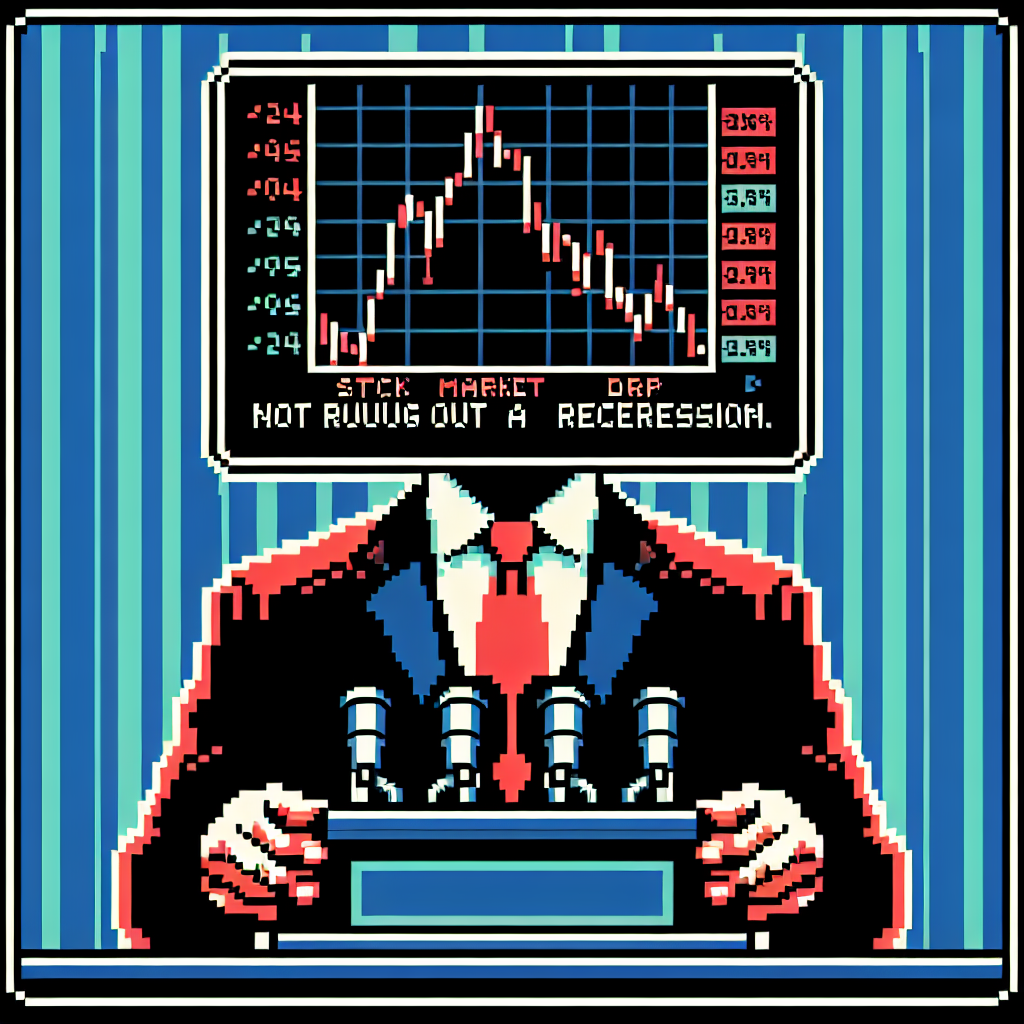
Ah, the stock market—a wondrous ocean of opportunity, tumult, and, occasionally, a bit of seasickness. On a recent Monday, investors awoke to a sharp decline in US stocks. The culprit? A Sunday interview with former President Donald Trump, who suggested the US might face “a period of transition” and didn’t rule out the possibility of a recession. When a former leader of the free world makes such statements, it’s like a lighthouse signaling rough seas ahead, and investors understandably adjust their sails.

Now, before we all start stockpiling canned goods and gold bars, let's take a broader look at what's going on. Economic transitions and market fluctuations are part and parcel of the financial landscape—like the ebb and flow of tides. Trump's comments, while impactful, are just one piece of a larger puzzle.

Firstly, let's address the elephant in the room: the "R" word—recession. It's not exactly a term that inspires confidence, but it's also not the apocalypse. Recessions are natural parts of economic cycles. Historically, they have been followed by periods of growth and recovery. For instance, the recession that followed the 2008 financial crisis led to a lengthy bull market that lasted over a decade.

Trump's remarks come at a time when the global economy is already dealing with several stressors. The ongoing ramifications of the COVID-19 pandemic, supply chain disruptions, and geopolitical tensions, like those between Russia and Ukraine, have all been contributing factors to economic uncertainty. These elements are reminding us that the world is an interconnected web, where a tug on one thread can ripple across the globe.

Additionally, let's look at the Federal Reserve's role in this equation. The Fed, under the leadership of Jerome Powell, has been navigating these choppy waters with monetary policy adjustments, such as interest rate hikes aimed at curbing inflation. While these moves are necessary, they are also part of why investors feel a bit queasy. Higher interest rates can mean higher borrowing costs, which can slow down economic growth—hence the recession fears.

But let's not forget the resilience of markets and economies. Remember when Brexit was supposed to herald the end of the world? Or when the US-China trade war seemed an insurmountable hurdle? Markets have a way of adapting, recalibrating, and ultimately, growing.

As for Trump, love him or loathe him, his words carry weight. His presidency was marked by significant economic events, including tax reforms and trade negotiations. While no longer in office, his commentary still resonates and stirs the financial seas.

So, what’s a savvy investor to do in times like these? Perhaps the best course of action is to stay informed but not be swayed by every headline. Diversification remains a timeless strategy, and keeping a long-term perspective can help weather the storms. As Warren Buffett wisely advises, "Be fearful when others are greedy, and greedy when others are fearful."

In closing, while the stock market may have experienced a dip, it’s important to keep our eyes on the horizon. Economic cycles come and go, but the human spirit of innovation and resilience remains steadfast. Whether it’s through green energy advances, technological breakthroughs, or global cooperation, the world has a way of righting itself, even when the seas are rough.

So, fellow sailors of the market, let’s adjust our sails, keep a steady hand on the tiller, and ride out the waves with optimism. After all, calm seas never made skilled sailors.

Read more about AI in Business

Read more about Latest Sports Trends

Read more about Technology Innovations