Thompson’s 4.26 Dash: Speed vs. Substance | Analysis by Brian Moineau

Speed steals the spotlight: Brenen Thompson’s 4.26 40-yard dash and what it really means

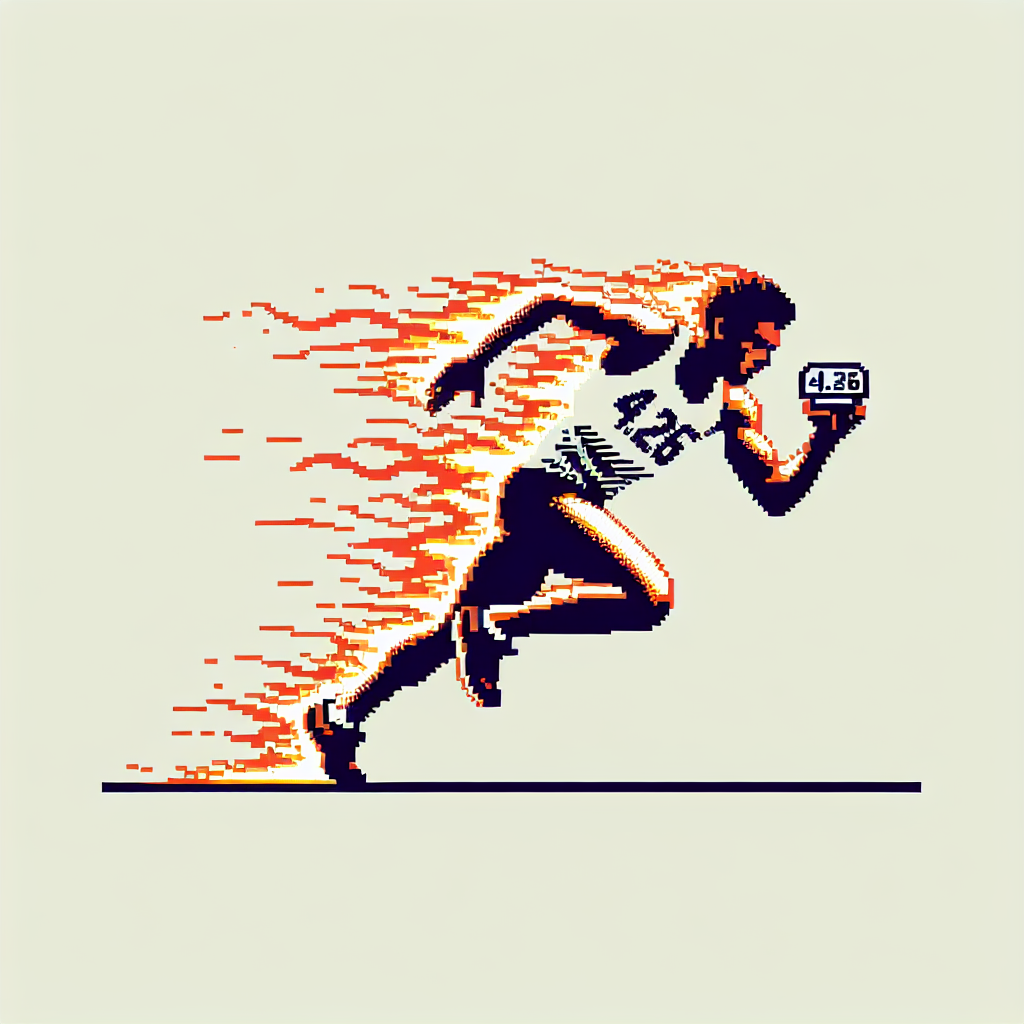
You don’t have to be a stats nerd to feel the hair-rise moment when a player explodes out of the blocks at the NFL Combine. Brenen Thompson did exactly that on February 28, 2026 — a blistering 4.26-second 40-yard dash that instantly became the headline of the day. It’s the kind of number that lives forever in highlight reels and draft-room spreadsheets alike. (nbcsports.com)

Why one sprint can sting — and why it often doesn’t

  • For receivers, straight-line speed matters more than for most positions. Deep routes, separation on fly patterns, and the ability to turn a short catch into a long one are all magnified by elite speed. Thompson’s run put him in rarefied air among combine performers. (espn.com)
  • That said, the 40-yard dash has limits. Most football plays aren’t 40 yards of full-speed, isolated running down a lane. Change-of-direction, route nuance, hands, body control, and football IQ are equal — if not greater — determinants of NFL success. The history of fast-but-not-elite careers (and slower players who became stars) reminds scouts to balance metrics with tape. (nbcsports.com)

A quick snapshot of the run and its context

  • Where and when: The performance came at the 2026 NFL Scouting Combine in Indianapolis on February 28, 2026. (espn.com)
  • The number: 4.26 seconds — the fastest at the 2026 Combine, and among the fastest in Indianapolis history, sitting very close to the combine record (4.21). (nbcsports.com)
  • The player: Brenen Thompson, listed at about 5-foot-9 and 164 pounds on combine measurement, who set school receiving marks at Mississippi State and posted a 1,000-yard season in 2025. (espn.com)

How scouts — and fantasy players — will read this

  • Immediate upside: A 4.26 legitimizes Thompson’s role as a vertical threat. It flags him as someone who can stretch defenses, win contested timing routes if paired with the right release technique, and flip field position on a moment’s notice. Teams that prioritize speed in their scheme will take notice. (sportingnews.com)
  • Nuance matters: Speed alone won’t mask heavy route-running flaws, small hands, or issues with separation against press coverage. Expect teams to rewatch his college tape for technique on in-breaking routes, contested-catch ability, and how often he converts speed into separation on game-speed routes. (espn.com)
  • Draft impact: A top-40 workout like this typically improves a player’s stock — especially for receivers who were already on the board. But where Thompson lands will depend on positional needs, interviews, medical checks, and his full collection of drills (shuttle, three-cone, catching drills). (cbssports.com)

What the 40 doesn’t tell you — and why that’s important

  • Route-running and nuance: A receiver’s ability to create separation at five and ten yards — using footwork, timing, and deception — is more predictive of consistent production than raw top speed.
  • Play strength and durability: Thompson’s weight (164 pounds at the combine) raises legitimate questions about how he’ll handle physical NFL defensive backs and press coverage, and whether he’ll maintain his health across a pro season. Game tape and medical evaluations will weigh heavily. (espn.com)
  • Special teams and versatility: For some players, elite speed becomes a roster-saving asset on kick returns and punt coverage. Teams value multi-role contributors, especially later-round picks.

Speed snapshot

  • 4.26 seconds at the 2026 Combine puts Thompson in elite company — a headline-making sprint that can and will move evaluators to reexamine him. (nbcsports.com)
  • Historical note: Combine-era leaders like Xavier Worthy (4.21) and John Ross (4.22) show the spectrum of outcomes — blazing time doesn’t guarantee stardom, but it opens doors. (nbcsports.com)

My take

Numbers like Thompson’s 4.26 are a sports lover’s candy: visceral, quantifiable, and instantly memorable. But the real craftsmanship for teams is in converting that pure athleticism into repeatable football plays. If Thompson pairs that speed with improved route nuance, a little added strength, and reliable hands, he could be a matchup nightmare on day one of camps. If he’s purely a straight-line threat, his role will likely trend toward situational downfield plays and special teams. Either way, the run was a statement — one that demands a closer look beyond the stopwatch.

Sources


Related update: We recently published an article that expands on this topic: read the latest post.

Related update: We recently published an article that expands on this topic: read the latest post.

Day 2 NFL Combine Winners and Losers | Analysis by Brian Moineau

Who Won and Who Lost on Day 2 of the 2026 NFL Combine

The combine is where tape meets timers — and on Day 2 in Indianapolis that collision produced winners and losers in equal measure. Friday’s focus on defensive backs and tight ends turned the spotlight on speed, burst and catch radius, and a handful of prospects answered with headline-making numbers while others left more questions than answers. Here’s a readable take on Chad Reuter’s Day 2 stock report and what it means for the draft board.

Why Day 2 mattered

  • Day 2 showcased cornerbacks, safeties and tight ends — positions where physical testing can dramatically reshape projections.
  • Athletic testing (40-yard dash, 10-yard splits, vertical/broad jumps) matters, but so do on-field drills and how a player’s testing complements his tape.
  • With the draft less than two months away (April 23–25, 2026 in Pittsburgh), a strong combine can vault a mid-round candidate into Day 2 consideration — and a subpar one can push a potential Day 2 pick toward Day 3 or beyond.

Quick hits from the report

  • Daylen Everette (Georgia, CB) ran like a man bringing a clipboard: a 4.38 40 with a 1.54 10-yard split, 37.5" vertical, clean ball skills in drills — an eye-opener that could bump him toward Round 2 if teams buy the athletic testing over middling 2025 tape. (NFL.com)
  • Kenyon Sadiq (Oregon, TE) posted absurd testing for a tight end: 4.39 40 at 241 pounds and explosive jumps — the sort of numbers that turn a positional projection into a fringe first-round conversation. (NFL.com)
  • Conversely, Davison Igbinosun (Ohio State, CB) disappointed in quickness measures and change-of-direction, with a 10-yard split and vertical that left evaluators uneasy about his twitch and hip fluidity. (NFL.com)
  • Max Klare (Ohio State, TE) elected not to run or jump, a decision that puts more burden on his pro day to show athletic upside after a season of lower volume. (NFL.com)
  • The safety room was deep; Emmanuel McNeil-Warren’s testing was fine but buried by multiple elite showings — a reminder that a solid workout alone sometimes isn’t enough in a stacked group. (NFL.com)

Players who boosted their stock

  • Daylen Everette (Georgia, CB)
    • Why it matters: Size + speed + ball skills. Even if 2025 tape wasn’t elite, the combine provided measurable upside that teams can project into coverage roles and special teams. A true jump in perceived upside.
  • Kenyon Sadiq (Oregon, TE)
    • Why it matters: Rare athletic profile for a true Y/T tight end. At 241 pounds with sub-4.4 speed and elite jumping traits, he checks boxes teams love for mismatches and vertical threats.
  • John Michael Gyllenborg (Wyoming, TE)
    • Why it matters: Measured well and displayed athleticism after a 2025 season hampered by injury — good combine + prior tape = a clearer path into Day 2/Day 1 considerations.

(Notes: Other outlets echoed these risers and flagged more CBs and TEs who stood out; strong performances from guys such as Treydan Stukes and Tacario Davis were also highlighted around the web.) (nfl.com)

Players who took a step back

  • Davison Igbinosun (Ohio State, CB)
    • The problem: Stiff hips, a 10-yard split and vertical that didn’t sell starter-level quickness. That combination can flatten an inside/outside projection for Day 2 teams. (nfl.com)
  • Max Klare (Ohio State, TE)
    • The problem: Not testing at the combine hands the narrative control back to teams — and in a deep TE class, missing measurable chances to separate is costly. (nfl.com)
  • Emmanuel McNeil-Warren (Toledo, S)
    • The problem: Solid testing but overshadowed by elite numbers from several safeties; the result is a plateau rather than a springboard. (nfl.com)

How teams will likely react

  • For bigger boards (top-64), measurable athleticism still rules the margins. A player like Sadiq suddenly has first-round buzz because he offers mismatch traits that modern offenses covet.
  • For corners and safeties, scheme fit matters. Teams will weigh hip fluidity and short-area quickness more heavily than dash times alone — but poor short-area testing can still knock a player down boards.
  • Players who skipped events (like Klare) will be triaged: teams will either bet on tape and medicals or wait for pro-day verification. That uncertainty often pushes a player's value down in the pre-draft market.

What to watch next

  • Pro days: Players who didn’t test fully or underwhelmed will get a last chance at their schools. How many will hit new heights on turf they know?
  • Positional comparables: As scouts stack TEs and DBs side-by-side, look at route versatility, contested-catch ability and film on third-down reps — combine numbers are context, not destiny.
  • Team-specific needs: A borderline prospect can leap into Day 2 if a team with scheme alignment believes the testing matches their plan.

My take

The combine remains a noisy but useful market signal. Day 2’s winners were the players whose testing reinforced a believable NFL role: size, burst and clean hands for TEs; size, speed and explosiveness for DBs. But film still matters. If a prospect runs fast but can’t flip his hips in coverage, teams will downgrade him; if a player posts eye-popping numbers but lacks tape, expect conservative, upside-themed drafting.

In short: Day 2 created compelling narratives — some will hold, some will be revised at pro days and in private visits. For draft-watchers, the best strategy is to let the combine refine — not overwrite — what the tape already told you.

Final thoughts

The combine is where certainty is smoothed into probability. A single 40 time or vertical jump won’t determine a career, but it can change the odds. For prospects like Everette and Sadiq, Friday gave them momentum to carry to team meetings and interviews. For others, it set a clearer, humbler path forward. The next month of pro days and interviews will tell us how many of these movements were seismic and how many were just noise.

Sources


Related update: We recently published an article that expands on this topic: read the latest post.


Related update: We recently published an article that expands on this topic: read the latest post.

Harbaugh and Schoen: Building Trust | Analysis by Brian Moineau

Harbaugh and Schoen: Learning to “Agree to Agree” at the Combine

The NFL Scouting Combine is where prospects run, jump and answer the questions every scout already knows the answers to. This year, though, the real intrigue in Indianapolis wasn’t a 40-yard dash — it was the developing partnership between John Harbaugh and Joe Schoen. Their message was simple and oddly reassuring: they are figuring out how to work together, and they’re willing to “agree to agree.”

Below I pull apart what that phrase means for the New York Giants, why it matters going into the 2026 draft and free agency, and how this new leadership chemistry could shape the franchise’s near future.

Why the Combine mattered beyond prospects

  • The Combine gave Harbaugh and Schoen a public forum to show alignment after a high-profile coaching hire that altered the team’s power dynamics.
  • Harbaugh arrived with a clear identity shaped by 18 seasons in Baltimore; Schoen brings the front-office continuity and institutional knowledge of the Giants’ scouting and roster work.
  • Both men repeatedly emphasized collaboration — not a surrender of roles or a power struggle, but a practical, united front as the organization rebuilds around young QB Jaxson Dart and the No. 5 pick in the 2026 draft. (bigblueview.com)

The phrase that stole the headlines

“Agree to agree” isn’t slick PR — it’s a management philosophy with roots in Harbaugh’s time in Baltimore. It signals a few things:

  • A shared decision-making baseline where coach and GM align on player traits and organizational direction.
  • A willingness to avoid public infighting by finding collective clarity on priorities early.
  • Recognition that successful franchises marry coaching vision with roster construction, not a sole dictator making every call. (aol.com)

This approach won’t remove hard disagreements, but it sets a pattern: define the desired player profile together, then let scouts and evaluators find the best fits.

Five immediate takeaways from the Combine coverage

  • Harbaugh is taking a commanding role in organizational design. His contract and reporting lines (including the hire of Dawn Aponte in a senior operations role) indicate he’ll heavily influence how football operations are organized. (bigblueview.com)
  • Schoen is publicly upbeat and collaborative. He stressed that the structure on paper “doesn’t matter” compared with the work they’ll do together, even as the realities of decision-making evolve. (newsweek.com)
  • The leadership duo is aligning on player traits. Harbaugh and his staff have communicated the kinds of physical and mental attributes they want; Schoen’s scouting apparatus now has to translate that into draft targets. (aol.com)
  • The PR posture matters. With fans and media scrutinizing any perceived imbalance, both men used the Combine to project unity and blunt narratives of a power struggle. That’s important for locker-room stability and free-agent recruiting. (bigblueview.com)
  • Having multiple experienced play-callers and staffers isn’t a weakness if roles are clear. Harbaugh emphasized systems and role clarity to make sure collaboration among coaches becomes a strength, not a source of friction. (bigblueview.com)

What this means for the 2026 draft and offseason

  • Expect more coach input in the scouting process. Harbaugh wants the staff aligned on the “player we’re drafting” — that’s a head coach shaping evaluation criteria early. (aol.com)
  • The Giants’ top-5 pick will be evaluated not just by athletic upside but by fit within a Harbaugh system. Offensive linemen or playmakers who match the coaching staff’s traits will rise in importance.
  • Free agency conversations will likely be framed by a shared plan: plug immediate holes with veterans who fit the culture and athletic profile the coaches want, while keeping draft capital for foundational pieces.

What could go wrong — and how they can prevent it

  • Risk: Blurred accountability. If “agree to agree” becomes code for vague responsibility, decisions slow and mixed messages follow.
  • Fix: Clear decision gates. Define who has final say in specific domains (e.g., contract signings vs. draft day calls) and communicate them internally and to players.
  • Risk: Cultural clash between long-tenured scouts and a new coaching lens.
  • Fix: Joint evaluations, shared tape sessions, and concrete metrics that translate coach preferences into scout language.

My take

The soundbite “agree to agree” is a mature way to describe the messy work of collaborative leadership. For fans, it’s comforting to see both men choosing public unity over headline-grabbing tension. For the franchise, the real test will be whether that unity produces consistent drafts, coherent roster moves, and on-field improvement. If the Giants can convert talk into disciplined process — one where coach and GM blend vision with roster-building craft — this season’s Combine will look like the moment things started to click.

Where to watch next

  • Pay attention to how the Giants’ boardroom meetings translate into the pre-draft visit lists and pro days.
  • Watch early free-agent signings for players who clearly match Harbaugh’s stated preferences.
  • Track whether the scouting reports start using the same descriptors Harbaugh emphasized at the Combine — that’s where “agree to agree” becomes measurable.

Sources


Related update: We recently published an article that expands on this topic: read the latest post.


Related update: We recently published an article that expands on this topic: read the latest post.

Gutekunst’s Indy Takeaway for Packers | Analysis by Brian Moineau

What Gutekunst Said in Indy — and What It Means for the Packers' Next Move

The NFL Scouting Combine is where drills meet diplomacy: prospects earn headlines with 40-yard dash times, and front-office leaders trade candid soundbites into a media frenzy. When Packers GM Brian Gutekunst took the podium in Indianapolis, he did what he usually does — guarded optimism with a clear blueprint. His comments touched on receivers, pass rush, special teams and the salary-cap landscape. For fans trying to read the tea leaves, Gutekunst’s tone in Indy felt like part reassurance, part challenge: the roster is close, but key upgrades remain necessary.

Quick hits from the podium

  • Gutekunst shrugged off clubhouse friction from Josh Jacobs’ public comments, emphasizing private conversations and Jacobs’ team-first mentality. (packers.com)
  • The GM still prefers developing in-house receivers rather than making a splash external addition — but he’s not blind to the need for a proven No. 1. (packers.com)
  • Health updates: Christian Watson’s ACL rehab is progressing; Romeo Doubs’ concussion history doesn’t appear to be a long-term red flag. (packers.com)
  • Pass-rush production and kicker reliability are explicit offseason priorities. Gutekunst said the pass rush “has to get better” and confirmed competition at kicker. (packers.com)
  • The higher-than-expected salary cap gives flexibility, but Gutekunst framed it as breathing room rather than a license to overspend. (packers.com)

Why the receiver conversation matters (and why Gutekunst sounded measured)

The optics were interesting: running back Josh Jacobs openly said the Packers need a “proven, No. 1” receiver, and that line quickly became the storyline out of Super Bowl week. Gutekunst’s response in Indy defused the drama without dismissing the issue. He reiterated that he’s had private conversations with Jacobs and believes the RB’s comments were rooted in a desire to win, not discord. At the same time, Gutekunst made his evaluation priorities clear: the front office would prefer one or more players on the current roster to step up rather than immediately flipping resources for an established star. That signals two things:

  • Gutekunst trusts the development pipeline and values internal continuity (drafted players getting opportunities). (packers.com)
  • The door remains open for external moves if the right high-value option appears — but not at the cost of destabilizing long-term roster construction. The GM’s posture is pragmatic, not reactionary. (packers.com)

From an SEO perspective: fans searching “Packers receiver need 2025”, “Gutekunst Combine receivers” or “Josh Jacobs comments” will find that Indy didn’t change Green Bay’s strategy — it clarified it.

Pass rush, the hidden keystone

If receivers are the high-profile ask, pass rush is the structural one. Gutekunst explicitly said producing more pressure is crucial if the Packers want to meet their stated championship aims. The Combine is the early-stage marketplace for edge talent, and Gutekunst’s remarks suggest he’s prepared to use draft capital or trades to upgrade that front. Expect the Packers to weigh:

  • Drafting edge help (possibly trading up if a premier rusher is available). (packers.com)
  • Prioritizing players with both size and versatility, fitting the defensive vision Jeff Hafley wants. (packers.com)

For fans, the implication is clear: look for moves that boost pressure generation next to improving coverage. A better pass rush feeds the secondary, masks rough patches at corner, and gives Jordan Love more clean pockets.

Roster depth, contracts, and the salary-cap reality

A surprise jump in the salary cap created headlines around the league. Gutekunst described the windfall as helpful breathing room but didn’t suggest Green Bay will suddenly behave differently in free agency. Key notes:

  • Jordan Love’s contract talks were expected to begin around combine-time, but formal extension rules limit when teams can complete deals. Gutekunst said initial conversations are part of the combine rhythm. (packers.com)
  • Several impending free-agent decisions — from offensive line starters to rotational players — will shape draft and signing priorities. Gutekunst framed the cap boost as flexibility, not a wholesale change in philosophy. (packers.com)

This is smart conservative management: keep flexible while targeting high-impact upgrades rather than overpaying for short-term fixes.

Special teams and other nitty-gritty areas Gutekunst flagged

Two specific small-market but high-leverage items rose in his talk:

  • Kicker Anders Carlson will face competition after a shaky rookie year; Gutekunst expects improvement but also competition. Kicking matters in close games — the Packers are addressing it. (packers.com)
  • Running back depth and role definition: Gutekunst wants a “bigger back” behind Aaron Jones for short-yardage and late-game scenarios, especially if AJ Dillon departs. That’s a targeted roster need that can influence mid-round draft choices or free-agent looks. (packers.com)

These are the kinds of small decisions that swing tight games; Gutekunst’s comments show he’s not ignoring them.

What to expect next — a short roadmap

  • Draft: Look for an emphasis on pass rush and depth — possibly a late-round developmental QB and an OL insurance piece. (packers.com)
  • Free agency/trades: Gutekunst will use the extra cap room judiciously. Big splashes are possible but not guaranteed; priority will be on fit and value. (packers.com)
  • Development: The staff will continue to create opportunities for younger receivers and defensive backs to earn roles — Gutekunst repeatedly credited opportunity as a driver of recent draft ROI. (packers.com)

Midseason checklist for skeptics and optimists

  • Skeptics: Watch for whether Green Bay actually adds a true No. 1 receiver or simply leans on roster development; whether pass-rush production measurably improves; and if kicking issues are resolved. (packers.com)
  • Optimists: Lean into the fact that the cap boost and internal depth give Gutekunst options; a few well-timed moves (edge rusher + reliable kicker) could convert a very good roster into a championship one. (packers.com)

My take

Gutekunst’s Combine appearance felt less like a reveal and more like a status report from a GM who believes the roster is close but incomplete. He balanced faith in homegrown talent with an honest acceptance that targeted upgrades matter — especially in pass rush and at the receiver position. If Green Bay can pair smart additions with the growth already visible on the roster, this offseason could be the bridge between contention and genuine title expectation.

Sources


Related update: We recently published an article that expands on this topic: read the latest post.


Related update: We recently published an article that expands on this topic: read the latest post.