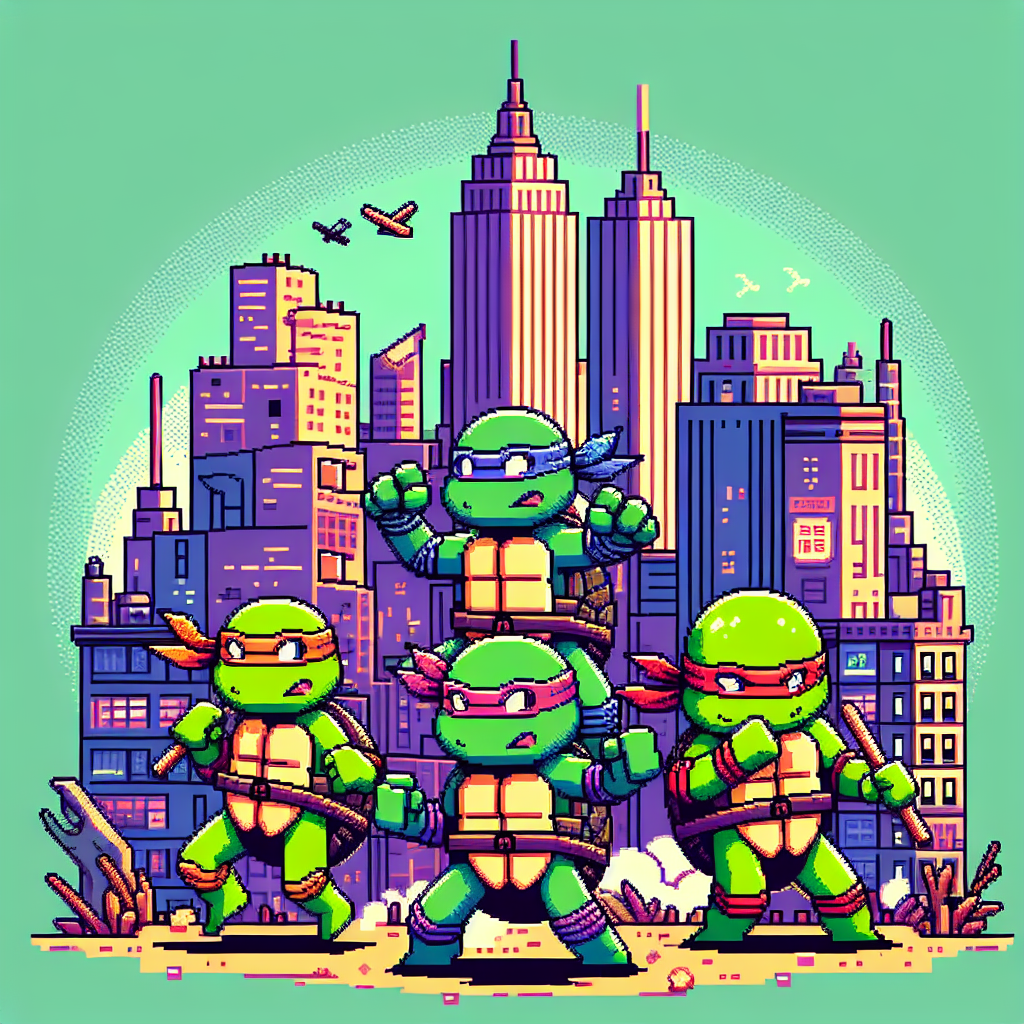
Go ninja, go: Why Teenage Mutant Ninja Turtles: Empire City feels like a proper Turtle game
There’s something deeply satisfying about swinging a sai, flipping through the air with a bo staff, then high-fiving your buddy in VR. Teenage Mutant Ninja Turtles: Empire City drops you into that exact groove — it’s a VR beat‑’em‑up that leans into the cartoonish energy, cheesy one‑liners, and pizza-fueled camaraderie the franchise is famous for. From the opening moments, Empire City sells you on being a Turtle, not just playing one. (uploadvr.com)
The game’s charm comes from how it stitches familiar TMNT DNA to modern VR design. It’s not a museum piece or a souped-up nostalgia trap: it’s a living, playable homage. The result is a game that, as the review line goes, “is better than the sum of its parts” — a phrase you’ll hear echoed throughout the community and press. (uploadvr.com)
What Empire City gets right
- Iconic characters and personality. The Turtles’ banter, mannerisms, and recognizable moves are here in spades. Each Turtle feels distinct in motion and attitude, which matters in a game built around identity and teamwork. (uploadvr.com)
- VR-first combat. Rather than awkwardly translating a 2D beat‑’em‑up into headset space, Empire City embraces VR mechanics: reachable attacks, parries, and environmental interactions that make fights feel tactile. Players report that stealth or all‑guns-blazing both work, rewarding different playstyles. (androidcentral.com)
- Co‑op social energy. The high‑five moments aren’t just fluff — multiplayer amplifies the experience. Moving and fighting alongside friends turns small skirmishes into memorable set pieces. Community chatter online mirrors preview impressions: this is a social VR playground for Turtle fans. (androidcentral.com)
Transitioning from fond memories to modern expectations, Empire City manages a delicate balance: it’s respectful but not reverent, playful but mechanically sound.
Teenage Mutant Ninja Turtles: Empire City — how it feels to play
At its best, Empire City is kinetic. Combat uses weapons, grabs, and throws in a way that translates into satisfying feedback in headset. There’s a joy to improvising with objects and crowds that makes each encounter feel a little improvised and cinematic. Reviewers who spent hands‑on time said the game nails the feeling of being a superpowered martial artist in cramped urban spaces. (gameinformer.com)
That said, the game isn’t flawless. Some critics note that parts of the city feel empty or underpopulated, and a few systems could use polish as the map scales up. These are the sorts of trade‑offs you often see in ambitious VR titles — scope versus fidelity. CGMagazine pointed out instances where the world’s sparseness undercut immersion, even if the core combat still delivered. (cgmagonline.com)
Still, those shortcomings rarely derail the central promise: convincing you you’re in a Turtle suit. The art direction, voice work, and animated expressions all push in the same direction, which matters far more than an extra NPC on the street when the combat and co‑op are clicking.
Design that respects the source material
Empire City works because it understands what makes TMNT lovable: the mix of goofy humor, brotherhood, and pulse‑pounding brawls. The developers lean into classic tropes — sewers, rooftops, Foot Clan thugs, and mutant oddities — while making sure the mechanics support those moments.
Instead of grafting in franchise elements as token cosmetics, the game integrates them into progression and encounter design. Weapons have weight. Tactics reward coordination. Even simple things like the music cues and sound effects are tuned to hit those nostalgic places without feeling like carbon copies of the old cartoons. That approach keeps the experience fresh for returning fans and accessible for newcomers. (uploadvr.com)
Where Empire City could improve
- Population density: The city occasionally feels quiet, which can make bustling urban combat feel oddly staged. This is a common VR performance choice, but it’s still noticeable. (cgmagonline.com)
- Polish across systems: Some interfaces and mission flows could be tightened. Expect small friction points during longer play sessions.
- Replay incentives: While combat is fun, persistent motivators for replay (deeper progression or varied mission structure) will determine the game’s long‑term stickiness.
These aren’t deal‑breakers, especially if you value moment‑to‑moment fun. For many players, the immediate joy of being a Turtle will overshadow backend rough edges.
A few quick notes about platforms and availability
The game has been showcased as a major VR release for Quest and SteamVR platforms, and it’s already drawing wishlist and storefront attention. Early hands‑on previews and reviews have put it on the radar for VR fans who’ve been craving a big‑budget licensed VR experience. (uploadvr.com)
Key points to remember
- Empire City nails the feel of being a Teenage Mutant Ninja Turtle. (uploadvr.com)
- Combat and co‑op are the game’s emotional core; they’re fun and social. (androidcentral.com)
- Visual and world‑building choices occasionally undercut immersion, but not enough to ruin the experience. (cgmagonline.com)
My take
I left my time in Empire City smiling, slightly winded, and oddly hungry for pizza — exactly the emotional cocktail a good TMNT game should produce. It doesn’t reinvent VR or the beat‑’em‑up, but it stitches enough smart design, voice, and heart to feel authentic. For players who grew up with the Turtles or anyone who wants a loud, physical co‑op romp in VR, this is the closest thing to stepping into the cartoon we’ve gotten in years. (uploadvr.com)
Sources
-
Teenage Mutant Ninja Turtles: Empire City Review – Go Ninja Go Ninja Go. UploadVR.
https://www.uploadvr.com/teenage-mutant-ninja-turtles-empire-city-review/ (uploadvr.com) -
My friends and I became the Ninja Turtles, and my Friday nights will never be the same again. Android Central.
https://www.androidcentral.com/gaming/vr-games/tmnt-empire-city (androidcentral.com) -
Teenage Mutant Ninja Turtles: Empire City Review. CGMagazine.
https://www.cgmagonline.com/review/game/teenage-mutant-ninja-turtles-empire-city/ (cgmagonline.com) -
Teenage Mutant Ninja Turtles: Empire City on Steam. Steam Store.
https://store.steampowered.com/app/3713650/Teenage_Mutant_Ninja_Turtles_Empire_City/ (store.steampowered.com) -
Teenage Mutant Ninja Turtles: Empire City Preview. Game Informer.
https://gameinformer.com/preview/2026/01/27/virtual-rea-dical-turtles (gameinformer.com)
Related update: We recently published an article that expands on this topic: read the latest post.
Related update: We recently published an article that expands on this topic: read the latest post.
