Knuth’s Breakthrough: Counting Knight | Analysis by Brian Moineau

The knight that wouldn’t stop: Knuth’s 2025 detour into Knight’s Tours

If you’ve ever watched a knight dance across a chessboard and felt a little shiver of delight, Donald Knuth’s 2025 Christmas lecture was made for you. In early December he stepped away (briefly) from his life’s work and treated a packed Stanford auditorium to a warm, wide-ranging romp through the mathematics and art of Knight’s Tours — and announced new computational censuses that pin down long-standing curiosities about how a knight can visit every square exactly once. (thenewstack.io)

Why this matters (and why it’s beautiful)

  • The Knight’s Tour is both an ancient puzzle and a modern graph‑theory problem: trace a path that visits each of an 8×8 board’s 64 squares exactly once using the knight’s L-shaped move.
  • Beyond recreational math, studying Knight’s Tours touches combinatorics, symmetry, algorithm design, and the kinds of exhaustive enumeration problems that test both theory and computing power.
  • Knuth’s framing emphasizes aesthetics: these tours aren’t just numbers — many are visually striking “snowflakes” or spirals with deep symmetry, and classifying them helps us see structure inside apparent chaos. (thenewstack.io)

Fresh results from the lecture

  • Knuth described how dividing tours by the “wedges” formed at the four central squares reduces the search space (roughly by a factor of eight), letting him classify and count tours more systematically. (thenewstack.io)
  • Using modern census programs and clusters of machines, he presented counts for very specific constrained families of tours — for example, 103,361,771,080 tours with a particular slope distribution among middle moves. (thenewstack.io)
  • He highlighted the total number of Knight’s Tours often quoted in the literature: about 13,267,364,410,532 on an 8×8 board (a result first computed by Brendan McKay in 1997), and explained how the new censuses reveal fine-grained maxima and unique extremal tours (e.g., the only tour with exactly four obtuse angles). (thenewstack.io)
  • Knuth also discussed constructions and surprising extrema: tours maximizing or minimizing certain angle counts, tours with many or few path crossings, and “whirling” tours with coil-like structure (including results on larger boards). (thenewstack.io)

How Knuth’s approach blends old and new

  • Classic intuition: take symmetries, invariants, and small structural observations (like the wedge idea) that mathematicians have used for centuries.
  • Modern tooling: write efficient enumerators, exploit data structures and symmetry reductions, and run massively parallel jobs on clusters to exhaustively search constrained families. Knuth described borrowing a 26‑machine cluster (832 cores) to crank through long runs — a modern echo of the “man vs. machine” era, where mathematical insight guides computation and computation finds structures intuition missed. (thenewstack.io)

Patterns, extremes, and human taste

  • Some of the lecture’s most charming moments weren’t the big counts but the anecdotal extremes: the tours with the most straight lines, the ones with unusually many 37-degree wedges, those with minimal obtuse angles, or the single tour with exactly four obtuse angles.
  • Knuth repeatedly returned to the notion that mathematical work, at its best, looks for beauty. He compared favorite tours to favorite pieces of music — patterns that please both left- and right‑brain sensibilities. (thenewstack.io)

Things this work nudges forward

  • Enumeration practice: Knuth’s censuses are a reminder that clever classification plus raw compute still yields discoveries in classical problems.
  • Visualization and design: the knight’s routes are fertile ground for “geek art” — architectural installations, prints, or teaching aids that make abstract combinatorics tangible (Knuth collaborated on decorations for Case Western’s reopened CS building). (thenewstack.io)
  • New questions: now that many maxima/minima and specific census classes are known, attention can shift to provable constructions, asymptotic behavior on larger boards, and generalizations (3‑D boards, other piece-move graphs, or different topologies). (thenewstack.io)

A few technical highlights

  • Wedge-based classification: analyzing the angles made at the four central squares cuts the enumeration problem into manageable families.
  • Winding-number and darkness/lightness patterns: representing tours by black/white patterns (based on winding parity) gives a helpful invariant for classification and visualization.
  • Parallel census runs: some calculations that would take many months on a desktop were completed in days using dozens of modern cores. Knuth noted running over 800 concurrent jobs for certain searches. (thenewstack.io)

What I find most striking

  • It’s rare to see a living legend like Knuth combine playful curiosity, deep technical craft, and the joy of sharing results that are simultaneously rigorous and whimsical. The Knight’s Tour, an 1891‑era puzzle, remains a testing ground for fresh ideas about enumeration, symmetry, and what we call “beauty” in mathematics. (thenewstack.io)

My take

  • This lecture is a small manifesto for computationally aided mathematics: human insight reduces the problem; machines exhaust the reduced space; both supply new stories and new questions.
  • The work also reminds us that not all important progress looks like earth‑shattering theorems. Sometimes it’s counting, classifying, and revealing hidden patterns in well-worn territory — and that matters. Knuth’s delight in the tours is also an invitation: curiosity plus craft still pays dividends.

Final thoughts

Knuth’s Knight’s Tours lecture is equal parts computation, combinatorics, and gallery show. It’s a pragmatic lesson for researchers and hobbyists alike: embrace constraints that reveal structure, write clean code to enumerate wisely, and don’t forget to enjoy the images your work makes. After all, a solved count is more satisfying when it comes wrapped in symmetry, surprise, and a good story. (thenewstack.io)

Further reading

  • Knuth’s Pre‑Fascicle on Hamiltonian Paths and Cycles (parts referenced in the talk).
  • Historical background on Knight’s Tours and McKay’s 1997 total count.

Sources


Related update: We recently published an article that expands on this topic: read the latest post.
Related update: We recently published an article that expands on this topic: read the latest post.

Japanese Gyoza Pot Stickers | Made by Meaghan Moineau

Japanese Gyoza Pot Stickers

Intro

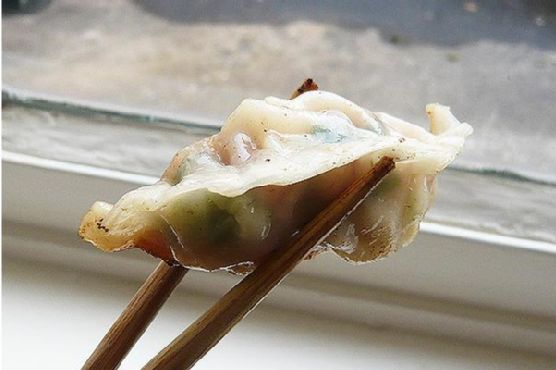
There’s something incredibly comforting about a plate of perfectly cooked gyoza, or Japanese pot stickers, their crispy bottoms contrasting with a tender, juicy filling. I remember visiting my grandmother’s house on weekends, the kitchen filled with the aromatic scent of sizzling gyoza. She would always let me assist, my small hands struggling to pleat the delicate wrappers just right. It was in those moments that I learned the art of cooking and the love that goes into each fold. Today, I’m excited to share this cherished recipe with you, bringing a piece of my childhood into your home.

Why You’ll Love It

This Japanese Gyoza recipe is a delightful blend of savory, spicy, and aromatic flavors. The combination of ground beef, cabbage, and spices wrapped in a delicate shell is truly irresistible. Whether you’re a seasoned cook or a beginner, these pot stickers are easy to make and perfect for any occasion. Plus, you can customize them with ingredients you love or have on hand!

Ingredients

  • 1/2 teaspoon black pepper
  • 2 cups finely chopped cabbage
  • 1 teaspoon chili sesame oil
  • 1/2 cup dried mushrooms, soaked in warm water and chopped
  • 2 teaspoons grated ginger root
  • 3 to 4 green onions, chopped
  • 1/2 pound ground beef
  • 2 tablespoons salad oil
  • 1 tablespoon sesame oil
  • 2 tablespoons Kikkoman soy sauce
  • 1 tablespoon cooking wine
  • Gyoza wrappers

Instructions

  1. Chop the cabbage finely, place it in a colander, and pour boiling water over it. Allow it to cool to the touch, then squeeze the cabbage well to remove excess water.
  2. In a large bowl, mix the cabbage, chopped green onions, chopped mushrooms, and grated ginger.
  3. In a separate bowl, combine the ground beef, cooking wine, soy sauce, sesame oil, and black pepper. Add this mixture to the bowl of vegetables and mix well.
  4. Place about 1 teaspoon of filling in the center of a gyoza wrapper. Fold the wrapper in half and pleat the edges to seal. If the edges don’t stick, dampen the inside edge with a little water, then pleat.
  5. Heat 2 tablespoons of salad oil in a large skillet over medium heat. Place the gyoza into the skillet, flat side down, and cook until the bottoms are golden brown.
  6. At the edge of the pan, carefully pour in a little water, up to 1/4 of the depth of the pot stickers. Cover the skillet, turn the heat to low, and simmer until the water has evaporated.

Tips

For best results, make sure to squeeze out as much water from the cabbage as possible to prevent the filling from becoming too wet. Also, when pleating the gyoza, try to make small, even pleats to ensure they cook uniformly and look appealing.

Variations & Substitutions

If you’re looking to switch things up, consider these variations:

  • Vegetarian: Replace the ground beef with finely chopped tofu or tempeh.
  • Spicy: Add a dash of chili flakes or a bit more chili sesame oil for an extra kick.
  • Different Proteins: Try ground pork or chicken instead of beef for a different flavor profile.

Storage

Leftover gyoza can be stored in an airtight container in the refrigerator for up to 3 days. To reheat, simply pan-fry them again to regain their crispy texture. You can also freeze uncooked gyoza for up to a month; just be sure to place them in a single layer on a baking sheet to freeze initially before transferring to a freezer bag.

FAQ

Can I use store-bought gyoza wrappers?

Absolutely! Store-bought gyoza wrappers are a convenient option and work perfectly for this recipe. Just be sure to keep them covered with a damp cloth to prevent them from drying out while you work.

How do I prevent the gyoza from sticking to the pan?

Make sure your pan is well-oiled and preheated before adding the gyoza. Adding water to the pan and covering it helps to steam the gyoza, which also prevents sticking. If they still stick, let them sit for a moment after cooking to allow them to release naturally.

Nutrition

While exact nutritional values can vary, each gyoza pot sticker typically contains around 70-80 calories, with a good balance of protein from the beef and vegetables. This makes them a tasty yet relatively light appetizer or main dish. For those watching their sodium intake, be mindful of the soy sauce content, or opt for a low-sodium version.

Conclusion

Japanese Gyoza Pot Stickers are a delightful treat that brings warmth and joy to any meal. Whether you’re making them for a family gathering, a dinner party, or simply to enjoy a taste of Japan at home, these pot stickers promise to be a hit. I hope this recipe brings the same joy to your kitchen as it has to mine. Happy cooking!

Related update: Japanese Gyoza Pot Stickers

Related update: Vegetarian Ratatouille

From Bat Boy to Winter Classic GM | Analysis by Brian Moineau

From bat boy to Winter Classic: how Bill Zito’s Brewers memories shaped a Stanley Cup-winning GM

There’s something deliciously cinematic about a kid who once chased foul balls behind an outfield chain-link turning up decades later to stack fresh ice where grass once grew. Bill Zito’s path—from a Milwaukee Brewers clubhouse attendant in the early 1980s to the general manager of the Florida Panthers—feels less like a straight line and more like a braided rope: different experiences woven together until the tensile strength is unmistakable. With the Panthers scheduled to play the 2026 Winter Classic at loanDepot park (the Marlins’ ballpark) on January 2, 2026, that braid has been brought vividly into focus.

A hook you can picture

Imagine a 16-year-old kid getting ambushed by a laser throw from Reggie Jackson and blowing the return over the outfielder’s head—three times. Rather than dinging his confidence, Jackson stayed, played catch, and mentored him through it. That moment, which Zito still recalls with emotion, is small and human — and it’s the kind of moment that seeds a leadership philosophy more than any playbook ever could.

How a baseball summer taught hockey leadership lessons

  • Attention to standards matters.
    • As a clubhouse attendant Zito learned the “first-class” routine: keep uniforms clean, supplies stocked, and the environment professional. Those operational standards are the connective tissue of winning franchises.
  • Preparation and contingency are everything.
    • Baseball’s long seasons teach you to plan for wear-and-tear and surprise problems. Zito credits that mentality for helping the Panthers withstand early-season injuries and other curveballs.
  • Culture isn’t loud; it’s consistent.
    • Zito watched Brewers players balance irreverence with dignity. The lesson: build a team where chemistry exists under pressure, not just in highlight clips.
  • Mentorship turns embarrassment into growth.
    • Reggie Jackson’s patience with a nervous kid became a blueprint for how leaders can teach competence without crushing confidence.

These are practical, almost tactile lessons — how to run a room, how to keep things professional under chaos, and how to treat people so they can become their best. Zito didn’t learn them from a seminar; he learned them hauling jerseys, firing up laundry machines at odd hours, and watching pros behave when the lights were brightest.

The Winter Classic as a narrative fulcrum

  • Full-circle symbolism.
    • The game is literally being played in a ballpark, the same kind of place where Zito once worked. Bringing the Stanley Cup to Milwaukee in 2024 and now hosting an outdoor game in a baseball stadium ties personal history to franchise achievement.
  • Cross-sport learning is underrated.
    • Front offices in hockey borrow from baseball, basketball and soccer all the time — in scouting, analytics, and operations. Zito’s story makes that borrowing explicit and human.
  • Events of this scale reward organizational polish.
    • Building an outdoor rink at an MLB venue requires meticulous logistics. The Panthers’ ability to deliver reflects the same operational mindset Zito spent summers cultivating.

Why this matters beyond a feel-good backstory

This isn’t only nostalgia. Zito’s arc is a case study in transferable leadership. Sports organizations frequently fetishize “hockey people,” but the best leaders synthesize culture, systems, and people-smarts from many sources. Zito’s Brewers lessons are evidence that humility, attention to detail, and mentorship are portable assets — whether you’re handing out cleats or negotiating contracts.

  • For fans: it reframes the Winter Classic. It’s not just spectacle; it’s a stage that reveals how organizations operate.
  • For team executives: Zito’s story underscores investing in operations and culture as competitive edges.
  • For young staffers: starting low doesn’t mean staying small; early, close-up exposure to pros can shape future leadership.

Lessons you can apply in any team or workplace

  • Do the small things well — they compound.
  • Create rituals that standardize quality (prep, cleanliness, readiness).
  • Teach patiently when someone falters; mentorship builds capacity.
  • Treat contingency planning as a core function, not a checkbox.

Those lessons are easy to summarize and harder to execute consistently. Zito’s advantage is that he learned them in the daily grind, not in theory — and that makes them durable.

My take

There’s a romantic thread here — a kid humbled by Reggie Jackson, later welcomed back with the Stanley Cup — but the romance isn’t what matters most. What matters is how ordinary experiences shape extraordinary leadership. The Winter Classic at loanDepot park is a neat backdrop for that arc: a visible, public symbol of the overlapping seasons of Zito’s career. If you watch the game thinking only about the score, you’ll miss the other victory line: the institutional craftsmanship that makes such moments possible.

Notes for readers tracking the event

  • The game is scheduled for January 2, 2026, at 8 p.m. ET.
  • Broadcasters and streaming partners include HBO Max, truTV, TNT and regional networks listed in coverage. (Check local listings for final channels.)

Sources


Related update: We recently published an article that expands on this topic: read the latest post.


Related update: We recently published an article that expands on this topic: read the latest post.

Croissants With Sesame Seeds (Kifli) | Made by Meaghan Moineau

Croissants With Sesame Seeds (Kifli)

Intro

There is something truly magical about the smell of freshly baked croissants wafting through the house on a Sunday morning. It takes me back to my grandmother’s kitchen, where the warmth from the oven and her loving presence made everything feel just right. She would often bake these delicious croissants with sesame seeds, known as kifli in our family, and they quickly became a beloved tradition. I remember sitting on the counter, eagerly watching her every move and waiting for the moment when I could sink my teeth into the first warm, flaky bite. This recipe carries forward that cherished memory, and I am thrilled to share it with you today.

Why You’ll Love It

These croissants are not only a treat for your taste buds, but they are also a feast for your senses. From the irresistible aroma as they bake to the satisfying crunch of sesame seeds with each bite, these croissants are a perfect blend of nostalgia and flavor. Whether you’re enjoying them as a special breakfast, a delightful brunch addition, or a comforting snack, these kifli will surely become a favorite in your household.

Ingredients

  • 1 cup lukewarm milk
  • 2 tablespoons dry active yeast
  • 1 tablespoon sugar
  • 6 cups flour
  • 1 teaspoon baking powder
  • 1 teaspoon salt
  • 1/4 cup vegetable oil
  • 4 eggs (separated – yolks and whites)
  • Margarine (small pieces for baking)
  • Sesame seeds

Instructions

  1. In a large, deep mixing bowl, pour in the lukewarm milk. Stir in the sugar, 2 tablespoons of flour, and the yeast. Let stand for ten minutes to activate the yeast.
  2. Add in the baking powder, salt, vegetable oil, egg whites, and 6 cups of flour. Stir with a wooden spoon until the mixture is well incorporated. You may need to use your hands toward the end.
  3. Transfer the dough to a lightly floured surface and knead it for 10 minutes until smooth and elastic.
  4. Place the dough in a large bowl, cover it, and let it stand for one hour until doubled in size.
  5. Preheat your oven to 375°F (190°C).
  6. Bring the dough back to your working area and knead it again for another 5 minutes to remove any air bubbles.
  7. Form the dough into a log and cut it into 5 or 6 equal pieces.
  8. Take one piece (cover the rest with a kitchen towel), and roll it out to a size as big as a medium pizza.
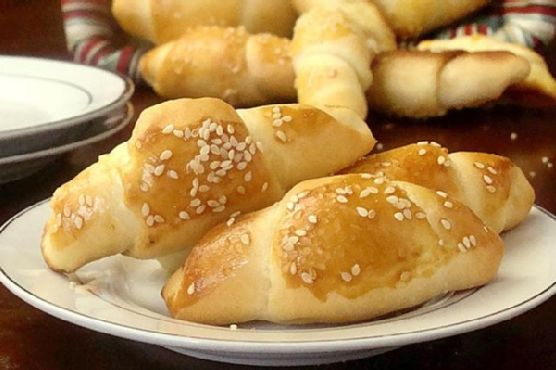
  9. With a knife, cut the rolled-out dough into 8 equal slices. Beginning at the widest point of each slice, start rolling it toward the narrowest point to form a crescent shape.
  10. Place the croissants on a lightly greased baking sheet. Repeat with the remaining dough pieces.
  11. In a small mixing bowl, whisk the 4 egg yolks. Brush each croissant with the egg yolk wash and then top with sesame seeds.
  12. Distribute 4 or 5 small pieces of margarine throughout the baking sheet.
  13. Bake for 15 to 20 minutes, or until golden brown. Once baked, cover the croissants with a kitchen towel while they cool slightly.
  14. Serve immediately or store in an airtight container for later enjoyment.

Tips

For best results, make sure your milk is lukewarm, not hot, to activate the yeast properly. If the dough feels sticky, gradually add a little more flour until you achieve the right consistency. When rolling the croissants, ensure they are tightly rolled to prevent them from unrolling during baking.

Variations & Substitutions

If you’re looking to experiment with flavors, consider adding a sprinkle of dried herbs to the dough or incorporating cheese into the filling for a savory twist. For a sweet version, substitute the sesame seeds with a light dusting of sugar or cinnamon before baking.

Storage

These croissants are best enjoyed fresh out of the oven. However, if you have leftovers, store them in an airtight container at room temperature for up to two days. For longer storage, freeze them in a single layer before transferring to a freezer-safe bag. Reheat in the oven to regain the fresh-baked taste and texture.

FAQ

Can I use butter instead of margarine?

Yes, you can substitute butter for margarine in this recipe. It will add a rich flavor to the croissants, but ensure to use it sparingly during baking to prevent excessive greasiness.

Can I make the dough ahead of time?

Absolutely! You can prepare the dough a day in advance. After the first rise, cover it tightly and store it in the refrigerator overnight. Allow it to come to room temperature before proceeding with the remaining steps.

How can I ensure my croissants are flaky?

The key to flaky croissants lies in the kneading and rolling process. Be sure to knead the dough thoroughly and roll it tightly when forming each croissant. This will help create the desired layers and texture.

Nutrition

Each croissant offers a delightful balance of carbohydrates and proteins, making it a satisfying treat. While not low in calories, these croissants are made with wholesome ingredients and offer a moderate amount of healthy fats from the sesame seeds and vegetable oil.

Conclusion

Bringing the aroma and taste of freshly baked sesame seed croissants into your home is a wonderful way to create new memories while honoring old ones. Whether you’re sharing them with family or enjoying a quiet moment alone, these kifli croissants are sure to bring joy to your day. I hope you find as much delight in baking and savoring them as I have. Happy baking!

Related update: Croissants With Sesame Seeds (Kifli)

Related update: Bourbon Street Beignets

Pan Seared Lamb Loin With Chimichurri & Roasted Trio Squash Salad With Goat Cheese and Pinenuts | Made by Meaghan Moineau

Pan Seared Lamb Loin With Chimichurri & Roasted Trio Squash Salad With Goat Cheese and Pinenuts

Intro

Growing up, Sunday dinners were a special affair in our household. My grandmother would gather us around the table, and there was always an air of anticipation as we eagerly awaited the culinary delight she had prepared. One of my cherished memories is of her lamb dishes, which were always perfectly seasoned and cooked to tender perfection. Inspired by those cherished times, I’ve recreated a modern twist on her classic lamb recipe. This Pan Seared Lamb Loin with Chimichurri and Roasted Trio Squash Salad with Goat Cheese and Pinenuts brings together vibrant flavors and textures, just like those unforgettable Sunday dinners.

Why You’ll Love It

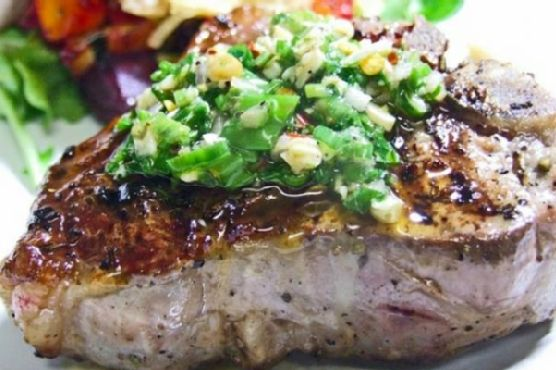
This recipe is a celebration of flavors and textures that will make your taste buds dance with joy. The juicy, tender lamb loin chops are perfectly complemented by the fresh and zesty chimichurri sauce, adding an aromatic flair to the dish. The roasted trio squash salad, with its creamy goat cheese and crunchy pinenuts, provides a delightful contrast in both flavor and texture. This meal is not only a feast for your palate but also a visual delight that will impress any dinner guest.

Ingredients

  • Cilantro
  • Extra virgin olive oil
  • Flat leaf parsley
  • Garlic clove
  • Black ground pepper
  • Kosher salt and pepper
  • Lamb loin chops
  • Lemon
  • Mint
  • Pinenuts
  • Red pepper flakes
  • Shallot

Instructions

  1. Preheat your oven to 400°F (200°C).
  2. For the Chimichurri, combine cilantro, parsley, garlic, lemon juice, olive oil, red pepper flakes, salt, and pepper in a large bowl. Mix well and set aside.
  3. Heat a large, heavy-bottomed pan with a drizzle of olive oil over medium-high heat.
  4. Sprinkle each side of the lamb loin chops evenly with kosher salt and freshly ground black pepper.
  5. Once the oil is hot and begins to smoke slightly, sear the lamb loin chops for approximately 2 minutes on each side.
  6. Transfer the seared lamb chops to the preheated oven. Cook according to your preference:
    • Rare: 2-3 minutes
    • Medium Rare: 6-8 minutes
    • Medium: 9-11 minutes
    • Well Done: 12-14 minutes
  7. Remove the lamb from the oven and let it rest, as it will continue to cook slightly during this time.
  8. Serve the lamb loin chops topped with the chimichurri sauce and accompanied by the roasted trio squash salad.

Tips

To ensure the lamb is cooked to your liking, use a meat thermometer. For rare, aim for an internal temperature of 125°F (51°C), for medium-rare, 135°F (57°C), and for medium, 145°F (63°C). Always allow the lamb to rest for a few minutes before serving to let the juices redistribute, ensuring tender and flavorful meat.

Variations & Substitutions

If you don’t have lamb loin chops on hand, this recipe works beautifully with beef steaks or pork chops as well. For a vegetarian twist, consider using portobello mushrooms as a meaty substitute. You can also customize the chimichurri by adding your favorite herbs or spices, such as oregano or cumin, for a unique flavor profile.

Storage

If you have leftovers, store the lamb and salad separately in airtight containers in the refrigerator. The lamb will keep well for up to 3 days. The chimichurri sauce can be stored in a sealed jar in the fridge for up to a week. When reheating the lamb, do so gently to avoid overcooking.

FAQ

Can I make the chimichurri sauce ahead of time?

Absolutely! Chimichurri can be made a day or two in advance. In fact, allowing it to sit for a few hours or overnight can enhance the flavors as the ingredients meld together. Just store it in an airtight container in the refrigerator.

What can I serve with this dish?

This dish pairs beautifully with a side of crusty bread to mop up any extra chimichurri sauce. You might also consider serving it with roasted potatoes or a simple green salad for a well-rounded meal.

Can I use dried herbs instead of fresh for the chimichurri?

While fresh herbs are recommended for the best flavor, you can use dried herbs in a pinch. Just remember that dried herbs are more concentrated, so use about one-third of the amount of fresh herbs called for in the recipe.

Nutrition

This dish is packed with nutritious ingredients. Lamb is an excellent source of high-quality protein, essential vitamins, and minerals such as iron and zinc. The chimichurri sauce provides healthy fats from olive oil and antioxidants from the fresh herbs. The trio squash salad adds fiber and vitamins A and C, while goat cheese offers calcium and healthy fats. Pinenuts contribute additional protein and healthy fats, making this meal a well-balanced and satisfying option.

Conclusion

There you have it – a delightful dish that brings together the warmth of tradition with the vibrancy of modern flavors. This Pan Seared Lamb Loin with Chimichurri and Roasted Trio Squash Salad is perfect for a special occasion or a comforting family dinner. Whether you’re reminiscing about cherished memories or creating new ones, this dish is sure to become a favorite in your home. Enjoy every bite!

Related update: Pan Seared Lamb Loin With Chimichurri & Roasted Trio Squash Salad With Goat Cheese and Pinenuts

Related update: Slow Cooker Red Beans and Rice

Nintendo Revives Nostalgic Icons for 2025 | Analysis by Brian Moineau

Nintendo’s nostalgia trick: old icons, new buzz for 2025 releases

Nintendo quietly knows how to tug at our nostalgia strings. This fall it rolled out a promotion for Nintendo Switch Online that brings back a stack of profile icons tied to big 2025 releases — including waves inspired by Super Mario Galaxy + Super Mario Galaxy 2, F‑Zero 99, and Kirby and the Forgotten Land. It’s a small feature on paper, but it tells a bigger story about how Nintendo keeps fans engaged between game drops.

Why icons matter more than you think

  • Icons are tiny, but they’re social: your profile avatar is how you present yourself in friends lists, lobbies, and party chats.
  • Tying icons to game releases turns a low‑friction cosmetic into a micro‑marketing channel: collectible waves, limited availability and the Missions & Rewards system push both attention and playtime.
  • For Nintendo, this is a light, low‑cost way to refresh interest in older IP (Super Mario Galaxy), support live services (F‑Zero 99) and spotlight newer hits (Kirby and the Forgotten Land).

What Nintendo brought back in 2025

  • Super Mario Galaxy + Super Mario Galaxy 2: multiple waves of character and background icons launched around September–October to coincide with the remastered bundle’s release, offering Mario, Rosalina, Lumas and other Galaxy staples via the Switch Online Missions & Rewards system.
  • F‑Zero 99: classic F‑Zero visuals resurfaced as icons alongside renewed interest in the franchise (and the battle royale spin).
  • Kirby and the Forgotten Land (and other Kirby games): icons tied to Kirby’s 3D comeback were rotated through Nintendo’s rewards lineup.

These icon drops are typically split into waves and cost small amounts of Platinum Points (the My Nintendo currency) — usually 10 points per character icon and smaller prices for frames or backgrounds. Availability tends to be limited, with each wave active for a week or so before rotating out. (See Sources for specific coverage and dates.)

Context: a pattern, not a one‑off

Nintendo has been leaning into collectible, limited‑time cosmetics across its ecosystem:

  • The Switch Online Missions & Rewards overhaul made profile icons a recurring reward that can be scheduled around releases.
  • Reissues and remasters like Super Mario Galaxy + Super Mario Galaxy 2 are natural anchors for nostalgia-driven drops.
  • The GameCube library and other retro pushes for Switch 2 also created opportunities to repurpose classic art into modern social cosmetics.

This is consistent with Nintendo’s broader strategy: marry premium releases with small, free/cheap engagement hooks that keep subscribers logging in and talking about their ecosystem.

The user experience side

  • It’s friendly to casual players: icons are cheap in My Nintendo points and don’t gate gameplay.
  • Collectors get a chase: limited windows create urgency and social bragging rights (“I grabbed the Rosalina icon”).
  • It nudges play: some icons require “Play and Redeem” style tasks (play a linked game X times) — that’s clever cross‑promotion.

For many fans, these small touches deepen fandom. For others, it can feel like manufactured scarcity — but compared to paid cosmetics in other platforms, Nintendo’s implementation leans light and community‑focused.

My take

Nintendo’s icon drops are a deceptively effective tool. They’re inexpensive to produce, resonate strongly with long‑time fans, and slot neatly into a subscription model where retention is king. By pairing iconic assets (literally) with marquee releases like Super Mario Galaxy + Super Mario Galaxy 2, Nintendo gets free social marketing and a steady trickle of engagement without heavy investment.

If you care about profiles and collector status, keep an eye on Switch Online’s Missions & Rewards during major release windows — these small items are often the most fun, smashable pieces of nostalgia Nintendo hands out between big game announcements.

Things to watch next

  • Will Nintendo expand rare icon drops to paid DLC-style bundles, or keep them mostly in My Nintendo’s Platinum economy?
  • How often will Nintendo synchronize icons with remasters and live‑service releases (e.g., F‑Zero 99)? Regular cadence could make these drops predictable — and predictable can be both comforting and stale.
  • As Switch 2 evolves, will higher‑resolution consoles get upgraded icon art (animated avatars, for instance)?

Sources


Related update: We recently published an article that expands on this topic: read the latest post.