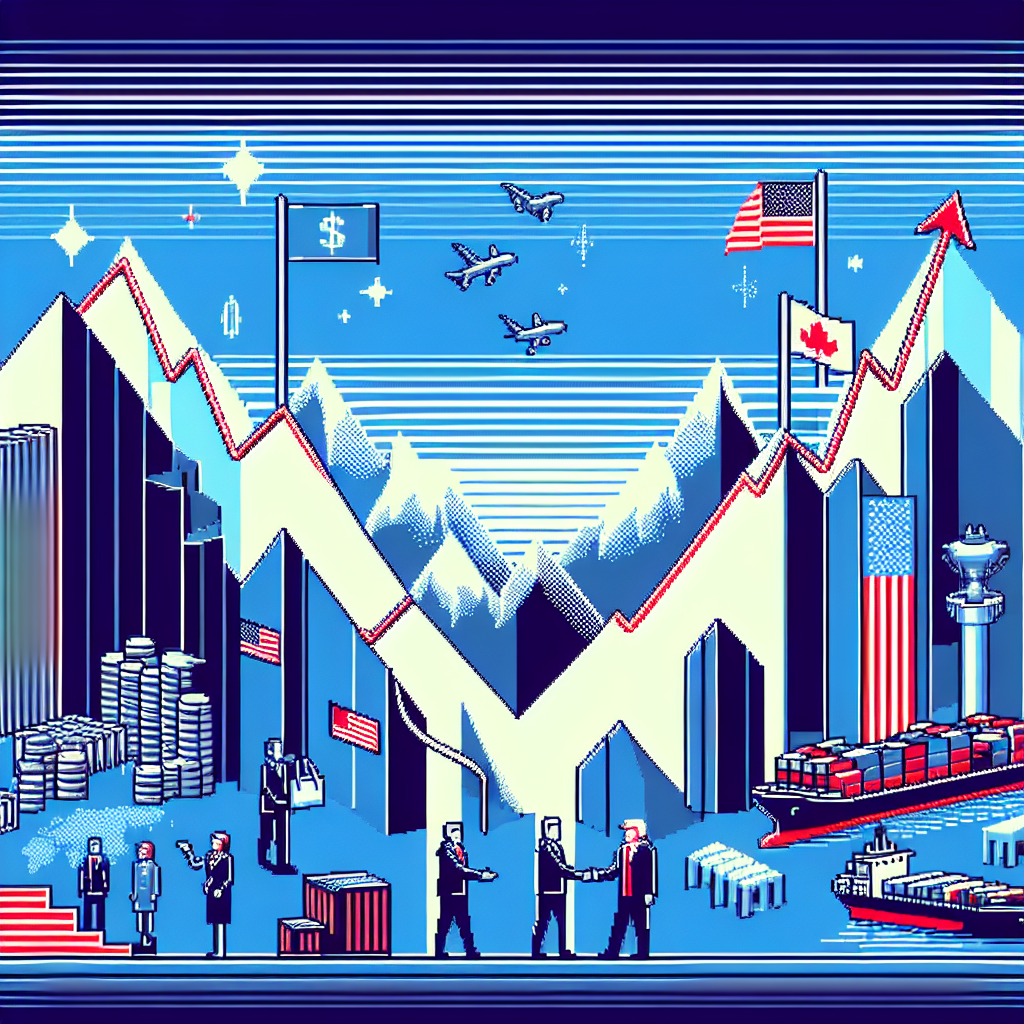
Markets breathe again after the Greenland tariff scare
The opening bell felt less like routine and more like damage control. Stocks went from a rout to a rally in a matter of news cycles after President Donald Trump announced he would not move forward with a set of Europe-targeted tariffs that had been expected to start on February 1. Investors who had been braced for a fresh global trade shock exhaled — and bought the dip. (washingtonpost.com)
Why this mattered so fast
- Tariff threats are different from ordinary headlines. They hit corporate margins, supply chains and the price of imports — and markets price those risks rapidly. When the president first threatened steep levies tied to his push over Greenland, U.S. indexes plunged and volatility spiked. (washingtonpost.com)
- The reversal removed an immediate policy overhang: with the tariff threat off the table for now, traders rotated back into cyclical and tech names that had sold off on worries about trade-driven earnings pressure. The result: a sharp, visible rebound in major indices. (investing.com)
- Wall Street’s sensitivity to abrupt trade-policy moves has been a recurring story — big policy swings can trigger outsized market moves, and sometimes the market’s reaction itself influences policy calibrations. (ft.com)
What happened, step by step
- Late weekend posts and comments from the White House signaled potential tariffs on a group of European countries in response to their resistance to U.S. pressure over Greenland. Markets immediately priced in the risk. The Dow plunged hundreds of points and the S&P and Nasdaq also gave back significant ground. (washingtonpost.com)
- As the diplomatic noise intensified — at Davos and in bilateral talks — investors watched for the administration’s next move. When the president announced he would not impose the planned tariffs beginning Feb. 1, major U.S. averages snapped higher within the trading day, recovering much of the prior losses. (investing.com)
- Traders described these moves as a classic “risk-on” bounce once the policy threat was removed; commentators also noted how rapidly political headlines can be priced in (or out) by markets. (ft.com)
Market implications for investors
- Short-term: volatility is likely to remain elevated around geopolitical or trade-related headlines. Fast reversals like this one can create opportunity — and risk — for traders who try to time headlines. (washingtonpost.com)
- Medium-term: corporate planning (sourcing, pricing, guidance) becomes harder when tariffs are used as leverage in foreign-policy disputes. Even when tariffs don’t land, the threat alone can affect decisions and valuations. (ft.com)
- Portfolio posture: diversification and a focus on fundamentals remain sensible for most long-term investors. For short-term participants, disciplined risk management is key when headline-driven moves dominate. (washingtonpost.com)
What the episode reveals about politics and markets
- Markets can act as a check — not in a formal way, but practically. Large, rapid sell-offs increase political costs and pressure decision-makers to recalibrate. That dynamic appears to have played out here, with market reactions amplifying the consequences of the tariff threat. (ft.com)
- At the same time, frequent policy flip-flops create a new baseline for volatility. Investors may grow used to headline swings, but “getting used to it” is not the same as being immune. Tail risks still exist and can surprise complacent portfolios. (washingtonpost.com)
Key takeaways
- Major U.S. indices rebounded after the administration dropped planned Europe tariffs set for Feb. 1, turning a sell-off into a rally. (investing.com)
- Tariff talk alone can move markets: the initial threat caused a sharp sell-off and a spike in volatility. (washingtonpost.com)
- Even when a policy threat is withdrawn, the episode raises longer-term questions about unpredictability, supply-chain risk and how investors price political risk. (ft.com)
My take
This episode is a microcosm of modern market-politics interactions: headlines travel fast, markets react faster, and the political calculus sometimes shifts under the weight of market consequences. For investors, the practical lesson is simple and recurring — respect the headlines, but anchor decisions in company fundamentals and risk management. Short-term traders can profit from volatility, but only with a clear plan and limits.
Sources
-
Stocks slide after Trump threatens new tariffs over Greenland. The Washington Post. Updated January 20, 2026.
https://www.washingtonpost.com/business/2026/01/20/stocks-trump-tariffs-greenland/ (washingtonpost.com) -
S&P 500 jumps as tariff angst eases on Greenland framework deal. Investing.com. January 20–21, 2026.
https://www.investing.com/news/stock-market-news/us-stock-futures-inch-higher-after-wall-st-tumbles-on-greenland-tariff-fears-4456659 (investing.com) -
Donald Trump's tariff 'shock regime' tests Wall Street's mettle. Financial Times. (Analysis on market influence of tariff threats.)
https://www.ft.com/content/cb1a8211-ac60-4cb2-b68f-955f3d0f98f5 (ft.com) -
Dow drops after Trump threatens European allies with tariffs over Greenland. CBS News. January 20, 2026.
https://www.cbsnews.com/news/stock-market-down-january-20-trump-greenland/ (cbsnews.com)
Related update: We recently published an article that expands on this topic: read the latest post.
Related update: We recently published an article that expands on this topic: read the latest post.