
YouTube Premium Lite Adds Background Play | Analysis by Brian Moineau

YouTube’s $7.99 Lite Plan Just Got a Big Upgrade — Here’s Why It Matters

YouTube quietly made a move on February 24, 2026 that changes the calculus for anyone who wants fewer ads without paying full price: Premium Lite, the $7.99-per-month tier, now includes background playback and offline downloads. Those two features were previously held back for the full $13.99 Premium plan — and their arrival on Lite suddenly makes the cheaper option a lot more compelling.

Why this feels bigger than a feature toggle

  • Background play and downloads are the features that turn YouTube from a “watch while you look at the screen” service into something you can use like a music or podcast app — listen while you do other things, save videos for flights or commutes, and generally treat YouTube as part of your everyday media rotation.
  • Historically, YouTube has guarded those features to differentiate its highest-paying users. The original Premium Lite launch (announced March 5, 2025) offered most videos ad-free but explicitly excluded downloads and background playback. By adding them on February 24, 2026, YouTube has narrowed the gap between Lite and full Premium. (blog.youtube)

What changed, exactly (and when)

  • Date of announcement: February 24, 2026. YouTube’s official blog and major tech outlets reported the rollout starting that day, with a regional phased rollout over the following weeks. (blog.youtube)
  • New capabilities for Premium Lite subscribers:
    • Background playback (audio continues when the app is minimized or the screen is off).
    • Offline downloads (save most videos for temporary offline viewing).
  • What remains exclusive to full YouTube Premium:
    • Ad-free access to music content and YouTube Music Premium features.
    • Additional convenience features like certain playback controls and unified ad removal across all music and music videos. (blog.youtube)

Who wins (and who doesn’t)

  • Winners
    • Casual viewers who want an ad-light experience and the practical benefits of downloads and background listening without paying full price.
    • Parents, commuters, and travelers who rely on offline playback for long stretches without reliable connectivity.
    • Users who were on the fence about switching to any paid tier — Lite now offers more tangible day-to-day value.
  • Losers (or, at least, still disadvantaged)
    • People who depend on ad-free music or the integration with YouTube Music — those features still require the full Premium plan.
    • Creators may see modest changes in ad revenue or subscription dynamics depending on how many viewers migrate to Lite instead of full Premium.

The competitive angle

This is part of a broader push by major platforms to tier subscription offerings more carefully: offer a lower-priced, compelling entry tier to capture price-sensitive users while preserving a premium product with exclusive extras. YouTube’s decision also follows enforcement moves earlier this year to close background-play loopholes that non-subscribers used via certain browsers — a reminder that background playback is strategically valuable to YouTube’s subscription business. (technobezz.com)

Quick takeaways

  • YouTube added background playback and downloads to Premium Lite on February 24, 2026.
  • The Lite tier is $7.99/month in the U.S.; full Premium is $13.99/month and still covers ad-free music and YouTube Music features.
  • This change makes Lite a much stronger value for non-music-focused users who want ad-light, multitasking-friendly access.

My take

YouTube’s move feels like sensible product segmentation: give price-sensitive users the day-to-day conveniences that make the service useful beyond “watching with the screen on,” while keeping music and the deepest integrations as part of the premium bundle. For many listeners and casual viewers, $7.99 with downloads and background play will be enough — and that’s exactly the point. If you want music without ads or the full YouTube Music experience, you’ll still pay more. But for general video consumers, this blurs the line between “good enough” and “premium.”

Sources


Related update: We recently published an article that expands on this topic: read the latest post.
Penne with Goat Cheese and Basil | Made by Meaghan Moineau

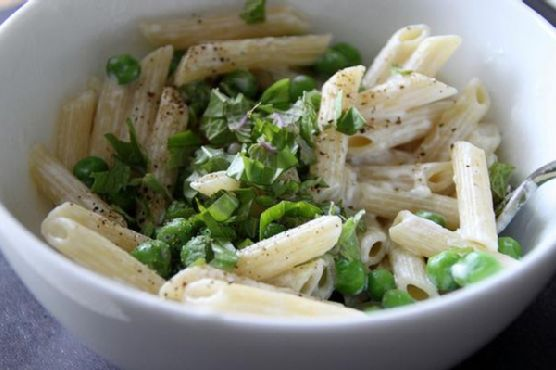
Penne with Goat Cheese and Basil

Intro

There’s something undeniably comforting about a bowl of perfectly cooked pasta, especially when it’s infused with the creamy tang of goat cheese and the aromatic freshness of basil. This Penne with Goat Cheese and Basil recipe is a delightful blend of rich flavors and simple ingredients, creating a dish that’s both elegant and easy to prepare. Every time I make this dish, I’m transported back to a sunlit kitchen in Tuscany, where I first learned the art of making pasta from scratch with my grandmother. The memory of her gentle hands guiding mine through the process is as vivid as the vibrant green basil leaves we picked fresh from her garden. This recipe is my homage to those cherished moments and a reminder of how food can connect us to our past.

Why You’ll Love It

This recipe is a true celebration of simplicity and flavor, perfect for both weeknight dinners and special occasions. Here’s why you’ll adore it:

  • Quick and Easy: It takes less than 30 minutes from start to finish.
  • Minimal Ingredients: You’ll only need five ingredients, all of which are pantry staples.
  • Rich and Creamy: The goat cheese melts beautifully, creating a luscious sauce that coats each piece of pasta.
  • Fresh and Aromatic: Fresh basil adds a burst of flavor and color.
  • Versatile: Perfect for a quiet dinner for two or a festive gathering with friends.

Ingredients

  • Penne pasta
  • Fresh basil leaves
  • Goat cheese
  • Olive oil
  • Salt and pepper

Instructions

  1. Cook the penne pasta according to the package directions until al dente. Drain and set aside.
  2. Arrange the basil leaves in a stack, roll them lengthwise like a cigar, and slice thinly crosswise to create a chiffonade. This technique enhances the basil’s flavor and presentation.
  3. In a large bowl, toss the hot pasta with olive oil and crumbled goat cheese. Stir gently until the cheese melts slightly, coating the pasta.
  4. Allow the pasta to cool for a few minutes. This step helps the flavors meld together.
  5. Add the basil chiffonade, and season with salt and pepper to taste. Toss everything together until well combined.
  6. Serve immediately, garnished with additional basil if desired.

Tips

Here are some handy tips to make your dish even more delightful:

  • Use High-Quality Ingredients: Since this recipe relies on a few key ingredients, using high-quality olive oil and fresh goat cheese will make a noticeable difference.
  • Don’t Overcook the Pasta: Be sure to cook the pasta al dente, as it will continue to soften when tossed with the warm ingredients.
  • Chiffonade Like a Pro: Rolling the basil before slicing helps prevent bruising and keeps your basil looking fresh.

Variations & Substitutions

This recipe is wonderfully adaptable. Here are some variations and substitutions you might consider:

  • Add Protein: Grilled chicken or shrimp would pair beautifully with the creamy goat cheese and fresh basil.
  • Try Different Cheeses: If goat cheese isn’t your preference, feta or ricotta can work as delicious alternatives.
  • Incorporate Vegetables: Cherry tomatoes, roasted red peppers, or spinach can add extra nutrition and flavor.
  • Use Whole Wheat Pasta: For a healthier twist, substitute the penne with whole wheat pasta.

Storage

This dish is best enjoyed fresh, but if you have leftovers, store them in an airtight container in the refrigerator for up to three days. To reheat, gently warm the pasta in a skillet over low heat with a splash of olive oil to help revive the creamy texture.

FAQ

Can I make this dish vegan?

Yes, you can easily make a vegan version by using vegan cheese alternatives available in most grocery stores. Nutritional yeast can also add a cheesy flavor without dairy.

Can I serve this dish cold?

Absolutely! This pasta is also delightful as a cold pasta salad. Simply allow the pasta to cool completely before adding the basil, and enjoy it straight from the fridge.

What type of goat cheese should I use?

A soft, creamy goat cheese works best for this recipe, as it melts well and evenly coats the pasta. You can also experiment with flavored varieties, like herbed or peppered goat cheese for an extra kick.

Nutrition

This dish is a wholesome meal, offering a balanced mix of carbohydrates, healthy fats from the olive oil, and protein from the goat cheese. While exact nutritional values will vary based on the specific brands and quantities used, each serving provides a good source of calcium and vitamins from the basil.

Conclusion

Penne with Goat Cheese and Basil is not just a meal; it’s a comforting reminder of the power of simple ingredients coming together to create something extraordinary. Whether you’re relishing it alone with a glass of wine or sharing it with loved ones around a bustling dinner table, this dish is sure to become a beloved staple in your culinary repertoire. As you savor each bite, may it bring you warmth, joy, and perhaps a touch of nostalgia for the cherished memories created in your own kitchen.

Related update: Penne with Goat Cheese and Basil

Marina F1 Free-Run: Spectacle and Mayhem | Analysis by Brian Moineau

When a Free F1 Showrun Became a Neighborhood Free-for-All

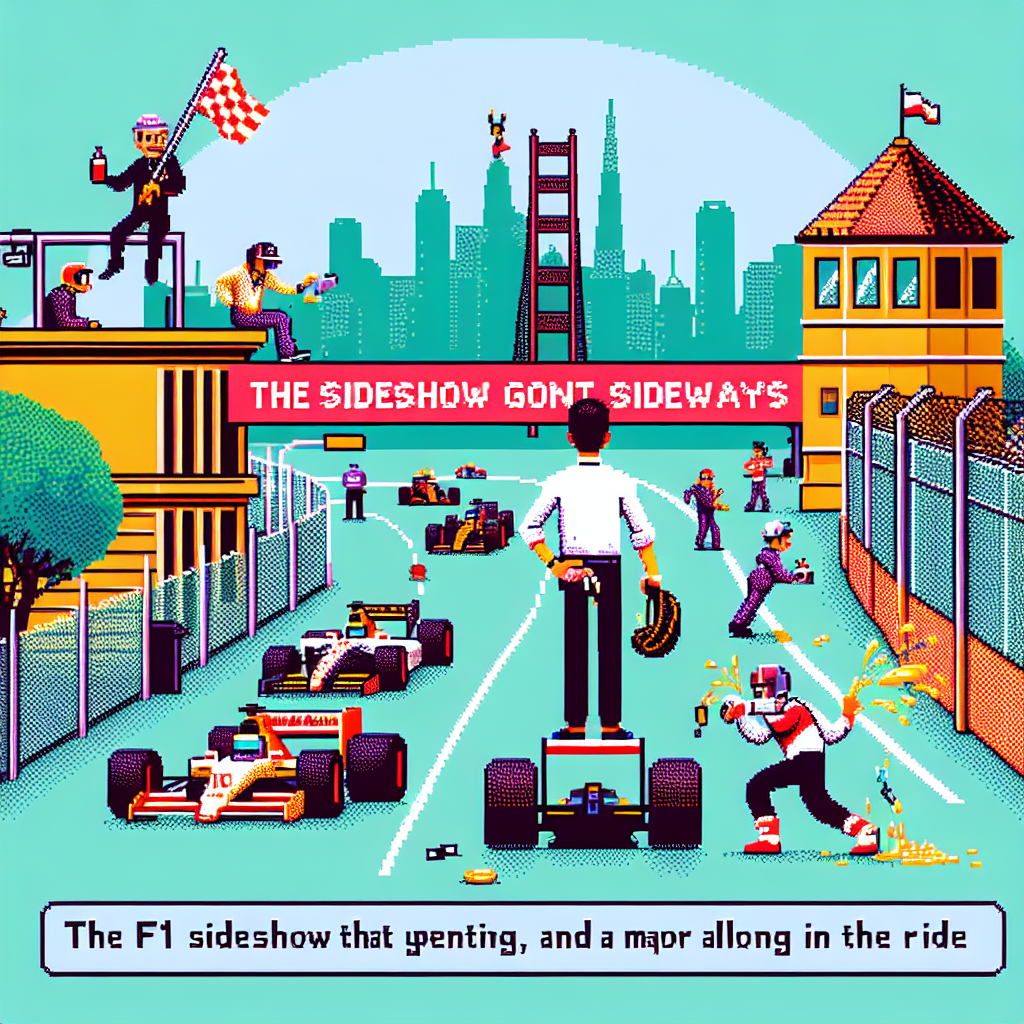
The roar of an F1 engine turned a Sunday in the Marina into a magnet for tens of thousands — and for a few hours the neighborhood looked less like a carefully managed showcase and more like the edges of a music festival that never got its permits. Red Bull’s free Showrun on February 21, 2026, delivered high-speed spectacle and social-media moments: donuts, skids, and an extra helping of chaos as people climbed roofs, trespassed onto private property, and — yes — urinated in yards. San Francisco police ultimately reported no arrests and called the event “extremely safe,” but neighbors’ accounts and local reporting tell a messier story about planning, public space, and how cities host blockbuster events.

Why everyone showed up (and why that matters)

  • Free access + Formula 1 hype = huge turnout. The Red Bull Showrun in the Marina was advertised as an open, public showcase featuring real F1 cars and drivers, which lowered barriers for attendance and raised expectations for spectacle.
  • The Marina is visually perfect for an F1 promo: waterfront views, a straight stretch of road (Marina Blvd.), and dense urban population nearby. That makes it attractive for organizers — and irresistible for thousands of onlookers.
  • What was missing was infrastructure: elevated viewing platforms, adequate restroom and trash facilities, clear crowd flows, and more visible, active crowd control — all the details that turn a pop-up spectacle into a safely run public event.

Neighborhood accounts vs. official line

  • Residents describe roof-climbing, trampling of landscaping, broken tiles and planters, damaged windows, and people relieving themselves on private property. Multiple accounts to local outlets said the scale of the crowd overwhelmed nearby streets and left behind visible damage. (sfstandard.com)
  • SFPD’s public statement to The San Francisco Standard: “Overall, the event was extremely safe, and there were no major public safety incidents.” The department said it responded to calls but made no arrests. That contrast — a calm official assessment versus vivid resident complaints — is at the heart of the controversy. (sfstandard.com)
  • Social media and neighborhood threads amplified the sense that planning and resource allocation were insufficient: limited policing presence at critical choke points, overwhelmed cell service, and a lack of amenities and signage. (reddit.com)

The mayor’s role and optics

  • Mayor Daniel Lurie donned a branded suit and appeared in promotional clips, a move some called a PR-friendly photo op. He later characterized such disruptions as part of the city’s comeback momentum. That framing — prioritize big events and accept some inconveniences — sits uneasily with residents who faced property damage and sanitation issues. (sfstandard.com)
  • When city officials embrace headline events, they also inherit responsibility for ensuring public-safety planning and neighborhood protections. The lack of clear pre-event coordination and post-event accountability has drawn criticism from local supervisors and community leaders. (sfstandard.com)

What went wrong — and what could have helped

  • Insufficient crowd management: no visible, phased entry points or dedicated bleachers meant people improvised with ladders, signs, balconies, and roofs.
  • Not enough public services: portable toilets, trash capacity, first-aid stations, and on-the-ground marshals were reportedly minimal or poorly signposted.
  • Communications and coordination gaps: residents said they received little advance notice and saw a limited on-site presence of city leadership directing logistics.
  • Traffic and emergency access: gridlock stretched across multiple neighborhoods, raising real concerns about ambulance access and urgent response capability. (axios.com)

Takeaway bullets

  • The formula for a successful free public spectacle requires as much logistics as it does hype — sightlines, sanitation, crowd flows, and emergency planning matter.
  • Official assessments that focus on arrests or major incidents don’t always capture the everyday harms neighbors experience (property damage, unsanitary conditions, feeling unheard).
  • High-profile events offer civic benefits — economic activity, tourism, global visibility — but those must be balanced with advance planning and local protections.
  • City leaders and promoters share responsibility: one provides the platform and visibility, the other must ensure the neighborhood survives the afterparty intact.

My take

Large-scale urban events are a test of civic muscle. The Marina Showrun proved that excitement and spectacle are easy to manufacture; the harder part is engineering for tens of thousands of unpredictable humans in a tight space. Calling the day “extremely safe” because there were no arrests feels incomplete. Safety isn’t just arrests avoided — it’s protecting property, ensuring sanitary conditions, preserving access for emergencies, and leaving neighborhoods as intact as they were before the party.

If San Francisco wants the benefits of world-class, headline-making events, the city needs to match that ambition with event infrastructure: meaningful advance coordination with neighbors, clear sightline solutions (paid or free elevated platforms), designated stewarding crews, and contingencies for crowd overflow. Otherwise the story repeats: thrillers on camera, headaches at home.

Sources


Related update: We recently published an article that expands on this topic: read the latest post.


Related update: We recently published an article that expands on this topic: read the latest post.

Related update: We recently published an article that expands on this topic: read the latest post.

Ancient Grains Bread | Made by Meaghan Moineau

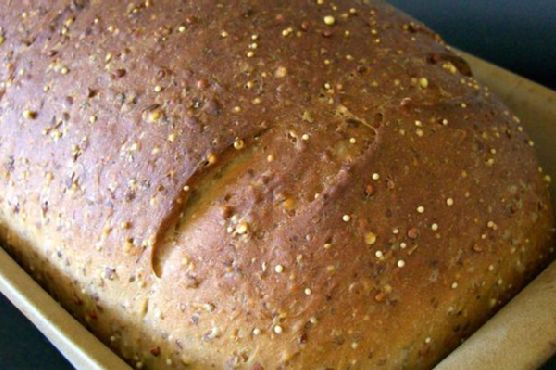
Ancient Grains Bread: A Taste of Tradition

Intro

There’s something incredibly comforting about the smell of freshly baked bread wafting through the house. It’s a scent that takes me back to my grandmother’s kitchen, where she would spend hours kneading dough by hand, humming softly to herself. Her bread was always a family favorite, packed with hearty grains and a touch of sweetness. Inspired by her timeless recipes, I’ve crafted this Ancient Grains Bread to bring a slice of that nostalgia to your own table. This bread, rich with history and flavor, combines the best of old-world grains with modern baking techniques for a loaf that is both wholesome and delicious.

Why You’ll Love It

This Ancient Grains Bread is not just a treat for the taste buds but also a wholesome addition to your diet. Packed with a variety of nutritious grains, this bread offers a delightful texture and a rich, earthy flavor. Each bite provides a satisfying chew, a hint of sweetness from the honey, and the comforting aroma of a well-baked loaf. Whether you’re making sandwiches, toast, or enjoying it plain with a pat of butter, this bread is versatile enough to complement any meal.

Ingredients

  • 2 teaspoons yeast
  • 2 cups all-purpose flour
  • 1 cup whole wheat flour
  • 1/4 cup rye flakes
  • 2 tablespoons ground flaxseed
  • 2 tablespoons amaranth grain
  • 2 tablespoons quinoa
  • 2 tablespoons soy flour
  • 1 tablespoon vital wheat gluten
  • 1/4 cup skim milk powder
  • 2 teaspoons salt
  • 1 1/2 cups warm water
  • 2 tablespoons honey

Instructions

  1. In a large bowl or stand mixer, whisk together the yeast, all-purpose flour, whole wheat flour, rye flakes, ground flaxseed, amaranth grain, quinoa, soy flour, vital wheat gluten, skim milk powder, and salt.
  2. Stir in the warm water and honey, mixing thoroughly to form a cohesive, fairly firm but workable dough.
  3. Turn the dough out onto a floured board or knead it with the dough hook for about 12 minutes until it becomes very elastic and smooth.
  4. Place the dough into a bowl, cover, and allow it to rest for 30 minutes.
  5. Roll the rested dough into a log shape and tuck it into a greased loaf pan.
  6. Cover the pan with a clean towel and allow the dough to rise for 50-60 minutes.
  7. Preheat your oven to 350°F (175°C).
  8. Slash the top of the loaf 2-3 times with a sharp knife or lame to allow the bread to expand properly in the oven.
  9. Bake the loaf for about 40 minutes until it is golden brown and sounds hollow when tapped on the bottom.
  10. Turn the bread out of the pan immediately and cool on a rack before slicing.

Tips

For the best results, make sure your water is warm, not hot, to activate the yeast without killing it. If you have time, let the dough rise in a warm, draft-free area. This will give the yeast the best environment to work its magic, resulting in a lighter loaf.

Variations & Substitutions

Feel free to experiment with this recipe by adding seeds like sunflower or pumpkin seeds for additional crunch and flavor. If you have dietary restrictions, you can substitute the honey with agave syrup or maple syrup. For a gluten-free version, replace the flours and vital wheat gluten with your favorite gluten-free blend, though be aware that the texture may vary.

Storage

Store your Ancient Grains Bread in an airtight container or wrapped in a clean kitchen towel at room temperature for up to 3 days. For longer storage, slice and freeze the bread, then toast slices directly from the freezer as needed.

FAQ

Can I make this recipe without a stand mixer?

Absolutely! While a stand mixer makes the process easier, you can knead the dough by hand. Just ensure you knead it long enough to achieve a smooth and elastic texture, which is key for a good rise.

What can I use if I don’t have rye flakes?

If you don’t have rye flakes on hand, you can substitute them with rolled oats or simply omit them from the recipe. The bread will still be delicious and hearty.

Nutrition

This bread is rich in fiber and protein thanks to the mix of ancient grains, making it a nutritious choice for your meals. Each slice provides a balance of carbohydrates, healthy fats, and plant-based proteins.

Conclusion

Baking this Ancient Grains Bread is like baking a piece of history. With each slice, you’ll enjoy a medley of flavors and textures that only ancient grains can offer. Whether you’re a seasoned baker or a newcomer to bread making, this recipe is straightforward and rewarding. Share it with loved ones and let it become a staple in your kitchen, just as it has in mine. Happy baking!

Related update: Ancient Grains Bread

Easy Pork Chops on Stuffing | Made by Meaghan Moineau

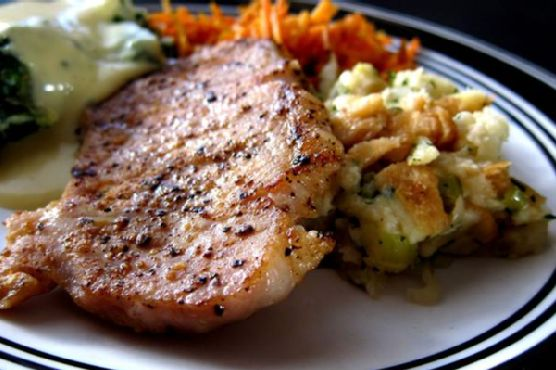
Easy Pork Chops on Stuffing

Intro

There’s something magical about the aroma of a home-cooked meal wafting through the house. This Easy Pork Chops on Stuffing recipe takes me back to my childhood, when Sundays were reserved for family dinners and the kitchen was the heart of our home. I remember my grandmother preparing this dish, the savory scent of pork mingling with the comforting aroma of stuffing filling every corner. It was more than just a meal; it was a tradition, a moment to gather and share stories. Now, I’m excited to share it with you, so you can create your own cherished memories around the dinner table.

Why You’ll Love It

This recipe is a perfect combination of simplicity and flavor. You’ll love how tender and juicy the pork chops turn out, and the stuffing is the perfect accompaniment to soak up all the delicious juices. It’s a dish that doesn’t require a lot of fancy ingredients or complicated techniques, making it ideal for both weeknight dinners and special occasions. Plus, the nostalgic flavors will transport you back to simpler times, making every bite a comforting experience.

Ingredients

  • Butter
  • Diced celery
  • Chicken broth
  • Fresh parsley
  • Diced onion
  • Bell pepper
  • Pork chops
  • Salt
  • White bread

Instructions

  1. Early in the day (or the night before), cut the bread into 1-inch cubes and leave them out to air dry. Place the cubes in a large mixing bowl.
  2. Heat 2 tablespoons of butter over medium heat in a sauté pan and sauté the celery until it’s almost tender.
  3. Add the onions and continue to cook over medium heat until they become translucent.
  4. Remove the mixture from the heat and add half of the chicken broth.
  5. Add the chopped parsley to the bread cubes and toss to distribute evenly.
  6. Pour the celery/onion mixture over the bread cubes and gently toss, adding additional broth as needed to moisten the bread. Be cautious not to break up the bread cubes. They should be moistened through but not soaking wet.
  7. Butter a shallow baking dish with half of the remaining butter and place the stuffing in the middle. Dot the top of the stuffing with any remaining butter.
  8. Cover the dish with aluminum foil and bake for 20 minutes in a preheated 350°F oven.
  9. Meanwhile, pat the pork chops dry with a paper towel and season both sides with salt and pepper. With a sharp knife, cut 2-3 slices through the fat edge on each chop to prevent them from curling while cooking.
  10. Preheat a non-stick sauté pan over medium-high heat and quickly sear the chops on each side until lightly browned. The chops will still be nearly raw in the center.
  11. Remove the foil from the precooked stuffing and place the chops in a single layer over the stuffing.
  12. Return the dish to the oven and roast for approximately 15-25 minutes, uncovered (depending on the thickness of your chops). The chops should be cooked until they are no longer dark pink inside, remaining moist and juicy, but not overcooked.
  13. Remove from the oven and serve immediately.

Tips

  • Ensure your bread is stale enough before using it for stuffing. If it’s too fresh, the stuffing might become mushy.
  • Use a meat thermometer to ensure your pork chops are perfectly cooked. They should reach an internal temperature of 145°F.
  • Searing the pork chops before baking ensures a flavorful crust that locks in moisture.

Variations & Substitutions

If you’re looking to add more flavor, consider mixing in some diced apples or cranberries into the stuffing for a sweet twist. You can also substitute chicken broth with vegetable broth if you prefer a vegetarian version of the stuffing. For an herbaceous kick, try adding some fresh thyme or rosemary to the stuffing mixture.

Storage

Leftovers can be stored in an airtight container in the refrigerator for up to three days. To reheat, place them in an oven-safe dish and warm them in a preheated oven at 350°F until heated through. Alternatively, you can reheat individual portions in the microwave.

FAQ

Can I use bone-in pork chops for this recipe?

Yes, you can use bone-in pork chops, but you may need to adjust the cooking time slightly to ensure they are cooked through.

What can I serve with this dish?

This dish pairs wonderfully with a side of green beans or a fresh garden salad. Mashed potatoes or roasted vegetables also complement the flavors nicely.

Nutrition

This dish is a hearty and satisfying meal, with each serving offering a good balance of protein and carbohydrates. While exact nutritional values will vary based on portion sizes and specific ingredients used, pork chops are a great source of lean protein, and the stuffing provides fiber and essential vitamins from the vegetables.

Conclusion

This Easy Pork Chops on Stuffing recipe is more than just a meal; it’s an experience that brings people together. With its rich flavors and comforting aromas, it’s a dish that warms both the heart and the soul. Whether you’re making it for a family dinner or a special occasion, it’s sure to become a beloved favorite in your home. Enjoy creating delicious memories with this timeless recipe!

Related update: Easy Pork Chops on Stuffing

Related update: Penne with Goat Cheese and Basil

AI Deciphers 2,000-Year-Old Roman Game | Analysis by Brian Moineau

A 2,000-year-old Roman puzzle solved by AI — and it’s a game

It’s not every day that a weathered slab of stone sitting quietly in a small Dutch museum becomes the crossroads of archaeology, computer science and human curiosity. Yet Object 04433 — an unassuming piece of white Jurassic limestone from the Roman site of Coriovallum (modern Heerlen) — has just had its story rewritten. After more than a century of head-scratching, high-resolution scanning, use-wear forensics and simulated play by AI, researchers now argue the slab was a playable board: a variant of a “blocking” game related to haretavl (hare-and-hounds) traditions. The team calls the reconstructed game Ludus Coriovalli.

Why this matters goes beyond one artifact. The study shows how digital tools can recreate behaviors lost to time, turning scratches and smoothed lines into a living rule set. That kind of detective work — mixing microscope-level physical evidence with millions of simulated moves — is archaeology at its most 21st-century.

Quick takeaways from the discovery

  • The object (Object 04433) is a rounded, intentionally shaped slab of Norroy limestone found at Coriovallum, now in the Het Romeins Museum collection in Heerlen, Netherlands.
  • Microscopic and photogrammetric analysis revealed uneven wear: some incised lines are noticeably more abraded, consistent with repeated gameplay along those tracks.
  • Researchers ran 1,100 AI-driven simulated games across 130 rule configurations (using the Ludii platform) and found that blocking-style games best reproduce the observed wear pattern.
  • If correct, this pushes back evidence for blockade-type games into the Roman period in northern Europe, suggesting a deeper and older distribution for this family of games than previously known.
  • The project highlights a new method for identifying ancient play: combine use-wear analysis, 3D imaging and AI simulation to infer plausible rulesets from material traces.

The object and the problem

At first glance, Object 04433 looks like a roughly rectangular block — but closer inspection shows deliberate shaping, bevels and an engraved network of lines not seen on typical Roman building stones. For decades scholars debated its purpose: a decorative piece, an architectural plan, a tile fragment — or a game board.

The breakthrough came when researchers treated the slab as an archaeological palimpsest of behavior. Using photogrammetry and photometric stereo, they generated precise 3D depth maps that made subtle wear visible. Certain lines had been smoothed by repeated abrasion; others remained sharp. That unevenness is the fingerprint of repeated human action, not random erosion.

How AI helped turn scratches into rules

This is where the study gets clever. The team didn’t just compare the slab to known board geometries; they built candidate games from rules documented across northern Europe, then used Ludii — a formal game-description and simulation system — to run thousands of AI-played matches for each ruleset. The idea: if players repeatedly use certain tracks during play, those lines should show higher simulated usage and thus match the wear observed on the stone.

After testing hundreds of permutations (different piece counts, movement and capture rules, starting positions, and so forth), the AI simulations that most closely matched the wear patterns were variants of blocking or pursuit-and-encirclement games — think “hare and hounds” and related traditions. In short: the stone likely hosted games where one side tried to trap the other, producing repeated movement along particular lines.

What this reveals about Roman life

  • Play as routine: Finding a dedicated object for a relatively local or regional game suggests structured leisure — not just impromptu play in the dirt. People invested time and materials into play.
  • Cultural overlap: The reconstructed rules link Roman-period material culture to game forms known from later medieval and northern European sources, revealing deep continuities or diffusion channels for certain game types.
  • Methodological shift: This study offers a template for reading behavior from artifacts that initially seem inscrutable. Wear patterns + AI-driven behavior modeling = plausible reconstructions of how ancient people lived and played.

Wider implications and limits

There’s an alluring simplicity to the idea that AI “decoded” an ancient board game, but the real advance is methodological: pairing rigorous surface analysis with simulated behavior. The authors are careful — the match is strong but not unique. Alternative explanations (manufacturing marks, non-game uses, post-depositional processes) can’t be absolutely ruled out. Still, the convergence of physical evidence and simulation makes the gaming interpretation persuasive.

This approach also raises exciting possibilities. Museums and archaeologists hold countless objects whose purpose is unclear; many might reveal human practices if examined with the same forensic and computational toolkit. At the same time, we should remember that AI doesn’t conjure facts out of thin air — it amplifies hypotheses and tests them against measurable traces. Human judgment, comparative knowledge and archaeological context remain essential.

My take

There’s something charming about connecting a two-millennia-old pastime to the same human impulse that fuels modern board-game nights. That this connection was revealed by AI underscores how technology can deepen — not replace — our understanding of the past. The slab doesn’t just become an artifact with a label; it regains part of the life it once hosted: bodies leaning over a table, fingers nudging pieces, laughter, stakes, perhaps even wagers. That kind of bridging between eras is the best of archaeology.

Sources