Samsung Unpacked 2026: Phones as Partners | Analysis by Brian Moineau

A new chapter for Galaxy: what Samsung actually announced at Unpacked 2026

Samsung's Unpacked on February 25, 2026 landed like a weather front for mobile tech — not a single dramatic lightning strike, but a sweep of changes that together reframe what a smartphone can do. From the S26 Ultra's built-in Privacy Display to earbuds that talk back to AI and “agentic” assistants that act for you, this event wasn't just about specs. It was about shifting phones from reactive tools into proactive partners.

Below I break down the headlines, give the context you need, and share what the changes mean for privacy, daily workflows, and whether it's worth upgrading.

Quick snapshot

  • Event date: February 25, 2026 (Galaxy Unpacked, San Francisco).
  • Ships: Galaxy S26 series and Galaxy Buds4 line are slated to be available from March 11, 2026.
  • Themes: agentic AI (phones acting on your behalf), hardware privacy (Privacy Display), camera and performance refinements, and refreshed earbuds with tighter AI integration.

What matters most right now

  • Privacy Display: a hardware-layer privacy solution built into the S26 Ultra’s OLED that limits side viewing — useful in crowded places and for safeguarding on-screen data.
  • Agentic AI: Samsung positions Galaxy AI as more than assistants that answer questions; it will proactively perform tasks, leverage on-device Personal Data Engine (PDE), and work with partners like Google (Gemini) and Perplexity.
  • Buds4 and Buds4 Pro: redesigned earbuds with improved audio, new gesture and head controls, and closer integration with Galaxy AI.
  • Pricing and release: preorders opened after Unpacked; S26 series ships March 11, 2026 with U.S. pricing shifts (S26 and S26+ up $100 vs. predecessors; Ultra holds at $1,299 in the U.S., per reporting).

A few high-level takeaways

  • Privacy and AI are front-and-center, not afterthoughts.
  • Samsung is treating AI as infrastructure — deeply embedded, cross-device, and designed to act for you.
  • Hardware innovations (display tech, thermal design) support those AI ambitions by enabling sustained on-device processing.
  • The product lineup is evolutionary in many specs, but the platform changes (PDE, agentic features) create new user scenarios that may drive upgrades.

The Galaxy S26 series: subtle redesigns, big platform bets

  • Design and performance:
    • The S26 Ultra swaps titanium for lighter aluminum for better thermal control and adds a larger vapor chamber; Samsung claims significant NPU and CPU improvements for the Ultra’s custom AP. These changes are meant to sustain AI-heavy workloads on-device.
  • Cameras and displays:
    • Improvements in apertures, image processing, and a 200 MP main sensor on the Ultra continue Samsung’s push on computational photography. The Ultra keeps flagship camera capabilities (including 8K options) while adding a display technology that’s the real eye-catcher this year.
  • Privacy Display (S26 Ultra headline):
    • This is a display-integrated approach to “shoulder surfing”: when enabled the screen remains clear for the person directly in front of it but darkens or blacks out when viewed from the side. You can configure it per app or area (notifications/passwords), and there’s a “Maximum Privacy Protection” mode for especially sensitive content.
    • Importantly, this is hardware-level masking integrated into the OLED panel rather than a simple software filter — which reduces the chance of easy circumvention and preserves front-view clarity.
  • Pricing and availability:
    • Preorders followed Unpacked and shipping begins March 11, 2026. U.S. pricing shows S26 and S26+ up about $100 versus last year, while the Ultra stays around $1,299 (regional prices vary).

Why this matters: Samsung is answering two real user pain points — public privacy and AI usefulness — with hardware plus platform improvements. That combination is more compelling than incremental megapixel or battery gains alone.

Agentic AI: a phone that does more than answer

  • Agentic AI concept:
    • Samsung framed agentic AI as the phone taking action on your behalf: scheduling, summarizing conversations, searching and even completing tasks (via partnerships and Google Labs previews of Gemini 3).
  • Personal Data Engine (PDE) and security:
    • The PDE organizes on-device data so AI can use context sensibly, and Knox/KEEP/Knox Vault aim to isolate and protect that data. Samsung emphasizes that privacy/security sit at the architecture level.
  • Partners and assistants:
    • Galaxy devices will ship with multiple AI assistants available: Bixby, Google’s Gemini, and Perplexity (with “Hey Plex” wake-word support for Perplexity features).
  • Day-to-day features:
    • Examples shown include contextual nudges during chats (Now Nudge), natural-language photo edits (Photo Assist), multi-object Circle to Search, call screening and summaries, and proactive document scanning/cleanup.

Why this matters: agentic features are a step beyond voice queries. If executed well and securely, they could reduce friction — fewer taps, fewer app switches. The risk is user trust: people will need to feel confident the AI acts correctly and respects privacy boundaries.

Galaxy Buds4 and Buds4 Pro: tighter audio and smarter ears

  • Design and hardware:
    • A refreshed “blade” look, smaller earbud heads, IP54/IP57 dust-water ratings, and an 11 mm wide woofer in the Pro that increases speaker area and bass response.
  • AI and safety features:
    • Super Clear call quality, better ANC, siren detection that boosts ambient awareness, and head gesture controls for hands-free interactions.
  • Integration:
    • Deep integration with Galaxy AI and multi-assistant voice control means the earbuds become more than audio peripherals — they’re conversational endpoints and modes of invoking assistants.

Why this matters: earbuds are now an important interface for agentic AI. Improvements in call clarity and environmental awareness fit a world where voice and context increasingly drive interactions.

The privacy and ethics question

  • Hardware privacy vs. software privacy:
    • The Privacy Display protects visual eavesdropping, but it doesn't (and can't) address data collection, profiling, or how AI services handle information. Samsung’s architectural protections (PDE, KEEP) are meaningful, but trust depends on transparent policies and implementation details.
  • Agentic risks:
    • When AI acts for you, mistakes can multiply. Mis-scheduled meetings, incorrect actions, or poor judgment in sensitive contexts are real concerns. User control, clear undo/consent flows, and conservative defaults will be crucial.
  • Ecosystem complexity:
    • Multiple assistants (Bixby, Gemini, Perplexity) increase choice but also fragmentation and potential confusion. How Samsung surfaces which assistant is acting — and how data is shared between them — will affect adoption.

My take

Samsung didn’t just refresh a spec sheet at Unpacked 2026 — it laid foundational pieces for phones that act. The Privacy Display is a smart, tangible response to a mundane yet widespread annoyance (shoulder-surfing), and the agentic AI push is the kind of platform-level ambition needed to make mobile AI meaningfully useful. That said, agentic AI’s success will depend on careful rollout: predictable behavior, robust privacy controls, and sensible defaults.

If you’re someone who uses a phone for work, reads sensitive content in public, or loves productivity shortcuts, the S26 Ultra’s mix of hardware privacy and agentic AI previews is compelling. If you’re more conservative about AI acting on your behalf, watch for early user reports about accuracy, transparency, and how personal data is handled before committing.

Sources


Related update: We recently published an article that expands on this topic: read the latest post.


Classy Poached Pear In Spicy Mango Nectar With Mango Ice Cream | Made by Meaghan Moineau

Classy Poached Pear In Spicy Mango Nectar With Mango Ice Cream

Intro

There’s something undeniably enchanting about the delicate, aromatic flavors of poached pears. I remember the first time I tasted a poached pear at my grandmother’s Sunday lunch. It was a cold winter afternoon, and the warmth of the spices filled the room, creating a cozy haven from the chill outside. Each bite was a revelation, the soft fruit yielding to the rich syrup, and it was then that I knew this dessert would hold a special place in my heart.

Fast forward to today, I’ve added my own twist to this classic dessert by pairing it with a spicy mango nectar and a scoop of refreshing mango ice cream. This recipe is simple yet sophisticated, perfect for impressing your dinner guests or treating yourself to a luxurious dessert experience.

Why You’ll Love It

  • Elegantly Simple: Despite its sophisticated appearance, this recipe is straightforward and easy to follow.
  • Exotic Flavors: The combination of pear, mango, and spices creates a unique and tantalizing dessert.
  • Perfect for Any Occasion: Whether it’s a dinner party or a quiet evening at home, this dessert is sure to impress.

Ingredients

  • 4 ripe pears
  • 1/2 cup sugar
  • 1 cup water
  • 1 cup mango pulp
  • 1/2 cup fruit juice (orange or apple)
  • 1 teaspoon lemon juice
  • 1 tablespoon orange rind
  • 1/2 teaspoon ground cinnamon
  • A few strands of saffron
  • Fresh mint leaves for garnish
  • Mango ice cream, for serving

Instructions

  1. Peel the pears and slice a bit off the bottom of each pear to ensure they can stand upright. Keep the stem intact to insert a mint sprig later.
  2. Gently dab some lemon juice over the pears to prevent browning, and set them aside.
  3. In a medium pot, create a simple syrup by combining half a cup of sugar with one cup of water over medium heat. Stir until the sugar dissolves and the mixture thickens slightly.
  4. Add the mango pulp, fruit juice, orange rind, a dash of cinnamon, and saffron strands to the sugar syrup. Stir to combine.
  5. Submerge the peeled pears into the syrup, ensuring they’re completely covered. Allow them to cook on low heat for 15 to 20 minutes, or until the pears are tender and have absorbed the amber hue from the mango syrup.
  6. Once cooked, remove the pears from the syrup and set them on a plate to cool.
  7. Garnish each pear with a fresh mint leaf inserted into the stem and drizzle some of the remaining syrup over the top.
  8. Serve warm or chilled, accompanied by a scoop of mango ice cream.

Tips

  • Choose the Right Pears: Look for ripe but firm pears to ensure they hold their shape while poaching.
  • Monitor the Syrup: Keep an eye on the syrup as it simmers to prevent it from reducing too much or burning.
  • Chilling Option: For a refreshing summer treat, chill the pears before serving.

Variations & Substitutions

  • Spice It Up: Add a pinch of ground nutmeg or cloves for a more robust spice profile.
  • Fruit Juice Options: Experiment with different fruit juices like pineapple or pomegranate for a unique twist.
  • Dairy-Free: Substitute mango sorbet for the ice cream to make this dessert dairy-free.

Storage

Leftover poached pears can be stored in an airtight container in the refrigerator for up to three days. Keep the syrup separate and drizzle it over the pears just before serving to maintain their texture and flavor.

FAQ

Can I make this dessert ahead of time?

Absolutely! You can poach the pears a day in advance and store them in the refrigerator. Simply drizzle with syrup and garnish with mint just before serving.

What type of mango pulp should I use?

Both fresh and canned mango pulp work wonderfully in this recipe. If using canned, ensure it’s pure mango pulp without added sugars or preservatives.

Nutrition

This dessert is a luxurious treat, and while it is not low-calorie, it offers the natural sweetness of fruit with the richness of spices. Pairing it with mango ice cream adds a creamy contrast to the tender pears.

Conclusion

Incorporating the exotic flavors of mango and spices, this poached pear dessert is a testament to how simple ingredients can create a gourmet experience. Whether you’re channeling nostalgia like I do, or simply indulging your taste buds, this recipe is sure to delight. Serve it at your next gathering or enjoy it as a solo treat to make any day a little more special. Remember, cooking is all about sharing love through food, so don’t hesitate to put your own spin on this classic dish. Happy cooking!

Related update: Classy Poached Pear In Spicy Mango Nectar With Mango Ice Cream

Related update: Roasted Asparagus With Bacon and Feta Cheese

Related update: Ginger Molasses Rounds

Nano Banana 2: Google’s Photorealism Leap | Analysis by Brian Moineau

A photo editor that bends reality — sometimes spectacularly: Nano Banana 2, hands-on

Google just pushed another fast, polished step into the world where photos are as editable as text. Nano Banana 2 (officially Gemini 3.1 Flash Image) stitches the speed of Gemini Flash with the higher-fidelity tricks of Nano Banana Pro, and it’s now the default image model sprinkled across Google apps. That means anyone with access to Gemini, Search’s AI mode, or Google Lens can iterate edits and generate photorealism at four‑K resolutions in seconds.

This post walks through what Nano Banana 2 does well, where it still trips up, and what that means for creators, storytellers, and anyone who scrolls through images online.

Why this matters right now

  • Generative image models have shifted from novelty to everyday tools: marketing assets, social posts, family edits, quick mockups.
  • Google’s decision to make Nano Banana 2 the default across Gemini, Search, Lens, AI Studio, and Cloud brings higher-fidelity editing and faster iteration to a massive user base.
  • Improvements in text rendering, subject consistency, and web-aware generation make these tools more practical — and more potentially misleading — in real contexts.

What Nano Banana 2 actually brings to the table

  • Speed meets polish: It combines the “Flash” speed of Gemini with many of the Pro-level visual improvements (textures, lighting, higher resolution up to 4K). This means faster A/B iterations without waiting for long renders.
  • Better text and data visuals: Google highlights improved on-image text rendering and the ability to pull up-to-date web information for infographics and diagrams. That’s useful for mockups, posters, or quick data-driven visuals.
  • Consistent subjects and object fidelity: The model claims to keep the look of up to five characters consistent across edits and maintain fidelity for up to 14 objects in a single workflow — handy for sequential scenes or branded assets.
  • Platform integration and provenance: Outputs are marked with SynthID watermarking and C2PA content credentials to help identify AI-generated media. The model is rolling out across multiple Google products and available through APIs and Google Cloud integrations.

Where it dazzles

  • Photo edits that keep small details: When the source image contains distinct clothing patterns or jewelry, Nano Banana 2 often reproduces those subtle cues faithfully, even when the pose or scene changes.
  • Faster creative loops: For designers or social creators who test many variants, the speed difference is a real productivity win.
  • Cleaner text in images: Marketing mockups and greeting-card style images benefit from much less “wobbly text” than older models produced.

Where it still shows its seams

  • Reality punctured, not perfected: In tests reported by WIRED and hands-on reviews, faces and compositing can look unconvincing — heads pasted on mismatched bodies, odd facial proportions, or age morphing that overshoots the prompt.
  • Web-aware but fallible: The model uses real-time web context for things like weather or infographics, but it can pull stale or misaligned data (for example, an incorrect date) and embed that into an image. A human still needs to fact-check.
  • The uncanny valley remains for complex, bespoke scenes: Fast, high-energy action shots or implausible body positions sometimes return caricatured or “decoupaged” results rather than seamless photorealism.

The ethical and social brushstrokes

  • Democratised manipulation: Making high-quality image editing and realistic generation free and widely available lowers the technical barrier for image-altering content — both creative and deceptive.
  • Better provenance helps but isn’t foolproof: SynthID/C2PA metadata can indicate AI origin, but watermarks aren’t impossible to strip and content credentials aren’t universally checked by platforms or viewers.
  • Verification becomes more important: As generative visuals look more convincing, media literacy — checking sources, reverse image search, and trusting verified channels — becomes a practical necessity.

Use cases that feel right for Nano Banana 2

  • Rapid marketing and ad mockups where many variants are needed quickly.
  • Content that benefits from localized text and translations embedded directly into visuals.
  • Creative storytelling where consistent subject appearance matters (storyboards, character sequences).
  • Fun personal edits and social content — with a grain of skepticism about realism.

My take

Nano Banana 2 is a strong, pragmatic step forward: it doesn’t magically fix every compositing or realism problem, but it makes high-quality editing and generation markedly faster and more accessible. That combination is powerful — and a bit disquieting. When tools make it trivially easy to produce photorealistic fictions, the onus shifts further to platforms, creators, and consumers to signal intent and vet facts. Google’s provenance efforts are a positive move, but they’re not a substitute for skepticism.

If you’re a creator, think of Nano Banana 2 as an accelerant for ideas — great for drafts, storyboards, and mockups — but not always final-deliverable certainties for pixel-perfect realism. If you’re a consumer, keep the verification habits tight: check dates, look for provenance metadata, and assume an image could be crafted rather than captured.

Plausible next steps for the technology

  • Continued improvements in face/pose blending and consistency across complex scenes.
  • Wider adoption of content credentials by social platforms and image-hosting services.
  • More nuanced UI signals in apps (clearer provenance badges, easier access to creation metadata) so viewers can instantly tell when something is AI-made.

A few short takeaways

  • Nano Banana 2 makes pro-level image edits much faster and more widely available.
  • It improves text rendering, subject consistency, and fidelity, but can still produce unconvincing faces and compositing errors.
  • Provenance tools are baked in, but human verification remains essential.
  • For creators it’s a productivity boost; for the public it heightens the need for media literacy.

Sources


Related update: We recently published an article that expands on this topic: read the latest post.
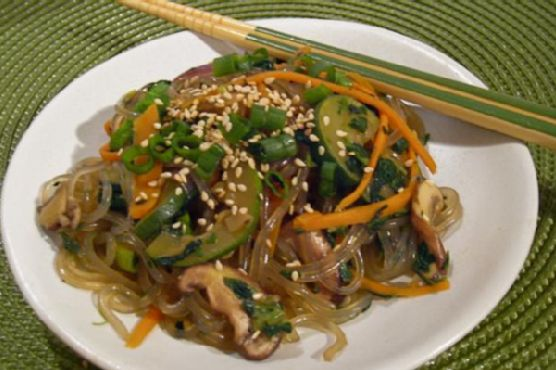
Chapchae (Korean Stir-Fried Noodles) | Made by Meaghan Moineau

Chapchae (Korean Stir-Fried Noodles)

Intro

Chapchae, a delightful Korean stir-fried noodle dish, has a special place in my heart. I remember the first time I tasted it was during a family trip to Seoul. The vibrant colors of the vegetables, the glossy sheen of the noodles, and the intoxicating aroma of sesame oil filled the air as we sat down at a local eatery. Each bite was a harmony of flavors and textures, and it instantly became a favorite. Inspired by that trip, I’ve recreated this dish at home many times, each instance bringing back fond memories of that culinary adventure.

Why You’ll Love It

Chapchae is a versatile dish that’s not only delicious but also a feast for the eyes. It’s perfect for any season, offering a balance of savory, sweet, and umami flavors that appeal to various palates. This dish is naturally gluten-free when using sweet potato vermicelli, making it a fantastic option for those with dietary restrictions. Additionally, chapchae is packed with vegetables, making it a nutritious choice for a quick lunch or a vibrant side dish.

Ingredients

  • 8 oz sweet potato vermicelli noodles
  • 1 sweet onion, thinly sliced
  • 2 cloves garlic, minced
  • 2 cups baby spinach
  • 1 carrot, julienned
  • 3 scallions, sliced
  • 1 cup mushrooms, sliced
  • 1 zucchini, julienned
  • 2 Tbsp olive oil
  • 2 Tbsp sesame oil, divided
  • 3 Tbsp soy sauce
  • 1 Tbsp sugar
  • Salt to taste

Instructions

  1. Cook the sweet potato vermicelli noodles according to the package directions. Once cooked, drain and set aside.
  2. In a large pan or wok over medium heat, heat the olive oil and 1 tablespoon of the sesame oil.
  3. Add the onion slices and minced garlic, sautéing for about 1 minute until fragrant.
  4. Add the rest of the vegetables: baby spinach, carrots, scallions, mushrooms, and zucchini. Cook for 4-5 minutes until the vegetables are half-cooked and still a bit crispy.
  5. Turn the heat to low and add the cooked noodles to the pan.
  6. Pour in the soy sauce, sugar, and the remaining sesame oil. Mix everything to combine and cook for another 2 minutes.
  7. Taste and add salt or more soy sauce if needed. For a sweeter dish, add a touch more sugar.
  8. If using, sprinkle sesame seeds over the top just before serving for an added nutty flavor and crunch.

Tips

For the best results, ensure that your vegetables are cut uniformly for even cooking. Don’t overcook them; chapchae is best with vegetables that retain a slight crunch. Also, feel free to adjust the seasoning according to your taste preferences. A dash of chili flakes can also add a nice kick if you enjoy a bit of heat.

Variations & Substitutions

Chapchae is incredibly adaptable. You can substitute the vegetables with whatever you have on hand, such as bell peppers or broccoli. For a protein boost, add tofu, beef strips, or chicken. If you prefer a lower-sodium option, use low-sodium soy sauce. For a vegetarian version, ensure your soy sauce is vegetarian-friendly and skip any meat additions.

Storage

Chapchae can be stored in an airtight container in the refrigerator for up to three days. Reheat gently on the stovetop or in the microwave, adding a splash of water or soy sauce to revitalize the noodles. Note that the noodles may absorb more sauce over time, so adjust the seasoning as needed when reheating.

FAQ

Can I make chapchae ahead of time?

Yes, chapchae can be prepared in advance. It’s an excellent dish for meal prep as the flavors meld beautifully over time. Just be sure to store it properly and give it a good stir before serving.

Is chapchae gluten-free?

Chapchae is naturally gluten-free when made with sweet potato vermicelli noodles, which are a common ingredient in Korean cuisine. However, make sure to check the labels on your soy sauce to ensure it’s gluten-free, or opt for tamari as an alternative.

Nutrition

Chapchae is a nutrient-rich dish thanks to its variety of vegetables. It’s high in fiber, vitamins, and minerals, and the sweet potato noodles provide a source of complex carbohydrates. The sesame oil and soy sauce contribute healthy fats and protein, respectively, making chapchae a well-rounded meal.

Conclusion

Chapchae is more than just a dish; it’s a delightful journey through flavors and textures that can transport you to the vibrant streets of Korea. Whether you’re making it for the first time or it’s been a staple on your menu, this recipe is sure to bring joy to your table. So grab your wok, gather your ingredients, and savor a bowl of this Korean classic. Enjoy every bite and perhaps, like me, you’ll find it becomes a cherished part of your culinary repertoire.

Related update: Chapchae (Korean Stir-Fried Noodles)

Related update: Cilantro Lime Halibut

Savory Slow Roasted Tomatoes with Filet of Anchovy | Made by Meaghan Moineau

Savory Slow Roasted Tomatoes with Filet of Anchovy

Intro

There’s something incredibly comforting about a kitchen filled with the sweet aroma of slow-roasting tomatoes. It takes me back to lazy summer afternoons spent in my grandmother’s kitchen, where time seemed to slow down just enough to savor each moment. Her garden was always brimming with ripe, juicy tomatoes, and she would often let me help her prepare them for roasting. Those afternoons, with the sun filtering through the curtains and the smell of herbs dancing in the air, are memories I cherish deeply. Today, I want to share a recipe that captures that nostalgia — Savory Slow Roasted Tomatoes with Filet of Anchovy.

Why You’ll Love It

This dish is a delightful blend of rich, sweet, and savory flavors that come together beautifully. The slow-roasted tomatoes become wonderfully caramelized, their natural sugars intensified by the long cooking process. The subtle hint of herbs, combined with the salty punch of anchovy filets, creates a complex flavor profile that is simply irresistible. Whether served as an appetizer, a side dish, or even a topping for bruschetta, these tomatoes are sure to impress your guests and become a staple in your culinary repertoire.

Ingredients

  • Round tomatoes
  • Any fresh herbs you like
  • Salt & pepper
  • Extra virgin olive oil
  • Anchovy filets

Instructions

  1. Preheat your oven to 150°C (280°F).
  2. Cut the top third off the tomatoes and discard the tops.
  3. Place the tomatoes on a baking tray lined with parchment paper.
  4. Sprinkle generously with salt, pepper, and your choice of fresh herbs.
  5. Drizzle the tomatoes with a generous amount of olive oil.
  6. Place the tray in the oven and roast for 4-6 hours, depending on the size of your tomatoes.
  7. Occasionally, baste the tomatoes with the juices and olive oil from the pan.
  8. Once the tomatoes are shriveled and begin to resemble sun-dried tomatoes, they are ready. They should still hold their shape and not become mushy.
  9. Remove from the oven and top each tomato with a whole anchovy filet.
  10. Serve warm or at room temperature, drizzling olive oil from the baking pan over the top.

Tips

To enhance the flavor, consider using a variety of herbs such as thyme, rosemary, or basil. Each brings a unique taste that complements the tomatoes beautifully. Additionally, choose tomatoes that are firm and ripe for the best texture and sweetness.

Variations & Substitutions

If anchovies aren’t to your liking, you can substitute them with capers or olives for a different type of umami flavor. For a vegetarian option, consider topping the tomatoes with crumbled feta cheese or a sprinkle of nutritional yeast.

Storage

These slow-roasted tomatoes can be stored in an airtight container in the refrigerator for up to a week. They also freeze well, allowing you to enjoy a taste of summer long after tomato season has passed. Simply thaw in the refrigerator before serving.

FAQ

Can I use cherry tomatoes instead of round tomatoes?

Yes, cherry tomatoes can be used, though the roasting time will be shorter. Keep an eye on them to ensure they don’t overcook.

What type of olive oil should I use?

Extra virgin olive oil is recommended for its rich flavor and health benefits. However, feel free to use any good-quality olive oil you have on hand.

Nutrition

This dish is not only delicious but also nutritious. Tomatoes are packed with vitamins C and K, potassium, and folate, while anchovies provide a good source of omega-3 fatty acids, protein, and essential nutrients. A serving of this dish offers a healthy dose of antioxidants and healthy fats, making it a guilt-free indulgence.

Conclusion

Savory Slow Roasted Tomatoes with Filet of Anchovy is a dish that beautifully marries simplicity with sophistication. It’s a recipe that not only fills your home with an irresistible aroma but also promises a burst of flavor with every bite. Whether you’re reminiscing about sunlit afternoons in a nostalgic kitchen or looking to create new memories with loved ones, this dish is sure to be a hit. Enjoy the luxurious taste and embrace the joy of slow cooking with this delightful recipe.

Related update: Savory Slow Roasted Tomatoes with Filet of Anchovy

DOLs New Rule Redefines Worker Status | Analysis by Brian Moineau

A clearer line — or a slipperier slope? Why the DOL’s new contractor rule matters

Imagine you run a small business and hire freelancers one week and temp workers the next. One morning you open email and see the Department of Labor has proposed a rule meant to make it “clearer” whether someone is an employee or an independent contractor. Relief — or dread — sets in, depending on whether you value flexibility or worry about legal exposure.

The DOL’s February 26, 2026, proposal rescinds the Biden-era 2024 rule and returns to a streamlined “economic reality” approach that highlights two core factors: (1) the employer’s control over the work and (2) the worker’s opportunity for profit or loss from initiative or investment. The agency says the change aligns with decades of federal court precedent and aims to reduce litigation and confusion. But the move has stirred a predictable clash: business groups and many gig‑economy firms applaud the clarity and flexibility; labor advocates warn it could strip important wage-and-hour protections from millions of workers.

What the proposal does — in plain English

  • Replaces the 2024 DOL rule on classification with an analysis similar to the 2021 approach centered on the “economic reality” test.
  • Emphasizes two “core factors” as most important:
    • How much control the employer has over the worker’s tasks and work conditions.
    • Whether the worker has a realistic chance to make (or lose) money through their own initiative or investment.
  • Lists additional, secondary factors (skill level, permanence of the relationship, integration into the employer’s business).
  • Notes that actual practice matters more than what contracts say on paper.
  • Extends the same analysis to related federal statutes that use the FLSA’s definition of “employ.”
  • Opens a 60‑day public comment period closing April 28, 2026. (The DOL published the NPRM on Feb 26, 2026.)

Quick takeaways for different readers

  • For small-business owners:
    • The rule aims to make classification simpler and more predictable if finalized.
    • Expect a window for asking the DOL clarifying questions through the comment process and compliance programs.
  • For independent workers and gig economy participants:
    • The proposal could preserve or expand contractor status for many workers who value autonomy — but it also risks reducing access to minimum wage and overtime protections for others.
  • For labor advocates and employees:
    • Fewer workers classified as employees means fewer covered by wage-and-hour protections, collective bargaining leverage, and employer-provided benefits.
  • For lawyers and HR teams:
    • This will be fertile ground for litigation and for careful internal policy rewrites while the proposal moves through rulemaking.

Why the DOL framed this as “clarity” — and why clarity is complicated

The DOL’s framing rests on two arguments:

  1. Federal courts have long used a flexible economic‑reality inquiry rather than a rigid checklist, so regulations should reflect that precedent.
  2. A simpler core-factor approach reduces litigation and administrative burden for employers and helps workers know where they stand.

That logic is sensible in theory: predictable rules reduce uncertainty and compliance costs. But the devil is in the facts. Worker misclassification has two faces:

  • Some businesses genuinely misuse contractor labels to avoid overtime, payroll taxes, and benefits.
  • Some workers rely on genuine independent contracting for flexibility, higher hourly rates, and entrepreneurial control.

A rule that tilts too far toward flexibility risks enabling the first problem; a rule that tilts toward strict employee classification risks undermining the second. The 2024 rule leaned toward protecting workers by enumerating multiple factors; the 2026 proposal re-centers the analysis on control and profit/loss — factors employers often find easier to point to.

Likely effects — practical and political

  • Short term:
    • Companies that depend on contractor models (ride-hailing, delivery, certain professional services) will welcome a looser test and may pause internal reclassification drives.
    • Unions and worker-advocacy groups will mobilize public comments and legal challenges if the final rule substantially reduces employee coverage.
  • Medium term:
    • We can expect more Section-by-Section guidance requests, DOL compliance assistance calls, and possibly increased use of the PAID self-reporting program by employers uncertain about past classifications.
  • Long term:
    • The regulatory pendulum has swung several times in recent administrations. Unless Congress acts to codify a standard, future administrations or courts could reverse course again. That means businesses and workers face recurring uncertainty unless legislative clarity is achieved.

Real-world scenarios (simple illustrations)

  • A freelance graphic designer who sets her rates, works for many clients, and invests in her own software: likely independent contractor under the proposal.
  • A delivery driver required to follow company-set routes, schedules, and branding, whose earnings are largely determined by company assignments: closer to employee under the control core factor.
  • A construction subcontractor who invests in equipment and hires helpers: the profit/loss and investment factor could weigh toward independent contractor status even if they work primarily for one general contractor.

My take

The DOL’s stated goal of aligning regulations with long-standing court precedent and promoting predictability is reasonable. Businesses and independent workers deserve clearer guidance. But regulatory clarity should not become a shortcut for stripping protections. The two-core-factor approach can be useful, but success will depend on how the DOL defines and applies “control” and “opportunity for profit or loss” in practice — and on whether the agency’s examples and enforcement priorities protect vulnerable workers who lack genuine bargaining power.

The rulemaking process — public comments and later enforcement — will be the real battleground. Employers should review classification practices now, document actual working arrangements (not just contracts), and consider submitting informed comments. Workers and advocates should press the DOL to ensure the new framework doesn’t enable broad misclassification that escapes the protections Congress intended in the FLSA.

Final thoughts

This is a consequential regulatory moment with real money and livelihoods at stake. The DOL’s proposal could simplify life for many businesses and solidify independence for some workers — but it could also leave others with fewer protections. Watch the comment period (closes April 28, 2026) and the DOL’s examples closely; those details will determine whether the rule promotes honest flexibility or invites abusive classification.

Sources