Chorizo and Beef Quinoa Stuffed Pepper | Made by Meaghan Moineau

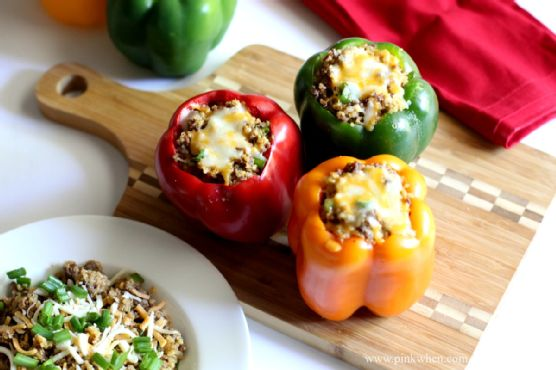
It was one of those weeknights where everything seemed to demand my attention at once. You know the kind, right? The kind where your inbox is overflowing, the laundry pile is ominously high, and all you want to do is eat something comforting that doesn’t involve a microwave pizza. So there I was, staring into my fridge, hoping for inspiration to leap out at me. That’s when I spotted the bell peppers chilling out in the crisper drawer, looking like they needed a purpose. The chorizo and ground beef were sitting in the fridge too, probably whispering that they’d be amazing together. And just like that, dinner was decided. These Chorizo and Beef Quinoa Stuffed Peppers are a satisfying blend of rich, spicy flavors and textures, and they come together quicker than you’d think. Plus, they’re perfect for those nights when you need something a bit more special without all the hassle.

Jump to Recipe

What You’ll Need

If you’re like me, you probably have most of these ingredients already lounging around your pantry and fridge. Here’s what you’ll want to gather:

  • Bell peppers (any color you love)
  • 1 cup quinoa
  • Water (for quinoa)
  • Chorizo, 250g
  • Lean ground beef, 250g
  • Mixed Monterey Jack and Cheddar cheese, 1 cup shredded
  • 2 tablespoons green onion tops, chopped
  • 1 teaspoon cumin
  • 1/2 teaspoon cayenne
  • 1 teaspoon chili powder

How to Make Chorizo and Beef Quinoa Stuffed Pepper

  1. Preheat your oven to 350°F (175°C). While you’re at it, bring a pot of water to boil for the quinoa. The goal is to get these started simultaneously to save time.
  2. In a skillet over medium heat, brown the chorizo and ground beef together. Stir occasionally until the mixture is golden and fragrant, around 6-8 minutes. Once cooked, drain the excess fat thoroughly and transfer the meat to a medium mixing bowl.
  3. Once your quinoa is fully cooked and fluffy, add it to the bowl with your meat mixture. This is where it starts to get exciting!
  4. Add the chopped green onion tops, cumin, cayenne, chili powder, and the shredded Monterey Jack and Cheddar cheese to the bowl. Mix everything well until it’s all happily combined.
  5. Prepare your bell peppers by cutting off the tops and removing any seeds. You want them to be ready to receive all that deliciousness.
  6. Stuff each bell pepper generously with your meat and quinoa mixture. Don’t be shy — pack it in there.
  7. Place your stuffed peppers in a baking dish, sprinkle a little more cheese on top for good measure, and bake in the preheated oven for about 10 minutes. You’ll know they’re done when the peppers have softened slightly and the cheese on top is melty and golden.
  8. Serve immediately and enjoy the awesome combination of flavors. Trust me, these are worth every bite.

Cook’s Notes

If you’re looking to make these ahead (and who doesn’t love a little meal prep?), you can absolutely prepare the filling in advance. Just store it in an airtight container in the fridge for up to two days. When you’re ready to eat, stuff the peppers and proceed with baking. As for leftovers, they keep well in the fridge for up to three days. Just reheat them gently in the oven or microwave until warmed through. A quick tip: make sure to drain the meat well after browning to avoid a greasy filling. Oh, and don’t skip the step of softening the peppers in the oven; it makes them easier to cut and eat!

Make It Your Own

Feel free to get creative with these stuffed peppers. Here are a few swap ideas to make them suit your taste:

  • Swap the quinoa for cooked rice or couscous for a different texture experience.
  • If you’re not into beef, try using ground turkey or chicken instead for a lighter option.
  • Make it vegetarian by using crumbled tofu or tempeh in place of the meat. Just add a bit more spice to keep the flavor bold.
  • Switch up the cheese with crumbled feta or a smoky gouda to add a unique twist.

If you try this, I’d love to hear how it turns out — drop a comment or tag me on your food pics! These stuffed peppers are a personal favorite, and I can’t wait to see your take on them. Happy cooking!

Related update: Chorizo and Beef Quinoa Stuffed Pepper

Related update: Crawfish Cake Sliders

Period Trackers Leak Sensitive Data | Analysis by Brian Moineau

TL;DR

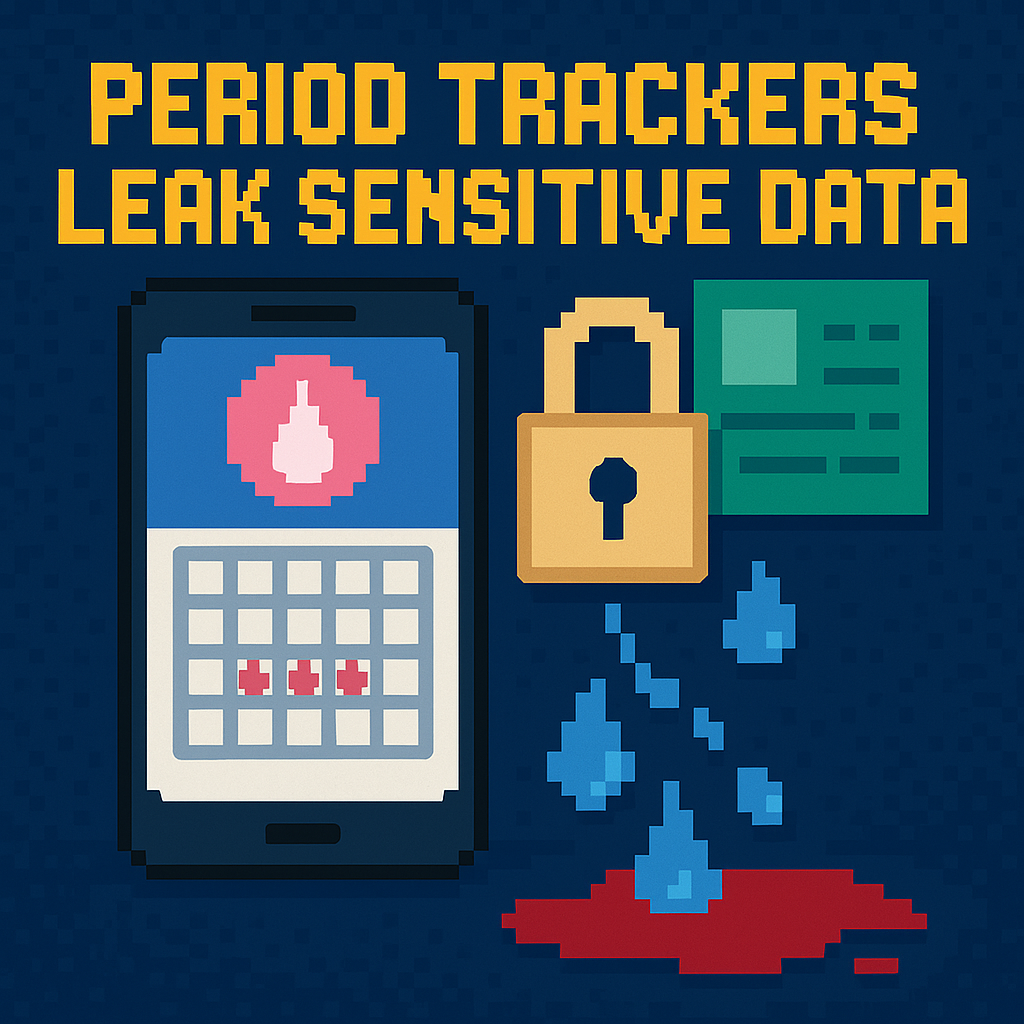
  • Mozilla’s tests found one period tracker, Stardust, routing reproductive health events (pregnancy status, birth control, symptoms) to RudderStack while also pinging Meta and AppsFlyer, contradicting the app’s “Your data is private. Period.” slogan [1][2].
  • The exposure isn’t just what you type; it’s where those events travel: every third‑party SDK or data “pipe” multiplies legal risk after Dobbs v. Jackson Women’s Health Organization (2022), while HIPAA’s April 26, 2024 update shields clinical PHI but not most consumer apps [3][7].
  • Enforcement signals are clear—FTC actions involving Flo (2021), GoodRx ($1.5M in 2023), and BetterHelp ($7.8M in 2023) preview how “privacy promises vs. practice” cases will hit femtech and its vendors next [4][5][6].

What the source said

In July 2026, BBC Future reported on Mozilla Foundation’s hands‑on testing of six period trackers—Flo, Clue, Stardust, Spot On, Period Calendar, and Euki—showing stark differences in how they transmit private data from the United States and Europe [1]. Mozilla and BBC found Stardust was the only app that sent labeled reproductive health events to RudderStack, a routing service not named in Stardust’s policy, while also sharing identifiers with Meta and AppsFlyer; Stardust says RudderStack can’t identify users and is contractually barred from repurposing data [1][2]. Spot On’s in‑app links to Planned Parenthood’s site exposed visits (e.g., for HIV testing or gender‑affirming care) to AB Tasty, while Period Calendar sent device IDs to Google and InMobi without an opt‑out; Mozilla called Euki “squeaky clean” by comparison [1].

Why it matters

Two groups have the most at stake in 2024–2026. First: users whose menstrual logs can imply pregnancy, fertility struggles, or miscarriage in states that criminalize aspects of reproductive care after the 2022 Dobbs ruling; HIPAA’s April 26, 2024 reproductive‑privacy rule protects clinical PHI but does not reach most consumer trackers, creating a gap prosecutors can exploit with subpoenas or geofence warrants [3][7]. Second: the femtech stack—app publishers, attribution firms, analytics routers, and ad platforms—because one mislabeled or misrouted event can turn “we protect your privacy” into Exhibit A for the FTC or a state AG, echoing Flo (2021), GoodRx (2023), and BetterHelp (2023) outcomes [4][5][6].

Original analysis

Consensus view: “Fix period tracker privacy with end‑to‑end encryption and you’re safe.” Contrarian read: encryption helps, but the weak link is metadata exhaust and server‑side event routing that Apple’s App Tracking Transparency dialog doesn’t meaningfully police, so sensitive streams can leave at app open to partners like RudderStack, AppsFlyer, or Meta, even before a user toggles a setting [2]. In discovery, the map of who received which payloads on which dates typically matters more than whether fields were encrypted in transit [4][5][6].

Historical analogue: Flo’s 2021 settlement and GoodRx’s 2023 penalty. In Flo, the FTC alleged the app labeled events like “Pregnancy” and sent them with identifiers to Facebook, Google, Flurry, Fabric, and AppsFlyer, contrary to public promises, leading to an order requiring affirmative express consent and external assessments [6]. GoodRx paid $1.5 million and was banned from sharing health information for advertising after claiming to be “HIPAA secure” while not being a covered entity; DOJ and FTC highlighted the mismatch between claims and data flows [5]. BetterHelp paid $7.8 million and faced a ban on sharing sensitive health data for ads, reinforcing that regulators don’t need a breach to act—just a broken promise with corroborating packet logs [4].

Back‑of‑envelope calculation (example math using 13 cycles/year and 2M MAUs):

  • Assumptions: a typical user logs 8 items per cycle (bleeding, PMS, two symptoms, mood, sex, contraception, note). At 13 cycles/year, that’s ~104 health events per user/year (author’s calc).
  • If an app routes those to 3 partners (analytics, attribution, data router), that’s ~312 transmissions per user/year (author’s calc).
  • With 2 million monthly actives sustaining this cadence, that’s roughly 624 million transmissions/year—a compounding discovery, breach, and subpoena surface if IDs or device metadata allow linkage later (author’s calc).

Period tracker privacy: a 2×2 that predicts risk based on Mozilla/BBC’s 2026 findings [1]

  • Axes: “Visibility of data flows” (transparent logs, partner lists, on‑device options such as iOS 17’s App Privacy Report) vs. “Third‑party dependence” (count and criticality of external SDKs/pipes on iOS 17 and Android 14).
Quadrant What defines it Example placement (from reporting/tests)
High visibility + Low dependence Clear partner registry, minimal SDKs, local storage by default Euki (“squeaky clean” per Mozilla/BBC) [1]
High visibility + High dependence Lots of SDKs but a detailed map and user controls Few period apps today; a target state
Low visibility + Low dependence Few partners but opaque disclosures Gap apps not audited this round
Low visibility + High dependence Multiple partners, event routing, limited controls Stardust (RudderStack for health data; AppsFlyer/Meta identifiers) [1][2]; Period Calendar (Google, InMobi, no user opt‑out per report) [1]; Spot On’s linked web features leaking to AB Tasty [1]

Named‑stakeholder breakdown (4 groups, 2024–2026):

  • App publishers (Stardust, Period Calendar, Spot On): if your privacy page and packet captures diverge, you are replaying Flo/GoodRx’s storyline in a harsher legal climate spanning Washington to Texas [1][5][6].
  • Data routers/SDKs (RudderStack, AppsFlyer, Meta): you are “processors,” and Washington’s My Health My Data Act (RCW 19.373, 2023) regulates processors via contracts, logs, and retention duties that will surface in discovery [7].
  • Regulators (FTC, state AGs, HHS OCR): toolkits and precedent—Flo (2021), BetterHelp (2023), GoodRx (2023)—align with HIPAA’s 2024 rule that clarifies covered‑entity limits and spotlights the consumer‑app gap [3][4][5][6].
  • Users: the safest default is local‑only logging or apps proven to avoid third‑party transmission of health events (Mozilla highlighted Euki in 2026 testing) [1][2].

What others are missing

The overlooked angle is vendor‑chain accountability one layer downstream of the app: event‑routing platforms that shuttle payloads between mobile clients and data warehouses in Seattle‑to‑San Francisco stacks. Washington’s My Health My Data Act (RCW 19.373) binds publishers and processors alike and compels a homepage‑linked health data policy, opt‑in consent, and deletion rights with concrete effective dates (large entities by March 31, 2024; small businesses by June 30, 2024) [7]. HIPAA’s April 26, 2024 reproductive‑privacy rule tightens disclosures inside clinics yet explicitly doesn’t cover fertility/period apps that aren’t regulated entities, so compliance pivots on state law and SDK contracts instead of hospital playbooks [3][7].

What to watch next

  1. By Q4 2026, at least one state attorney general will file a My Health My Data Act action against a consumer reproductive‑health app or a processor for undisclosed sharing of cycle or pregnancy events, citing packet logs and partner contracts as evidence.
  2. By Q2 2027, a top‑5 mobile analytics or attribution vendor (by market share in North America) will ship a “reproductive‑health safe mode” that rejects cycle‑ or pregnancy‑labeled events and enforces 30‑day deletion SLAs, and at least one major tracker will announce adoption in a press release.
  3. By Q1 2027, Apple or Google will update platform policy to restrict server‑side routing of sensitive health events to non‑clinical processors without explicit, in‑context consent and an in‑app partner list, with enforcement via app rejections.

My take

If you ship a period tracker in 2026, you can’t outsource privacy to your SDKs or routers. The rule of thumb is simple: if your network logs show pregnancy or symptom events leaving the device, you’re building a plaintiff’s timeline for the FTC or a state AG. Build a data diode now: keep health events on‑device, publish a partner bill of materials, and ban reproductive‑health labels in analytics streams. HIPAA’s 2024 fix protects clinic charts, not your app; FTC precedent punishes broken promises; Washington’s MHMD creates direct exposure for processors—choose the “squeaky clean” quadrant or budget for discovery [1][3][5][6][7].

Sources

  1. The privacy problems hidden in your period tracker — BBC (https://www.bbc.com/future/article/20260715-how-period-trackers-share-womens-private-details) — Core report from July 2026 based on Mozilla’s testing; details on Stardust–RudderStack, Spot On’s AB Tasty issue, Period Calendar’s tracking, and Euki’s “squeaky clean” status.

  2. Privacy Review: Stardust Period Tracker — Mozilla Foundation (https://www.mozillafoundation.org/en/nothing-personal/stardust-privacy-review/) — Confirms health‑event transmission to RudderStack and identifiers to AppsFlyer/Meta; explains why Apple’s ATT doesn’t constrain these pipes.

  3. The HIPAA Privacy Rule (incl. Apr 26, 2024 Final Rule to Support Reproductive Health Care Privacy) — HHS.gov (https://www.hhs.gov/hipaa/for-professionals/privacy/index.html) — Establishes scope and the 2024 reproductive‑privacy update; clarifies covered entities/business associates vs. consumer apps.

  4. FTC Gives Final Approval to Order Banning BetterHelp from Sharing Sensitive Health Data for Advertising, Requiring It to Pay $7.8 Million — Federal Trade Commission (https://www.ftc.gov/news-events/news/press-releases/2023/07/ftc-gives-final-approval-order-banning-betterhelp-sharing-sensitive-health-data-advertising) — Shows FTC bans on ad uses of sensitive health data and monetary relief.

  5. Digital Healthcare Platform Ordered to Pay Civil Penalties… (GoodRx) — U.S. Department of Justice (https://www.justice.gov/archives/opa/pr/digital-healthcare-platform-ordered-pay-civil-penalties-and-take-corrective-action) — Details $1.5M penalty and advertising bans for sharing health data despite privacy claims.

  6. FTC Finalizes Order with Flo Health, a Fertility‑Tracking App that Shared Sensitive Health Data — Federal Trade Commission (https://search.ftc.gov/news-events/news/press-releases/2021/06/ftc-finalizes-order-flo-health-fertility-tracking-app-shared-sensitive-health-data-facebook-google) — Lays out how labeled pregnancy/period events went to analytics firms and the remedial order (consent, audits).

  7. Protecting Washingtonians’ Personal Health Data and Privacy (My Health My Data Act FAQ) — Washington State Attorney General (https://www.atg.wa.gov/protecting-washingtonians-personal-health-data-and-privacy) — Clarifies RCW 19.373 scope, effective dates (Mar 31 and Jun 30, 2024), policy‑link requirement, and that processors are in scope.


Related update: We recently published an article that expands on this topic: read the latest post.


Related update: We recently published an article that expands on this topic: read the latest post.

Cheese and Leek Strata | Made by Meaghan Moineau

It was one of those evenings when the fridge seemed to have its own agenda. You know, the kind where you open the door, and despite it being packed, you can’t find the makings of a straightforward dinner. I spotted some forlorn leeks and a half-full bottle of porter leftover from the weekend, and inspiration hit me like a bolt of lightning. Enter my Cheese and Leek Strata—a dish that’s an absolute game-changer for those nights when you don’t want to keep oscillating between the fridge and the pantry. This strata is comfort in a casserole, layered with flavors and textures that promise to turn your evening around. It’s like a savory bread pudding, but with a cheesy, leeky twist. Perfect for brunch or a cozy dinner, it’s a make-ahead marvel that gives you more time to curl up on the couch with a good book or Netflix series.

Jump to Recipe

What You’ll Need

With ingredients you likely have lurking around your kitchen, this dish won’t require a mad dash to the grocery store. Here’s the lowdown:

  • 6 large eggs
  • 2 cups milk
  • 1/2 cup porter (or any dark beer)
  • 1 garlic clove, minced
  • Salt and pepper, to taste
  • 1 loaf sourdough bread, cut into cubes
  • 1 large leek, thinly sliced
  • 1 red bell pepper, diced
  • 1 cup shredded cheddar cheese
  • 1 cup shredded Swiss cheese

How to Make Cheese and Leek Strata

  1. Preheat your oven to 350 degrees Fahrenheit. As it warms, the kitchen fills with a cozy promise of what’s to come.
  2. In a large mixing bowl, combine the eggs, milk, porter, minced garlic, and a generous pinch of salt and pepper. Beat this mixture well until it’s beautifully blended, creamy and slightly frothy.
  3. Grease a 2.5-quart round baking dish. Place half of the sourdough bread cubes at the bottom, forming the first layer of your strata.
  4. Sprinkle half of the sliced leeks and diced red bell pepper over the bread layer. The veggies should look like colorful confetti scattered across the bread.
  5. Top this veggie layer with half of the Swiss and cheddar cheeses, letting it snow over the vibrant layer beneath.
  6. Repeat the layering process with the remaining ingredients—bread, leeks, bell pepper, and cheeses—ending with a delightful blanket of cheddar cheese on top.
  7. Pour the egg mixture evenly over the entire dish, ensuring the liquid seeps through to all corners.
  8. Cover the dish tightly with foil or plastic wrap and weigh it down with a slightly smaller baking dish. This step helps everything meld together beautifully.
  9. Refrigerate for at least 2 hours or, even better, overnight. This waiting period lets the flavors mingle and intensify.
  10. When you’re ready to bake, remove the cover and place it in the oven for about 40 minutes. The strata is done when the center is set and the top is golden and enticingly fragrant.
  11. Serve warm, and let the compliments roll in!

Cook’s Notes

You’ll want to give this strata time in the fridge. Trust me, it makes all the difference in flavor and texture. If you’re strapped for time, a minimum of 2 hours will do, but overnight is optimal. If you have leftovers, they store beautifully in the fridge for up to three days. Just reheat them gently in the oven. Be sure to use a crusty sourdough—it holds up better against the liquid soaking. And if you find the center isn’t setting after 40 minutes, give it another 5-10 minutes until it’s firm.

Make It Your Own

  • Swap the cheddar cheese for some sharp Gruyère if you’re feeling fancy.
  • Not a fan of leeks? Try using caramelized onions for a sweeter touch.
  • Give it a meaty twist by adding cooked bacon or sausage between the layers.
  • For a spicy kick, toss in some jalapeños alongside the bell peppers.

If you try this, I’d love to hear how it turns out—drop a comment or tag me! Happy cooking, and may your fridge always surprise you in the best possible way.

Related update: Cheese and Leek Strata

Related update: Chorizo and Beef Quinoa Stuffed Pepper

Braised Pork: Filipino Humba | Made by Meaghan Moineau

It was a rainy Wednesday evening when my kitchen turned into a culinary battleground. I was battling the clock, the weather, and my own growling stomach. In the chaos, I discovered a family classic that would become my weekday hero: Braised Pork, known in the Philippines as Humba. This dish is like a warm hug — cozy, flavorful, and so much easier than you’d think. The secret? It’s all in the marination and the slow simmering that transforms humble ingredients into something magical. Trust me, this one’s a keeper for when you need something hearty but don’t want to spend all day cooking.

Jump to Recipe

What You’ll Need

You might be surprised to find that the ingredient list reads like a pantry inventory. It’s a delightful mix of familiar staples and a few special twists that make all the difference.

  • Pork belly – for that melt-in-your-mouth texture.
  • Pork butt shoulder – adds a bit more substance and chew.
  • Whole garlic – because vampires aren’t the only ones who appreciate its charm.
  • Vinegar – gives the dish its signature tang.
  • Brown sugar – balances the tang with a sweetness that caramelizes beautifully.
  • Soy sauce – adds umami and color.
  • Bay leaf – for a subtle aroma.
  • Rice wine – it’s like the secret handshake of Asian cooking.
  • Star anise – provides that warm, licorice-like hint.
  • Oregano – a little herbal depth.
  • Fermented black beans – those little flavor bombs.
  • Whole peanuts – adds a nutty crunch.
  • Olive oil – gets everything going.
  • Paprika – a smoky whisper.
  • Water – to help everything meld together.
  • Fried bananas – trust me on this one.

How to Make Braised Pork: Filipino Humba

  1. In a large bowl, toss together the pork belly, pork butt shoulder, garlic, vinegar, brown sugar, soy sauce, and rice wine. Give it a good mix and let it marinate for about 30 minutes in the fridge. This is where the magic starts.
  2. After marinating, transfer everything from the bowl into a saucepan. Add water, fermented black beans, and peanuts. Cover the pan and bring it to a boil. You’ll start to smell the savory-sweet aroma—it’s heavenly.
  3. Once it’s boiling, lower the heat to a gentle simmer. Add the bay leaf, star anise, oregano, paprika, and a splash of olive oil. Stir gently, then cover and let it simmer for about an hour or until the sauce is thick and glossy.
  4. Five minutes before finishing, decide on the bananas. If you’re feeling adventurous, add them in. Otherwise, serve them on the side. They add sweetness and a fun twist.

Cook’s Notes

So, here’s the deal: this dish loves time. The longer it simmers, the more the flavors develop. But don’t overdo it—an hour is usually perfect. If you find the sauce too thick, add a bit of water to loosen it up. Store leftovers in an airtight container and they’ll keep beautifully in the fridge for up to three days. Reheating brings the flavors back to life, just add a splash of water to keep it from drying out.

Make It Your Own

Here are some fun ways to switch things up without losing the essence of the dish:

  • Swap the pork for crispy tofu if you’re going for a vegetarian vibe. Just adjust the marinating time a bit shorter.
  • Try using coconut vinegar for a milder, slightly tropical twist.
  • Add some pineapple chunks during the last ten minutes of simmering for a sweet and tangy flair.
  • Replace the peanuts with cashews for an even richer nutty note.

If you try this, I’d love to hear how it turns out — drop a comment or tag me on social media! This dish has become a weeknight favorite in my house, and I hope it does in yours too. Happy cooking!

Related update: Braised Pork: Filipino Humba