Five Market Moves Investors Must Know | Analysis by Brian Moineau

Morning market pulse: five things investors should know before the bell

The market opens like a morning radio dial: a few headlines, a surprise on the tape, and suddenly portfolio emotions are humming. Today’s mix feels like that—economic growth that surprised, a regulatory pause that eases tech pressure, a fresh S&P milestone, and the usual questions about where bond yields and inflation fit into the picture. Below are the five things investors should keep front of mind as trading starts.

Quick hits for busy investors

  • U.S. economic growth came in stronger than many anticipated, giving risk assets a tailwind. (apnews.com)
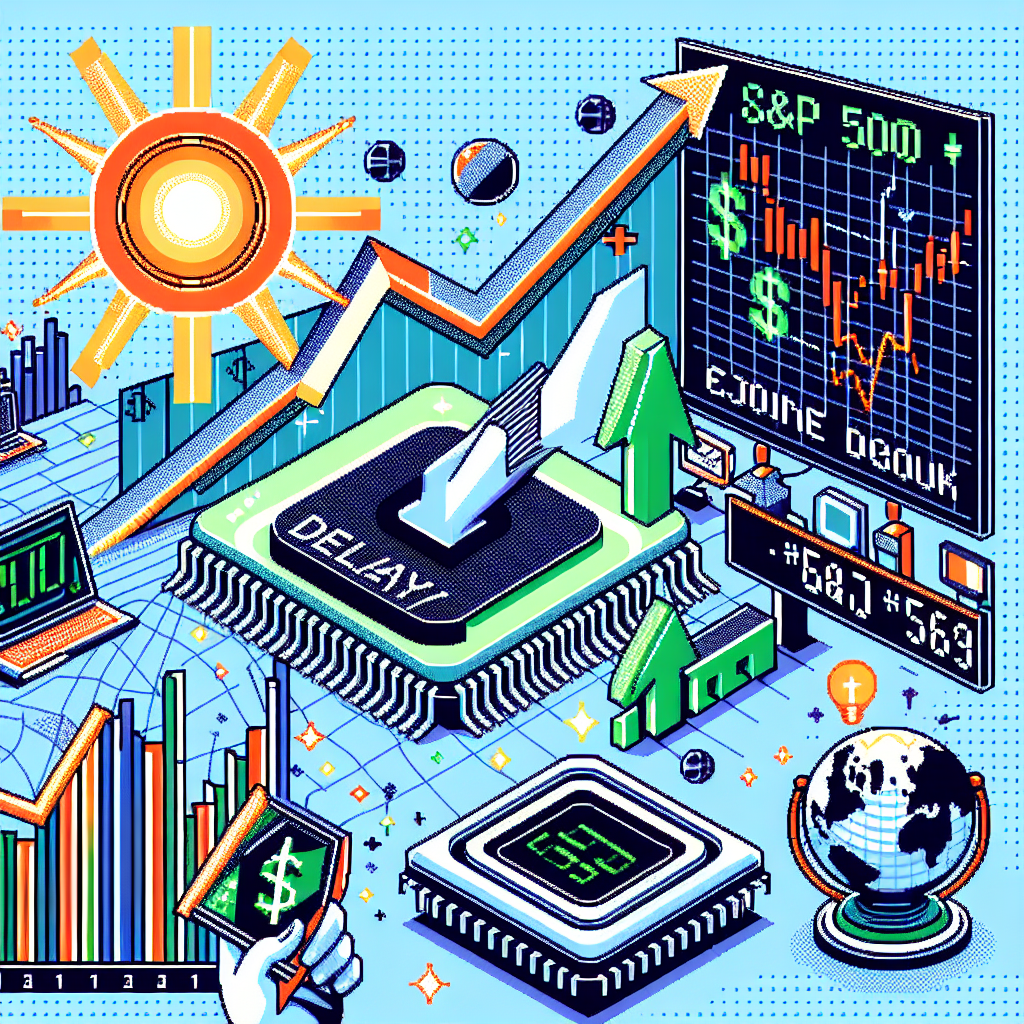
  • Washington pushed back on near-term chip tariffs, a welcome reprieve for technology and manufacturing supply chains. (reuters.com)
  • The S&P 500 hit a new record as investors leaned into tech and rate-cut hopes. (reuters.com)
  • Bond yields and inflation data remain the variables that could change the narrative quickly. (apnews.com)
  • Market breadth matters: record highs driven by a few mega-cap winners can mask underlying fragility. (reuters.com)

1. Growth surprised — but read the fine print

Headline GDP growth beat street expectations, and that’s the kind of number that wakes traders up. Strong consumption and corporate spending pushed the headline higher, which supports the bullish case for equities. But a word of caution: growth beats can be two-edged. They may lift risk assets today while also reinvigorating inflation worries that could impede Fed easing later. Watch incoming inflation gauges and labor data closely; they’ll tell you whether this growth is durable or transitory. (apnews.com)

2. The chip-tariff delay is a tactical win for tech — strategic questions remain

Regulators have delayed implementing higher tariffs on certain semiconductor imports, which eases an immediate cost shock for chip-hungry industries. For firms running supply-constrained production schedules, that delay reduces near-term margin pain and lowers the risk of disrupted product roadmaps. But delaying a tariff is not the same as solving supply-chain fragility or the long-term strategic competition over semiconductors. Expect companies to use the breathing room to update guidance — and watch capex plans for evidence of longer-term reshoring or diversification. (reuters.com)

3. S&P keeps climbing — concentration risk is real

A new S&P 500 record tells us investors are confident, particularly about large-cap tech leaders and AI beneficiaries. Yet records driven by a cluster of mega-cap names raise the question of breadth: are most companies participating, or is market performance concentrated? When indices rally on a handful of stocks, risk is asymmetric — a shock to the leaders can amplify index pain. Portfolio tilt matters: if you’re overweight the rally leaders, consider whether your position sizing and stop-loss rules reflect the elevated correlation risk. (reuters.com)

4. Rates, yields and the Fed calendar still run the show

Even with strong GDP and a tariff pause, markets are sensitive to the path of interest rates. Recent moves show investors pricing in eventual rate cuts, which supports equities and higher multiple expansion for growth stocks. But if inflation re-accelerates or payrolls surprise to the upside, the Fed’s stance could stay firmer for longer — and that would pressure risk assets. Keep an eye on ten-year yields, the upcoming inflation prints, and any Fed commentary for clues on timing and magnitude of policy shifts. (reuters.com)

5. Earnings, guidance and sentiment will determine whether this is a rally or a run-up

Macro headlines move markets intraday, but corporate results and management commentary steer the trend. Better-than-expected revenue and margin outlooks will sustain optimism; cautious guidance could snap momentum. Also watch investor sentiment indicators — flows into and out of equities, options skew, and credit spreads — because they reveal whether participants are buying the rally or hedging against it. (reuters.com)

My take

We’re in a market that rewards conviction but punishes complacency. The mix of stronger growth and a regulatory pause is a constructive backdrop for stocks — especially tech — but it also raises the stakes on inflation and Fed expectations. For investors, that suggests a balanced posture: respect the rally, but keep risk controls in place, diversify across themes that can outperform in both a slower and a faster growth environment, and stay nimble around data releases. Position sizing and active monitoring matter more now than ever.

Sources


Related update: We recently published an article that expands on this topic: read the latest post.


Related update: We recently published an article that expands on this topic: read the latest post.
Markets Test Key Levels as AI Chip Race | Analysis by Brian Moineau

A tricky morning for the market: futures wobble while AI drama rattles Nvidia

Wall Street opened with a bit of that stomach-flip feeling investors know too well — futures flirting with a key level as big tech news rearranged the mood. Nvidia slipped after reports that Google (and possibly Meta) are moving more seriously into AI chips, while earnings from companies like Alibaba and Best Buy provided bright spots. The result: cautious optimism, punctuated by a reminder that narratives — and who controls AI compute — still move markets.

What to notice right away

  • S&P 500 and Nasdaq futures were teetering around an important technical level, signaling that the major indexes face a decisive day (or week) ahead.
  • Nvidia shares dropped after news that Google’s AI chips (TPUs) are being pitched more aggressively and that Meta may be in talks to use Google’s chips — a development that raises questions about market share in AI hardware.
  • Retail and cloud-related earnings (Alibaba, Best Buy among them) surprised on the upside, giving pockets of the market fuel even as AI headlines dominated the tape.

Why futures matter this morning

  • Futures act like a pre-market temperature check: small price differences can amplify when regular trading opens.
  • When futures “waver at a key level,” traders interpret that as indecision at an important technical barrier — the line between a resumption of the uptrend or a pullback that could invite volatility.
  • That indecision is particularly potent now because the market’s leadership is concentrated in a handful of mega-cap tech names; any uncertainty there can sway broad indexes.

The Nvidia story (short and relevant)

  • The kerfuffle centers on reports that Google has been moving to offer its tensor processing units (TPUs) more broadly and that Meta may consider buying or renting them for data-center AI workloads.
  • For Nvidia, whose GPUs dominate AI training and inference today, that’s a credible competitive threat if big customers diversify away or rent capacity elsewhere.
  • Markets reacted: Nvidia down; Google/Alphabet gained ground as investors priced the prospect of a stronger cloud/chip offering. But analysts remain split between near-term price pressure and longer-term confidence in Nvidia’s ecosystem and product roadmap.

Earnings winners: Alibaba and Best Buy

  • Alibaba: The company’s AI initiatives (including Qwen and other cloud efforts) and improving execution have investors rewarding the stock. Positive earnings or user/engagement data tends to revive confidence in its growth narrative beyond just Chinese e-commerce.
  • Best Buy: A solid retailer report — especially during a season where tech and appliance demand matters — reminded markets that cyclical earnings can still surprise positively and support discretionary retail names even as tech headlines dominate.

The investor dilemma

  • Focus vs. diversification: Are you trading the headlines (short-term swings tied to AI chip deals) or positioning for structural trends (AI spending continuing to balloon, where Nvidia still has advantages)?
  • Technical risk vs. fundamental conviction: Futures waver at key levels often trigger stop runs and increased volatility. Long-term investors should ask whether a headline-driven drop meaningfully changes the underlying business case.
  • Earnings pockets vs. market leadership: Retail winners and cloud/AIs successes can provide rotation opportunities, but broad indices are heavily weighted to the biggest tech names — which still drive the market’s direction.

Strategic thinking (practical ideas, not advice)

  • If you’re short-term trading, watch the futures level closely: a clear break (with volume) could invite follow-through; a hold and reversal often signals buyers stepping in.
  • For swing or longer-term investors, separate the signal from the noise: a one-off report about chip deals is newsworthy but doesn’t instantly rewrite competitive moats — track customer wins, product compatibility, and supply commitments over several quarters.
  • Consider diversification across AI plays: chips (Nvidia), cloud/service providers (Google, AWS, Microsoft), and select application-layer companies that monetize AI rather than supply raw compute.
  • Earnings surprises in areas like retail (Best Buy) and cloud/AI adoption (Alibaba) show rotation can matter — scanning relative strength and volume after reports helps find durable moves.

Market mood and what to watch next

  • Watch how major indexes behave if/after they clear the “key level” in futures. A decisive breakout could renew the rally; a failure could bring renewed volatility and profit-taking.
  • Keep an eye on follow-up reporting about the Google/Meta/TPU discussions and any official statements from Nvidia or Google — markets often move again when the details (or denials) arrive.
  • Monitor next wave of earnings and guidance: retailers, cloud providers, and chip suppliers will shape whether headlines are transitory or signal a deeper reshuffling.

Quick takeaways

  • Markets are at a crossroads: technical indecision in futures plus headline risk from AI supply competition equals heightened short-term volatility.
  • Nvidia’s pullback reflects legitimate concerns about compute competition, but it doesn’t instantly erase Nvidia’s ecosystem advantages.
  • Earnings from Alibaba and Best Buy show pockets of fundamental strength that can offer rotation opportunities amid headline-driven noise.

My take

This is a classic example of markets balancing two currents: headline-driven rotation (who supplies which chips) and the longer-running structural story of AI adoption. Short-term traders will be reactive — and rightly so — but long-term investors should weigh whether today’s headlines change durable revenue and margin pathways. For now, expect chop: the indexes are being tested, and the winners will be those who can blend quick risk management with a patient view on AI’s multi-year buildout.

Sources


Related update: We recently published an article that expands on this topic: read the latest post.

Dow Slides as Meta Earnings Shock Market | Analysis by Brian Moineau

Stock Market Today: A Jolt from the Summit and a Tech Giant’s Reality Check

The market woke up Thursday like someone who’d expected good news and found a half-empty cup. A high-profile Trump–Xi meeting that many hoped would soothe trade jitters delivered only modest, incremental outcomes — and tech earnings, led by Meta’s shockers, handed investors a reason to sell first and ask questions later. The result: the Dow slipped, the Nasdaq took a hit, and Meta’s stock plunged after an earnings report that mixed strong revenue with a staggering one-time charge and much bigger capital plans.

Key takeaways

    • The Dow and broader U.S. indices pulled back after markets digested both the Trump–Xi meeting outcomes and mixed Big Tech earnings.
    • Meta reported strong revenue but a huge one-time tax hit plus sharply higher AI-related spending guidance; the stock plunged on the news.
    • Investor focus is splitting between near-term macro/geo‑political events (trade, Fed messaging) and longer-term concerns about expensive AI buildouts.
    • Even “good” earnings can be punished when forward spending and one-off accounting items raise doubts about future profitability.

The hook: why a summit and an earnings call mattered in the same breath

When two world leaders meet, traders watch for concrete policy changes that could alter trade flows, tariffs, and supply chains — things that ripple across blue-chip companies in the Dow. When a major tech company reports earnings that raise fresh questions about the costs of the AI arms race, it rattles an industry that underpins much of the market’s recent gains. This was a day where geopolitics and corporate strategy collided, and the market answered with a shrug that turned into selling.

What happened at the summit (the market’s shorthand)

    • The Trump–Xi meeting produced incremental steps and a public tone of cooperation rather than a sweeping trade détente. Markets had priced in the hope of clearer, bigger concessions; the modest outcomes left some investors underwhelmed.
    • That lack of a dramatic breakthrough left trade-sensitive stocks and sentiment more vulnerable, amplifying the reaction to corporate news arriving the same day. (See reporting that U.S.–China statements were constructive but not transformational.) (apnews.com)

Meta: revenue growth, a fiscal surprise, and the AI price tag

Meta’s quarter delivered the kind of revenue beat investors generally like — but the headline numbers that mattered to traders were twofold:

    • A one‑time, very large tax charge that slashed GAAP earnings per share and materially altered the optics of profitability for the quarter. That accounting hit made the quarterly EPS number look terrible versus expectations, even though adjusted results were stronger.
    • Management raised capital‑spending and signalled significantly higher AI and infrastructure outlays going forward. That kind of ramp-up looks great for long‑term product ambition but scary for near‑term margins and cash needs.

Investors punished the stock after hours and into the next day — a reminder that market moves often focus on the future (spending, margins, balance-sheet impacts), not just yesterday’s revenue beat. Multiple outlets reported steep after-hours moves and investor concern about the scale of AI spending and the tax hit. (marketwatch.com)

The bigger investor dilemma: growth vs. proof of profit

This episode highlights a recurring market tension:

    • Growth-first strategies (large capex and hiring to own the AI layer) promise outsized returns if the investments succeed.
    • But when the investments are enormous and returns are uncertain, investors demand clearer milestones, timelines, and capital discipline — otherwise they mark down valuations.

Meta’s case is textbook: revenue growing, user metrics not collapsing, yet the market punished the stock because the path to profitable monetization of those AI investments — and the near-term drag on earnings — felt unclear.

How other market forces played in

    • Fed messaging and rate expectations remained a backdrop: comments that a further rate cut wasn’t guaranteed kept investors cautious about the breadth of multiple expansion.
    • Tech peers with similar AI spending signals also saw pressure (Microsoft, others), while companies that beat expectations or showed clearer near‑term margins (some pockets of health care and select cyclicals) saw relative strength. (tradingeconomics.com)

What investors might watch next

    • Follow‑up guidance from Meta: clearer timelines or unit‑economics commentary for AI products would calm some concerns.
    • Tone and policy details from U.S.–China interactions: any concrete tariff or supply‑chain adjustments that affect corporate costs and export controls.
    • Fed commentary and economic data that affect the odds of further rate cuts; the discount rate matters when valuations hinge on growth out years.

Short reflection

Markets are opinion machines: they price not only what is, but what might be. When geopolitical talks produce modest results and corporate leaders announce aggressive, uncertain spending, the machine mutters and sells. Days like this are noisy and sometimes emotional — useful for long‑term investors to parse, but treacherous for short‑term traders chasing headlines.

Sources


Related update: We recently published an article that expands on this topic: read the latest post.

Metas $16B Tax Shock Rocks Stock | Analysis by Brian Moineau

Meta’s Rollercoaster Quarter: A $16B Tax Shock, Record Revenue — and a Lot to Parse

It’s not every day a single line in an earnings release can send a blue-chip tech stock tumbling after-hours. On October 29, 2025, Meta reported a quarter that looked like a tale of two narratives: record revenue and user growth on one side, and a near-$16 billion, one‑time tax charge on the other that slashed reported profit and knocked the stock down in extended trading.

This post walks through what happened, why investors reacted the way they did, and what the tax hit means for Meta’s financial story as it pours capital into AI.

Key takeaways

  • Meta reported third-quarter 2025 revenue of $51.24 billion — up about 26% year-over-year — and user growth across its apps. (investopedia.com)
  • A one-time, non-cash income tax charge of roughly $15.9 billion tied to the “One Big Beautiful Bill” Act (signed into law earlier in 2025) pushed reported net income down sharply and depressed EPS in the quarter. (investopedia.com)
  • Excluding the tax charge, Meta’s adjusted results would have shown much stronger profitability — an EPS that beat street estimates — highlighting the difference between cash/operational performance and GAAP accounting effects. (thewrap.com)
  • Market reaction—stock decline in after-hours trading—reflects short-term sensitivity to headline GAAP drops, ongoing heavy AI and capex spending, and investor focus on near-term returns. (investopedia.com)

The headline numbers (the short, readable version)

  • Revenue: $51.24 billion (up ~26% vs. Q3 2024). (investopedia.com)
  • Reported net income: ~$2.7 billion (down ~83% vs. year-ago), largely due to a $15.93 billion one-time tax provision. (prnewswire.com)
  • GAAP diluted EPS: $1.05; adjusted EPS excluding the tax impact would be roughly $7.25 — a material difference that changes the narrative. (investopedia.com)

What exactly happened with the tax charge?

When the One Big Beautiful Bill Act (OBBBA) was enacted in mid‑2025, it changed U.S. corporate tax dynamics: it accelerated certain expensing rules and changed the treatment of deferred tax assets while also introducing or modifying provisions like a Corporate Alternative Minimum Tax (CAMT). Because of that, Meta recognized a valuation allowance against some U.S. federal deferred tax assets and booked a one-time, non-cash charge of about $15.93 billion in Q3 to reflect those accounting impacts as of the law’s enactment date.

Important nuance:

  • The charge is non-cash and one-time for accounting (GAAP) purposes in this quarter.
  • Meta expects—based on its public statements—a meaningful reduction in future federal cash tax payments because of provisions in the law (e.g., immediate expensing of certain R&D and capex). (prnewswire.com)

Why did the stock fall, if revenue was strong?

Markets have a short attention span for nuance. A few reasons the share price dropped in after-hours trading:

  • GAAP EPS matters to many investors and funds that track indexes or have mandates tied to reported earnings. Seeing EPS slump from multi‑dollar levels to $1.05 is alarming at face value. (investopedia.com)
  • The timing and size of the charge created headline risk: $16 billion is a big number, and it dominated the narrative despite being non‑cash. (thewrap.com)
  • Meta continues to spend heavily on AI infrastructure and capex (Meta raised capex guidance), which keeps questions alive about near-term cash allocation and returns on those investments. Even with revenue strength, investors worry about a future where spending outpaces near-term monetization. (investopedia.com)

The bigger picture: revenue and AI investments still matter

Peeling back the accounting charge, the underlying business showed strength:

  • Ad revenue and user metrics continue to grow; daily active user counts climbed and overall monetization improved. (thewrap.com)
  • Meta reiterated aggressive investment in AI: increased capex guidance (now projected between $70–$72 billion for the year), plus continued R&D in generative and infrastructure play. That’s a conscious bet on future dominance in AI-driven products and services. (investopedia.com)

So the story isn’t “Meta collapsing.” It’s “Meta’s financials were distorted this quarter by a one‑time accounting entry tied to tax-code changes, at the same time the company is doubling down on expensive, long‑range AI builds.”

What investors should watch next

  • Cash tax payments and the actual cash-flow timing implications of OBBBA — the law may reduce future cash taxes even while producing a one-time GAAP hit. Watch future guidance and cash tax line items. (prnewswire.com)
  • Capital allocation signals: will Meta sustain the raised capex path? Will buybacks or dividends reappear if cash taxes drop materially? (investopedia.com)
  • Execution on AI monetization: product traction (advertising on new ad surfaces, premium features, enterprise AI products) will determine whether heavy spending turns into durable returns. (thewrap.com)

Investor dilemma (short reflection)

There’s a perennial tug-of-war here. On the one hand, GAAP numbers matter — they shape headlines, index flows, and short-term positioning. On the other, long‑term investors care about underlying cash generation and whether today’s bets (huge AI infrastructure and R&D outlays) create proprietary advantages down the road. This quarter is a textbook case where accounting rules and policy shifts can temporarily cloud a company’s growth story.

Bottom line

Meta’s Q3 2025 report is both reassuring and jarring: revenue and user growth are robust, but a one‑time $15.9 billion tax accounting charge tied to the One Big Beautiful Bill knocked reported profits and spooked investors. The real questions now are about cash-tax outcomes, the discipline of capital allocation, and how quickly today’s AI investments will translate into predictable, scalable returns. For long-term observers, this is a pause for recalculation — not necessarily a plot twist.

Sources


Related update: We recently published an article that expands on this topic: read the latest post.


Related update: We recently published an article that expands on this topic: read the latest post.

What To Expect in Markets This Week: Fed Meeting, Tariffs Deadline, July Jobs Report – Investopedia | Analysis by Brian Moineau

What To Expect in Markets This Week: Fed Meeting, Tariffs Deadline, July Jobs Report - Investopedia | Analysis by Brian Moineau

Navigating the Week: Tariffs, the Fed, and Tech Titans Take Center Stage

As we sip our morning coffee and brace ourselves for the economic rollercoaster of the week, several pivotal events are poised to shape the financial landscape. From tariffs and interest rates to the July jobs report, the business world is buzzing with anticipation. Let's embark on this journey together, shall we?

Tariffs Deadline: The Global Game of Chess

First up on our agenda is the key tariffs deadline. Tariffs have long been the economic equivalent of a chess game, with countries maneuvering to protect their industries while negotiating for better trade deals. This week’s deadline is particularly significant, as it could impact sectors ranging from agriculture to technology. While the details of these tariffs might feel like a distant concern to some, they ripple through the global supply chain, potentially affecting everything from the price of your morning avocado toast to the latest smartphone you can’t wait to upgrade to.

A nod to the broader geopolitical stage, the ongoing trade negotiations echo the tensions and collaborations seen in recent international summits. As nations strive for balance in a rapidly changing world, we are reminded that economic decisions are rarely isolated and often reflect larger themes of diplomacy and strategy.

The Fed's Interest-Rate Decision: A Dance of Numbers

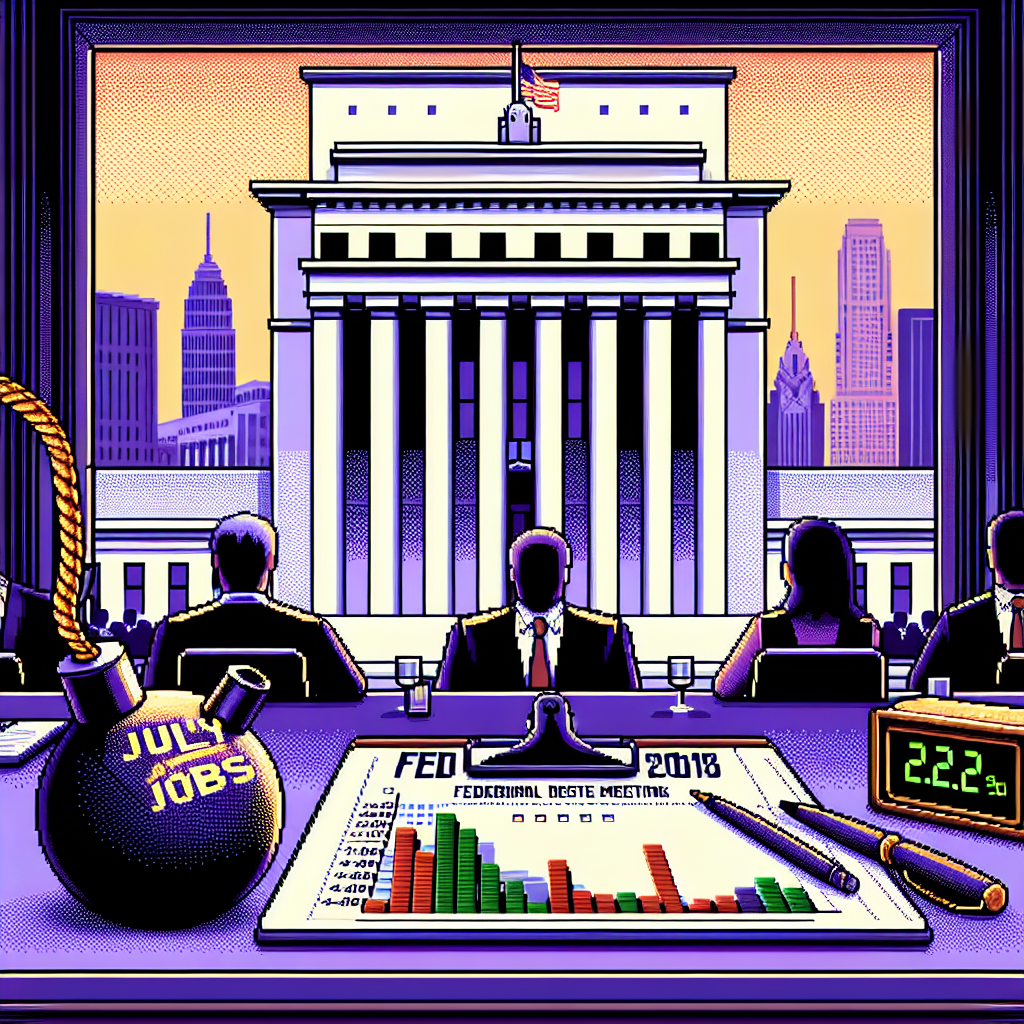
Next, all eyes turn to the Federal Reserve as it prepares to announce its latest interest-rate decision. This is the moment when economists and investors lean in, analyzing every word and nuance for hints about the Fed's future trajectory. With inflation data also being released, the stakes are high. Will the Fed choose to hold steady, or will it pivot in response to the economic conditions? The answer could influence everything from mortgage rates to the stock market's mood.

In a world increasingly driven by data, the Fed's decision is akin to a dance with numbers, where rhythm and timing are crucial. It's a reminder of how interconnected our financial systems are and how a decision in Washington can reverberate around the globe.

July Jobs Report: The Pulse of the Workforce

The July jobs report will offer a snapshot of the labor market’s health and momentum. Employment figures are not just numbers on a page; they represent real people and their livelihoods. In an era where remote work and AI are reshaping the employment landscape, these reports are more telling than ever.

Moreover, as companies grapple with the challenges of attracting and retaining talent, the jobs report also reflects broader societal shifts. From the rise of the gig economy to debates over work-life balance, the data can provide insights into the evolving nature of work itself.

Tech Titans' Earnings: The Battle of the Giants

Lastly, we have the tech giants—Microsoft, Meta, Apple, and Amazon—reporting their earnings. These companies are more than just market leaders; they are cultural behemoths shaping the way we live, communicate, and consume. Their performance will not only influence stock indices but also provide a window into consumer behavior and technological trends.

As these titans of industry reveal their financials, it's worth considering their role in addressing global challenges, such as privacy concerns, digital addiction, and misinformation. They are at the forefront of innovation, yet they also face scrutiny over their impact on society and the economy.

Final Thoughts: A Week of Reflection and Anticipation

This week promises to be a whirlwind of economic indicators and corporate revelations. As we navigate through tariffs, interest rates, jobs data, and tech earnings, it's crucial to remain informed and engaged. After all, these developments affect not only investors and policymakers but also everyday citizens.

In the grand tapestry of global events, this week serves as a reminder of the interconnectedness of markets, nations, and individuals. So, as we keep an eye on the headlines, let's also take a moment to reflect on the broader implications and the shared journey we are all a part of. Here's to a week of discovery and insight!

Read more about AI in Business

Read more about Latest Sports Trends

Read more about Technology Innovations