When a Rally Meets Reality: Tech Rotation Sends Dow Lower — but Palantir Shines
The market hit that familiar tug-of-war this week: broad indexes slipping while one high-profile tech name sprinted ahead. The Dow fell roughly 400 points and the S&P 500 lost about 1% as investors rotated out of richly valued software and cloud names — even as Palantir’s strong fourth-quarter results and upbeat guidance gave the tech complex a momentary lift.
Here’s a readable take on what happened, why it matters, and what to watch next.
Why the selloff felt different this time
- Markets were already on edge from stretched valuations in AI and software stocks. That “priced-for-perfection” setup made the sector unusually sensitive to any signal that future growth might be harder to monetize.
- A wave of fresh product launches and model advances in AI (and attendant discussions about disruption and pricing power) amplified investor anxiety about which companies will actually keep margins and customers.
- The result: investors rotated away from high-flying software names toward either defensive sectors or names with clearer near-term fundamentals — a rotation that pulled the Dow and S&P lower even though pockets of tech reported strong results.
A bright spot: Palantir’s Q4 pushed a rally — briefly
- Palantir reported stronger-than-expected fourth-quarter results and gave upbeat guidance, which initially sent its shares higher and provided a lift to the tech sector.
- The company’s numbers reinforced the narrative that certain data- and AI-centric firms are converting demand into revenue and improved profitability — which is exactly what investors want to see when they question long-term business resilience.
- Still, the broader software and cloud indexes were under pressure, suggesting Palantir was the exception rather than the rule in this pullback.
Market dynamics in plain language
- When a handful of sectors (here: software and cloud) dominate gains over a long stretch, even modest doubts about future growth can produce outsized moves down.
- Earnings surprises, guidance, and product launches now serve double duty: they can validate a growth story or create fresh skepticism about sustainability (and sometimes both, across different names).
- In other words, a single company’s great quarter (Palantir) can’t single-handedly reverse a sector-wide reassessment — but it points to the winners investors will watch most closely.
What this means for investors and observers
- Volatility is a feature, not a bug, in an era where AI expectations are stretched. Expect sharper moves as new models and product rollouts reshape perceived winners and losers.
- Look beyond headlines: strong revenue growth or a beat matters, but so do guidance, customer metrics, and unit economics. Those are the signals that tend to outlast one-day price moves.
- Diversification and a clear view of time horizon matter more than ever: short-term rotations can punish momentum-heavy portfolios, while longer-term investors may find opportunities in temporary selloffs.
Quick takeaways
- Palantir’s solid Q4 and bullish guidance offered a pro-tech datapoint, but the broader software selloff overwhelmed those gains. (Markets can be unforgiving when an entire bucket of stocks is being re-priced.)
- The price action reflects two competing narratives: genuine structural opportunity from AI versus near-term worries about disruption, pricing power, and stretched valuations.
- Expect more headline-driven volatility as upcoming earnings and AI product launches hit the tape.
My take
This episode feels like a market-level reality check. Enthusiasm for AI remains powerful — but so does the discipline of investors who now demand clearer proof that AI-driven revenue growth translates into durable profits and defensible markets. Companies that can show both grit (unit economics, cash flow) and growth will outperform in the messy stretches between hype cycles.
Sources
(Article titles and coverage used to shape this post; links above point to the corresponding news outlets’ market coverage pages.)
Related update: We recently published an article that expands on this topic: read the latest post.
Related update: We recently published an article that expands on this topic: read the latest post.

Puka Nacua: From Beloved Overachiever to Social Media Headline
A 24‑year‑old receiver goes for 225 yards and two touchdowns in a heartbreaker at Lumen Field — and instead of leaving the story with the stat line, he adds a deleted X post and a league fine to the narrative. The result: a fast, messy reminder that modern athletes live—and sometimes err—out loud.
Why this mattered right away
- The game: Los Angeles Rams at Seattle Seahawks, December 18, 2025 — a 38–37 Seahawks overtime win at Lumen Field.
- The performance: Puka Nacua hauled in 12 catches for 225 yards and two touchdowns, his best single-game yardage total to date.
- The firestorm: Moments after the loss Nacua posted (then deleted) a provocative X message criticizing the officials and echoed earlier comments he made during a livestream. The NFL has since fined him $25,000 for criticizing officiating. (reuters.com)
A hook: greatness on the stat sheet, judgement off it
There’s something magnetic about an underdog turned breakout star — the humble kid who becomes indispensable. Nacua’s on‑field leap this season turned him into that player for the Rams. But in the span of 48 hours he went from celebrated overachiever to an athlete whose social media missteps threaten to become the off‑field subplot to his breakout year. The clash between elite performance and impulsive public moments is the modern NFL’s recurring drama.
The sequence of events (clear, specific dates)
- December 16–17, 2025: During a livestream with internet personalities, Nacua criticized NFL officials, saying “the refs are the worst” and accusing them of making calls for attention. That comment drew scrutiny. (nfl.com)
- December 18, 2025: In the Rams’ 38–37 overtime loss at Lumen Field, Nacua recorded 12 receptions for 225 yards and two TDs. After the game he posted on X: “Can you say i was wrong. Appreciate you stripes for your contribution. Lol.” The post was deleted soon after. (sports.yahoo.com)
- December 19, 2025: The NFL announced a $25,000 fine for his comments criticizing officiating; media outlets reported his explanation that the deleted post was “a moment of frustration.” (reuters.com)
What’s at stake
- Reputation: Nacua is widely liked for his work ethic and humility. Repeated high‑profile missteps risk changing his public image from “lovable overachiever” to someone more polarizing. (latimes.com)
- Discipline and finances: The NFL enforces rules against public criticism of officials. Fines are immediate, and repeated incidents can draw stiffer penalties or suspension risk in escalatory scenarios. (nfl.com)
- Contract leverage: Nacua is approaching free‑agency and extension conversations. Off‑field behavior is part of the evaluation for teams and public perception can influence negotiations and endorsements. (latimes.com)
The bigger picture: athletes, social media, and instant consequence
We’re living in an era where a locker room rant, a live stream, or a scowl in postgame footage becomes permanent content. That dynamic compresses the window for reflection between an emotional moment (say, the gut‑wrenching last play of a loss) and a tasteless social post. For young stars, the learning curve now includes not only game film study but platform management.
- Athletes’ impulses are real and human; the platform effect is instantaneous and amplifying.
- Teams increasingly expect media savvy and restraint from marquee players.
- Leagues will fine to enforce perceived integrity of officiating and to deter public undermining of officials.
Not the first, won’t be the last
Every season produces a handful of high‑profile social media misfires. What matters is the follow‑through: sincere apology, corrective behavior, and time. Nacua apologized about a related incident earlier in the week and characterized the deleted tweet as a brief lapse; coach Sean McVay offered public support while also underscoring the need for growth. How Nacua responds over December and into the offseason will shape whether this becomes a minor bump or a recurring storyline. (washingtonpost.com)
What fans and media should watch next
- How Nacua conducts himself in upcoming media availability and whether he offers a clearer public acknowledgement of mistake.
- Any follow‑up action by the NFL beyond the $25,000 fine.
- Whether the Rams emphasize media training as part of player development, especially for young stars entering contract seasons.
Practical keywords for searching fresh updates: Puka Nacua deleted tweet, Rams Seahawks December 18 2025, NFL fines Nacua $25,000, Nacua officiating comments.
Key points to remember
- Nacua’s performance at Lumen Field (225 yards, 12 catches) was elite on December 18, 2025. (sports.yahoo.com)
- He made critical comments about officials during a livestream, then posted and deleted a mocking X message after the Rams’ 38–37 overtime loss. (nbcsports.com)
- The NFL fined him $25,000 for his public criticism of officiating. (nfl.com)
Final thoughts
Talent opens doors, but judgment keeps them open. Puka Nacua’s on‑field rise this season is undeniable; his instant popularity came from state‑of‑mind football and relatable humility. The current controversy is a teachable moment: for Nacua, for the Rams, and for a league balancing player expression with the integrity of the game. If he learns and adapts, this will be a footnote to a spectacular season. If not, it could become a pattern that distracts from what he does best — making plays.
Sources
Related update: We recently published an article that expands on this topic: read the latest post.
Related update: We recently published an article that expands on this topic: read the latest post.

When versatility wins: Bo Melton’s Swiss Army act and Christian Watson’s comeback day
Green Bay served up a classic NFC North slugfest on December 7, 2025 — a game with momentum swings, a few emotional returns, and one of those small, beautiful stories that makes football feel like theater. The headline moments: Bo Melton lining up everywhere and delivering a 45-yard touchdown, and Christian Watson scoring twice in his long-awaited return against the Bears. What followed was a 28-21 Packers victory sealed by Keisean Nixon’s end‑zone interception, but the underlying narrative was about roster flexibility and players answering the moment.
Why this game mattered beyond the score
- Division implications were real — rivalry games carry extra weight in December.
- The Packers are juggling injuries and roster shifts; seeing depth players contribute matters for January hopes.
- Christian Watson’s two-touchdown day in a rematch against the team he suffered a major knee injury against in 2024 added emotional resonance.
- Bo Melton’s play exemplified modern roster value: a core special-teamer who can actually impact offense and (occasionally) defense.
The plays that stole the show
- Bo Melton’s 45-yard touchdown: Lined up in the slot, practically uncovered, Melton tracked Jordan Love’s deep ball and outraced a late recovery by Jaquan Brisker. It was a pure example of schematic misdirection (using a position-change guy to create matchup confusion) and execution. That score opened a window for Green Bay’s offense to breathe. (Source: Packers.com)
- Christian Watson’s two third-down TDs: Watson ripped off a 23-yard third‑and‑10 strike in the second quarter and then a 41-yard third‑and‑3 conversion in the third — both plays when the offense needed a sudden flip of field position and momentum. His performance underscored both his deep speed and his ability to win contested spots after returning from an ACL tear. (Source: Packers.com)
- Josh Jacobs late drive: A decisive 21-yard run set up Jacobs’ 2-yard touchdown that put Green Bay ahead with 3:32 left — a reminder the run game still provides the most reliable late‑game clock management and hole‑making. (Source: Packers.com)
- Keisean Nixon’s game‑ending interception: The defensive bookend — timely pressure and a red‑zone pick to close the door — turned a tight game into a W. (Game recap)
What Bo Melton’s usage tells us about the Packers
- Versatility is not just a roster luxury; it’s a strategic weapon. Melton started camp as a converted cornerback and has been sprinkled into offensive snaps after injuries thinned the wide receiver room. Using him as a change‑of‑pace receiver created a matchup the Bears hadn’t prepared for.
- Special teams and hybrid players expand play-calling options. Melton’s background makes him harder to scout pre-snap: is he a receiver, a nickel corner, or a gadget snap? That uncertainty can free up timing and create one-on-one opportunities.
- Developmentally, Melton’s path is a modern blueprint: carve out a role on special teams, learn multiple positions, and be ready when the offense calls your number. His touchdown — his first regular-season TD since the breakout vs. Minnesota nearly two years ago — was validation of that journey. (Source: Packers.com)
Christian Watson’s comeback arc, by the numbers
- Since returning in late October, Watson has been explosive: he recorded 25 receptions for 452 yards and five touchdowns over six starts leading up to this game, and the Bears matchup gave him another statement performance. The two touchdowns against Chicago were both on third downs — high-leverage plays that swung the pendulum for Green Bay. (Source: Packers.com)
- The third‑down wrinkle: Watson’s touchdowns highlight Jordan Love’s comfort throwing in pressure windows and the Packers’ willingness to target their fastest vertical threat on critical downs.
Matchup lessons and what to watch next
- Opponents defending Love must respect the vertical game. When Green Bay gets one-on-one coverage, Love and his receivers are willing to attack and convert on big downs.
- Depth matters late in the season. With injuries across the league, teams that can rotate in competent, multi-role players (Melton, returning receivers like Jayden Reed, etc.) will fare better in January’s attrition.
- The Bears’ late rally nearly changed the narrative. The ability to stop a fourth‑quarter run and then force a high-pressure end‑zone throw — resulting in Nixon’s interception — showed that complementary football (offense, run game, red‑zone defense) wins tense rivalry games.
Highlights for quick SEO-friendly scanning:
- Bo Melton touchdown: 45 yards.
- Christian Watson: 2 TDs, 89 yards on 4 targets.
- Jordan Love: 3 TD passes, key chemistry with deep targets.
- Josh Jacobs: 86 rushing yards, game-winning TD.
- Final score: Packers 28, Bears 21; game‑sealing INT by Keisean Nixon.
A closer look at momentum and morale
This win felt like more than three points in the standings — it was a validation of culture. Players returning from injury produced, a utility man stepped up when asked to wear many hats, and the defense made the play it needed to at the end. Those intangible outcomes ripple in a locker room: confidence in backups, trust in the coaching staff’s creativity, and reinforced belief in Jordan Love’s decision-making with the deep ball.
My take
Football seasons are often decided by the little things that compound: a converted third‑down, a timely blitz, a creative personnel usage. Bo Melton’s touchdown was one of those small-but-loud moments that can tilt a roster’s identity toward versatility. Christian Watson’s two scores reminded everyone that elite speed + regained confidence is a dangerous combination. Put them together with a steady running game and a clutch defensive play, and you get a win that feels like progress.
Sources
Related update: We recently published an article that expands on this topic: read the latest post.
S&P slips, ADP signals softer jobs market — live market mood
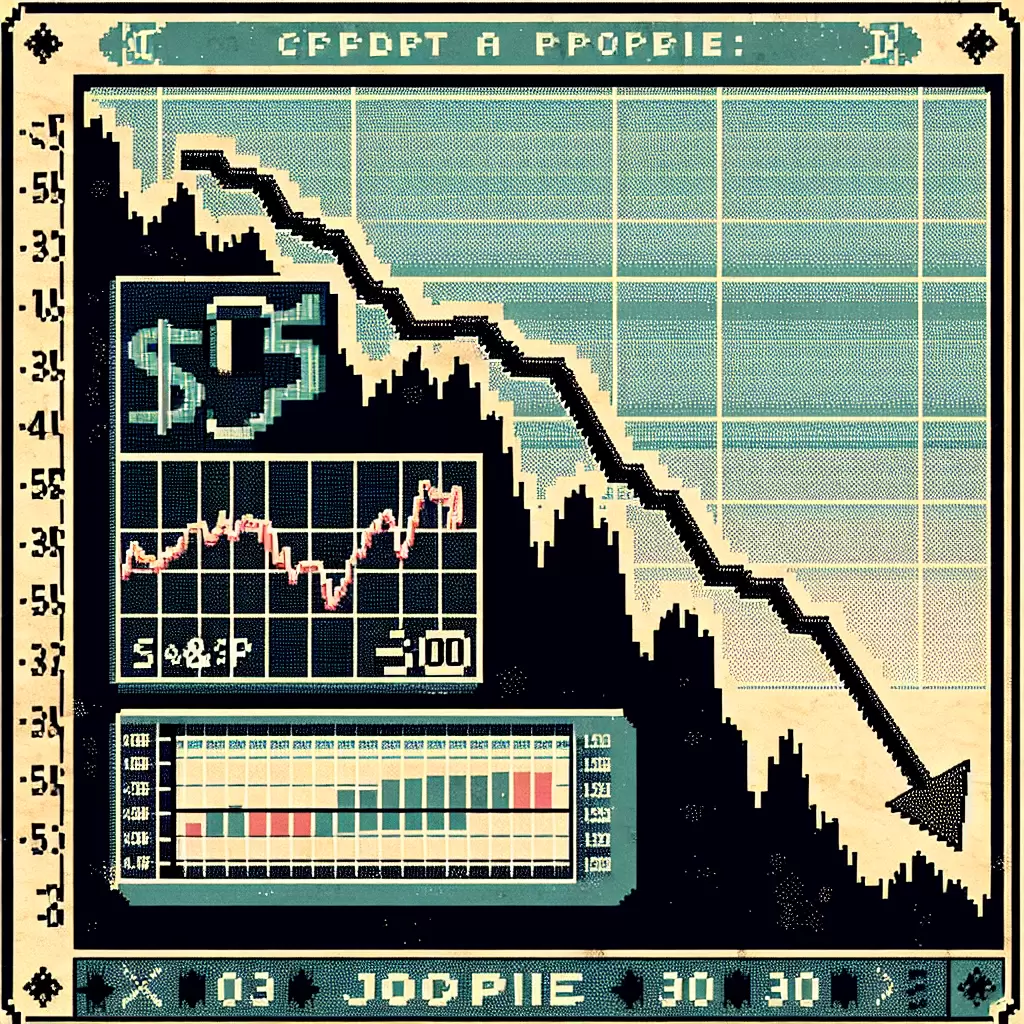
The mood on Wall Street this week felt like a weather shift: one moment clear, the next a heavy cloud of caution rolling in. The S&P 500 nudged lower as investors processed the latest ADP private-payrolls read — a number that, while not catastrophic, reinforced the view that the labor market is cooling. That subtle shift is enough to make traders rethink risk, tech valuations and how fast the Fed might move next.
What happened (quick snapshot)
- ADP’s October private-payrolls report showed a modest gain of about 42,000 jobs on November 5, 2025, a bounce after a couple of weak months but still a far cry from the pace seen earlier in the year.
- The S&P 500 slipped on the news while the Nasdaq and Dow showed mixed action as investors weighed weaker labor momentum against pockets of resilience.
- Markets are especially sensitive right now because official BLS data has been disrupted; traders are leaning on ADP and other indicators for clues about employment and inflation.
Why this matters right now
- The labor market is the primary lever for the Fed: brisk hiring and rising wages give the Fed room to keep rates high; cooling labor reduces near-term inflation pressure and increases the odds of rate cuts or a slower path higher.
- ADP is not the BLS. It’s a private-sample indicator that often points the way but can diverge from the official jobs number. With some government data delayed in recent weeks, ADP’s read carries outsized influence.
- Even modest “slack” in hiring can hurt high-valuation sectors (think tech) and tilt flows toward defensive parts of the market.
Market context and background
- Through 2025 the U.S. labor market has been on a gradual softening trend: monthly hiring has slowed from the heady gains of prior years, and several reports have shown layoffs rising in certain sectors (notably tech and professional services).
- ADP’s October report (released November 5, 2025) showed a limited rebound with gains concentrated in education, healthcare and trade/transportation — while professional services, information and leisure/hospitality continued to lose jobs.
- Investors are also watching broader signals: corporate earnings, layoffs data from firms, and other real‑time indicators that can confirm whether hiring weakness is broad-based.
Market movers (how the indexes reacted)
- S&P 500: slipped as traders priced in slower growth and a slightly stronger chance of policy easing later rather than sooner.
- Nasdaq: sensitive to growth and earnings momentum, it underperformed at times as soft hiring raises questions about tech demand and valuations.
- Dow: tended to be steadier, benefiting from more defensive and cyclical names that are less dependent on expansionary sentiment.
A few takeaways for investors and traders
- ADP matters now because other official data streams are constrained. Treat it as a directional signal, not gospel.
- A modest slowdown in private payrolls is not the same as a recession signal — but it does change the probabilities on Fed timing and equity valuations.
- Sector rotation is alive: less tolerance for richly priced growth names, more interest in value, dividends and beaten-down cyclical names if data deteriorates further.
My take
This is classic “data-driven caution.” The October ADP print is neither a dramatic shock nor a reassurance that everything’s fine. It sits in the middle: enough to make markets re-price risk modestly and to keep central-bank watchers glued to the next data points. In that environment, patience matters. Traders will jump on any fresh signal — another payroll read, CPI or corporate guidance — so expect continued intraday swings and heightened sensitivity to headlines.
Final thoughts
Markets are living through a transition: from a hot labor market that justified higher valuations to a more uncertain one where the Fed’s next move is less obvious. That middle ground often brings volatility and opportunity. For long-term investors, the best move is rarely to panic but to reassess portfolio tilt and ensure allocations reflect both risk tolerance and the new economic backdrop.
Sources
Related update: We recently published an article that expands on this topic: read the latest post.
Related update: We recently published an article that expands on this topic: read the latest post.