Lenders Balk at AI Data Center Financing | Analysis by Brian Moineau

Lenders said “no” to an AI data center. Why that matters.

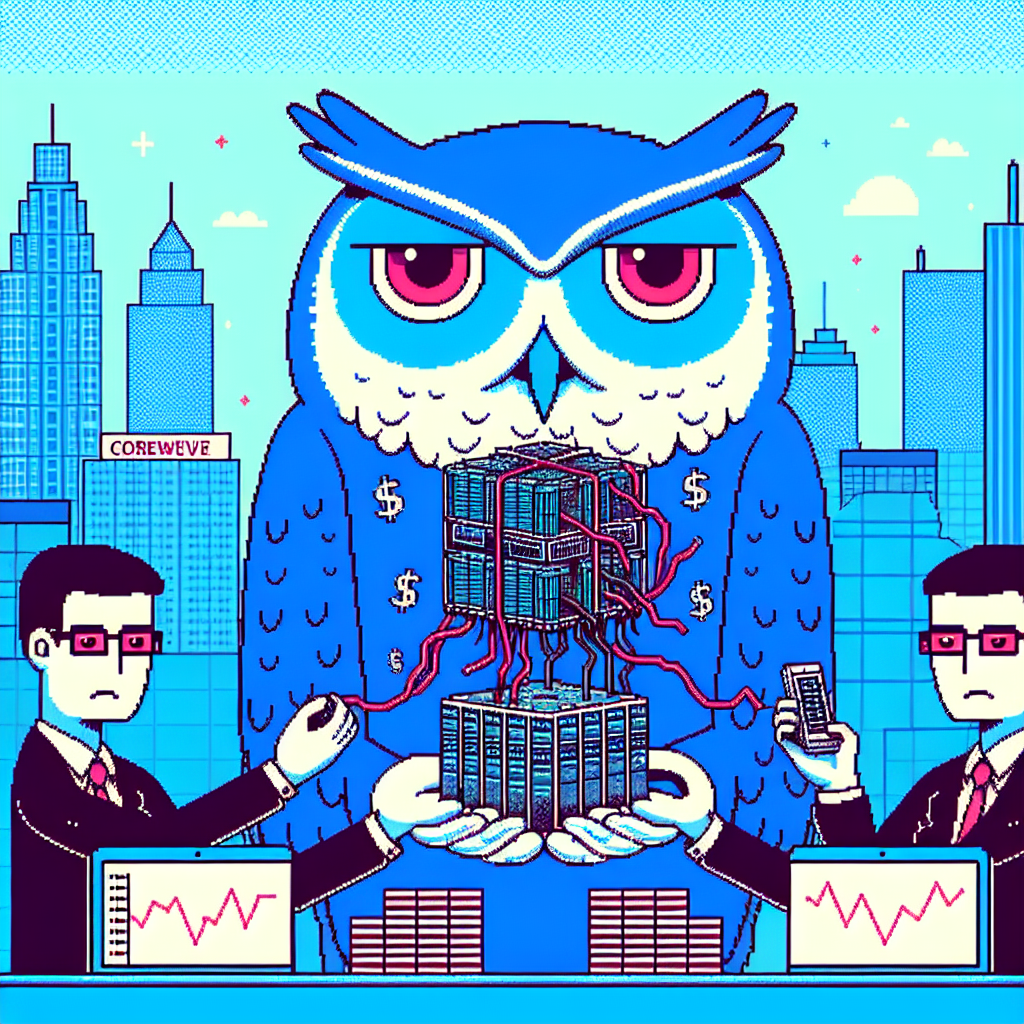
When the financial engine behind a flashy AI project can’t convince banks to chip in, it’s not a small hiccup — it’s a flashing warning light. Last week, Blue Owl Capital’s attempt to line up roughly $4 billion of third‑party debt for a new data center in Lancaster, Pennsylvania — a build CoreWeave would occupy — failed to draw lender interest. The reason cited by at least one prospective lender: CoreWeave’s below‑investment‑grade credit profile and the growing unease around underwriting AI‑linked infrastructure with stretched balance sheets. The story isn’t just about one deal — it’s a snapshot of how credit markets are recalibrating around the AI boom.

Quick takeaways for readers scanning headlines

  • Blue Owl shopped approximately $4 billion of debt for a Lancaster, PA data center that CoreWeave is expected to occupy, but lenders largely passed.
  • CoreWeave carries a B+ issuer rating from S&P, which many lenders view as a material hurdle for financing large construction loans.
  • Blue Owl has provided roughly $500 million of bridge financing that runs through March 2026, but longer‑term debt partners remain elusive.
  • The episode highlights a broader tightening in credit appetite for capital‑intensive AI infrastructure that lacks investment‑grade tenant credit or explicit sponsor credit support.

The backstory you need

Over the past 18 months, an explosion of AI compute demand has driven a rush to build specialized data centers loaded with GPUs and networking hardware. Building that capacity is incredibly expensive — and developers have often relied on creative financing structures to spread risk: pre‑leasing to investment‑grade tenants, using big‑tech credit to securitize bonds, or tapping private‑credit syndicates.

Blue Owl made a name for itself by structuring large, bespoke financing deals tied to hyperscale projects — sometimes leaning on the strong credit of marquee partners. In Lancaster, the project was to be occupied by CoreWeave, a fast‑growing AI cloud provider backed commercially by Nvidia and others. But CoreWeave’s S&P issuer rating sits at B+ — below investment grade — and lenders told Business Insider they reviewed the deal and “passed.” Blue Owl says the project is under construction and “fully funded, on time, and on budget,” and disclosed about $500 million of bridge financing through March 2026 to cover near‑term needs. The challenge is finding permanent debt that’s comfortable carrying exposure to a below‑IG tenant and the concentrated, capital‑intensive nature of AI infrastructure.

Why lenders are getting picky

  • Credit ratings matter. For big construction debt, investment‑grade tenant credit or sponsor guarantees make it far easier for banks and institutional lenders to underwrite large exposures. A B+ issuer rating is often treated as “junk” territory for many conservative lenders.
  • AI is capital‑intensive and lumpy. The economics depend on long‑term take‑or‑pay contracts, utilization of expensive GPUs, and steady demand. Any wobble in customer concentration or equipment supply can compress cash flow quickly.
  • Market memory of recent stresses. Earlier struggles — like banks having a hard time placing tranches of other hyperscale financings — have made lenders more circumspect.
  • Private‑credit scrutiny. Blue Owl itself has faced pressure in parts of its business (including reports of halted redemptions in a private credit fund), which can color counterparties’ appetite to join its largest balance‑sheet exposures.

What this means for CoreWeave, Blue Owl, and the AI buildout

  • For CoreWeave: investor patience will hinge on cash‑flow visibility and an ability to diversify tenant concentration and lower leverage. The stock moved lower after the reporting, reflecting market discomfort.
  • For Blue Owl: the firm can still fund projects via sponsor equity or temporary bridge loans, but repeatedly failing to syndicate debt on marquee deals could hurt its reputation as a deal architect and raise questions about balance‑sheet exposure.
  • For the sector: expect more selectivity. Deals that once easily found buyers — because of hype around AI demand — will now require cleaner credit profiles, investment‑grade anchors, or explicit wrap/credit support from an investment‑grade counterparty.

The investor dilemma

Investors and lenders face a tradeoff: back high‑growth, strategically important AI infrastructure (and accept structurally higher credit risk), or demand tighter protections and wait for clearer proof that demand and margins are durable. That tradeoff is reshaping deal structures:

  • More bridge financing and sponsor equity up front.
  • Deals that rely on investment‑grade offtake guarantees (or partial guarantees).
  • Larger covenant packages, shorter tenors, and higher pricing for riskier borrowers.

My take

This episode is less a verdict on AI’s long‑term promise and more a reminder that capital markets separate technological excitement from credit tolerance. Building the AI cloud is still necessary and likely lucrative for some players — but lenders increasingly want either investment‑grade counterparties, explicit credit support, or much better margin of safety. That shift will favor well‑capitalized incumbents and force smaller, highly leveraged specialists to refine their capital plans or find partners willing to accept concentrated risk.

If Blue Owl or CoreWeave can secure an investment‑grade sponsor guarantee, diversify demand, or show stronger operating cash flows, the market will follow. Until then, expect increased creativity in financing — and more deals that stall at the lender pitch desk.

Sources

Final thoughts

The AI infrastructure race will keep building — but the capital that fuels it is asking tougher questions. Projects once sold on future demand will increasingly need present‑day creditworthiness, sponsor strength, or hybrid financing structures that bridge the gap. The lenders’ “pass” in Lancaster is a practical reset: hype isn’t a covenant, and tomorrow’s compute needs don’t pay today’s interest.


Related update: We recently published an article that expands on this topic: read the latest post.


Related update: We recently published an article that expands on this topic: read the latest post.

Oracle’s $50B Cloud Gamble Fuels AI Race | Analysis by Brian Moineau

Oracle’s $45–50 billion Bet on AI: Why the Cloud Arms Race Just Got Louder

The headline is dramatic because the move is dramatic: Oracle announced it plans to raise between $45 billion and $50 billion in 2026 through a mix of debt and equity to build more cloud capacity. That’s not a routine capital raise — it’s a statement about how much money is now needed to stand toe-to-toe in the AI infrastructure race.

Why this matters right now

  • The market for large-scale cloud compute for AI is shifting from software-margin stories to capital-intensive infrastructure plays.
  • Oracle says the cash will fund contracted demand from big-name customers — including OpenAI, NVIDIA, Meta, AMD, TikTok and others — which means these are not speculative capacity bets but expansions tied to real deals.
  • Raising this much via both bonds and equity signals Oracle wants to preserve an investment-grade balance sheet while shouldering a very heavy upfront cost profile that may compress free cash flow for years.

What Oracle announced (the essentials)

  • Oracle announced its 2026 financing plan on February 1, 2026. The company expects to raise $45–$50 billion in gross proceeds during calendar 2026. (investor.oracle.com)
  • Financing mix:
    • About half via debt: a one-time issuance of investment-grade senior unsecured bonds early in 2026. (investor.oracle.com)
    • About half via equity and equity-linked instruments: mandatory convertible preferred securities plus an at-the-market (ATM) equity program of up to $20 billion. (investor.oracle.com)
  • Oracle says the capital is to meet "contracted demand" for Oracle Cloud Infrastructure (OCI) from major customers. (investor.oracle.com)

How this fits into Oracle’s longer-term AI strategy

  • Oracle has pivoted in recent years from being primarily a database and enterprise-software vendor to an infrastructure provider for generative AI customers. Large, multi-year contracts (notably with OpenAI) have been central to that story. (bloomberg.com)
  • Building AI-scale data centers is capital intensive: racks, GPUs/accelerators, power, cooling, networking, and long lead times. The company’s plan acknowledges that scale requires front-loaded spending — and external capital. (investor.oracle.com)

The investor dilemma

  • Pros:
    • Backing by contracted demand reduces some revenue risk versus pure capacity-to-sell strategies.
    • If Oracle can deliver the compute reliably, the payoff could be large: stable long-term revenue from hyperscaler-AI customers and higher utilization of OCI.
  • Cons:
    • Heavy near-term cash burn and higher gross debt levels could pressure margins and returns for several fiscal years.
    • Equity issuance (including ATM programs and convertible securities) dilutes existing shareholders and can weigh on the stock.
    • Credit metrics and investor appetite for more investment-grade bonds at this scale are uncertain. Credit-default-swap trading and analyst commentary show investor nervousness about overbuilding for AI. (barrons.com)

Who bears the risk — and who benefits?

  • Risk bearers:
    • Current shareholders face dilution risk and near-term margin pressure.
    • Bond investors absorb increased leverage and structural execution risk if demand slips or customers renegotiate.
  • Potential beneficiaries:
    • Customers that secure large, predictable capacity from Oracle (e.g., AI model trainers) may benefit from more onshore, enterprise-grade compute.
    • Oracle, if it executes, could lock in long-term, high-margin cloud contracts and tilt the competitive landscape versus other cloud providers.

What to watch next

  • Timing and pricing of the bond issuance (size, maturities, yields) — this will show investor appetite and borrowing cost. (investor.oracle.com)
  • Pace and pricing of the ATM equity program and any convertible issuance — how aggressively Oracle taps the market matters for dilution and market sentiment. (investor.oracle.com)
  • Delivery milestones and usage numbers from Oracle’s major contracts (especially OpenAI) — revenue recognition and cash flows tied to those deals will determine whether the investment turns into long-term value. (bloomberg.com)
  • Any commentary from ratings agencies about credit outlook — maintaining investment-grade status appears to be a stated goal; watch for downgrades or negative outlooks. (barrons.com)

A quick reality check

  • Oracle’s public statement is explicit: this is a 2026 calendar-year plan to fund contracted demand and to do so with a “balanced combination of debt and equity” while aiming to keep an investment-grade balance sheet. That clarity helps investors model the path forward — but it doesn’t remove execution risk. (investor.oracle.com)

My take

This is the clearest evidence yet that AI’s infrastructure tailwinds have become a capital market story as much as a software one. Oracle isn’t just buying GPUs — it’s buying a longer runway to be a backbone for AI customers. That could be brilliant if those contracts materialize and stick. It could also be a cautionary tale of heavy upfront capital deployed into an industry still sorting out which customers and deals will be durable.

For long-term investors, the question isn’t only whether Oracle can build data centers efficiently — it’s whether those investments translate into sustained, high-quality cash flows before the financing and dilution costs swamp returns. For the market, the move raises a broader point: large-scale AI will increasingly look like utilities and telecom in its capital intensity — and that changes how we value cloud vendors.

Sources


Related update: We recently published an article that expands on this topic: read the latest post.


Related update: We recently published an article that expands on this topic: read the latest post.

Credit Boom Since 2007 Fuels Complacency | Analysis by Brian Moineau

When Credit Markets Get Hot, Complacency Becomes the Real Risk

Global credit markets are running at their hottest in nearly two decades — spreads are compressing, issuance is booming, and big-name managers from Pimco to Aberdeen are waving caution flags. That combination makes for a heady cocktail: strong returns today, and a growing list of reasons to worry about what happens when the music stops.

Why this matters right now

  • Corporate bond spreads have tightened to levels not seen since around 2007, driven by strong demand for yield and an ongoing search for income across institutions and retail investors.
  • Heavy issuance — from investment-grade firms to private credit vehicles — has flooded markets with supply, yet investors continue to buy. That eagerness reduces compensation for taking credit risk.
  • Managers who’ve lived through cycles (and painful defaults) are increasingly saying the same thing: fundamentals are showing cracks in some corners, underwriting standards look looser than they should, and the “complacency premium” may be dangerously low.

The tone isn’t doomsday. Rather, it’s a reminder that stretched markets can stay stretched for a long time — and when conditions change, losses can happen fast.

How the market got here

  • Central banks’ pivot from emergency easing to tighter rates in recent years, followed by signs of easing expectations, encouraged buyers back into credit. Falling government yields made corporate spreads look attractive — at first.
  • Private credit exploded in size as investors chased higher returns outside public markets. That growth brought looser lender protections and more leverage in some deals.
  • Big pools of long-term capital (pension funds, insurers, yield-seeking mutual funds) have structurally increased demand for credit, reducing the market’s risk premiums.

Those forces combined into a classic late-cycle pattern: strong performance, plentiful issuance, and gradually deteriorating underwriting standards.

What the big managers are saying

  • Pimco’s research and outlooks have highlighted compressed spreads and growing caution about private credit and lower-quality, highly leveraged sectors. Their view: be selective, favor high-quality public fixed income, and avoid chasing thin risk premia where protections are weak. (See Pimco’s recent “Charting the Year Ahead” insights.)
  • Aberdeen (abrdn) analysts have laid out scenarios — soft landing, hard landing, and “higher-for-longer” rates — and pointed out that spreads now price a fairly optimistic path. They advise balancing risk and opportunity, favoring investment-grade credits while watching for vulnerabilities in lower-rated segments.

These voices aren’t saying “sell everything.” They’re saying: recognize where compensation is thin, stress-test portfolios for adverse outcomes, and favor structures and collateral that offer real protection.

Where vigilance should be highest

  • Private credit and direct lending: Less liquid, often less transparent, and sometimes offering little extra spread relative to liquidity and covenant risk.
  • Lower-rated corporate bonds and cov-lite loan markets: Covenant erosion and looser underwriting reduce recovery prospects if stress arrives.
  • Heavily levered sectors or those exposed to cyclical slowdowns: Retail, certain parts of tech and media, and some leveraged consumer plays.
  • Vehicles promising liquidity that isn’t supported by underlying assets: Mismatches can amplify losses in stressed conditions.

Practical portfolio nudges

  • Tilt toward quality: Favor issuers with stable cash flows, healthy balance sheets, and strong covenants when possible.
  • Mind liquidity: Don’t over-allocate to strategies or funds that can’t meet redemptions in a stress event if you rely on liquidity.
  • Diversify across credit continuums: Think of public vs. private, secured vs. unsecured, and short vs. long duration as decision levers — not as a single “credit” bucket.
  • Stress-test yield assumptions: Ask how returns hold up if rates shock higher or default rates rise modestly.
  • Focus on security selection: In a spread-compressed world, alpha from selection matters more than broad beta exposure.

The investor dilemma

  • On one hand, credit has delivered attractive returns and many investors can’t ignore the income.
  • On the other, chasing that income without discipline risks permanent impairment of capital if defaults or liquidity squeezes spike.

That tension is the heart of the current message from the Street: participate, but don’t confuse participation with prudence.

A few scenarios to watch

  • Soft landing: Spreads tighten further, defaults stay low — investors get more upside, but valuations look stretched.
  • Hard landing: Spreads widen materially, defaults rise — lower-quality credit and illiquid private positions suffer first and worst.
  • Higher-for-longer rates: Credit performance is mixed; higher absolute yields cushion total returns, but re-pricing risk and refinancing stress hurt vulnerable issuers.

Being explicit about which scenario you’re implicitly betting on helps shape position sizing and risk controls.

My take

There’s nothing inherently wrong with credit markets being hot — markets reflect supply, demand, and investor preferences. The problem is complacency: when good outcomes become the norm, people gradually lower their guard. Today’s environment rewards selectivity, structural protections, and a healthy dose of skepticism about easy-looking yield. For most investors, that means reducing blind beta in favor of credit with clear collateral, conservative underwriting, and diversified liquidity sources.

Final thoughts

Markets can stay frothy for longer than intuition suggests. That’s why the best defense isn’t trying to time the exact top but building resilience: limit exposure where compensation is thin, demand transparency and covenants, and keep some capacity to redeploy into genuinely attractive opportunities if conditions normalize or stress reveals weaknesses. The loudest warnings aren’t forecasts of immediate collapse — they’re a call to invest with intention.

Sources


Related update: We recently published an article that expands on this topic: read the latest post.

Trumps 10% Card Rate Shakes Bank Stocks | Analysis by Brian Moineau

When a Truth Social Post Moves Markets: Credit-card Stocks Tumble After Trump’s 10% Pitch

It took a few sentences on Truth Social to send a jolt through Wall Street. On Jan. 10–12, 2026, shares of card-heavy lenders—Capital One among them—slid sharply after President Donald Trump called for a one‑year cap on credit‑card interest rates at 10%, saying he would “no longer let the American Public be ‘ripped off’ by Credit Card Companies.” The market reaction was immediate: card issuers and some big banks saw double‑digit intraday swings in premarket and regular trading as investors tried to price political risk into credit businesses. (cbsnews.com)

The scene in the trading pit

  • Capital One, which leans heavily on credit‑card interest, was among the hardest hit—dropping roughly 6–9% in early trading depending on the snapshot—while other card issuers and big banks also fell. Payment processors such as Visa and Mastercard slipped too, though their business models are less dependent on interest income. (rttnews.com)
  • Traders didn’t just react to the headline; they reacted to uncertainty: Would this be a voluntary squeeze, an executive action, or an actual law? Most analysts pointed out that a 10% cap would require congressional legislation to be enforceable and could be difficult to implement quickly. (politifact.com)

Why markets panicked (and why the panic might be overdone)

  • Credit cards are a high‑margin, unsecured loan product. Banks price risk into APRs; slicing those rates dramatically would compress profits and force repricing or pullback in lending to riskier customers. Analysts warned of a “material hit” to card economics if 10% became reality. (reuters.com)
  • But there’s a big legal and political gap between a president’s call on social media and an enforceable nationwide interest cap. An executive decree cannot rewrite federal usury rules or contractual APRs without Congress—or sweeping regulatory authority that doesn’t presently exist. That makes the proposal politically potent but legally fragile. (politifact.com)
  • Markets hate uncertainty. Even improbable policy moves can shave multiples from stock valuations when they threaten a core revenue stream. That’s why even companies like Visa and Mastercard dipped: a hit to consumer spending or card usage patterns could ripple into transaction volumes. (barrons.com)

Who wins and who loses if a 10% cap actually happened

  • Losers
    • Pure‑play card issuers and lenders with big portfolios of higher‑risk card balances (e.g., Capital One, Synchrony) would see margins squeezed and might exit segments of the market. (rttnews.com)
    • Rewards programs and cardholder perks could be reduced as banks seek to cut costs that were previously subsidized by interest income. (investopedia.com)
  • Winners (conditional)
    • Consumers who carry balances could see immediate relief in interest payments if the cap were enacted and applied broadly.
    • Payment networks could potentially benefit from increased transaction volumes if lower borrowing costs stimulated spending, though network revenue isn’t directly tied to APRs. Analysts are divided. (barrons.com)

The investor dilemma

  • Short term: stocks price in political risk fast. If you’re an investor, the selloff can create buying opportunities—especially if you think the cap is unlikely to pass or would be watered down. Some strategists flagged this as a dip to consider adding to core positions. (barrons.com)
  • Medium term: watch credit metrics. If a cap—or even credible legislative movement toward one—appears likely, expect a repricing of credit spreads, tightened underwriting, and lower return assumptions for card portfolios.
  • For conservative portfolios: prefer diversified banks with strong deposit franchises and diversified fee income over mono‑line card lenders. For risk seekers: sharp selloffs can be entry points if you accept policy risk and can hold through noise. (axios.com)

Context and background you should know

  • Credit card interest rates have been unusually high in recent years—average APRs have been around or above 20%—driven by higher Fed policy rates and the risk profile of revolving balances. That’s why the idea of a 10% cap resonates politically: it’s easy to sell to voters frustrated by the cost of everyday credit. (reuters.com)
  • The mechanics matter: imposing a blanket cap raises thorny questions about existing contracts, late fees, penalty APRs, and whether banks could offset lost interest with higher fees or reduced credit access. Policymakers and consumer advocates debate tradeoffs between lower rates and potential credit rationing for vulnerable borrowers. (reuters.com)

Angle for business and consumer readers

  • For business readers: policy headlines can create volatility—think through scenario planning, stress‑test margins under lower APR assumptions, and model customer credit migration or fee adjustments.
  • For consumers: a political promise is different from a law. While the headline offers hope, practical steps—improving credit scores, shopping for lower APR offers, and negotiating with issuers—remain the most reliable ways to lower your rate today. (washingtonpost.com)

My take

The episode is a textbook example of modern politics meeting modern markets: a high‑impact, low‑information social‑media policy push that forces quick repricing. The risk to banks is real if Congress moves, but the legal and logistical hurdles are substantial—so the smarter read for many investors is to separate near‑term market panic from long‑term structural risk. For consumers, the promise is attractive; for firms, it’s a reminder that political headlines are now a permanent driver of volatility.

Sources


Related update: We recently published an article that expands on this topic: read the latest post.


Related update: We recently published an article that expands on this topic: read the latest post.