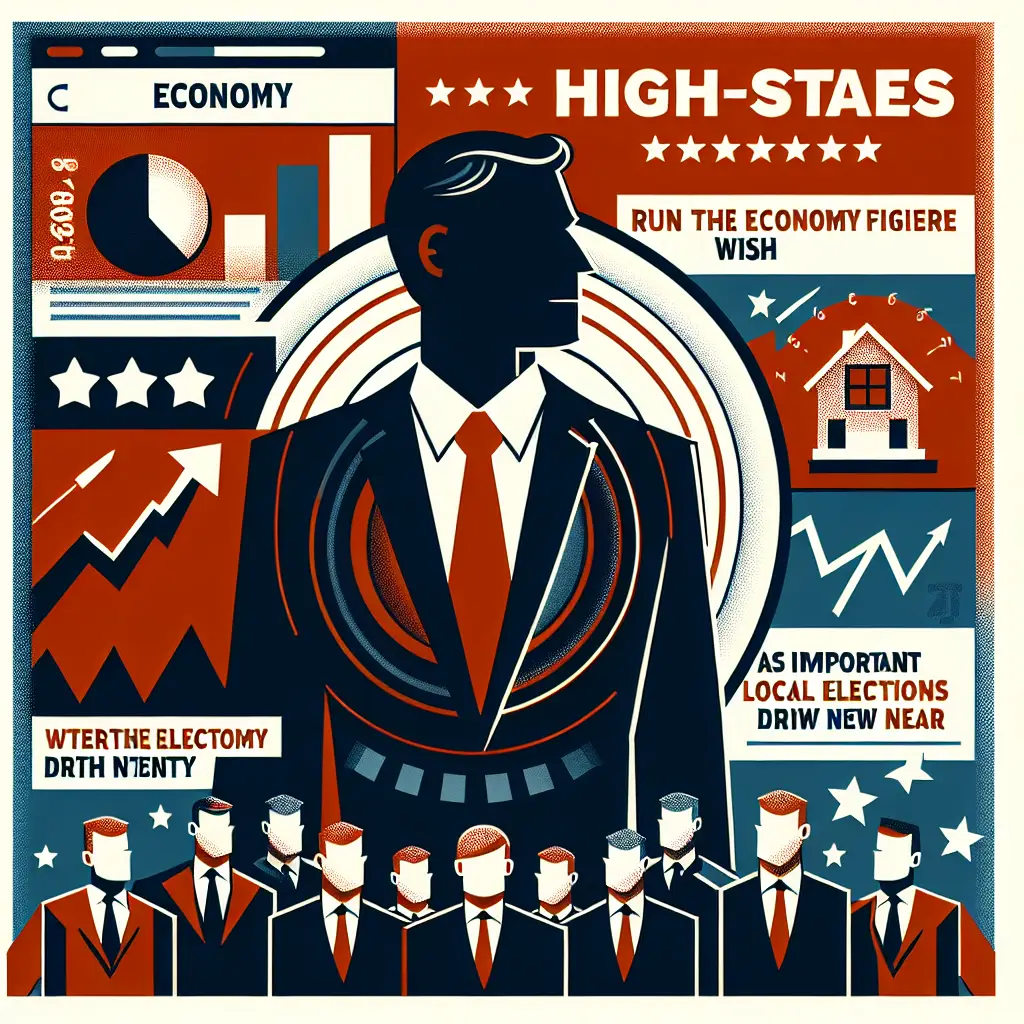
Betting on a Hot Economy to Win Midterms | Analysis by Brian Moineau

Running the Economy Hot: Politics, AI and the Bet for a Midterm Bounce

The White House is openly gambling that a hotter economy will translate into happier voters. Picture this: bigger tax refunds hitting bank accounts this spring, investment incentives nudging companies to spend, a friendlier regulatory climate—and a steady drumbeat about AI-driven productivity keeping inflation from erupting. It’s a full-court press aimed at lifting Republican prospects in November’s congressional elections.

Below I unpack what the administration is promising, why economists are split, and what voters and markets should watch as the calendar moves toward the midterms.

Why the administration thinks this will work

  • The policy centerpiece is sweeping tax changes that increase refunds and lower tax bills for many households and businesses—money the White House says will fuel consumer spending and business investment.
  • Officials are banking on three reinforcing forces: fiscal stimulus (tax refunds and incentives), looser regulation, and an expected easing of interest rates from the Federal Reserve.
  • Crucially, they argue that productivity gains from broader AI adoption will expand supply and output, allowing wages and growth to rise without rekindling persistent inflation.

This is not subtle messaging. Administration officials and allies have framed the near-term goal as “running the economy hot” to deliver strong GDP numbers before voters cast ballots.

What’s actually in motion (and the timing)

  • Tax refunds: New or extended provisions in recent tax legislation mean many filers will see larger refunds this filing season, which typically peaks from February through April. That timing could create visible short-term boosts in consumer spending.
  • Business incentives: Provisions that accelerate write-offs and expand research & development credits are designed to push companies to invest now rather than later.
  • Monetary policy hopes: The White House is counting on the Fed to cut rates in 2026, lowering borrowing costs and amplifying fiscal stimulus. That’s a political — and calendar-sensitive — wish.
  • AI productivity argument: Officials point to faster productivity in IT and knowledge sectors as proof that AI can raise output without a proportional rise in prices.

The economist’s dilemma

  • Stimulus composition matters. Tax cuts skewed toward higher earners and corporate incentives can increase GDP without producing the same marginal consumption boost as relief targeted at lower-income households. Higher-income recipients tend to save or invest a larger share.
  • Timing and behavioral responses are uncertain. Many households carry elevated credit-card balances and might use refunds to pay debt rather than spend. Corporations may also delay investment if they see demand or policy risks.
  • Inflation and the Fed. If growth re-accelerates faster than expected and inflation moves up, the Fed could tighten—undoing the administration’s hoped-for cycle of rate cuts.
  • Tariffs, immigration stance and regulatory rollbacks could blunt gains. Trade barriers and policies that strain labor supply may raise costs and constrain growth even as tax-driven demand rises.

Who wins — and who might not

  • Potential winners: Homeowners, asset-holders and firms positioned to benefit from accelerated investment or deregulation. Voters who receive larger refunds and feel immediate relief may reward incumbents.
  • Potential losers: Younger, price-sensitive renters facing high housing costs; lower-income households that don’t see proportional benefit; and broader wage earners if inflation returns or housing and credit costs stay elevated.
  • Political payoff depends on perception: Voters tend to reward perceivable personal economic gain. A headline GDP beat helps, but pocketbook effects (paychecks, refunds, mortgage rates) often matter more.

Signals to watch between now and November

  • IRS refund flows and consumer spending figures (Feb–Apr): are refunds getting spent or used to pay down debt?
  • Job growth and wage trends: sustained wage gains would bolster the “hot economy” narrative.
  • Core inflation and Fed communications: any sign inflation is re-accelerating could prompt a policy pivot.
  • Corporate capex announcements: are firms actually accelerating investment on the incentives?
  • Housing and credit indicators: mortgage rates, home prices and consumer credit trends will shape broader sentiment.

Quick takeaways

  • The administration is pursuing a time-sensitive strategy: fiscal boosts, deregulatory moves and a narrative about AI productivity to produce a visible economic lift before midterms.
  • The policy mix could produce a short-term growth bump, but whether that translates into durable gains or voter gratitude is uncertain.
  • The Federal Reserve and household responses (spending vs. debt repayment) are the two wildcards that will determine if “running hot” helps or backfires.

My take

This is a high-stakes political experiment wrapped in economic policy. The mechanics are plausible—a tax-season boost, combined with business incentives, can push GDP higher in the short run. But economics is full of second acts: who receives the gains, how they use them, and how monetary policy reacts. If AI does meaningfully raise productivity and the Fed leans dovish as hoped, the White House narrative could be vindicated. If inflation surprises to the upside or refunds flow into debt repayment, the engine sputters—and the political returns may fall short.

Sources


Related update: We recently published an article that expands on this topic: read the latest post.

Related update: We recently published an article that expands on this topic: read the latest post.


Related update: We recently published an article that expands on this topic: read the latest post.

FSOC Reset: Deregulation for Growth | Analysis by Brian Moineau

A watchdog reborn for growth: What Scott Bessent’s FSOC reset means for markets and regulators

A policy about protecting the financial system just got a makeover. When Treasury Secretary Scott Bessent told the Financial Stability Oversight Council (FSOC) to stop thinking “prophylactically” and start hunting for rules that choke growth, the room changed from risk-management to rule‑rewriting. That pivot — part managerial, part ideological — will ripple across banks, fintech, investors and anyone who cares how Washington balances safety and dynamism.

Quick takeaways

  • Bessent has directed FSOC to prioritize economic growth and target regulations that impose “undue burdens,” signaling a clear deregulatory tilt.
  • The council will form working groups on market resilience, household resilience, and the effects of artificial intelligence on finance.
  • Supporters say loosening unnecessary rules can revive credit flow and innovation; critics warn that weakening post‑2008 safeguards risks rekindling systemic vulnerabilities.
  • Practical effects will depend on how FSOC’s new priorities influence independent regulators (Fed, SEC, OCC, CFPB) and whether Congress or courts push back.

Why this matters now

FSOC was born from the 2008 crisis under the Dodd‑Frank framework to sniff out risks that cross institutions or markets. For nearly two decades the accepted default for many regulators has been: better safe than sorry — build buffers, tighten oversight, and prevent contagion before it starts.

Bessent is asking the council to change the default. In a letter accompanying FSOC’s annual report (December 11, 2025), he framed overregulation as a stability risk in its own right — arguing that rules that slow growth, limit credit or choke technological adoption can produce stagnation that undermines resilience. He wants FSOC to spotlight where rules are excessive or duplicative and to shepherd work that reduces those burdens, including in emerging areas such as AI. (politico.com)

That’s a big philosophical and operational shift. Instead of primarily preventing tail risks (a “prophylactic” posture), FSOC will add an explicit mission: identify regulatory frictions that constrain growth and recommend easing them.

What the new FSOC playbook looks like

  • Recenter mission: Treat economic growth and household well‑being as core inputs to stability, not as tradeoffs. (home.treasury.gov)
  • Working groups: Create specialized teams for market resilience, household financial resilience (credit, housing), and AI’s role in finance. These groups will evaluate where policy might be recalibrated. (reuters.com)
  • “Undue burden” lens: Systematically review rules for duplication, cost‑benefit imbalance, or barriers to innovation — and highlight candidates for rollback or harmonization. (apnews.com)

What's at stake — the upside and the downside

  • Upside:

    • Faster capital flow and potential credit expansion if unnecessary frictions are removed.
    • More rapid adoption of financial technology (including AI) that could improve services and lower costs.
    • Reduced compliance costs for smaller banks and nonbank financial firms that often bear disproportionate burdens. (mpamag.com)
  • Downside:

    • Diminished guardrails could increase systemic risk if stress scenarios are underestimated or regulations that prevented contagion are untethered. Critics point to recent corporate bankruptcies and market stress as reasons to be cautious. (apnews.com)
    • FSOC’s influence is largely convening and coordinating; it cannot unilaterally rewrite rules. The real test will be whether independent agencies adopt the new tone or resist.
    • Political and legal pushback is likely from consumer‑protection advocates, some Democrats in Congress, and watchdog groups who argue loosened rules will favor financial firms at consumers’ expense. (politico.com)

How markets and stakeholders will likely respond

  • Big banks and fintech: Encouraged. They’ll press for reduced compliance burdens and clearer pathways for novel products (AI models, alternative credit scoring).
  • Regional/community banks: Mixed. Lower compliance costs could help, but loosening supervision can also allow larger firms to expand risky products that affect smaller lenders indirectly.
  • Consumer advocates and progressive lawmakers: Vocal opposition, emphasizing consumer protections, transparency, and stress‑test rigor.
  • Investors: Watchful. Market participants tend to welcome pro‑growth signals but will price in increased tail‑risk if oversight is perceived as weakened.

The real constraint: FSOC’s powers and the regulatory ecosystem

FSOC chairs and convenes — it doesn’t replace independent regulators. The Fed, SEC, OCC and CFPB set and enforce many of the rules Bessent has in mind. That means:

  • FSOC can recommend, coordinate, and spotlight problem areas; it can’t, by itself, decree deregulation.
  • The policy route will often run through agency rulemakings, litigation, and Congress — all places where the deregulatory push can be slowed, shaped, or blocked. (reuters.com)

Put simply: this is a strategic reorientation more than an instant policy rewrite. Its potency depends on persuasion and leverage across the regulatory web.

My take

There’s a reasonable middle path here. Financial rules that are genuinely duplicative or outdated deserve scrutiny — especially where technology has changed how services are delivered. Yet dismantling prophylactic measures wholesale risks repeating a painful lesson: stability is often the fruit of constraints that look costly in calm times.

The best outcome would be surgical reform: use FSOC’s platform to clean up inefficiencies, increase transparency, and direct agencies to modernize rules — while preserving the stress‑testing, capital, and resolution tools that limit contagion. The danger is rhetorical: calling prophylaxis “burdensome” can become a pretext for rolling back protections that matter when markets turn.

Final thoughts

Bessent’s reset reframes a central policy debate: is stability best secured primarily by stricter rules or by stronger growth? The answer isn’t binary. Markets thrive when rules are sensible, targeted, and adapted to new technologies — but don’t disappear when they make mistakes. Over the coming months expect vigorous fights over concrete rulemakings, not just rhetoric. How FSOC translates this new mission into action will tell us whether this shift produces smarter regulation — or just a lighter touch at the expense of resilience.

Sources


Related update: We recently published an article that expands on this topic: read the latest post.


Related update: We recently published an article that expands on this topic: read the latest post.

Donald Trump’s economy falters as US jobs growth grinds to a halt – Financial Times | Analysis by Brian Moineau

Donald Trump’s economy falters as US jobs growth grinds to a halt - Financial Times | Analysis by Brian Moineau

Title: The Economic Rollercoaster: When Promises Meet Reality

In the latest twist of the economic saga under the Trump administration, the Financial Times reports a significant slowdown in US job growth. The promises of prosperity that fueled the rhetoric during the campaign trail are facing a reality check. As the economy experiences this slowdown, it prompts a reflection on the broader implications and what this means for Americans going forward.

A Bumpy Road Ahead

Donald Trump's presidency has been a whirlwind of bold promises and ambitious goals, particularly in the realm of economic growth. From tax cuts to deregulation, his administration aimed to create an environment ripe for job creation and economic prosperity. Yet, as the latest data suggests, the momentum is faltering. This development isn't just a blip on the radar; it raises critical questions about the sustainability of the policies touted as economic saviors.

Global Connections

The US economy doesn't operate in a vacuum. Global events, such as trade tensions and geopolitical uncertainties, have undoubtedly played a role in shaping the current economic landscape. For instance, the trade war with China created ripples across the global economy, impacting everything from agricultural exports to tech industry supply chains. As these tensions simmer, they add layers of complexity to the economic challenges at home.

Moreover, the COVID-19 pandemic has reshaped how economies function worldwide. Its aftermath continues to affect supply chains and consumer behavior, further complicating efforts to revitalize job growth. Meanwhile, other countries are grappling with similar challenges, as they too navigate the intricate dance of economic recovery in a post-pandemic world.

Donald Trump: A Polarizing Figure

Donald Trump's approach to leadership and policy-making has always been characterized by his distinctive style and often controversial decisions. Love him or loathe him, his tenure has undeniably impacted the economic and political landscape. While some hail his efforts to cut red tape and lower taxes, others criticize the long-term sustainability of these measures and their impact on income inequality and public debt.

Looking Beyond the Numbers

While the current economic data may seem disheartening, it's essential to remember that economies are inherently cyclical. Slowdowns can be opportunities to recalibrate and address underlying issues that might have been overlooked during periods of rapid growth. This moment offers policymakers a chance to reassess strategies and invest in sustainable, inclusive growth that benefits all Americans.

Final Thoughts

As we observe the unfolding economic narrative, it's crucial to approach the situation with a balanced perspective. The numbers tell one part of the story, but the human element and the broader context complete it. The current economic challenges are not insurmountable, but they do require thoughtful, collaborative solutions that transcend political divides.

In the end, the ultimate question remains: Can the promises of prosperity be fulfilled in a way that withstands the test of time and turbulence? Only time will tell, but one thing is certain—economic resilience will depend on adaptability, innovation, and a willingness to learn from both successes and setbacks.

Read more about AI in Business

Read more about Latest Sports Trends

Read more about Technology Innovations