Tariff Surge Strains U.S. Midsize Firms | Analysis by Brian Moineau

Tariffs Hit Home: Why U.S. Midsize Firms Are Suddenly Paying the Price

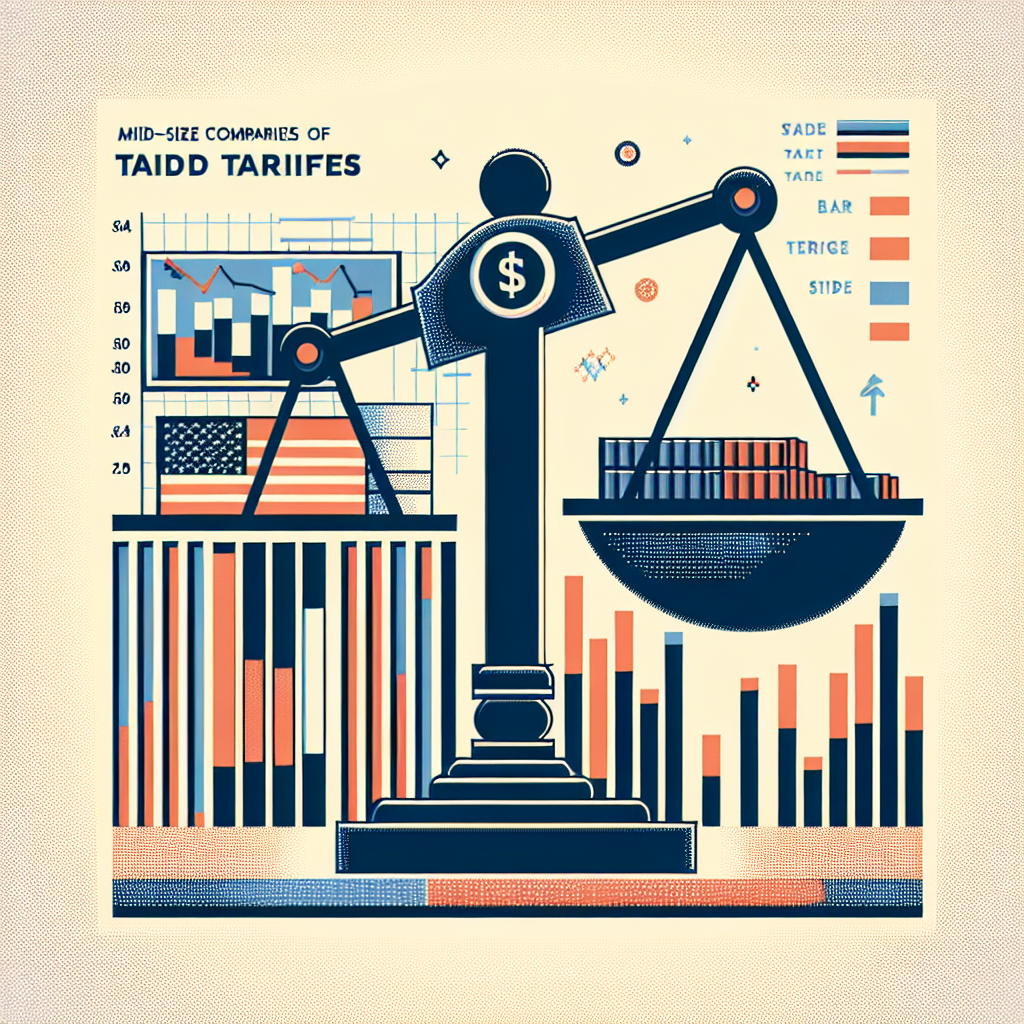
A year ago tariffs were a political slogan. Now they're a line item on balance sheets. New analysis from the JPMorganChase Institute finds that monthly tariff payments by midsized U.S. companies have roughly tripled since early 2025 — and the cost isn’t vanishing overseas. Instead, it’s landing squarely on American businesses, their workers, and ultimately consumers. (jpmorganchase.com)

Why this matters right now

  • Midsize companies — those with roughly $10 million to $1 billion in revenue and under 500 employees — employ tens of millions of Americans and sit at the center of supply chains. A material cost shock for them ripples through local economies.
  • The analysis comes amid a larger policy shift that raised average tariff rates dramatically in 2024–2025 and set off debates about who bears the burden: foreign suppliers, U.S. firms, or American consumers. The evidence is increasingly squarely on the U.S. side. (jpmorganchase.com)

Key points for readers pressed for time

  • Tariff payments by midsize firms tripled on a monthly basis since early 2025. (jpmorganchase.com)
  • The additional burden has been absorbed in ways that harm domestic outcomes: higher consumer prices, compressed corporate margins, or cuts in hiring. (the-journal.com)
  • Some firms are shifting away from direct purchases from China, but it’s unclear whether that reflects true supply-chain reshoring or simple routing through third countries. (jpmorganchase.com)

The economic picture — beyond the headline

The JPMorganChase Institute used payments data to track how middle-market firms actually move money across borders. Their finding — a tripling of tariff outflows — is not just an accounting quirk. It reflects higher effective import taxes that many of these firms cannot easily avoid.

What that looks like on the ground:

  • Retailers and wholesalers, with thin margins, face an especially acute squeeze; some will add markup, passing costs to shoppers. (apnews.com)
  • Other firms will have to choose between accepting lower profits, cutting spending (including on hiring), or finding new suppliers. JPMorganChase’s data show some reduction in direct payments to China, but not enough to indicate a complete reorientation of sourcing. (jpmorganchase.com)

Why the distributional story matters: the policymakers who champion tariffs often frame them as taxes paid by foreign exporters. But multiple studies and payment-data analyses now point the opposite way — tariffs operate as a domestic cost that falls on U.S. businesses and consumers, with the burden concentrated on firms without the scale to absorb or dodge the charge. (apnews.com)

A few concrete numbers to anchor the debate

  • The JPMorganChase Institute previously estimated that tariffs under certain policy scenarios could cost midsize firms roughly $82 billion; the tripling in monthly outflows is a complementary sign of how quickly those costs can materialize. (axios.com)
  • Middle-market firms account for a large share of private-sector employment, so a change equal to a few percent of payroll can meaningfully affect hiring plans. (axios.com)

What firms are likely to do next

  • Pass-through: Where competition allows, retailers and distributors will raise prices. Expect higher consumer prices in affected categories.
  • Substitution: Some firms will seek suppliers in lower-tariff jurisdictions or route goods through third countries — a costly and imperfect fix that may increase lead times and complexity.
  • Absorb: Many midsize firms lack pricing power and will instead accept smaller margins, delay investments, or cut labor costs.
  • Hedge or pre-buy: Larger firms already stockpiled inventory during previous tariff surges; midsize firms can’t always do the same, which leaves them more exposed to sudden rate changes. (jpmorganchase.com)

Broader implications

  • Inflation and politics: Tariffs operate like a tax that can nudge consumer prices upward. Even modest price effects matter politically when households feel pocketbook pain.
  • Supply-chain strategy: The pattern of reduced direct payments to China suggests firms are adapting — but adaptation is slow and costly. Strategic decoupling from a major supplier nation isn’t instantaneous; it takes new contracts, quality checks, and often higher unit costs.
  • Policy design: If the goal is to strengthen U.S. manufacturing, tariffs can help some producers while hurting downstream businesses and consumers. That trade-off underlines why empirical analysis of who actually pays the tariff is crucial to policy debates. (jpmorganchase.com)

My take

Tariffs are a blunt instrument. The new JPMorganChase Institute evidence makes a clear pragmatic point: when you raise the price of imports sharply and quickly, the economic pain shows up inside the country — not neatly absorbed by foreign suppliers. For policymakers who want to protect or grow U.S. industry, that doesn’t mean tariffs are useless, but it does mean they’re incomplete. If the aim is durable domestic job creation and competitiveness, tariffs should be paired with targeted industrial policy: investment in skills, R&D, logistics, and incentives that help midsize firms scale rather than simply shifting costs onto consumers or employees.

Sources


Related update: We recently published an article that expands on this topic: read the latest post.
Markets Rally After Greenland Tariff | Analysis by Brian Moineau

Markets breathe again after the Greenland tariff scare

The opening bell felt less like routine and more like damage control. Stocks went from a rout to a rally in a matter of news cycles after President Donald Trump announced he would not move forward with a set of Europe-targeted tariffs that had been expected to start on February 1. Investors who had been braced for a fresh global trade shock exhaled — and bought the dip. (washingtonpost.com)

Why this mattered so fast

  • Tariff threats are different from ordinary headlines. They hit corporate margins, supply chains and the price of imports — and markets price those risks rapidly. When the president first threatened steep levies tied to his push over Greenland, U.S. indexes plunged and volatility spiked. (washingtonpost.com)
  • The reversal removed an immediate policy overhang: with the tariff threat off the table for now, traders rotated back into cyclical and tech names that had sold off on worries about trade-driven earnings pressure. The result: a sharp, visible rebound in major indices. (investing.com)
  • Wall Street’s sensitivity to abrupt trade-policy moves has been a recurring story — big policy swings can trigger outsized market moves, and sometimes the market’s reaction itself influences policy calibrations. (ft.com)

What happened, step by step

  • Late weekend posts and comments from the White House signaled potential tariffs on a group of European countries in response to their resistance to U.S. pressure over Greenland. Markets immediately priced in the risk. The Dow plunged hundreds of points and the S&P and Nasdaq also gave back significant ground. (washingtonpost.com)
  • As the diplomatic noise intensified — at Davos and in bilateral talks — investors watched for the administration’s next move. When the president announced he would not impose the planned tariffs beginning Feb. 1, major U.S. averages snapped higher within the trading day, recovering much of the prior losses. (investing.com)
  • Traders described these moves as a classic “risk-on” bounce once the policy threat was removed; commentators also noted how rapidly political headlines can be priced in (or out) by markets. (ft.com)

Market implications for investors

  • Short-term: volatility is likely to remain elevated around geopolitical or trade-related headlines. Fast reversals like this one can create opportunity — and risk — for traders who try to time headlines. (washingtonpost.com)
  • Medium-term: corporate planning (sourcing, pricing, guidance) becomes harder when tariffs are used as leverage in foreign-policy disputes. Even when tariffs don’t land, the threat alone can affect decisions and valuations. (ft.com)
  • Portfolio posture: diversification and a focus on fundamentals remain sensible for most long-term investors. For short-term participants, disciplined risk management is key when headline-driven moves dominate. (washingtonpost.com)

What the episode reveals about politics and markets

  • Markets can act as a check — not in a formal way, but practically. Large, rapid sell-offs increase political costs and pressure decision-makers to recalibrate. That dynamic appears to have played out here, with market reactions amplifying the consequences of the tariff threat. (ft.com)
  • At the same time, frequent policy flip-flops create a new baseline for volatility. Investors may grow used to headline swings, but “getting used to it” is not the same as being immune. Tail risks still exist and can surprise complacent portfolios. (washingtonpost.com)

Key takeaways

  • Major U.S. indices rebounded after the administration dropped planned Europe tariffs set for Feb. 1, turning a sell-off into a rally. (investing.com)
  • Tariff talk alone can move markets: the initial threat caused a sharp sell-off and a spike in volatility. (washingtonpost.com)
  • Even when a policy threat is withdrawn, the episode raises longer-term questions about unpredictability, supply-chain risk and how investors price political risk. (ft.com)

My take

This episode is a microcosm of modern market-politics interactions: headlines travel fast, markets react faster, and the political calculus sometimes shifts under the weight of market consequences. For investors, the practical lesson is simple and recurring — respect the headlines, but anchor decisions in company fundamentals and risk management. Short-term traders can profit from volatility, but only with a clear plan and limits.

Sources


Related update: We recently published an article that expands on this topic: read the latest post.



Related update: We recently published an article that expands on this topic: read the latest post.
Indias Growth Surge: Factories Fuel Boom | Analysis by Brian Moineau

India’s GDP Surprise: Factories, Festivals and a Fed of Optimism

Prime Minister Narendra Modi called the GDP number “very encouraging.” And who wouldn’t be? When official data showed India’s economy growing faster than most forecasters dared to predict, the reaction was equal parts relief and recalibration — for businesses, policymakers and investors trying to read what comes next.

Why this quarter felt different

  • India’s GDP surged 8.2% year‑on‑year in the July–September 2025 quarter, well above Bloomberg and consensus forecasts and the strongest pace in six quarters. (fortune.com)
  • The upswing was broad-based: private consumption jumped ahead of the festival season, manufacturing posted a sharp gain, and services remained resilient. Policy moves — tax cuts in September and a series of earlier rate reductions — helped juice demand. (fortune.com)
  • All of this happened while a strained trade backdrop loomed: a 50% U.S. tariff on many Indian imports complicates export prospects and adds uncertainty to the near term. Yet firms appear to have front‑loaded shipments and inventory activity, muting the immediate bite of tariffs. (fortune.com)

What the numbers really tell us

  • Short-term momentum: The combination of festive-season spending, tax cuts and prior interest‑rate easing produced a powerful near‑term boost. Manufacturing growth (9.1%) and a near‑8% jump in private consumption are the headline engines of the quarter. (fortune.com)
  • Not necessarily durable: Several economists warn the gains may fade once the one‑off effects — stockpiling before tariffs, festival demand, and statistical quirks like a lower GDP deflator — wash out. Forecasts for next fiscal year were nudged up, but multilateral institutions and rating agencies still flag downside risks if trade frictions persist. (fortune.com)
  • Policy implications: Strong growth reduces the urgency for an immediate rate cut by the Reserve Bank of India, though low inflation keeps room for easing open. Markets reacted by pricing a lower probability of an imminent cut. (fortune.com)

A closer look at the Trump tariffs effect

  • Timing matters: Many exporters shipped ahead of August’s tariff implementation, which created a temporary volume bump. That front‑loading shows up in the data, helping manufacturing and export‑related activity this quarter. (fortune.com)
  • Structural risk remains: If high U.S. tariffs endure, exporters will face sustained price and market‑access penalties. Multilateral forecasts (IMF WEO and Article IV assessments) reduced long‑run growth projections slightly under a scenario of prolonged tariffs. India’s domestic demand cushion can blunt but not fully negate export pain. (imf.org)
  • Winners and losers: Sectors with strong domestic market exposure (consumer goods, some services, domestic manufacturing) benefit most from the current setup. Labor‑intensive export sectors — textiles, gems and jewelry, seafood — are more exposed to tariff damage. (forbes.com)

When numbers and politics collide

  • Messaging matters: Modi’s “very encouraging” post on X is more than cheerleading. Strong quarterly prints bolster the government’s reform story (tax cuts, Make in India push) and strengthen negotiating leverage in trade talks. But politics also raises the bar for sustaining results; the state wants growth to look both robust and inclusive. (fortune.com)
  • External perceptions: International agencies still see India as one of the few bright spots in a slower world economy, even if they temper longer-term forecasts because of protectionist shocks. That positioning attracts capital and attention — until and unless trade barriers start redirecting supply chains away from India. (imf.org)

Practical implications for readers

  • For consumers: Strong demand helped by tax cuts means fresher buying power now, especially in urban centers during festival cycles. But keep an eye on inflation and employment signals over the next two quarters.
  • For business leaders: Don’t over‑interpret one robust quarter. Use the breathing room to invest in productivity, diversify export markets, and avoid over‑reliance on short‑term stockpiling gains.
  • For investors: Macro momentum and lower inflation create a constructive backdrop, but tariff‑driven export risk and potential capital flow swings mean selective exposure and active risk management make sense.

A few smart caveats

  • Some part of the headline jump may reflect statistical effects (lower GDP deflator and other discrepancy adjustments), so analysts are rightly cautious about extrapolating this pace forward. (fortune.com)
  • Forecasts vary: While the IMF projects India to remain a top growth performer in 2025–26 under its baseline, it also warns that sustained high tariffs shave projected growth thereafter. (imf.org)

My take

This quarter feels like a tactical win for India: policy levers and private consumption combined to outpace expectations, and manufacturing showed welcome life. But the strategic contest is just beginning. If India wants manufacturing-led, export‑driven growth to be durable, it needs two things: (1) trade diplomacy and adaptation to reclaim lost market access, and (2) faster local value‑chain deepening so that front‑loaded shipments don’t become the main growth story. Short of that, domestic resilience will keep India growing, but the trajectory will be bumpier than a single headline number suggests.

The bottom line

An 8.2% print is newsworthy and politically powerful. It buys space for reforms and investment. But read it as a strong quarter, not a guarantee of uninterrupted acceleration. The next few quarters — how tariffs play out, whether festival demand normalizes, and whether investment follows consumption — will tell us whether this was a steppingstone or a spike.

Sources


Related update: We recently published an article that expands on this topic: read the latest post.


Related update: We recently published an article that expands on this topic: read the latest post.


Related update: We recently published an article that expands on this topic: read the latest post.

U.S. International Trade in Goods and Services, July 2025 – Bureau of Economic Analysis (BEA) (.gov) | Analysis by Brian Moineau

U.S. International Trade in Goods and Services, July 2025 - Bureau of Economic Analysis (BEA) (.gov) | Analysis by Brian Moineau

Navigating the Trade Winds: The U.S. Trade Deficit's July 2025 Surge

Ah, the ever-evolving dance of international trade! Just when you think you've caught the rhythm, the tune changes, and you're left trying to catch up. That's precisely what happened in July 2025, as reported by the Bureau of Economic Analysis (BEA). The United States' goods and services deficit reached a staggering $78.3 billion, up $19.2 billion from June's revised figure of $59.1 billion. It's a number that has many economists scratching their heads and businesses reassessing their strategies.

The Big Picture


Before you let the numbers get you down, let's take a step back and look at the broader context. The trade deficit isn't just a standalone figure; it's a snapshot of a much larger global economic picture. With the world slowly recovering from the economic disruptions caused by the COVID-19 pandemic, international trade has been on a rollercoaster ride. Supply chains are still adjusting, and consumer demand is in flux.

In July, the increase in the trade deficit was primarily driven by a rise in imports outpacing exports. The U.S. imported more consumer goods, capital goods, and industrial supplies, reflecting a robust domestic demand. Meanwhile, exports did not experience the same level of growth, partly due to ongoing challenges in the global supply chain and varying recovery rates in different parts of the world.

The Global Tapestry


This jump in the trade deficit isn't happening in isolation. It's intertwined with global economic currents. For instance, the European Union, a major trading partner of the U.S., is navigating its own economic challenges, including energy crises and political shifts. These factors can influence the demand for U.S. exports.

In Asia, China, another key player in global trade, is experiencing a complex economic landscape marked by regulatory changes and geopolitical tensions. These dynamics can impact the flow of goods and services to and from the U.S.

The Dollar Dance


Another interesting angle to consider is the role of the U.S. dollar. A stronger dollar makes imports cheaper and exports more expensive, which can widen the trade deficit. In 2025, the dollar has maintained its strength, partly due to the Federal Reserve's monetary policy decisions. This strength, while beneficial for American consumers purchasing foreign goods, challenges U.S. exporters trying to compete in global markets.

Looking Forward


So, what does this all mean for the future of U.S. trade? The trade deficit is a complex beast, influenced by myriad factors beyond just imports and exports. Policies aimed at boosting domestic production, such as incentives for manufacturing and innovation, could help balance the scales. Additionally, diplomatic efforts to stabilize global trade relations are crucial.

On a lighter note, the ebb and flow of the trade deficit can also be seen as a testament to the interconnectedness of our world. It's a reminder that even as nations strive for self-sufficiency, the global marketplace is a shared space where cooperation and competition coexist.

Final Thoughts


As we sail these trade winds, it's essential to remember that numbers like the trade deficit are just one piece of the economic puzzle. They offer insights, yes, but they also prompt deeper questions about how we engage with the world and what strategies we employ to foster sustainable growth.

In the end, whether you're a business leader, policymaker, or curious global citizen, understanding these shifts in trade dynamics is vital. So, let's keep our eyes on the horizon, ready to adapt and thrive in this ever-changing global economy. As the saying goes, the only constant in life—and trade—is change.

Read more about AI in Business

Read more about Latest Sports Trends

Read more about Technology Innovations

China’s Economy Slows Sharply as Trade War Bites – Bloomberg | Analysis by Brian Moineau

China’s Economy Slows Sharply as Trade War Bites - Bloomberg | Analysis by Brian Moineau

Title: Navigating the Economic Crossroads: China’s Slowdown in a Tumultuous Trade Landscape

In recent months, China’s economic gears have been grinding more slowly than usual, as highlighted in Bloomberg's article, “China’s Economy Slows Sharply as Trade War Bites.” The world’s second-largest economy is experiencing a deceleration across key sectors, including factory activity, investment, and retail sales. This phenomenon is attributed to a combination of internal policy shifts and external pressures, most notably the ripple effects of the ongoing trade war with the United States.

A Complex Economic Tango

At the heart of this slowdown is a multifaceted dance between domestic policy and international tensions. The Chinese government has been cracking down on destructive price wars, which, while potentially stabilizing in the long run, have led to short-term disruptions. On the other side of the Pacific, former President Donald Trump’s tariffs have left a lingering impact, creating what some might call a “tariff hangover.” These tariffs have not only strained China’s exports but have also led to shifts in global supply chains, with many companies reconsidering their strategies and dependencies on Chinese manufacturing.

Global Ripples

The ripple effects of China’s economic slowdown are felt globally, given its integral role in the worldwide economic orchestra. For instance, Germany, with its export-reliant economy, has witnessed a dip in demand for its goods from China, leading to concerns about its own economic stability. Similarly, emerging markets, which have long relied on Chinese investment and trade, are feeling the tremors of this slowdown.

Interestingly, this situation parallels historical instances where economic superpowers have had to readjust their strategies in response to both internal and external pressures. One can draw comparisons to Japan in the 1990s, when it faced its own economic stagnation, partly due to its rigid economic structure and external pressures. Such historical parallels provide a lens through which we can view China’s current challenges, offering both cautionary tales and lessons in resilience.

A Silver Lining?

While the headlines may seem daunting, every cloud has its silver lining. For China, this slowdown could be an opportunity to pivot towards a more sustainable economic model. The government’s focus on cracking down on price wars and reducing reliance on exports could lead to a more balanced economy, less vulnerable to the whims of global trade tensions.

Moreover, this period of adjustment might spur innovation and diversification within China’s economy. With less emphasis on traditional manufacturing, there’s potential for growth in sectors like technology, renewable energy, and domestic consumption. Indeed, as the world increasingly moves towards a greener and more digital future, China’s strategic shifts could position it as a leader in these burgeoning fields.

Final Thoughts

In the grand tapestry of global economics, China’s current slowdown is but a single thread. While challenges abound, so too do opportunities for reinvention and growth. As China navigates these tumultuous waters, the world watches with bated breath, aware that the outcome will reverberate far beyond its borders.

Ultimately, this moment serves as a reminder of the interconnected nature of our global economy and the delicate balance required to maintain stability. As history has shown, periods of economic turbulence, while daunting, often pave the way for innovation and progress. In the case of China, the world waits to see what new path will emerge from this economic crossroads.

Read more about AI in Business

Read more about Latest Sports Trends

Read more about Technology Innovations

Trump thinks tariffs can bring back the glory days of US manufacturing. Here’s why he’s wrong – The Conversation | Analysis by Brian Moineau

Trump thinks tariffs can bring back the glory days of US manufacturing. Here's why he's wrong - The Conversation | Analysis by Brian Moineau

Title: The Tariff Tango: Nostalgia vs. Reality in US Manufacturing

There’s an old saying that nostalgia isn’t what it used to be. Recently, this sentiment seems to ring especially true in the context of US manufacturing, as former President Donald Trump attempts to reignite the glory of American industry through the use of tariffs. However, as The Conversation highlights in an insightful piece, these actions are driven more by a longing for the past than by the current economic landscape.

A Rose-Tinted Vision of Manufacturing

Donald Trump has always had a flair for the dramatic, and his economic policies are no exception. His approach to reviving US manufacturing often involves imposing tariffs, with the hope that these will encourage domestic production and deter reliance on foreign imports. It’s a strategy that harks back to a time when American factories were bustling, and “Made in the USA” was a ubiquitous label.

However, the world has changed since those days. Global supply chains are complex and intertwined, and a blanket approach to tariffs can lead to unintended consequences, such as higher prices for consumers and retaliatory measures from other countries. The manufacturing sector today is driven by technology and automation, rather than sheer manpower, and this evolution requires a more nuanced strategy than simply looking to the past.

Global Context: A Shifting Landscape

It's not just the US grappling with these economic challenges. Across the Atlantic, the UK is navigating its post-Brexit reality, seeking to strike new trade deals while maintaining economic stability. Similarly, China is strategically positioning itself as a leader in high-tech manufacturing, leaving traditional manufacturing powerhouses like the US in need of innovation rather than nostalgia.

In the tech world, companies like Tesla are redefining manufacturing with their gigafactories, blending cutting-edge technology with production. This shift highlights the need for forward-thinking policies that embrace technological advancements rather than relying solely on tariffs to protect old industries.

A Walk Down Memory Lane with Trump

Donald Trump, known for his larger-than-life persona, often draws from his unique blend of business acumen and celebrity status. His tenure as president was characterized by bold claims and actions that resonated with a segment of the American population yearning for simpler times. Yet, his approach often overlooked the complexities of modern economics.

His nostalgic perspective on manufacturing is reminiscent of his campaign slogan, "Make America Great Again," which taps into a desire to return to an idealized past. However, as the adage goes, you can’t step into the same river twice. The economic landscape has shifted, and so must the strategies to navigate it.

Final Thoughts: Embracing the Future

As we consider the future of US manufacturing, it’s important to acknowledge the power of nostalgia while recognizing its limitations. Tariffs alone cannot turn back the clock to a bygone era of manufacturing dominance. Instead, investment in education, innovation, and sustainable practices will pave the way for a robust industrial future.

The conversation around tariffs and manufacturing is a reminder that while the past shapes us, it is the future that demands our creativity and courage. By embracing change and crafting policies that reflect the realities of today’s world, we can honor our history while building a brighter economic future.

In an ever-globalizing world, the true measure of progress lies in our ability to adapt and evolve. As we move forward, let’s do so with a clear-eyed vision and a commitment to both preserving and progressing the American dream.

Read more about AI in Business

Read more about Latest Sports Trends

Read more about Technology Innovations