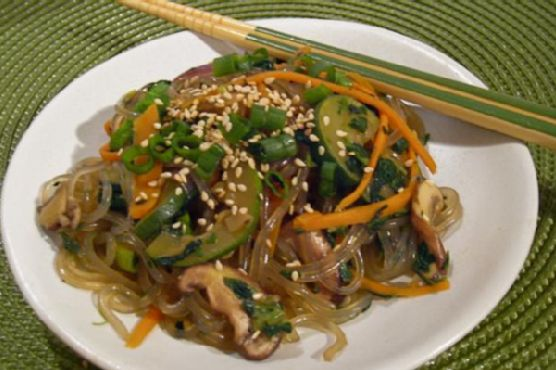
Chapchae (Korean Stir-Fried Noodles) | Made by Meaghan Moineau

Chapchae (Korean Stir-Fried Noodles)

Intro

Chapchae, a delightful Korean stir-fried noodle dish, has a special place in my heart. I remember the first time I tasted it was during a family trip to Seoul. The vibrant colors of the vegetables, the glossy sheen of the noodles, and the intoxicating aroma of sesame oil filled the air as we sat down at a local eatery. Each bite was a harmony of flavors and textures, and it instantly became a favorite. Inspired by that trip, I’ve recreated this dish at home many times, each instance bringing back fond memories of that culinary adventure.

Why You’ll Love It

Chapchae is a versatile dish that’s not only delicious but also a feast for the eyes. It’s perfect for any season, offering a balance of savory, sweet, and umami flavors that appeal to various palates. This dish is naturally gluten-free when using sweet potato vermicelli, making it a fantastic option for those with dietary restrictions. Additionally, chapchae is packed with vegetables, making it a nutritious choice for a quick lunch or a vibrant side dish.

Ingredients

  • 8 oz sweet potato vermicelli noodles
  • 1 sweet onion, thinly sliced
  • 2 cloves garlic, minced
  • 2 cups baby spinach
  • 1 carrot, julienned
  • 3 scallions, sliced
  • 1 cup mushrooms, sliced
  • 1 zucchini, julienned
  • 2 Tbsp olive oil
  • 2 Tbsp sesame oil, divided
  • 3 Tbsp soy sauce
  • 1 Tbsp sugar
  • Salt to taste

Instructions

  1. Cook the sweet potato vermicelli noodles according to the package directions. Once cooked, drain and set aside.
  2. In a large pan or wok over medium heat, heat the olive oil and 1 tablespoon of the sesame oil.
  3. Add the onion slices and minced garlic, sautéing for about 1 minute until fragrant.
  4. Add the rest of the vegetables: baby spinach, carrots, scallions, mushrooms, and zucchini. Cook for 4-5 minutes until the vegetables are half-cooked and still a bit crispy.
  5. Turn the heat to low and add the cooked noodles to the pan.
  6. Pour in the soy sauce, sugar, and the remaining sesame oil. Mix everything to combine and cook for another 2 minutes.
  7. Taste and add salt or more soy sauce if needed. For a sweeter dish, add a touch more sugar.
  8. If using, sprinkle sesame seeds over the top just before serving for an added nutty flavor and crunch.

Tips

For the best results, ensure that your vegetables are cut uniformly for even cooking. Don’t overcook them; chapchae is best with vegetables that retain a slight crunch. Also, feel free to adjust the seasoning according to your taste preferences. A dash of chili flakes can also add a nice kick if you enjoy a bit of heat.

Variations & Substitutions

Chapchae is incredibly adaptable. You can substitute the vegetables with whatever you have on hand, such as bell peppers or broccoli. For a protein boost, add tofu, beef strips, or chicken. If you prefer a lower-sodium option, use low-sodium soy sauce. For a vegetarian version, ensure your soy sauce is vegetarian-friendly and skip any meat additions.

Storage

Chapchae can be stored in an airtight container in the refrigerator for up to three days. Reheat gently on the stovetop or in the microwave, adding a splash of water or soy sauce to revitalize the noodles. Note that the noodles may absorb more sauce over time, so adjust the seasoning as needed when reheating.

FAQ

Can I make chapchae ahead of time?

Yes, chapchae can be prepared in advance. It’s an excellent dish for meal prep as the flavors meld beautifully over time. Just be sure to store it properly and give it a good stir before serving.

Is chapchae gluten-free?

Chapchae is naturally gluten-free when made with sweet potato vermicelli noodles, which are a common ingredient in Korean cuisine. However, make sure to check the labels on your soy sauce to ensure it’s gluten-free, or opt for tamari as an alternative.

Nutrition

Chapchae is a nutrient-rich dish thanks to its variety of vegetables. It’s high in fiber, vitamins, and minerals, and the sweet potato noodles provide a source of complex carbohydrates. The sesame oil and soy sauce contribute healthy fats and protein, respectively, making chapchae a well-rounded meal.

Conclusion

Chapchae is more than just a dish; it’s a delightful journey through flavors and textures that can transport you to the vibrant streets of Korea. Whether you’re making it for the first time or it’s been a staple on your menu, this recipe is sure to bring joy to your table. So grab your wok, gather your ingredients, and savor a bowl of this Korean classic. Enjoy every bite and perhaps, like me, you’ll find it becomes a cherished part of your culinary repertoire.

Related update: Chapchae (Korean Stir-Fried Noodles)

Related update: Cilantro Lime Halibut

Korean Sweet n Sour Chicken | Made by Meaghan Moineau

Korean Sweet n Sour Chicken

Intro

There’s something about the combination of sweet and sour flavors that transports me back to my childhood. I remember the first time I tasted this delightful Korean Sweet n Sour Chicken; it was during a family gathering. My grandmother, who was an exceptional cook, had prepared this dish with so much love. As the aroma filled the house, we all gathered around the table, our mouths watering in anticipation. That first bite was a revelation — the perfect balance of crispy chicken, tangy sauce, and fresh vegetables. Today, I am thrilled to share this cherished recipe with you, hoping it becomes a favorite in your home as well.

Why You’ll Love It

This Korean Sweet n Sour Chicken recipe is not only delicious but also easy to make. It’s a wonderful fusion of flavors that takes your taste buds on a delightful journey. The crispy chicken pairs perfectly with the sweet and tangy sauce, and the colorful vegetables add a burst of freshness and nutrition. Whether you’re cooking for your family or hosting a dinner party, this dish is sure to impress.

Ingredients

  • 2 boneless chicken breasts
  • 2 tablespoons soy sauce
  • 1 cup flour
  • 1/2 cup cornstarch
  • 1 egg, beaten
  • 1 cup water (divided)
  • Vegetable oil for frying
  • 1 onion
  • 1 cup carrot slices
  • 1 cup edamame
  • 1/2 cup cider vinegar
  • 1/2 cup pineapple juice
  • 3 tablespoons sugar
  • 1/4 cup mixed corn starch and water

Instructions

  1. Cut the chicken into thin strips, about 1 or 2-inch pieces. Add soy sauce to the chicken for a short marination; mix well and set aside.
  2. Cut the vegetables into large bite-sized pieces. Set aside until the sauce is ready and thickened.
  3. Make the batter by mixing the flour, cornstarch, water, and beaten egg. Add more flour until a thick consistency is reached.
  4. Dip the marinated chicken strips into the batter.
  5. Bring vegetable oil to medium-high heat. Deep fry each of the strips for about 3 to 4 minutes per batch or until browned and cooked through.
  6. When finished, place on a paper towel-lined dish to remove excess oil. For extra crispiness, optionally re-fry the chicken strips for a second time.
  7. To make the sauce, bring 1 cup of water, 3 tablespoons of vinegar, 3 tablespoons of sugar, and 2 tablespoons of soy sauce to a rapid boil in a saucepan.
  8. Add the mixture of cornstarch and water to the saucepan. Add desired vegetables and let simmer for about 5 minutes or until it thickens.
  9. On a large plate, add the fried chicken strips, then pour over the sauce/vegetable mixture and serve while warm.

Tips

  • For best results, ensure the oil is at the right temperature before frying. Too low, and the chicken will absorb too much oil; too high, and it will burn.
  • Feel free to adjust the sweetness or sourness of the sauce according to your taste preferences.
  • Use paper towels to drain excess oil from the fried chicken, ensuring it stays crispy.

Variations & Substitutions

If you’re looking to switch things up, here are some variations and substitutions you can try:

  • Protein Swap: Substitute chicken with tofu or shrimp for a different protein option.
  • Vegetable Variety: Add bell peppers, snow peas, or broccoli for additional flavor and nutrients.
  • Gluten-Free Option: Use a gluten-free flour blend instead of regular flour for a gluten-free version.

Storage

Store any leftovers in an airtight container in the refrigerator for up to 3 days. To reheat, place the chicken and sauce in a skillet and warm over low heat until heated through. Alternatively, use a microwave, but be mindful that the chicken may not remain as crispy.

FAQ

Can I prepare this dish in advance?

Yes, you can prepare the sauce and marinate the chicken in advance. Store them separately in the refrigerator for up to 24 hours. When you’re ready to serve, fry the chicken and heat the sauce with the vegetables.

Is there a way to make this dish healthier?

To make this dish healthier, consider air frying the chicken instead of deep frying to reduce oil content. You can also use brown rice flour for the batter and serve with a side of steamed brown rice for added fiber.

Nutrition

While specific nutritional values can vary, this dish provides a good source of protein from the chicken and edamame. The vegetables offer dietary fiber, and the sauce, when used in moderation, can fit into a balanced diet. If you have dietary concerns, consider adjusting the sugar and oil quantities.

Conclusion

There you have it, a delightful and nostalgic Korean Sweet n Sour Chicken recipe that is bound to become a staple in your kitchen. Whether you’re making it for a special family gathering or a casual weeknight dinner, this dish is sure to bring smiles and satisfy cravings. Enjoy the harmonious blend of flavors and the joy of sharing a meal with loved ones. Happy cooking!

Related update: Korean Sweet n Sour Chicken

Related update: North Carolina-Style BBQ Pulled Pork

Korean Honey Citron Tea Cheesecake | Made by Meaghan Moineau

Korean Honey Citron Tea Cheesecake

Intro

There’s something magical about the blend of sweet and tangy flavors that transport you to cherished moments from the past. I remember my first taste of Korean honey citron tea, which was during a chilly winter visit to my grandmother’s home. She always had a stash of this golden, aromatic paste, ready to warm us up from the inside out. It wasn’t just a drink; it was a ritual, a comfort, a hug in a cup. Today, I’m bringing that warmth to you in the form of a cheesecake that combines the beloved flavors of honey citron tea with the creamy decadence of a classic dessert. This Korean Honey Citron Tea Cheesecake is my way of sharing a piece of my heritage and the cozy memories of my childhood with you.

Why You’ll Love It

This Korean Honey Citron Tea Cheesecake is a unique twist on a classic dessert that will surely captivate your taste buds. Here’s why it deserves a spot in your recipe repertoire:

  • Remarkable Flavor: The fusion of sweet honey and zesty citron creates a refreshing yet indulgent taste.
  • No-Bake Delight: Perfect for those warm days when you want a delicious dessert without turning on the oven.
  • Textural Marvel: The creamy, smooth filling pairs beautifully with the crunchy biscuit base and the slightly set topping.
  • Easy to Prepare: With simple instructions and ingredients, this cheesecake is a breeze to make, even for beginners.

Ingredients

  • Butter
  • Cream cheese
  • Non-dairy topping cream
  • Gelatin
  • Korean honey citron tea paste
  • Lemon juice
  • Marie biscuits
  • Fresh milk
  • Sugar
  • Water

Instructions

  1. Line a 23cm round pan with a removable base and set aside.
  2. Combine crushed digestive biscuit crumbs and melted butter in a mixing bowl. Press the biscuit crumbs onto the base of the prepared pan and refrigerate for later use.
  3. Measure water into a bowl and sprinkle in the gelatin (do not stir). Allow the gelatin to swell for a few minutes. Place the bowl over a pot of simmering hot water and stir until the gelatin melts. Remove from heat and let cool to room temperature.
  4. Whisk non-dairy topping cream until it reaches peak form (not too stiff), then set aside.
  5. In another mixing bowl, beat cream cheese and sugar until smooth. Gradually add milk until combined. Add lemon juice and honey citron tea paste, mixing well. Incorporate the gelatin solution and combine thoroughly.
  6. Gently fold in the whipped non-dairy topping cream using a hand whisk. Pour the cream cheese mixture into the prepared cake tin and refrigerate for at least 4 hours until set.
  7. For the topping, heat the gelatin using the same method as before. Stir in the honey citron tea paste, mix well, and leave to cool. Spread the honey citron tea paste thinly and evenly over the cheesecake.
  8. Refrigerate the cheesecake until ready to serve.

Tips

  • Ensure your cream cheese is at room temperature before beating; this helps achieve a smoother texture.
  • When melting the gelatin, be careful not to overheat it, as this can affect its setting properties.
  • For an even more pronounced citrus flavor, consider adding a bit of lemon zest to the cream cheese mixture.

Variations & Substitutions

Feel free to make this recipe your own by trying out some of these variations:

  • Use a different base: Swap marie biscuits for graham crackers or digestive cookies to change the texture and flavor of the crust.
  • Dairy-free option: Substitute cream cheese and milk with their dairy-free alternatives for a lactose-friendly version.
  • Extra flavor: Drizzle some additional honey on top before serving for an extra touch of sweetness.

Storage

Store the cheesecake in an airtight container in the refrigerator for up to 5 days. For longer storage, you can freeze the cheesecake for up to a month. Simply wrap it well in plastic wrap and aluminum foil before freezing. To serve, let it thaw in the refrigerator overnight.

FAQ

Can I use regular whipping cream instead of non-dairy topping cream?

Yes, regular whipping cream can be used as a substitute. Just make sure to whip it to soft peaks before incorporating it into the cheesecake mixture.

Where can I find Korean honey citron tea paste?

Korean honey citron tea paste is commonly found in Asian grocery stores or online. It’s a popular product, often used for making beverages, and its unique flavor makes it a great ingredient for both sweet and savory dishes.

Can I make this cheesecake in advance?

Absolutely! This cheesecake is perfect for making ahead of time. Prepare it a day in advance and let it set in the refrigerator overnight. This will also allow the flavors to meld beautifully.

Nutrition (approximation per serving)

  • Calories: 350
  • Fat: 22g
  • Sugar: 20g
  • Protein: 5g
  • Carbohydrates: 30g

Conclusion

Bringing together the beloved flavors of Korean honey citron tea and the creamy indulgence of cheesecake, this recipe is sure to become a favorite in your home. It’s a dessert that invites warmth and nostalgia with every bite, perfect for sharing with friends and family. Whether served at a festive gathering or as a treat for yourself, this Korean Honey Citron Tea Cheesecake is a delightful way to add a touch of sweetness to your day. Enjoy the journey as you create and savor this memorable dessert!

Related update: Korean Honey Citron Tea Cheesecake

Related update: Delicious Triple Chocolate Bundt Cake

Related update: Dulce De Leche Cheesecake

Neoguri (Spicy Seafood Ramen) | Made by Meaghan Moineau

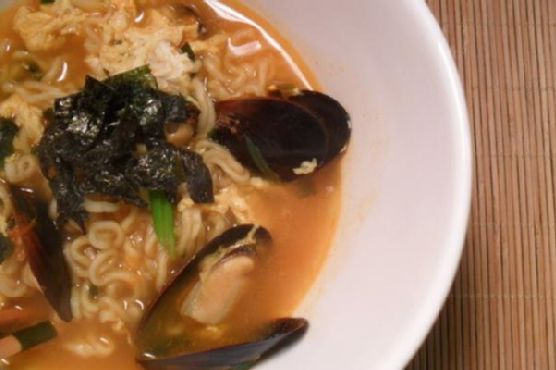
Neoguri (Spicy Seafood Ramen) Recipe

Intro

When I was a child, my family would often gather around the kitchen table on chilly evenings, excitedly waiting for a steaming bowl of my grandmother’s homemade ramen. The rich, savory aroma would fill the room, making our mouths water in anticipation. My grandmother, originally from a small coastal town in Korea, had a knack for turning simple ingredients into a feast for the senses. Among her creations, her spicy seafood ramen was legendary—the perfect blend of heat, umami, and comfort. Even now, the taste of spicy seafood ramen takes me back to those cherished family memories, and I’m thrilled to share a version of this recipe with you today. Let’s dive into creating a delicious bowl of Neoguri (Spicy Seafood Ramen) that warms the heart and soul.

Why You’ll Love It

This Neoguri (Spicy Seafood Ramen) recipe is more than just a quick meal; it’s a culinary experience. Here’s why you’ll adore it:

  • Quick and Easy: With just a few ingredients and simple steps, you can whip up a satisfying meal in under 20 minutes.
  • Rich in Flavor: The combination of spicy broth, seafood, and umami-packed seaweed creates a depth of flavor that’s hard to beat.
  • Customizable: This recipe is versatile and can be adjusted to suit your taste preferences or dietary needs.
  • Comforting: Perfect for a cozy night in, this ramen is sure to warm you up from the inside out.

Ingredients

  • 1 egg
  • 1 cup mussels (fresh or frozen)
  • 1 pack Neoguri ramen
  • 1 green scallion
  • 1 sheet seaweed (gim)

Instructions

  1. Bring a pot of water to a boil. Add mussels and sauce packets from the Neoguri ramen package into the boiling water. Allow it to boil for about 5 minutes to cook the mussels and deepen the broth. If using fresh mussels, wait until they open and discard any that remain closed.
  2. Include the noodles in the boiling pot and cook for 2 to 3 minutes, or until they reach your desired texture.
  3. In a small bowl, beat the egg. Gradually add the beaten egg into the pot while stirring the noodles in a circular motion for even, flaky egg drops. For a poached egg, carefully add the egg off to the side of the pot.
  4. While the noodles are cooking, thinly slice the green scallion and gim (seaweed) sheet.
  5. Transfer the cooked ramen to a serving bowl and garnish with the sliced scallions and seaweed. Serve hot and enjoy!

Tips

  • For extra heat, add a dash of chili flakes or Sriracha to the broth.
  • If you prefer a milder flavor, use only half of the Neoguri ramen sauce packet.
  • Ensure mussels are thoroughly cleaned and de-bearded before cooking to avoid any grit in your broth.
  • Use a high-quality seaweed sheet for the best flavor and texture.

Variations & Substitutions

This recipe is wonderfully adaptable. Here are some ideas to make it your own:

  • Vegetarian Option: Skip the mussels and add tofu or mushrooms for a protein boost while keeping it vegetarian.
  • Extra Veggies: Add sliced carrots, bok choy, or bean sprouts for added nutrients and texture.
  • Seafood Mix: Use a mix of seafood like shrimp, clams, and squid along with the mussels for a more diverse taste.
  • Noodle Swap: If you can’t find Neoguri ramen, any instant ramen with a spicy flavor profile will work in a pinch.

Storage

For the best taste and texture, it’s best to enjoy Neoguri (Spicy Seafood Ramen) fresh. However, if you have leftovers, store them in an airtight container in the refrigerator for up to two days. When reheating, add a splash of water or broth to loosen the noodles and ensure even warming. Be cautious, as the seafood flavor may intensify over time.

FAQ

Can I use frozen mussels instead of fresh?

Yes, frozen mussels are a convenient option and work well in this recipe. Just make sure to thaw them before adding them to the boiling water.

Is it possible to make this ramen less spicy?

Absolutely! You can control the spice level by using only half of the sauce packet or adding more water to dilute the broth. Adjust the spice to your preference.

Nutrition

This Neoguri (Spicy Seafood Ramen) offers a balanced meal with protein from mussels and egg, carbohydrates from noodles, and nutrients from scallions and seaweed. Mussels are a great source of omega-3 fatty acids, while seaweed provides iodine, an essential mineral. Adjust portion sizes to fit your dietary needs.

Conclusion

There’s something incredibly comforting about a bowl of steaming Neoguri (Spicy Seafood Ramen). It’s more than just a meal; it’s a connection to cherished memories and a celebration of flavors. This recipe brings warmth and satisfaction to any table, from its spicy seafood broth to the tender noodles and vibrant garnishes. I hope this dish becomes a beloved staple in your kitchen, just as it has been in mine. Enjoy the delightful complexity of flavors with each spoonful and share the joy with others around you. Happy cooking!

Related update: Neoguri (Spicy Seafood Ramen)

Related update: Turkey BLT with Creamy Dijon Mustard

Bibimbab (Korean Rice w Vegetables & Beef) | Made by Meaghan Moineau

Bibimbab (Korean Rice w Vegetables & Beef) | Made by Meaghan Moineau

Title: Discover the Heartwarming Flavors of Bibimbab: A Korean Classic
Description: Dive into the rich flavors and vibrant colors of Bibimbab, a beloved Korean dish that brings together a medley of fresh vegetables, savory beef, and perfectly cooked rice. Join us as we explore this deliciously customizable meal, perfect for any palate, and share a nostalgic family memory that highlights its place in our hearts.

---


Bibimbab: A Journey Through Flavor and Memory


Bibimbab, a staple in Korean cuisine, is more than just a dish. It's a tapestry of flavors and textures that unite to create a harmonious and satisfying meal. With its roots steeped in tradition and adaptability to suit any lifestyle, Bibimbab is a culinary delight that welcomes everyone to the table.


Ingredients:

- Carrots, julienned

- Cooked white rice


- Eggs


- English cucumber, sliced


- Garlic clove


- Red sprinkle gochugaru (red pepper flakes)


- Red gochujang (red pepper paste)


- Olive oil


- Sesame oil


- Sesame seeds


- Soy sauce


- Fresh spinach


- Sandwich steaks, thinly sliced


Instructions:


1. Prepare the Rice: Cook rice according to package directions and set aside.
2. Prep the Vegetables: Cut the carrots and cucumber into matchstick pieces. Set aside for sautéing.
3. Cook the Spinach: In a large non-stick pan, bring 2 cups of water to a boil. Add spinach and cook until wilted, stirring constantly. Drain and squeeze the spinach dry into a ball.
4. Sauté the Carrots and Garlic: Wipe out the skillet and heat 1 tsp of olive oil over medium-high heat. Add carrots and cook until soft, about 3 minutes. Add garlic and cook until fragrant, about 1 minute. Mix cucumber slices with gochugaru and set aside.
5. Prepare the Spinach Mixture: Combine the spinach with soy sauce and set aside until serving.
6. Cook the Beef: Add thinly sliced beef to the non-stick pan and heat until browned. Wipe down the pan with a napkin.
7. Fry the Eggs: Heat 1 tsp of olive oil in the non-stick pan over medium-high heat. Add eggs and cook until the whites are set, and the yolks remain runny, about 5 minutes.
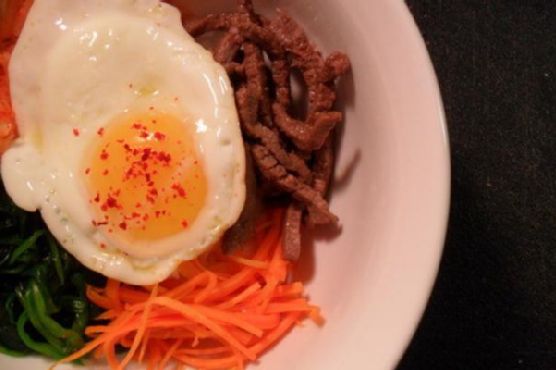
8. Assemble the Bibimbab: Divide the cooked rice among four bowls. Top with sautéed vegetables, beef, and eggs. Drizzle with sesame oil and sprinkle with sesame seeds. Finish with a dollop of gochujang or Sriracha sauce for a spicy kick.

A Taste of Nostalgia


Growing up, Bibimbab was more than just a meal; it was a family ritual that brought us together on Sunday afternoons. I vividly recall the comforting aroma of sesame oil and the vibrant colors of the vegetables laid out on the kitchen counter. My grandmother, with her gentle hands, would guide us in chopping the vegetables, teaching us the importance of each ingredient and its place in the dish.


As we gathered around the table, each person was given the freedom to craft their perfect bowl, adding a personal touch to the traditional recipe. It was in these moments that I learned the true essence of Bibimbab—its ability to adapt to each individual's taste while still maintaining its core identity. Even today, every bite takes me back to those cherished family gatherings, filled with laughter and stories, binding us together through the simple joy of sharing a meal.


Difficulty Rating: 4/10


Classification: Main Dish


Bibimbab is a dish that invites creativity and personalization, making it a delightful experience for both novice and experienced cooks alike. Its versatility accommodates vegetarians, dieters, health-conscious eaters, and meat-lovers, ensuring that everyone can partake in its deliciousness. So, gather your ingredients, embrace the process, and enjoy the journey of creating your own Bibimbab masterpiece!

Read more about Appetizers

Read more about Main Dishes

Read more about Desserts

Winter Kimchi | Made by Meaghan Moineau

Winter Kimchi | Made by Meaghan Moineau

Title: Embrace the Cold: Crafting Winter Kimchi to Warm Your Soul
Description: Discover the art of making Winter Kimchi, a cherished family recipe that combines tradition, flavor, and nostalgia. Dive into this step-by-step guide to creating a tangy, spicy delight that’s perfect for warming up those chilly winter days.

---


As the frost begins to lace the windows and winter's chill settles in, there’s nothing quite like the comforting embrace of a traditional dish that warms you from the inside out. For my family, that dish has always been Winter Kimchi. Its bold flavors and vibrant colors have long been a staple at our table, bringing both warmth and a touch of spice to our coldest months.


Ingredients:

- 1 large napa cabbage, quartered


- Brine solution (water with salt)


- 1 bowl of cooked rice


- 1 radish, julienned


- 2 spring onions, chopped


- 1 bulb of garlic, cloves separated


- 1 tablespoon of sugar


- 2 tablespoons of Korean gochujang paste


- 1 tablespoon of chili flakes


- 1 can of fermented baby shrimps or cincalok


- 2 tablespoons of fish sauce


Instructions:

1. Begin by soaking the quartered napa cabbage in a brine solution for 4 hours. To ensure even soaking, weigh the cabbage down with a heavy plate.


2. Once the cabbage is well-brined, remove it from the solution and drain thoroughly.


3. In a food processor, combine the garlic cloves, cooked rice, fermented shrimp, fish sauce, sugar, gochujang paste, and chili flakes. Blend until you achieve a smooth paste.


4. Stir in the chopped spring onions into the paste to add a fresh, vibrant note.


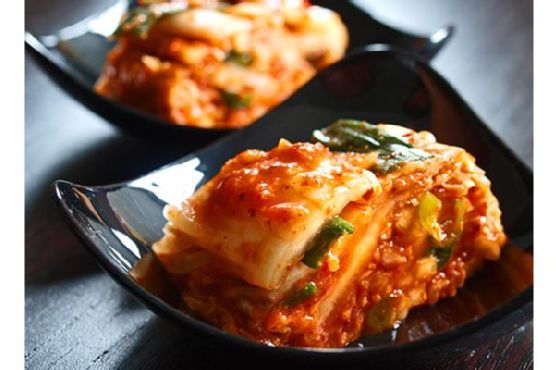
5. Carefully stuff the napa cabbage with the spicy paste, making sure to get in between the individual leaves and coating every inch of the cabbage thoroughly.


6. Place your stuffed cabbage into an airtight container. Allow the kimchi to sit at room temperature for a day, then transfer it to the fridge to ferment for at least a week. For the best flavor, I recommend waiting around three weeks before diving in.


A Taste of Nostalgia:

Every winter, as the first snowflakes began to fall, my grandmother would gather the family around the kitchen table for the annual kimchi-making ritual. The kitchen would be filled with the pungent aroma of garlic and spices, mingling with the laughter and chatter of loved ones. As a child, I would watch in awe as my grandmother's skilled hands expertly layered the fiery red paste between the cabbage leaves, transforming simple ingredients into a dish that was nothing short of magical.


For us, Winter Kimchi was more than just food—it was a connection to our heritage, a symbol of resilience against the winter cold, and a reminder of the warmth of family bonds. Each bite was a sensory journey, a dance of flavors that told stories of the past and hopes for the future.


Difficulty: 6/10
Classification: Appetizer

Creating Winter Kimchi is a delightful adventure that marries tradition with creativity. Whether you're new to kimchi-making or a seasoned pro, the experience is both rewarding and deeply satisfying. As you savor each spicy, tangy bite, may it bring you as much warmth and joy as it has brought my family over the years.

Read more about Appetizers

Read more about Main Dishes

Read more about Desserts

Neoguri (Spicy Seafood Ramen) | Made by Meaghan Moineau

Neoguri (Spicy Seafood Ramen) | Made by Meaghan Moineau

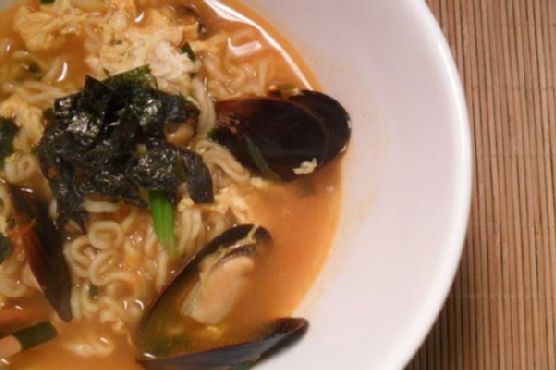
**Title: Embracing the Spice: Crafting Neoguri Ramen with a Splash of Family Nostalgia**


**Description:** Dive into a steaming bowl of Neoguri Ramen, a spicy seafood delight that's as heartwarming as it is mouthwatering. Infused with rich broth and adorned with fresh mussels, scallions, and seaweed, this recipe will transport you to the vibrant kitchens of Korea. Discover the simple joy of creating this dish and the cherished memories it evokes.


---


### Neoguri Ramen: A Taste of Tradition and Love


In the heart of every family kitchen, there lies a recipe that transcends time—a dish that brings comfort, joy, and a sense of belonging. For me, that recipe is Neoguri Ramen. This spicy seafood ramen is more than just a meal; it's a connection to my roots and a cherished family memory.


**Ingredients:**


- 1 pack Neoguri ramen


- 1 egg


- A handful of fresh mussels


- 1 green scallion


- 1 sheet of gim (seaweed)


**Instructions:**


1. **Prepare the Broth:** Start by bringing a pot of water to a rolling boil. Add the mussels and the sauce packets from the Neoguri ramen. Allow the mussels to cook for about 5 minutes. If using fresh mussels, watch for them to open and discard any that remain closed. This step is crucial as it deepens the broth's flavor, enveloping your senses with the aroma of the sea.


2. **Cook the Noodles:** Introduce the ramen noodles to the pot and let them cook for 2 to 3 minutes. This is where the magic of Neoguri happens, as the noodles absorb the spicy broth, becoming a canvas of flavor.


3. **Add the Egg:** For a silky, flaky texture, beat the egg and stir it into the pot in a circular motion. If you prefer a poached egg, gently slide it into the pot off to the side, letting it poach in the spicy embrace of the broth.


4. **Garnish and Serve:** While the ramen finishes cooking, thinly slice the scallion and cut the gim sheet into strips. Once the ramen is ready, transfer it to a serving bowl and top with the fresh scallions and seaweed. The garnish adds a burst of freshness and a hint of the ocean, elevating the dish to new heights.


**Difficulty:** 4/10


**Classification:** Main Dish


### A Nostalgic Journey


Every time I prepare Neoguri Ramen, I am transported back to my grandmother's kitchen, where the air was always filled with laughter and the rich aroma of spices. I remember sitting on a wooden stool, watching her deft hands work magic with simple ingredients. Her secret? A pinch of love and stories from her childhood that she shared as we cooked together.


One chilly winter evening, we crafted this very dish. The warmth of the spicy broth was a perfect contrast to the cold air outside. As we slurped the noodles, she shared tales of her life by the sea, of gathering fresh mussels and seaweed with her siblings. That evening, the kitchen became a bridge between past and present, and the ramen was the catalyst for connection.


**Conclusion**


Neoguri Ramen is more than a spicy seafood dish—it's a symbol of tradition, family, and the simple joys of life. Whether you're a seasoned cook or a beginner, this recipe invites you to savor each moment, creating not just a meal, but a memory. So gather your ingredients, embrace the spice, and let this dish become a cherished part of your family story.

Read more about Appetizers

Read more about Main Dishes

Read more about Desserts