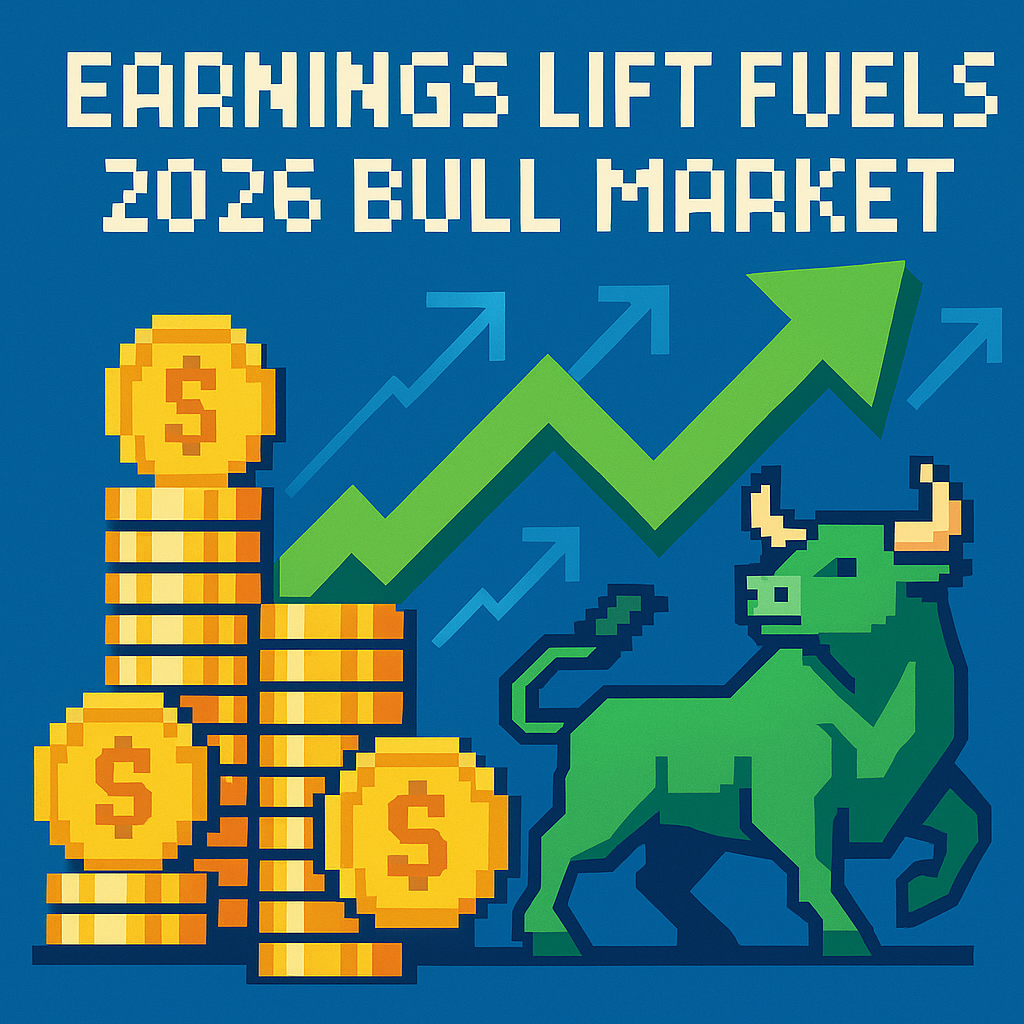
Earnings Lift Fuels 2026 Bull Market | Analysis by Brian Moineau

P/E Compression Is the 2026 Bull Market’s Tell

TL;DR

  • In the 2026 bull market, the wrinkle is P/E compression: the S&P 500’s forward P/E sits below where it began the year even as prices climbed, because earnings rose faster than prices [1].
  • FactSet pegs Q2 2026 S&P 500 earnings growth at 23.3%, with 10 of 11 sectors up, led by Energy, Information Technology, and Materials—fuel for prices without needing multiple expansion [2].
  • Math check: with the S&P 500 at 7,499 and a 20.4x forward P/E on June 30, the market discounts roughly $368 in next-12‑month EPS; if forward EPS lifts to $380–$400 by Q4 while the multiple merely holds 20x–21x, you still get 7,600–8,400 [3].

What the source said

Yahoo Finance reported that the 2026 rally left the S&P 500 cheaper on a forward basis than where it started the year, because the “E” outran the “P,” compressing the index’s forward P/E [1]. The article pointed to an “earnings boom,” with back‑to‑back 20%+ EPS growth quarters and a 23.3% estimate for Q2 2026 from FactSet [2]. Ten of eleven GICS sectors should post year‑over‑year profit gains, with Energy, Information Technology, and Materials leading the pack [2]. The takeaway: if Q2 beats again, analysts raise numbers into Q3 2026, while prices can climb even if the multiple stays flat [1][2].

Original analysis

  • Shown work on valuation math using June 30, 2026 inputs: S&P 500 = 7,499; forward P/E = 20.4x [3]. Implied next‑12‑month EPS = 7,499 ÷ 20.4 = $367.6, which rounds to $368 [3]. Scenario A: if forward EPS = $380 and P/E = 20.0x, price = 20.0 × 380 = 7,600 [3]. Scenario B: if forward EPS = $400 and P/E = 21.0x, price = 21.0 × 400 = 8,400 [3]. Risk case: if EPS = $380 and P/E compresses to 19.0x, price = 19.0 × 380 = 7,220, which shows downside even with higher earnings [3].

  • A 2×2 for 2H 2026:

    • High earnings growth + Flat/Down P/E (compression): steady grind higher; resembles mid‑cycle periods like 2004 when profit momentum outpaced sentiment.
    • High earnings growth + Up P/E: melt‑up risk; think of 2013 as a year when both earnings and multiples helped.
    • Low earnings growth + Flat/Up P/E: brittle rally; vulnerable to guidance cuts during October–November 2026 earnings season.
    • Low earnings growth + Down P/E: drawdown; typically follows negative revisions clusters across at least 6 of 11 sectors.
  • Contrarian read: leadership concentration in mega‑cap AI names such as Nvidia, Microsoft, and Alphabet could mean broad EPS beats help equal‑weight indices more than the cap‑weighted S&P 500 in 2H 2026, while pockets like Utilities and Real Estate remain rate‑sensitive even if Energy and Tech print strong results [2].

What others are missing

The market underestimates how 2026 AI data‑center buildouts at Microsoft (Quincy, Washington), Amazon (Hilliard, Ohio), and Alphabet (Council Bluffs, Iowa) flow through GAAP EPS via depreciation schedules that stretch 6–8 years, which can lift reported margins even before full cash returns materialize; that accounting timing could fortify EPS in Information Technology and Communication Services while masking capital‑intensity risk that shows up in free cash flow.

What to watch next

  1. By November 15, 2026, FactSet’s published S&P 500 forward 12‑month EPS will print at or above $390.
  2. On December 31, 2026, if the S&P 500 forward P/E closes between 19.5x and 21.5x, the index will finish between 7,600 and 8,400.
  3. By November 30, 2026, at least 8 of 11 GICS sectors will show positive year‑over‑year EPS growth for Q3 2026 in the FactSet scorecard.

Sources

  1. Yahoo Finance (malaysia.news.yahoo.com) — Summarizes 2026 P/E compression alongside price gains, framing why valuations look less stretched than headlines imply.
  2. FactSet Insight (insight.factset.com) — Provides the Q2 2026 23.3% S&P 500 EPS growth estimate and notes 10 of 11 sectors with positive YoY earnings, plus sector leadership.
  3. J.P. Morgan Asset Management, Guide to the Markets (am.jpmorgan.com) — Supplies the June 30, 2026 forward P/E of 20.4x and context for index‑level valuation math.


Related update: We recently published an article that expands on this topic: read the latest post.
Ikea’s Sleek Inflatable Chair Reinvents | Analysis by Brian Moineau

Inflatable, but Make It Stylish: Why Ikea's New Blow-Up Chair Is a Small Design Revolt

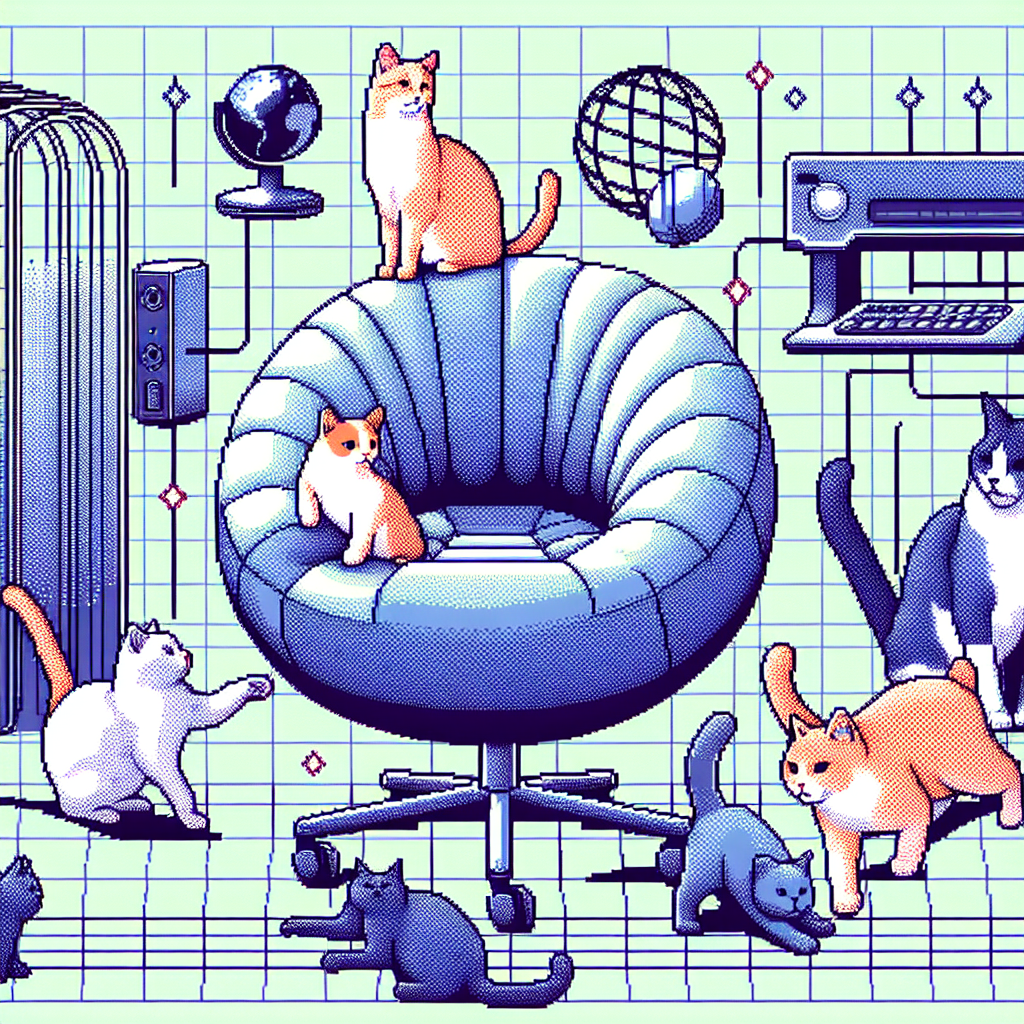
Ikea's New Blow-Up Chair Was Tested by Cats — and that headline is exactly the kind of delightful, slightly absurd moment that marks a good design story. The PS 2026 Easy Chair arrives as part of Ikea’s experimental PS 2026 collection, and the company says it’s taken around 26 years (and a lot of prototypes) to get inflatable furniture right. This isn’t nostalgia dressed up in neon: it’s a rethinking of what “air” furniture could be when paired with smarter engineering and modern materials. (wired.com)

Why an inflatable chair — again?

Inflatable furniture was a hallmark of ’90s kitsch: cheap, lightweight, portable, and famously squeaky or short-lived. Ikea tried similar ideas decades ago with mixed results and eventually shelved the concept. Designer Mikael Axelsson took the challenge back on for PS 2026, combining internal air chambers with a rigid frame and textile outer layer to balance the perks of inflatable pieces (compact shipping, low weight) with the comfort and durability people actually want. That marriage of air and structure is what sets this iteration apart. (ikea.com)

Quick context:

  • The PS collection is Ikea’s playground for experimental ideas — launched in 1995 and returning in 2026 for its tenth iteration. (ikea.com)
  • The Easy Chair was previewed at Milan Design Week and will be part of a full PS 2026 reveal in May (Ikea’s Democratic Design Days). (yankodesign.com)

Ikea's New Blow-Up Chair Was Tested by Cats

Yes, cats. When a product team wants to see how things behave in real homes, there’s no substitute for unpredictable living-room testers. WIRED’s coverage pointed out that Ikea actually let cats interact with prototypes — a playful and practical move, since claws, curiosity, and sudden leaps are a great stress test for seams, valves, and textile abrasion. This kind of “real-life” testing speaks louder than lab specs: if a sofa survives a cat’s ambush, it’s probably ready for human use. (wired.com)

What Ikea changed — the engineering bits that matter

The new Easy Chair isn’t a single plastic bubble. Key improvements include:

  • Internal air chambers that stabilize the shape rather than depending on a single bladder.
  • A carbon-steel or chrome frame that gives structural support and prevents the “floppy” feel of old inflatables.
  • Textile outer layers that mask the balloon aesthetic and add tactile comfort and durability.
    Those changes aim to keep shipping efficiencies (flat-pack potential, low weight) while making the piece feel — and last — like actual furniture. (trendhunter.com)

The sustainability and logistics angle

One big reason Ikea keeps circling back to inflatable ideas is logistics: air-filled furniture can pack smaller, lowering transport emissions per unit and cutting costs. Done responsibly, that efficiency can be a sustainability win. The caveat: longevity. If an inflatable product has a short life and ends up in landfill, the benefits evaporate. Ikea’s focus on reworked materials and replaceable parts will determine whether this is a genuine environmental plus or a clever marketing riff. Several early write-ups highlight that Ikea intends the PS 2026 pieces to be functional and durable — but real-world use will be the final verdict. (ikea.com)

Design culture: nostalgia vs. reinvention

There’s a cultural tug-of-war here. Inflatable furniture triggers nostalgia — dorm rooms, summer parties, and the era of throwaway trends. But PS 2026 reframes inflatable as intentional design, not a cheap gimmick. By enclosing air within engineered chambers and dressing it in contemporary textiles, Ikea reframes a once-frivolous object into something with design pedigree. The public reaction is mixed: some love the playful risk, others recall leaky failures and worry about longevity. Online forums show both enthusiasm and skepticism. (reddit.com)

What to watch when the chair ships

If you’re curious about buying one, consider:

  • Valve and repairability: can you patch or replace inner bladders easily?
  • Warranty and expected lifespan: Ikea’s commitment matters more than the flashy Milan reveal.
  • Environmental trade-offs: does compact shipping outweigh potential end-of-life issues?
  • Real-world comfort: showroom photos rarely capture how a piece performs over months of use.
    Early press says the full PS 2026 collection will drop in mid-May; that’s when we’ll start seeing durability reports and customer reviews. (ikea.com)

Playful testing as product storytelling

Let’s be honest: saying “we tested it with cats” is brilliant PR. But it’s also a legitimate design method. Home objects don’t live in climate-controlled labs; they live with pets, kids, and spilled coffee. Inviting those variables into the testing process produces better outcomes and makes the product story resonate. In Ikea’s case, the cats are a wink: a reminder that design should be useful, affordable, and a little bit fun.

Final thoughts

Ikea’s PS 2026 Easy Chair is more than a nostalgia stunt. It’s an attempt to reconcile the logistical brilliance of inflatable furniture with modern expectations of comfort and durability. Whether it becomes a staple or a curious footnote will depend on how those early promises hold up in living rooms around the world. For now, it’s exciting to see a mass-market giant take a risk, test it in the messy reality of home life (cats included), and try to make design playful again.

A few useful notes

  • Full PS 2026 launch and wider availability are scheduled around May 13–15, 2026 (Ikea’s mid-May Democratic Design Days and subsequent in-store rollouts). (admiddleeast.com)
  • Expect more hands-on reviews after the collection reaches stores; those will answer the repairability and longevity questions consumers rightly care about.

Sources


Related update: We recently published an article that expands on this topic: read the latest post.