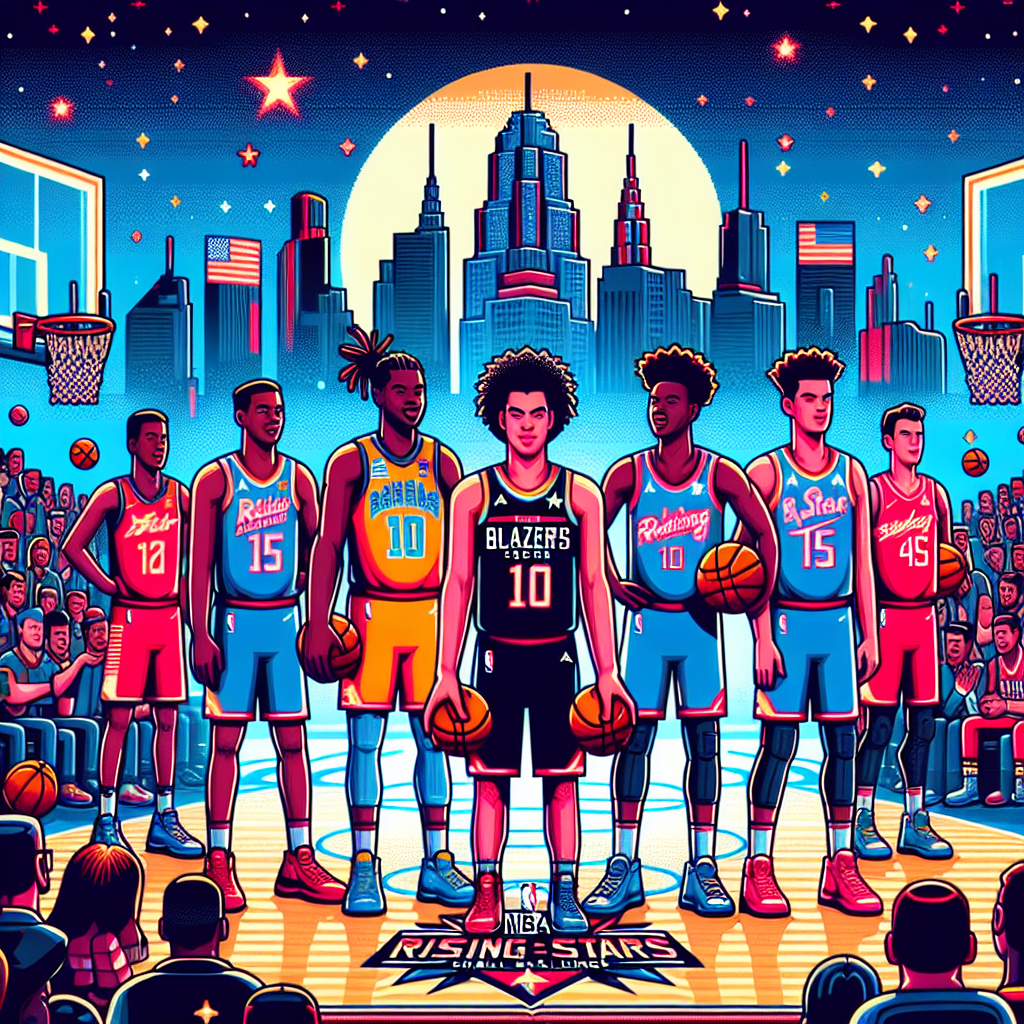
Clingan and Hansen Shine at Rising Stars | Analysis by Brian Moineau

Two Trail Blazers Stood Tall at All‑Star Weekend

The Rising Stars Challenge at the 2026 NBA All‑Star Weekend wasn’t just another playground for prospects — it was a stage where Portland’s young frontcourt made a case. Watching Donovan Clingan and Yang Hansen trade highlights felt like a snapshot of a team that’s quietly building a new identity: physical, hungry, and not afraid to show personality on a national stage.

Setting the scene

  • Event: Castrol Rising Stars Challenge during NBA All‑Star Weekend, Feb 13–15, 2026 (Intuit Dome, Inglewood, CA).
  • Format: Mini‑tournament — two semis (race to 40) and a final (first to 25), with NBA rookies/sophomores and a G League team mixed across squads.
  • Portland representation: Donovan Clingan (Team Melo) and Yang Hansen (Team Austin, representing Rip City Remix / G League).

This wasn’t a conventional box‑score night for the Blazers’ bigs so much as a collection of memorable moments — pump‑fakes, pull‑up threes, and a defensive presence that still has opponents guessing.

What jumped out

  • Clingan’s physicality and confidence. He opened things aggressively — winning the tip, scoring the first seven points for Team Melo in the semi, and finishing the semi with nine points. He carried that energy into the final, hitting two early threes and finishing as a presence on defense even when the offense dried up. (Blazer’s Edge)(blazersedge.com)
  • Hansen’s poise and versatility. The 7‑footer (and G‑League standout) came off the bench and immediately changed the flow: a made three, a classic three‑point play, and a highlight drive where he sold a shoulder fake on Clingan before gliding to the rim. He shot efficiently (80% in the semi) and played every minute after checking in. (Blazer’s Edge, ClutchPoints)(blazersedge.com)
  • The human moment that matters. Hansen faking out Clingan and finishing at the rim is the kind of play that does more than move the scoreboard — it gives fans and teammates something to tweet about, laugh about, and remember. It’s chemistry in public. (ClutchPoints)(clutchpoints.com)
  • Results and context. Team Melo advanced from the semis 40–34 (Clingan and Reed Sheppard led with nine apiece), but Team Vince ultimately won the tournament. Still, both Portland players left a national mark — notching minutes, highlights, and useful tape that matters for how teams and fans perceive them. (NBA.com, LA Times, Blazer’s Edge)(nba.com)

Why this matters for Portland

  • Validation of frontcourt investment. Portland has invested draft capital and development time in size and rim protection. Seeing two recent bigs perform — in different contexts (Clingan in the NBA rookie/sophomore mix, Hansen representing the G League) — suggests the frontcourt pipeline is producing tangible returns.
  • Developmental signals. Hansen’s efficiency and comfort with multiple actions (three, drive, free throws) hint at a high upside if coached and given reps. Clingan’s willingness to step out and attempt threes shows a modern center’s toolkit, even if it wasn’t all falling on this stage.
  • Fan and locker‑room momentum. Small moments — a smirk after a highlight, a teammate sold on a move — translate into confidence that carries back to regular‑season minutes.

Quick stat snapshot

  • Donovan Clingan: semi — 9 points, 2 rebounds, 1 block; final — early 6 points (two threes), ended with limited counting numbers but notable defensive contest on the final play. (Blazer’s Edge)(blazersedge.com)
  • Yang Hansen: semi (Team Austin) — 10 points, 2 rebounds, 80% shooting in his minutes; key plays included a three and a three‑point play after a drive. (Blazer’s Edge, NBA summary)(blazersedge.com)

My take

All‑Star exhibitions can be silly, but they’re also a rare live audition with a national audience and simpler scouting tape. Clingan looks like a menacing, modern rim protector who’s learning to stretch the floor; Hansen looks like a fast‑rising two‑way project with legitimate touch and instincts. For Portland fans wondering how the team’s long‑term blueprint will take shape, these two moments — one a pump‑fake‑and‑drive, the other a contested block and early threes — are part of the same story: a team leaning into size, versatility, and a new generation of identity.

Final thoughts

The Rising Stars Challenge wasn’t the definitive answer to everything about the Blazers’ future, but it was an encouraging footnote. Both Donovan Clingan and Yang Hansen left Inglewood with more than highlights — they left with momentum. If the season ahead is about growth, those little flashes at All‑Star Weekend become the kindling.

Sources


Related update: We recently published an article that expands on this topic: read the latest post.

Bulls’ Roster Teardown: Dosunmu Traded | Analysis by Brian Moineau

The Bulls’ latest roster demolition: why trading Ayo Dosunmu hurts and makes sense

There’s a particular sting when a hometown player you’ve watched grow into a reliable pro is packed into a trade bag and sent away before you’ve finished your mid-morning coffee. That’s what happened Thursday when the Chicago Bulls — in the middle of a blitz of deadline moves — shipped Ayo Dosunmu out of town, along with Julian Phillips, while Dalen Terry had already been moved earlier in the day. It felt less like a nudge in a new direction and more like a wholesale teardown.

Below I unpack the context, the logic from both sides, and what this cascade of trades means for the Bulls’ short- and long-term identity.

Why this felt like a gut punch

  • Dosunmu is a hometown success story. Drafted in the second round out of Illinois in 2021, he’d steadily built a reputation as a gritty two-way guard who could defend, create shots, and provide energy off the bench or in spot starts. The emotional attachment runs deep for Chicago fans. (chicago.suntimes.com)
  • The timing. The Bulls had already moved other recognizable pieces (Kevin Huerter, Nikola Vučević, Coby White in earlier deals reported around the deadline), so Dosunmu’s exit felt like another brick pulled from the house rather than a strategic remodel. The narrative shifted from “retool” to “rebuild.” (chicago.suntimes.com)
  • Certainty of departure. Dosunmu was on an expiring deal, meaning the Bulls’ front office faced a classic decision: try to hold onto a fan favorite for a modest chance at a playoff push, or flip him now for longer-term assets. They chose the latter. (foxsports.com)

The trade details (the essentials)

  • Minnesota Timberwolves received: Ayo Dosunmu and Julian Phillips. (espn.com)
  • Chicago Bulls received: Rob Dillingham, Leonard Miller and four future second-round draft picks (reports vary slightly by outlet on exact package timing but the core pieces are consistent). (espn.com)

Dalen Terry, a former first-round pick who never quite locked a long-term role in Chicago, was moved earlier to New York in a deal that brought back Guerschon Yabusele — a move the Sun‑Times framed as partly bookkeeping and partly an admission of development misfires. (chicago.suntimes.com)

The front-office logic: accelerating a rebuild

  • Asset accumulation: The Bulls picked up young prospects and multiple second‑rounders. For a team that’s now clearly pivoting away from the current competitive window, extra picks and young talent are valuable currency. Getting Rob Dillingham (a former lottery pick) and Leonard Miller + draft capital gives Chicago lottery upside and trade chips down the line. (foxsports.com)
  • Avoiding forced re-signs: Dosunmu was an expiring salary and likely would test free agency in the summer. Rather than risk losing him for nothing, the Bulls monetized his value now. That’s pragmatic, even if it’s unpopular with the fanbase. (wsls.com)
  • Clearing confusion: The Bulls’ roster had a jumble of veterans and young wings — moving several established players creates clarity: this is a reset. Artūras Karnisovas has repeatedly said the roster would change; this is the literal fulfillment of that promise. (chicago.suntimes.com)

What Minnesota gains (and why they made the move)

  • Immediate two-way depth: Dosunmu brings energy, defense, and 3‑point shooting that can slide into bench lineups beside Anthony Edwards and boost the Wolves’ perimeter options for a playoff push. He was averaging career-high scoring numbers and shooting efficiently this season — traits playoff teams covet for bench scoring. (foxsports.com)
  • Short-term upgrade: For a contender trying to solidify a seed, adding a polished, affordable rotation guard for the stretch run is low-risk, high-return — especially if Dosunmu fills a role and hits free agency as hoped.

The cost: what Chicago might be sacrificing

  • Fan goodwill and identity: The Bulls are shedding hometown and popular players in rapid succession. That erodes continuity and makes it harder to sell future rebuilds to a passionate local fanbase. (chicago.suntimes.com)
  • Developmental risk: Rob Dillingham and Leonard Miller are young, but neither is a guarantee. Turning proven role players into prospects and picks carries the usual gamble: will those assets become meaningful rotation pieces? (foxsports.com)
  • Perception of incompetence vs. intentionality: Critics will point to busts or mis-picks (the Sun‑Times referenced Dalen Terry not meeting expectations) to paint the front office as flawed. But that critique sits beside a competing narrative: smart teams sometimes need to cut losses and gather flexibility. (chicago.suntimes.com)

Quick wins and longer arcs

  • Short-term: The Bulls will be worse this season on paper — fewer proven scorers and continuity. That may help draft positioning.
  • Medium-term: If Chicago’s evaluators hit on their lottery/later picks and Dillingham/Miller develop, the franchise could swap mid-tier veterans for younger controllable talent and reload cap flexibility.
  • Long-term: This is a multi-year bet. The scoreboard pain now could pay out only if the front office nails scouting, player development, and later acquisitions.

What to watch next

  • How Rob Dillingham and Leonard Miller are deployed — are they given minutes or flipped for different assets?
  • The Bulls’ summer strategy: will they chase a franchise-level swing in free agency, or keep stockpiling picks and hope for a high draft position?
  • Dosunmu’s role in Minnesota and whether he re-signs in free agency — his performance there will color how this deadline trade is judged.

Key takeaways for Bulls fans

  • This was a decisive, not incremental, pivot: the front office is embracing a rebuild and sacrificing immediate familiarity for future optionality. (chicago.suntimes.com)
  • The Bulls gained prospects and picks in exchange for proven role players — a tradeoff between certainty today and upside tomorrow. (foxsports.com)
  • How the club executes on development and future draft decisions will determine whether these moves become celebrated or regretted.

My take

I get the frustration. Trading a hometown player like Ayo Dosunmu stings because it’s personal — he represented a connective thread between the team and the city. But the NBA is a market of windows. The Bulls’ leadership appears to have decided that clinging to incremental competitiveness this season was less valuable than clearing a path to a new core. That’s defensible, even if it’s ugly in the moment.

If Chicago’s brain trust can translate those second‑rounders and young pieces into real talent or smart trades, this chapter will read like a necessary reset. If they don’t, this will look like an avoidable demolition. For now, it’s a bold bet — and bold bets are always polarizing.

Sources


Related update: We recently published an article that expands on this topic: read the latest post.

Mendoza Bros. Spotlight: Alberto to GT | Analysis by Brian Moineau

Georgia Tech lands Alberto Mendoza: the portal move that keeps the Mendoza name in the ACC spotlight

You know that feeling when a plot twist lands faster than the final seconds of a close game? One day Indiana is celebrating a Heisman winner and a national title, the next day Georgia Tech announces a commitment from the Heisman winner’s younger brother. Alberto Mendoza’s decision to transfer to the Yellow Jackets is the kind of offseason moment that redraws depth charts and sparks instant “what if” conversations.

Why this matters beyond a single roster move

  • Alberto isn’t just “Fernando’s little brother.” He’s a 6-2, athletic QB who showed real promise in relief at Indiana — efficient passing, a few timely throws and the kind of dual-threat flashes ACC coaches covet.
  • Georgia Tech just finished 9–4 in 2025 and needs a quarterback to replace Haynes King. Adding a young QB with game experience and a winning pedigree accelerates their timeline.
  • For Georgia Tech, this is both a talent pickup and a recruiting signal: Brent Key is willing to be aggressive in the portal to speed the program’s trajectory.

A quick snapshot of Alberto’s background

  • High school: Christopher Columbus (Miami, FL), the same South Florida pipeline that produced his brother Fernando.
  • At Indiana: Played mostly as a backup in 2025, appearing in nine games. Notable stat line: completed 18-of-24 for 286 yards, five TDs and one interception, plus 190 rushing yards and a rushing TD. Those numbers came in limited opportunities but showed accuracy and playmaking instincts.
  • Transfer timeline: Entered the transfer portal in the winter window following Indiana’s national title run and committed to Georgia Tech on January 20, 2026.

What Georgia Tech gets (and what to watch)

  • Immediate competition: Alberto arrives with college reps and a winning culture close to home. He won’t be an automatic starter — Georgia Tech still has returning players and incoming transfers — but he presents a realistic path to the job if he adapts to the system quickly.
  • Mobility and efficiency: In spot duty, Alberto demonstrated a high completion rate and the ability to pick up yards with his legs. That profile fits well with modern ACC offenses that prize quick decision-making and the threat of QB movement.
  • Development upside: At 6-2 and still young, Mendoza has room to add polish. Georgia Tech’s coaching staff will be judged on how quickly they can turn those flashes into consistent performance against ACC defenses.

Ripple effects for Indiana and the Mendoza family narrative

  • Indiana’s offseason quarterback carousel keeps spinning. With Fernando expected to turn pro after capturing the Heisman and the national title, Indiana had already added portal talent (Josh Hoover). Alberto looking elsewhere is understandable — he’s chasing playing time and a chance to build his own legacy.
  • Storylines sell. Fernando’s Heisman and the Hoosiers’ Cinderella run dominate headlines, and Alberto’s move feeds into the human interest angle: two brothers, two different paths after a shared season of ultimate success.

Where the risk and reward lie

  • Risk for Georgia Tech: Portal commits aren’t guaranteed fits. Chemistry, learning a new offense and adapting to ACC speed are immediate hurdles. If Alberto doesn’t win the job, Tech still needs to replace production at QB.
  • Reward for Georgia Tech: If he develops into a reliable starter, this could be a low-friction, high-upside win — a player with practice-room familiarity with a championship-winning culture and the confidence that comes from being part of a top program.

The broader college-football lens

  • The Mendoza story is another illustration of how transfers and family ties shape roster construction today. Power is shifting toward players who can move for opportunity, and programs that move quickly in the portal gain competitive advantage.
  • It’s also a reminder that star seasons (and Heismans) don’t freeze rosters. Momentous wins often spark roster churn — players reassess their roles, coaches retool, and the cycle repeats.

Final thoughts

Alberto Mendoza’s commitment to Georgia Tech is more than a neat offseason headline. It’s a strategic play by the Jackets to add a young, experienced quarterback with a winning background — and it offers Mendoza a clearer path to carve his own identity away from an inevitable comparison to Fernando. If the coaching staff can accelerate his comfort in the offense, this could be an understated offseason win for both player and school. Either way, the Mendoza name will continue to be one to watch in 2026.

Sources


Related update: We recently published an article that expands on this topic: read the latest post.


Related update: We recently published an article that expands on this topic: read the latest post.
When Waiting Wins: The Late-Tech Edge | Analysis by Brian Moineau

When the Cardinals Waited to Plug In: Why Late Tech Adoption Can Be a Winning Playbook

There’s a slightly counterintuitive feeling that comes when you watch a team that’s known for tradition—like the St. Louis Cardinals—lean into modern performance tech. It’s comforting and a little thrilling at the same time: the same franchise that treasures history is now measuring spin efficiency in Jupiter and tracking ground reaction forces in the batting cages. But the bigger story here isn’t just “the Cardinals use tech.” It’s about timing: how waiting to adopt new technology can sometimes be an advantage rather than a handicap.

The hook: innovation without the bruises

Imagine buying a brand-new gadget on day one versus buying it after a year of updates, bug fixes, and user feedback. Early adopters get the flash and the bragging rights, but they also wrestle with early faults, awkward workflows, and expensive pivots. Late adopters—if they pick wisely—get the polished version plus a map of what works and what doesn’t.

That’s the thesis behind a recent piece on Viva El Birdos, which walks through the tech the Cardinals are using (and slowly integrating) and argues the club’s later, deliberate approach may spare them many missteps common to teams that plunged in too fast. (vivaelbirdos.com)

Why the Cardinals’ timing looks smart

  • They avoid teething problems. Early versions of hardware and software often change dramatically. Wait long enough and vendors iterate toward reliability, better documentation, and sensible workflows.
  • They learn from others. By the time a tool reaches them, there’s often a body of case studies—what injuries it predicted poorly, which metrics were noise, how coaches actually use the dashboards.
  • They get more interoperable systems. Early sports tech tended to be stovepiped: one vendor’s files didn’t play nicely with another’s. Later entrants often adopt common standards or offer integrations with the ecosystem (TrackMan, Rapsodo, etc.). (trackman.com)
  • Budget discipline. Waiting lets a club prioritize spending on proven solutions and the right people to interpret the data, instead of chasing every shiny thing.

The tech the Cardinals are (or likely are) using

Viva El Birdos’ roundup reads like a checklist of modern baseball performance tools—most of which are now common across MLB clubs, though the timing and depth of deployment vary: (vivaelbirdos.com)

  • Force plates (e.g., Forcedecks) to measure drive and deceleration forces in pitchers.
  • Arm-care and range-of-motion sensors for release-point strength checks and daily self-testing.
  • TrackMan for full ball-trajectory and spin metrics—the workhorse of stadium and practice analytics. (trackman.com)
  • Rapsodo systems and newer PRO devices for portable, detailed ball-flight and spin data useful in both hitting and pitching work. (rapsodo.com)
  • Trajekt pitching simulators that emulate live pitcher release and pitch shapes for hitters.
  • Kinatrax and other markerless motion-capture tools that let teams analyze in-game biomechanics without body markers.
  • Edgertronic high-speed cameras for frame-by-frame spin and release detail.
  • NordBord and groin/hip strength testing rigs to quantify rotational power and injury risk.
  • Wearables and embedded sensors (sleeves, shoe plates, GPS/IMUs like Catapult) for workload and fatigue management.

Together, these tools create a matrix of data: mechanical forces, joint kinematics, ball flight, internal workload, and recovery indicators. The real art—and major expense—is turning that matrix into actionable, human-led decisions.

Late adoption: the tradeoffs and practical gains

  • Reduced trial-and-error: The Cardinals (and teams that follow this path) can skip failed experiments other teams used as public beta tests.
  • Better vendor maturity: Hardware durability, battery life, cloud reliability, and analytics UI often improve significantly after a product’s first 12–24 months on the market.
  • Smarter hiring: Rather than hiring a stack of generalists, a team can recruit specialists who know the refined tools and workflows that actually move outcomes.
  • Focused integration: Rather than attaching every sensor to every uniform, a later adopter can implement a streamlined stack that interoperates and produces clean signals for coaching and medical staff.
  • But: late adoption risks missing early competitive edges and the institutional learning that comes from building expertise over time. The solution is selective adoption—waiting for evidence while experimenting in controlled ways.

How measured adoption looks in practice

  • Start with high-signal tools. TrackMan and Rapsodo have become standard for a reason: they provide clear, reproducible metrics that feed scouting, player development, and in-game adjustments. (trackman.com)
  • Pilot niche tech where risk is low. Try force plates and markerless capture with a small group (rehab pitchers, minor-league staff) before scaling.
  • Build data ops and human interpreters first. Devices generate numbers; the value comes when physiotherapists, pitching coaches, and data scientists translate numbers into biomechanics and training plans.
  • Use tech to augment, not replace, judgment. Advanced cameras and sensors illuminate details that were once invisible—use them to inform decisions rather than dictate them.

Lessons for other teams and organizations

  • Timing is strategic. You can treat the adoption curve as a resource allocation problem: when do you spend on hardware vs. talent vs. integration?
  • Expect consolidation. Vendors consolidate and best practices emerge; buying into a mature standard often means less technical debt.
  • Invest in explainability. Coaches need interpretable metrics. If a metric can’t be explained in plain terms (what to change, how to change it, and why it matters), it’s probably not ready for daily use.
  • Measure ROI beyond wins. Quantify effects on injury reduction, player availability, and rehab timelines—not just spin rate or exit velocity.

What this means for fans and those who follow the Cardinals

  • You’ll see more subtle changes than instant results. Technology rarely instantaneously turns prospects into All-Stars, but it can steadily reduce injury rates, optimize workloads, and eke out small, repeatable performance gains.
  • The narrative won’t be “we bought X and won.” It will be slower: better-managed pitchers, smarter rest schedules, individualized development plans—incremental advantages that compound.

A few practical cautions

  • Beware metric inflation. More numbers often mean more noise. Teams must test whether a metric predicts outcomes (health, performance) or merely correlates superficially.
  • Privacy and player buy-in matter. Wearable tracking and health monitoring require trust, clear consent, and good communication about how data is used.
  • Don’t let tech short-circuit human relationships. The best results come when coaches use data as a conversation starter—not a final verdict.

My take

The Cardinals’ approach—methodical, observant, and willing to adopt proven tech rather than chase every novelty—feels like a franchise-calibrated strategy. It leverages one of the club’s true strengths: institutional patience. In a league where marginal gains matter and injuries can derail seasons, late-but-intelligent adoption can deliver a cleaner, sustainable path to competitive advantage.

If you squint, it’s the baseball version of “buy quality after the bugs are fixed.” You still need to spend—and you still must staff the right people—but when done thoughtfully, waiting can be an edge, not a delay.

Quick practical takeaways

  • Waiting can be smart—if you use the pause to study outcomes, vendors, and integrations.
  • Prioritize high-signal tools (ball flight + workload tracking) before adding niche hardware.
  • Invest in interpreters (trainers, biomechanists, data analysts) as much as devices.
  • Use pilots to scale safely and won’t overwhelm players or staff.

Sources

Final thought: technology won’t replace baseball’s human core, but the right timing—and the right people interpreting the right signals—can make the difference between expensive experiment and consistent improvement.


Related update: We recently published an article that expands on this topic: read the latest post.

Related update: We recently published an article that expands on this topic: read the latest post.


Related update: We recently published an article that expands on this topic: read the latest post.
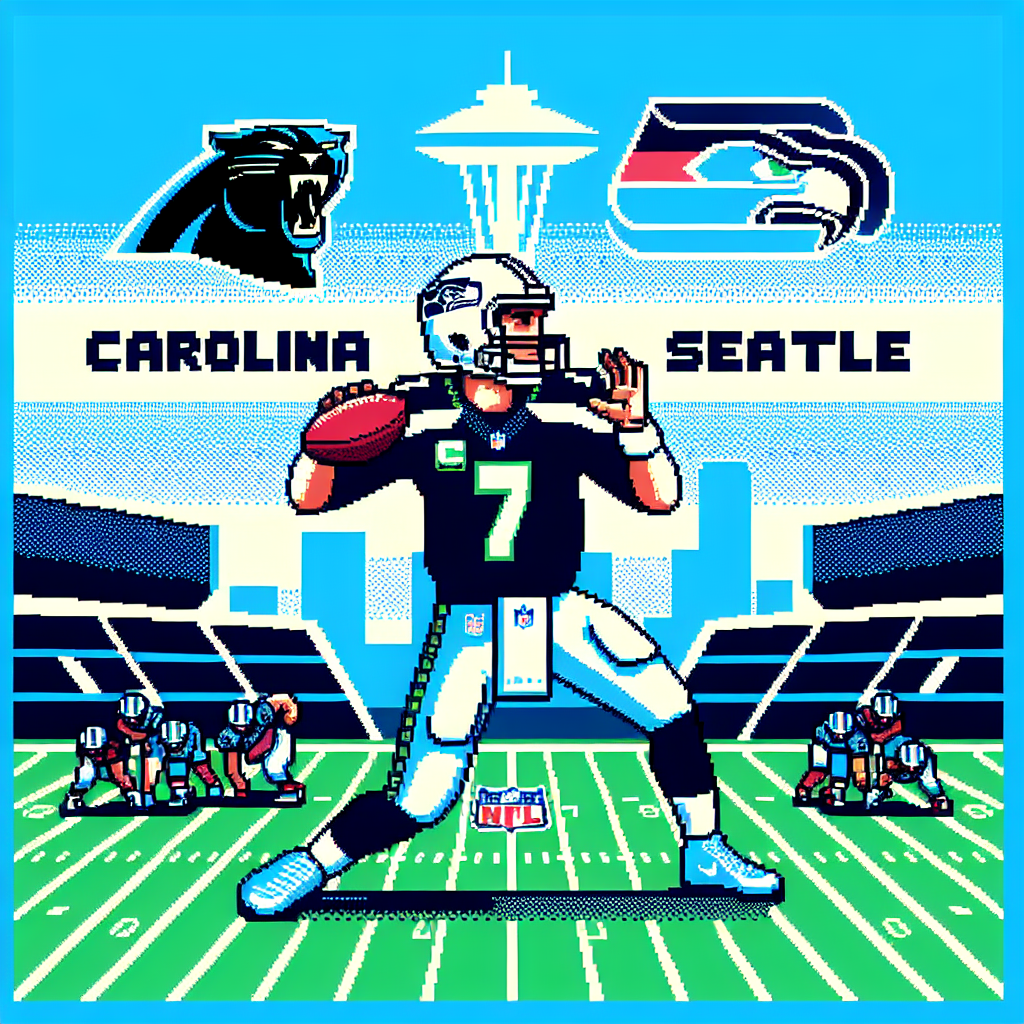
Darnold’s Homecoming: From Setback | Analysis by Brian Moineau

Sam Darnold Goes Back to Carolina — and It Feels Different This Time

There’s something poetic about a quarterback walking back into a stadium where he once had to re-find himself. For Sam Darnold, returning to Bank of America Stadium isn’t a trip down memory lane so much as a checkpoint on a journey that’s gone from “what if” to “why not.” Once the Panthers’ stop on a rocky early-career path, Carolina helped reshape him into the player who’s now a two-time Pro Bowler and a legitimate NFC contender with the Seattle Seahawks.

Why this visit matters

  • It’s more than nostalgia. It’s a concrete example of how short chapters can change a career arc.
  • Darnold’s story reframes the “bust-to-breakout” narrative into something cleaner: development, patience, and context.
  • The contrast between his two stints in Carolina (a starter-in-waiting role in 2021–22) and his current form shows what coaching, learning behind a veteran, and a little momentum can do for a quarterback’s confidence.

A quick timeline that matters

  • 2018: Darnold is drafted No. 3 overall by the New York Jets and struggles early in his career.
  • 2021–2022: Traded to the Carolina Panthers. He starts games, battles injuries, and finishes strong late in 2022 — a small stretch that mattered more than it looked at the time.
  • 2023: Spends a season in San Francisco as Brock Purdy’s backup, learning in a strong offensive system.
  • 2024: Breakout year with the Minnesota Vikings — strong statistics, a Pro Bowl nod, and widespread recognition as an improved quarterback.
  • 2025: Signs with the Seahawks and returns to Carolina as an established starter, playoff-bound and riding the momentum built over the previous seasons.

How Carolina “paved the way”

Darnold’s comments before the Seahawks’ December 26, 2025 game capture the essence of what those Carolina years meant to him: being around good teammates, weathering adversity, learning the offense, and coming through injury to finish the season on an upswing. That late-2022 stretch — where he helped the Panthers go 4-2 down the stretch and posted multiple games with a passer rating over 100 — became a kind of quiet audition. It didn’t solve everything overnight, but it seeded belief.

Three practical ways Carolina helped:

  • Rebuilding mental resilience: The Panthers stint forced Darnold to cope with setbacks and rebuild confidence in-game.
  • Learning from teammates and coaches: Exposure to different systems and veteran players gave him new tools to add to his repertoire.
  • Creating momentum: Playing well late in the 2022 season opened the door for the next steps — a learning season in San Francisco and the breakout year in Minnesota.

The bigger picture: player development and second chances

Darnold’s arc is a useful case study about NFL careers that aren’t linear. Talent alone rarely tells the whole story; context, coaching, scheme fit, health, and timing all matter. Teams (and players) who are patient and intentional about development can turn perceived “busts” into reliable starters. For Darnold, the time in Carolina didn’t instantly rewrite his narrative — it supplied the pieces he later used to build it.

  • Players can rebrand their careers with incremental wins and learning opportunities.
  • Backup years (like his time in San Francisco) can be less about sitting on the bench and more about refining decision-making.
  • Short hot stretches — the kind Darnold had in Carolina — matter because they provide evidence that a player can win when given the right support.

What to watch when Darnold plays in Carolina

  • Poise under pressure: Does he show the same command and decisiveness that powered his 2024 season?
  • Pocket movement and quick reads: Those were hallmarks of his improvement in Minnesota and will be critical against Carolina’s schemes.
  • Leadership cues: How he interacts with teammates on and off the field shows whether the growth is sustained beyond stats.

Things that make this narrative compelling for Seahawks fans

  • Darnold’s success is also a win for Seattle’s offensive staff and the broader rebuild: they signed a quarterback who’s earned momentum and now must prove it again in a new environment.
  • If the Seahawks keep winning with Darnold at the helm, his road through Carolina will look less like a detour and more like a necessary milepost.
  • The human element — friendships, locker room lessons, and hard-earned confidence — is what converts raw talent into consistent performance.

My take

Sam Darnold’s return to Carolina reads like one of those sports stories you don’t notice until it’s fully formed: a player who kept working, learned from imperfect opportunities, and used them as leverage for a genuine career revival. The Seahawks’ decision to bank on him wasn’t just about stats from one breakout year — it was betting on a player who’s shown the capacity to grow. Whether he cements a long-term legacy in Seattle or continues evolving, that trip back to Bank of America Stadium is a reminder that development often happens in unexpected places.

Sources


Related update: We recently published an article that expands on this topic: read the latest post.


Related update: We recently published an article that expands on this topic: read the latest post.

Cowboys Late Push: Building Something | Analysis by Brian Moineau

Closing the Year with Purpose: The Cowboys’ Unexpected Summer of Hope

There’s a particular kind of stubborn optimism in football — the kind that refuses to let the season end quietly even when the playoffs are out of reach. After the Dallas Cowboys were officially eliminated from playoff contention in late December 2025, head coach Brian Schottenheimer didn’t send the veterans home early or pivot fully into audition mode. Instead he doubled down on one message: they’re still building something special.

This is not the self-delusion of an owner desperate for headlines or a coach covering for mistakes. It’s a deliberate cultural stance, a claim about identity and process when the scoreboard stings the most.

Why Schottenheimer’s stance matters

  • It reframes the end of a disappointing season as an investment period rather than an admission of failure.
  • The approach protects the delicate balance between player development, veteran stewardship, and organizational continuity.
  • It gives the franchise a narrative heading into 2026: learning, accountability, and sustained standards.

Schottenheimer has been clear: this is year one of a project. That matters for teams that want to avoid the “blow-it-up” cycle and instead create long-term winning habits.

What Schottenheimer actually said

  • He emphasized the immediate focus — “playing the Commanders” and taking each game seriously.
  • He stressed that players still want to play, want to win, and care about one another.
  • He framed culture as intact: practice effort, locker-room cohesion and accountability remain, even if the win-loss column doesn’t show it yet.
  • He acknowledged coaching and execution need fixing, calling out that the record shows “we’re not playing good enough football” and “I’m not coaching good enough football,” while insisting culture is not the problem. (DallasCowboys.com)

This mix of accountability and faith in the locker room is a classic leadership posture — own the failures, but insist on the foundations that will allow you to fix them.

The practical choices behind the rhetoric

  • Managing veterans: Schottenheimer signaled cautious handling of veteran stars (like Dak Prescott) when games get out of hand, balancing player health with momentum-building.
  • Division focus: He pointed out the realistic chance to “go potentially 5‑1 in the division,” reframing the remaining slate into a tangible target that matters to fans and players.
  • Play and practice standards: He highlighted that the team continues to practice and prepare hard — the kind of consistency that helps teams rebound faster in Year Two.

These are not poetic platitudes — they’re operational decisions that shape roster usage, coaching priorities in the offseason, and how the front office evaluates progress.

The broader context

  • This was Schottenheimer’s first year as head coach, a season with notable roster moves and upheavals (including high-profile trades earlier in 2025) and uneven results on defense and offense.
  • Owner Jerry Jones has been publicly intent on “competing now,” which adds pressure to turn culture into wins quickly.
  • Despite the misses, Dallas still landed notable individual recognition (e.g., Pro Bowl nods), underscoring that talent exists even if synergy didn’t consistently follow.

Taken together, the season reads like a classic transitional campaign: flashes of high-level play, recurrent structural issues (especially on defense), and a coach trying to install a long-term identity while under immediate-results pressure.

Nuggets for fans and skeptics

  • This stance isn’t an excuse: Schottenheimer explicitly took coaching responsibility where due. That kind of candor can buy credibility if next season shows measurable improvement.
  • Culture alone won’t win games. The Cowboys will need tangible fixes — schematics, personnel, situational coaching — to translate the “special” rhetoric into wins.
  • The remaining games of the 2025 season were being framed as momentum-building opportunities, not consolation prizes. That matters when evaluating offseason momentum and front-office decisions.

What to watch in 2026

  • Coaching adjustments: Will Schottenheimer change his staff or scheme emphases to stop the defensive slide?
  • Roster moves: Will the front office prioritize pass rush and secondary help to address persistent defensive shortcomings?
  • Player development: Can young and new pieces (and veteran leaders) convert late-season effort into early-season cohesion next year?

If the organization truly believes this is a sustainable build, those are the levers they’ll pull.

A short verdict

You can be skeptical — and you should be. “We’re building something special” is a bold claim from a first-year coach whose team missed the postseason. But there’s credibility in Schottenheimer’s blend of ownership and optimism: he admitted coaching shortcomings, praised the locker-room culture, and set practical goals for the remaining games. If Dallas converts that cultural bedrock into clearer strategic fixes (especially on defense), the phrase won’t sound like wishful thinking next fall.

Final thoughts

Good culture is necessary and messy stuff is inevitable. The true test for the Cowboys will be whether the lessons of 2025 produce measurable change in 2026. Fans don’t just want hope — they want progress. For now, Schottenheimer has given the locker room a direction and the franchise a baseline: finish strong, protect the core, and turn culture into consistent execution. That’s a start worth watching.

Sources


Related update: We recently published an article that expands on this topic: read the latest post.

Bedard Injury Sidelines Chicago | Analysis by Brian Moineau

When a Single Second Changes Everything

The final horn had barely sounded when one second — 0.8 seconds, to be exact — rewrote the script for the Blackhawks. Connor Bedard, the 20-year-old whirlwind who has been carrying Chicago’s offense, left Friday night’s loss to St. Louis in visible pain after a last‑second faceoff. By the time the Hawks returned home, the team had already announced he would not play Saturday against Detroit. That tiny slice of time suddenly felt enormous.

Why that moment matters

  • Bedard isn’t just another young prospect. He’s the face of Chicago’s fast-moving rebuild and the team’s leading point producer this season.
  • The injury happened during the final faceoff with 0.8 seconds left — a play that, under normal circumstances, is a desperation attempt to spark something. Instead it produced an immediate and worrying absence.
  • Early comments from coach Jeff Blashill called the play a “freak accident,” and the organization pushed updates to Monday. For now it’s a short‑term absence but an ominous, uncertain one.

The scene: what happened

With the Blackhawks trailing late, Bedard tried to win the draw that would give Chicago one last crack at tying the game. As the puck dropped, he and Blues center Brayden Schenn engaged; Bedard fell awkwardly and grabbed at his right shoulder, then skated off escorted by trainers. He had assisted on both Chicago goals earlier in the night, and his loss was felt immediately as the Hawks prepared to face Detroit the next day without their star center. (bleachernation.com)

How teams react to sudden losses of a star

  • Short-term lineup moves: expect a forward from Rockford or a depth recall to take Bedard’s spot on the roster sheet. The Hawks will lean on secondary scoring, sheltered minutes for their top wingers, and tactical shifts on faceoffs.
  • Tactical escalation: opponents will test Chicago’s depth and defensive structure, particularly in the middle, to exploit a team that’s suddenly missing its primary playdriver.
  • Psychological ripple: losing a 20-year-old who sparks energy changes team morale and fan expectation. Games that felt winnable with Bedard on the ice suddenly take on a different feel.

What this means for larger storylines

  • Playoff race and standings: Bedard is a key contributor to Chicago’s offensive production; missing him even briefly can impact results and points in a tight race.
  • Olympic ambitions: media and fans immediately noted the potential Olympic implications — a serious shoulder injury could jeopardize Bedard’s availability for international play should Canada call. Bleacher Nation flagged that concern in its post‑game notes. (bleachernation.com)
  • Player development and durability narrative: Bedard’s early career has been meteoric. How the Hawks handle recovery and load management will shape debate about preserving franchise cornerstones.

Quick reads — what the outlets are saying

  • Bleacher Nation reported the moment as a sudden turning point and emphasized the immediate practical impact (he won’t play Detroit; team awaiting further tests). (bleachernation.com)
  • Reuters and ESPN provided succinct game‑and‑status updates, quoting coach Jeff Blashill calling it a “freak accident” and noting that the club expects to have more information after further evaluation. (reuters.com)

Three short takeaways

  • A single second in hockey can be decisive not just for a play but for a season’s momentum.
  • The Hawks will shuffle lines and likely call up depth, but Bedard’s unique impact is not easily replaced.
  • The team’s communication timeline matters: cautious wording from coaches and a Monday update window signal prudence — and uncertainty.

My take

I hate that sports conversations sometimes reduce injuries to bullet points, but there’s a deeper thread here about how modern teams protect and manage their young stars. Bedard has been handled carefully as he’s climbed into superstar territory; the immediate priority should be clarity on the injury, prudent medical care, and resisting any rush back that sacrifices long‑term availability for a single game or a short streak of wins. For the Blackhawks, this is a test of organizational depth and temperament — can they steady the ship and keep competing while they wait for news?

Sources


Related update: We recently published an article that expands on this topic: read the latest post.

Related update: We recently published an article that expands on this topic: read the latest post.

Jon Sumrall: New Era for Florida Gators | Analysis by Brian Moineau

New era in Gainesville: Jon Sumrall becomes Florida’s head coach

He’s not the flashy name some Gators fans hoped for, but Jon Sumrall arrives in Gainesville with momentum, a clear resume and an appetite to prove the doubters wrong. On November 30, 2025, the University of Florida officially announced Sumrall — 43 years old and coming off a highly successful stint at Tulane — as the program’s 31st head football coach. The hire closes a turbulent search that briefly targeted Lane Kiffin and signals Florida’s willingness to place a fast-rising, SEC-tested coach into the spotlight.

Why this matters right now

  • Florida is a program built on championship expectations, not patient rebuilding. The choice of Sumrall shows the athletic department wants a coach who can deliver culture change quickly.
  • Sumrall’s path — success at Troy and Tulane, plus prior SEC experience as an assistant — makes him a different kind of risk than a long-shot big-name hire or another retread.
  • The coaching market was chaotic: Florida pursued other options before landing Sumrall, and the hire came after Kiffin chose LSU. That context matters for how fans and boosters will receive the move.

What Jon Sumrall brings to Gainesville

  • Rapid turnarounds: Sumrall has a track record of turning programs around fast. He led Troy to back-to-back Sun Belt titles and repeated conference-title appearances at Tulane. That résumé matters for a program hungry to return to national contention.
  • Defensive identity with offensive urgency: Sumrall’s roots are defensive — a former linebacker at Kentucky and a longtime defensive coach — but he’s emphasized building complete staffs and recruiting playmakers on both sides. His first public comments at Florida stressed the need for an “explosive offense,” signaling he knows what Gator Nation expects.
  • Proven recruiter in the Southeast: He has deep recruiting ties across Florida, Georgia, Alabama and the Gulf South. For Florida — a talent-rich state where winning local recruiting battles is non-negotiable — that regional credibility is a big asset.
  • Player development and culture: Reports and the university’s announcement highlight Sumrall’s player-first leadership, attention to development, and emphasis on toughness and accountability.

The deal and timeline

  • Official announcement date: November 30, 2025. Florida’s release and multiple national outlets reported the hire that day.
  • Contract details reported: Media outlets (AP, ESPN, ABC) reported a six-year deal averaging roughly $7.45 million per year (about $44.7 million total, incentives included). Sumrall will remain with Tulane through their postseason commitments (American Athletic Conference title game and any College Football Playoff appearance), per the reports.

The immediate challenges ahead

  • Staff building: Sumrall must assemble coordinators and assistants who can win over recruits and quickly install schemes that fit the personnel. Florida fans will watch the offensive coordinator hire closely — expectations for explosive offense are explicit.
  • Winning back trust: Some sections of Gator Nation preferred a bigger name and will see Sumrall as a consolation pick. Early gains on the field and clarity in recruiting approach will be essential to quiet skeptics.
  • Navigating the portal and NIL: Modern roster management demands more than traditional coaching chops. The reports indicate Florida is also adding front-office expertise (e.g., linking Dave Caldwell to a GM-like role) to help with roster construction and NIL strategy — a sign that the program knows the challenge is institutional, not just one man on the sideline.
  • Recruiting battles in-state: Florida must fend off SEC rivals in the state’s talent-rich landscape. Sumrall’s regional ties help, but results and relationships will be the real test.

How this compares to recent hires

  • Different from a flash hire: Unlike pursuing a marquee offensive figure, Florida chose a rising, process-driven leader who’s succeeded by building programs rather than relying on star-level name recognition.
  • Similarities to successful quick-turn coaches: Sumrall’s swift success at Troy and Tulane mirrors coaches who’ve quickly moved up the ladder by creating durable, winning cultures — the kind of profile athletic directors covet when they want sustainable success, not just one-season sparks.

Quick snapshots for fans and recruits

  • What fans should expect first year:
    • Immediate staff turnover and aggressive recruiting pushes in December–January.
    • Attempt to retain top in-state prospects while adding portal targets that fit Sumrall’s identity.
    • A focus on defensive toughness combined with attempts to upgrade offensive playmaking.
  • What recruits and transfers will hear:
    • A coach who sells development, winning culture and an SEC pedigree in recruiting relationships.

Short checklist for the next 90 days

  1. Announce the coaching staff (especially offensive coordinator).
  2. Secure commitments from priority in-state recruits and portal targets.
  3. Communicate a clear messaging/NIL plan to players and families.
  4. Lock in spring practice plans and a timeline for culture rollout.

My take

This hire feels like a pragmatic, high-upside move. Jon Sumrall is not a guaranteed national champion overnight, and the Gators didn’t land the splash many wanted — but the model he represents (rapid program fixes, defensive roots, regional recruiting bonafides) fits a school that can afford to be both patient and demanding. If Florida gives Sumrall the resources and a stable front office structure, he has the background to make the program competitive again — and quickly. The early staff hires and recruiting fallout will tell us how bold the administration is willing to be.

Sources


Related update: We recently published an article that expands on this topic: read the latest post.


Related update: We recently published an article that expands on this topic: read the latest post.

Panthers Trim Roster: Season Outlook Ahead | Analysis by Brian Moineau

Florida Panthers Trim Roster: What It Means for the Upcoming Season

As the excitement of the NHL season approaches, fans are buzzing with anticipation. The Florida Panthers recently made headlines by trimming their training camp roster down to 29 players, a strategic move that sets the stage for what promises to be an exhilarating season. With a roster consisting of 18 forwards, eight defensemen, and three goaltenders, the Panthers are shaping up as serious contenders. Let’s dive into the implications of these changes and what they might mean for the team’s performance this year.

Context: A New Season and Fresh Aspirations

The Florida Panthers are coming off a strong season, where they showcased their potential and made a deep playoff run. With the addition of some key players over the offseason, including exciting rookies and seasoned veterans, the team’s management is keen to refine their lineup during training camp. The recent roster reduction is part of the natural progression towards finalizing a team that can compete at the highest level.

Reducing the training camp roster is not just a matter of numbers; it’s about finding the right chemistry among players and honing in on strategies that will maximize performance. With the NHL season kicking off soon, the Panthers are focused on building a cohesive unit that can withstand the rigors of a long campaign.

Key Takeaways

Roster Composition: The final roster now consists of 18 forwards, eight defensemen, and three goaltenders, indicating a balanced approach to team structure.

Focus on Chemistry: With fewer players to evaluate, coaching staff can concentrate on building line combinations and defensive pairings that work well together.

Player Development: The reduction allows younger players to get more ice time and experience during training, which is crucial for their development.

Strategic Depth: The Panthers are investing in depth at all positions, which will be key in managing injuries and fatigue throughout the season.

Increased Competition: The trimmed roster heightens competition among players, motivating them to elevate their game and secure a spot in the final lineup.

Conclusion: Looking Ahead

As the Florida Panthers finalize their training camp roster, fans have every reason to be optimistic. The strategic cuts not only clarify the team’s direction but also set the tone for the upcoming season. With a blend of skill, youth, and experience, the Panthers are well-positioned to make a significant impact. As we gear up for puck drop, let’s keep an eye on how these roster decisions play out on the ice. The anticipation is palpable, and the journey ahead is sure to be thrilling!

Sources

– Florida Panthers Reduce Training Camp Roster to 29 Players – NHL.com [https://www.nhl.com/panthers/news/florida-panthers-reduce-training-camp-roster-to-29-players/c-325138232](https://www.nhl.com/panthers/news/florida-panthers-reduce-training-camp-roster-to-29-players/c-325138232)


Related update: We recently published an article that expands on this topic: read the latest post.


Related update: We recently published an article that expands on this topic: read the latest post.

BYU Basketball Unveils Big 12 Schedule | Analysis by Brian Moineau

BYU Basketball’s Big 12 Conference Schedule: What to Expect This Season

As the leaves start to change and the air turns crisp, basketball fans find themselves buzzing with excitement. Yes, it’s that time of year again—college basketball season is just around the corner! For BYU basketball fans, there’s even more reason to celebrate as the Cougars have officially released their Big 12 Conference schedule. Let’s dive into what this means for the team and what fans can expect in the coming months.

Context: A New Era for BYU Basketball

BYU’s transition to the Big 12 Conference marks a significant shift in the program’s trajectory. Historically, the Cougars have made a name for themselves in the West Coast Conference (WCC), but now they step into a more competitive arena filled with powerhouse programs. This move not only elevates the stakes for the players on the court, but it also heightens the excitement for fans who are eager to see how their team will perform against tougher competition.

The Cougars’ entry into the Big 12 is marked by a challenging schedule that pits them against some of the best teams in the nation. With the likes of Kansas, Texas, and Baylor on the horizon, the upcoming season promises to be a rollercoaster ride full of thrilling matchups.

Key Takeaways from BYU’s Big 12 Schedule

Competitive Matchups: BYU will face off against top-tier teams in the Big 12, which will test their skills and resilience. Games against national powerhouses will be a highlight of the season.

Home Court Advantage: The Cougars will have several crucial games at home in Provo, where the energy and support from local fans can make all the difference.

Rivalries Renewed: With new rivalries brewing in the Big 12, fans can expect intense atmospheres during matchups, especially against teams that have a strong history in college basketball.

Player Development Opportunities: Competing in a more challenging conference will provide a platform for BYU players to showcase their talents and develop against elite competition.

Increased National Exposure: Joining the Big 12 means more televised games and greater visibility for the BYU basketball program, which could help with recruiting efforts down the line.

Concluding Reflection

As the BYU Cougars gear up for their inaugural season in the Big 12, the excitement is palpable. The challenges that lie ahead will undoubtedly push the team to grow and evolve, providing a thrilling experience for fans and players alike. With a mix of competitive matchups and the chance to create new rivalries, this season promises to be one for the books. So, mark your calendars and get ready to cheer on the Cougars as they embark on this new chapter in their basketball journey!

Sources

– Vanquish the Foe: “BYU Basketball Releases Big 12 Conference Schedule” [Link to original article] – NCAA: “2023-2024 College Basketball Season Overview” [Link to NCAA’s basketball page].

(Note: Ensure to replace placeholder links with actual URLs from authoritative sources when publishing.)


Related update: We recently published an article that expands on this topic: read the latest post.


Related update: We recently published an article that expands on this topic: read the latest post.

Tomorrow’s Top 25 Today: Texas A&M enters top 10, Alabama rises, Clemson falls from college football rankings – CBS Sports | Analysis by Brian Moineau

Tomorrow's Top 25 Today: Texas A&M enters top 10, Alabama rises, Clemson falls from college football rankings - CBS Sports | Analysis by Brian Moineau

Title: Shifting Sands in College Football: Week 3's Top 25 Shake-Up

Ah, college football—the game of passion, tradition, and unexpected turns. The Week 3 action of the 2025 season has stirred the pot, and as the dust settles, we find ourselves gazing at a reshuffled AP Top 25 poll. With Texas A&M taking a leap into the top 10, Alabama continuing its upward trajectory, and Clemson finding itself on an unfamiliar downward slide, there's plenty to discuss.

Gig 'Em Aggies: Texas A&M's Rise

Let's start with Texas A&M. The Aggies' climb into the top 10 is turning heads—and rightly so. Under the guidance of their steadfast head coach, Jimbo Fisher, the team has been crafting a narrative of resilience and tenacity. Fisher, who once led Florida State to a national championship, has been instrumental in cultivating talent and fostering a winning culture in College Station. It's reminiscent of how strategic leadership can pivot fortunes, much like how certain tech startups have surged in value through visionary guidance.

Texas A&M's rise is not just a flash in the pan. They've been steadily building their program, focusing on recruitment and player development. Their recent victory over a formidable opponent showcased not only their physical prowess but also their strategic acumen on the field. It's an exciting time for Aggies fans, who are seeing their team become a formidable force in college football.

Alabama's Ascent: A Familiar Climb

Meanwhile, in Tuscaloosa, the Crimson Tide continues to roll. Alabama's rise in the rankings is a testament to the consistency that has become synonymous with Nick Saban's tenure. Saban, a name as entrenched in college football lore as any, has crafted a legacy of excellence. The parallels between Alabama's football dynasty and longstanding business empires are striking—both are built on a foundation of discipline, innovation, and an unwavering commitment to excellence.

This season, the Tide is buoyed by a mix of seasoned veterans and promising newcomers, creating a balanced attack that opponents find hard to counter. Like a well-oiled machine, Alabama's system doesn't just rely on individual brilliance but thrives on collective effort and adaptability.

Clemson's Conundrum: A Fall from Grace

On the flip side, Clemson's tumble out of the top rankings is a narrative of intrigue. Once a powerhouse under Dabo Swinney, the Tigers are navigating turbulent waters. It's a story reminiscent of once-dominant companies grappling with market disruptions and evolving consumer demands. For Clemson, this season is shaping up to be a test of grit and reinvention.

Swinney has been a stalwart leader for the Tigers, guiding them to multiple national titles. However, this season's challenges highlight the importance of adaptability in leadership—a lesson not just for sports teams but for anyone steering an organization through change. Clemson will need to recalibrate and harness its rich talent pool to reclaim its place among the elite.

The Bigger Picture: Reflections Beyond the Field

This shake-up in college football rankings mirrors broader global dynamics where change is the only constant. Just as teams rise and fall in rankings, nations, economies, and industries experience their cycles of growth and contraction. The agility to navigate these shifts, whether on the field or in the boardroom, defines long-term success.

In the world of sports, as in life, these rankings are but a snapshot in time. They remind us of the unpredictability and excitement that make college football an enduring spectacle. As fans, we revel in the drama and celebrate the stories of triumph and resilience.

Final Thought: Embrace the Unpredictable

As we look forward to the rest of the 2025 season, let's embrace the unpredictability that makes college football so captivating. Whether you're cheering for the Aggies, the Tide, or hoping for a Clemson comeback, remember that every game is a new opportunity for heroes to emerge and legends to be forged. So, grab your popcorn, settle in, and enjoy the ride—because in college football, anything is possible.

Read more about AI in Business

Read more about Latest Sports Trends

Read more about Technology Innovations

Islanders won’t be trading No. 1 pick in 2025 NHL Draft, GM says – NHL.com | Analysis by Brian Moineau

Islanders won't be trading No. 1 pick in 2025 NHL Draft, GM says - NHL.com | Analysis by Brian Moineau

Title: Betting on the Future: The Islanders Hold Steady with the 2025 NHL Draft Pick

In the fast-paced world of professional sports, where trades and drafts can make or break a team’s future, the New York Islanders have made a bold statement: they’re keeping their No. 1 pick in the 2025 NHL Draft. General Manager Mathieu Darche has confirmed that the highly coveted first-round selection will remain with the Islanders, setting the stage for potential franchise-altering decisions. But what does this mean for the team and its fans? Let’s dive in.

The Art of the Draft


The NHL Draft is akin to a high-stakes game of chess. Each team carefully plots its moves, hoping to outmaneuver its opponents and come out on top. For the Islanders, holding the No. 1 pick is a golden opportunity, a chance to secure a player who could shape the team’s future for years to come. It’s not just about finding a good player; it’s about discovering the next face of the franchise.

GM Mathieu Darche’s decision to hold onto the pick suggests a strategic approach. While he’s keeping mum about whether the Islanders have set their sights on a specific player, one name floating around is Schaefer. Whether or not Schaefer will don the Islanders’ jersey remains a mystery, but the intrigue surrounding this potential pick adds an extra layer of excitement for fans.

A Page from the Past


Looking back, history has shown us that holding onto a top draft pick can pay off in spades. Take, for instance, the Edmonton Oilers’ selection of Connor McDavid in 2015. McDavid’s extraordinary talent has not only revitalized the Oilers but also made him one of the league’s most electrifying players. The Islanders are undoubtedly hoping for a similar outcome with their 2025 pick.

Connecting the Dots to Other Worlds


Interestingly, the notion of holding firm and betting on youthful talent isn’t unique to the NHL. In the tech world, companies often invest heavily in young, promising startups, nurturing them with the hope of unearthing the next big innovation. Similarly, the music industry is rife with stories of record labels discovering raw talent and transforming unknown artists into global superstars. The common thread? Patience and strategic vision can lead to monumental success.

The Islanders’ Current Landscape


Under Darche’s leadership, the Islanders have shown a commitment to building a strong, cohesive team. Their recent seasons have seen a mix of highs and lows, with a passionate fanbase eager to see their team rise to championship glory. By choosing to hold onto the No. 1 pick, the Islanders are reinforcing their dedication to long-term growth, a move that could solidify their standing in the league for years to come.

Final Thoughts


Mathieu Darche’s decision to keep the Islanders’ top draft pick is a testament to the team’s confidence in their scouting and development programs. While the specifics of the draft remain under wraps, the anticipation is palpable. Islanders fans, gear up for an exciting journey — the 2025 NHL Draft could be the dawn of a new era for your team. As we wait with bated breath, one thing is clear: the Islanders are playing the long game, and they’re all in.

In the ever-evolving world of sports, sometimes the best move is the one you don’t make. Here’s to hoping this decision proves to be a game-changer for the Islanders.

Read more about AI in Business

Read more about Latest Sports Trends

Read more about Technology Innovations

Hayes Names 24-Player USWNT Roster for April Matches against Brazil – U.S. Soccer | Analysis by Brian Moineau

Hayes Names 24-Player USWNT Roster for April Matches against Brazil - U.S. Soccer | Analysis by Brian Moineau

Title: Emma Hayes and the USWNT: A Stellar Roster, A New Era

The announcement of the U.S. Women’s National Team (USWNT) roster for their upcoming matches against Brazil is akin to unwrapping a much-anticipated gift. Head coach Emma Hayes, a name synonymous with tactical brilliance and inspiring leadership, has unveiled a 24-player squad that promises to deliver thrilling performances at SoFi Stadium in Inglewood, California, this April.

Emma Hayes, who has been at the helm since 2023, is no stranger to success. Her tenure with Chelsea Women prior to joining the USWNT was marked by numerous accolades, including multiple Women’s Super League titles and FA Cups. Known for her strategic acumen, Hayes has been a transformative figure in women’s football. Her influence extends beyond tactics; she’s a champion of player development and empowerment, advocating for equality and recognition in sports. With Hayes, it’s not just about winning games, but also about fostering a culture of excellence and resilience.

The roster itself is a blend of seasoned veterans and fresh talent, an approach Hayes has been known to favor. This mix ensures not only stability but also injects new energy into the team. Players like the ever-reliable Alex Morgan and the dynamic Sophia Smith bring a wealth of experience and flair to the squad. Meanwhile, emerging stars such as Naomi Girma are set to make their mark on the international stage, showcasing the depth of talent in American women’s soccer.

As the USWNT prepares to take on Brazil, a team known for its technical prowess and flair, the matches promise to be a spectacle. Brazil, led by their iconic forward Marta, presents a formidable challenge. The games are not just about the tactical showdown, but also about cultural exchange and mutual respect between two giants of women’s football.

These matches occur against the backdrop of a rapidly evolving sports world. The growing popularity of women’s soccer, highlighted by record-breaking viewership of the 2023 Women’s World Cup, signifies a paradigm shift in how we perceive and value women's sports. This change is mirrored across various domains, from the historic equal pay agreements achieved by the USWNT to the increasing investment in women’s leagues globally. It’s an exciting time for sports enthusiasts and advocates of gender equality alike.

In a world where stories of perseverance and breaking barriers resonate deeply, the USWNT, under Hayes’s leadership, embodies these narratives. Their journey is a testament to the power of sport to inspire and unite. As we gear up for the April matches, let’s celebrate not just the game but the strides being made towards a more inclusive sporting world.

In conclusion, Emma Hayes’s announcement of the 24-player roster is more than just a list; it’s a statement of intent. The USWNT is not just preparing for two matches against Brazil; they are gearing up to inspire a generation. As fans, let's rally behind them, cheering for a team that doesn’t just play for glory, but for progress. Here’s to a new era in women’s soccer, one that promises excitement, change, and a whole lot of heart.

Read more about AI in Business

Read more about Latest Sports Trends

Read more about Technology Innovations