
TL;DR
- Switzerland vs Algeria stats tell a concrete story: less of the ball (44%) but far better shots (2.52 xG from 11 attempts) and a clinical 2-0 that finally snaps an 88-year World Cup knockout drought. [1]
- Forget the “plucky Switzerland” trope; Murat Yakin has built a vertical side keyed by a 20-year-old breakout, Johan Manzambi, with smart triggers from Denis Zakaria and Granit Xhaka at BC Place in Vancouver. [1]
- The downstream stakes are real: a Round-of-16 date with Colombia on July 7 in Vancouver, Premier League links swirling around Manzambi, and larger FIFA distributions confirmed in April 2026. [7][4][5]
What the source said
Opta Analyst reports that Switzerland beat Algeria 2-0 at BC Place (Vancouver) to reach the World Cup last 16, their first win in a World Cup knockout tie since 1938. Breel Embolo scored in the 10th minute from a Johan Manzambi burst, and Dan Ndoye added the second just 48 seconds into the second half after a Zakaria interception. Opta’s numbers underline the control-through-chances approach: Switzerland posted 2.52 expected goals (11 shots) to Algeria’s 0.73 (eight shots), despite the Desert Foxes holding 56% possession and having out-possessed opponents in all four of their matches. Xhaka marked his 150th cap while leading Switzerland in duels, possession regains, and fouls won. Manzambi became the youngest Swiss player with five goal contributions on World Cup record (since 1966). [1]
Why it matters
-
For Switzerland, this is a narrative jailbreak with receipts: a 2.52–0.73 xG edge in Vancouver on July 2 and the first knockout win since 1938. FIFA also approved higher team payments in April 2026, adding $100 million across federations; advancing while keeping minutes managed becomes a fiscal strategy for the Swiss FA, not just a feel-good story. [1][5][3]
-
For Algeria and Vladimir Petković—who coached Switzerland from 2014 to 2021—this loss exposes the ceiling of sterile control. The Fennecs owned 56% possession yet produced 0.73 xG, which points to box-entry poverty more than bad luck. If Petković remains through 2028 as reported, staff need a repeatable route to cutbacks and third‑man runs before the next FIFA window. [1][6]
Original analysis
1) Back-of-envelope: shot quality and efficiency
- Switzerland’s xG per shot: 2.52 xG / 11 shots ≈ 0.229.
- Algeria’s xG per shot: 0.73 xG / 8 shots ≈ 0.091.
- Differential in average shot quality: 0.229 – 0.091 ≈ 0.138 xG per attempt.
That gap explains the scoreboard in Vancouver. Switzerland finished 2 goals on 2.52 xG (G–xG = –0.52), which is “par” in a knockout game. Algeria took eight mostly low-quality looks and rarely touched the 0.15–0.20 xG band. Possession without penetration is a July luxury item that doesn’t cash out at BC Place. [1][2]
2) A 2×2: possession vs penetration, applied
Use a simple map for July 2 at BC Place: high possession/high threat = full control; high possession/low threat = sterile control; low possession/high threat = direct damage; low possession/low threat = drift. In this match, Switzerland sat in low possession/high threat (direct damage), and Algeria sat in high possession/low threat (sterile control). Switzerland’s second goal hit 48 seconds after halftime via a midfield trap—Zakaria stepped, stole, and the box filled within three passes—showing structure, not randomness. Algeria built 56% possession across four matches, but they didn’t translate those touches into penalty-box touches when it counted. [1]
3) Historical analogue, with a twist
The last time Switzerland scored two in a World Cup knockout game was that 7–5 chaos-fest vs Austria in 1954 at Lausanne. The 1954 lesson was “can’t close chaos”; the 2026 Vancouver lesson was “control chaos by starving the box.” The xG split (2.52–0.73) and the 48-second second-half strike look more like Euro 2020’s France upset under Petković—only this time with Manzambi’s vertical carries and a tidier Xhaka–Zakaria coverage mesh. That’s why the 88-year drought ended here, not on a coin flip. [1][2][6]
4) Named-stakeholder breakdown
- SC Freiburg: Manzambi’s club just watched a 20-year-old become the first Swiss player with five World Cup goal involvements on record (since 1966), a July statement that inflates any summer 2026 valuation. [1][5]
- Newcastle United: Multiple outlets—and Opta Analyst—tie the Magpies to Manzambi; his carry-assist for Embolo and line-breaking touches fit Newcastle’s 2023–2026 recruitment pattern. Expect phone lines to heat up before July 31. [1][4]
- Swiss FA: The FIFA Council’s April 2026 decisions added $100 million in prep and support; each extra July match in Vancouver boosts youth‑pathway flexibility heading toward 2026–2028 cycles. [5][3]
- City of Vancouver/BC Place: 52,497 attended Switzerland–Algeria, and Sky’s listings project another sellout on July 7 for Switzerland–Colombia, a tourism and broadcast postcard for British Columbia. [2][7]
- Algeria and Vladimir Petković: The plan produced control, not chances. With an extension discussed through 2028, Algeria must build second-phase patterns (third-man runs; half‑space cutbacks) or risk repeating a sub‑1.0 xG profile against organized blocks. [6]
5) The contrarian read
- Consensus: “Switzerland grind, keep it 1-0, and pinch moments.”
- Reality: Yakin’s Switzerland loaded the box quickly and repeatedly—11 shots yielding 2.52 xG—via Manzambi’s carry past Aïssa Mandi on the opener and a rehearsed Zakaria theft on the second. That’s not grinding; that’s proactive verticality with the handbrake off. [1]
What others are missing
Most write-ups spotlight Manzambi’s age and the 88-year drought, but the engine was the Xhaka–Zakaria axis reimagined in Vancouver. Xhaka’s 150th cap came with team-highs for duels won (10), possession regains (8), and fouls won (5), which freed Zakaria to play “destructor–distributor.” His step to intercept Ramy Bensebaini’s pass at 45:48 triggered the second goal: win on the half-turn, feed a loaded zone, finish in two touches. That pairing lets Yakin keep the back four compact while still flooding the box when Manzambi breaks a line, a blueprint they’ll carry into July 7 vs Colombia. [1][7]
What to watch next
- On July 7, Switzerland vs Colombia at BC Place finishes with combined shots under 22, and Switzerland’s xG per shot is ≥ 0.14. [7]
- By July 31, 2026, at least one reputable outlet (Sky Sports or The Guardian) reports a formal €40m+ bid for Johan Manzambi from a Premier League club. [2][4]
- By March 31, 2027, in Algeria’s next two competitive matches post‑World Cup, average possession remains ≥ 55% while non‑penalty xG per game stays below 1.2, confirming the “sterile control” problem unless system tweaks appear.
My take
I’m buying Switzerland as a goals-first knockout team in 2026: a veteran controller (Xhaka), a rangy hunter–passer (Zakaria), and a 20-year-old accelerator (Manzambi) who turns 40 yards into panic. Against Colombia on July 7 in Vancouver, I expect the Nati to concede the stage and steal the plot. If Manzambi keeps bending games on two touches, Switzerland aren’t just quarterfinal material—they’re the bracket’s quiet disruptor. [7]
Sources
- Switzerland 2-0 Algeria Stats: Embolo and Ndoye End 88-Year Wait — Opta Analyst (https://theanalyst.com/articles/switzerland-vs-algeria-stats-world-cup-2026) — Primary match stats and milestones (xG 2.52–0.73, 56% Algeria possession), plus Manzambi and Xhaka notes and the 88-year context.
- Switzerland 2-0 Algeria — Sky Sports (https://www.skysports.com/football/switzerland-vs-algeria/report/549848) — Independent match report with attendance (52,497), venue/time, and confirmation of the historic drought ending.
- Switzerland 2–0 Algeria (Match 85) — FIFA Training Centre PDF (https://www.fifatrainingcentre.com/media/native/tournaments/fifa-world-cup/2026/PMSR-M85-SUI-V-ALG.pdf) — Official match sheet with date (July 2 local), stadium (BC Place), and stage.
- Manzambi dazzles as Switzerland stroll into last 16 with win over Algeria — The Guardian (https://www.theguardian.com/football/2026/jul/03/manzambi-switzerland-world-cup-algeria-match-report) — Reporting on Manzambi’s impact and Premier League links (e.g., Newcastle United).
- FIFA to pay out $100M in extra cash to help cover World Cup teams’ costs — The Washington Post (https://www.washingtonpost.com/sports/soccer/2026/04/29/fifa-world-cup-prize-money-raise/bd8ae238-43ac-11f1-b19d-32431046b5b4_story.html) — Confirms April 2026 increases in baseline distributions and preparation money that matter to federation budgets.
- Algeria coach will go up against his former team Switzerland in the World Cup knockout round — The Washington Post (https://www.washingtonpost.com/sports/soccer/2026/07/01/world-cup-switzerland-algeria/6993a200-75a7-11f1-b665-5f8be87f3787_story.html) — Establishes Vladimir Petković’s Switzerland history and current Algeria role through 2028 reports.
- Colombia 1–0 Ghana: Colombia set up last‑16 tie with Switzerland in Vancouver on July 7 — Sky Sports (https://www.skysports.com/football/news/11095/13558809/world-cup-2026-colombia-x-x-ghana) — Confirms Switzerland’s next opponent, date (July 7), and venue (BC Place, Vancouver).
Related update: We recently published an article that expands on this topic: read the latest post.
Related update: We recently published an article that expands on this topic: read the latest post.
TL;DR
- Uruguay’s World Cup ended with a 1-0 loss to Spain and two draws (1-1 vs Saudi Arabia; 2-2 vs Cape Verde); Marcelo Bielsa said he “left nothing” to Uruguayan football after the exit. [1][2][3][4][5]
- The shock exit isn’t just about a “toxic” coach; it’s about a rigid system that mismatched the squad, a high-stakes goalkeeper call that backfired, and a 48‑team format where two points condemn you. [3][6]
- Cape Verde’s debutants advanced from Group H while 19th‑ranked Uruguay went home, underscoring how margins and squad politics—not mystique—decide modern World Cups. [5][6][8]
What the source said
Al Jazeera reported that Uruguay crashed out of the 2026 World Cup with zero wins after a 1-0 defeat to Spain, following draws against Saudi Arabia and Cape Verde. Marcelo Bielsa accepted full responsibility, repeated a self‑description as a “toxic perfectionist,” and said he had “left nothing” of value to Uruguayan football. The piece noted Uruguay were the highest‑ranked side eliminated at that point (FIFA No. 19 in June 2026) and recalled Bielsa’s prior World Cups: a group exit with Argentina in 2002 and a Round of 16 run with Chile in 2010. [1][8][9]
Why it matters
- For the AUF and a proud fan base in Montevideo, a second straight group‑stage exit (2022 and now 2026) dents a century‑long big‑tournament identity and forces a style‑versus‑fit debate for the next cycle. The next coach inherits a split squad—icons and a newer core—and a public argument about how Uruguay should play. [2][4][6]
- For FIFA 2026—48 teams in 12 groups with eight third‑placed teams advancing—the Uruguay case shows a heavyweight can still be out with two points and a negative goal difference. Cape Verde demonstrated a smaller federation can survive 270 minutes with structure and game management. [5][6]
Original analysis
Frame the debate: Bielsa’s ideology vs squad fit (a 2×2)
|
Squad fit high (roles, profiles lined up) |
Squad fit low (roles clash with demands) |
| Ideologue manager (non‑negotiable game model) |
Guardiola’s Barça/Spain core circa 2011: ideas + profiles aligned |
Bielsa 2026 Uruguay: pressing/transition asks vs veterans with different rhythms [2][3][4] |
| Pragmatist manager (model flexes to players) |
Del Bosque’s 2010 Spain: built around Xavi/Iniesta tempo |
Tournament firefighters: compact 4‑4‑2s riding goalkeeper form |
Bielsa landed in the top‑right box once the roster didn’t match his asks. Group H told that story in three beats: 1‑1 vs Saudi Arabia, 2‑2 vs Cape Verde, then 0‑1 vs Spain after a goalkeeping error. The pressing principles showed in spurts; under stress, execution and decision‑making fell apart. [2][4][5]
Back‑of‑envelope: the unforgiving math of two points
- Format math: 12 groups x 4 teams = 48; top two per group (24) + eight best third‑placed (8) = 32 qualifiers; two‑thirds of third‑placed teams advance. Points rule: win = 3, draw = 1, loss = 0. [6]
- Uruguay’s totals: 0W‑2D‑1L = 2 points; goals for 3 (1+2), goals against 4 (1+2+1), goal difference −1. With two points and a negative GD, you lose to any third‑placed side on 3+ points and most two‑point peers on tiebreaks, so you’re effectively out. Converting one draw to a win lifts you to 4 points and a neutral or positive GD, which typically clears the best‑third cut. [2][4][5][6]
The historical analogue that actually fits: Argentina 2002, not Leeds 2020
The consensus blames Bielsa’s “toxicity.” My contrarian read: the decisive failure was systemic misfit under tournament constraints, an old Bielsa problem that echoes 2002 Argentina more than any club spell. In 2002, a talented team fell in the group because selection and in‑game adjustments didn’t bend fast enough; in 2010 with Chile, a role‑aligned, younger core reached the Round of 16. World Cups reward risk compression; Bielsa inflates risk when profiles don’t align. [1][7][9]
The goalkeeper decision as a hinge moment
Fernando Muslera, 40, started against Spain and committed the mistake that decided 1‑0; he was substituted at half‑time after staff and media reported he asked to come off. That single high‑leverage error, in a three‑game tournament sample, can swing an entire arc when your model depends on perfect execution. Uruguay paid full price. [2][3][10][11]
Inside the camp: revolt or routine tension?
Outlets in Spain and the UK reported senior‑player pushback on physical workload and tactical mirroring before the Spain match, while other reporting rejected the idea of a full mutiny. Under results pressure, routine friction turned every meeting into a referendum on leadership style. Bielsa’s own post‑match words—“I haven’t left anything to Uruguayan football”—put the accountability squarely on him. [1][12][13]
Named‑stakeholder readout
- Marcelo Bielsa: A third World Cup without a deep run hardens the view of him as a club‑cycle alchemist more than a tournament operator. [1][7]
- AUF (Uruguayan FA): Decision point for 2026–2027—double down on the philosophy and recruit profiles to match it, or pivot to a pragmatist for the 2027 Copa América qualifying rhythm.
- Cape Verde FA: Validation on debut—compact block, timely saves, and game‑state control delivered second place in Group H at the first attempt. [5]
What others are missing
The goalkeeper selection politics—and how they created avoidable variance. Bielsa re‑installed a 40‑year‑old Muslera who hadn’t anchored most of the cycle, then watched a single error decide Uruguay‑Spain and trigger a halftime switch. That wasn’t just randomness; it flowed from a pre‑tournament choice compounded by documented tension over training load and tactical mirroring, which left almost no cushion for human error across 270 minutes. [3][10][11][12][13]
What to watch next
- By July 10, 2026, AUF will confirm Bielsa’s departure and name an interim for the September FIFA window.
- By September 2026, Uruguay will start a goalkeeper other than Fernando Muslera in every match of that window.
- By December 31, 2026, at least one of Uruguay’s June 2026 group‑stage starters will announce international retirement.
My take
Bielsa didn’t poison Uruguay; he misread the tournament. In a 48‑team World Cup where many third‑placed teams survive, you manage variance first and ideology second. Uruguay did the opposite: a high‑risk model, a volatile goalkeeper bet, and a public stance that made tactical U‑turns politically costly. The Celeste didn’t need fireworks—they needed three points and quiet. They got neither. [3][5][6]
Sources
- Toxic Bielsa leaves ‘nothing good’ behind as Uruguay suffer World Cup shock — Al Jazeera (https://www.aljazeera.com/sports/2026/6/27/toxic-bielsa-leaves-nothing-good-behind-in-uruguay-shock-world-cup-exit) — Core report with Bielsa’s “left nothing” admission and Uruguay’s winless exit.
- Uruguay 0-1 Spain — FIFA.com (https://www.fifa.com/en/articles/uruguay-spain-match-report-highlights) — Official match report and highlight context for the decisive defeat.
- World Cup 2026: Uruguay 0-1 Spain — Sky Sports (https://www.skysports.com/football/news/12098/13556686/world-cup-2026-uruguay-0-1-spain-alex-baena-goal-after-fernando-muslera-error-sends-marcelo-bielsas-team-out) — Independent match report noting Muslera’s error and elimination stakes.
- Saudi Arabia 1-1 Uruguay — FIFA.com (Arabic highlights/report) (https://www.fifa.com/ar/articles/saudi-arabia-uruguay-highlights-match-report-ar) — Confirms Uruguay’s opening draw in Group H.
- Uruguay 2-2 Cape Verde — FIFA Training Centre (official post‑match summary PDF) (https://www.fifatrainingcentre.com/media/native/tournaments/fifa-world-cup/2026/PMSR-M37-URU-V-CPV.pdf) — Confirms Uruguay’s second draw and match context against Cape Verde.
- Groups, qualification rules and third‑place advancement — FIFA explainer (https://www.fifa.com/en/articles/groups-how-teams-qualify-tie-breakers) — Format math for the 48‑team tournament and best third‑placed criteria.
- “I haven’t left anything to Uruguayan football” — The Guardian (https://www.theguardian.com/football/2026/jun/27/marcelo-bielsa-exits-world-cup-stage-with-uruguay-admission) — Bielsa’s post‑exit admission; includes substitution detail.
- FIFA/Coca‑Cola Men’s Rankings (June 2026): Uruguay 19th — The FA compiled rankings PDF (https://www.thefa.com/-/media/files/thefaportal/governance-docs/registrations/mens-fifa-rankings-june-2026-12-months.ashx) — Verifies Uruguay’s No. 19 rank at the time of elimination.
- Argentina 2002 group‑stage exit under Bielsa — World Soccer archive (https://www.worldsoccer.com/world-soccer-latest/bielsablames-bad-luck-for-departure-51864) — Historical analogue for Bielsa’s prior World Cup group‑stage failure.
- Muslera substitution explanation — Globo Esporte (https://ge.globo.com/google/amp/futebol/copa-do-mundo/noticia/2026/06/27/bielsa-explica-por-que-muslera-foi-substituido-no-intervalo-na-eliminacao-do-uruguai.ghtml) — Post‑match detail on the halftime goalkeeper change.
- “Muslera asked to come off” angle — Cadena SER (https://cadenaser.com/nacional/2026/06/27/error-garrafal-de-muslera-en-el-primer-gol-de-espana-cadena-ser/) — Reporting on the goalkeeper’s role in the substitution.
- Reports of player pushback on training/workload — The Guardian (https://www.theguardian.com/football/2026/jun/27/marcelo-bielsa-uruguay-depart-storm-spite-ill-discipline-world-cup) — Accounts of senior players’ concerns pre‑Spain.
- “No mutiny” counter‑report — Cadena SER (https://cadenaser.com/nacional/2026/06/27/la-version-de-uruguay-descarta-un-motin-en-ciernes-en-el-mundial-contra-marcelo-bielsa-hay-mucha-tension-pero-no-ha-habido-motin-cadena-ser/) — Balances the narrative on alleged revolt in the camp.
Related update: We recently published an article that expands on this topic: read the latest post.
Related update: We recently published an article that expands on this topic: read the latest post.
TL;DR
- Arne Slot’s Liverpool exit on May 30, 2026—after a 2024/25 title and a 2025/26 fifth-place slide—forces a tactical and payroll reset; the successor choice could swing eight-figure UEFA income and multiple careers. [2][3][4]
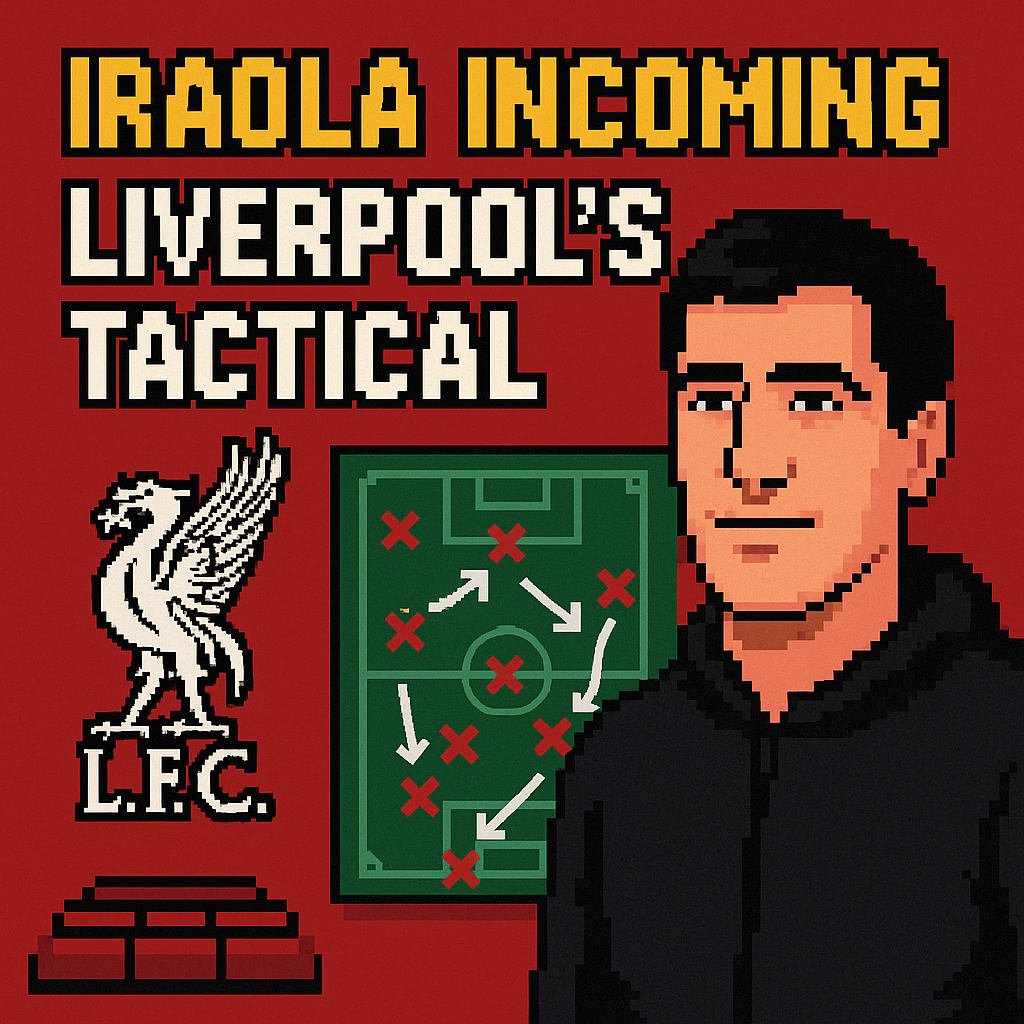
- The consensus centers on Andoni Iraola, whose high-press, wide-lane system would immediately reshape roles for Florian Wirtz, Jeremie Frimpong, and Milos Kerkez at Anfield. [1][5][6]
- The decisive edge won’t be “bounce” but system–squad fit: aligning Iraola’s vertical press with a roster assembled for Slot’s controlled build-up while protecting Champions League revenue margins. [1][3][4][5]
What the source said
Sports Illustrated casts Liverpool’s sacking of Arne Slot two years after his June 2024 start as a split dressing-room moment, naming Florian Wirtz, Curtis Jones, Milos Kerkez, and Jeremie Frimpong as “winners,” and Cody Gakpo and Ryan Gravenberch as “losers.” The piece cites 2025/26 outputs—Wirtz’s 15 goal involvements in 49 matches and Frimpong’s 3 in 35—as evidence that usage under Slot dulled certain profiles. It also places Andoni Iraola, coming off Bournemouth, as the near‑term favorite to take over at Liverpool in 2026. [1][8]
Why it matters
Fenway Sports Group’s football leadership—Michael Edwards (FSG CEO of Football) and Richard Hughes (sporting director)—must now hire a coach whose game model fits pieces acquired in 2024–26; after finishing fifth and 25 points behind Arsenal in 2025/26, Liverpool put Champions League qualification and its wage bill under immediate pressure. The wrong fit could suppress outputs for Wirtz and Frimpong and force discount exits in 2026/27. [3][9][2]
UEFA’s revamped distributions widen the financial cliff. The Champions League equal-share “starting fee” is about €18.62m per club, while the Europa League’s equal-share pot is €155m spread across 36 teams—around €4.31m per club—before performance, coefficient, and market/value pillars. That baseline delta is roughly €14.31m per season, excluding additional upside tied to results and historical ranking. [4][7]
Original analysis
Contrarian read
- Consensus: Iraola is the antidote to Slot’s slower, inside-channel build-up and will “free” Liverpool’s wide threats.
- Counter: the promise only materializes if Liverpool embrace his principles—press-first, wide-lane occupation, fast verticals, and full-backs as true overlap threats. Asking the current group to mimic Iraola-ball without retooling spacing and pressing triggers risks transition leaks more than chance creation. Iraola has publicly described the regain-to-nine immediacy and risk–reward of his model; it lives on field occupation and rest-defense starting positions. [5][6]
2×2: Fit vs. full-back role
- Axes: Manager pressing intensity (High vs. Moderate) x Full-back usage (Wide/overlap vs. Inverted/inside).
- Klopp 2018–22: High press + Wide/overlap; Trent Alexander-Arnold and Andy Robertson were primary chance creators from the sides.
- Slot 2024–26: Moderate-to-high press + More inverted/controlled build-up with full-backs stepping inside.
- Iraola 2023–26: High press + Wide/overlap with aggressive verticals and early diagonals. [2][5][6]
- Implication: If Iraola arrives in 2026, Frimpong and Kerkez should live on the outside lane again; Wirtz must receive between lines with overlaps outside him. That geometry echoes Klopp-era spacing more than Slot’s inside-out patterns—and it dictates recruitment for touchline wingers and overlap-heavy full-backs. [1][5][6]
Back-of-envelope money math
- UEFA Champions League equal-share: €18.62m per club. [4]
- UEFA Europa League equal-share: €155m/36 ≈ €4.31m per club. [7]
- Baseline delta: ≈ €14.31m per season, before performance, coefficient, and market/value pillars that add further millions. [4][7]
- Point: tactical fit isn’t aesthetic; it’s financial risk management tied to 2026/27 European qualification.
Named-stakeholder breakdown
- FSG (Michael Edwards/Richard Hughes): Their 2024 restructuring promised process discipline; a mis-hire now risks burning eight figures of UEFA distributions and devaluing key assets, while a good fit re-rates Wirtz/Frimpong/Kerkez on the balance sheet in 2026. [9][4][7]
- Andoni Iraola: A high-press teacher with proof at Rayo Vallecano (La Liga, Madrid) and Bournemouth (Dorset) from 2020–2026; Anfield will demand alignment on wide profiles and pressing triggers rather than miracles. [5][6]
- Florian Wirtz: He posted 11 goals and 11 assists for Bayer Leverkusen in 2023/24; he excels receiving between lines with overlaps outside. Park him wide and his per-90 output drops. [10]
- Jeremie Frimpong: As an overlapping RB/wing-back, he logged double-digit G/A seasons and 1,000+ sprints in the 2023/24 Bundesliga; conservative RB usage blunts his value. [1][10]
- Cody Gakpo: Slot gave him 52 appearances and 9 goals in 2025/26; with academy winger Rio Ngumoha emerging and a likely senior wide addition in 2026, his minutes compress unless he spikes early output. [1]
What others are missing
The non-negotiables of Iraola’s attack—not his name—drive outcomes in 2026/27: wide and high full-backs, relentless lane occupation, and immediate verticals into the No.9 within the first five seconds after regain. Those choices create central pockets for Wirtz and on-the-move receptions for Frimpong and Kerkez; Slot’s inside-channel, slower build-up produced different rest-defense and spacing trade-offs. If Edwards and Hughes back Iraola, they must restore touchline width from full-backs and accept a wider rest-defense shell to protect transitions. Skip that structural reset and Liverpool will strand two space-runners—Frimpong and Kerkez—who rarely receive in stride. [5][6][1]
What to watch next
- By June 15, 2026, Liverpool announce Andoni Iraola as head coach; if they do not, expect a tactical pivot away from high-press, wide-full-back principles. [3][8]
- By September 1, 2026, Liverpool either sell or loan Cody Gakpo, or start a newly signed senior winger in at least 3 of the first 5 Premier League matches of 2026/27—evidence of a reset in the wide rotation. [1]
- By December 31, 2026, Wirtz posts non-penalty goals+assists of ≥0.60 per 90 across ≥900 league minutes if used centrally with overlaps outside; failure to clear that mark signals continued misuse toward the ~0.30/90 tier cited under Slot. [1][10]
My take
I’d hire Iraola in 2026 only with a written mandate for his geometry: wide full-backs, fast vertical regains, and Wirtz as a between-lines hub with Frimpong/Kerkez attacking outside. That structure revives a Klopp-adjacent identity the Kop recognizes and protects a €14–25m annual European revenue swing tied to qualification and distributions. [4][7] Miss the structural piece and you get tired presses, stranded full-backs, and a multi‑million shortfall the accountants will notice in 2026/27. Fit beats slogans at Anfield.
Sources
- The Winners, Losers From Arne Slot’s Liverpool Departure — Sports Illustrated (https://www.si.com/soccer/winners-losers-arne-slot-liverpool-departure) — Names winners/losers, cites 2025/26 production (e.g., Wirtz 15 G/A in 49; Frimpong 3 in 35), and flags Iraola as likely successor.
- Liverpool closing in on new manager appointment after shock Arne Slot sack bombshell — FourFourTwo (https://www.fourfourtwo.com/person/coaches-managers/liverpool-closing-in-on-new-manager-appointment-after-shock-arne-slot-sack-bombshell) — Context on Slot’s dismissal plus first‑season title and 2025/26 slump.
- El Liverpool destituye a Arne Slot — El País (https://elpais.com/deportes/futbol/2026-05-30/el-liverpool-destituye-a-arne-slot.html) — Reports May 30, 2026 sacking, 25‑point gap to Arsenal, and UCL quarterfinals.
- Financial Report 2024/25 (UEFA) — UEFA.com (https://editorial.uefa.com/resources/02a1-1fcc539a26d9-78ac6793e755-1000/20260113_enclosure_04_financial_report_2024-25_en.pdf) — Sets 2024–27 distributions, including €18.62m UCL equal-share per club.
- Andoni Iraola explains the high-risk tactics behind his Bournemouth transformation — Sky Sports (https://www.skysports.com/football/news/11670/13235389/andoni-iraola-explains-the-high-risk-tactics-behind-his-bournemouth-transformation-before-arsenal-test) — Iraola’s own description of pressing and transition cues.
- Andoni Iraola tactics watch — The Coaches’ Voice (https://learning.coachesvoice.com/cv/andoni-iraola-tactics-bournemouth-vallecano/) — Independent breakdown of Iraola’s vertical press, rest-defense, and full-back roles.
- UEFA Circular No. 32/2025 and Europa League split — UEFA.com (https://editorial.uefa.com/resources/029a-1e0b5460b86d-31e6cad26358-1000/20250616_circular_2025_32_en.pdf) — Confirms UEL total (€565m) with 27.5% (€155m) as equal shares; ≈€4.31m per club across 36 teams.
- Arne Slot begins role as Liverpool FC head coach — Liverpool FC (https://www.liverpoolfc.com/news/arne-slot-begins-role-liverpool-fc-head-coach) — Official timing of Slot’s start in June 2024, anchoring the two‑season window.
- Richard Hughes appointed sporting director; Michael Edwards returns as FSG CEO of Football — ESPN (https://www.espn.com/soccer/story/_/id/39770016/liverpool-appoint-new-sporting-director-post-klopp-shake-up) — Confirms decision-makers shaping the 2026 hire and recruitment model.
- Bundesliga 2023/24 stats: Frimpong and Wirtz — Bundesliga.com (https://www.bundesliga.com/en/bundesliga/news/bayer-leverkusen-florian-wirtz-the-complete-midfielder-29628) — Documents Wirtz’s 11G+11A and Frimpong’s elite output in Leverkusen’s 2023/24 season.
Related update: We recently published an article that expands on this topic: read the latest post.
Related update: We recently published an article that expands on this topic: read the latest post.