
I was in the middle of a marathon of holiday movies when I realized my sweet tooth was acting up. You know that moment when the snow is falling on screen, and you just want something warm and chocolaty to match the vibe? That was me. But I didn’t want just another hot chocolate; I needed something extra special. Enter my Candy Cane Chocolate Marshmallows. These babies are the perfect combination of sweet, crunchy, and gooey goodness, and the best part? They’re super easy to make! Imagine enjoying these with friends, exchanging gifts, or just treating yourself on a chilly night—total bliss.
Jump to Recipe
What You’ll Need
Alright, here’s the good news: you probably have most of this stuff already lurking in your pantry. These marshmallows are all about the simple joys of the holiday season.
- Candy canes – grab a few from your tree or stash!
- Dark chocolate – for that rich, decadent coating.
- Milk chocolate – adds a creamy sweetness.
- Marshmallows – the stars of the show.
How to Make Candy Cane Chocolate Marshmallows
- First, let’s smash those candy canes! Place them in a zip-top bag and use the bottom of a glass or a mallet to crush them into small pieces. You want a mix of dust and tiny chunks.
- Now, set up a double boiler on your stove. If you don’t have one, just place a heatproof bowl over a pot of simmering water. Make sure the bowl doesn’t touch the water.
- Add the dark chocolate and milk chocolate to the bowl. Stir occasionally until the chocolate is fully melted and smooth. Inhale deeply—the smell is pure heaven.
- Grab a marshmallow, dip it halfway into the melted chocolate, spinning it slightly to get a good coat.
- Immediately dip the chocolate-covered marshmallow into the crushed candy canes. Press gently so the pieces stick to the chocolate, creating a crunchy layer.
- Place the marshmallows on a sheet of wax paper. Let them chill in the fridge for at least an hour, or until the chocolate hardens.
Cook’s Notes
Okay, a few tips from my kitchen to yours. First, make sure your chocolate doesn’t scorch; keep the heat low and steady. If you’re planning to make these ahead, they store beautifully in an airtight container for up to a week. Just keep them in a cool spot to prevent any accidental melting. Also, if you find your candy canes getting sticky, toss them back into the fridge for a bit—they’ll be easier to work with when they’re cool and crisp.
Make It Your Own
Here are some fun twists you can try:
- Swap out the candy canes for crushed pretzels if you prefer a salty-sweet combo.
- Use white chocolate instead of milk chocolate for a different flavor profile.
- Roll the marshmallows in crushed nuts for extra crunch and a nutty flavor.
- Add a sprinkle of sea salt on top of the chocolate layer for an elevated touch.
If you try this, I’d love to hear how it turns out—drop a comment or tag me in your photos! These little treats are sure to spread some holiday cheer in your home. Enjoy every bite!
Related update: Candy Cane Chocolate Marshmallows
Related update: Vegetarian Scotch Eggs
Related update: Frozen Mojito Pie

TL;DR
What the source said
Space.com reports that NASA/JPL awarded Firefly Aerospace a $13 million subcontract to design and build the aeroshell—backshell plus heat shield—for SkyFall, a nuclear-powered Mars mission slated for 2028. SkyFall will carry three Ingenuity-like helicopters and release them mid-descent to start flying immediately, a technique NASA dubs the “SkyFall Maneuver.” [1][3] (https://www.space.com/space-exploration/missions/nasa-begins-funding-hardware-for-skyfall-mars-helicopter-mission)
Firefly will develop, manufacture, and test the aeroshell in Texas, including work at its Rocket Ranch site in Briggs before shipment to JPL in Pasadena, California for integration. The helicopters will prospect for near-surface water ice to inform future crewed landing sites, extending Ingenuity’s 2021–2024 legacy into resource mapping and site scouting. [2][1] (https://www.globenewswire.com/news-release/2026/07/07/3323174/0/en/firefly-aerospace-receives-13-million-nasa-jpl-subcontract-to-build-aeroshell-for-skyfall-mars-mission.html)
Why it matters
Two communities have the most to gain—or lose—here. For human spaceflight planners at NASA and its partners, a trio of airborne scouts mapping shallow subsurface ice could reset the shortlist of safe, useful landing zones before any habitat lands on Mars in the 2030s. Water ice supports in-situ propellant, life support, and radiation shielding; getting that reconnaissance without landing a full rover or lander first saves mass, money, and years. [1][5] (https://aviationweek.com/space/launch-vehicles-propulsion/firefly-aerospace-produce-shell-nasas-skyfall-mission)
For the commercial deep-space supply chain, Firefly’s aeroshell order is a signal: planetary entry, descent, and landing (EDL) hardware is opening to nontraditional primes. If the Texas-built shell performs and the mid-air release works in 2028, the template—commercial composites plus JPL avionics—could become the go-to stack for “rotorcraft-first” Mars missions this decade. [2][3] (https://www.jpl.nasa.gov/videos/nasas-skyfall-mars-helicopters/)
Original analysis
Contrarian read
- Consensus: The big story is NASA’s “first nuclear-powered interplanetary spacecraft.”
- My take: That line muddles history. NASA has flown nuclear-powered (RTG) interplanetary craft for five decades—Voyager (launched 1977), Galileo (1989), Cassini (1997), and New Horizons (2006). The novelty only stands if SkyFall uses a fission reactor rather than an RTG; what’s genuinely new—and risky—is mid-air deployment of helicopters from a 2.65‑meter heritage aeroshell and jetpack, trading a lander’s mass/complexity for the ability to fly immediately at higher-elevation, rougher sites. [4][6] (https://arxiv.org/abs/2203.03704)
Historical analogue (2012: “sky crane” for Curiosity)
- In 2012, JPL’s sky-crane lowered Curiosity on tethers—a maneuver many thought too exotic until it worked and then became standard for large rovers (Perseverance in 2021). New EDL paradigms that buy mass margins and site access tend to stick. If SkyFall’s mid-air release works, expect a generational pivot: helicopter-first Mars missions for regional surveys, then targeted landers where the copters flag resources or hazards. [9] (https://science.nasa.gov/planetary-science/programs/mars-exploration/mission-timeline/how-we-land-on-mars/)
Back-of-envelope calculation
Named-stakeholder breakdown
Framework: Risks vs. payoffs for the SkyFall Mars helicopter mission
One more useful yardstick: Ingenuity cost about $80M to build and $5M to operate for the demo month, then flew 72 times before its final flight on Jan. 18, 2024. If SkyFall fields three improved helos and each manages 100 flights, that’s 300 sorties. Even if unit hardware cost stayed Ingenuity‑like (assume $80M each), you’d get ~$240M/300 ≈ $0.8M per sortie in pure air‑vehicle capex—already cheaper “per flight” than Ingenuity’s ~$1.18M (=$85M/72). It’s a crude metric, but it shows how scaling the fleet can make exploration economics look less like bespoke stunts and more like air campaigns. [8] (https://www.planetary.org/space-missions/ingenuity)
What others are missing
The hinge isn’t just the helicopters—it’s the aeroshell aperture and packing problem. The MAHD/MAD studies assume a 2.65‑meter, Mars‑heritage aeroshell (Pathfinder/MER/Phoenix/InSight). Fitting a jetpack plus a Mars Science Helicopter inside that diameter already pushes geometry; SkyFall is promising three Ingenuity‑class craft. That implies aggressive stowage, separation sequencing, and debris‑free clearance under dynamic loads during descent. If JPL and Firefly prove repeatable, low‑shock, no‑foul release of multiple flyers from a small capsule, Mars missions gain a new “multi‑drop” logistics primitive. That’s the scalable part—not the nuclear label. [6][2] (https://arxiv.org/abs/2203.03704)
What to watch next
- By Q4 2027, Firefly delivers the SkyFall aeroshell to JPL; any slip beyond December 2027 likely punts to the next Earth–Mars synodic window (~26 months later). [5][10] (https://aviationweek.com/space/launch-vehicles-propulsion/firefly-aerospace-produce-shell-nasas-skyfall-mission)
- By June 2027, JPL publishes mid‑air deployment drop‑test results (e.g., jetpack‑to‑helicopter separation stability) with video and data, consistent with the MAHD test flow outlined in 2022 and past EDL verification campaigns. [6][9] (https://arxiv.org/abs/2203.03704)
- By March 2028, NASA clarifies SkyFall’s power source in public docs—RTG vs. reactor—and aligns comms accordingly; if it’s RTG, expect explicit comparisons to Voyager/Cassini to avoid “first nuclear” backlash. [4] (https://science.nasa.gov/planetary-science/programs/radioisotope-power-systems/missions/)
My take
I’m bullish—on the maneuver, not the marketing. If SkyFall nails a mid‑air release of multiple scouts in 2028 and those aircraft come home with believable subsurface ice maps, this becomes the Curiosity sky‑crane moment for aerial Mars. The aeroshell order signals that JPL intends to build around commercial composites and iterate fast. Don’t get distracted by the nuclear headline; the lasting value is a repeatable way to insert swarms into rough, high‑elevation terrain. If that works in 2028, the next Mars decade belongs to fleets of rotorcraft, not lone mega‑rovers. [2][5][6] (https://www.globenewswire.com/news-release/2026/07/07/3323174/0/en/firefly-aerospace-receives-13-million-nasa-jpl-subcontract-to-build-aeroshell-for-skyfall-mars-mission.html)
Sources
-
NASA begins funding hardware for “SkyFall” Mars helicopter mission — Space.com (https://www.space.com/space-exploration/missions/nasa-begins-funding-hardware-for-skyfall-mars-helicopter-mission) — News on Firefly’s $13M aeroshell award, 2028 target, and the “SkyFall Maneuver.”
-
Firefly Aerospace Receives $13 Million NASA JPL Subcontract to Build Aeroshell for SkyFall Mars Mission — GlobeNewswire (https://www.globenewswire.com/news-release/2026/07/07/3323174/0/en/firefly-aerospace-receives-13-million-nasa-jpl-subcontract-to-build-aeroshell-for-skyfall-mars-mission.html) — Confirms contract value, Texas facilities, and mid-air release naming.
-
NASA’s SkyFall Mars Helicopters — JPL (https://www.jpl.nasa.gov/videos/nasas-skyfall-mars-helicopters/) — Official JPL page describing the mission concept and mid-air deployment approach.
-
Radioisotope Power Systems Missions — NASA Science (https://science.nasa.gov/planetary-science/programs/radioisotope-power-systems/missions/) — Documents NASA’s RTG-powered interplanetary spacecraft (Voyager, Cassini, New Horizons), crucial for parsing the “first nuclear” claim.
-
Firefly Aerospace To Produce Shell For NASA’s SkyFall Mission — Aviation Week (https://aviationweek.com/space/launch-vehicles-propulsion/firefly-aerospace-produce-shell-nasas-skyfall-mission) — Adds delivery-by-late-2027 detail and reiterates the three‑helicopter, water‑ice mapping goal.
-
Mid-Air Helicopter Delivery at Mars Using a Jetpack — arXiv (https://arxiv.org/abs/2203.03704) — JPL/NASA preprint on the MAHD concept, including 2.65‑m aeroshell fit, +150% payload mass, and ~275 kg entry mass modeling.
-
NASA Pushes Next-Gen Mars Helicopter Rotor Blades Past Mach 1 — JPL (https://www.jpl.nasa.gov/news/nasa-pushes-next-gen-mars-helicopter-rotor-blades-past-mach-1/) — Evidence of AeroVironment-built next-gen rotors and ongoing rotorcraft maturation at JPL.
-
Ingenuity, NASA’s Mars Helicopter — The Planetary Society (https://www.planetary.org/space-missions/ingenuity) — Establishes Ingenuity’s 72 flights (ending Jan. 18, 2024) and ~$85M development/initial ops cost, used in sortie economics.
-
How We Land on Mars — NASA Science (https://science.nasa.gov/planetary-science/programs/mars-exploration/mission-timeline/how-we-land-on-mars/) — Curiosity’s 2012 sky-crane and Perseverance’s 2021 EDL context for new paradigms.
-
Mars Fact Sheet — NASA GSFC (https://nssdc.gsfc.nasa.gov/planetary/factsheet/marsfact.html) — Provides the 779.94‑day Earth–Mars synodic period (~26 months) to frame launch-window slips.
Related update: We recently published an article that expands on this topic: read the latest post.
Related update: We recently published an article that expands on this topic: read the latest post.
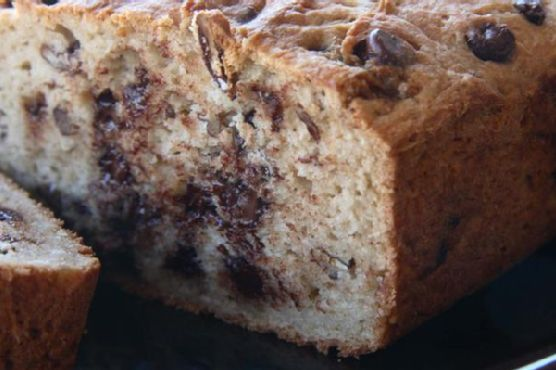
One chilly evening last fall, I found myself in the kitchen, craving something warm and comforting. My cupboard was a bit of a disaster, full of bits and bobs from baking adventures past. A half-used bag of gluten-free flour, some chocolate chips I had been furtively snacking on, and a nearly empty jar of pecans were calling to me. It was definitely a “use what you have” kind of night. As I pulled ingredients together, a gluten-free chocolate-pecan quickbread was born — a delightful mix of melty chocolate and crunchy pecans, wrapped in a tender, slightly sweet loaf. The best part? It made my entire kitchen smell like a cozy bakery on a crisp autumn day. If you’re looking for something that’s both indulgent and easy to whip up, this quickbread might just be your new favorite.
Jump to Recipe
What You’ll Need
The beauty of this quickbread lies in its simplicity. You likely have most of these ingredients on hand:
- Butter, for that irresistible richness
- Gluten-free flour, to keep things friendly for all tummies
- Sugar and brown sugar, for sweetness and a hint of molasses flavor
- Baking soda, to give our loaf a little lift
- Salt, to balance everything out
- Semi-sweet chocolate chips, because chocolate makes everything better
- Pecans, for that nutty crunch
- Eggs, to bind and add moisture
- Unsweetened applesauce, a sneaky moisture-hero
- Vanilla-honey Greek yogurt, for tang and tenderness
- Vanilla extract, because why not double down on vanilla goodness?
How to Make Gluten-Free Chocolate-Pecan Quickbread
- First things first, preheat your oven to 350 degrees Fahrenheit. Butter your trusty 5″x9″ loaf pan and set it aside.
- Gently heat the butter until it’s just melted. Set it aside to cool — you don’t want scrambled eggs in your bread!
- In a large bowl, combine the gluten-free flour, sugar, brown sugar, baking soda, and salt. Give it a good whisk to break up any lumps.
- Stir in the semi-sweet chocolate chips and pecans. This is starting to look delicious already, isn’t it?
- In a separate bowl, whisk together the eggs, applesauce, yogurt, vanilla extract, and the cooled melted butter.
- Pour the wet mixture into the dry ingredients and stir until just combined. Be gentle here; over-mixing is not our friend.
- Pour the batter into the prepared loaf pan, smoothing out the top with a spatula.
- Bake in your preheated oven for about an hour, or until a toothpick inserted into the center comes out clean. The top should be golden and your kitchen will smell heavenly.
- Allow the loaf to cool in the pan for 10 minutes before transferring it to a wire rack to cool completely. Patience, my friend!
Cook’s Notes
Let’s talk about some little tips that make a big difference. First, feel free to use whatever gluten-free flour blend you love; they all work here. Just make sure it has xanthan gum in it, or add a teaspoon if it doesn’t. If your loaf turns out a bit too crumbly, you may have over-mixed, which is easy to do. Treat the batter gently! As for storage, keep your quickbread in an airtight container at room temperature for up to three days. It also freezes beautifully — just slice and wrap individual pieces for easy snacking later.
Make It Your Own
Here’s where you get to play around:
- Swap the pecans for walnuts if you’re feeling nutty.
- Use dark chocolate chips for a more intense chocolate experience.
- Add a teaspoon of cinnamon to the dry mix for a warm, spicy touch.
- Substitute the vanilla-honey Greek yogurt for plain Greek yogurt and an extra teaspoon of honey if that’s what you have on hand.
If you try this, I’d love to hear how it turns out — drop a comment or tag me! Happy baking, and may your kitchen be filled with the sweet aroma of chocolate-pecan goodness.
Related update: Gluten-Free Chocolate-Pecan Quickbread
Related update: Candy Cane Chocolate Marshmallows
Related update: Braised Pork: Filipino Humba

It was one of those Thursday evenings when you’re standing in the kitchen, contemplating the universe — or at least what’s left in your pantry. I had a hankering for something sweet but not the patience for an elaborate dessert. You know the feeling? I wanted something that felt a little special, like it could be served with coffee if a friend popped by, yet casual enough to devour in my pajamas. That’s when these Dried Cranberry Chocolate Cookies came into play. They’re the perfect blend of tangy and sweet, a delightful twist on the classic chocolate chip cookie that feels just right for any time of year. Plus, they come together quicker than my favorite TV show, which is saying something. Trust me, you’ll want to keep this recipe up your sleeve for those moments when you need a treat without the fuss.
Jump to Recipe
What You’ll Need
You might be surprised to find that most of these ingredients are already lounging around in your kitchen. The star of the show? Those **dried cranberries** that you bought for a salad and then forgot in your pantry. They’re about to meet their new best friend: **chocolate chips**.
- 1 cup plain flour
- 1/2 teaspoon baking powder
- 1/4 teaspoon baking soda
- 1/4 teaspoon **kosher salt**
- 1/2 cup **unsalted butter**, softened
- 1/3 cup **granulated sugar**
- 1/3 cup **light brown sugar**, packed
- 1 large **egg**
- 1 large **egg yolk**
- 1 teaspoon **vanilla extract**
- 1 cup old fashioned **rolled oats**
- 1/2 cup **semisweet chocolate chips**
- 1/2 cup **white chocolate chips**
- 1/2 cup **dried cranberries**
How to Make Dried Cranberry Chocolate Cookies
- Preheat your oven to 325°F (165°C). Line two baking sheets with parchment paper, because nobody wants cookies stuck to the tray.
- In a medium bowl, whisk together the flour, baking powder, baking soda, and salt. This is your dry team, so make sure they’re well-mixed.
- In a stand mixer fitted with a paddle attachment, beat the butter, granulated sugar, and brown sugar on medium speed until the mixture is creamy and fluffy. This should take about 2 minutes.
- Add the egg, then the egg yolk, and finally the vanilla extract to the butter mixture, beating well after each addition. Don’t forget to scrape down the sides of the bowl for an even mix.
- Slowly incorporate your dry ingredients into the wet mixture, mixing until just combined. The dough should be coming together nicely.
- Fold in the chocolate chips and dried cranberries. You want them evenly distributed for the ultimate balance of flavors in every bite.
- Scoop heaping teaspoons of dough onto the prepared baking sheets. Keep them about 2 inches apart; they like their personal space as they bake.
- Bake in your preheated oven for 12 to 15 minutes. You’re looking for the cookies to brown slightly at the edges and be just set in the middle.
- Let the cookies cool on the baking sheets for a couple of minutes before transferring them to a wire rack to cool completely. Or sneak a warm one because life’s too short.
Cook’s Notes
Cookies are a forgiving bunch, but a few tips can make them legendary. Make sure your butter is soft but not too warm to prevent your cookies from spreading too much. If you’re baking on a particularly humid day, you might find the dough a bit sticky—popping it in the fridge for 10 minutes should do the trick. These cookies keep well in an airtight container for up to a week, not that they’ll last that long! If you want to prep ahead, the dough can be frozen after scooping and then baked straight from the freezer—just add a couple of extra minutes to the baking time.
Make It Your Own
Feeling adventurous? Here are some ways to switch things up:
- Swap the **dried cranberries** for **dried cherries** for a slightly tart note that pairs beautifully with chocolate.
- Substitute **dark chocolate chips** for the semisweet variety if you’re in the mood for a richer, more intense chocolate flavor.
- Add a handful of chopped **nuts**, like walnuts or pecans, for a bit of crunch and nuttiness.
- Love spices? A teaspoon of **cinnamon** or a pinch of **nutmeg** can add a cozy warmth to your cookies.
If you try this, I’d love to hear how it turns out—drop a comment or tag me in your cookie creations! Your feedback is like the chocolate chips in my cookies: essential and sweet. 🍪
Related update: Dried Cranberry Chocolate Cookies
Related update: Gluten-Free Chocolate-Pecan Quickbread