
Last Tuesday, I found myself in a bit of a culinary pickle. It was one of those chaotic weeknights where all I wanted was something comforting yet not too heavy. But, with my pantry looking a little uninspired, the options seemed limited. As I rummaged through my fridge, I spotted some fresh herbs and eggs. That’s when inspiration struck – Vegetarian Scotch Eggs. They’re not only a playful twist on a classic favorite, but they also satisfy that comforting craving without being overly indulgent. Plus, they’re surprisingly easy to whip up, even when you’re short on time. So, if you’re juggling a busy schedule but still want something delicious, this recipe is your golden ticket.
Jump to Recipe
What You’ll Need
If you’re like me, you probably have most of these ingredients already hanging out in your kitchen. Simple yet flavorful, these are the stars of our dish:
- Fresh breadcrumbs
- Fresh dessert spoon chives
- 5 eggs (4 for boiling, 1 for coating)
- Fresh dessert spoon flat-leaf parsley
- Black salt and pepper
- Vegetable oil
How to Make Vegetarian Scotch Eggs
- Preheat your oven to 325°F (170°C). This step is key to ensure our Scotch eggs are perfectly warm and crisp.
- Place 4 eggs in a medium-sized pan and cover them entirely with cold water. It’s like giving them a little bath before the magic happens.
- Bring the water to a gentle boil, then reduce the heat and let them simmer for exactly 4 minutes. We’re aiming for that slightly soft, golden center.
- Immediately transfer the eggs to a bowl of cold water. This stops the cooking process and makes them easier to peel. Trust me, your fingers will thank you.
- Peel the cooled eggs carefully. It’s like unwrapping a delicate little gift.
- In a small bowl, whisk the remaining egg until it’s all sunshine-y and smooth.
- Mix the chopped chives and parsley with the fresh breadcrumbs. Season with a pinch of black salt and pepper. Feel free to get a little generous here; seasoning is key.
- Gently roll each peeled egg in a bit of flour. This helps the coating stick like a dream.
- Dip the floured eggs in the whisked egg mixture, ensuring they’re well coated. Now, roll them in the herby breadcrumbs. This is where they get their magical cloak of flavor.
- Pour vegetable oil into a pan, about 2 inches deep, and heat it up. You’re looking for it to shimmer slightly – that’s when you know it’s ready.
- Carefully fry the coated eggs in the hot oil. Turn them occasionally to get an even golden color all around. This takes about 2-3 minutes. They’ll start to look irresistibly crunchy.
- Use a slotted spoon to remove the eggs from the oil and place them in an ovenproof dish. Pop them in the oven for another 3-4 minutes to make sure they’re heated through.
Cook’s Notes
Here’s the deal: the fresher your breadcrumbs, the better the crunch you’ll get. If you can make them at home, do it! And when it comes to frying, make sure your oil is hot enough before you lower in the eggs – a little test with a breadcrumb should tell you if it sizzles right. If the coating starts to brown too quickly, the oil is too hot. Just turn down the heat a bit.
Leftovers? Although these are best enjoyed fresh, you can store any extras in the fridge for up to two days. Just pop them in a preheated oven for about 10 minutes to heat them up again – they’ll be almost as delightful as the first time.
Make It Your Own
Here are some fun ways to switch things up and keep it interesting:
- Spicy Kick: Add a teaspoon of crushed red pepper flakes to the breadcrumb mix for a little heat.
- Cheesy Delight: Mix in some grated Parmesan or cheddar with the breadcrumbs for a cheesy crust.
- Herb Lovers: Switch up the herbs – basil and dill can add a fresh twist.
- Vegan Version: Use a flaxseed egg (1 tablespoon flaxseed meal + 2.5 tablespoons water) instead of a regular egg for the coating.
If you try this, I’d love to hear how it turns out — drop a comment or tag me! It’s always a joy to see how my favorite recipes are enjoyed by others. Happy cooking!
Related update: Vegetarian Scotch Eggs

TL;DR
- Brussels ordered Meta to switch off Facebook and Instagram’s “infinite scroll” and “autoplay” by default under the EU’s Digital Services Act (DSA), with penalties up to 6% of global turnover at stake. The European Commission’s preliminary findings arrived on July 10, 2026. [1][2][3]
- The bigger risk than a fine is an EU product fork that slows Meta’s experimentation velocity and trims Reels watch time and ad impressions—the twin growth levers Meta highlighted in its FY2025 report. [4]
- TikTok Lite’s April 2024 EU intervention showed the playbook: the Commission pushes live product changes, not PR or warning labels, when it labels a feature “addictive.” [5]
What the source said
AP reported that on July 10, 2026 the European Commission issued preliminary findings that Facebook and Instagram deploy “addictive design” features—autoplay, infinite scroll, push notifications, and engagement‑maximizing recommendations—that risk users’ physical and mental health, including minors across the EU‑27. The Commission wants Meta to disable those features by default, strengthen break prompts, and reduce the primacy of engagement in recommendations; Meta pointed to “Teen Accounts,” nightly lockouts, and a parent‑set 15‑minute time cap option as safeguards. If the findings become a formal decision, DSA penalties can reach 6% of Meta’s global revenue, and Meta can submit a response before any order is finalized. [1][3][6]
Why it matters
- Stakeholders span EU teens and parents (default safety versus DIY controls), EU ad buyers (fewer impressions per euro if sessions shorten), Meta shareholders (compliance costs, slower growth), and every other “very large online platform” (VLOP) designated under the DSA as Brussels redraws the line between “engaging” and “manipulative” design. [2][3][7]
- A DSA decision that hard‑codes design‑by‑default changes travels fast: it becomes a template for the UK and Australia and a data point for US state attorneys general litigating engagement features. The fine is a one‑off; the product constraints become a standing EU baseline. [2][5]
Original analysis
EU demands Facebook and Instagram dismantle design features it calls addictive for users
Consensus view: This is an EU shot across the bow that ends in a manageable fine and cosmetic tweaks. Contrarian read: The Commission is trying to edit the engagement stack itself, not negotiate labels—its April 2024 TikTok Lite move in France and Spain froze a rewards feature in days, signaling that “addictive design” triggers product shutdowns, not disclosures. [5]
Meta’s exposure is twofold: fines and experimentation friction. Meta’s growth engine depends on high‑throughput A/B tests on feeds, Reels, and notifications; default‑off autoplay and non‑infinite feeds in the EU force region‑specific branches that reduce statistical power and slow ranking rollouts. That drag does not show up in a penalty headline, but it compounds quarter after quarter for EU audiences and any global models trained with EU data in the mix.
Back‑of‑envelope calculation (the fine versus recurring drag):
- Meta FY2025 revenue: $200.966 billion. [4]
- Max DSA fine: 6% of global annual turnover. [3]
- 6% × $200.966B = $12.06B (0.06 × 200.966).
- A 2% ongoing revenue drag from sustained EU design constraints would be ≈$4.02B per year (0.02 × $200.97B), which can outweight a one‑time hit if constraints persist across 2026–2028 as enforcement matures. [4]
Historical analogue (TikTok Lite, 2024):
- In April 2024, the Commission opened DSA proceedings against TikTok Lite’s “rewards for watch time” in France and Spain, signaled interim suspension, and TikTok paused the feature across the EU almost immediately. The lesson from Brussels: if a feature is framed as addictive, the remedy is to disable it by default, not simply warn or label it. [5]
Named‑stakeholder breakdown:
- Meta: In 2025, ad impressions rose 12% year over year and average price per ad rose 9%, both sensitive to session length and video continuity—precisely what autoplay and infinite scroll amplify. Expect an “EU mode” that preserves recommendation quality while trimming endless continuity. [4]
- European Commission: After designating Facebook and Instagram as VLOPs, this becomes a flagship DSA test; a soft settlement undermines the regime, while a hard remedy establishes that “addictive design” can trigger binding defaults across the bloc. [2][7]
- Advertisers in the EU: Shorter sessions and fewer seamless video handoffs mean fewer mid‑scroll and mid‑video impressions; media buyers will seek higher‑quality creative, tighter frequency caps, and may swing incremental short‑form video spend toward YouTube if its defaults remain friendlier—until the Commission looks there, too. [2]
- US regulators and AGs: State AG complaints have argued that engagement‑maximizing defaults harm minors; an EU design mandate—if finalized—becomes fresh evidence that “safe defaults” are technically and commercially viable at scale. [2]
A typology for “engagement engines” under DSA pressure:
- Continuity drivers: autoplay and infinite scroll keep users moving without choices; squarely targeted for default‑off. [2]
- Trigger drivers: push notifications pull users back; expect rate limits, quiet hours, or higher‑friction opt‑ins as defaults. [2]
- Targeting drivers: personalized recommendations steer attention; not banned, but likely tuned for diversity and “breaks,” not pure watch‑through. [2]
- Guardrails: teen accounts, time caps, and break nudges exist today; the Commission says current versions are easy to dismiss and wants enforced, stickier defaults. [1][2][6]
The bottom line: Meta can write a check; it cannot easily replace the automaticity that turns short sessions into long ones, and the DSA aims straight at that mechanic. [2][3]
What others are missing
Coverage centers on fines and teen settings, but the hidden cost is product velocity in the EU‑27. Default‑off autoplay and scroll force Meta to split core feed logic, notification cadence, and Reels playback into a region‑specific branch, which multiplies concurrent experiments, shrinks per‑variant samples, and stretches time to statistical confidence for ranking tweaks. That slows learning loops on video, where small watch‑time deltas drive big ad‑impression gains; Meta’s FY2025 numbers show it leaned on ad impressions (+12% YoY) to grow, so a slower release cycle hits the revenue engine more than a headline penalty. [4]
What to watch next
- By Q4 2026, Meta pilots an “EU mode” on Facebook and Instagram with default‑off autoplay and infinite scroll plus stronger break prompts, and claims in earnings or a blog post that engagement impact is “limited”; independent trackers (e.g., IAB Europe AdEx or SMI) show at least a 2‑percentage‑point EU shift of short‑form video ad spend toward YouTube by Q1 2027 if Reels watch time dips.
- By H1 2027, the European Commission issues a final DSA decision that includes binding design commitments and either a symbolic fine under 2% of FY2025 revenue or a suspended fine contingent on milestones. [2][3]
- By June 30, 2027, at least one other VLOP with heavy video autoplay—TikTok or YouTube—receives a formal DSA action focused on default design settings, confirming that “addictive design” enforcement is cross‑platform. [5][7]
My take
If I ran Meta’s EU product, I would stop litigating defaults and start shipping excellent “opt‑in continuity.” Make autoplay a clear choice with value—“Play next with sound off + topic diversity”—and instrument those opt‑ins for ranking. Treat Brussels as a lab for “engagement without compulsion,” then export wins globally; waiting for courts risks a ~$12.06B headline (6% of FY2025 revenue) and, worse, months of frozen roadmaps while regulators draft your release notes. [3][4]
Sources
-
EU demands Facebook and Instagram dismantle design features it calls addictive for users — AP News (https://apnews.com/article/facebook-instagram-eu-regulators-teens-addictive-b2f0ffd5ffc90721cacef7937e5909d2) — Straight report on July 10, 2026 findings, targeted features, and Meta’s “Teen Accounts.”
-
Commission preliminarily finds the addictive design of Instagram and Facebook in breach of the Digital Services Act — European Commission (https://digital-strategy.ec.europa.eu/en/news/commission-preliminarily-finds-addictive-design-instagram-and-facebook-breach-digital-services-act) — Official description of infinite scroll, autoplay, push notifications, and requested default changes.
-
The enforcement framework under the Digital Services Act — European Commission (https://digital-strategy.ec.europa.eu/en/policies/dsa-enforcement) — Legal basis for fines up to 6% of global annual turnover and the response process.
-
Meta Reports Fourth Quarter and Full Year 2025 Results — Meta Investor Relations (https://investor.atmeta.com/investor-news/press-release-details/2026/Meta-Reports-Fourth-Quarter-and-Full-Year-2025-Results/default.aspx) — FY2025 revenue ($200.966B), ad impressions (+12% YoY), average price per ad (+9% YoY), and regulatory commentary.
-
Commission opens proceedings against TikTok under the DSA regarding the launch of TikTok Lite in France and Spain — European Commission (https://digital-strategy.ec.europa.eu/en/news/commission-opens-proceedings-against-tiktok-under-dsa-regarding-launch-tiktok-lite-france-and-spain) — Precedent for rapid EU intervention and product suspension tied to “addictive” mechanics.
-
Beyond the Headlines: Meta’s Record of Protecting Teens and Supporting Parents — Meta Newsroom (https://about.fb.com/news/2026/01/metas-record-protecting-teens-supporting-parents/amp/) — Meta’s description of teen safeguards, including nightly lockouts and a 15‑minute time cap option.
-
Supervision of the designated very large online platforms and search engines under DSA — European Commission (https://digital-strategy.ec.europa.eu/en/policies/list-designated-vlops-and-vloses) — Confirms that Facebook and Instagram are designated VLOPs subject to enhanced DSA obligations.
Related update: We recently published an article that expands on this topic: read the latest post.
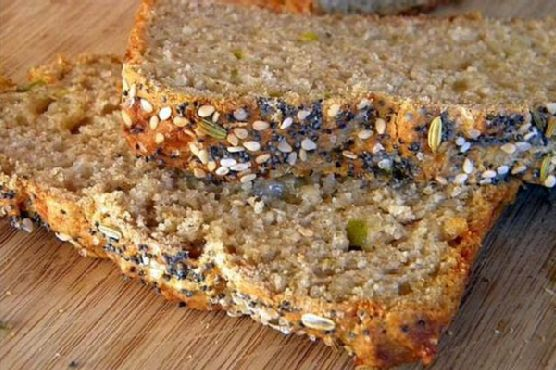
I remember last fall when I was caught in a total downpour on my way back from the farmers’ market. I dashed inside my apartment, dripping and shivering, with a bag full of local cheese and a can of green chiles I had impulsively picked up. My mind immediately went to a warm, comforting loaf of bread, something easy yet satisfying. Enter Cheddar Chile Beer Bread. This recipe is your best friend when you need something hearty but don’t want to fuss with yeast or kneading. It comes together in a flash, and that extra sharp cheddar paired with the zing from the chiles makes it feel special and cozy. Plus, it’s the kind of bread that fills your kitchen with the most *amazing* aroma, making it worth every second of waiting while it bakes.
Jump to Recipe
What You’ll Need
Chances are, most of these ingredients are lurking in your pantry right now, just waiting for their moment to shine. Here’s what you’ll need:
- 1 cup whole wheat flour
- 1 cup all-purpose flour
- 1 tablespoon baking powder
- 1 teaspoon salt
- 1/2 teaspoon dry mustard
- 1 can (12 oz) beer (use what you love to drink!)
- 1 cup white shredded extra sharp cheddar cheese
- 1 can (4 oz) canned green chiles, drained
- 1 tablespoon sesame seeds
- 1 tablespoon poppy seeds
- 1/2 teaspoon caraway seeds
- 1 teaspoon sea salt
How to Make Cheddar Chile Beer Bread
- Preheat your oven to 425 degrees. While it warms up, grease a loaf pan to make sure our bread doesn’t stick.
- In a large mixing bowl, whisk together the whole wheat flour, all-purpose flour, baking powder, salt, and dry mustard. This will be the backbone of your bread.
- Add the green chiles, shredded cheddar, and the beer to the dry mix. Stir until everything comes together. Expect a super thick batter that’s a good arm workout!
- Scrape the thick batter into your prepared loaf pan. Spread it out evenly so it bakes up nice and uniform.
- Now for the fun part: sprinkle the sesame seeds, poppy seeds, and caraway seeds over the top. Finish with a sprinkle of sea salt. Use your fingers to gently press these into the batter so they stick while baking.
- Lower your oven temperature to 400 degrees and pop the loaf in. Bake for 45-50 minutes, and let the aromas take over. It’s done when a toothpick inserted into the center comes out clean.
- Let the bread cool on a wire rack for about 15 minutes, then turn it out of the pan. Try to resist diving in right away, but I give you full permission to sample a slice while it’s still warm!
Cook’s Notes
A few little tips: using a beer you enjoy drinking will really make a difference as it flavors the bread. If the batter feels too thick, that’s totally normal. It might seem like you’ve done something wrong, but trust the process, it will work out. The seeds on top not only add flavor, but also a fun texture contrast to the soft, cheesy bread. This loaf is best the day it’s made, but if you have leftovers, toast them up the next morning with a bit of butter—it’s heavenly!
Make It Your Own
Here are a few ways to switch it up:
- Spicy Kick: Add a chopped jalapeño to the mix for some extra heat.
- Herby Twist: Toss in a tablespoon of dried herbs like rosemary or thyme with the dry ingredients.
- Cheese Swap: Use pepper jack or gouda instead of cheddar for a different cheesy flavor.
- Gluten-Free Version: Substitute the flours with a 1:1 gluten-free blend.
If you try this, I’d love to hear how it turns out—drop a comment or tag me in your photos! Sharing is caring, especially when it’s as delicious as this. Enjoy every bite, friends!
Related update: Cheddar Chile Beer Bread
Related update: Fenugreek Roti
Related update: Savory Cheese Dill Scones

Picture this: It’s a rainy Tuesday evening, I’m rummaging through my pantry, and the undeniable craving for something warm, sweet, and savory strikes. My go-to? Braised Pork: Filipino Humba. There’s something about the combination of tender pork and the rich, slightly sweet sauce that just screams comfort food. You’d think a dish with such bold flavors requires hours, but this gem is surprisingly weeknight-friendly. The magic lies in the balance of flavors, a little patience, and a hint of adventure. So, let’s dive in and make this delightful dish that captures the heart of Filipino cuisine in every bite.
Jump to Recipe
What You’ll Need
This recipe is the definition of pantry-friendly with a sprinkle of exotic intrigue. Chances are you already have most of what you need.
- Pork belly – the king of tender, juicy cuts
- Pork butt shoulder – adds depth with its marbled fat
- Whole garlic – because who doesn’t love garlic?
- Vinegar – for that tangy kick
- Brown sugar – sweetens the pot
- Soy sauce – umami galore!
- Bay leaf – subtle fragrance
- Rice wine – adds complexity
- Star anise – a whisper of licorice
- Oregano – for a hint of earthiness
- Fermented black beans – rich and salty
- Whole peanuts – crunchy texture
- Olive oil – just a splash
- Paprika – a dash for color
- Water – to bring it all together
- Fried bananas – for that tropical twist
How to Make Braised Pork: Filipino Humba
- In a large mixing bowl, combine the diced pork belly and pork butt shoulder with the whole garlic cloves, vinegar, brown sugar, soy sauce, and rice wine. Give it a gentle stir until everything is well-coated. Pop this into the fridge for about 30 minutes to marinate. You’ll want those flavors to mingle and get cozy.
- Once marinated, transfer everything into a heavy-bottomed saucepan. Add water, fermented black beans, and whole peanuts. Bring this beauty to a rolling boil, and then watch as the kitchen fills with an irresistible aroma.
- When it reaches a boil, dial the heat down to a gentle simmer. Stir in the bay leaf, star anise, oregano, paprika, and a drizzle of olive oil. Let it simmer away for about an hour. During this time, the sauce will thicken, and the pork will become melt-in-your-mouth tender.
- Five minutes before you’re ready to serve, decide if you want the fried bananas in the mix or on the side. Either way, they add a delightful sweetness that complements the savory sauce. Taste and adjust seasoning if needed. Then, plate up and dive in!
Cook’s Notes
Don’t rush the marinating process; it’s where the flavor magic truly begins. If you’re short on time, a quick 15-minute marinade can work, but longer is always better. When simmering, keep the lid on to retain moisture, but check occasionally to ensure nothing sticks. Should you find yourself with leftovers (unlikely as that may be!), store them in an airtight container in the fridge. The flavors deepen overnight, making it even better the next day. You can reheat on the stove or microwave, just add a bit of water to loosen the sauce if needed.
Make It Your Own
- Swap the pork for chicken thighs if you’re in the mood for poultry. They’ll soak up the sauce beautifully and cook a bit faster.
- For a vegetarian twist, replace the meat with crispy tofu. Just skip the marinating step and add the tofu in the last 15 minutes of cooking.
- If peanuts aren’t your thing, try adding cashews for a creamier texture.
- Want more heat? Toss in a sliced chili or two with the other spices.
If you try this, I’d love to hear how it turns out — drop a comment or tag me! Cooking is all about sharing the joy, and I’m excited to hear your thoughts and twists on this classic dish. Happy cooking!
Related update: Braised Pork: Filipino Humba
Related update: Zucchini & Basil Frittata