TL;DR
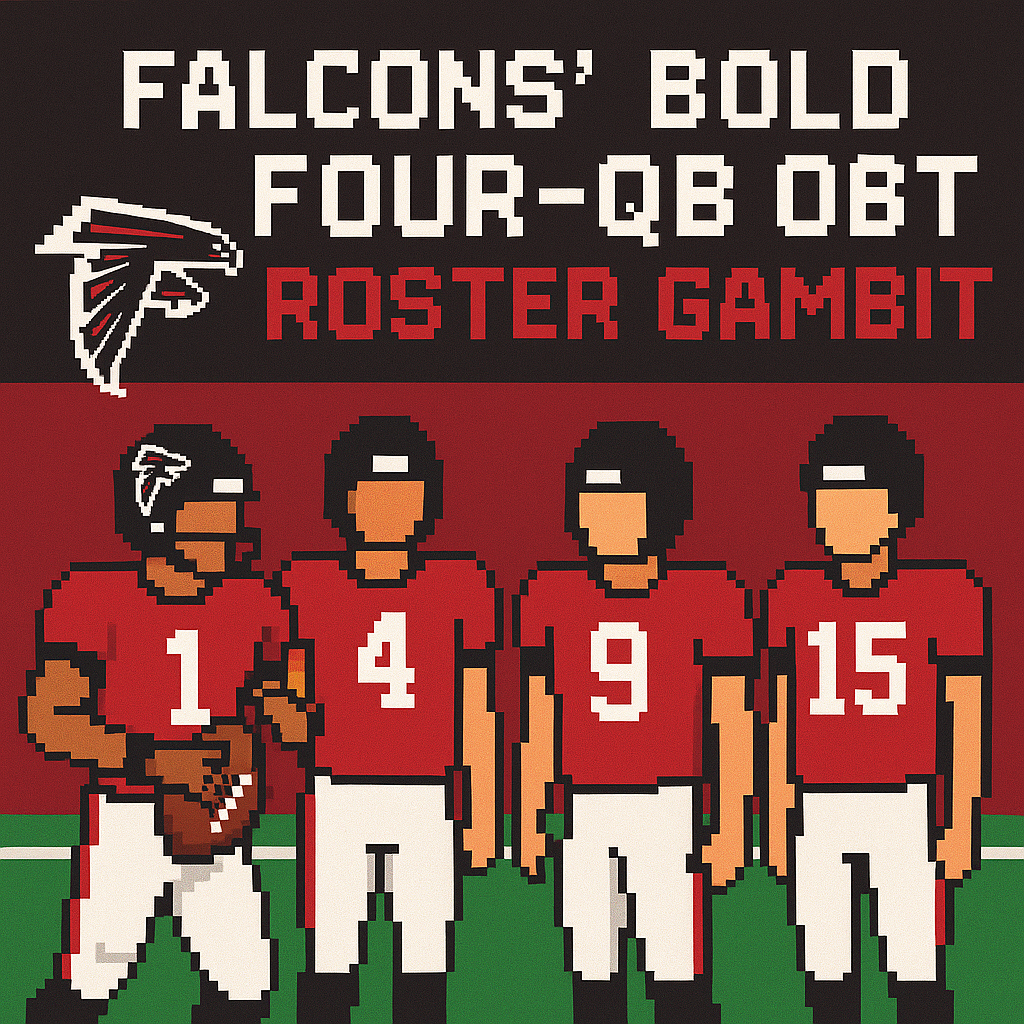
- The Falcons’ initial 53-man roster for 2026 kept four quarterbacks (Tua Tagovailoa, Michael Penix Jr., Cooper Rush, Jack Strand) and only two running backs (Bijan Robinson, Brian Robinson Jr.), a rare build that squeezes special teams and edge depth while buying time to sort the QB pecking order. [2][3][4]
- Atlanta traded CB Clark Phillips III and a 2027 fifth-round pick to the Bears for DT Gervon Dexter Sr., and carried injured DB Billy Bowman Jr. on the 53—classic “roster sequencing” that signals short-term IR moves and more churn before Week 1 against Pittsburgh at Mercedes-Benz Stadium in Atlanta, Georgia. [1][2][6][7]
- My read: the four-QB gambit is a rational response to 2026 emergency QB mechanics and trade dynamics, not indecision; expect Atlanta to flip one QB and backfill RB/EDGE via the IR/waiver dance within 72 hours of cutdown. [3][5][8]
What the source said
The Falcoholic’s initial roster rundown highlights three headline choices: Atlanta carried four quarterbacks through the 53-man cutdown, reduced the running back room to two, and made several surprising moves at the margins. Those included releasing special-teams contributor Tyler Goodson and passing on veteran edge help (Azeez Ojulari, Bralen Trice) while adding Gervon Dexter Sr. on the interior. The piece frames Billy Bowman Jr.’s inclusion as a positive recovery signal, with Da’Shawn Hand in a similar spot heading into the September 2026 opener against the Pittsburgh Steelers. It also underscores that “initial” is the operative word—more moves are expected before Week 1—while questioning a few priorities (e.g., LB JD Bertrand, QB Cooper Rush) in a roster that’s likely to keep moving. [1]
Why it matters
This isn’t just about the Falcons; it’s about how 2026 roster mechanics and quarterback injury risk push teams toward hoarding passers and punting on back-end depth across 53 and 48 active slots on game day. The real stakeholders are general manager Ian Cunningham and head coach Kevin Stefanski, who must balance immediate competitive needs (edge pressure, special teams) with asset preservation (QB trade value) under NFL roster rules that reward sequencing acumen. [2][3][5][8]
Players feel it most. Four quarterbacks and 13 defensive backs crowd out roles for back-end runners and rotational edge rushers—jobs often earned on kick coverage at Heinz Field–style slugfests the Steelers prefer. If Atlanta can’t replace those hidden-yardage snaps with disciplined personnel usage, the cost shows up in field position in Week 1 on September 6–7, not on a transaction log. [1][2][4]
Original analysis
Contrarian read — The consensus: carrying four quarterbacks is wasteful and screams indecision. My take: it’s rational roster arbitrage in 2026. The NFLPA’s veto of the league’s proposed unlimited emergency QB elevations forces the true “QB3” to live on the 53 or consume one of a finite number of weekly elevations, which erodes flexibility. Four clubs kept four QBs on initial 53s this week, so Atlanta’s not an outlier; they’re playing the market. [3][5]
Back-of-the-envelope roster math — edge and RB:
- Defensive snap math: assume 65 defensive snaps and two-edge fronts on 80% of plays. That’s 0.8 × 65 × 2 ≈ 104 edge snaps to allocate. With only three true edges (Za’Darius Smith, Samson Ebukam, Cameron Thomas), the average load is ~35 snaps each if perfectly balanced; in real usage, the top two push toward 50+, leaving fatigue and injury exposure and minimal sub-package variability. A fourth edge would drop average load toward the high-20s and add third-down variants without taxing Smith/Ebukam. [2][4]
- Offensive run math: assume ~62 offensive snaps and a 42% rush rate ≈ 26 RB carries. Bijan Robinson and Brian Robinson Jr. can absorb that on paper, but one in-game ankle tweak leaves pass-pro and two-minute offense in the hands of a practice-squad elevation or an out-of-position WR. The opportunity cost of QB4 is probably 10–12 special-teams snaps and the emergency RB3 role on September game days. [2][4][8]
Named-stakeholder breakdown:
- Tua Tagovailoa, QB: Retains leverage as presumed QB1; four-QB build gives Atlanta time to test-market the room without cutting bait in late August 2026. [2][3][4]
- Michael Penix Jr., QB: Protected development runway; not forced into QB2 by timing. A trade of Rush or a Strand stash becomes the pressure valve before Week 2. [2][3]
- Cooper Rush, QB: Classic “inventory” quarterback—valuable to teams thin on game-ready backups; most tradable piece if Atlanta wants to reclaim a roster slot by September 14. [2][3][4]
- Jack Strand, QB: UDFA with preseason juice; hard to sneak to the practice squad without exposing him to claims—hence the initial 53 spot and the likely PS shuffle. [3][4]
- Gervon Dexter Sr., DT: Interior pass-rush infusion via a costed asset (Clark Phillips III + 2027 5th); signals confidence in perimeter pressure packages built around Smith/Ebukam/Thomas until James Pearce Jr. returns from suspension. [2][6]
- Billy Bowman Jr., DB: Inclusion on 53 signals a near-term practice return under IR rules (minimum four games if he were stashed), preserving earlier availability; roster sequencing, not sentiment. [2][4][7]
A 2×2 to decode the Falcons’ initial 53-man roster
- Axis 1 (X): Immediate game-day utility for Week 1 at Mercedes-Benz Stadium in Atlanta. [1][2]
- Axis 2 (Y): Retainable market value on the 53 across September 2026 trade calls. [3][5]
- High utility / high value: Bijan Robinson, Za’Darius Smith — scarce snaps that change outcomes on third-and-medium. [2][4]
- High utility / low value: Core special-teamers (Malcolm DeWalt IV), swing OL — replaceable leaguewide but essential every Sunday. [2][4]
- Low utility / high value: QB4 (Rush or Strand) — minimal game-day need, high trade/roster-protection value under current QB rules. [3][5]
- Low utility / low value: Developmental TE3 or RB3 — the very spots squeezed to carry a fourth QB. [2][4]
What the numbers and rules foreshadow: The Falcons will almost certainly execute the classic post-53 shuffle—short-term IR for one or two injured players (eligible to return after four games), followed by re-signs or claims at RB and EDGE before September 3, 2026. That’s how you square a four-QB ledger with Week 1 reality without losing assets to waivers under 16-man practice-squad and elevation limits. The team site’s transaction language and the Bowman/Hand handling already point that direction. [2][6][7][8]
What others are missing
Angle: the deliberate “roster sequencing” behind Bowman and Dexter. Billy Bowman Jr. on the initial 53 isn’t a sentimental victory lap; it’s a clock play tied to the four-game IR return rule that preserves earlier practice activation in September. Dexter’s arrival on August cutdown week pairs with that timing—interior depth lets Atlanta tolerate going light at edge for a few days while it maneuvers IR and waiver claims. That combination—timing plus positional redundancy—explains the four-QB and two-RB oddity better than “they can’t decide at quarterback.” [2][4][6][7]
What to watch next
- By September 3, 2026, Atlanta will place at least one of Bowman or Hand on short-term IR and add an RB3 to the 53 via re-sign or waiver claim. [2][4][7]
- By Week 2 (September 13–14, 2026), the Falcons will pare the active QB room to three (via trade of Rush or a Strand move to the practice squad). [2][3][4][5]
- By October 11, 2026 (through Week 5), Gervon Dexter Sr. will log 40%+ defensive snap share in at least two games as Atlanta leans interior pressure to offset light edge depth. [2][6]
My take
I’m fine with the Falcons burning an initial 53 spot on QB4. The 2026 rules incentivize hoarding passers, and Atlanta’s room has both uncertainty and trade value in a market where four teams carried four QBs on cutdown day. I’m not fine with living short at edge beyond this week, because Za’Darius Smith and Samson Ebukam shouldn’t play 85% of snaps in September if you want them healthy in December. If Cunningham executes the IR/waiver two-step and spins off one quarterback for a day-three pick while adding an RB3 and a rotational edge, this roster build stops looking weird and starts looking savvy. [2][3][5][6][7][8]
Sources
[1] Top storylines following the Falcons initial 53-man roster — The Falcoholic (https://www.thefalcoholic.com/atlanta-falcons-depth-chart/95615/top-storylines-following-the-falcons-initial-53-man-roster-billy-bowman-tyler-goodson) — The starting point: four QBs, two RBs, surprise edge cuts, Bowman/Hand status, and the expectation of churn.
[2] Atlanta Falcons release initial 2026 roster — AtlantaFalcons.com (https://www.atlantafalcons.com/news/atlanta-falcons-2026-roster) — Official 53 with position counts and transaction buckets (released/waived), including QB4, RB2, Bowman on the 53, and Goodson/Ojulari/Trice moves.
[3] Four NFL teams keep four QBs on initial 53-man rosters — NFL.com (https://amp.nfl.com/news/four-nfl-teams-keep-four-qbs-on-initial-53-man-rosters) — League-wide context that Atlanta isn’t alone; lists the Falcons’ quartet and explains why teams are doing it.
[4] Falcons announce initial 53-man roster: 3 takeaways as team carries 4 QBs — Atlanta Journal-Constitution (https://images.ajc.com/sports/2026/08/falcons-announce-initial-53-man-roster-3-takeaways-as-atlanta-carries-4-qbs/) — Independent confirmation of the position counts and notable inclusions/exclusions, plus Bowman’s status.
[5] NFLPA vetoes emergency third QB rule change — NFL.com (https://www.nfl.com/news/nflpa-vetoes-emergency-third-qb-rule-change) — Explains why teams can’t stash a “bona fide” emergency QB via unlimited elevations, pushing clubs toward carrying more QBs.
[6] Falcons trade CB Clark Phillips III, 5th-round pick to Chicago Bears for DT Gervon Dexter Sr. — AtlantaFalcons.com (https://www.atlantafalcons.com/news/falcons-trade-clark-phillips-iii-5th-round-pick-chicago-bears-gervon-dexter-sr) — Confirms the Dexter acquisition that shapes trench depth and buys time for edge-room triage.
[7] Players now eligible to return from injured reserve after four games — NFL.com (https://www.nfl.com/news/players-now-eligible-to-return-from-injured-reserve-after-four-games) — Details the modern short-term IR framework (four-game minimum, designated to return), critical to understanding Bowman/IR timing.
[8] Contract Language & Roster Mechanics (Practice Squad and Standard Elevation Addendum) — NFL Football Operations (https://operations.nfl.com/calendar-events/nfl-free-agency/contract-language) — Codifies 16-man practice squads and the 54/55-man elevations that interact with the Falcons’ initial 53 calculus.
Related update: We recently published an article that expands on this topic: read the latest post.
Related update: We recently published an article that expands on this topic: read the latest post.