
When Credit Markets Get Hot, Complacency Becomes the Real Risk
Global credit markets are running at their hottest in nearly two decades — spreads are compressing, issuance is booming, and big-name managers from Pimco to Aberdeen are waving caution flags. That combination makes for a heady cocktail: strong returns today, and a growing list of reasons to worry about what happens when the music stops.
Why this matters right now
- Corporate bond spreads have tightened to levels not seen since around 2007, driven by strong demand for yield and an ongoing search for income across institutions and retail investors.
- Heavy issuance — from investment-grade firms to private credit vehicles — has flooded markets with supply, yet investors continue to buy. That eagerness reduces compensation for taking credit risk.
- Managers who’ve lived through cycles (and painful defaults) are increasingly saying the same thing: fundamentals are showing cracks in some corners, underwriting standards look looser than they should, and the “complacency premium” may be dangerously low.
The tone isn’t doomsday. Rather, it’s a reminder that stretched markets can stay stretched for a long time — and when conditions change, losses can happen fast.
How the market got here
- Central banks’ pivot from emergency easing to tighter rates in recent years, followed by signs of easing expectations, encouraged buyers back into credit. Falling government yields made corporate spreads look attractive — at first.
- Private credit exploded in size as investors chased higher returns outside public markets. That growth brought looser lender protections and more leverage in some deals.
- Big pools of long-term capital (pension funds, insurers, yield-seeking mutual funds) have structurally increased demand for credit, reducing the market’s risk premiums.
Those forces combined into a classic late-cycle pattern: strong performance, plentiful issuance, and gradually deteriorating underwriting standards.
What the big managers are saying
- Pimco’s research and outlooks have highlighted compressed spreads and growing caution about private credit and lower-quality, highly leveraged sectors. Their view: be selective, favor high-quality public fixed income, and avoid chasing thin risk premia where protections are weak. (See Pimco’s recent “Charting the Year Ahead” insights.)
- Aberdeen (abrdn) analysts have laid out scenarios — soft landing, hard landing, and “higher-for-longer” rates — and pointed out that spreads now price a fairly optimistic path. They advise balancing risk and opportunity, favoring investment-grade credits while watching for vulnerabilities in lower-rated segments.
These voices aren’t saying “sell everything.” They’re saying: recognize where compensation is thin, stress-test portfolios for adverse outcomes, and favor structures and collateral that offer real protection.
Where vigilance should be highest
- Private credit and direct lending: Less liquid, often less transparent, and sometimes offering little extra spread relative to liquidity and covenant risk.
- Lower-rated corporate bonds and cov-lite loan markets: Covenant erosion and looser underwriting reduce recovery prospects if stress arrives.
- Heavily levered sectors or those exposed to cyclical slowdowns: Retail, certain parts of tech and media, and some leveraged consumer plays.
- Vehicles promising liquidity that isn’t supported by underlying assets: Mismatches can amplify losses in stressed conditions.
Practical portfolio nudges
- Tilt toward quality: Favor issuers with stable cash flows, healthy balance sheets, and strong covenants when possible.
- Mind liquidity: Don’t over-allocate to strategies or funds that can’t meet redemptions in a stress event if you rely on liquidity.
- Diversify across credit continuums: Think of public vs. private, secured vs. unsecured, and short vs. long duration as decision levers — not as a single “credit” bucket.
- Stress-test yield assumptions: Ask how returns hold up if rates shock higher or default rates rise modestly.
- Focus on security selection: In a spread-compressed world, alpha from selection matters more than broad beta exposure.
The investor dilemma
- On one hand, credit has delivered attractive returns and many investors can’t ignore the income.
- On the other, chasing that income without discipline risks permanent impairment of capital if defaults or liquidity squeezes spike.
That tension is the heart of the current message from the Street: participate, but don’t confuse participation with prudence.
A few scenarios to watch
- Soft landing: Spreads tighten further, defaults stay low — investors get more upside, but valuations look stretched.
- Hard landing: Spreads widen materially, defaults rise — lower-quality credit and illiquid private positions suffer first and worst.
- Higher-for-longer rates: Credit performance is mixed; higher absolute yields cushion total returns, but re-pricing risk and refinancing stress hurt vulnerable issuers.
Being explicit about which scenario you’re implicitly betting on helps shape position sizing and risk controls.
My take
There’s nothing inherently wrong with credit markets being hot — markets reflect supply, demand, and investor preferences. The problem is complacency: when good outcomes become the norm, people gradually lower their guard. Today’s environment rewards selectivity, structural protections, and a healthy dose of skepticism about easy-looking yield. For most investors, that means reducing blind beta in favor of credit with clear collateral, conservative underwriting, and diversified liquidity sources.
Final thoughts
Markets can stay frothy for longer than intuition suggests. That’s why the best defense isn’t trying to time the exact top but building resilience: limit exposure where compensation is thin, demand transparency and covenants, and keep some capacity to redeploy into genuinely attractive opportunities if conditions normalize or stress reveals weaknesses. The loudest warnings aren’t forecasts of immediate collapse — they’re a call to invest with intention.
Sources
Related update: We recently published an article that expands on this topic: read the latest post.

When the Crown Slips: BYD Tops Tesla in the Global EV Race
A short, sharp image comes to mind: the electric vehicle throne — long assumed to be Elon Musk’s exclusive domain — quietly shifting eastward. In 2025, China’s BYD sold more fully electric cars than Tesla, marking the first time Tesla has been definitively overtaken on annual BEV (battery-electric vehicle) deliveries. That moment deserves a second look: it’s not just a change in ledger lines, it’s a sign of how fast the EV playing field is changing.
What happened
- Tesla’s full-year deliveries fell in 2025 to roughly the mid-to-high 1.6 million range, down from about 1.79 million in 2024. Reuters and other outlets reported an annual decline driven by softer demand and the end of a key U.S. federal EV tax credit. (reuters.com)
- BYD’s fully electric (BEV) sales jumped about 28% year-on-year, reaching a figure above 2.2 million BEVs in 2025 — while the company’s total passenger-vehicle deliveries (including plug-in hybrids) were much larger still. That helped BYD claim the top spot for BEV deliveries worldwide. (nasdaq.com)
Why this matters
- Market leadership signals matter beyond ego: they shape investor narratives, supplier leverage, dealer and service footprints, and the direction of R&D budgets.
- BYD’s win highlights a structural reality: scale in China + aggressive product mix (including lower-priced models) + rapid export growth = a powerful engine for volume.
- Tesla’s setback suggests the company faces cyclical and structural headwinds: tougher competition in China and Europe, pricing pressures, and policy shifts (notably U.S. tax credit changes) that can swing consumer demand.
Quick takeaways for busy readers
- BYD surpassed Tesla on annual BEV deliveries in 2025, driven by strong growth at home and surging exports. (forbes.com)
- Tesla’s deliveries fell versus 2024; a key factor was the expiration of a U.S. federal tax credit that had boosted EV purchases. (reuters.com)
- The gap reflects two different strategies: BYD’s high-volume, vertically integrated approach across price segments vs. Tesla’s higher ASP (average selling price) and continued focus on premiuming technology and margins. (statista.com)
The broader context
- China is both the world’s largest EV market and a global manufacturing powerhouse. Domestic scale allows Chinese OEMs to iterate quickly on cost, battery chemistry, and model range — then export those efficiencies abroad.
- BYD’s mix includes a significant volume of plug-in hybrids (PHEVs) alongside BEVs; while the global “BEV crown” is the headline, BYD’s overall passenger-vehicle scale (BEVs + PHEVs) gives it production flexibility and revenue diversification. (nasdaq.com)
- Tesla still holds advantages: brand cachet, software and energy-integration narratives, an established Supercharger network in many markets, and high-margin software/Autopilot services. But those advantages are being contested on price, product breadth, and local partnerships in key markets.
What this could mean going forward
- Competition will intensify on price and features. Expect more affordable models from legacy and new EV players, plus broader rollouts of mid-market tech (e.g., fast charging at lower cost). (autoini.com)
- Global market share could fragment. Tesla may focus on differentiation (software, autonomy, energy) while BYD leverages scale and cost to win mainstream buyers and expand exports.
- Regulation and incentives will remain swing factors. Policy changes (subsidies, tax credits, import rules) can rapidly change demand dynamics across regions.
My take
This shift is important, but not catastrophic for Tesla. It’s a signal that the EV market is maturing: leadership is contestable, and product, price and distribution matter as much as hype. BYD’s ascent is a reminder that manufacturing scale, vertical integration (including battery production) and a broad product ladder can win volume — especially when a domestic market as large as China’s acts as a testing ground and springboard.
For Tesla, the choice is tactical and strategic: defend volume with pricing and localized models where needed, and double down on the unique strengths that keep margins and future optionality intact (software, energy, and autonomy). For BYD, the opportunity is to convert volume into durable share in markets outside China while protecting profitability as it scales globally.
Final thoughts
The EV crown’s relocation tells us less about a single company’s destiny and more about an industry in transition. Expect more headline moments like this: the winners of the next decade will be those who combine scale, speed, and adaptability — and who can turn manufacturing muscle into global, trusted customer experiences.
Sources
Related update: We recently published an article that expands on this topic: read the latest post.
Related update: We recently published an article that expands on this topic: read the latest post.
Related update: We recently published an article that expands on this topic: read the latest post.
Related update: We recently published an article that expands on this topic: read the latest post.

When a Three-Day Win Streak Feels Both Comforting and Fragile
The market closed on a gentle high — the S&P 500 notched its third straight winning session, led by another surge in Nvidia and broad gains across the market. But the calm in stock futures after that three-day run felt more like a pause than a parade: futures were largely flat as investors digested whether the rally has momentum or is simply a holiday-season reprieve.
Quick snapshot
- The S&P 500 recorded a third consecutive winning session, buoyed by gains in big tech, especially Nvidia.
- Ten of 11 S&P sectors rose in the session, signaling breadth beyond the usual handful of leaders.
- Stock futures traded around the flatline after the close, suggesting traders were taking profits or waiting for fresh data and earnings catalysts.
Why this small, steady move matters
Markets don’t always need dramatic headlines to move meaningfully. A three-day winning streak — particularly when it comes with broad sector participation — tells us a few practical things:
- Market sentiment is constructive. When 10 out of 11 sectors are positive, it isn’t just a narrow tech rally; money is rotating into cyclicals, financials or other pockets as well. That’s a healthier profile for a sustainable advance.
- Big-cap leadership still matters. Nvidia’s gains have outsized influence on the indexes. When a giant like NVDA moves materially, it can lift the S&P and Nasdaq even if smaller names are mixed.
- Flat futures after gains can mean caution. Futures trading little changed overnight suggests traders want more clarity — upcoming earnings, economic data, or central bank signals — before pushing the next leg higher.
The backdrop: what investors were weighing
- Economic signals: Consumer confidence and some “soft” indicators have been mixed — people report feeling less optimistic even as many hard data points (industrial production, housing starts on different days) have surprised to the upside. The disconnect keeps investors guessing about the outlook for growth and inflation.
- Fed expectations: Any tug-of-war around the timing and scale of Fed rate cuts or pauses is market-moving. If markets increasingly expect cuts, that can sustain rallies; if the data suggests stickier inflation, rallies can stall.
- Earnings and corporate action: Big company moves — earnings beats, guidance changes, or corporate decisions like buybacks and unusual investments — can quickly change index dynamics. Case in point: Nvidia’s headlines and other large-cap moves often ripple across sector flows.
What to watch next
- Upcoming economic releases: durable goods, inflation reads, and jobs-related numbers will re-shape Fed expectations and market sentiment.
- Earnings calendar: a number of companies (including smaller caps and midcaps) reporting can either extend the rally or expose cracks beneath the headline indexes.
- Leadership breadth: if the rally continues with more sectors participating and small- and mid-caps joining, it’s more robust. If gains narrow back to megacaps, risk of a short-term pullback rises.
Market mood in plain language
Think of this rally like a group hike. The S&P managed three steady steps up the trail with most of the group keeping pace — that’s encouraging. But the guides (futures traders) stayed at the next ridge, scanning the horizon. They’re not sprinting forward yet. They want clarity: will the weather (economic data) hold? Are there dangerous patches ahead (inflation surprises, disappointing earnings)? Until they see it, the pace is cautious.
A few tactical notes for investors (not advice, just common-sense points)
- If you’re long-term focused, broad participation is encouraging; keep concentrates in line with your plan.
- If you’re trading shorter term, watch leadership shifts and volume — rallies on thin volume are more fragile.
- Use upcoming data releases and earnings as checkpoints to reassess exposure, not as triggers for emotionally driven trades.
My take
A three-day win streak with 10 of 11 sectors up is a welcome sign of market health, but the tepid action in futures after the close shows that conviction isn’t universal. Big tech — and Nvidia in particular — remains the fulcrum. For investors, that means celebrating breadth when it appears, but staying disciplined: watch the data, watch leadership, and let conviction build from multiple confirmations rather than one flashy headline.
Sources
Related update: We recently published an article that expands on this topic: read the latest post.
Related update: We recently published an article that expands on this topic: read the latest post.
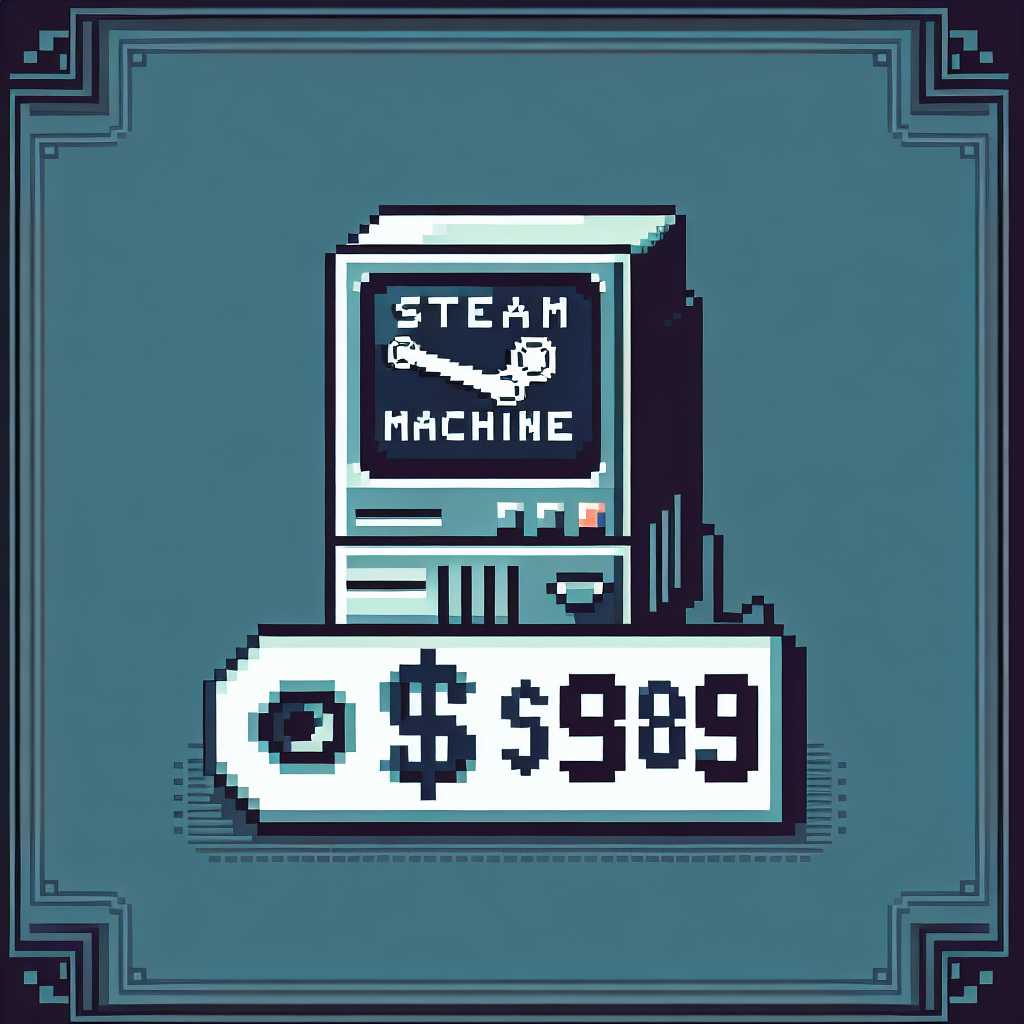
Valve’s Steam Machine won’t be subsidised — expect PC-like prices
You remember the moment Valve teased a living-room-sized PC that felt more like a console than a tower? That shiny little box — the Steam Machine — promises to live on your TV bench, boot into SteamOS, and bring much of your Steam library to the sofa. The catch, according to Valve, is that its price tag is going to be less “console launch loss leader” and more “what an equivalent PC costs.” That distinction matters more than you might think.
Why the price line matters
- Console makers traditionally sell hardware at or below cost at launch and make profit on software and services. That lets companies push a low entry price to build install base quickly.
- Valve is saying it will not subsidise the Steam Machine in that way. Instead, the device will be priced roughly in the same window as a PC with comparable CPU/GPU/RAM/storage.
- That framing shifts how consumers, press and competitors think about the product: it’s not a budget console alternative, it’s a curated, compact PC experience with a living-room focus.
What Valve actually said
Valve engineer Pierre-Loup Griffais told the Friends Per Second (Skill Up) podcast that the Steam Machine’s pricing will be “more in line with what you might expect from the current PC market,” and that Valve aims to be competitive at that level of performance. He emphasised Valve won’t subsidise the hardware the way console makers often do, and noted features like small form factor and low noise as added value that justify a PC-equivalent price. Several outlets have reported and analysed this explanation. Sources later reiterated Valve’s reluctance to set a concrete number while market conditions (component prices, supply) are still fluctuating. (See Sources.)
The practical fallout for buyers
- Expect one or more configurations (likely different storage and maybe a “Pro” later), with base models probably sitting above the cheapest consoles and closer to mid-range gaming PCs.
- Convenience vs. bang-for-buck: the Steam Machine sells convenience (plug-and-play living-room experience, quiet small form factor, TV integration) that a DIY small-form-factor PC has a hard time matching — but that convenience comes at a premium.
- For price-conscious buyers, building or buying a desktop might still give more raw performance per dollar. For people who want a tidy, TV-focused Steam experience, the trade-off might be worth it.
Market context and timing
- Component price volatility (RAM, storage, GPUs) makes precise pricing hard right now; Valve acknowledged that directly.
- Valve’s position is different from the Steam Deck era: the Deck launched with strong subsidies and aggressive pricing that helped it find a wide audience. Valve has signalled it won’t repeat that playbook for the Steam Machine.
- Competing consoles (PlayStation, Xbox) often use hardware pricing strategies tied to exclusive games and massive ecosystem investments. Valve is betting on Steam’s ecosystem and optional hardware advantages rather than subsidised entry prices.
A few reasonable price guesses (not official)
Analysts and outlets are speculating widely — numbers in the discussion range from roughly mid-$500s up to $800–$1,000 for higher-spec variants. Much depends on the final internal specs and whether Valve decides to offer a slimmer or “Pro” model later. Whatever the final tags are, remember the anchor: Valve says “PC-equivalent” pricing, not “console-priced.”
What this means for Steam’s strategy
- Valuing hardware parity with PC suggests Valve intends the Steam Machine to sit alongside desktops rather than undercut them.
- It positions Valve as offering a premium, integrated hardware option to access Steam — like the Steam Deck did for handhelds, but with less emphasis on low launch pricing.
- Valve retains flexibility: they can still adjust SKUs, storage options and promotions, but the commitment to non-subsidised pricing signals a different commercial calculus.
Quick takeaways
- The Steam Machine will be priced like a comparable PC, not like a subsidised console.
- Valve emphasises added hardware value (small form factor, low noise, TV integration) to justify that price.
- Final prices are TBD because component costs are still volatile; speculation ranges widely but tends to sit above typical console launch prices.
- Buyers need to weigh convenience and living-room integration against pure price-per-performance.
Final thoughts
Valve has earned goodwill by making clever hardware bets before (hello, Steam Deck). Saying the Steam Machine will track PC prices is honest and sets expectations early. It also reframes who the Steam Machine is for: not bargain hunters, but people who want a polished, compact, sofa-friendly PC experience without fiddling with mini-ITX builds or cables behind the TV. If you want the cheapest possible way to play PC games on a TV, building or buying a prebuilt PC may still win. If you want a tidy, Valve-curated living-room box that “just works,” you might be willing to pay for that convenience.
Sources
(Note: quotes and reporting above are drawn from Valve’s recent public comments and multiple technology outlets reporting on them.)
Related update: We recently published an article that expands on this topic: read the latest post.
Related update: We recently published an article that expands on this topic: read the latest post.
Related update: We recently published an article that expands on this topic: read the latest post.