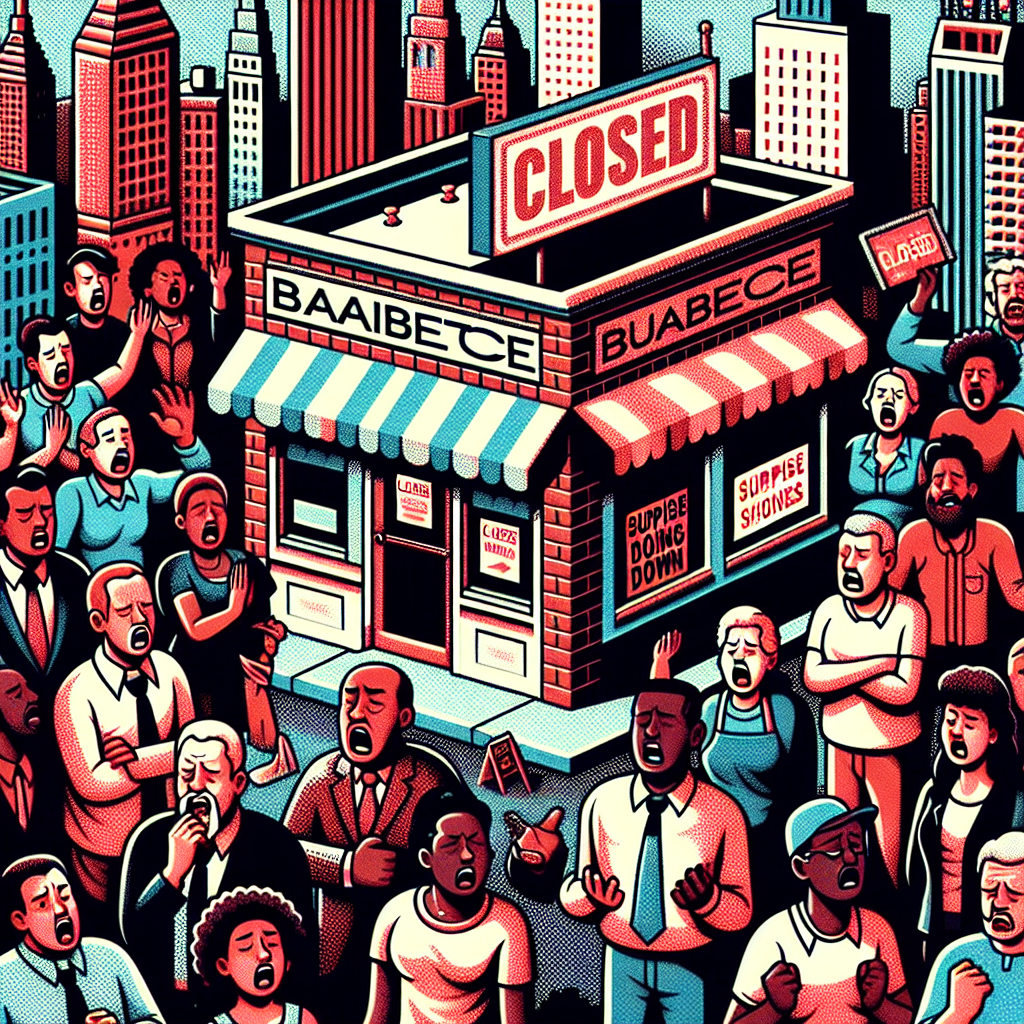
When Smokey Bones abruptly closes locations, nobody expected the silence
The morning of April 28, 2026 started like any other for many diners — except for those who walked up to a familiar Smokey Bones and found the doors locked with a handwritten sign. Smokey Bones abruptly closes locations across numerous states, leaving staff and customers blindsided and a string of long-time neighborhood anchors dark. The suddenness of these shutdowns, reported in markets from Columbus, Ohio to Long Island, added a surreal note to a brand that once felt reliably “there” for casual nights out. (wtvm.com)
Transitioning from a steady casual-dining staple to an overnight disappearing act is not just a local story — it’s a wider signal about the pressures on midscale restaurant chains in 2026.
What happened and when
- On April 28, 2026 multiple Smokey Bones locations closed their doors with little to no advance notice to employees or patrons. Local news crews and storefront photos show closure notices posted that day. (wtvm.com)
- Reports say the closures touched restaurants in states including Ohio, Pennsylvania, New York, Rhode Island, Illinois, Michigan and Georgia — and numerous community outlets confirmed permanent shutdowns at specific locations. (wpxi.com)
- The chain’s parent and related ownership activity — including earlier restructuring and bankruptcy filings affecting related brands — set the stage for a portfolio-wide retrenchment before these abrupt closures. Local reporting and corporate filings from earlier in 2026 documented financial stress and a reshaping strategy. (en.wikipedia.org)
These are the facts that matter for employees, landlords, and regulars who relied on the chain.
Why the suddenness matters
First, abrupt closures have immediate human consequences. Employees often learned they were out of a job the same day: pay, benefits, final wages, and tip pools become urgent questions. Customers with gift cards or upcoming reservations were likewise left scrambling. The emotional imprint is significant — neighborhoods lose a familiar meeting place, and staff lose income without a runway.
Second, sudden chain-wide shutdowns amplify uncertainty in commercial real estate and municipal planning. Landlords and local business alliances that budget around occupied leases must now reconfigure foot traffic forecasts and tenant mixes. For retail corridors where a Smokey Bones anchored traffic, the empty space creates a measurable void.
Finally, from a brand perspective, the optics of disappearing without a clear public message corrodes trust. When companies close locations transparently, they can preserve relationships and reputation; opaque exits generate speculation and social-media backlash faster than corporate statements can travel.
The bigger picture for midscale chains
Smokey Bones’ fate illustrates structural headwinds hitting many midscale full-service restaurants:
- Rising fixed costs (rent, utilities, insurance) squeeze margins when check sizes don’t keep up.
- Labor market dynamics and turnover raise operational complexity and costs.
- Shifting consumer habits — including off-premise spending, delivery expectations, and value-seeking — favor brands that adapt quickly or niche concepts that can be leaner.
- Private-equity ownership, brand roll-ups, and portfolio optimization decisions can accelerate closures if owners decide to redeploy assets into higher-growth concepts. (en.wikipedia.org)
Taken together, these pressures mean that long-standing regional brands can be vulnerable, especially when they fail to modernize traffic-driving elements like brunch, delivery, loyalty, or local engagement.
What communities and workers can expect next
- Short-term disruption: employees will pursue unemployment claims, and communities will see empty storefronts. Local news outlets have already chronicled the immediate aftermath at specific locations. (butlereagle.com)
- Medium-term churn: landlords and developers will market the vacated spaces to new concepts. Some closures become opportunities for rising local restaurants or franchise swaps; others linger as blighted properties.
- Long-term reckoning: restaurateurs and investors will watch whether the closures shift buyer behavior or accelerate consolidation in the casual-dining space.
These ripple effects show the closure is not just corporate housekeeping — it reshapes neighborhoods and labor markets.
Lessons for business owners and diners
- For operators: transparency matters. When closures are handled with clear communication, severance planning, and customer remediation (gift-card refunds, for example), reputational damage is more containable.
- For employees: knowing rights (final pay, tipped-wage rules, unemployment insurance) and documenting hours and pay is critical when a shutdown is abrupt.
- For diners: cherish the local institutions you value, and support independent restaurants that reinvest locally — they often provide more resilient community value than sprawling chains.
Thinking practically, where possible vendors, landlords, and local chambers should coordinate to re-tenant spaces quickly and consider interim pop-ups that maintain foot traffic.
My take
Smokey Bones’ swift disappearance feels like a cultural punctuation mark: a reminder that even familiar brands aren’t immune to shifting economics and ownership decisions. The image of empty dining rooms and staff receiving the news on the same day is jarring — and points to a need for more humane exit plans when companies downsize. Long after the “Now Open” sign is replaced, the social habits and neighborhood flows that restaurants create can take years to recover.
If anything, these closures should prompt a conversation about sustainable business models in casual dining: nimble operations, clearer communication, and deeper local ties could buy more resilience. For communities, the creative opportunity is to fill those rooms with concepts that reflect current tastes, not just the ghosts of past dining trends.
Sources
-
WTVM: "Smokey Bones abruptly closes as chain reportedly shuts down all locations", April 28, 2026.
https://www.wtvm.com/2026/04/28/columbus-smokey-bones-abruptly-closes-chain-appears-shut-down-nationwide/ (wtvm.com) -
Columbus Ledger-Enquirer: "Smokey Bones Bar and Grill location closes in Columbus, GA", April 28, 2026.
https://www.ledger-enquirer.com/living/food-drink/article315571386.html (ledger-enquirer.com) -
Greater Long Island: "Long Island's Smokey Bones closes as chain shutters nationwide", April 29, 2026.
https://greaterlongisland.com/ronkonkomas-smokey-bones-closes-as-chain-shutters-locations-nationwide/ (greaterlongisland.com) -
WPXI: "All Smokey Bones locations in Western Pennsylvania closed", April 28, 2026.
https://www.wpxi.com/news/local/all-smokey-bones-locations-western-pennsylvania-closed/GOIBE7YCKFFP7A2FY2CI4RGNUA/ (wpxi.com) -
IBTimes: "What Happened to Smokey Bones? Inside the BBQ Chain's Chapter 11 Bankruptcy and Sudden Nationwide Closures", April 2026.
https://www.ibtimes.co.uk/smokey-bones-shuts-down-locations-bankruptcy-1794184 (ibtimes.co.uk)
Related update: We recently published an article that expands on this topic: read the latest post.
Related update: We recently published an article that expands on this topic: read the latest post.