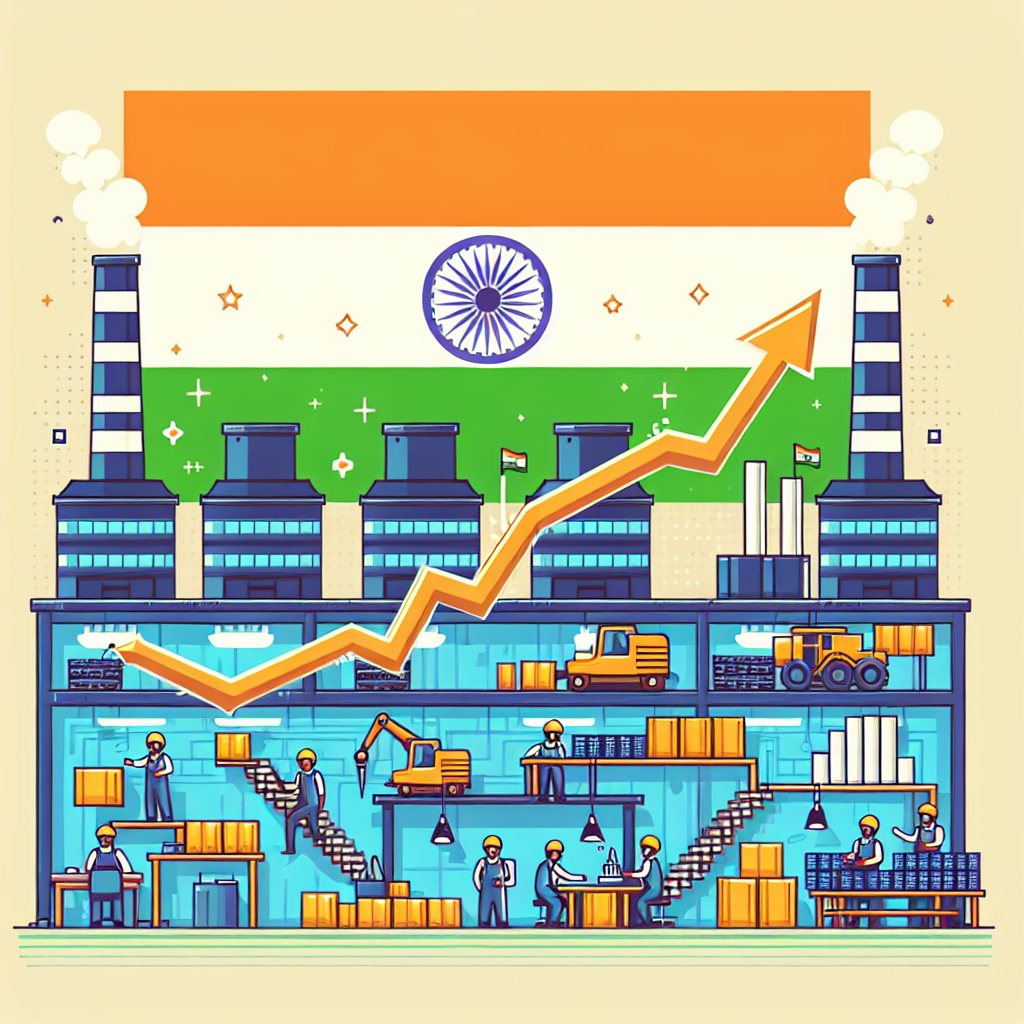
Indias Growth Surge: Factories Fuel Boom | Analysis by Brian Moineau

India’s GDP Surprise: Factories, Festivals and a Fed of Optimism

Prime Minister Narendra Modi called the GDP number “very encouraging.” And who wouldn’t be? When official data showed India’s economy growing faster than most forecasters dared to predict, the reaction was equal parts relief and recalibration — for businesses, policymakers and investors trying to read what comes next.

Why this quarter felt different

  • India’s GDP surged 8.2% year‑on‑year in the July–September 2025 quarter, well above Bloomberg and consensus forecasts and the strongest pace in six quarters. (fortune.com)
  • The upswing was broad-based: private consumption jumped ahead of the festival season, manufacturing posted a sharp gain, and services remained resilient. Policy moves — tax cuts in September and a series of earlier rate reductions — helped juice demand. (fortune.com)
  • All of this happened while a strained trade backdrop loomed: a 50% U.S. tariff on many Indian imports complicates export prospects and adds uncertainty to the near term. Yet firms appear to have front‑loaded shipments and inventory activity, muting the immediate bite of tariffs. (fortune.com)

What the numbers really tell us

  • Short-term momentum: The combination of festive-season spending, tax cuts and prior interest‑rate easing produced a powerful near‑term boost. Manufacturing growth (9.1%) and a near‑8% jump in private consumption are the headline engines of the quarter. (fortune.com)
  • Not necessarily durable: Several economists warn the gains may fade once the one‑off effects — stockpiling before tariffs, festival demand, and statistical quirks like a lower GDP deflator — wash out. Forecasts for next fiscal year were nudged up, but multilateral institutions and rating agencies still flag downside risks if trade frictions persist. (fortune.com)
  • Policy implications: Strong growth reduces the urgency for an immediate rate cut by the Reserve Bank of India, though low inflation keeps room for easing open. Markets reacted by pricing a lower probability of an imminent cut. (fortune.com)

A closer look at the Trump tariffs effect

  • Timing matters: Many exporters shipped ahead of August’s tariff implementation, which created a temporary volume bump. That front‑loading shows up in the data, helping manufacturing and export‑related activity this quarter. (fortune.com)
  • Structural risk remains: If high U.S. tariffs endure, exporters will face sustained price and market‑access penalties. Multilateral forecasts (IMF WEO and Article IV assessments) reduced long‑run growth projections slightly under a scenario of prolonged tariffs. India’s domestic demand cushion can blunt but not fully negate export pain. (imf.org)
  • Winners and losers: Sectors with strong domestic market exposure (consumer goods, some services, domestic manufacturing) benefit most from the current setup. Labor‑intensive export sectors — textiles, gems and jewelry, seafood — are more exposed to tariff damage. (forbes.com)

When numbers and politics collide

  • Messaging matters: Modi’s “very encouraging” post on X is more than cheerleading. Strong quarterly prints bolster the government’s reform story (tax cuts, Make in India push) and strengthen negotiating leverage in trade talks. But politics also raises the bar for sustaining results; the state wants growth to look both robust and inclusive. (fortune.com)
  • External perceptions: International agencies still see India as one of the few bright spots in a slower world economy, even if they temper longer-term forecasts because of protectionist shocks. That positioning attracts capital and attention — until and unless trade barriers start redirecting supply chains away from India. (imf.org)

Practical implications for readers

  • For consumers: Strong demand helped by tax cuts means fresher buying power now, especially in urban centers during festival cycles. But keep an eye on inflation and employment signals over the next two quarters.
  • For business leaders: Don’t over‑interpret one robust quarter. Use the breathing room to invest in productivity, diversify export markets, and avoid over‑reliance on short‑term stockpiling gains.
  • For investors: Macro momentum and lower inflation create a constructive backdrop, but tariff‑driven export risk and potential capital flow swings mean selective exposure and active risk management make sense.

A few smart caveats

  • Some part of the headline jump may reflect statistical effects (lower GDP deflator and other discrepancy adjustments), so analysts are rightly cautious about extrapolating this pace forward. (fortune.com)
  • Forecasts vary: While the IMF projects India to remain a top growth performer in 2025–26 under its baseline, it also warns that sustained high tariffs shave projected growth thereafter. (imf.org)

My take

This quarter feels like a tactical win for India: policy levers and private consumption combined to outpace expectations, and manufacturing showed welcome life. But the strategic contest is just beginning. If India wants manufacturing-led, export‑driven growth to be durable, it needs two things: (1) trade diplomacy and adaptation to reclaim lost market access, and (2) faster local value‑chain deepening so that front‑loaded shipments don’t become the main growth story. Short of that, domestic resilience will keep India growing, but the trajectory will be bumpier than a single headline number suggests.

The bottom line

An 8.2% print is newsworthy and politically powerful. It buys space for reforms and investment. But read it as a strong quarter, not a guarantee of uninterrupted acceleration. The next few quarters — how tariffs play out, whether festival demand normalizes, and whether investment follows consumption — will tell us whether this was a steppingstone or a spike.

Sources


Related update: We recently published an article that expands on this topic: read the latest post.
Related update: We recently published an article that expands on this topic: read the latest post.


Related update: We recently published an article that expands on this topic: read the latest post.

Donald Trump’s economy falters as US jobs growth grinds to a halt – Financial Times | Analysis by Brian Moineau

Donald Trump’s economy falters as US jobs growth grinds to a halt - Financial Times | Analysis by Brian Moineau

Title: The Economic Rollercoaster: When Promises Meet Reality

In the latest twist of the economic saga under the Trump administration, the Financial Times reports a significant slowdown in US job growth. The promises of prosperity that fueled the rhetoric during the campaign trail are facing a reality check. As the economy experiences this slowdown, it prompts a reflection on the broader implications and what this means for Americans going forward.

A Bumpy Road Ahead

Donald Trump's presidency has been a whirlwind of bold promises and ambitious goals, particularly in the realm of economic growth. From tax cuts to deregulation, his administration aimed to create an environment ripe for job creation and economic prosperity. Yet, as the latest data suggests, the momentum is faltering. This development isn't just a blip on the radar; it raises critical questions about the sustainability of the policies touted as economic saviors.

Global Connections

The US economy doesn't operate in a vacuum. Global events, such as trade tensions and geopolitical uncertainties, have undoubtedly played a role in shaping the current economic landscape. For instance, the trade war with China created ripples across the global economy, impacting everything from agricultural exports to tech industry supply chains. As these tensions simmer, they add layers of complexity to the economic challenges at home.

Moreover, the COVID-19 pandemic has reshaped how economies function worldwide. Its aftermath continues to affect supply chains and consumer behavior, further complicating efforts to revitalize job growth. Meanwhile, other countries are grappling with similar challenges, as they too navigate the intricate dance of economic recovery in a post-pandemic world.

Donald Trump: A Polarizing Figure

Donald Trump's approach to leadership and policy-making has always been characterized by his distinctive style and often controversial decisions. Love him or loathe him, his tenure has undeniably impacted the economic and political landscape. While some hail his efforts to cut red tape and lower taxes, others criticize the long-term sustainability of these measures and their impact on income inequality and public debt.

Looking Beyond the Numbers

While the current economic data may seem disheartening, it's essential to remember that economies are inherently cyclical. Slowdowns can be opportunities to recalibrate and address underlying issues that might have been overlooked during periods of rapid growth. This moment offers policymakers a chance to reassess strategies and invest in sustainable, inclusive growth that benefits all Americans.

Final Thoughts

As we observe the unfolding economic narrative, it's crucial to approach the situation with a balanced perspective. The numbers tell one part of the story, but the human element and the broader context complete it. The current economic challenges are not insurmountable, but they do require thoughtful, collaborative solutions that transcend political divides.

In the end, the ultimate question remains: Can the promises of prosperity be fulfilled in a way that withstands the test of time and turbulence? Only time will tell, but one thing is certain—economic resilience will depend on adaptability, innovation, and a willingness to learn from both successes and setbacks.

Read more about AI in Business

Read more about Latest Sports Trends

Read more about Technology Innovations

Fed Gets Green Light for Interest Rate Cuts as Unemployment Rate Jumps to 4-Year High – Realtor.com | Analysis by Brian Moineau

Fed Gets Green Light for Interest Rate Cuts as Unemployment Rate Jumps to 4-Year High - Realtor.com | Analysis by Brian Moineau

Blog Post: The Fed’s Interest Rate Tango: A Dance with the Economy

In a world where economic indicators often feel as unpredictable as a game of Jenga on a shaky table, the recent news that the Federal Reserve has been given the green light for interest rate cuts might just be the stability we need—or at least a strategic move in the economic dance. According to Realtor.com, the unemployment rate has jumped to a four-year high, prompting the Fed to consider cutting interest rates in response. Let's unpack what this means, not just for the U.S. economy but for your wallet and perhaps even your dream of owning that cozy cottage by the lake.

The Fed’s Balancing Act

The Federal Reserve has always played a critical role in maintaining economic stability. By adjusting interest rates, the Fed can either cool down an overheating economy or give it a much-needed boost. With unemployment on the rise, this is an opportune moment for the Fed to step in and cut rates. Lower interest rates mean cheaper borrowing costs, which can stimulate spending by consumers and businesses alike. This is akin to giving the economy a shot of espresso—just what it might need to liven up!

However, this isn’t a decision made lightly. Jerome Powell, the Fed Chair, and his team must weigh the potential risks of cutting rates. Lower rates could lead to increased borrowing, which is great for economic growth, but it could also inflate asset bubbles. It’s a delicate dance, where one wrong move could send the economy spinning off the floor.

Global Economic Connections

The decision to cut rates doesn’t occur in isolation. Globally, economies are interlinked in a complex web of trade and finance. Recently, the International Monetary Fund (IMF) lowered its global growth forecasts, citing issues such as trade tensions and geopolitical uncertainties. A move by the Fed to lower rates could have ripple effects, influencing other central banks to consider similar measures to keep their economies competitive and prevent capital outflows.

Moreover, with the ongoing buzz around climate change and sustainability, it’s interesting to note how economic policies are increasingly factoring in environmental impacts. Investment in green technologies is becoming a priority, and lower interest rates could provide the necessary capital boost for these eco-friendly ventures.

The Real Estate Angle

For those eyeing the real estate market, this news comes as a mixed bag. On one hand, lower rates could make mortgages more affordable, a boon for homebuyers. Realtor.com’s insights suggest that this could invigorate the housing market, which has been showing signs of cooling off. On the other hand, if unemployment continues to rise, consumer confidence might wane, impacting the real estate sector negatively.

Final Thoughts

As the Fed prepares to potentially tweak interest rates, it’s crucial to remain informed and pragmatic about the implications. While lower rates could indeed stimulate economic activity, they also come with their own set of challenges. For the average person, this might be a good time to reassess financial plans, whether it’s locking in a mortgage rate or considering investments.

In the grand scheme of things, economic policies are like a complex waltz—requiring precision, timing, and a bit of flair. The Fed’s decision to cut rates will be just one move in this ongoing dance, one that affects not just Wall Street but Main Street too.

As we watch this economic choreography unfold, let’s hope it leads to a harmonious outcome for all. After all, in the dance of economics, every step counts.

Read more about AI in Business

Read more about Latest Sports Trends

Read more about Technology Innovations

Best Buy reports modest sales recovery, but says tariffs are complicating its turnaround – CNBC | Analysis by Brian Moineau

Best Buy reports modest sales recovery, but says tariffs are complicating its turnaround - CNBC | Analysis by Brian Moineau

Title: Navigating the Retail Seas: Best Buy's Modest Recovery Amidst Tariff Tides

The retail world is no stranger to the ebbs and flows of economic tides, and Best Buy, the electronics giant, recently reported a modest sales recovery that seems to signal a change in the winds. Surpassing revenue and earnings expectations for its most recent quarter, Best Buy is showcasing a resilience that many other retailers could stand to emulate. But, as the company's leadership wisely notes, the journey is far from over, with the looming specter of tariffs complicating what could otherwise be a smooth turnaround.

The news, originally reported by CNBC, highlights Best Buy's cautious optimism. Despite the positive quarterly results, the company has maintained its full-year forecast, citing tariff uncertainty as a potential storm cloud on the horizon. It's a prudent move, considering the current geopolitical climate where trade tensions can shift as quickly as a wind gust.

Tariffs have been a hot topic globally, with many industries feeling the impact of trade policies, particularly those between the United States and China. Electronics, one of Best Buy's staple offerings, often bear the brunt of these tariffs due to their complex international supply chains. Much like sailors navigating treacherous waters, retailers must be adept at steering their strategies to avoid the rocks of increased costs and reduced consumer spending.

Interestingly, Best Buy's performance can also be seen as a microcosm of the broader retail landscape, which has been experiencing a renaissance of sorts. The pandemic accelerated e-commerce adoption, yet many consumers still value the tactile experience of in-store shopping. This dual demand requires retailers to be agile, offering seamless omnichannel experiences that satisfy both digital and traditional shoppers.

In the wider world of business, parallels can be drawn to companies like Apple and Amazon, who have also had to deftly maneuver through tariff implications. Apple's supply chain, deeply intertwined with Chinese manufacturing, has been particularly vulnerable, driving the company to explore diversification strategies. Meanwhile, Amazon's vast global logistics network gives it some insulation from individual tariff impacts, but it too keeps a watchful eye on trade developments.

Beyond the realm of commerce, tariffs have ripple effects that touch various aspects of society. For instance, educational institutions that rely on imported technology for STEM programs may face budgetary pressures, which in turn affects students' learning experiences. Similarly, small businesses that can't absorb increased costs as easily as larger corporations may pass these on to consumers, leading to broader economic implications.

So, what does this mean for the average consumer? While Best Buy's cautious approach might seem like a corporate strategy discussion far removed from everyday life, it actually serves as a reminder of the interconnectedness of global markets and personal wallets. As tariffs influence product prices, consumers may find themselves making more deliberate purchasing decisions, weighing the value of immediate gratification against potential future costs.

In conclusion, Best Buy's recent performance is a testament to strategic resilience, a quality that is increasingly vital in today's unpredictable economic environment. While tariffs remain a complicating factor, the company's ability to navigate these challenges offers hope not only for its own future but also for the broader retail industry. As we move forward, it will be fascinating to watch how Best Buy and its peers continue to adapt, innovate, and steer through the complexities of global trade. Whether you're a shareholder, a shopper, or simply someone interested in the dynamics of business, there's much to learn from Best Buy's journey. Sail on, Best Buy, sail on.

Read more about AI in Business

Read more about Latest Sports Trends

Read more about Technology Innovations

Auto groups lobby Trump administration against parts tariffs in rare unified message – CNBC | Analysis by Brian Moineau

Auto groups lobby Trump administration against parts tariffs in rare unified message - CNBC | Analysis by Brian Moineau

Title: The Auto Industry's Unusual Alliance: When Competitors Rally for a Common Cause

In a rare show of unity, automotive giants and their allies have come together to send a loud and clear message to the Trump administration: tariffs on auto parts could spell trouble for U.S. automotive production. It’s not every day you see franchised dealers, suppliers, and nearly all major automakers singing the same tune, but these are no ordinary times.

Driving in the Same Lane

The proposed tariffs have driven these industry titans to form an alliance typically reserved for the racetrack rather than the boardroom. Facing the prospect of increased costs that could stifle innovation and lead to higher prices for consumers, the industry has collectively decided that enough is enough.

It's reminiscent of the time when Ford and General Motors, despite their fierce rivalry, joined forces during World War II to support the war effort. Today, it seems that the enemy is the potential economic fallout from tariffs, which could disrupt supply chains and increase production costs, ultimately driving vehicle prices higher and putting American jobs at risk.

A Global Perspective

The auto industry isn't just a domestic affair; it's a global network intricately woven together. The imposition of tariffs could lead to retaliatory measures from other countries, echoing the trade tensions we've seen in recent years. For instance, the trade war between the U.S. and China taught us that tit-for-tat tariffs can have widespread repercussions, from agricultural products to technology.

Furthermore, the auto industry is undergoing a transformative era with the rise of electric vehicles (EVs) and autonomous driving technology. Companies are investing billions in a race to dominate the future of transportation. Tariffs could slow down these advancements by diverting resources away from innovation and into dealing with increased costs.

Lessons from the Past

Historically, tariffs have been a double-edged sword. The Smoot-Hawley Tariff Act of 1930, for example, was intended to protect American industries during the Great Depression but instead contributed to a global economic downturn. While it's important to protect domestic industries, history has shown that isolationist policies can backfire, leading to unintended consequences.

Connecting the Dots

As the world grapples with challenges like climate change and the transition to renewable energy, the automotive industry plays a crucial role in reducing carbon emissions. The imposition of tariffs could hinder progress in this area, as companies may find it more difficult to invest in cleaner technologies.

Moreover, the global pandemic has already disrupted supply chains, highlighting the need for resilience and cooperation. Just as the world came together to develop vaccines and address COVID-19, the auto industry is demonstrating that collaboration is key to overcoming challenges.

Final Thoughts

The unified stance of the auto industry against parts tariffs is a testament to the power of collaboration in the face of adversity. It serves as a reminder that sometimes, even fierce competitors must come together to safeguard their collective future. As we navigate an ever-changing global landscape, the lessons learned from this alliance could serve as a blueprint for other industries facing similar challenges.

In the end, whether it's on the production line or the global stage, cooperation and open dialogue are essential for steering the world toward a prosperous and sustainable future. As the auto industry shifts gears, one thing is clear: together, they are stronger, and their message is one we should all heed.

Read more about AI in Business

Read more about Latest Sports Trends

Read more about Technology Innovations

Will tariffs make the US money? And could Canada join the EU? – BBC.com | Analysis by Brian Moineau

Will tariffs make the US money? And could Canada join the EU? - BBC.com | Analysis by Brian Moineau

### Tariffs, Trade, and the Curious Question of Canada's EU Ambitions

In a world swirling with political maneuvers and economic strategies, tariffs have taken center stage, especially under the leadership of former President Donald Trump. Our trusted correspondents from London, New York, Beijing, and Mumbai have delved into your pressing questions about these tariffs and, intriguingly, whether Canada might ever consider joining the European Union. It’s a fascinating mix of economics, diplomacy, and a dash of the unexpected.

#### The Tariff Tango

First, let's waltz through the world of tariffs. For the uninitiated, tariffs are taxes imposed on imported goods, which can protect domestic industries from foreign competition or simply be a strategic move in the complex dance of international trade. Under Trump's administration, tariffs became a frequent tool, particularly in the U.S.-China trade war. The goal? To make American products more competitive and to pressure China into trade concessions.

But do tariffs actually make the U.S. money? In the short term, yes, they can increase government revenue as importers pay these taxes. However, the broader economic impact is murkier. Tariffs can lead to increased costs for consumers and businesses, as seen in various sectors from agriculture to tech. Moreover, retaliatory tariffs from other nations can harm U.S. exporters.

#### A Canadian Curveball

Now, onto the unexpected twist: Could Canada join the EU? While this might sound like a plot from a political thriller, it's a question worth entertaining. Geographically, Canada is nestled comfortably in North America, but politically and culturally, it shares much with European nations. The Comprehensive Economic and Trade Agreement (CETA) already creates strong economic ties between Canada and the EU, reducing tariffs and promoting trade.

However, full EU membership for Canada would be a Herculean task, involving complex negotiations and fundamental changes in its political and economic systems. It’s more of a whimsical notion than a feasible reality, akin to pondering if the UK might rejoin the EU post-Brexit. Yet, in a world where political landscapes shift rapidly, never say never.

#### Global Ripples

These topics don’t exist in isolation. The tariff discussions resonate amid ongoing global trade tensions. For instance, the U.S. and China are still navigating a rocky relationship, while the EU is dealing with its own challenges, from Brexit aftermath to economic recovery post-pandemic. Canada's role in all this is significant, serving as a bridge between North American and European markets.

Elsewhere, the rise of regional trade pacts like the Comprehensive and Progressive Agreement for Trans-Pacific Partnership (CPTPP) highlights a trend towards regionalism in trade. Countries are increasingly looking to strengthen ties with their neighbors, even as globalization faces its own set of challenges.

#### Final Thoughts

Tariffs are more than just taxes; they are tools of strategy and symbols of national policy. Whether they will make or lose money for the U.S. remains a layered question, but their impact is undeniably global. As for Canada’s hypothetical EU membership, it’s a delightful thought experiment that underscores the fluidity of international relations.

In the end, tariffs and trade policies reflect the ongoing quest for balance in a rapidly changing world. As nations continue to navigate these waters, the conversations and decisions made today will shape our economic futures for decades to come. So, keep asking questions, stay informed, and never underestimate the power of a good economic debate.

Read more about AI in Business

Read more about Latest Sports Trends

Read more about Technology Innovations