
World Cup Tension: Iran, War, and Politics | Analysis by Brian Moineau

A World Cup, a War, and a President Who Says He Doesn’t Care

It’s not every day that international sport and geopolitics collide this loudly. With the 2026 FIFA World Cup kicking off in just a few months on June 11, the global spotlight on soccer is supposed to be all about goals, chants and host cities. Instead, a chain of U.S. and Israeli strikes on Iran — and Iran’s own anguished response — has placed Team Melli’s presence in doubt, and President Donald Trump’s brisk reaction to that possibility landed like a cold gust across an already tense field: “I really don’t care,” he told POLITICO when asked if Iran would play this summer. (memeorandum.com)

Below I unpack what’s happening, why this matters beyond sport, and how the World Cup — usually a ritual of global connection — suddenly looks more like a geopolitical test.

The hook: sport as a casualty of escalating conflict

Imagine qualifying for the World Cup — the pinnacle for any footballing nation — and then being told your tournament might be off because your country has been struck and plunged into mourning. That’s the reality Iran faces after airstrikes that killed the country’s supreme leader and triggered a wider confrontation. Iran’s football federation chief, Mehdi Taj, said participation “cannot be expected” in the wake of the attack, citing the national trauma and a mandated 40-day mourning period that disrupts training and domestic competition. (inquirer.com)

Meanwhile, the U.S. president’s terse dismissal — that he doesn’t care whether Iran shows up — turned a sports story into a front-page political flashpoint, because it signals how the administration views the intersection of national security, diplomacy, and even global sporting events. (memeorandum.com)

What actually happened and why it matters for the World Cup

  • Iran qualified for the 2026 World Cup and is scheduled to play group-stage matches in the United States (Los Angeles and Seattle among the venues). (inquirer.com)
  • After the strikes and the resulting instability, Iran’s FA president said preparations and participation are now uncertain; domestic league play and pre-tournament friendlies will be affected by mourning and security concerns. (scmp.com)
  • FIFA has said it’s monitoring the situation, while U.S. officials have suggested exceptions to travel restrictions could be arranged for athletes and staff if necessary — but logistical, legal and security hurdles remain. (inquirer.com)

This isn’t simply a scheduling headache. The potential absence of Iran would reverberate through several arenas:

  • Sporting: lost opportunity for players, fans and federations; bracket integrity and broadcast plans could be affected.
  • Humanitarian and moral: athletes often become symbols in crises — their safety, ability to grieve, or freedom to compete becomes a moral question for organizers and countries.
  • Political messaging: a host nation publicly indifferent to another qualified team’s absence invites accusations of weaponizing sport or trivializing civilian suffering.

Why Trump’s comment landed hard

When a president casually says “I really don’t care” about whether a nation competes in a global sporting event, it does several things at once:

  • It flattens the human element — sidelining athletes, families and fans who see the World Cup as more than geopolitics. (memeorandum.com)
  • It signals to allies and adversaries how sport and diplomacy might be weighed in policy calculus — important when diplomacy, humanitarian concerns, and security are all tangled together. (inquirer.com)
  • It amplifies the narrative in Tehran that the U.S. does not merely disagree with Iran’s government but disdains the country’s place at the global table — making reconciliation or pragmatic solutions politically harder.

Put simply: it’s not just about a match. The remark feeds a broader story line that the U.S. administration’s priority in this moment is military and strategic objectives, with cultural diplomacy — including international sport — treated as expendable. (memeorandum.com)

What FIFA, hosts, and fans face now

  • Contingency planning: FIFA will need to decide whether to allow Iran to withdraw without replacement, find a replacement team (if feasible), or postpone matches — each option carries precedent, legal ramifications, and ticketing nightmares. (global.espn.com)
  • Security and reception: hosting a team from a country currently at war with co-host nations or their allies raises questions about the safety of players, fans and staff, and whether fan travel and visas can be handled without political friction. (inquirer.com)
  • The fan experience: millions already planned travel; rivals, broadcasters and sponsors must weigh reputational exposure against business continuity.

Quick takeaways

  • The Iran national team’s World Cup participation is in serious doubt after U.S.-Israeli strikes and the death of Iran’s supreme leader disrupted preparations. (scmp.com)
  • President Trump told POLITICO “I really don’t care” if Iran plays, a remark that reframes the issue from sport logistics to public diplomacy and political signaling. (memeorandum.com)
  • FIFA and co-hosts face complex choices that mix safety, legal obligations, and optics — and there are no simple or apolitical answers. (global.espn.com)

My take

Sport has a stubborn ability to bring people together — even rivals — in a way that politics rarely does. That’s precisely why the potential absence of Iran from the 2026 World Cup stings: it’s not just a team not showing up, it’s a missed moment for connection at scale. Presidents and policymakers can wage decisions in war rooms, but a World Cup is a global commons where ordinary people — not governments — often find common ground. To shrug at that is to undervalue one of the softest, often most durable tools in international life.

If Iran ultimately misses the tournament, it should be remembered not just as a political footnote but as a human story: players who trained for years, fans who saved to travel, and communities that looked to sport for respite. That loss will be felt in stadiums and living rooms, and its reverberation will outlast any single news cycle. (inquirer.com)

Final thoughts

We’re watching the collision of two powerful realities: the immediacy of armed conflict and the long-simmering global ritual of sport. The outcome is still in flux — and the choices FIFA, the co-hosts, and governments make over the next weeks will tell us how seriously the world takes the idea that some spaces should remain for people, not politics. Even in war, fans want to chant. Even in crisis, players want to play. What we decide about that says a lot about who we are.

Sources


Related update: We recently published an article that expands on this topic: read the latest post.
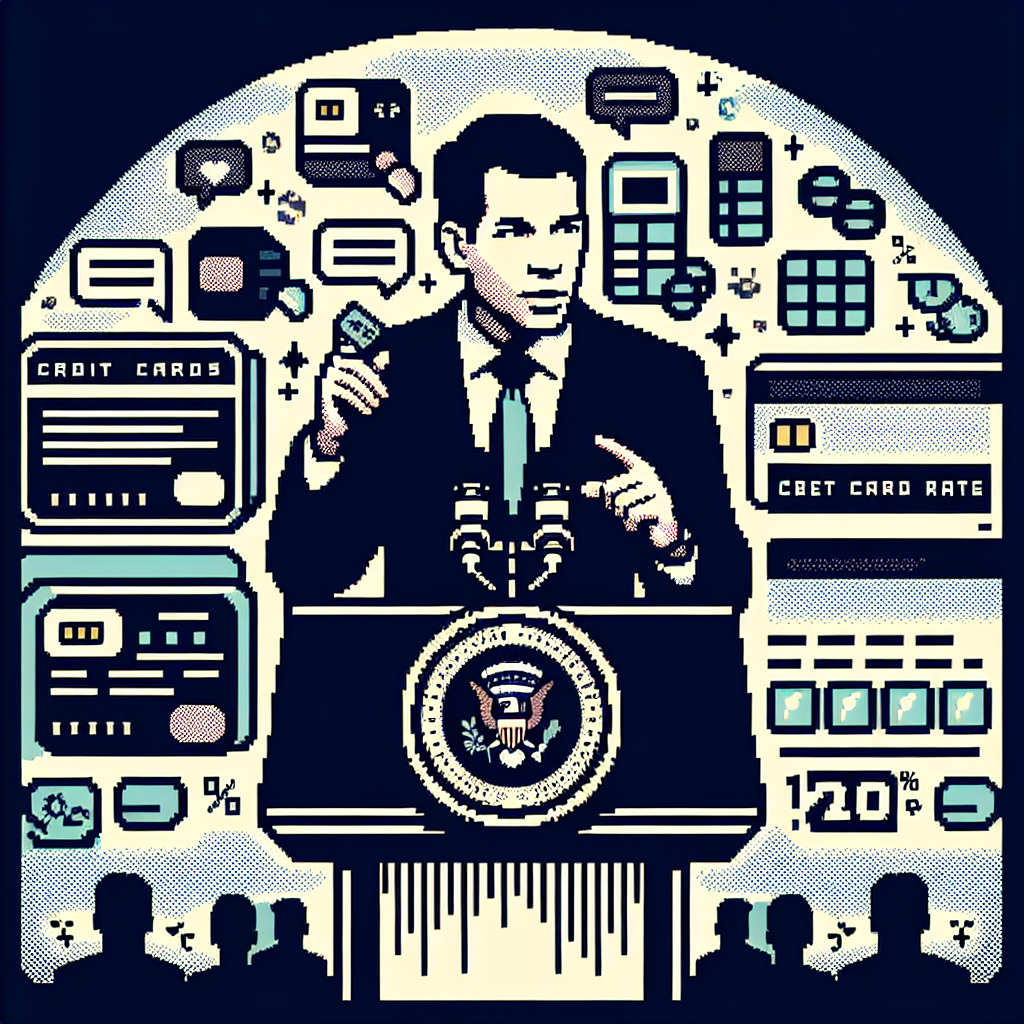
Trump’s 10% Credit Cap: Feasible | Analysis by Brian Moineau

Will a 10% Cap on Credit Card Interest Rates Fly? A look at Trump's latest push

A punchy Truth Social post — and a bold promise: a one-year cap on credit card interest at 10% starting January 20, 2026. It reads like a populist balm for households drowning in high-rate debt, but the announcement raised an immediate and obvious question: how would it actually work? The president offered no enforcement details, no legislative text and no clear path to make banks comply. That gap is where the real story lives.

Why this matters right now

  • U.S. credit card balances and interest burdens are headline issues for many households; credit-card APRs averaged near 20% in recent years.
  • Capping rates at 10% would materially reduce interest payments for millions of cardholders — and compress revenues for card issuers that rely on interest income.
  • Any abrupt regulatory change could alter credit availability, lending pricing models, rewards programs and the broader consumer finance market.

What the announcement said — and what it didn't

  • The president called for a one-year cap at 10% and said it would take effect January 20, 2026. (reuters.com)
  • He did not provide implementing details: no executive order text, no proposed statute, no explanation of enforcement mechanisms, and no guidance about exemptions (e.g., business cards, store cards, secured cards). (reuters.com)

A quick reality check: legal and practical hurdles

  • Federal law and regulatory authority: Major changes to interest-rate limits generally require legislation or changes to existing regulatory rules. An administrative unilateral cap across all card issuers — imposed overnight — would face constitutional, statutory and logistical obstacles. Congress is the usual route for rate caps affecting private contracts. (reuters.com)
  • Market reactions: Banks and card issuers earn substantial net interest income from high-rate cards. A 10% cap would squeeze margins, likely triggering responses such as:
    • Tighter underwriting (fewer cards for lower-score borrowers).
    • Higher fees in other areas (annual fees, origination or late fees).
    • Reduced rewards and perks tied to interchange or interest spread.
    • Potential exit or consolidation in riskier business lines. (washingtonpost.com)
  • Consumer access trade-off: Historical and state examples show interest caps can improve affordability for existing borrowers but may reduce credit access for subprime or thin-file consumers. That trade-off is central to the policy debate. (washingtonpost.com)

Who would win and who might lose

  • Potential winners
    • Existing cardholders who carry balances would likely pay much less interest while the cap is in place.
    • Consumers in the middle of the credit spectrum might see near-term relief if banks keep accounts open and pricing stable.
  • Potential losers
    • Subprime borrowers or applicants with low credit scores could face reduced access as issuers reprice risk or pull back.
    • Investors in major card issuers could see profit hit and volatility in bank stocks.
    • Small merchants and consumers who depend on card rewards could lose benefits if issuers cut programs to offset lost interest revenue. (barrons.com)

Politics and timing

  • The proposal dovetails with political messaging about affordability and “taking on” big financial firms — a resonant theme in an election-year environment. It echoes earlier bipartisan bills and activist pressure from lawmakers such as Senators Bernie Sanders and Josh Hawley, who previously backed a similar 10% idea. (theguardian.com)
  • Industry groups quickly criticized the move, warning of reduced credit access and unintended consequences; some lawmakers praised the idea but noted it requires legislation. The president’s lack of detailed implementation planning drew skepticism from both critics and some supporters. (washingtonpost.com)

What implementation might realistically look like

  • Congressional path: A statute that amends consumer lending rules or establishes a temporary rate cap is the most straightforward legal path — it would require votes in the House and Senate and reconciliation with existing federal and state usury laws. (reuters.com)
  • Regulatory tools: Agencies (e.g., CFPB, Fed, Treasury) can issue rules or guidance, but imposing a across-the-board APR ceiling without Congress is legally risky and likely to be litigated. Any regulatory approach would also need to reconcile federal preemption and state usury regimes.
  • Phased or targeted design: A more politically viable and economically nuanced approach could target specific practices (penalty APRs, junk fees, or certain high-cost “store cards”) rather than a blunt across-the-board APR cap, reducing shock to credit markets.

How consumers should think about it now

  • Short term: Expect headlines, political theater and statements from banks. Actual change — if any — will take time and likely require legislative action or complex regulatory steps.
  • If you carry card debt: Focus on basics — shop rates, consider balance transfers where feasible (watch fees and limits), and prioritize paying down high-interest balances.
  • Watch the details: Any real policy will hinge on exemptions, definitions (APR vs. retroactive rates), and enforcement mechanisms — those details will determine winners, losers and the depth of impact.

My take

The 10% cap is a bold, attention-grabbing proposal that taps real consumer pain around credit-card interest. But without a clear path to implementation, it’s more a political signal than an immediate fix. If policymakers want durable, pro-consumer change, the conversation needs to move from headlines to crafted policy design: targeted statutory language, guardrails to preserve safe access to credit, and attention to how issuers might shift costs. Done thoughtfully, lowering excessive consumer-costs is achievable; done abruptly, it risks pushing vulnerable borrowers into riskier alternatives.

Further reading

  • For reporting on the announcement and early responses, see Reuters and The Guardian (non-paywalled summaries and context). (reuters.com)

Sources


Related update: We recently published an article that expands on this topic: read the latest post.



Related update: We recently published an article that expands on this topic: read the latest post.


Related update: We recently published an article that expands on this topic: read the latest post.

Rising Unemployment Roils Trump’s Economic | Analysis by Brian Moineau

When the jobless rate climbs, a political narrative starts to wobble

There’s a particular hum in Washington when a jobs report walks in slightly off-script: markets twitch, talking heads adjust their tone, and political teams scramble for new soundbites. The headline from mid-December was blunt — the unemployment rate rose, even as the economy added a modest number of jobs — and that small shift has outsized implications for an administration that has made “economic comeback” central to its pitch to voters.

Below I unpack why a rising jobless rate matters politically, what’s driving the softening labor market, and why this is more than just a numbers game.

What happened — the quick version

  • In the latest Labor Department snapshots, the unemployment rate ticked up to the mid-4 percent range (reports around the December jobs release put it at roughly 4.6% for November), while payroll gains were modest. (wsj.com)
  • Revisions and one-off cuts — notably large reductions in federal payrolls earlier in the year — have removed a cushion that previously helped headline job growth. (washingtonpost.com)
  • Other indicators — weaker hiring in manufacturing and finance, slower wage growth, and falling private job openings — point to a labor market that’s cooling rather than collapsing. (businessinsider.com)

Why this stings Trump’s economic messaging

  • The core of the Trump message has been: my policies deliver jobs and rising incomes. Voters notice the jobless rate more than they notice GDP nuance. A rising unemployment rate is a visceral, easy-to-grasp signal that “the economy isn’t working for people.” (politico.com)
  • Politics is about attribution. When unemployment climbs, the incumbent is the default target; opponents and the press will link labor weakness directly to administration choices — tariffs, federal workforce cuts, and policy uncertainty — even if causes are mixed. (americanprogress.org)
  • Messaging mismatch: The White House can point to private-sector gains and labor-force entrants as explanations, but those arguments are weaker if people feel longer job searches, slower pay growth, or layoffs in local industries. Numbers that look small in D.C. spreadsheets translate to real pain on Main Street. (whitehouse.gov)

What’s behind the shift in the labor market

  • Policy headwinds: Tariff uncertainty and trade policy shifts have raised costs for some manufacturers and importers, prompting hiring freezes or cuts in certain sectors. (businessinsider.com)
  • Federal payroll reductions: Large federal workforce cuts earlier in the year removed a steady source of employment and ripple effects into the private firms that depend on government contracts. (washingtonpost.com)
  • Monetary legacy and demand cooling: The Federal Reserve’s earlier cycle of high interest rates and their lagged effects are still tamping down investment and hiring in interest-sensitive sectors. That, plus slower wage growth, reduces hiring incentives. (ft.com)
  • Structural changes: Automation, AI adoption, and shifting sectoral demand mean some occupations face lasting disruption, complicating the short-term picture. (businessinsider.com)

Voter dynamics and the election arithmetic

  • Timing matters. If the labor market continues to weaken heading into an election year, skepticism about economic stewardship becomes a tangible drag. Voters who once prioritized pocketbook improvements are quicker to notice higher joblessness and slower hiring. (politico.com)
  • The administration can still shape the narrative (point to private-sector job creation, rising participation, or short-term payroll gains), but repetition works only so long if local experiences tell a different story. Campaigns that rely on economic credibility are particularly vulnerable to a steady, measurable rise in unemployment. (whitehouse.gov)

What to watch next

  • Monthly Labor Department jobs reports and revisions: small headline changes can have big political effects once they stack into a trend. (wsj.com)
  • Federal employment and contract dynamics: more cuts or restorations will directly affect regions and industries that provide campaign reach. (washingtonpost.com)
  • Wage trends and jobless-duration metrics: growing spell lengths or falling real wages are the signals that sway everyday voters more than the unemployment number alone. (wsj.com)
  • Fed policy shifts: if the Fed moves aggressively on rates, it will change the trajectory of hiring and investment, with clear political consequences. (ft.com)

Quick takeaways

  • A rising unemployment rate punches above its weight politically — it’s shorthand for “economy not delivering.” (wsj.com)
  • Policy choices (tariffs, federal cuts) and lingering monetary effects are combining with structural labor shifts to cool hiring. (americanprogress.org)
  • The administration can frame the data in ways that defend its record, but sustained labor-market deterioration would make persuasive messaging much harder. (politico.com)

My take

Numbers move markets, but narratives move voters. A single uptick in unemployment doesn’t end a presidency. But in politics, perception is cumulative: a steady string of softer labor reports can erode the economic credibility that incumbents depend on. For an administration that’s built a central narrative around jobs and prosperity, the safe play is twofold — stabilize the labor market with clear, targeted policy and lay out an honest, localized story that connects policy moves to tangible results for working people. Spin only stretches so far when someone in your town has been looking for work longer than they used to.

Sources

(Note: URLs above are non-paywalled where available; some outlets may require free registration.)


Related update: We recently published an article that expands on this topic: read the latest post.


Related update: We recently published an article that expands on this topic: read the latest post.

Indias Growth Surge: Factories Fuel Boom | Analysis by Brian Moineau

India’s GDP Surprise: Factories, Festivals and a Fed of Optimism

Prime Minister Narendra Modi called the GDP number “very encouraging.” And who wouldn’t be? When official data showed India’s economy growing faster than most forecasters dared to predict, the reaction was equal parts relief and recalibration — for businesses, policymakers and investors trying to read what comes next.

Why this quarter felt different

  • India’s GDP surged 8.2% year‑on‑year in the July–September 2025 quarter, well above Bloomberg and consensus forecasts and the strongest pace in six quarters. (fortune.com)
  • The upswing was broad-based: private consumption jumped ahead of the festival season, manufacturing posted a sharp gain, and services remained resilient. Policy moves — tax cuts in September and a series of earlier rate reductions — helped juice demand. (fortune.com)
  • All of this happened while a strained trade backdrop loomed: a 50% U.S. tariff on many Indian imports complicates export prospects and adds uncertainty to the near term. Yet firms appear to have front‑loaded shipments and inventory activity, muting the immediate bite of tariffs. (fortune.com)

What the numbers really tell us

  • Short-term momentum: The combination of festive-season spending, tax cuts and prior interest‑rate easing produced a powerful near‑term boost. Manufacturing growth (9.1%) and a near‑8% jump in private consumption are the headline engines of the quarter. (fortune.com)
  • Not necessarily durable: Several economists warn the gains may fade once the one‑off effects — stockpiling before tariffs, festival demand, and statistical quirks like a lower GDP deflator — wash out. Forecasts for next fiscal year were nudged up, but multilateral institutions and rating agencies still flag downside risks if trade frictions persist. (fortune.com)
  • Policy implications: Strong growth reduces the urgency for an immediate rate cut by the Reserve Bank of India, though low inflation keeps room for easing open. Markets reacted by pricing a lower probability of an imminent cut. (fortune.com)

A closer look at the Trump tariffs effect

  • Timing matters: Many exporters shipped ahead of August’s tariff implementation, which created a temporary volume bump. That front‑loading shows up in the data, helping manufacturing and export‑related activity this quarter. (fortune.com)
  • Structural risk remains: If high U.S. tariffs endure, exporters will face sustained price and market‑access penalties. Multilateral forecasts (IMF WEO and Article IV assessments) reduced long‑run growth projections slightly under a scenario of prolonged tariffs. India’s domestic demand cushion can blunt but not fully negate export pain. (imf.org)
  • Winners and losers: Sectors with strong domestic market exposure (consumer goods, some services, domestic manufacturing) benefit most from the current setup. Labor‑intensive export sectors — textiles, gems and jewelry, seafood — are more exposed to tariff damage. (forbes.com)

When numbers and politics collide

  • Messaging matters: Modi’s “very encouraging” post on X is more than cheerleading. Strong quarterly prints bolster the government’s reform story (tax cuts, Make in India push) and strengthen negotiating leverage in trade talks. But politics also raises the bar for sustaining results; the state wants growth to look both robust and inclusive. (fortune.com)
  • External perceptions: International agencies still see India as one of the few bright spots in a slower world economy, even if they temper longer-term forecasts because of protectionist shocks. That positioning attracts capital and attention — until and unless trade barriers start redirecting supply chains away from India. (imf.org)

Practical implications for readers

  • For consumers: Strong demand helped by tax cuts means fresher buying power now, especially in urban centers during festival cycles. But keep an eye on inflation and employment signals over the next two quarters.
  • For business leaders: Don’t over‑interpret one robust quarter. Use the breathing room to invest in productivity, diversify export markets, and avoid over‑reliance on short‑term stockpiling gains.
  • For investors: Macro momentum and lower inflation create a constructive backdrop, but tariff‑driven export risk and potential capital flow swings mean selective exposure and active risk management make sense.

A few smart caveats

  • Some part of the headline jump may reflect statistical effects (lower GDP deflator and other discrepancy adjustments), so analysts are rightly cautious about extrapolating this pace forward. (fortune.com)
  • Forecasts vary: While the IMF projects India to remain a top growth performer in 2025–26 under its baseline, it also warns that sustained high tariffs shave projected growth thereafter. (imf.org)

My take

This quarter feels like a tactical win for India: policy levers and private consumption combined to outpace expectations, and manufacturing showed welcome life. But the strategic contest is just beginning. If India wants manufacturing-led, export‑driven growth to be durable, it needs two things: (1) trade diplomacy and adaptation to reclaim lost market access, and (2) faster local value‑chain deepening so that front‑loaded shipments don’t become the main growth story. Short of that, domestic resilience will keep India growing, but the trajectory will be bumpier than a single headline number suggests.

The bottom line

An 8.2% print is newsworthy and politically powerful. It buys space for reforms and investment. But read it as a strong quarter, not a guarantee of uninterrupted acceleration. The next few quarters — how tariffs play out, whether festival demand normalizes, and whether investment follows consumption — will tell us whether this was a steppingstone or a spike.

Sources


Related update: We recently published an article that expands on this topic: read the latest post.


Related update: We recently published an article that expands on this topic: read the latest post.


Related update: We recently published an article that expands on this topic: read the latest post.

When Halo Becomes a Weapon of Politics | Analysis by Brian Moineau

When a Sci‑Fi Icon Gets Drafted Into Real‑World Violence: Halo, AI and the Cost of Dehumanizing Rhetoric

There’s something gut‑level unnerving about seeing your favorite fictional world repurposed as a weapon. Imagine turning a beloved sci‑fi shooter — a series that millions grew up with — into a rallying cry to “destroy” people in the real world. That’s exactly what happened late October 2025 when U.S. government social posts used AI‑generated images of Halo to promote immigration enforcement, prompting sharp condemnation from the franchise’s original creators.

This post untangles why that matters beyond fandom: the mix of cultural icons, generative AI, and political messaging isn’t just tone‑deaf — it risks normalizing language and imagery that have historically enabled dehumanization.

Key takeaways

    • The Department of Homeland Security and related accounts posted AI‑generated Halo imagery with slogans like “Destroy the Flood,” a clear analogy that equated migrants with the Flood, Halo’s parasitic antagonist.
    • Halo veterans including Marcus Lehto and Jaime Griesemer publicly condemned the posts as “absolutely abhorrent” and “despicable,” arguing the Flood were never intended as an allegory for immigrant populations.
    • The incident spotlights two bigger issues: how generative AI makes it trivially easy to weaponize copyrighted cultural IP for political messaging, and how dehumanizing metaphors (comparing groups to parasites) have dangerous historical resonance.
    • Microsoft — owner of the Halo IP — remained publicly noncommittal at the time, raising questions about corporate responsibility when IP is co‑opted for political ends.

The image, the reaction, and why it hurt

Late October 2025, an X (formerly Twitter) post tied to Homeland Security shared imagery of Spartans — Halo’s armored super‑soldiers — driving a Warthog beneath the Halo ring world with the words “Destroy the Flood” and a recruitment angle for ICE. The Flood, within the Halo lore, are a parasitic scourge: an enemy that strips away identity and consumes worlds.

On the surface it reads like a meme. But the implication was unmistakable: equate migrants with parasitic invaders and you’ve reduced human beings to a threat to be annihilated. That’s why key figures behind Halo were enraged. Marcus Lehto said the co‑option “really makes me sick,” while Jaime Griesemer called the ICE post “despicable” and warned it should offend every Halo fan, regardless of politics. Their responses highlight a core point: creators don’t control every context in which their work appears, but many feel a responsibility to object when their art is used to promote harm.

Why copyrighted IP and generative AI are a combustible mix

    • Generative AI tools can produce plausible, polished imagery quickly, making it easy for actors — state or private — to fabricate visuals that look “official.”
    • Cultural IP carries built‑in emotional and persuasive power. A Master Chief figure is shorthand for heroism, conflict and legitimacy for millions of players; recontextualized, it lends those feelings to the message being pushed.
    • Copyright and trademark law offer some remedies, but enforcement is slow and messy — and companies may choose not to act for political or business reasons. At the time of the incident, Microsoft’s public response was limited, leaving creators and fans to push back in public forums.

Generative AI amplifies asymmetries: anyone with basic tools can create imagery that looks like a brand’s or franchise’s official output, then weaponize it online. That’s why the debate isn’t just about one meme — it’s about how we govern visual truth and the ethical limits of deploying cultural capital in politics.

The deeper danger of dehumanizing metaphors

Describing a human group as “parasites,” “insects,” or “the flood” isn’t new; it’s an old rhetorical device that historically precedes violence. Comparing people to sub‑human entities strips moral complexity and makes extreme measures seem plausible or even righteous. Many commentators pointed out that equating migrants with the Flood echoes dangerous dehumanizing language that has been used before to justify abuses.

This is why creators’ outrage matters beyond fandom: it’s a cultural guardrail. When original storytellers push back, they’re not just protecting brand image; they’re resisting a narrative that turns complex social issues into a binary, extermination‑style frame.

Corporate silence and responsibility

Microsoft — current owner of Halo — reportedly declined to comment beyond minimal statements at the time. That silence fuels frustration. If brand IP is repurposed for political messaging that many view as harmful, stakeholders expect clearer action: takedown requests, public distancing, or at least moral clarity from those who own the rights.

But corporate responses are complicated by legal, political and business calculations. The episode exposes tension between platform enforcement, IP owners, and the public interest — a debate that will only intensify as AI image‑making becomes routine.

A short reflection

We live in a moment when imagery moves fast and the line between fiction and political persuasion blurs easily. Cultural icons are powerful because they belong to communities of fans whose shared meanings are shaped, defended and debated. When those icons get hijacked in ways that dehumanize real people, creators’ and communities’ voices matter — not just for brand protection, but for the health of public discourse.

If you care about the soul of the stuff you love, it’s worth paying attention to how it’s used, and calling out when popular culture is enlisted to justify harm. The Halo incident isn’t only a controversy about a videogame — it’s a warning about how tools and symbols can be misused unless we set clearer norms and faster remedies.

Sources


Related update: We recently published an article that expands on this topic: read the latest post.


Related update: We recently published an article that expands on this topic: read the latest post.


Related update: We recently published an article that expands on this topic: read the latest post.


Related update: We recently published an article that expands on this topic: read the latest post.