
Sweden Dominates; Canada Clinches Top Spot | Analysis by Brian Moineau

A night of high drama at the World Juniors: Sweden rolls, Canada clears the way

The puck barely left the ice Wednesday night as two of the tournament favorites—Sweden and Canada—put on clinical offensive displays that reshaped group play at the 2026 IIHF World Junior Championship. Sweden’s balanced attack handed the United States a 6-3 loss and finished Group A unbeaten, while Canada leaned on timing and a red-hot Cole Beaudoin to outscore Finland 7-4 and claim first in Group B. If you like speed, finishing and a little junior-level chaos, this was hockey served hot.

Why this matters now

  • These games weren’t just group-stage box scores — they set seeding and momentum for the knockout rounds. Sweden’s statement win hands them real control in Group A; Canada’s late goals and depth scoring show a team built for the push toward a medal.
  • The World Juniors is where top prospects test themselves under bright lights. Performances here can lift a player’s draft stock and reveal which teams have systems tough enough to survive a seven-game tournament.

What stood out

  • Sweden’s two-headed scoring attack: Lucas Pettersson and Eddie Genborg each netted a pair of goals, giving Sweden reliable finishers at key moments. That kind of finishing from the top end makes a team hard to slow down.
  • Special teams and short-handed impact: Sweden converted on the power play and even struck short-handed—small margins that widened the gap and exposed lapses in U.S. discipline.
  • Canada’s depth production: Cole Beaudoin finished with three points and the Beaudoin–O’Reilly–Desnoyers line provided momentum swings. Multiple contributors (Brady Martin scored twice, Zayne Parekh and Sam O’Reilly each had multi-point nights) underline Canada’s offensive depth.
  • Goaltending and timing: Love Harenstram made 28 saves for Sweden in a game where timely saves didn’t steal the outcome but kept the gap manageable. Conversely, netminding inconsistencies and a few defensive miscues cost the U.S. chances to stay close.

Game snapshots

  • Sweden 6, United States 3

    • Sweden controlled the tempo after an early deflection gave them a 1-0 lead. Genborg struck twice on the power play and Pettersson added a short-handed dagger — a momentum killer that turned the game in Sweden’s favor. Jack Berglund’s three assists and some young draft-eligible names setting up plays showed Sweden’s mix of experience and emerging talent. The U.S. battled but could not sustain a full 60-minute effort. (NHL.com recap)
  • Canada 7, Finland 4

    • A wild first period gave way to Canada settling into effective chance creation and finished opportunities. Beaudoin scored twice and assisted once, and Brady Martin added a two-goal night. Finland kept pace at times — Roope Vesterinen and Lasse Boelius chipped in offensively — but Canada’s finishing and a clutch third-period goal margin carried them to top spot in Group B. (NHL.com recap)

Bigger-picture implications

  • Sweden looks like a legitimate gold-medal threat. Unbeaten in group play and with finishers who can convert special-team chances, they’ve staked a claim as a team to fear in the quarters and beyond.
  • Canada’s balance matters. Tournament hockey rewards teams that can roll multiple lines and still produce. Their depth scoring reduces the pressure on any single star and helps when matchups get tighter in elimination rounds.
  • The U.S. and Finland both have tools to correct course, but the margin for error shrinks in knockout hockey. Discipline and consistency — especially on special teams and defensive-zone coverage — will be critical if either wants to climb the bracket.

Headlines players to watch next

  • Lucas Pettersson (Sweden) — timely scoring and a knack for finishing from dangerous areas.
  • Eddie Genborg (Sweden) — power-play presence; two-goal nights change games.
  • Cole Beaudoin (Canada) — multi-point performances and a reliable scorer on the more physical Canadian forecheck.
  • Jack Berglund (Sweden) — playmaking that fuels the top line’s momentum.

My take

The World Juniors keeps delivering the best mix of raw talent and meaningful hockey. Sweden’s 6-3 win over the U.S. felt like more than a group-stage result — it was a reminder that tournament depth and special-teams execution beat sporadic heroics. Canada’s 7-4 victory showed that when a team spreads offense across lines, it becomes very hard to shut down. This tournament still has twists ahead, but after these results, teams that marry discipline with finishing will be the ones lifting trophies.

Sources


Related update: We recently published an article that expands on this topic: read the latest post.



Related update: We recently published an article that expands on this topic: read the latest post.
Jasmine Paolini Leads Italy to Victory in | Analysis by Brian Moineau

Italy’s Triumph at the Billie Jean King Cup 2025: Jasmine Paolini Shines

The Billie Jean King Cup has always been a stage for thrilling tennis moments, and the 2025 edition delivered just that. With Italy defending their title against a formidable United States team, all eyes were on Jasmine Paolini as she stepped up to secure Italy’s victory. The match was more than just a tennis showdown; it was a testament to skill, determination, and the spirit of competition.

A Quick Recap of the Billie Jean King Cup

For those who might not be familiar, the Billie Jean King Cup is one of the most prestigious team competitions in women’s tennis, akin to the Davis Cup for men. The tournament showcases some of the best female players from around the globe, and its rich history celebrates both the sport and the incredible journey of women in athletics. This year, Italy aimed to defend their title, having taken home the trophy in 2021, while the United States, with a strong lineup, sought to reclaim their dominance.

The Match: Italy vs. United States

In a high-stakes showdown, Jasmine Paolini faced Jessica Pegula in a match that was fraught with pressure. The air was thick with anticipation as fans cheered for their teams. Paolini, known for her fierce playing style and incredible resilience, showcased her skills brilliantly. She managed to outmaneuver Pegula, delivering powerful serves and precise groundstrokes that left the American player struggling to find her rhythm.

With the match hanging in the balance, Paolini’s composure under pressure was evident. Every point was fought fiercely, and as the final whistle blew, it was clear: Italy had successfully defended their title with a convincing 2-0 victory. This win not only solidified Italy’s status in women’s tennis but also marked a pivotal moment in Paolini’s career.

Key Takeaways

Italy’s Dominance: With this victory, Italy has proven once again that they are a force to be reckoned with in women’s tennis, successfully defending their Billie Jean King Cup title.

Jasmine Paolini’s Rising Star: Paolini’s performance against Pegula showcased her potential as one of the top players in the game, highlighting her ability to perform under pressure.

The Importance of Team Spirit: The Billie Jean King Cup emphasizes the importance of teamwork and national pride, as players come together to represent their countries on an international stage.

Strategy and Adaptation: Paolini’s match strategy, focusing on exploiting Pegula’s weaknesses, reflects a deep understanding of the game, which is crucial at this level of competition.

Historical Significance: This match adds another chapter to the storied rivalry between Italy and the United States in women’s tennis, emphasizing the evolving dynamics of international tennis competitions.

Concluding Reflection

As we celebrate Italy’s victory in the 2025 Billie Jean King Cup, it’s essential to recognize the broader implications of this win for women’s sports. Paolini’s triumph is not just about winning a match; it symbolizes the hard work, dedication, and passion that female athletes bring to the court every day. With each match, they inspire the next generation and continue to pave the way for equal recognition in sports.

The Billie Jean King Cup remains a vital platform for showcasing talent and fostering camaraderie among nations. As we look forward to future tournaments, one thing is certain: the excitement of women’s tennis is only just beginning.

Sources

– “Billie Jean King Cup 2025: Jasmine Paolini helps Italy defend title with 2-0 win against United States” – BBC

Feel free to share your thoughts on this thrilling match in the comments below! What did you think of Paolini’s performance, and how do you see the future of women’s tennis unfolding?


Related update: We recently published an article that expands on this topic: read the latest post.


Related update: We recently published an article that expands on this topic: read the latest post.

“They’re Crushing Us Completely”: China’s Offshore Wind Revolution Builds Thirty Five Megawatt Monsters While America Falls Behind – Energy Reporters | Analysis by Brian Moineau

“They’re Crushing Us Completely”: China’s Offshore Wind Revolution Builds Thirty Five Megawatt Monsters While America Falls Behind – Energy Reporters | Analysis by Brian Moineau

Title: Riding the Wind: China’s Offshore Wind Revolution and America’s Lagging Efforts

In recent years, the global race for renewable energy dominance has intensified, and China has emerged as a formidable contender, particularly in the realm of offshore wind energy. According to a recent article by Energy Reporters, China is not just participating in this race—they’re setting the pace with the creation of massive 35-megawatt offshore wind turbines. While the United States has made strides in renewable energy, particularly solar power, it seems to be stumbling in the offshore wind arena, much to the chagrin of energy enthusiasts and environmentalists alike.

China’s Offshore Wind Revolution

China’s ambitious leap into offshore wind energy is not just a testament to its engineering prowess but also a reflection of its strategic focus on sustainable development. The country’s latest 35-megawatt offshore wind turbines are colossal, both in size and energy output. These turbines are part of China’s broader vision to reduce its carbon footprint, a goal that has been underscored by its commitment to peak carbon emissions before 2030 and achieve carbon neutrality by 2060.

China’s success can be attributed to a combination of supportive government policies, substantial investment in research and development, and a domestic manufacturing sector capable of producing the necessary components at scale. This approach has not only fueled advancements in technology but has also stimulated economic growth and job creation within the renewable energy sector.

America’s Offshore Wind Challenges

On the flip side, the United States, despite its vast coastlines and technological capabilities, has been slow to capitalize on offshore wind opportunities. Regulatory hurdles, fragmented energy policies, and a relatively nascent domestic supply chain have hindered progress. While projects like the Vineyard Wind off the coast of Massachusetts signal the beginning of a shift, the U.S. is still playing catch-up. According to a report by the International Energy Agency (IEA), America will need to accelerate its efforts to harness the potential of offshore wind if it hopes to close the gap with China.

A Global Perspective

The contrast between China and the United States in offshore wind development is reflective of broader global trends in renewable energy. For instance, Europe has long been a leader in offshore wind, with countries like the UK, Germany, and Denmark setting benchmarks for others to follow. The European Union’s Green Deal and its ambitious targets for carbon neutrality have spurred significant investments in wind energy, serving as a model for others.

Beyond wind energy, the global shift towards renewables is also evident in burgeoning solar markets in India and Australia and advancements in battery storage technology. These efforts collectively highlight the world’s pivot towards sustainable energy solutions amid the growing urgency of climate change.

Final Thoughts

China’s offshore wind revolution serves as both an inspiration and a wake-up call. It underscores the importance of strategic investment, government support, and innovation in driving energy transitions. For the United States, the challenge is not just to catch up but to leapfrog—to leverage its technological and economic strengths to build a robust offshore wind sector that can compete on a global scale.

As the winds of change continue to blow, the world’s energy future will be defined by those who can harness the power of innovation and sustainability. While the race is far from over, it’s clear that the leaders of tomorrow’s energy landscape will be those who invest wisely today. In the spirit of healthy competition, perhaps it’s time for America to dust off its proverbial running shoes and get back in the race.

Read more about AI in Business

Read more about Latest Sports Trends

Read more about Technology Innovations


Related update: We recently published an article that expands on this topic: read the latest post.


Related update: We recently published an article that expands on this topic: read the latest post.

China reports bumper April exports ahead of crucial trade talks with US – Financial Times | Analysis by Brian Moineau

China reports bumper April exports ahead of crucial trade talks with US - Financial Times | Analysis by Brian Moineau

Navigating the Trade Winds: China's Export Surge and the Global Chessboard

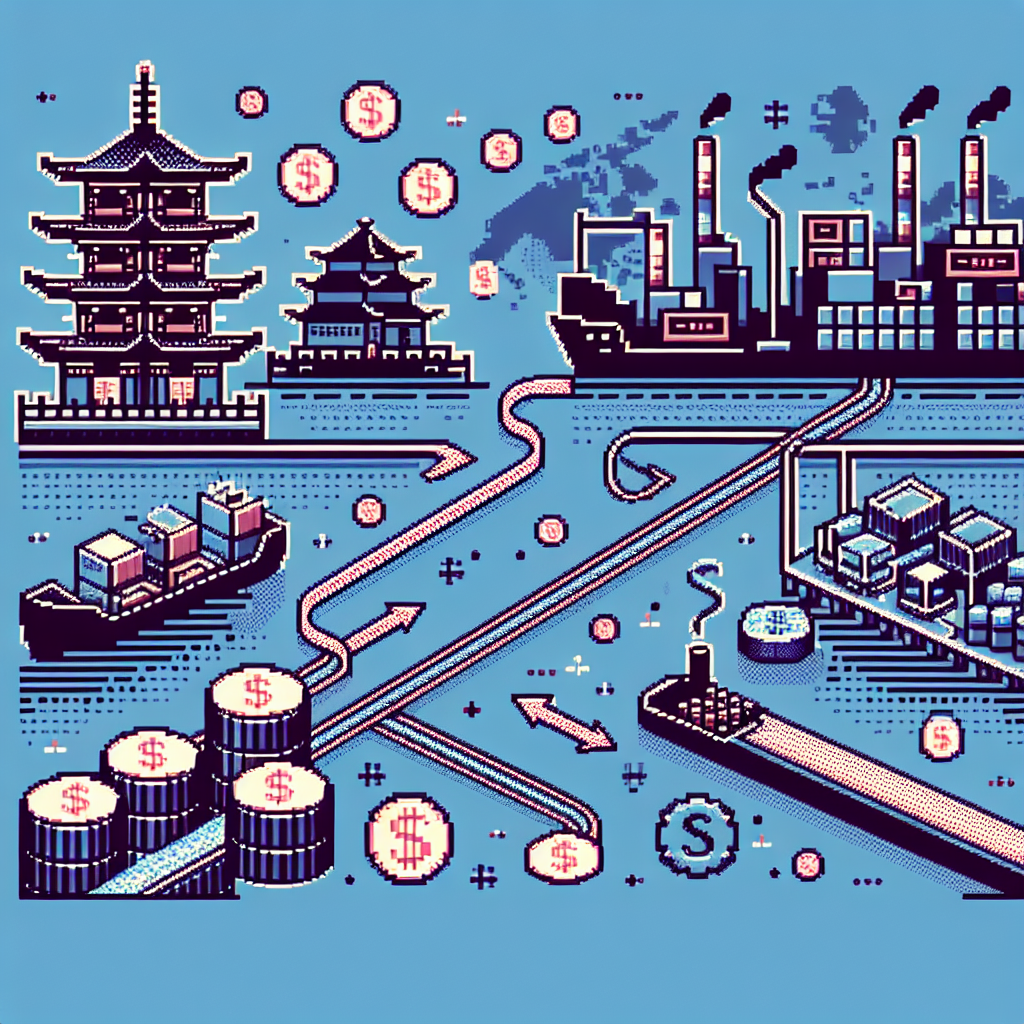
In a world where economic narratives are as dynamic as the tides, China's latest trade data offers a compelling chapter. According to the Financial Times, China's exports have experienced a remarkable surge in April, largely buoyed by increased shipments to Southeast Asia and Europe. This uptick comes at a particularly pivotal moment, just ahead of crucial trade talks with the United States. The timing couldn't be more interesting, as these negotiations could potentially reshape the contours of global trade.

Shifting Trade Currents

China's ability to offset a drop in exports to the United States with increases in other regions is a testament to its strategic maneuvering in the global market. As the world's factory, China has been adept at expanding its trade networks, and the current data underscores its resilience. The pivot to Southeast Asia and Europe is not just a reaction to strained US-China trade relations but also a reflection of China's long-term strategy to diversify its economic relationships. In recent years, China's Belt and Road Initiative has fostered stronger ties with these regions, providing a foundation for increased trade.

A Broader Context

This development in China's trade dynamics is happening against a backdrop of significant global economic shifts. For instance, Europe is increasingly looking to strengthen its own economic ties within Asia, as seen in the EU's recent investment agreements with Vietnam and other Southeast Asian nations. Meanwhile, the United States is recalibrating its trade policies, focusing on reshoring industries and reducing dependency on foreign manufacturing, particularly from China.

The trade talks between China and the US are a microcosm of a larger geopolitical chess game. Both nations are vying for economic supremacy, but they are also aware of their intertwined destinies. The global supply chain disruptions caused by the COVID-19 pandemic have added an extra layer of urgency to these discussions, reminding all parties of the need for a more resilient and diversified global economy.

Global Trade and Innovation

China's export resilience is also indicative of its growing prowess in innovation. Over the past decade, China has shifted from being primarily a manufacturer of low-cost goods to becoming a hub of technological advancement. This evolution is evident in its export profiles, which now include high-tech products and green technology solutions. As countries worldwide strive to meet climate goals, China's role as a leader in renewable energy exports cannot be overlooked.

Final Thoughts

As China and the United States prepare for their trade discussions, the world watches with bated breath. The outcome of these talks will not only influence bilateral relations but also set the tone for the future of global trade. China's export strategy, with its focus on diversification and innovation, exemplifies the changing nature of international commerce. In an interconnected world, the ripples of these economic decisions will be felt far and wide.

In conclusion, the April export data serves as a reminder of the ever-evolving landscape of global trade. As nations navigate these waters, the need for collaboration and strategic foresight becomes paramount. While the winds of change are unpredictable, they also bring the promise of new opportunities for those willing to adapt.

Read more about AI in Business

Read more about Latest Sports Trends

Read more about Technology Innovations

Nvidia CEO Jensen Huang Sounds Alarm As 50% Of AI Researchers Are Chinese, Urges America To Reskill Amid ‘Infinite Game’ – Yahoo Finance | Analysis by Brian Moineau

Nvidia CEO Jensen Huang Sounds Alarm As 50% Of AI Researchers Are Chinese, Urges America To Reskill Amid 'Infinite Game' - Yahoo Finance | Analysis by Brian Moineau

The AI Global Race: A Call to Action from Nvidia's Jensen Huang

In a world where technology evolves faster than the latest TikTok trend, Nvidia CEO Jensen Huang is sounding the alarm on America’s need to embrace artificial intelligence (AI) as a strategic imperative. During a recent address, Huang highlighted a striking statistic: 50% of AI researchers are Chinese. This revelation is both a wake-up call and a rallying cry for the United States to revamp its approach to AI and technology education.

Huang's message is clear—America needs to reskill its workforce to remain competitive in what he describes as an "infinite game." Unlike a finite game, where players vie for a clear endpoint, this infinite game of AI innovation has no finish line. It's all about persistence, adaptation, and continuous improvement. The stakes are high, and the competition is fierce.

The Global AI Landscape

The global AI landscape is evolving rapidly, with countries like China making significant strides. China's investment in AI research and development is substantial, supported by robust government policies and a vast pool of tech-savvy talent. Their progress in AI, particularly in areas like facial recognition and data analytics, underscores the importance of strategic investment and education in the field.

Meanwhile, in the United States, tech giants like Google, IBM, and Microsoft are leading the charge in AI innovation. However, Huang's comments suggest a broader need for a national strategy that goes beyond the efforts of a few companies. This involves not only investing in emerging technologies but also fostering a culture of continuous learning and adaptation across all sectors.

Jensen Huang: A Visionary Leader in Tech

Jensen Huang, a Taiwanese-American entrepreneur, co-founded Nvidia in 1993. Under his leadership, Nvidia has become a powerhouse in the semiconductor industry, known for its graphics processing units (GPUs) that power everything from gaming to AI research. Huang's foresight and commitment to innovation have positioned Nvidia at the forefront of technological advancements, particularly in AI and machine learning.

Huang's insights are not only shaped by his experience at Nvidia but also reflect broader trends within the tech industry. His call to action is a reminder of the importance of leadership in navigating the complexities of technological change. As AI continues to transform industries and societies, leaders like Huang play a crucial role in guiding the conversation and shaping the future.

The Bigger Picture: Education and Policy

Huang’s emphasis on reskilling resonates with ongoing discussions about the future of work and education. As AI and automation reshape job markets, the need for adaptive learning and skills training becomes increasingly urgent. Initiatives like coding boot camps, online courses, and collaborative tech hubs are essential in equipping the workforce with the skills needed to thrive in an AI-driven economy.

Moreover, policymakers must consider the implications of AI on privacy, ethics, and security. Collaborative efforts between government, academia, and industry are vital in developing frameworks that balance innovation with societal well-being.

Final Thoughts

Jensen Huang’s call for America to fully embrace AI is more than just a strategic recommendation—it's a vision for future-proofing the nation in an ever-evolving technological landscape. As we navigate this infinite game, the ability to learn, adapt, and innovate will determine our success. By investing in education, fostering collaboration, and embracing change, America can secure its position as a leader in AI and technology for generations to come.

In the words of Charles Darwin, “It is not the strongest of the species that survive, nor the most intelligent, but the one most responsive to change.” In the realm of AI, this mantra rings truer than ever. Let's heed Huang's call to action and embrace the infinite possibilities ahead.

Read more about AI in Business

Read more about Latest Sports Trends

Read more about Technology Innovations

Why China curbing rare earth exports is a huge blow to the US – BBC | Analysis by Brian Moineau

Why China curbing rare earth exports is a huge blow to the US - BBC | Analysis by Brian Moineau

A Rare Move: China's Strategic Play in the Global Trade Chess Game

In the grand chessboard of global trade, few moves have been as calculated and impactful as China's recent decision to curb exports of rare earth minerals to the United States. This strategic maneuver, a counter-punch in the ongoing trade war, has sent ripples through international markets and raised eyebrows across boardrooms from Silicon Valley to Wall Street.

The Glittering Importance of Rare Earths

Rare earth elements might not sparkle like gold or silver, but they are invaluable in the modern world. These 17 elements are critical in the manufacturing of everything from smartphones and electric vehicles to wind turbines and military equipment. In essence, they are the unsung heroes of the technological age.

China, holding a commanding position with about 80% of the world's rare earth supply, has leveraged this dominance as a strategic asset. The suspension of exports to the U.S. is akin to a masterful chess move, putting pressure on the U.S. to reconsider its trade strategies. It's a reminder that, in the high-stakes game of global trade, control over critical resources can be a powerful bargaining chip.

The Broader Implications

This move doesn't just affect the U.S.; it's a wake-up call to the world about the vulnerabilities in global supply chains. The European Union, for example, has already been taking steps to reduce its dependency on Chinese rare earths by exploring alternative suppliers and investing in local production capabilities. Australia's Lynas Rare Earths, one of the few significant producers outside China, has seen a surge in interest and investment.

Meanwhile, the U.S. is not sitting idly by. Efforts are underway to boost domestic production and develop recycling technologies to reclaim rare earths from electronic waste. However, these initiatives will take time to bear fruit, and in the short term, industries reliant on these materials may face disruptions.

Drawing Parallels

This rare earth conundrum is reminiscent of the oil crises of the 1970s when geopolitical tensions led to energy shortages and skyrocketing prices. Both situations underscore the importance of resource independence and the need for diversified supply sources in an interconnected world.

Moreover, the rare earth saga parallels the current push for semiconductor self-sufficiency. With the global chip shortage still fresh in memory, countries are keenly aware of the risks posed by over-reliance on a single supplier or region.

Final Thoughts

China's suspension of rare earth exports is more than just a reaction to trade tensions; it’s a strategic reminder of the interconnectedness and fragility of global supply chains. As nations navigate this complex landscape, the lesson is clear: diversification and innovation are key to resilience.

In the end, the rare earths issue is not just about minerals—it's about understanding and adapting to the dynamics of global power. As the world watches this high-stakes game unfold, one thing is certain: the era of business as usual has come to an end. It's time for new strategies, fresh thinking, and above all, a commitment to collaboration and sustainability in the face of shared challenges.

For more insights on how global trade dynamics are shaping the future, check out [this link](https://www.bbc.com/news/business) to explore additional articles.

Read more about AI in Business

Read more about Latest Sports Trends

Read more about Technology Innovations

Hong Kong’s richest man is in hot water over his company’s Panama Canal ports deal – The Associated Press | Analysis by Brian Moineau

Hong Kong’s richest man is in hot water over his company’s Panama Canal ports deal - The Associated Press | Analysis by Brian Moineau

Navigating Choppy Waters: Li Ka-shing, the Panama Canal, and the Geopolitical Ripples

In the latest installment of the high-stakes global chess game known as international business, Hong Kong's legendary tycoon Li Ka-shing finds himself at the epicenter of a geopolitical squall. The news that CK Hutchison Holdings, part of Li's sprawling business empire, decided to sell its Panama Canal port assets to a consortium including U.S. investment firm BlackRock Inc. has apparently ruffled feathers in Beijing. It seems that the decision has stirred the pot in the intricate relationship between China and the global business community.

Li Ka-shing, often hailed as one of the most astute businessmen in Asia, is no stranger to navigating complex waters. Known for his rags-to-riches story, Li's ventures span telecommunications, retail, and real estate, earning him a reputation as Hong Kong’s richest man. His strategic decisions have always been scrutinized, but none perhaps as closely as this latest move involving the strategically significant Panama Canal.

The Panama Canal, a critical artery of global trade, has long been more than just a waterway; it's a geopolitical hotspot. Control over its ports is akin to holding a key to the kingdom of international commerce. The decision to sell these assets to a consortium with American interests might have been seen as a pragmatic business move, but in the world of geopolitics, it's a bit like throwing a stone into a pond: the ripples are inevitable and often unpredictable.

In recent years, the geopolitical landscape has seen increasing tensions between the United States and China. This sale, involving prominent U.S. investment firm BlackRock Inc., adds a layer of complexity to these strained relations. It underscores the delicate balance that businesses like CK Hutchison must maintain in a world where business decisions are often inseparable from political implications.

This scenario is reminiscent of other global business maneuvers where strategic assets have changed hands, often igniting geopolitical debates. Consider the case of Huawei, the Chinese technology giant, whose global expansion has been met with both enthusiasm and apprehension due to underlying political considerations. Similarly, the sale of Panama Canal port assets becomes not just a business transaction but a statement of economic alliances and strategic positioning.

As we observe this unfolding drama, it's crucial to consider the broader context. In the backdrop of this deal is a world grappling with complex issues such as supply chain disruptions, trade wars, and the ever-evolving dynamics of globalization. The Panama Canal is just one piece of the puzzle, but it's a piece that holds significant weight.

Li Ka-shing, with his storied career and a track record of anticipating market trends, likely saw the potential benefits of this sale. However, as with any high-profile business decision, especially one with geopolitical implications, the ripple effects extend beyond the boardroom. For Li, navigating these choppy waters requires not just business acumen but an acute awareness of the shifting tides of global politics.

In conclusion, the sale of CK Hutchison Holdings' Panama Canal port assets is a microcosm of the complex interplay between business decisions and geopolitical realities. It highlights the challenging landscape that global business leaders must navigate, where every move is scrutinized through both economic and political lenses. As the world watches how this narrative unfolds, one can't help but admire Li Ka-shing’s continued ability to steer through the storm, reminding us all that in business, as in life, the journey is as important as the destination.

Read more about AI in Business

Read more about Latest Sports Trends

Read more about Technology Innovations