AI-Driven Proofs: A New Math Era | Analysis by Brian Moineau

The new proof: how AI is reshaping mathematical discovery

AI is being used to prove new results at a rapid pace. Mathematicians think this is just the beginning. That sentence — part observation, part provocation — captures a moment when circuit boards and chalkboards started having a real conversation. Recent advances show not only that machines can check proofs, but that they can suggest, discover, and even invent mathematical ideas that were previously out of reach.

This post follows that thread: what’s changed, why many mathematicians are excited (and cautious), and what the near future might look like when humans and AI collaborate to expand the frontier of math.

Why this feels like a revolution

For decades, proof assistants and automated theorem provers quietly improved reliability: they formalized proofs, eliminated human slip-ups, and verified long arguments. That work mattered, but it felt incremental. The real shift began when machine-learning systems started generating original strategies, heuristics, and conjectures rather than just checking what humans wrote.

Now, hybrid pipelines—large language models (LLMs) working with formal proof systems like Lean, and search-and-reinforcement systems like those from DeepMind—are turning exploratory computing into a creative partner. The result is faster discovery: proofs that once required months of trial-and-error can now appear in weeks or days, at least for certain classes of problems.

Transitioning from verification to invention is why many people call this a revolution. Machines are no longer passive recorders of human thought. They’re active collaborators.

AI is being used to prove new results at a rapid pace

  • Systems today can tackle contest-level problems (International Mathematical Olympiad style), generate new lemmas, and propose entire proof outlines that humans then refine.
  • Tools that combine natural-language reasoning (LLMs) with formal verification (proof assistants) reduce the gap between plausible informal reasoning and mechanically checked correctness.
  • Reinforcement-learning approaches and specialized models have discovered algorithmic improvements (for example, in matrix multiplication research) that count as genuine mathematical contributions.

These capabilities don’t mean machines have autonomously solved millennium problems. Instead, they demonstrate a growing ability to explore mathematical space in ways humans often do not: brute-forcing unusual paths, synthesizing tactics from many disparate examples, and quickly testing conjectures in formal environments.

What mathematicians are saying

Some leading voices embrace the potential. They see AI as a method multiplier: it speeds certain kinds of work, surfaces hidden patterns, and frees humans for high-level conceptual thinking. Fields medalists and established researchers have mused that AI could lower the barrier to entry for creative mathematics, enabling more people to participate in deep research.

Others raise healthy alarms. A proof that’s syntactically correct inside a proof assistant might still be mathematically opaque: it can lack the intuitive explanation or the conceptual lens that makes a result meaningful. There are also concerns about overtrust—accepting machine-generated proofs without careful scrutiny—or about the incentives researchers face when flashy, AI-assisted results attract attention even if they aren’t well-understood.

So the conversation is wide: excitement about new tools, plus a discipline-wide insistence on clarity, explanation, and reproducibility.

How these systems actually work (in plain terms)

  • LLMs propose ideas in human-friendly language: a lemma, a strategy, or a sketch of an argument.
  • Proof assistants (like Lean or Coq) demand rigorous, step-by-step formal statements. They verify every inference.
  • Hybrid workflows route machine proposals through formalizers that convert natural-language math into machine-checkable code, and then iterate: the assistant tries to fill gaps; the model proposes fixes; the assistant verifies or rejects them.
  • Reinforcement-learning agents optimize for success at producing valid proof steps, learning tactics that humans might not think to try.

This back-and-forth resembles a graduate student proposing drafts while an exacting advisor insists on full formal rigor. The difference is speed and scale: machines can propose many more drafts and test them faster.

Early wins and notable examples

  • AI systems have performed impressively on contest-level problems, achieving results comparable to high-performing human students.
  • Specialized models have discovered algorithmic improvements (for example, reducing multiplication counts for certain matrix sizes) that lead to publishable advances.
  • Research groups have demonstrated end-to-end pipelines that generate new theorems, formalize them, and provide mechanically checked proofs.

These examples are not just press releases; they represent reproducible techniques researchers are building on. The pattern is clear: AI helps with search, pattern recognition, and proof construction, while humans supply intuition and conceptual framing.

What this means for the practice of mathematics

  • Productivity: Routine and exploratory proof search can accelerate, letting mathematicians focus on conceptual synthesis.
  • Education: Students can use AI as a tutor that generates step-by-step reasoning, suggests alternative proof paths, and flags gaps.
  • Collaboration: New collaborations will form between mathematicians and machine-learning experts, creating hybrid research teams.
  • Publishing and standards: Journals and communities will need clearer standards for machine-generated results and expectations about explanation and verification.

Yet transformation won’t be uniform. Deep theoretical work that requires new conceptual frameworks will still rely heavily on human creativity for the foreseeable future. AI amplifies and redirects human effort—it doesn’t replace the need for mathematical judgment.

Considerations and limits

  • Explainability: A mechanically verified proof may still leave humans asking “why?” Good mathematics values explanation; machine output must be interpretable.
  • Scope: Current AI excels in certain domains and problem types. Hard, longstanding open problems that hinge on new frameworks remain challenging.
  • Validation: The field needs reproducible pipelines and widely accessible datasets so others can confirm or falsify AI-generated claims.
  • Ethics and credit: Who gets credit for AI-assisted discoveries? How should contributions be attributed? The community is only starting to discuss these norms.

Transitioning carefully—celebrating capability while demanding rigor—will help mathematics gain the benefits while guarding its intellectual standards.

Fresh perspective

  • Machines augment, not replace, mathematical imagination.
  • The most exciting outcomes may be hybrids: human insight guided by machine exploration uncovering paths we would not have prioritized.
  • Over time, a new craft of “AI-assisted intuition” may develop: mathematicians skilled at steering models, interpreting their output, and turning raw machine suggestions into elegant theory.

My take

I view this as a creative partnership phase. The strongest results will come when mathematicians treat AI as a collaborator—one that is tireless at exploration but needs human judgment to sculpt meaning. If the community preserves standards of explanation and reproducibility, the next decades could see an expansion of mathematics in both depth and participation.

These tools will force mathematicians to articulate what counts as understanding. That pressure is healthy: it will push the field to be clearer about why proofs matter, not just whether they exist.

Sources


Related update: We recently published an article that expands on this topic: read the latest post.

Related update: We recently published an article that expands on this topic: read the latest post.

Lemon Scented Polenta Pancakes with Blueberry Thyme Syrup | Made by Meaghan Moineau

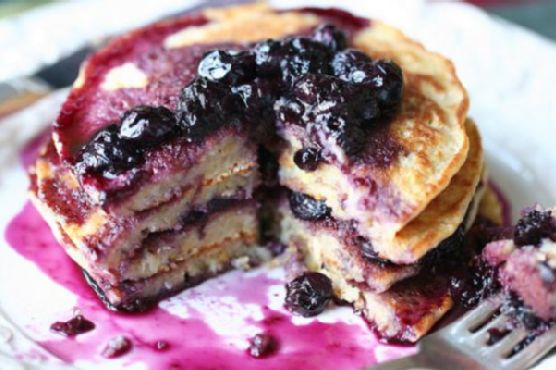
Picture this: it’s a lazy Sunday morning, and the sunlight is peeking through the kitchen window just enough to gently nudge me from my cozy corner on the couch. That’s when the craving hits—something vibrant and refreshing yet comforting to kickstart the day. Enter Lemon Scented Polenta Pancakes with Blueberry Thyme Syrup. This whimsical twist on the classic pancake is my answer to those mornings where you need a dish that feels special but isn’t a hassle to whip up. With the zing of lemon and the earthy sweetness of blueberry thyme syrup, this dish is an absolute keeper. It’s just fancy enough to impress anyone who stumbles into your kitchen but easy enough to make you wonder why you don’t do this every weekend.

Jump to Recipe

What You’ll Need

This recipe is one of those magical ones where you probably have most of the stuff lounging in your pantry, waiting to be turned into something fabulous. Here’s what you’ll need:

  • All-purpose flour
  • Baking powder
  • Fresh blueberries
  • Butter
  • Cornmeal
  • Egg
  • Fresh thyme
  • Honey
  • Lemon zest
  • Maple syrup
  • Milk
  • Salt
  • Vanilla extract
  • Water

How to Make Lemon Scented Polenta Pancakes with Blueberry Thyme Syrup

  1. Start by making the syrup. Combine the syrup ingredients: blueberries, maple syrup, and thyme sprigs in a small saucepan. Bring this mixture to a gentle boil. Once boiling, reduce the heat and let it simmer. The blueberries will soften and the thyme will infuse its earthy aroma. Remember to remove the thyme sprigs just before serving.
  2. For the pancakes, grab a medium saucepan and combine the cornmeal with cold water. Bring this to a boil, whisking constantly so it’s smooth and not lumpy. Reduce the heat and let it simmer until thickened, about 4 to 5 minutes. It should have the consistency of a thick porridge.
  3. In a small bowl, whisk together the milk, egg, honey, and a splash of vanilla extract. Add this to the thickened cornmeal, transforming it into a creamy polenta custard.
  4. In your largest mixing bowl, whisk together the all-purpose flour, baking powder, salt, and lemon zest. Make a well in the center of the dry ingredients and pour your polenta custard into the middle. Stir until everything is just combined; over-mixing is a no-go!
  5. Heat up a large griddle or non-stick pan and give it a good brush of butter. Ladle enough batter onto the griddle for 4-inch pancakes. If the batter seems too thick, a splash more milk will help it along.
  6. Cook the pancakes over moderate heat until bubbles form on the surface and the edges look a touch dry. This is your cue to flip them. Cook until the other side is beautifully golden and the pancakes have a little puff to them, about 2 minutes more.
  7. Transfer these golden beauties to warm plates and repeat with the remaining batter. Drench them in the warm blueberry syrup, and you’re set for a morning of deliciousness.

Cook’s Notes

Let’s talk about a few things to keep in mind as you embark on this pancake adventure. First, the syrup is the star—don’t skimp on the thyme unless you’re not a fan of its unique flavor! This syrup can be stored in an airtight container in the fridge for up to a week and reheated gently on the stove. As for the pancakes, if you’ve got leftovers (which is doubtful), they freeze well. Layer parchment paper between them and pop them in a zip-top bag for freezer storage. Defrost in the toaster on a low setting for a quick breakfast. Also, if you’re making these ahead of time, keep them warm in a low oven while you finish up the batch.

Make It Your Own

This recipe is wonderful as is, but who doesn’t love a little culinary improvisation? Here are a few ideas to make these pancakes truly yours:

  • Swap the blueberries for raspberries or blackberries if that’s what you have on hand or prefer.
  • Add a tablespoon of poppy seeds to the pancake batter for a delightful crunch that complements the lemon zest.
  • If you’re dairy-free, use almond milk and vegan butter without sacrificing any of the flavor.
  • For a nutty twist, replace half of the cornmeal with almond flour.

If you try this, I’d love to hear how it turns out—drop a comment or tag me! There’s nothing quite like seeing your creations and hearing how these pancakes brightened your day. Enjoy, my friends!

Related update: Lemon Scented Polenta Pancakes with Blueberry Thyme Syrup

Related update: Superbowl Chili

Related update: Baked Apple Pancake

Giants Trade-Downs: Maximizing Value | Analysis by Brian Moineau

Hook: A fork in the road at No. 5

When you type "NY Giants 2026 NFL Draft: Finding the perfect trade scenario at No. 5" into your brain (or a browser), the immediately tempting thought is: keep the pick and grab a blue-chip player. But sitting at No. 5 in a talent-rich — and oddly top-heavy — 2026 draft, the Giants have another tantalizing option: trade down, cash in on value, and still land a difference-maker. That possibility — and the specific trade-down scenarios bubbling up around the league — deserve more than a shrug. They deserve a plan.

Why trade down could make sense for the Giants

  • The class depth at the top reduces the drop-off between No. 5 and spots in the 8–16 range. Therefore, moving back a handful of spots may not cost New York a true franchise-altering player.
  • The Giants have roster holes beyond one high-end starter: offensive line depth, linebacker and safety help, and Day 2 picks to build long-term depth.
  • Smart front offices prize multiple high-upside assets over one premium player who might leave gaps elsewhere. Trading down can convert a single premium pick into two or three useful pieces.

Transitioning from theory to practice requires concrete packages. Below are a few plausible trade-down scenarios built from current chatter, historical trade charts, and realistic front-office thinking.

Trade scenarios for No. 5 that actually make sense

Scenario A — Move down a few spots and add a mid Day 2 pick

  • Proposal: Trade No. 5 to a team in the 8–11 range for that team’s first-rounder (late 1st), an early second, and a late third.
  • Why it fits: The Giants still select a top-15 player (likely one of the core targets) while picking up an additional Day 2 asset to address depth — maybe a guard or coverage linebacker.
  • Upside: Keeps access to premium talent while adding a pick that could turn into an immediate starter.
  • Risk: If the front office has a narrow list of targets who won’t be on the board late in Round 1, the Giants could lose their top choice.

Scenario B — Cash in for a haul and attack the roster aggressively

  • Proposal: Flip No. 5 for a late first, two seconds (one early), and a future mid-round pick.
  • Why it fits: This is classic roster construction — trade elite draft position for quantity and flexibility. New York acquires multiple shots at starters and can address the offensive line and secondary without gambling on a single player.
  • Upside: Restores missing Day 3 capital (Giants entered 2026 with roster and pick gaps) and lets GM Joe Schoen stockpile young controllable talent.
  • Risk: A team moving up must really want a specific player; if that player doesn’t pan out, the Giants will feel like they surrendered a potential star.

Scenario C — Short trade down to target a specific position

  • Proposal: Move from No. 5 to around No. 9–11, plus a little sweetener (a late-round pick or future asset) so New York can draft their preferred guard or defensive back while still getting top-tier value.
  • Why it fits: If the board breaks badly — e.g., two quarterbacks and a receiver go early — a targeted short slide preserves access to the Giants’ realistic best-fit players.
  • Upside: Minimizes draft-day gambling while still improving draft capital slightly.
  • Risk: The sweetener needs to be worth it; if the return’s light, the move looks unnecessary in hindsight.

How to evaluate a trade offer in real time

  • Project the board three picks deep: Will your top target still be available at the later slot? If yes, calculate value of the extra assets.
  • Consider roster elasticity: If the team can realistically replace talent through free agency or later picks, leaning into trades that add multiple picks is smart.
  • Weigh certainty vs. upside: One elite player has upside but concentrates risk. Multiple picks diversify that risk.
  • Listen to market signals: If several teams are calling about No. 5, that raises bargaining power. If calls are thin, the Giants must recalibrate expectations.

What the chatter around the league is saying

Reports indicate the Giants have been fielding offers and are open to moving the pick, with rival teams eyeing No. 5 to leap for a coveted prospect. Industry pieces and mock-draft conversations suggest teams from the late top-10 to the mid-first round could be interested in trading up, especially if an offensive tackle or premium offensive skill player is still available. That creates a realistic market for either a short slide or a larger swap for multiple Day 2 assets. (See Sources.)

The roster impact — short and long term

  • Short-term: Trading down can realistically deliver an immediate starter (guard, corner, or off-ball linebacker) plus depth that helps win within the next 12–18 months.
  • Long-term: Multiple picks give the Giants more lottery tickets that could develop into cornerstone players or be used later in trades for veteran help.
  • Salary-cap: Moving down reduces rookie salary costs at the top, freeing cap space earlier for free-agent moves or extensions.

Draft-day checklist for the Giants' front office

  • Have clear tiers for preferred players and identify which tiers are still acceptable at No. 9–16.
  • Set minimum acceptable compensation for moving back (e.g., at least one early second + late third).
  • Maintain contingency plans: if no trade offers meet the threshold, be ready to pull the trigger at No. 5.
  • Communicate with coaching staff about positional urgency — John Harbaugh’s style values versatile, tough players who fit scheme early.

What fans should watch for on draft night

  • Volume of calls on No. 5: More calls = more leverage.
  • Which positions are driving calls: If tackles and receivers are the focal point, that informs which teams might be willing to pay to move up.
  • How the market prices up: If another team pays generously to jump from the late teens to a top-10 spot, that sets a precedent for New York’s negotiations.

Final thoughts

Trading down from No. 5 isn’t an act of cowardice; it’s a decision in roster engineering. The right move turns scarcity into abundance: one premium pick becomes multiple shots at long-term value. For the Giants, who have clear spots to fill, a thoughtful trade — not a reflexive jump — could pay dividends for both the 2026 season and beyond. At the end of the night, the smartest choice will always be the one that balances immediate need with roster flexibility.

What to take away

  • The Giants can both stay competitive and improve depth by moving down a few spots.
  • Realistic trade packages will likely include a late first plus Day 2 picks.
  • Market conditions on draft night will determine whether the Giants should hold or deal.

Sources


Related update: We recently published an article that expands on this topic: read the latest post.

Vanilla Coconut Snowball Cupcakes | Made by Meaghan Moineau

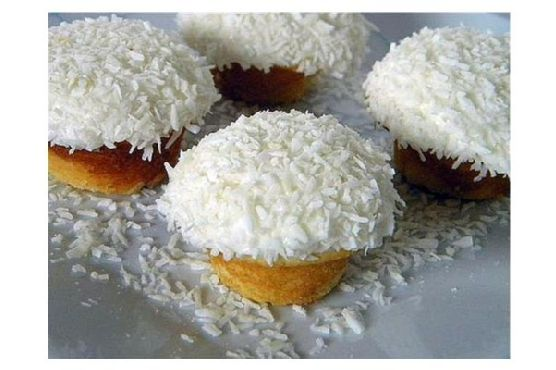
Last Tuesday, somewhere between the hustle of a long workday and the clamor of my kids’ animated dinner table debates, I felt that familiar urge to bake something comforting. It was the kind of chilly autumn evening that practically begs for a cozy, sweet treat — an edible hug, if you will. Enter these Vanilla Coconut Snowball Cupcakes. They’re the perfect blend of fluffy vanilla goodness and tropical coconut flair, transforming a regular weeknight into something a bit more special. The best part? They’re as easy as they are impressive, requiring only pantry staples and a little love. So, while I was elbow-deep in flour, and someone spilled milk all over the kitchen floor (of course), I realized these cupcakes were worth every bit of chaos. Jump to Recipe

What You’ll Need

Chances are, you’ve got most of these tucked away in your pantry or fridge already.

  • 1 1/2 cups **flour**
  • 1 1/2 teaspoons **baking powder**
  • 1/4 teaspoon **salt**
  • 1/2 cup **butter**, softened
  • 1 cup **sugar**
  • 1 teaspoon **vanilla extract**
  • 2 large **eggs**
  • 1/3 cup **regular milk**
  • 1/4 cup **sour cream**
  • 1 cup **unsweetened coconut flakes**
  • For the frosting:
    • 1/2 cup **butter**, softened
    • 1/4 cup **sour cream**
    • 1 teaspoon **vanilla**
    • 2-3 cups **confectioners’ sugar**
    • Additional **coconut flakes** for coating

How to Make Vanilla Coconut Snowball Cupcakes

  1. Preheat your oven to 350°F (175°C) and line a 12-cupcake pan with paper liners or grease it lightly if you’re all out of liners.
  2. In a small bowl, whisk together the flour, baking powder, and salt. Set this aside to get cozy with itself.
  3. In a large mixing bowl, beat the butter on medium-high speed until it’s creamy, about 2 minutes. This is where you’ll see magic starting to happen.
  4. Gradually add sugar to the butter, beating until the mix is light and fluffy — around 3 minutes. Don’t forget to scrape down the sides of the bowl midway.
  5. Beat in the vanilla extract, imagining the sweet fragrance wrapping around your senses.
  6. Add the eggs, one at a time, beating well between each addition. Your batter should now resemble a lovely, satiny mix.
  7. Alternately add the flour mixture and milk, starting and ending with the flour. Beat briefly after each addition just to combine.
  8. Stir in the sour cream and coconut, feeling the texture change as it all comes together.
  9. Fill the cupcake wells about 3/4 full. Pop them in the oven and let them bake for about 18 minutes or until a toothpick comes out clean.
  10. Transfer the pan to a wire rack for 5 minutes, then remove the cupcakes and let them cool completely on the rack.
  11. For the frosting, beat together the butter, sour cream, and vanilla until fluffy. Slowly add 2 cups of confectioners’ sugar, beating on low until combined. Increase speed and beat until light and fluffy, adding more sugar as needed.
  12. Fill a shallow bowl with coconut flakes. Frost each cooled cupcake and dip the tops into the coconut, pressing gently to adhere.

Cook’s Notes

Here are a few tidbits to keep in mind as you venture into cupcake bliss:

  • Room temperature ingredients are key for that perfect, smooth batter — so don’t skip this step.
  • The coconut flakes add a delightful texture and flavor, but if you’re not a fan, simply skip coating the tops. The cupcakes will still shine.
  • You can bake these a day ahead. Just keep them unfrosted and stored in an airtight container. Frost them before serving for that fresh, right-out-of-the-oven vibe.
  • Leftovers, if you have any, can be stored in the fridge for 3-4 days. Bring them to room temperature before indulging, as the flavors are best when not too cold.

Make It Your Own

  • **Nutty Twist:** Substitute the coconut flakes with toasted almonds or pecans for a delightful crunch.
  • **Chocolate Lovers’ Dream:** Swap out half the flour for cocoa powder, and add chocolate chips to the batter for a decadent treat.
  • **Lemon Coconut Delight:** Add the zest of one lemon to the batter and the frosting for a zingy, fresh take.
  • **Berry Bliss:** Gently fold in a handful of blueberries or raspberries into the batter for a burst of fruity goodness in every bite.

If you try these Vanilla Coconut Snowball Cupcakes, I’d love to hear how they turned out! Drop a comment below or tag me in your baking adventures. Happy baking, my friends! 🧁✨

Related update: Vanilla Coconut Snowball Cupcakes

Related update: Noodle Kugel with Pineapple-Gluten free, Dairy Free

Wisconsin Beer Cheese Soup | Made by Meaghan Moineau

It was one of those biting-cold Wisconsin evenings when the wind cut through my coat like a knife, and all my fingers could think about was curling around something warm. I stumbled into the kitchen, cheeks pink from the chill, and had that lightbulb moment: Wisconsin Beer Cheese Soup. It’s one of those recipes that feels like a cozy flannel blanket – indulgent, comforting, and just what you need when the weather’s not cooperating. It’s like a big, cheesy hug in a bowl, and the best part is that it comes together quickly with ingredients you probably already have lurking in your pantry or fridge. Plus, melting cheese into anything just seems to magically fix a bad day, don’t you think?

Jump to Recipe

What You’ll Need

Just a heads-up, this isn’t one of those shopping list monsters. You might already have a lot of these basics on hand, except for maybe the hero of the dish: a good Wisconsin beer.

  • 2 tablespoons butter
  • 1 medium onion, diced
  • 2 carrots, peeled and diced
  • 2 celery sticks, chopped
  • 2 cloves garlic, minced
  • 1/4 cup flour
  • 1 cup Wisconsin beer
  • 2 cups broth (chicken or vegetable)
  • 1 cup half & half
  • 2 cups shredded Wisconsin cheddar
  • 1 tablespoon mustard
  • 1 teaspoon worcestershire sauce
  • 1/2 teaspoon black pepper
  • 1/4 teaspoon red pepper flakes
  • Salt to taste

How to Make Wisconsin Beer Cheese Soup

  1. Start by melting the butter over medium heat. Once it’s all sizzly and lovely, toss in the onion, carrots, celery, and garlic. Cook everything for about 3-4 minutes until the veggies are soft and the kitchen smells like you’re winning at dinner.
  2. Sprinkle the flour over your veggie mix and stir until it disappears into the buttery goodness, absorbing all those delicious flavors.
  3. Pour in the beer and broth, scrapping up any bits sticking to the bottom of the pot, and bring it to a gentle boil. You’ll see some bubbles start to form at the edges – that’s your cue!
  4. Lower the heat to a simmer and stir in the half & half and the shredded cheddar. Let the cheese melt completely, stirring occasionally. This is where the magic happens, so don’t rush it.
  5. Add in the mustard, worcestershire sauce, black pepper, and red pepper flakes. Give it a good stir.
  6. Time to grab your immersion blender and blend the soup until it’s smooth and creamy. No immersion blender? No worries! Carefully blend in batches using a regular blender, but only fill it a third full each time to prevent a hot liquid disaster.
  7. Taste and add salt as needed. Pour yourself a big bowl, sit back, and enjoy the creamy, cheesy glory.

Cook’s Notes

When it comes to soup, patience is key. Letting the cheese melt slowly into the broth ensures a velvety texture. If you rush this part, you might end up with a grainy soup, and nobody wants that. As for storage, this soup keeps well in the fridge for about 3 days. Just give it a good stir when you reheat it since the cheese and liquid might separate a bit. Unfortunately, this one’s not a great candidate for freezing; the texture changes too much after thawing. If you’re planning ahead, you can chop the veggies a day early and store them in the fridge to make your cooking super speedy.

Make It Your Own

  • Swap the beer: If you’re not a beer person, a hard cider can add an interesting twist with a sweet undertone.
  • Make it meatier: Stir in some cooked, crumbled bacon for added smokiness and texture.
  • Vegetarian version: Use vegetable broth instead of chicken broth and skip the worcestershire sauce or use a veggie-friendly alternative.
  • Spice it up: Add a finely chopped jalapeño with the veggies for an extra kick.

If you try this, I’d love to hear how it turns out — drop a comment or tag me! Cooking is all about sharing, after all. Can’t wait to see your delicious creations!

Related update: Wisconsin Beer Cheese Soup

Related update: Tomato and lentil soup

Blaydes’ Costly Toll After UFC 327 War | Analysis by Brian Moineau

The price of an instant classic: Curtis Blaydes didn’t walk away unscathed after his Fight of the Night against Josh Hokit at UFC 327

The first thing people will remember from UFC 327 is the kind of heavyweight war that makes you forget about rankings for a night. Curtis Blaydes didn’t walk away unscathed after his Fight of the Night against Josh Hokit at UFC 327, and the damage tells a story as wild as the three rounds themselves. What began as a pulse-raising, back-and-forth slugfest ended with both men bleeding, battered—and, crucially, with Blaydes carrying facial fractures that underline just how thin the margin is between glory and physical cost in elite MMA.

This was more than a loss on Blaydes’ record; it was a visceral reminder that fights deemed “instant classics” often come with a real medical bill.

Why the fight mattered

Blaydes entered the cage as a seasoned top-five heavyweight whose resume includes title-chasing runs and marquee matchups. Josh Hokit arrived as an unbeaten, hungry prospect whose pressure and volume had already made waves. The narrative—veteran vs. rising star—played out exactly as promoters dream it will: striking exchanges that tested chin, cardio and composure.

But the stakes weren’t just about career trajectories. For fans and pundits, this bout owed a stylistic thrill: Hokit’s non-stop output versus Blaydes’ mix of wrestling and heavy hands. For the fighters, it was a chance to shift momentum in a division that constantly seeks new challengers.

Curtis Blaydes didn’t walk away unscathed after his Fight of the Night against Josh Hokit at UFC 327

In the immediate aftermath, headlines focused on the fight’s quality—and rightly so. Yet the next development was medical: Blaydes sustained a fractured orbital and a fractured nose during the bout, according to his management. Those injuries help explain the swelling and the battered look he carried into the locker room, and they raise questions about recovery timelines and how this fight will shape his next steps in the heavyweight picture. (mmafighting.com)

  • A fractured orbital can affect vision temporarily and requires careful management to avoid long-term problems.
  • A broken nose, while common in combat sports, still forces altered breathing patterns and often surgery if the deviation impedes function.
  • Both injuries together mean Blaydes will need time—and smart medical care—before even considering a return.

The anatomy of a brutal three rounds

Transitioning from the headlines to the cage: the bout was a chess match with hammers. Hokit’s pressure and combinations found seams, while Blaydes’ power and wrestling threatened to change the tone whenever the fight hit the fence. The third round showcased why both earned Fight of the Night honors: each man traded lead changes, momentum swings and sustained violence that kept everyone guessing.

Fights like this take their toll in two ways: immediate traumatic injury and the cumulative wear that follows. For Blaydes, the visible facial fractures are the acute consequence. For both fighters, the head trauma and exhaustion linger beyond the final horn and must factor into how their camps plan recovery and (when appropriate) return.

What this means for Blaydes’ career

Short-term, expect Blaydes to pause and focus on recovery—and that’s not negotiable. Operations or reconstructive input may be required depending on the final medical assessments. That influences timing for any comeback and could push him out of contention windows when matchmakers are aligning title paths.

Long-term, however, a rugged performance—even in a loss—can revitalize a fighter’s narrative. Blaydes showed durability, heart and an ability to engage in high-level exchanges. That matters in a division where reputation and marketability intersect with rankings. A head-turning loss sometimes yields more opportunities than a quiet win.

The division beyond the damage

Meanwhile, Hokit’s win gives the heavyweight division a fresh story arc. Beating Blaydes in such a memorable way stakes Hokit’s claim as more than a prospect; it proposes him as a legitimate piece in matchmaking conversations. For fans, this is healthy: the heavyweight class has been searching for consistent, watchable contenders beyond the usual suspects.

That said, the division’s landscape is fragile, and injuries—like Blaydes’—reshape match possibilities overnight. Promoters must juggle momentum, athlete safety and the business of compelling matchups. Expect UFC scheduling to be cautious with Blaydes until medical clearance appears.

Lessons from the spill of blood and glory

  • High-risk, high-reward fights generate headlines and bonuses—but they also generate downtime.
  • Fighters and teams must prioritize long-term health over short-term routing. The public wins from the spectacle don’t justify rushed comebacks.
  • For the casual fan, a great fight is entertaining; for practitioners, it’s a case study in balancing aggression with preservation.

What to watch next

Transitioning forward, keep an eye on several markers:

  • Official medical updates from Blaydes’ camp about surgery or recovery timelines.
  • Matchmaking signals: whether the UFC markets Blaydes toward a quick bounce-back or places him on a longer shelf.
  • Hokit’s next opponent—how quickly the promotion capitalizes on his momentum will shape the division’s narrative.

Final thoughts

There’s a romantic streak in combat sports that glorifies wars. We celebrate fighters who leave everything in the cage, and rightfully so. But nights like UFC 327 also expose the ledger—raw injuries and recovery ahead. Curtis Blaydes’ fractured orbital and nose are a sobering footnote to what was otherwise an electrifying Fight of the Night. The bout will be rewatched for its intensity; it should also be remembered as a prompt to respect the recovery that follows even the most memorable victories and defeats.

The heavyweight division just got a new chapter. It’s a gritty one—marked by blood, bravery and the slow, patient work of healing.

Sources


Related update: We recently published an article that expands on this topic: read the latest post.


Related update: We recently published an article that expands on this topic: read the latest post.