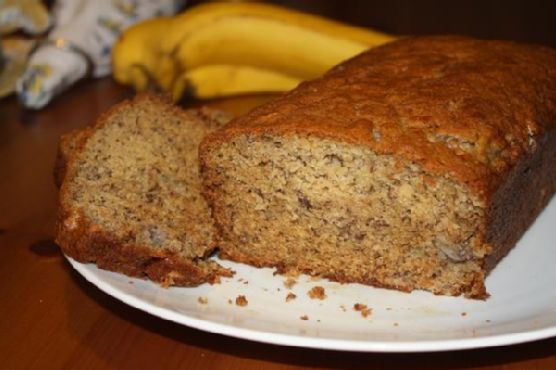
There’s something about the smell of banana bread baking that just instantly transports you to a place of comfort. It was a dreary Tuesday evening, and I was staring at a trio of overripe bananas languishing in my fruit bowl, a scene I suspect is familiar to many. These bananas had been begging to be transformed into something magical, and I knew just the recipe to do it. This traditional banana bread is like a warm hug in edible form—simple, reliable, and incredibly satisfying. Whether you’re trying to impress a last-minute guest or just want to make the most of those spotty bananas, this is the recipe you need. Plus, it’s almost guaranteed you have everything you need already in your pantry.
Jump to Recipe
What You’ll Need
Chances are you already have most of this sitting around your kitchen. We’re keeping it classic and straightforward, letting those bananas truly shine.
- Granulated sugar
- Unsalted butter, softened
- 2 large eggs
- 3 ripe bananas
- 2 tablespoons milk
- 1 teaspoon ground cinnamon
- 2 cups flour
- 1 teaspoon baking powder
- 1/2 teaspoon baking soda
- 1/2 teaspoon salt
How to Make Traditional Banana Bread
- Preheat your oven to 325 degrees F, and butter a 9x5x3-inch loaf pan. This is where your banana bread will take shape, so make sure it’s nicely coated to prevent sticking.
- Cream the sugar and butter in a large mixing bowl. You’re looking for a fluffy texture that feels as light as a cloud.
- Crack the eggs into the sugar mixture, one by one, beating well after each addition. This helps incorporate air, making your bread rise beautifully.
- In a small bowl, mash the bananas with a fork until they’re smooth but with a few small chunks remaining. Stir in the milk and cinnamon, giving your mixture that first hint of the aroma to come.
- In another medium-sized bowl, mix together the flour, baking powder, baking soda, and salt. It’s like setting the stage for a perfect bake.
- Fold the banana mixture into the butter mixture, stirring just until they’re happily combined.
- Add the dry ingredients to the banana mixture, stirring everything just until no flour pockets remain. Be careful not to overmix; we want tender, not tough.
- Pour the luscious batter into the prepared loaf pan. Level it out and pop it into the oven.
- Bake for about 1 hour, or until a toothpick inserted into the center comes out clean. The top should be golden and your kitchen will smell absolutely divine.
- Allow the bread to cool on a rack for at least 15 minutes before slicing. The waiting is hard, but worth it to avoid a crumbly mess when slicing.
Cook’s Notes
Banana bread is pretty forgiving, but a few pointers can make all the difference. Make sure your bananas are really ripe—almost too ripe to eat. They should be speckled brown and slightly mushy. This recipe works best with unsalted butter, but if all you have is salted, just reduce the salt a touch. If you’re baking ahead, this bread keeps well wrapped in foil or an airtight container for up to three days. You can also freeze slices individually for up to a month; just warm them in the oven before serving for that fresh-baked goodness.
Make It Your Own
Here are a few variations to consider if you’re feeling adventurous or just want to use up what you have:
- Swap the granulated sugar for brown sugar for a deeper, richer flavor.
- Fold in a handful of chocolate chips or chopped nuts right before baking for added texture and flavor.
- Add a teaspoon of vanilla extract when you add the eggs for a subtle twist that enhances the banana flavor.
- Replace the milk with Greek yogurt for a tangy touch and an extra moist crumb.
If you try this, I’d love to hear how it turns out—drop a comment or tag me! Whether you’re a seasoned baker or a newbie, this banana bread is sure to bring a bit of joy to your day. Happy baking!
Related update: Traditional Banana Bread
Related update: Coconut Macaroons With Chocolate Drizzle
Related update: Cheddar Chile Beer Bread

TL;DR
- The Atlanta Hawks’ Summer League OT loss to the Utah Jazz in Salt Lake City featured highlights, but the substance was Kingston Flemings’ decision-making: 9 assists, 1 turnover, and 4 steals despite 4-for-16 shooting. [3]
- Utah’s No. 2 pick Darryn Peterson scored 28 in his debut at the Huntsman Center on July 4, 2026, yet Atlanta still manufactured a late lead while shooting 38.7% from the field. That hints Flemings’ playmaking already functions as pro scaffolding. [2][3][4]
- With the NBA testing one–free-throw mechanics for most of regulation and a two-minute OT, processing speed beats polish in July; Flemings’ 9:1 assist-to-turnover line is the real Hawks takeaway. [5][6][3]
What the source said
Peachtree Hoops recapped Atlanta’s July 4, 2026 opener against Utah at the Huntsman Center in Salt Lake City: a choppy first half with 19 combined turnovers, a third-quarter burst from No. 8 pick Kingston Flemings, and a frantic finish that reached a two-minute OT. The piece spotlights Darryn Peterson’s immediate 28-point impact for the Jazz, Asa Newell’s flashes for Atlanta, and Flemings’ late-game sequence—a steal and a corner jumper ruled a three, then changed to a two on review. The Hawks briefly led in the final minute before falling by one in overtime, with first-look contributions from Zuby Ejiofor and Henri Veesaar also noted. [1]
Why it matters
For evaluators like GM Landry Fields and Quin Snyder’s staff, Summer League offers early signals on what scales to NBA spacing and tempo. A 14–9–4 line with one turnover in 27:49 from Flemings points to a guard whose floor is supported by reads, not makes, which stabilizes minutes around Trae Young whether Flemings starts or organizes the second unit. [3]
For the league office, the July lab matters too. With the one–free-throw experiment and a two-minute OT compressing cadence, prospects who process faster win more possessions under pressure. That favors an undersized creator like Flemings in 2026, because anticipation, timing, and clean deliveries travel even when jumpers vary. [5][6]
Original analysis
Atlanta Hawks Summer League overtime loss: signal vs. noise
The official box shows Utah 103, Atlanta 102 in OT on July 4, 2026 at the Huntsman Center, not 102–101 as some early recaps had it. That single point reframes the debut: Flemings didn’t “shine” because he scored; he drove half-court offense, created four steals, and nearly flipped the result in a compressed, experimental environment. [3][2]
-
Back-of-the-envelope calculation 1: points created
- Flemings scored 14 and logged 9 assists. If we baseline each assist at 2 points, that’s 18 assisted points: 14 + 18 = 32. RealGM lists 13 Atlanta threes; if three of his dimes produced threes, a mixed estimate lands around 35: 14 + (6×2) + (3×3) = 35. That’s roughly one-third of Atlanta’s 102 points touched. [3]
- Signal: He produced ~35 points while committing 1 turnover, which is scalable usage under NBA pace. [3]
-
Back-of-the-envelope calculation 2: distribution density
- Per-36 assists: 9 in 27.82 minutes → 9 × (36/27.82) ≈ 11.6.
- Assist-to-turnover: 9:1 = 9.0.
- Under one–free-throw timing and a two-minute OT, mistake tolerance shrinks; a 9:1 line outweighs 4-for-16 shooting noise in this rules set. [3][5][6]
-
Historical analogue (2018): the Trae Young Summer League panic
- Young opened Summer League 4-for-20 (1-for-11 from three) in 2018, then stabilized days later with volume and feel intact. The lesson: July accuracy lies; processing scales. Flemings’ 2026 debut fits that template for Atlanta. [7]
-
A 2×2 typology: Summer League skill signals
- Translatable + Immediate: On-ball reads, two-man timing, advantage creation. Flemings logged 9 AST, 1 TOV, and 4 STL with clean PnR deliveries to Zuby Ejiofor. [1][3]
- Translatable + Delayed: Paint finishing vs. NBA length. Flemings went 4–16, but his passing forces help that should open layups by December 2026. [3]
- Context-Dependent + Immediate: Heat-check shooting spurts that swing quarters without predicting NBA stability; Asa Newell hit timely shots and ran lanes in space. [1]
- Context-Dependent + Delayed: Wing flashes without star gravity; Henri Veesaar pick-and-pop touches matter less until surrounded by NBA creators. [1]
Consensus after night one says Peterson owned the headline with 28, and Atlanta’s No. 8 pick needs his jumper to fall. The contrarian read: the Hawks already learned the only July lesson that matters about a small creator—Flemings can win possessions with his brain, which scales next to veterans who catch, cut, and space. [2][3][4]
Two tactical notes from this game with forward value:
-
The Flemings–Ejiofor pick-and-roll worked on first contact. That’s a preseason-ready “bench stabilizer” action: empty-corner PnR, short-roll to Ejiofor, spray to a weakside shooter like Asa Newell lifting from the slot. You’re banking on reads, not hero shots. [1][3]
-
Flemings’ four steals show anticipation and gap timing, not random bounces. In a two-minute OT where one possession flips the outcome, that anticipation is currency for a rookie guard. [3][5]
Rules context matters in 2026. Summer League’s one–free-throw rule (worth two or three points) applies until the last two minutes of the fourth, with standard free throws in those final two minutes and in all of OT; OT is two minutes. That compression raises the premium on early-clock reads over late-clock isolations, which aligns with Flemings’ strengths. [6][5]
What others are missing
Most coverage celebrates Peterson’s 28 and the final-minute drama. The neglected angle is how the one–free-throw framework and two-minute OT reshuffle evaluation toward possession-winning micro-skills: screen manipulation, pre-rotation reads, and events like steals or deflections that flip expected value. Flemings posted a 9:1 assist-to-turnover line and 4 steals in 27:49 under those constraints, matching the “travels on command” profile front offices seek in a complementary guard. [3][6][5]
What to watch next
- By July 7, 2026, Flemings finishes the Salt Lake City slate with an assist-to-turnover ratio of at least 3.5 across all SLC games. [2]
- By July 19, 2026 (Las Vegas Summer League window), Flemings records at least one game with 3 or more made threes as defenses go under more ball screens. [8]
- By July 19, 2026, Peterson posts a 30-plus-point Summer League outing as Utah expands his on-ball usage after a 28-point debut. [2][4][8]
My take
I’m buying Atlanta’s takeaway and fading the misses. If I’m the Hawks in 2026, I lock Flemings into second-unit organizer minutes on Opening Night and give him real PnR reps with a hands-y roller like Ejiofor. The jumper can lag; the reads can’t. A 4-for-16 debut stapled to 9 dimes, 4 steals, and late-clock poise under the one–free-throw rules screams “keep him on the ball in Vegas, surround him with shooters, and let volume normalize percentage.” The Hawks didn’t lose a prospect on July 4—they found his identity. [3][6][5]
Sources
- Flemings shines in overtime loss as Hawks lose 102-101 in Summer League debut — Peachtree Hoops (https://www.peachtreehoops.com/atlanta-hawks-summer-league/72161/flemings-kingston-atlanta-hawks-summer-league-debut-final-utah-jazz-darryn-peterson) — Possession notes from Atlanta’s opener, including Flemings’ late steal and the reviewed corner jumper.
- 2026 Salt Lake City Summer League: Peterson leads Jazz over Hawks — NBA.com (https://www.nba.com/news/2026-salt-lake-city-summer-league-hawks-jazz) — Official recap with final score (103–102 OT), venue, and key stat lines.
- Jul 4, 2026 — Atlanta Hawks 102 at Utah Jazz 103 (Box Score) — RealGM (https://basketball.realgm.com/nba/boxscore/2026-07-04/Atlanta-at-Utah/524604) — Box score: Flemings 14-9-4 in 27:49 with 1 TOV; team shooting splits and OT scoring.
- Utah Jazz rookie Darryn Peterson shines in Summer League debut, scores 28 points — The Salt Lake Tribune (https://www.sltrib.com/sports/jazz/2026/07/04/utah-jazz-rookie-darryn-peterson/) — Local confirmation of Peterson’s 28 and shot profile detail.
- NBA 2K26 Summer League Format Summary & Playing Rules — NBA.com (https://www.nba.com/news/2025-summer-league-format) — Confirms two-minute initial OT and Summer League-specific mechanics.
- NBA Summer League to use ‘1 free throw’ rule, “connected basketball” — NBA.com (https://www.nba.com/news/nba-summer-league-free-throw-connected-basketball) — Details when the one–free-throw experiment applies and when it reverts to standard.
- Hawks’ Trae Young: Struggles in Summer League debut — CBS Sports (https://www.cbssports.com/fantasy/basketball/news/hawks-trae-young-struggles-in-summer-league-debut/) — 2018 analogue: Young’s 4-for-20 opener and why early July accuracy misleads.
- NBA unveils 2026 NBA Summer League Schedule — NBA.com (https://www.nba.com/news/2026-nba-summer-league-schedule) — Las Vegas dates (July 9–19, 2026) to anchor prediction windows.
Related update: We recently published an article that expands on this topic: read the latest post.
Related update: We recently published an article that expands on this topic: read the latest post.
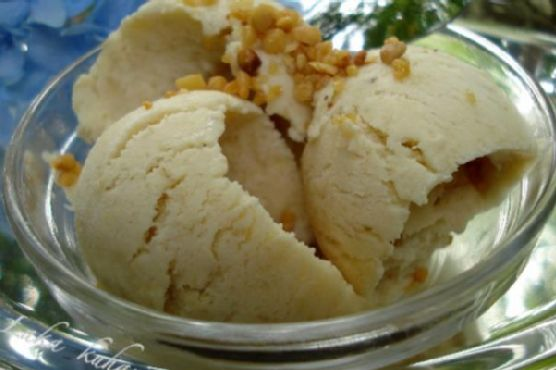
It was one of those evenings when nothing seemed to go right. I had just returned from a long day at work, craving something sweet and indulgent. With a sneaky glance at my fruit basket, I realized I had a bunch of slightly overripe bananas begging to be used. That was my eureka moment: Banana in brown sugar ice cream. It’s one of those recipes that sounds super fancy but is actually a delightful twist on your average ice cream. Plus, it’s a fantastic way to transform humble bananas into a rich, creamy treat that’s perfect for any occasion. This recipe strikes the perfect balance between indulgent and comforting, and it’s seriously worth a try.
Jump to Recipe
What You’ll Need
Trust me, you won’t need a shopping cart full of ingredients for this one. Chances are you already have most of these on hand:
- Bananas – The riper, the better!
- Light brown sugar
- Sour full-fat cream or coconut milk for a lighter twist
- Dark rum
- Vanilla extract
- Lemon juice
- A pinch of sea salt
How to Make Banana in brown sugar ice cream
- In a wide skillet or saucepan, heat the light brown sugar with one-quarter of the sour cream. Stir it gently until the mixture becomes smooth and bubbly, filling your kitchen with a caramel-like aroma.
- Add the bananas and a pinch of sea salt. Let them cook for about 5 minutes, stirring occasionally. You’re looking for soft, completely cooked-through bananas with a golden touch.
- Once the bananas are done, remove the skillet from heat and stir in the remaining sour cream, dark rum, and vanilla extract. Give it a taste, and if it’s a tad too sweet, a few drops of lemon juice will brighten it up.
- Pour everything into a blender or food processor, and puree until the mixture is utterly smooth.
- Chill it thoroughly for at least an hour, or if patience is a virtue you possess, let it sit overnight.
- When you’re ready, pour the chilled mixture into your ice cream maker and follow the manufacturer’s instructions. The anticipation is worth it!
- Before serving, let the ice cream sit out for 5-10 minutes, or longer if needed, to reach that perfect scooping consistency.
Cook’s Notes
Making this ice cream is a breeze, but here are a few tips to ensure it turns out perfectly:
- If you choose sour cream, the mixture might curdle a bit while cooking. Don’t panic! It will all smooth out when blended.
- This treat is best served in chilled glass or porcelain bowls to keep it from melting too quickly.
- For effortless scooping, soak your ice cream spoon in boiling water, then dry it before using.
- Store any leftovers (if there are any!) in an airtight container in the freezer. It’ll stay delicious for a week or two, though I doubt it will last that long.
Make It Your Own
Here are a few ideas to tweak this dessert to suit your fancy:
- Swap the dark rum for bourbon for a slightly different boozy kick.
- Add a handful of toasted pecans or walnuts after churning for a nutty crunch.
- For a chocolatey twist, toss in some chocolate chips or a swirl of chocolate syrup during the final mixing.
- Not a fan of bananas? Substitute with ripe peaches or mangoes for a tropical spin.
If you try this, I’d love to hear how it turns out — drop a comment or tag me! Let’s share the ice cream joy because we all need a little sweetness in our lives.
Related update: Banana in brown sugar ice cream
Related update: Traditional Banana Bread
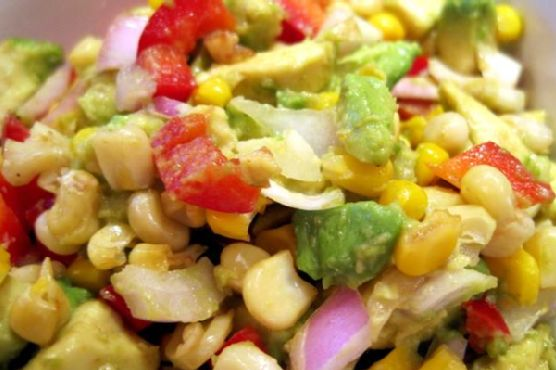
Picture this: It’s a balmy Tuesday evening, and after a long day at work, all you want is something fresh, quick, and a little fun to brighten up your dinner table. You’re standing in the kitchen, barefoot, with the warm breeze tickling your curtains, and that’s when you remember the bag of frozen corn tucked away in the freezer. And oh, the avocado sitting prettily on the counter, just begging to be used! That’s when the idea hits: Corn Avocado Salsa. It’s a dish that’s as vibrant as it is simple, packed with the kind of zesty flavors that say, “Hey, let’s pretend it’s summer all year round.” Plus, it’s the type of recipe that lets you feel like a pro without requiring a culinary degree. Let’s dive in!
Jump to Recipe
What You’ll Need
Here’s the beauty of this dish: It’s made with ingredients you likely already have. It’s about taking the humble and making it shine, and let’s be honest, who doesn’t love a recipe that doesn’t call for a grocery store run?
- Avocado
- Balsamic vinegar
- Cumin
- Canned frozen corn
- Garlic
- Red bell pepper
How to Make Corn Avocado Salsa
- Preheat your oven to 375 degrees. The perfect temperature to get that corn just right—golden and slightly crisp, without venturing into burnt territory.
- Spread the frozen corn flat on a baking sheet. Give it a light spritz of olive oil spray to help it roast up nicely.
- Roast the corn in the oven for about 8-10 minutes. Keep an eye on it; you’re looking for a nice golden hue, not the blackened crunch of forgotten popcorn.
- Once roasted, remove the corn from the heat and let it cool. It’s essential to let the corn relax a bit before mixing, or it’ll cook the avocado, turning your salsa into a mushy mess.
- While the corn is cooling, finely chop the red bell pepper and garlic. Mix these in a bowl, letting their flavors begin their tango.
- Peel and coarsely chop the avocado. Add this beauty to your bowl along with the cooled corn. Try not to mash it; we want chunks, not guac.
- Finally, sprinkle in cumin and drizzle in the balsamic vinegar. Blend well, but gently. You’re aiming for harmony in the bowl, not chaos.
Cook’s Notes
Let’s keep it real: Salsas are wonderfully forgiving, but there are still a few things to keep in mind. First off, make sure to give the corn enough time to cool—otherwise, your avocado may start to look more like a green smoothie. If you want to prep ahead, you can roast the corn and chop the veggies a day in advance. Just keep the avocado out until you’re ready to serve to maintain its gorgeous green color. Leftovers might be rare, but if you do have them, the salsa holds up okay for a day or two in the fridge. Just give it a good stir before serving.
Make It Your Own
Here are a few variations to keep your salsa adventures fresh:
- Swap the red bell pepper for a jalapeño if you like a bit of heat. Just remember to deseed unless you’re feeling particularly daring.
- Try adding some black beans for a heartier version. It makes for a great taco filler.
- Throw in some chopped cilantro for an extra burst of freshness. It’s like a little green party in your mouth.
- If you’re a citrus fan, squeeze in a bit of lime juice for a zesty twist. It pairs beautifully with the avocado.
If you try this, I’d love to hear how it turns out—drop a comment or tag me! Nothing makes my day more than seeing your creations and hearing your thoughts. Happy cooking, friends!
Related update: Corn Avocado Salsa
Related update: Egyptain Cauliflower Side Salad