Paul Skenes: Proudly Wearing USA Colors | Analysis by Brian Moineau

When Paul Skenes Says “I’m Never Saying No,” It’s Not Just Baseball — It’s a Statement

If you thought Team USA’s hockey gold stirred the pot, wait until the World Baseball Classic arrives and Paul Skenes takes the hill. The Pirates’ young ace didn’t offer a tepid, neutral soundbite when asked about representing the United States — he gave the kind of full-throated yes that turns a sports story into something bigger: identity, pride, and the culture wars that keep showing up in sports coverage.

Skenes’ line — effectively, “If I ever get the chance to do this, I’m never saying no” — is simple, direct, and unglamorous. But in 2026, when the World Baseball Classic puts country jerseys back under the spotlight, simple things can become cultural Rorschach tests. OutKick’s take (loud, partisan, and gleefully provocative) frames that answer as fuel for the right’s narrative that “lefty sports media” will be outraged. Other outlets treat it as what it most likely is: a top player eager to compete for his country.

Below I run through the context, why the reaction matters beyond headlines, and what this moment says about sport, fans, and media.

The set-up: Skenes, Team USA, and the WBC stage

  • Paul Skenes is among the game’s brightest young pitchers — a former Air Force Academy cadet turned LSU national champion, No. 1 overall pick, and immediate frontline starter in MLB.
  • Team USA for the 2026 World Baseball Classic has been building star power: Aaron Judge as captain, high-profile pitchers (including Skenes), and a roster meant to fix the pitching shortfalls that dogged the 2023 squad.
  • The WBC is different than the regular season: short tournaments, national jerseys, and emotions that bring out patriotism and critique in equal measure. Players say it feels like playoff baseball; fans and media often treat it like geopolitics in cleats.

(Sources: MLB, CBS, Fox Sports.) (mlb.com)

Why a straightforward “I’ll always say yes” matters right now

  • It underscores a rare thing in modern pro sports: player enthusiasm for international competition. That alone helps legitimize the WBC’s prestige.
  • It invites interpretation. In today’s polarized media ecosystem, a short quote becomes raw material. Outlets on the right will frame it as patriotic defiance; critics will scrutinize the broader symbolism (which players wear the star, what national representation means, etc.).
  • Skenes’ background — Air Force Academy, collegiate national team experience — makes his answer resonate differently than if it came from a player without military ties or prior Team USA history. That personal history amplifies the authenticity people read into his words. (mlb.com)

What we’re likely to see in coverage — and why it matters

  • Polarized headlines: Expect the extremes. Some pieces will paint Skenes as emblematic of unapologetic national pride; others will analyze how the WBC interacts with social and political narratives. OutKick’s headline is an example of the first approach — combative and performative. (outkick.com)
  • Sports-as-culture coverage: The WBC will be less about batting averages for many readers and more about what the event means culturally — unity, protest, representation, or division. That’s not new, but tournaments focused on national teams concentrate those conversations.
  • Player reactions will matter more than ever: If Skenes and other high-profile athletes lean into patriotism-themed messaging, the storylines will feed themselves; if they avoid politics and focus on competition, the coverage may pivot back to tactics and rosters.

What this says about fans and the media ecosystem

  • Fans want narratives. A player who pledges to “never say no” gives them a clean, emotional story to latch onto. National-team competition sells easily because it taps into identity.
  • Media incentives push toward extremes. Outlets that traffic in outrage or confirmation bias will squeeze a soundbite for clicks. Balanced outlets will contextualize Skenes’ quote with his history and the WBC’s competitive stakes. Both approaches coexist — and both shape public perception.
  • The athlete’s control is limited. Skenes can make a heartfelt statement; how it’s amplified is up to dozens of editors, columnists, podcasters, and social-media users. That’s the modern cost (and reach) of five words on a microphone.

Notes on the bigger baseball picture

  • Team USA’s pitching concerns from 2023 were real; adding Skenes addresses that on-paper weakness and raises expectations that the U.S. can contend for gold again. (cbssports.com)
  • The WBC’s March schedule and host cities (including pool play sites) mean the spotlight will be intense and geographically diverse — big markets, international stages, and the chance for narrative-heavy games (e.g., the U.S. versus Japan rematch potential). (mlb.com)

Notes for readers skimming headlines

  • OutKick’s piece uses partisan framing and rhetorical provocation to stoke reaction; other outlets (MLB.com, CBS, Fox Sports) focus more on Skenes’ enthusiasm and the team-building aspect. Read both types of coverage to separate spin from context. (outkick.com)

A few takeaways worth bookmarking

  • The simplest athlete quotes can become cultural flashpoints in today’s media climate.
  • Paul Skenes’ commitment to Team USA is both a purely sporting plus (better rotation) and a flashpoint for national narratives.
  • Expect WBC coverage to mix game analysis with broader cultural framing — sometimes in the same headline.
  • If you prefer calmer coverage, prioritize direct interviews and league reporting over partisan commentary.

My take

I think Skenes’ answer is exactly what most athletes mean when they talk about representing their country: pride, competitiveness, and a rare chance to wear a different uniform. The rest — outrage, triumphalism, hot takes — is a noisy overlay that tells us as much about the media and fans as it does about the player.

If you want hard baseball reasons to care, Skenes’ presence materially strengthens Team USA’s rotation. If you want cultural reasons, his background and the current media moment guarantee the conversation will be louder than the quote. Both are true, and both are interesting.

Sources


Related update: We recently published an article that expands on this topic: read the latest post.

Related update: We recently published an article that expands on this topic: read the latest post.
Wilbur Wood: White Sox Ironman Legacy | Analysis by Brian Moineau

Wilbur Wood, the White Sox Workhorse, Has Passed Away at 84

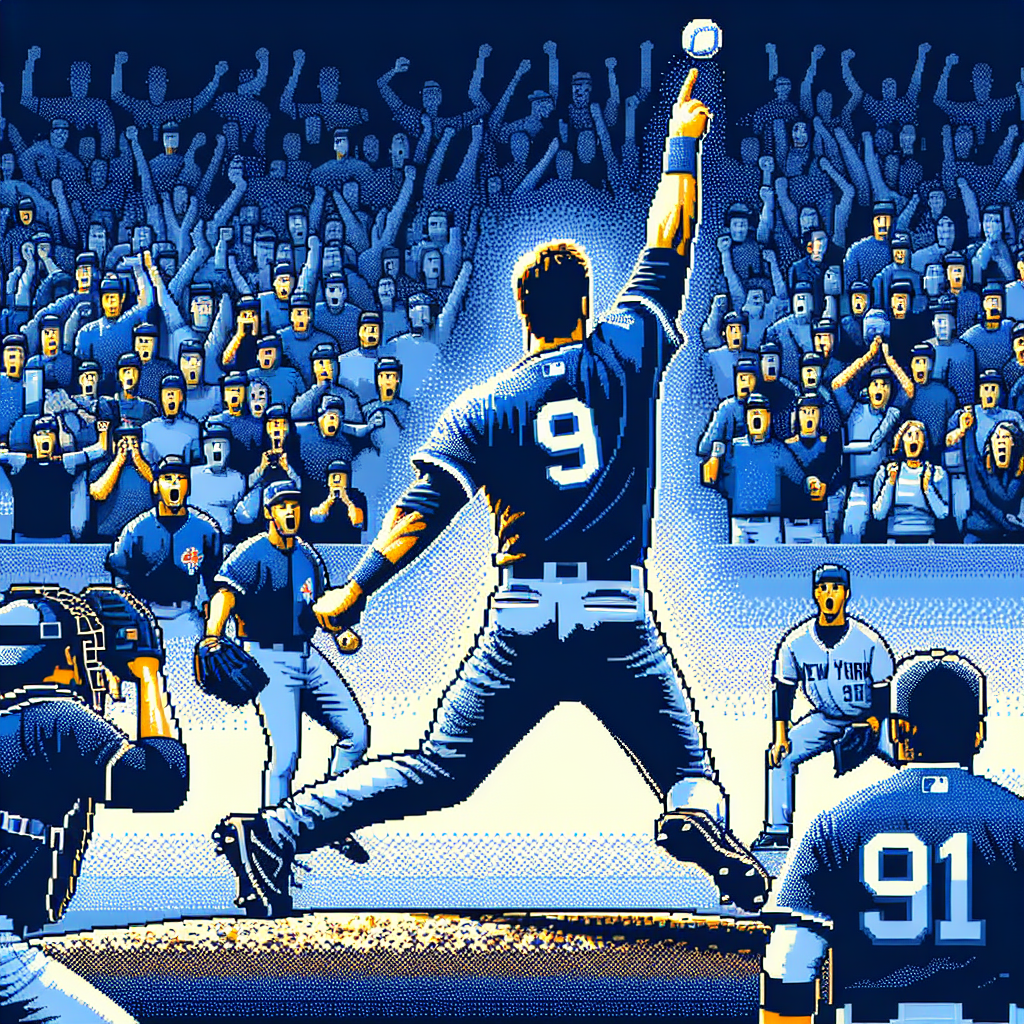
An image of a worn baseball glove and a well-traveled pitcher’s mound feels right when you think of Wilbur Wood. He wasn’t flashy. He didn’t light up radar guns. What he did was simpler — and rarer: he showed up, year after year, inning after inning, wielding a knuckleball that befuddled hitters and preserved his team’s rotation in an era when starters were expected to finish what they began. Wood died on January 17, 2026, at age 84, leaving behind a legacy built on durability, craft, and an almost old‑world approach to pitching.

Why his story matters

  • Wood belongs to a line of pitchers who redefined how teams used innings. In the early 1970s he was not merely effective — he was essential.
  • He is one of the last true ironmen in the Live Ball Era: four seasons of 300+ innings and a 1972 campaign (376 2/3 innings and 49 starts) that is largely unthinkable in modern baseball.
  • His transformation from a marginal reliever to a frontline starter after committing to the knuckleball (mentored by Hoyt Wilhelm) is a neat, human story about adaptation and mentorship in sports.

A quick look back at the career

  • Began major-league life with the Boston Red Sox (debut at age 19 in 1961), had a brief stop with the Pittsburgh Pirates, then found a home in Chicago from 1967–1978.
  • After learning the knuckleball more seriously (with guidance from Hoyt Wilhelm), Wood shifted from mop-up reliever to workhorse starter.
  • Peak years were 1971–1974: multiple 20-win seasons, three All‑Star nods, and top finishes in Cy Young voting.
  • Career totals include 164 wins, a 3.24 ERA, 2,684 innings pitched, and a reputation for completing games and eating innings few today would dare attempt.

What made Wilbur Wood special

  • Durability: Four seasons with 300 or more innings (1971–1974) during which he routinely started on short rest and completed games that modern starters rarely attempt.
  • The knuckleball: Wood converted a quirky, low-velocity pitch into a career-defining weapon. That pitch allowed him to pitch deep into games and seasons when conventional wisdom favored burnouts from heavy workload.
  • Consistency under an old-school grind: In an era of increasingly specialized bullpens, Wood’s output was a reminder of how different roster construction and pitcher usage once were.

Things that stand out about the 1972 season

  • 376 2/3 innings pitched — the most by a starter in the Live Ball Era — and 49 starts, figures almost impossible to conceive of in baseball’s modern era.
  • Second in Cy Young voting that year, with a sub-2.60 ERA over the stretch of his dominance.
  • Those totals are anchor points for conversations about pitcher health, modern workload limits, and how the game has evolved since the 1970s.

A player shaped by place and mentors

  • Wood’s Massachusetts roots and his early call-up at 19 hint at a long relationship with the game that required reinvention to survive.
  • The role of veterans like Hoyt Wilhelm in refining his knuckleball underscores the often-understated value of mentorship — a coaching moment that turned a career around.
  • After baseball, Wood returned to private life and business pursuits, reflective of a generation of players who didn’t always remain in the spotlight after retirement.

Remembering the human side

It’s easy to reduce a figure like Wood to innings, starts, and WAR. The fuller picture includes grit, the humility of a craft pitcher, and the laugh in the clubhouse when the knuckleball danced across the plate. Tributes from teammates, the White Sox organization, and fans highlight a player who was admired not just for numbers but for how he embodied reliability — the most underrated currency in team sports.

Final thoughts

Wilbur Wood’s story is both a relic and a lesson. It’s a relic because the baseball landscape that produced 300‑inning seasons no longer exists. It’s a lesson because his career shows how skill reinvention, mentorship, and toughness can carve out a long, meaningful run even when raw physical tools aren’t elite. As baseball keeps changing — with limiting innings, protecting arms, and using analytics to rethink roles — remembering figures like Wood helps preserve a sense of continuity and respect for craft. He wasn’t a Hall-of-Famer by plaque, but he was a Hall‑of‑Character in the hearts of White Sox fans and plenty of baseball purists.

Remembering him through the numbers and the moments

  • 17 major-league seasons (1961–1978).
  • 164 career wins, 3.24 ERA, 2,684 innings pitched.
  • Three-time All-Star; multiple top finishes in Cy Young voting.
  • Signature seasons from 1971–1974 that defined him as one of the most durable starters of his era.

Sources


Related update: We recently published an article that expands on this topic: read the latest post.


Related update: We recently published an article that expands on this topic: read the latest post.
When Waiting Wins: The Late-Tech Edge | Analysis by Brian Moineau

When the Cardinals Waited to Plug In: Why Late Tech Adoption Can Be a Winning Playbook

There’s a slightly counterintuitive feeling that comes when you watch a team that’s known for tradition—like the St. Louis Cardinals—lean into modern performance tech. It’s comforting and a little thrilling at the same time: the same franchise that treasures history is now measuring spin efficiency in Jupiter and tracking ground reaction forces in the batting cages. But the bigger story here isn’t just “the Cardinals use tech.” It’s about timing: how waiting to adopt new technology can sometimes be an advantage rather than a handicap.

The hook: innovation without the bruises

Imagine buying a brand-new gadget on day one versus buying it after a year of updates, bug fixes, and user feedback. Early adopters get the flash and the bragging rights, but they also wrestle with early faults, awkward workflows, and expensive pivots. Late adopters—if they pick wisely—get the polished version plus a map of what works and what doesn’t.

That’s the thesis behind a recent piece on Viva El Birdos, which walks through the tech the Cardinals are using (and slowly integrating) and argues the club’s later, deliberate approach may spare them many missteps common to teams that plunged in too fast. (vivaelbirdos.com)

Why the Cardinals’ timing looks smart

  • They avoid teething problems. Early versions of hardware and software often change dramatically. Wait long enough and vendors iterate toward reliability, better documentation, and sensible workflows.
  • They learn from others. By the time a tool reaches them, there’s often a body of case studies—what injuries it predicted poorly, which metrics were noise, how coaches actually use the dashboards.
  • They get more interoperable systems. Early sports tech tended to be stovepiped: one vendor’s files didn’t play nicely with another’s. Later entrants often adopt common standards or offer integrations with the ecosystem (TrackMan, Rapsodo, etc.). (trackman.com)
  • Budget discipline. Waiting lets a club prioritize spending on proven solutions and the right people to interpret the data, instead of chasing every shiny thing.

The tech the Cardinals are (or likely are) using

Viva El Birdos’ roundup reads like a checklist of modern baseball performance tools—most of which are now common across MLB clubs, though the timing and depth of deployment vary: (vivaelbirdos.com)

  • Force plates (e.g., Forcedecks) to measure drive and deceleration forces in pitchers.
  • Arm-care and range-of-motion sensors for release-point strength checks and daily self-testing.
  • TrackMan for full ball-trajectory and spin metrics—the workhorse of stadium and practice analytics. (trackman.com)
  • Rapsodo systems and newer PRO devices for portable, detailed ball-flight and spin data useful in both hitting and pitching work. (rapsodo.com)
  • Trajekt pitching simulators that emulate live pitcher release and pitch shapes for hitters.
  • Kinatrax and other markerless motion-capture tools that let teams analyze in-game biomechanics without body markers.
  • Edgertronic high-speed cameras for frame-by-frame spin and release detail.
  • NordBord and groin/hip strength testing rigs to quantify rotational power and injury risk.
  • Wearables and embedded sensors (sleeves, shoe plates, GPS/IMUs like Catapult) for workload and fatigue management.

Together, these tools create a matrix of data: mechanical forces, joint kinematics, ball flight, internal workload, and recovery indicators. The real art—and major expense—is turning that matrix into actionable, human-led decisions.

Late adoption: the tradeoffs and practical gains

  • Reduced trial-and-error: The Cardinals (and teams that follow this path) can skip failed experiments other teams used as public beta tests.
  • Better vendor maturity: Hardware durability, battery life, cloud reliability, and analytics UI often improve significantly after a product’s first 12–24 months on the market.
  • Smarter hiring: Rather than hiring a stack of generalists, a team can recruit specialists who know the refined tools and workflows that actually move outcomes.
  • Focused integration: Rather than attaching every sensor to every uniform, a later adopter can implement a streamlined stack that interoperates and produces clean signals for coaching and medical staff.
  • But: late adoption risks missing early competitive edges and the institutional learning that comes from building expertise over time. The solution is selective adoption—waiting for evidence while experimenting in controlled ways.

How measured adoption looks in practice

  • Start with high-signal tools. TrackMan and Rapsodo have become standard for a reason: they provide clear, reproducible metrics that feed scouting, player development, and in-game adjustments. (trackman.com)
  • Pilot niche tech where risk is low. Try force plates and markerless capture with a small group (rehab pitchers, minor-league staff) before scaling.
  • Build data ops and human interpreters first. Devices generate numbers; the value comes when physiotherapists, pitching coaches, and data scientists translate numbers into biomechanics and training plans.
  • Use tech to augment, not replace, judgment. Advanced cameras and sensors illuminate details that were once invisible—use them to inform decisions rather than dictate them.

Lessons for other teams and organizations

  • Timing is strategic. You can treat the adoption curve as a resource allocation problem: when do you spend on hardware vs. talent vs. integration?
  • Expect consolidation. Vendors consolidate and best practices emerge; buying into a mature standard often means less technical debt.
  • Invest in explainability. Coaches need interpretable metrics. If a metric can’t be explained in plain terms (what to change, how to change it, and why it matters), it’s probably not ready for daily use.
  • Measure ROI beyond wins. Quantify effects on injury reduction, player availability, and rehab timelines—not just spin rate or exit velocity.

What this means for fans and those who follow the Cardinals

  • You’ll see more subtle changes than instant results. Technology rarely instantaneously turns prospects into All-Stars, but it can steadily reduce injury rates, optimize workloads, and eke out small, repeatable performance gains.
  • The narrative won’t be “we bought X and won.” It will be slower: better-managed pitchers, smarter rest schedules, individualized development plans—incremental advantages that compound.

A few practical cautions

  • Beware metric inflation. More numbers often mean more noise. Teams must test whether a metric predicts outcomes (health, performance) or merely correlates superficially.
  • Privacy and player buy-in matter. Wearable tracking and health monitoring require trust, clear consent, and good communication about how data is used.
  • Don’t let tech short-circuit human relationships. The best results come when coaches use data as a conversation starter—not a final verdict.

My take

The Cardinals’ approach—methodical, observant, and willing to adopt proven tech rather than chase every novelty—feels like a franchise-calibrated strategy. It leverages one of the club’s true strengths: institutional patience. In a league where marginal gains matter and injuries can derail seasons, late-but-intelligent adoption can deliver a cleaner, sustainable path to competitive advantage.

If you squint, it’s the baseball version of “buy quality after the bugs are fixed.” You still need to spend—and you still must staff the right people—but when done thoughtfully, waiting can be an edge, not a delay.

Quick practical takeaways

  • Waiting can be smart—if you use the pause to study outcomes, vendors, and integrations.
  • Prioritize high-signal tools (ball flight + workload tracking) before adding niche hardware.
  • Invest in interpreters (trainers, biomechanists, data analysts) as much as devices.
  • Use pilots to scale safely and won’t overwhelm players or staff.

Sources

Final thought: technology won’t replace baseball’s human core, but the right timing—and the right people interpreting the right signals—can make the difference between expensive experiment and consistent improvement.


Related update: We recently published an article that expands on this topic: read the latest post.


Related update: We recently published an article that expands on this topic: read the latest post.


Related update: We recently published an article that expands on this topic: read the latest post.

From Bat Boy to Winter Classic GM | Analysis by Brian Moineau

From bat boy to Winter Classic: how Bill Zito’s Brewers memories shaped a Stanley Cup-winning GM

There’s something deliciously cinematic about a kid who once chased foul balls behind an outfield chain-link turning up decades later to stack fresh ice where grass once grew. Bill Zito’s path—from a Milwaukee Brewers clubhouse attendant in the early 1980s to the general manager of the Florida Panthers—feels less like a straight line and more like a braided rope: different experiences woven together until the tensile strength is unmistakable. With the Panthers scheduled to play the 2026 Winter Classic at loanDepot park (the Marlins’ ballpark) on January 2, 2026, that braid has been brought vividly into focus.

A hook you can picture

Imagine a 16-year-old kid getting ambushed by a laser throw from Reggie Jackson and blowing the return over the outfielder’s head—three times. Rather than dinging his confidence, Jackson stayed, played catch, and mentored him through it. That moment, which Zito still recalls with emotion, is small and human — and it’s the kind of moment that seeds a leadership philosophy more than any playbook ever could.

How a baseball summer taught hockey leadership lessons

  • Attention to standards matters.
    • As a clubhouse attendant Zito learned the “first-class” routine: keep uniforms clean, supplies stocked, and the environment professional. Those operational standards are the connective tissue of winning franchises.
  • Preparation and contingency are everything.
    • Baseball’s long seasons teach you to plan for wear-and-tear and surprise problems. Zito credits that mentality for helping the Panthers withstand early-season injuries and other curveballs.
  • Culture isn’t loud; it’s consistent.
    • Zito watched Brewers players balance irreverence with dignity. The lesson: build a team where chemistry exists under pressure, not just in highlight clips.
  • Mentorship turns embarrassment into growth.
    • Reggie Jackson’s patience with a nervous kid became a blueprint for how leaders can teach competence without crushing confidence.

These are practical, almost tactile lessons — how to run a room, how to keep things professional under chaos, and how to treat people so they can become their best. Zito didn’t learn them from a seminar; he learned them hauling jerseys, firing up laundry machines at odd hours, and watching pros behave when the lights were brightest.

The Winter Classic as a narrative fulcrum

  • Full-circle symbolism.
    • The game is literally being played in a ballpark, the same kind of place where Zito once worked. Bringing the Stanley Cup to Milwaukee in 2024 and now hosting an outdoor game in a baseball stadium ties personal history to franchise achievement.
  • Cross-sport learning is underrated.
    • Front offices in hockey borrow from baseball, basketball and soccer all the time — in scouting, analytics, and operations. Zito’s story makes that borrowing explicit and human.
  • Events of this scale reward organizational polish.
    • Building an outdoor rink at an MLB venue requires meticulous logistics. The Panthers’ ability to deliver reflects the same operational mindset Zito spent summers cultivating.

Why this matters beyond a feel-good backstory

This isn’t only nostalgia. Zito’s arc is a case study in transferable leadership. Sports organizations frequently fetishize “hockey people,” but the best leaders synthesize culture, systems, and people-smarts from many sources. Zito’s Brewers lessons are evidence that humility, attention to detail, and mentorship are portable assets — whether you’re handing out cleats or negotiating contracts.

  • For fans: it reframes the Winter Classic. It’s not just spectacle; it’s a stage that reveals how organizations operate.
  • For team executives: Zito’s story underscores investing in operations and culture as competitive edges.
  • For young staffers: starting low doesn’t mean staying small; early, close-up exposure to pros can shape future leadership.

Lessons you can apply in any team or workplace

  • Do the small things well — they compound.
  • Create rituals that standardize quality (prep, cleanliness, readiness).
  • Teach patiently when someone falters; mentorship builds capacity.
  • Treat contingency planning as a core function, not a checkbox.

Those lessons are easy to summarize and harder to execute consistently. Zito’s advantage is that he learned them in the daily grind, not in theory — and that makes them durable.

My take

There’s a romantic thread here — a kid humbled by Reggie Jackson, later welcomed back with the Stanley Cup — but the romance isn’t what matters most. What matters is how ordinary experiences shape extraordinary leadership. The Winter Classic at loanDepot park is a neat backdrop for that arc: a visible, public symbol of the overlapping seasons of Zito’s career. If you watch the game thinking only about the score, you’ll miss the other victory line: the institutional craftsmanship that makes such moments possible.

Notes for readers tracking the event

  • The game is scheduled for January 2, 2026, at 8 p.m. ET.
  • Broadcasters and streaming partners include HBO Max, truTV, TNT and regional networks listed in coverage. (Check local listings for final channels.)

Sources


Related update: We recently published an article that expands on this topic: read the latest post.

Related update: We recently published an article that expands on this topic: read the latest post.
Rangers Reset: Semien Traded for Nimmo | Analysis by Brian Moineau

A changing of the guard: Marcus Semien heads to the Mets, Brandon Nimmo to Texas

Baseball trades always come with a little drama — nostalgia for what was, curiosity about what’s next, and an inventory of both dollars and intangibles changing hands. The Rangers’ decision to send Marcus Semien to the New York Mets in exchange for outfielder Brandon Nimmo (plus cash) feels like all of that wrapped into one roster-clearing, future-facing move.

A hook: why this trade stopped me

Semien signed a seven-year, $175 million deal with Texas before the 2022 season and spent four seasons anchoring the middle infield. That kind of commitment usually signals a long-term identity: this is “our” player, our leader on and off the field. Trading him now — while he still has three years left on that deal and fresh off another Gold Glove — signals the Rangers are more interested in reshaping their roster and payroll structure than preserving continuity for its own sake.

What happened — the essentials

  • Marcus Semien, 35, goes to the New York Mets.
  • The Rangers receive Brandon Nimmo (32) and cash considerations in return.
  • Semien had signed a seven-year, $175 million contract with Texas before 2022 and spent four seasons there.
  • Nimmo waived his no‑trade clause to facilitate the deal and still has several years left on his extension with a significant salary commitment.

(Details and reporting on the transaction appeared across major outlets on Nov. 23–24, 2025.)

Why the Rangers made the move

  • Roster reset: Texas went all‑in around the Corey Seager–Semien middle infield earlier in the decade and won the franchise’s first World Series in 2023. But the team has been trying to translate that into sustained contention. Moving Semien frees the Rangers to reshape that core and allocate roster spots and playing time differently.
  • Payroll flexibility and timelines: Semien still carries guaranteed money for multiple seasons. Swapping him for Nimmo — plus cash considerations flowing the other way in some versions of the deal — changes positional needs and the mix of guaranteed salary; it might also be a bid to balance present competitiveness with longer-term roster flexibility.
  • Defensive and clubhouse value for New York: Semien is still an elite defender up the middle. For the Mets, adding a sure-handed, veteran presence at second base improves run prevention and covers holes the team wants to fix without waiting for development.

What the Mets gain (and gamble on)

  • Improved run prevention: Marcus Semien remains one of the better defensive middle infielders in baseball — the kind of player who can cut opponent scoring and stabilize an infield.
  • Veteran leadership: Semien brings championship experience and steady daily play. For a Mets roster that has chased pitching and run prevention, that’s a natural fit.
  • Offense is a question mark: Semien’s best offensive years were earlier in the decade (notably 2019 and 2021). His production dipped in recent seasons, so the Mets are betting that his defense and remaining offensive tools provide enough net value to justify the acquisition.

What the Rangers get (and what they’re counting on)

  • A left-handed outfielder with pop and on-base skills: Nimmo is a steady, well-regarded presence who has produced strong counting numbers in recent seasons. He offers a different offensive profile than Semien.
  • A clubhouse change and lineup shuffle: Nimmo's addition shifts lineup construction — more emphasis on outfield defense and plate discipline, less on middle‑infield offense. It also gives the Rangers the flexibility to explore internal options or free agency for middle infielders.
  • A longer-term contract to manage: Nimmo still has years left on his deal, meaning the Rangers are swapping one multi-year commitment for another with different timing and risk.

Bigger picture: what this says about both teams

  • The Rangers are moving from nostalgia toward pragmatism. Even players who helped deliver a championship aren’t immune to strategic retooling when the front office believes a different mix gives the best chance to return to the postseason.
  • The Mets are prioritizing run prevention and veteran stability. They signaled that defense up the middle and reliable at-bats are worth trading a longtime fan favorite to try to improve their short-term chances.

A few things to watch next season

  • Who plays second in Texas? Semien’s departure opens the door to prospects, trade market pickups, or internal solutions. How the Rangers replace his defense will be telling.
  • How Semien ages in New York. Can he remain a defensive anchor while providing enough offense to help the Mets push for a playoff spot?
  • Nimmo’s role in Arlington. Will the Rangers get consistent production from him in the middle of the lineup, and how will his contract years affect future roster moves?

What I’m taking away

Trades like this are rarely purely about on-field performance. They’re chess moves that account for payroll, contract horizons, clubhouse culture, and a team’s timeline for contention. Moving Marcus Semien — a recent World Series contributor and $175 million signee — is a clear statement from the Rangers: they’re willing to reconfigure the pieces that brought them success to chase a different path forward. The Mets, meanwhile, are saying they want a veteran defensive upgrade now rather than waiting for a longer, riskier rebuild in the infield.

This deal won’t be judged in headlines; it will be judged in April and September — in runs saved, clubhouse cohesion, and whether either front office got the long-term math right. Either way, it reminds us why the offseason is the most fascinating part of baseball: fortunes (and fan feelings) can pivot on a single phone call.

Final thoughts

Baseball’s churn can feel merciless — beloved players move, fan rituals shift, and narratives reset. But that churn is also the sport’s creative engine. The Semien–Nimmo swap reshapes two contenders and sets the table for another season of surprises. Expect emotions in the short term, and analytic verdicts in the long term.

Sources


Related update: We recently published an article that expands on this topic: read the latest post.

Related update: We recently published an article that expands on this topic: read the latest post.

Yesavage’s Unhittable Splitter Stuns | Analysis by Brian Moineau

The legend of Trey Yesavage grows with each unhittable splitter

There are moments in sports that arrive fully formed — small, electric flashes that demand you stop and watch. Trey Yesavage’s latest outing against the Dodgers was one of those moments: a young pitcher whose splitter seems to have its own gravitational pull, leaving hitters flailing and teammates whispering “It’s like damn, wow.” The Blue Jays’ rookie didn’t just pitch; he announced himself on baseball’s biggest stage.

Key takeaways

  • Yesavage’s splitter has become a true wipeout pitch, generating huge swing-and-miss rates and shaping his early postseason dominance.
  • He delivered a historically dominant World Series performance, combining strikeouts, control and poise beyond his few major-league starts.
  • Opposing teams game-plan around that “from the sky” splitter, but Yesavage pairs it with a rising four-seam and a slider to keep hitters unbalanced.
  • His rapid ascent — first-round pick, September debut, postseason stardom — is a reminder of how quickly a young pitcher can shift a franchise’s trajectory.

A hook: when a pitch feels like destiny

Picture this: the stadium hushes, the hitter steps in, and the baseball seems to come from a different altitude entirely. That’s what watching Yesavage’s splitter feels like — a pitch released high, then dropping so late the batters' eyes betray them at the last second. Teammates and announcers use phrases that sound like hyperbole, but the outcomes — looking strikes, missed swings, and strikeouts — do the talking.

Why the splitter is more than a single pitch

Yesavage’s mechanics and pitch design make the splitter more than a nasty secondary offering. Analysts and Statcast breakdowns highlight a few features that make his arsenal sing together:

  • High release and extreme downhill plane make both his fastball and splitter travel on similar trajectories before diverging dramatically, confusing hitter timing.
  • His four-seamer shows above-average “rise,” which sets up the illusion: hitters expect a continuing path up in the zone and then the splitter plummets beneath the bat.
  • The splitter’s late, violent drop yields high chase and whiff rates, so when Yesavage lands it below the zone he gets swings-and-misses rather than fouls or weak contact.

These aren’t abstract numbers — they show up in the box score and in the body language of opponents. Dave Roberts and Dodgers hitters said they tried to lay off the splitter; when a lineup is forced to do that, you know it’s working. (Sources: MLB Statcast, ESPN, AP.)

The moment against the Dodgers: more than a stat line

Yesavage’s outing versus Los Angeles wasn’t just effective, it was historic. Facing one of baseball’s most fearsome lineups in the World Series, he mixed the splitter, slider and rising fastball to rack up strikeouts, limit hard contact, and tilt the game early in Toronto’s favor. For a pitcher with only a handful of regular-season starts, to deliver that kind of performance in Game 5 is remarkable — and the kind of moment that lingers in franchise lore.

  • He struck out a large number of batters and walked few or none, showing both swing-and-miss stuff and command.
  • Even when he didn’t lean on the splitter as much as usual, its mere presence altered hitters’ approaches.
  • Teammates responded with the kind of stunned admiration reserved for rare displays: silence, then “wow.”

(See detailed game coverage and postgame quotes from ESPN and AP for context.)

What this means for Toronto and the broader game

A pitcher like Yesavage changes matchups. Opposing managers must decide whether to attack his splitter zone aggressively — risking strikeouts — or to sit back and try to punish other pitches. For the Blue Jays, having a young starter who can control games in October deepens rotation flexibility and shortens the path to a title.

On a larger scale, Yesavage’s emergence is a reminder that baseball’s evolution — new grips, analytics-driven pitch usage, and refined mechanics — still produces old-fashioned spectacle: devastating breaking pitches, late swings, and the thrill of postseason theater.

A short reflection

There’s something magnetic about watching a rookie not just survive, but own the moment. Yesavage’s rise is the kind of story fans love because it’s uncontrived: talent meeting preparation, with a pitch that looks unfair. Whether he becomes a long-term ace or another memorable October hero, his splitter has already earned a place in the game’s highlight reels — and his teammates’ stunned, delighted silence says more than any headline could.

Sources


Related update: We recently published an article that expands on this topic: read the latest post.


Related update: We recently published an article that expands on this topic: read the latest post.
18-Inning World Series Drew 17.6M Viewers | Analysis by Brian Moineau

How many people stuck around to watch the end of Game 3 of the World Series?

The clock read 2:50 a.m. Eastern Time when Freddie Freeman launched the walk-off homer that finally ended the 18-inning, six-hour-and-39-minute epic between the Dodgers and Blue Jays. You might assume most of the nation had long since given up and gone to bed — and yet, a staggering number of viewers were still glued to their screens.

Key takeaways

  • 8.5 million viewers in the United States were still watching when the game ended around 2:50 a.m. ET.
  • The game averaged roughly 11.4 million U.S. viewers across Fox platforms, with a peak near 13.1 million earlier in the night.
  • When you add Canadian audiences, the combined U.S.–Canada audience for Game 3 was around 17.6 million.
  • The unusual combination of prolonged drama, star power (Shohei Ohtani, Freddie Freeman) and a strong Canadian audience helped retain viewers deep into the night.

The hook: why that 8.5 million figure matters

Imagine a typical late-night crowd watching TV: by 2:50 a.m., most primetime audiences have evaporated. So when Sports Illustrated and Nielsen reported that roughly 8.5 million Americans were still watching the final swing, it wasn’t just a number — it was proof that a rare live sporting event can hold attention past the point where most programming loses it.

That figure means more people watched the walk-off than watched the first pitch earlier that evening in some viewing windows. It also tells TV executives, advertisers, and leagues that premium live sports — especially when they turn into dramatic, unpredictable marathons — still command huge, engaged audiences even in the unlikeliest time slots.

Context: the marathon that made viewers stay

  • The showdown took place on Monday, October 27, 2025 (Game 3).
  • The game tied the record for most innings in World Series history (18) and ran nearly 6 hours and 40 minutes.
  • Shohei Ohtani put on a historic offensive display, and Freddie Freeman finished it with his dramatic walk-off homer.
  • The telecast faced direct competition from Monday Night Football, which drew a larger audience that night; still, the World Series’ retention deep into the night was remarkable.

Long games often bleed viewers as casual fans sign off, but this one retained a surprising share — more than half of its earlier peak audience remained into the early-morning hours. That level of retention is unusual and notable for modern TV where on-demand viewing and multiple live options fragment attention.

Reading the numbers: averages, peaks, and late-night retention

  • Average U.S. audience: roughly 11.3–11.4 million viewers for the full telecast.
  • Peak audience: about 13.1 million (around the ninth inning earlier in the night).
  • Late-night audience at game end: ~8.5 million still watching at ~2:50 a.m. ET.
  • Combined U.S. + Canada audience: reported around 17.6 million, highlighting how the Blue Jays’ presence supercharged Canadian viewership.

The slight variations in the averages reported by different outlets (11.31M vs. 11.4M) reflect typical rounding and platform-count differences; the standout, consistent stat is the 8.5M who stayed to the finish.

Why viewers stayed — three quick reasons

  • Drama and unpredictability: Extra innings, shifting momentum, and the possibility of history keep viewers invested.
  • Star players and storylines: Ohtani’s record-setting night and Freeman’s late heroics gave casual fans reasons to stay.
  • National pride and regional interest: A massive Canadian audience for the Blue Jays lifted the combined numbers, and American viewers were willing to stay up for the rare baseball spectacle.

Small reflection

In an era when so much content is bite-sized and time-shiftable, live sports remain one of the clearest reminders that real-time, unscripted drama still has power. That 8.5 million people at 2:50 a.m. were not just watching — they were witnessing a moment together. There’s something ancient and communal about staying up late to see the end of a story not yet written.

Sources


Related update: We recently published an article that expands on this topic: read the latest post.


Related update: We recently published an article that expands on this topic: read the latest post.

Dodgers Triumph Over Brewers in NLDS Game | Analysis by Brian Moineau

Dodgers Dominate Brewers in Game 2 of the NLDS: A 3-1 Victory

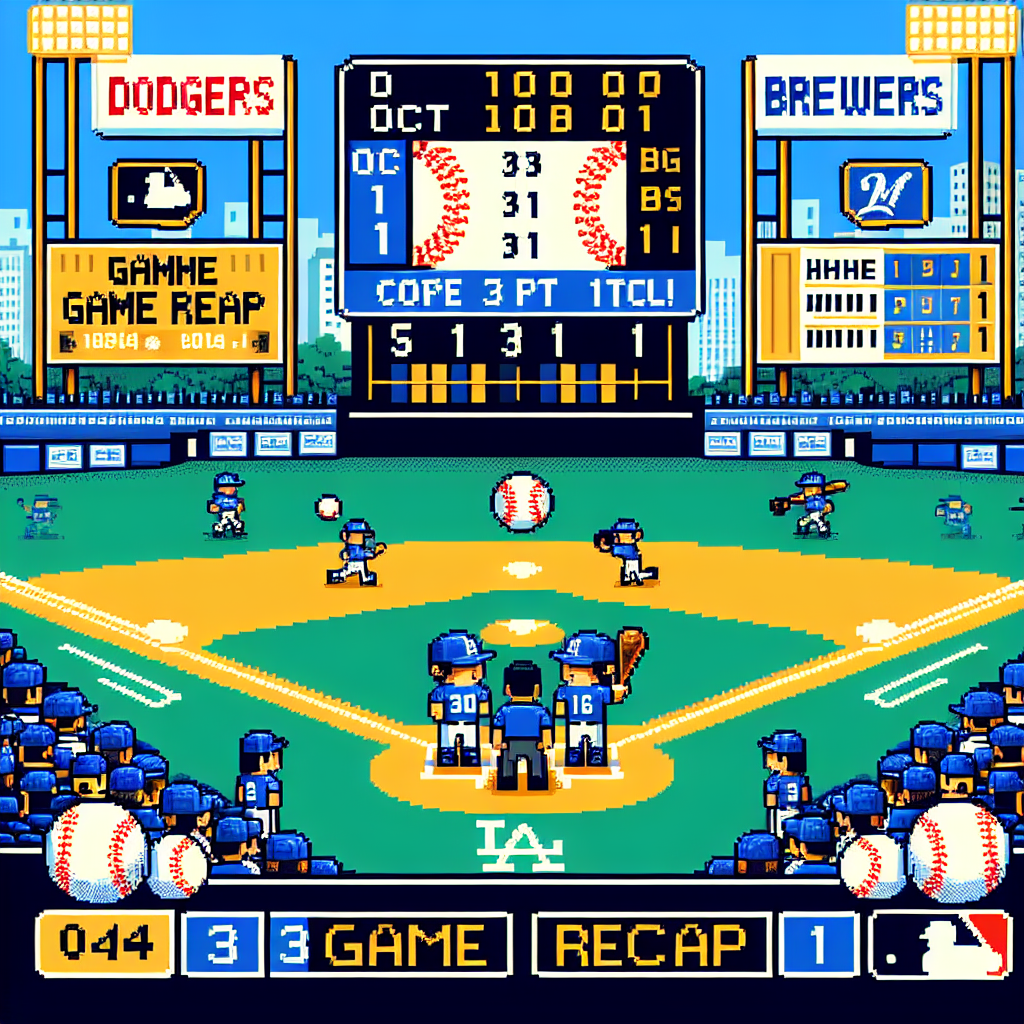
As the crisp autumn air settles in, baseball fans across the nation are glued to their screens, eagerly watching the postseason unfold. In a thrilling matchup on October 16, 2025, the Los Angeles Dodgers showcased their dominance against the Milwaukee Brewers, clinching a 3-1 victory in Game 2 of the National League Division Series (NLDS). Let’s dive into what made this game a pivotal moment in the Dodgers’ playoff journey.

A Brief Context: The Road to the NLDS

The Los Angeles Dodgers, perennial powerhouses in Major League Baseball, entered the postseason with high expectations. After winning the NL West title, their eyes were set on another World Series appearance. Facing off against the Milwaukee Brewers, a team known for their grit and determination, the Dodgers knew they had to bring their A-game.

Game 1 had already set the tone for the series, with the Dodgers narrowly edging out the Brewers in a tight contest. Fans were buzzing with anticipation for Game 2, eager to see if the Dodgers could maintain their momentum and take a commanding 2-0 series lead.

Highlights from the Game: Pitching and Power

The game unfolded with a mix of stellar pitching and key offensive plays. Dodgers’ ace pitcher, Clayton Kershaw, took the mound and delivered a performance reminiscent of his Cy Young days. With pinpoint accuracy and a devastating curveball, Kershaw held the Brewers to just one run, striking out eight batters over seven innings.

On the offensive side, the Dodgers capitalized on their scoring opportunities. A crucial two-run homer from Mookie Betts in the fifth inning turned the tide, giving the Dodgers the cushion they needed. Additionally, Freddie Freeman’s consistent hitting kept the pressure on the Brewers throughout the game.

Key Takeaways

Kershaw’s Masterclass: Clayton Kershaw proved once again why he’s a postseason legend, delivering a dominant performance that kept the Brewers at bay. – Mookie Betts Shines: Betts’ power swing not only lifted the team’s morale but also solidified his status as a postseason clutch player. – Dodgers’ Depth: The Dodgers showcased their depth with contributions from multiple players, emphasizing their strength as a team rather than relying on a single star. – Brewers’ Resilience: Despite the loss, the Brewers fought hard, demonstrating their ability to challenge the Dodgers and setting the stage for an exciting Game 3. – Momentum Shift: The victory puts the Dodgers in a favorable position to sweep the series, adding pressure on the Brewers to respond in the upcoming games.

Concluding Reflection

As the Dodgers celebrate their victory, the focus now shifts to Game 3, where the Brewers will look to make adjustments and fight back. The postseason is always unpredictable, and while the Dodgers have taken the lead, the Brewers are not to be underestimated. With the stakes higher than ever, fans can expect an intense battle ahead as both teams vie for a coveted spot in the NL Championship Series.

Baseball is more than just a game; it’s a saga of resilience, strategy, and moments that define legacies. Here’s to the thrill of October baseball!

Sources

– ESPN – Dodgers 3-1 Brewers (Oct 16, 2025) Game Recap: [ESPN Game Recap](https://www.espn.com/mlb/recap?gameId=401445937)


Related update: We recently published an article that expands on this topic: read the latest post.


Related update: We recently published an article that expands on this topic: read the latest post.

Mariners and Blue Jays Clash in ALCS Game | Analysis by Brian Moineau

Swing, Swing: Mariners Pitchers vs. Blue Jays Hitters in Game 3 of the ALCS

Baseball is a game of numbers and narratives, where every pitch tells a story and each swing can change the course of a season. As the Seattle Mariners and Toronto Blue Jays clashed in Game 3 of the American League Championship Series (ALCS), fans were treated to an electrifying showdown between two teams known for their aggressive play styles.

Context: A Battle of Aggression

The ALCS has been a rollercoaster ride for both the Mariners and the Blue Jays. Each team entered the series with their unique strengths. The Mariners boasted a pitching staff that thrives on precision and power, while the Blue Jays showcased a dynamic lineup capable of making big plays at the plate. As both teams continued their postseason journeys, the stakes couldn’t have been higher.

In the first two games of the series, we witnessed the Mariners’ pitchers dominate the Blue Jays’ hitters, leveraging their ability to control the zone and capitalize on mistakes. Conversely, Toronto’s offense—known for its aggressive swings—was eager to break out and assert their dominance. Game 3 promised to be a crucial moment, as both teams sought to gain momentum and inch closer to the World Series.

Key Takeaways from Game 3

Pitching Precision vs. Hitting Aggression: Mariners’ pitchers continued to showcase their ability to locate pitches effectively, making it difficult for Blue Jays hitters to settle into a rhythm. The Mariners’ strategy of working the edges of the strike zone paid dividends, minimizing hard contact.

Home Runs and Missed Opportunities: While the Blue Jays had their chances, their aggressive approach led to several strikeouts, particularly against Mariners’ ace pitchers. A few missed opportunities left fans wondering if they could have capitalized better on their scoring chances.

Defensive Highlights: In addition to the pitching duel, both teams displayed exceptional defensive skills. Key plays in the field prevented runs from scoring and added to the drama of the game, reminding us that baseball is as much about defense as it is about offense.

Momentum Swings: The game showcased the ever-changing momentum typical of playoff baseball. Just when it seemed the Mariners had an advantage, the Blue Jays would rally, only to be thwarted by clutch pitching. This ebb and flow kept fans on the edge of their seats.

The Importance of Game 3: Winning Game 3 in a best-of-seven series is often seen as a pivotal moment. With both teams looking to establish dominance, the outcome set the tone for the remainder of the series, making every pitch and swing all the more significant.

Conclusion: The Thrill of the Game

As the dust settled on Game 3 of the ALCS, one thing was clear: the battle between the Mariners’ pitchers and Blue Jays’ hitters was a testament to the beauty of baseball. With both teams displaying their strengths and weaknesses, the series is shaping up to be an unforgettable chapter in postseason history.

As fans, we can only sit back, savor the drama, and hope for more thrilling moments in the games to come.

Sources

– [Lookout Landing: Swing, swing: Mariners pitchers vs. Blue Jays hitters](https://www.lookoutlanding.com) (Please replace with the actual URL from the source)

*Note: The URL provided is a placeholder. Be sure to verify and use the actual link from the Lookout Landing article.*


Related update: We recently published an article that expands on this topic: read the latest post.


Related update: We recently published an article that expands on this topic: read the latest post.

Snitker Steps Down: Braves Face New Era | Analysis by Brian Moineau

Brian Snitker Steps Down: A New Chapter for the Braves

In a surprising turn of events, the Atlanta Braves have announced that Brian Snitker, the beloved manager who led the team to its most recent World Series title in 2021, will not be returning to the dugout next season. After nearly half a century with the organization, Snitker’s departure marks the end of an era for the Braves, leaving fans and players alike reflecting on his indelible impact on the franchise.

A Legacy Built on Dedication and Success

Brian Snitker has been a key figure in the Atlanta Braves organization since 1977, serving in various roles from minor league manager to third base coach before taking the helm as the team’s manager. His tenure culminated in one of the most memorable moments in Braves history: the 2021 World Series championship. Under Snitker’s leadership, the Braves not only won the title but also fostered a culture of resilience and teamwork, leading to a rejuvenation of the franchise’s competitive spirit.

Despite the ups and downs, Snitker remained a steady presence, guiding the team through challenges and celebrating its victories. His strategic acumen and ability to connect with players transformed the Braves into perennial contenders. However, after a disappointing 2023 season, the Braves have decided to transition to a new managerial direction.

Key Takeaways

End of an Era: Brian Snitker will not return as Braves manager after nearly 50 years with the organization. – World Series Triumph: Snitker led the Braves to the 2021 World Series championship, solidifying his place in the team’s history. – Legacy of Leadership: His management style was characterized by fostering strong relationships with players, which contributed to team unity and success. – Future Outlook: The Braves are likely to seek a new manager who can build on Snitker’s foundation while bringing a fresh perspective to the team.

A New Chapter for the Braves

As the Braves prepare for the next season, the organization faces the challenge of finding a new leader who can carry forward Snitker’s legacy while adapting to the evolving landscape of Major League Baseball. While change can be daunting, it also brings a sense of excitement and opportunity. Fans will undoubtedly be eager to see how the Braves pivot and adapt in this new era.

Brian Snitker’s contributions to the Braves will not be forgotten. His journey from a minor league player to a World Series-winning manager is a testament to hard work, loyalty, and the deep-rooted culture of the franchise. As we say goodbye to Snitker in the dugout, we also look forward to the possibilities that lie ahead for the Braves.

Sources

– AP News. “Brian Snitker, who managed Braves to 2021 World Series title, won’t return to dugout next season.” [AP News](https://apnews.com/article/brian-snitker-braves-manager-2021-world-series-title-ff3c9e8e8c6d5e6d7d5d1d0c8a8a0b8a)


Related update: We recently published an article that expands on this topic: read the latest post.


Related update: We recently published an article that expands on this topic: read the latest post.

Giolitos Heartbreak: Elbow Injury | Analysis by Brian Moineau

Lucas Giolito’s Heartbreaking Elbow Injury: A Red Sox Fan’s Perspective

As the excitement of postseason baseball electrifies fans across the nation, one Red Sox player is feeling the sting of both disappointment and hope. Lucas Giolito, a key member of the pitching rotation, has been sidelined due to a devastating elbow injury, leaving him unable to participate in the playoffs. While he watched his team triumph over the Yankees in Game 1 of the Wild Card Series, his heart was heavy with the weight of what could have been.

The Context of Giolito’s Injury

Lucas Giolito, known for his powerful fastball and sharp curve, joined the Red Sox with high expectations after a standout season. However, the 28-year-old right-hander’s journey took a tragic turn when he suffered an elbow injury that has officially ruled him out for the remainder of the postseason. In an emotional press conference, Giolito described the injury as “devastating,” not just for him personally but also for his teammates who rely on him as a pillar of their pitching staff.

Despite his personal struggles, Giolito found solace in watching his teammates shine on the big stage. The Red Sox’s Game 1 victory against their arch-rivals, the Yankees, was a moment of triumph that he cherished, even as he grappled with the reality of his situation. His rotation mate, Garrett Crochet, stepped up in Giolito’s absence, showcasing the strength and resilience of a team determined to make a deep playoff run.

Key Takeaways

Injury Impact: Giolito’s elbow injury is a significant blow to the Red Sox’s pitching rotation, as he was expected to play a crucial role in their postseason campaign.

Team Morale: Despite his personal disappointment, Giolito finds comfort in the team’s camaraderie and their ability to rally together during challenging times.

Postseason Dynamics: The Red Sox’s victory over the Yankees highlights the unpredictable nature of playoff baseball, where every game can pivot on the performance of individual players.

Future Outlook: While Giolito’s current season has ended prematurely, he remains focused on recovery and is hopeful for a strong return next season.

Support System: Giolito’s situation sheds light on the emotional rollercoaster athletes face, reminding fans of the human side of sports and the importance of support systems in professional environments.

Concluding Reflection

Lucas Giolito’s story is a poignant reminder of the highs and lows that come with being an athlete. As fans, we often celebrate the victories but overlook the sacrifices and struggles that players endure behind the scenes. While Giolito may be sidelined, his spirit remains intertwined with the Red Sox’s journey through the playoffs. It’s a testament to the resilience of athletes and the power of teamwork, reminding us that even in moments of despair, hope and camaraderie can light the way forward.

Sources

– MassLive: [Red Sox’ Lucas Giolito details ‘devastating’ elbow injury that will keep him out of playoffs](https://www.masslive.com/redsox)

As the postseason unfolds, let’s keep Giolito and his teammates in our thoughts and continue to support them through this challenging time. Go Red Sox!


Related update: We recently published an article that expands on this topic: read the latest post.


Related update: We recently published an article that expands on this topic: read the latest post.

MLB Embraces Robot Umpires by 2026 | Analysis by Brian Moineau

The Future of Umpiring: MLB’s Decision to Embrace Robot Umpires in 2026

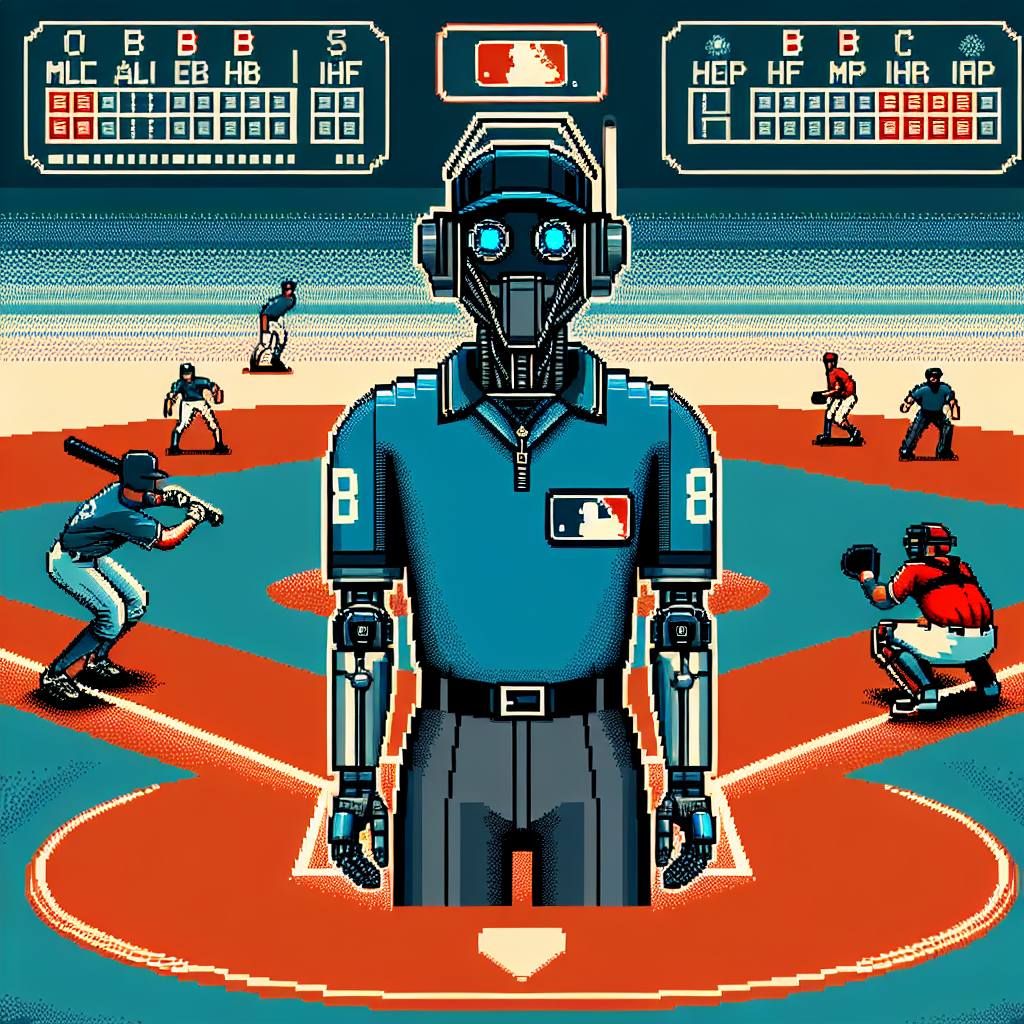
If you’ve ever watched a baseball game and found yourself yelling at the screen over a questionable strike call, you’re not alone. The debate over umpire accuracy has been a long-standing topic in Major League Baseball (MLB), and it seems that the league is ready to embrace a high-tech solution. In a groundbreaking decision, MLB’s 11-man competition committee has approved the use of an Automated Ball/Strike System, commonly referred to as “robot umpires,” starting in 2026. But what does this mean for the future of America’s pastime?

Context and Background

The introduction of robot umpires isn’t as futuristic as it sounds. For years, technology has been creeping into baseball, from instant replay to advanced analytics. The Automated Ball/Strike System has already been tested in the Minor Leagues and various independent leagues, receiving mixed reviews but ultimately showing promise in enhancing accuracy and speeding up the game.

Human umpires will still play a role in this new system, as they will call balls and strikes on the field. However, teams will have the opportunity to challenge two calls per game, allowing for a blend of human judgment and technological precision. This hybrid approach aims to strike a balance between maintaining the human element of the game and ensuring fair play.

Key Takeaways

Implementation Date: MLB will officially adopt the Automated Ball/Strike System in 2026.

Challenge System: Teams will be allowed to challenge up to two calls per game, integrating human decision-making with technology.

Mixed Reviews: The system has been tested in the Minors, showing both potential benefits and some reservations from players and fans alike.

Maintaining Human Element: While technology will play a larger role, human umpires will still be present on the field, preserving the traditional aspect of the game.

Impact on Game Dynamics: This change could significantly influence game strategy and pacing, potentially leading to a faster and more accurate gameplay experience.

A New Era for Baseball

As we approach the 2026 season, it’s clear that this decision could reshape the landscape of baseball. Fans might find themselves adjusting to a new way of engaging with the game, while players will need to adapt their strategies knowing they have the option to challenge calls.

Ultimately, this move by MLB is a reflection of an evolving sport that is not afraid to embrace change. The hope is that by combining human intuition with technological advancement, baseball can continue to thrive in a rapidly changing sports environment.

As we gear up for this new chapter, one thing is certain: whether you’re a traditionalist or a tech enthusiast, the conversation around the future of umpiring in baseball is just getting started.

Sources

– “MLB will use robot umpires in 2026.” AP News. [AP News](https://apnews.com/article/mlb-robot-umpires-2026)


Related update: We recently published an article that expands on this topic: read the latest post.


Related update: We recently published an article that expands on this topic: read the latest post.

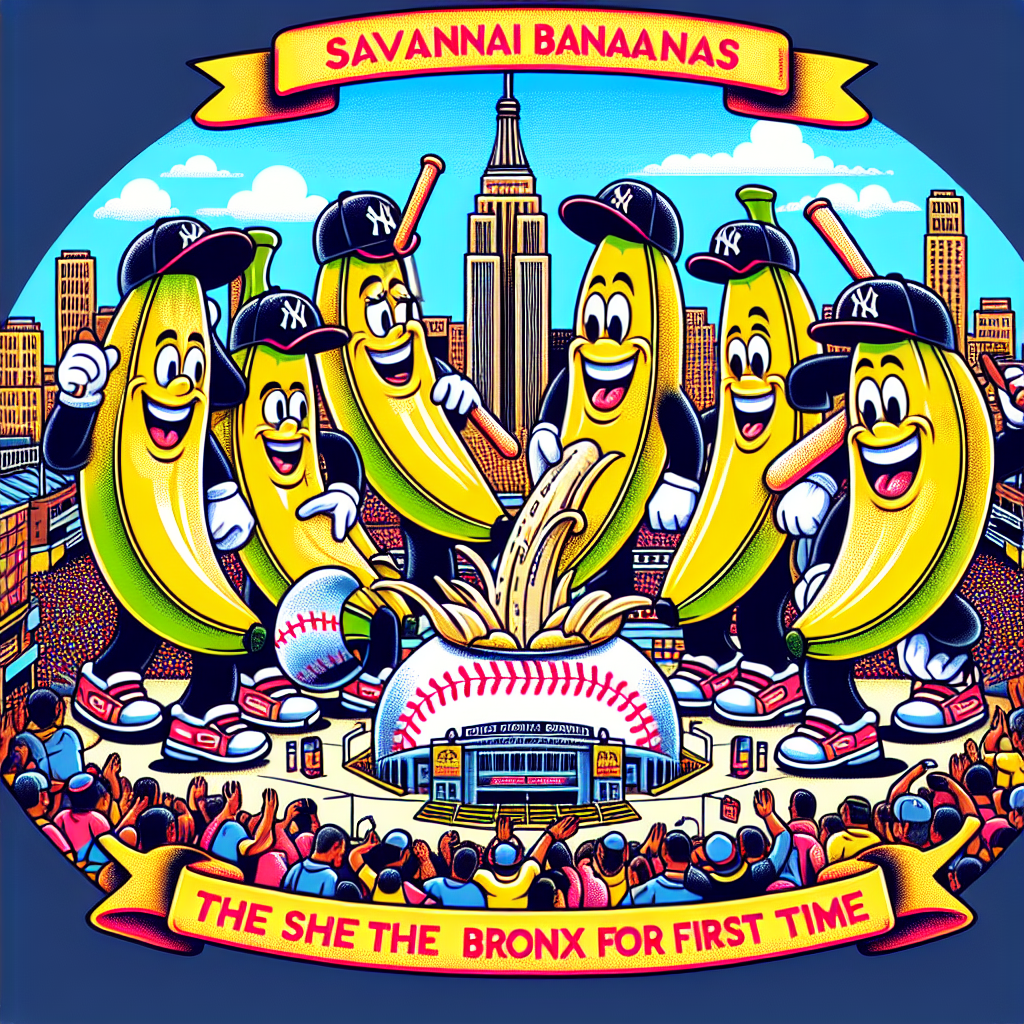
Savannah Bananas bringing show to The Bronx for first time – New York Post | Analysis by Brian Moineau

Savannah Bananas bringing show to The Bronx for first time - New York Post | Analysis by Brian Moineau

The Savannah Bananas: Bringing Southern Charm to the Bronx

In a delightful twist of fate, baseball fans in the Bronx are in for an unconventional treat. For the first time ever, the Savannah Bananas, the wildly entertaining and unorthodox baseball team from Georgia, are set to grace Yankee Stadium with their presence, bringing their unique brand of trick-filled exhibition games to one of the most iconic venues in sports. This is not just a game, it's a spectacle—a blend of baseball, performance art, and carnival fun that has taken the sports world by storm.

The Savannah Bananas are not your typical baseball team. Founded in 2016, they have garnered a massive following, not just for their prowess on the field, but for their commitment to entertaining fans with a showmanship that rivals the Harlem Globetrotters. Their games feature choreographed dances, on-field antics, and an infectious energy that make every inning a memorable experience. It’s baseball as you’ve never seen it before—more about laughter and community than about scores and stats.

But why Yankee Stadium? For a team known for its roots in the sunny climes of Savannah, coming to the Bronx might seem like an odd choice. Yet, it’s a perfect metaphor for baseball’s evolving narrative. Just as the Bananas challenge the norms of the game, New York City has always been a melting pot, a place where cultures and ideas come together to create something uniquely vibrant. This event isn't just about a baseball game; it's about celebrating diversity in sports and breaking down traditional barriers.

As the Bananas bring their Southern charm to the Big Apple, it’s interesting to note how this aligns with broader trends in sports and entertainment. Globally, there is a growing appetite for events that transcend the boundaries of traditional sports. The rise of esports, the blending of music festivals with sporting events, and even the recent success of sports documentaries like "The Last Dance," highlight a shift in how audiences engage with sports. It’s less about the game itself and more about the story, the experience, and the characters involved.

Speaking of characters, the Bananas are led by their charismatic owner, Jesse Cole, who is as much a part of the show as the players. Donning his signature yellow tuxedo, Cole embodies the spirit of the Bananas—a commitment to fun, innovation, and community. His vision has transformed a small-town team into a national sensation, proving that with a little creativity and a lot of heart, anything is possible.

As the Bananas prepare to take the field in the Bronx, we’re reminded of the power of sports to bring people together, to make us laugh, and to challenge the status quo. Whether you’re a die-hard Yankees fan or new to the world of baseball, this is an event not to be missed. It’s a chance to see the game in a new light, to embrace the unexpected, and to join in the joyous celebration of America’s favorite pastime.

In a world that often feels divided, the Savannah Bananas remind us of the joy of coming together, even if just for a few innings. So grab your peanuts and Cracker Jack, and get ready for a game that promises to be as thrilling as it is entertaining. The Bananas are coming to town, and they’re bringing the party with them!

Final Thought:

As the Savannah Bananas step onto the hallowed grounds of Yankee Stadium, they carry with them a message that resonates far beyond the diamond: sports are for everyone, and there’s always room for a little more fun. Here’s to an unforgettable experience that celebrates the magic of baseball, Southern charm, and the joy of living in the moment. Welcome to New York, Bananas!

Read more about AI in Business

Read more about Latest Sports Trends

Read more about Technology Innovations

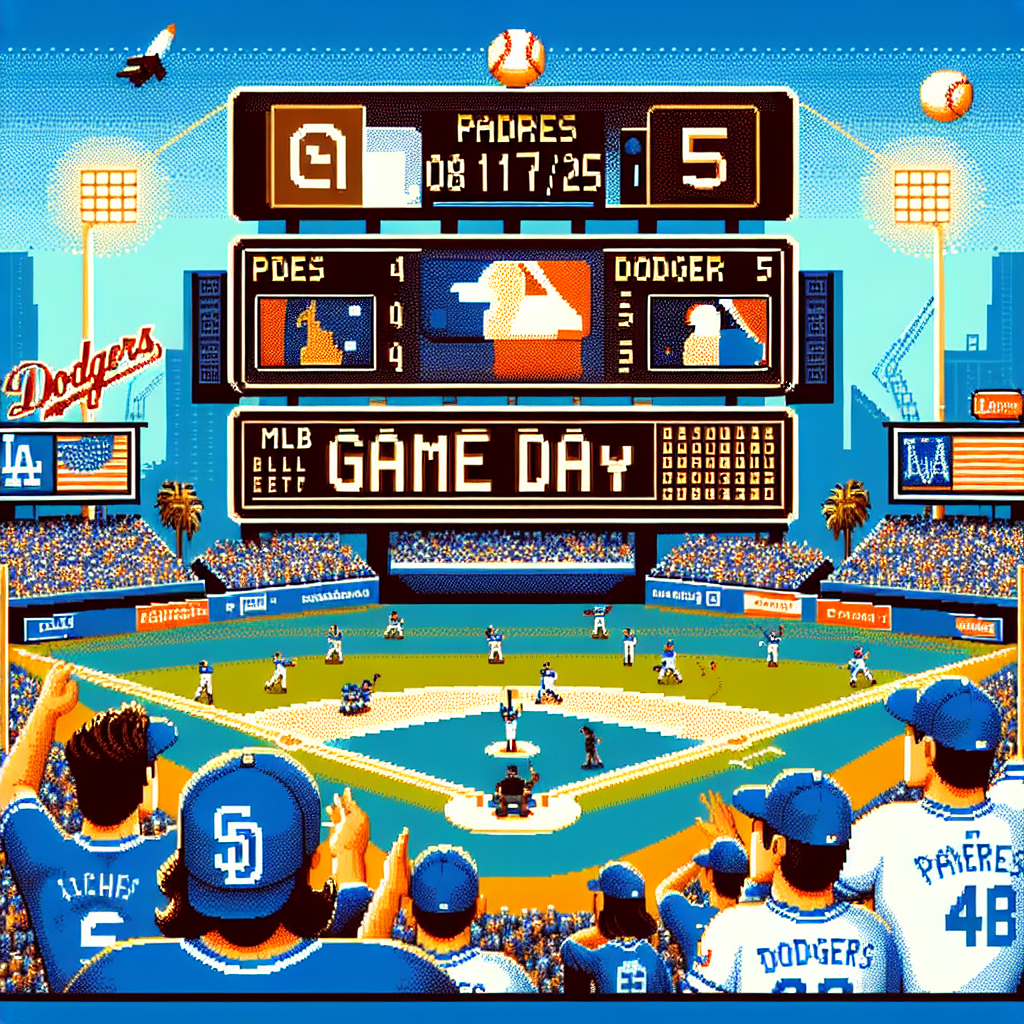
MLB Gameday: Padres 4, Dodgers 5 Final Score (08/17/2025) – MLB.com | Analysis by Brian Moineau

MLB Gameday: Padres 4, Dodgers 5 Final Score (08/17/2025) - MLB.com | Analysis by Brian Moineau

Title: A Day at the Ballpark: Padres vs. Dodgers - A Classic Showdown in the City of Angels

Ah, the sweet sounds of summer: the crack of the bat, the cheer of the crowd, and the hushed anticipation before the pitch. On August 17, 2025, fans at Dodger Stadium were treated to an electrifying matchup between the San Diego Padres and the Los Angeles Dodgers. With a final score of 5-4, the Dodgers managed to edge out the Padres, adding another chapter to their storied rivalry.

This game wasn't just about the score; it was a narrative woven with tension, strategy, and a little bit of drama. The Dodgers have long been a powerhouse in Major League Baseball, with a history of success and a fan base that spans the globe. On the other hand, the Padres, the underdogs with a fighting spirit, have been steadily rising, challenging the old guard with every swing of the bat.

The Padres vs. Dodgers matchup is more than just a game; it's a spectacle. It's about two teams that embody the spirit of their cities. Los Angeles, with its glitz and glamour, and San Diego, with its laid-back, never-say-die attitude, make for a clash that's as much about culture as it is about baseball.

In this game, the Dodgers' victory was hard-fought. The Padres, led by their charismatic manager, Chavo "Chavito" Martinez, put up a relentless fight. Martinez, who took over the Padres' reins in 2023, has been instrumental in injecting energy and hope into the franchise. His leadership style, a mix of old-school wisdom and modern analytics, has been pivotal in the Padres' recent successes.

The game also saw standout performances from key players. For the Dodgers, veteran pitcher Julio Urías proved once again why he's a cornerstone of their rotation. His command on the mound, mixed with an uncanny ability to get out of tight spots, was a highlight of the evening. On the Padres' side, young slugger Juan Soto showcased his prowess, driving in crucial runs and reminding everyone why he's one of the most exciting talents in baseball today.

Beyond the game, this matchup reflects broader trends in the world of sports and beyond. In recent years, we've seen a shift towards embracing youthful talent and innovation, both on and off the field. Teams are investing in young players, new technologies, and data analytics to gain a competitive edge. This mirrors trends in other industries, where innovation and adaptability have become key to success.

Moreover, the game was a reminder of sports' power to bring people together. In a world often divided by politics, economics, and ideologies, sports remain a unifying force. Fans from different walks of life, united by their love for the game, come together to cheer, jeer, and share in the highs and lows of their favorite teams.

As we reflect on this game, it's clear that baseball is more than just America's pastime; it's a dynamic, evolving sport that continues to capture hearts and imaginations. Whether you're a die-hard Dodgers fan or rooting for the Padres, there's no denying the excitement and passion that games like these bring.

In the end, whether you're in the upper decks or watching from home, the thrill of a close game, the camaraderie among fans, and the timeless beauty of baseball are what truly make it special. As the season progresses, we can only anticipate more such thrilling encounters that keep us on the edge of our seats.

Final Thoughts: As the Dodgers and Padres continue their seasons, this game serves as a reminder of the unpredictable nature of baseball. It's a sport where, on any given day, anything can happen, and that's precisely what keeps us coming back for more. Whether you're in it for the stats, the stories, or the sheer love of the game, baseball is a ride that's always worth taking.

Read more about AI in Business

Read more about Latest Sports Trends

Read more about Technology Innovations

Where Pete Alonso stands among MLB’s other franchise home run kings – New York Post | Analysis by Brian Moineau

Where Pete Alonso stands among MLB’s other franchise home run kings - New York Post | Analysis by Brian Moineau

Where Pete Alonso Stands Among MLB’s Franchise Home Run Kings: A Lighthearted Look

In the grand tapestry of baseball, where legends are woven into the fabric of America's pastime, each MLB team boasts its own home run king—those legendary players who have sent baseballs soaring into the stratosphere more than any of their teammates. For the New York Mets, that crown now belongs to Pete Alonso. But where does Alonso's achievement stand when compared to the home run titans of the other 29 MLB teams? Let's dive into this question with a sprinkle of perspective and a dash of humor.

The Polar Bear Roars

First things first, let's tip our caps to Pete Alonso, affectionately dubbed "The Polar Bear" for his burly physique and undeniable power at the plate. Since bursting onto the scene in 2019, Alonso has been a bright spot in the Mets' lineup, smashing records faster than you can say "Amazin' Mets." With his recent coronation as the franchise’s all-time home run leader, surpassing legends like Mike Piazza and Darryl Strawberry, Alonso has etched his name into Mets lore.

Alonso's achievement isn't just about the number of homers; it's a testament to his consistency and resilience. Amidst the pressures of New York media and the ever-competitive NL East, Alonso's power-hitting prowess has been a constant source of excitement for Mets fans. It's like having a fireworks display at every home game—if only Citi Field had more parking for all those fireworks!

Comparing Royalty: Alonso and His Counterparts

Now, let's put Alonso's milestone into perspective. Around the league, home run kings vary from team to team, some holding records that seem insurmountable. For instance, Hank Aaron's 755 career homers with the Braves franchise casts a long shadow, as does Barry Bonds' 762 with the Giants (though Bonds' legacy is often discussed with an asterisk).

Then there's the iconic Babe Ruth, whose 714 homers with the Yankees remain legendary. Even in an era where the baseball flew through the air with less vigor than today, Ruth's slugging made him a household name and a cultural icon.

In contrast, Alonso's record may not be as astronomical as some of these legends, but it’s important to remember that each franchise has its unique history and challenges. The Mets, a relatively young team by MLB standards, have seen their fair share of ups and downs. Alonso's achievement is not just a personal triumph; it's a beacon of hope for a franchise that's always striving for greatness.

A World Beyond Baseball

Alonso's journey to becoming the Mets' home run king also reflects broader themes relevant today. In a world where perseverance and dedication are more important than ever, Alonso's story resonates beyond the diamond. His ability to overcome slumps, adapt to changing circumstances, and remain focused on his goals is something we can all draw inspiration from. Whether you're an athlete, a student, or someone navigating the challenges of daily life, Alonso's journey is a reminder that tenacity pays off.

In recent years, sports have increasingly become a platform for social change and community engagement. Alonso has used his position to make a difference, notably through his Homers for Heroes foundation, which supports first responders and veterans. In an era where athletes are more than just players, it's heartening to see them using their influence for good.

Final Thoughts

In the grand scheme of MLB history, Pete Alonso's record as the Mets' home run king is a chapter still being written. While he may not yet match the towering figures like Aaron or Ruth, his contributions to the Mets and the baseball community are undeniable. As Alonso continues to launch baseballs into orbit, Mets fans have every reason to cheer—and perhaps dream of a future where the Polar Bear reigns supreme on an even grander stage.

So here's to Pete Alonso, the Mets' home run king: may his bat stay mighty, his spirit indomitable, and his homers aplenty. And who knows? Maybe one day, he'll be the stuff of legend, inspiring the next generation of Mets fans and reminding us all of the power of perseverance and passion.

Read more about AI in Business

Read more about Latest Sports Trends

Read more about Technology Innovations

Mariners, Eugenio Suárez reuniting in trade with Diamondbacks – The Seattle Times | Analysis by Brian Moineau

Mariners, Eugenio Suárez reuniting in trade with Diamondbacks - The Seattle Times | Analysis by Brian Moineau

Rekindling the Flame: The Mariners and Eugenio Suárez Reunite

In a world where reunions are often reserved for high school alumni and blockbuster movie franchises, the Seattle Mariners and Eugenio Suárez are setting the sports stage ablaze with their own heartwarming comeback story. According to The Seattle Times, the Mariners are finalizing a trade to bring third baseman Eugenio Suárez back from the Arizona Diamondbacks, and it's a move that’s sure to ignite the passions of Seattle's baseball faithful.

For those who may not be deeply entrenched in the lore of America's pastime, Eugenio Suárez is no stranger to the Pacific Northwest. The Venezuelan power hitter, known for his impressive home run tally and charismatic presence on the field, played a pivotal role with the Mariners in the past. His return to Seattle is akin to a beloved character stepping back into a beloved series—unexpected, but oh so appreciated.

A Trip Down Memory Lane

Suárez's journey in Major League Baseball has been nothing short of a rollercoaster. Remember 2019? It was the year Suárez slugged his way into the history books with 49 home runs, setting the record for the most homers in a single season by a Venezuelan player. Watching him swing the bat is like watching an artist at work—his precision and power are a testament to years of dedication and love for the game.

But beyond stats, Suárez brings an infectious energy to the field. His ability to lift team morale is as valuable as his skill with the bat. In a sport often dictated by the stoic focus of its players, Suárez's vibrant persona is a refreshing reminder of the joy that baseball can bring.

A Broader Perspective

Reunions in baseball aren’t merely about athletic prowess; they resonate with a broader theme of homecoming. In a world that often feels fragmented, these stories remind us of the power of connection and belonging. Suárez's return to Seattle parallels other recent heartwarming stories of reunions, like Lionel Messi's emotional return to his boyhood club, Newell's Old Boys, bringing us back to the essence of sports as a unifying force.

Seattle's Sporting Renaissance

Seattle, often celebrated for its coffee culture and tech innovation, is quietly nurturing a sporting renaissance. With the Seahawks in the NFL, the Sounders in the MLS, and now, a bolstered Mariners lineup, the Emerald City is becoming a dynamic sports hub. The Mariners' strategic acquisition of Suárez not only strengthens their roster but also signals their commitment to contending at the highest level.

Final Thoughts

As the Mariners and Suárez prepare to write their next chapter together, fans can only wait in anticipation for the magic to unfold. Whether you're a die-hard baseball aficionado or a casual observer, this reunion is a reminder of the beauty and unpredictability of sports. It's a narrative of hope, of second chances, and of the enduring connection between a player and his city.

In the grand tapestry of baseball, where every game is an opportunity for heroes to emerge, Eugenio Suárez's return to Seattle is a story that deserves more than just a glance—it deserves our cheers. So, let’s grab our peanuts and Cracker Jack and get ready for a season that promises to be as thrilling as a walk-off home run. Welcome back, Eugenio. We've missed you.

Read more about AI in Business

Read more about Latest Sports Trends

Read more about Technology Innovations

Emmanuel Clase Placed On Administrative Leave Amid MLB’s Sports-Betting Investigation – MLB Trade Rumors | Analysis by Brian Moineau

Emmanuel Clase Placed On Administrative Leave Amid MLB’s Sports-Betting Investigation - MLB Trade Rumors | Analysis by Brian Moineau

Title: Navigating the Curveball: Emmanuel Clase and the MLB Betting Investigation

In the ever-evolving world of professional sports, where athletic prowess meets the spectacle of competition, there's never a dull moment. This week, the MLB world was caught off guard when news broke that Emmanuel Clase, the Cleveland Guardians' fireball-throwing closer, was placed on administrative leave amid an investigation into sports-betting allegations. As fans and analysts alike try to piece together what this means for the Guardians and Clase's future, let's take a step back, add some perspective, and keep things a bit light-hearted.

Emmanuel Clase: The Man Behind the Fastball

Emmanuel Clase has become a household name for baseball aficionados, not only for his role as a crucial closer for the Guardians but also for his lightning-fast pitches. Clase, with his triple-digit fastballs, has been a beacon of hope for Cleveland's bullpen, especially during tight games. The young Dominican pitcher, known for his calm demeanor on the mound and an arsenal that leaves batters flailing, was seen as a potential trade asset for the Guardians, potentially reshaping their roster for the future.

The Betting Investigation: A Sign of the Times?

The MLB's investigation into sports betting isn't happening in a vacuum. Sports betting has become a hot topic globally, with numerous states in the U.S. legalizing it and the industry booming with new platforms. This shift has brought about a wave of both excitement and concern. While fans enjoy the added thrill, leagues and teams must navigate the murky waters of maintaining integrity and preventing any form of game manipulation.

Clase's situation is particularly poignant as it echoes a broader narrative seen in other sports. Recall the NBA's Tim Donaghy scandal or the NFL's own hurdles with betting controversies. Each incident serves as a reminder of the fine line athletes and officials must walk in this new era of sports betting.

Connecting the Dots: A Global Perspective

Interestingly, the sports-betting conversation is not limited to the U.S. This year, the UK saw its own share of controversies, with high-profile soccer players facing scrutiny for their involvement in betting. The global sports community continues to grapple with these issues, pushing for tighter regulations and education for athletes and staff.

Final Thoughts: The Game Must Go On

As the investigation unfolds, it's essential to remember that Emmanuel Clase, like all athletes, is human. The pressure and scrutiny faced by professional players can be immense. While the outcome of this investigation remains to be seen, it's crucial for fans and the media to approach with empathy and patience.

Whether Clase returns to the mound for the Guardians or finds a new chapter elsewhere, his story is a reminder of the complex interplay between sports, media, and the evolving landscape of betting. In the end, baseball, like life, often throws us unexpected curveballs. How we handle them defines not just the players but the game itself.

For more detailed updates, you can follow the ongoing coverage on [MLB Trade Rumors](https://www.mlbtraderumors.com/). Let's hope for a fair resolution and, as always, play ball!

Read more about AI in Business

Read more about Latest Sports Trends

Read more about Technology Innovations

White Sox 7, Pirates 2: Opening second half with first sweep – Sox Machine | Analysis by Brian Moineau

White Sox 7, Pirates 2: Opening second half with first sweep - Sox Machine | Analysis by Brian Moineau

Title: White Sox Sweep Pirates: A Fresh Start in the Second Half

As the MLB season meanders into its latter half, the Chicago White Sox have made a bold statement by sweeping the Pittsburgh Pirates at PNC Park. This victory didn’t just add a notch to their win column—it marked their first sweep after five missed opportunities. The White Sox’s performance over the weekend was nothing short of dominant, reminiscent of a team reinvigorated and ready to rewrite their narrative.

The Sweep That Was


The White Sox unleashed their might with two consecutive 10-run games, setting the tone for a series where they left little room for Pirate optimism. This wasn’t merely a victory; it was a declaration that the team is capable of great things when all cylinders are firing.

The series was a showcase of balanced prowess, with both offensive and defensive efforts shining through. The pitching staff, led by standout performances from Lucas Giolito and Lance Lynn, stifled the Pirates’ lineup, while the bats were alive and electric, sending balls sailing deep into the Pittsburgh sky.

A Lesson in Perseverance


This sweep is more than just numbers or standings; it’s a testament to perseverance. After squandering previous opportunities to sweep, the White Sox needed to demonstrate resilience, something many teams aspire to but few achieve consistently. Their ability to close out this series is an encouraging sign for fans and a potential turning point for the team.

In sports, as in life, the ability to learn from failures and adapt is crucial. The White Sox’s recent success parallels some broader themes we see in the world today. Consider the global response to the COVID-19 pandemic, where perseverance and adaptability have been vital. Nations and individuals alike have had to learn, innovate, and push forward despite setbacks—much like the White Sox finding their stride after initial struggles.

The Bigger Picture


The White Sox’s sweep over the Pirates also resonates with the current zeitgeist in sports, where narratives of comeback and redemption are ever-popular. Whether it's Simone Biles returning to the gymnastics floor after a challenging year or Naomi Osaka navigating the complexities of professional sports and mental health, athletes and teams are redefining what it means to triumph.

Tony La Russa, the White Sox manager, deserves a nod for steering the team through turbulent waters. Having returned to managing after a decade-long hiatus, La Russa brings a wealth of experience and a steady hand, proving that the old guard still has a few lessons to teach in an era dominated by analytics and new methodologies.

Final Thoughts


As the White Sox move forward, this sweep should serve as a foundation—a reminder of what they’re capable of when they play as a cohesive unit. It's a small victory in the grand scheme of the season, but one that could spark a turnaround.

In the end, sports continue to be a microcosm of life, encapsulating the ups and downs, the struggles and triumphs. The White Sox's recent success is a reminder that perseverance, teamwork, and a little bit of magic can change the course of one’s journey. Here’s to hoping this sweep is just the beginning of a thrilling second half for the White Sox and their fans.

Read more about AI in Business

Read more about Latest Sports Trends

Read more about Technology Innovations

‘He wanted to be a Red Sox’: A look at some of Boston’s Day 2 draft picks – MassLive | Analysis by Brian Moineau

‘He wanted to be a Red Sox’: A look at some of Boston’s Day 2 draft picks - MassLive | Analysis by Brian Moineau

Title: Embracing the Red Sox Dream: A Glimpse into Boston's Day 2 Draft Picks

In the heart of summer, as the MLB draft unfurls its excitement and hope, the Boston Red Sox find themselves not just selecting players, but welcoming dreams. "He wanted to be a Red Sox," resonates as a testament to the magnetic pull of Boston baseball. Day 2 of the MLB Draft saw the Red Sox not merely choosing athletes based on numbers and stats but engaging in a mutual embrace with young talents whose hearts beat in sync with Fenway's fervor.

The phrase "He wanted to be a Red Sox" reflects more than an athlete's aspiration; it captures a cultural phenomenon. The allure of the Red Sox transcends baseball, weaving into the fabric of Boston's identity. It's a sentiment echoed by fans and players alike, reminiscent of the passion seen in other iconic sports franchises like the New York Yankees or the Los Angeles Lakers. Each choice made in the draft is not just a strategic decision but a nod to the future of a legacy.

Take, for instance, the story of a young draftee whose eyes lit up at the prospect of donning a Red Sox cap. This isn't just about entering the big leagues; it's about walking into a storied franchise with legends like Ted Williams and David Ortiz as footsteps to follow. The Red Sox have a way of making dreams feel tangible, much like the Chicago Cubs did for fans when they broke their 108-year curse in 2016. These moments are not merely about sports; they're about hope and belief—a common thread in human experience.

This year's draft picks are more than potential players; they're future narrators of Boston's ongoing baseball saga. In a world where sports often intersect with societal changes, the selections made by the Red Sox echo themes of perseverance and ambition. The MLB draft is a reminder that sports can be a beacon in turbulent times, much like how the Women's World Cup has become a platform for gender equality and empowerment.

As the Red Sox continue to build their roster, they also cultivate a culture of belonging. Whether it's a player who grew up cheering for the team or a scout who saw a spark in an underdog, the draft is a celebration of potential. It's about the young pitcher who idolized Pedro Martinez or the slugger who dreams of replicating Big Papi’s playoff heroics.

In this interconnected world, the story of a draft pick choosing Boston feels both local and universal. It's about a young man wanting to be part of something historic and the city embracing him as one of its own. The Red Sox, much like any team with a devoted following, are not just about the game; they're about community and connection.

So, here's to the new faces, the fresh talent, and the dreams that will soon unfold on the hallowed grounds of Fenway Park. As we look forward to the next baseball season, let us remember that every draft is more than a selection—it's a chapter in the ongoing story of sports, dreams, and the undying hope that binds us all.

Final Thought:
The MLB Draft is more than a procedural event; it's a beacon of hope and a testament to the dreams of young athletes. As the Boston Red Sox welcome their new prospects, they remind us of the power of ambition and the allure of being part of something greater. In the world of sports and beyond, it's the dreams we chase that define us, and the community we build that sustains us. Here's to the new Red Sox, may their journey be as storied as the franchise they've chosen to join.

Read more about AI in Business

Read more about Latest Sports Trends

Read more about Technology Innovations

Yankees Claim Rico Garcia – MLB Trade Rumors | Analysis by Brian Moineau

Yankees Claim Rico Garcia - MLB Trade Rumors | Analysis by Brian Moineau

Title: From Queens to the Bronx: The Journey of Rico Garcia and the Magic of Waiver Wires

Ah, the unpredictable world of Major League Baseball, where a simple waiver wire transaction can connect boroughs and shift career trajectories. The recent news that the New York Yankees have claimed Rico Garcia off waivers from the New York Mets is a reminder of how sports, much like life, is full of unexpected twists and turns. And while this may seem like just another footnote in the annals of baseball transactions, it actually offers a fascinating glimpse into the delicate ballet of team dynamics and player potential.

The Waiver Wire: Baseball’s Magical Circuit

For the uninitiated, the waiver wire might sound like some arcane baseball jargon, but it's essentially the sport's version of a bustling marketplace, or perhaps a dating app. Teams put players on waivers hoping for a match, and other teams swipe right (or left, metaphorically speaking) to claim them. This mechanism ensures that players get opportunities where they are needed most, and it keeps the game fresh and exciting.

In the case of Rico Garcia, the waiver wire has connected Queens to the Bronx, a journey reminiscent of the thousands of New Yorkers who make that trek daily. But unlike the crowded 7 train, Garcia's journey is about seizing an opportunity to shine in Yankee pinstripes.

Rico Garcia: A Pitcher’s Tale

Rico Garcia, for those who may not have followed his career closely, is a right-handed pitcher with a repertoire that includes a lively fastball and a sharp breaking ball. Originally hailing from Honolulu, Hawaii, Garcia's path to the majors has been anything but straightforward. After being drafted by the Colorado Rockies in 2016, Garcia has had stints with several organizations, including the San Francisco Giants and the Baltimore Orioles, before finding himself in the Mets organization.

Garcia's story is one of resilience and perseverance, qualities that resonate well beyond the diamond. In a world where the gig economy is booming and career changes are becoming the norm, Garcia’s journey is a testament to adaptability and the pursuit of one's dreams despite the odds.

Yankees: A New Chapter

For the Yankees, adding Garcia to their roster is a strategic move, one that reflects their ongoing efforts to bolster their pitching depth. The Bronx Bombers, known for their storied history and championship pedigree, are constantly on the lookout for talent that can help them maintain their competitive edge.

This move comes at a time when the Yankees are focusing on blending experienced veterans with promising rookies. Garcia's experience and potential make him a valuable asset, one who could contribute significantly as the Yankees aim for another postseason run.

Beyond Baseball: A World of Connections

Interestingly, this transaction mirrors broader trends in our interconnected world. Just as businesses are increasingly forming partnerships across borders, sports teams are leveraging every opportunity to build stronger rosters. The idea of connectivity is not just a baseball phenomenon; it's a global one, seen in everything from international trade deals to collaborative tech innovations.

Final Thoughts: The Beauty of the Game

As we watch Rico Garcia don the iconic Yankees cap, we're reminded that baseball, at its core, is about more than just statistics and standings. It's about stories—of players, teams, and the communities they represent. Whether you're a die-hard Yankees fan or just someone who appreciates a good underdog story, Garcia's journey adds another layer to the rich tapestry of baseball narratives.

So, here's to Rico Garcia and to all the players out there chasing their dreams, one pitch at a time. May the waiver wire continue to bring surprises that keep us all on the edge of our seats, cheering for the next chapter in the great American pastime.

Read more about AI in Business

Read more about Latest Sports Trends

Read more about Technology Innovations