Markets on edge: when politics, AI and technicals collide
The opening hook: Markets don’t move in straight lines — they twitch, spasm and sometimes lurch when politics and technology intersect. This week’s action felt exactly like that: a presidential directive touching an AI firm, hotter-than-expected inflation signals and geopolitical jitters combined to push the major indexes below their 50‑day lines — even as equal‑weight ETFs quietly marched to highs. The result is a market with two faces: leadership concentrated in a handful of mega-cap stocks, while breadth measures show a more constructive tape underneath.
What happened, in plain terms
- A White House move restricting federal use of Anthropic’s AI and related contractor bans rattled investors because it directly ties politics to the AI supply chain and big-cloud platforms. (investors.com)
- At the same time, a hotter producer-price backdrop and rising geopolitical tensions pushed risk appetite lower, tipping the major indexes below important short- to intermediate-term technical levels (the 50‑day moving averages). (investors.com)
- Yet equal‑weight ETFs (which give each S&P 500 stock the same influence) were hitting highs, signaling that more of the market — not just the handful of mega-cap names — was showing strength. That divergence (cap-weighted indices weak, equal-weight strong) is crucial to watch. (investors.com)
Why the divergence matters
- Major-cap concentration: When indexes like the S&P 500 and Nasdaq are buoyed mainly by a few giants, headline readings can mask weakness in the broader market. That’s what cap-weighted indexes do: one or two big winners can hide the rest.
- Equal‑weight ETFs tell a different story: If an equal‑weight S&P ETF is making new highs, more stocks are participating in the advance — a potentially healthier sign than a rally led by five names. Investors often use this as a breadth check. (investors.com)
- Technical thresholds (50‑day lines) matter for short-term momentum: many traders and models treat a close below the 50‑day as a warning flag. Seeing major indexes slip below them while equal‑weight funds rally creates a tactical tug-of-war. (investors.com)
The catalysts behind the move
- Political/AI shock: The Trump administration’s restriction on Anthropic for federal agencies — and related contractor constraints — introduced a direct policy risk to AI vendors and cloud partners. That’s not abstract: it affects large platforms, defense contracting, and the perceived growth runway for AI-oriented businesses. Markets price policy risk quickly. (investors.com)
- Inflation data and macro noise: Elevated producer prices and the risk that tariffs or geopolitical flareups could keep inflation sticky make the Fed’s path less certain and reduce tolerance for valuation extremes, especially in cyclical and interest-rate-sensitive names. (cnbc.com)
- Geopolitics and safe-haven flows: Any uptick in global tensions nudges investors toward defense, commodities and some haven assets — and away from crowded growth trades. That dynamic can accelerate short-term rotation. (investors.com)
Where the real strength is: sector and stock themes
- Memory and AI infrastructure: Semiconductor memory names (Sandisk, Micron, Western Digital) have been bright spots this year, driven by data-center demand for GPUs, memory and AI workloads. Even with headline noise, these parts of the market are benefiting from a secular AI buildout. (investors.com)
- Stocks to watch ahead of earnings: With earnings season and major reports coming (Broadcom, MongoDB were noted examples in the coverage), traders will pick through guidance and order trends for clues around AI capex and cloud demand. Strong results could re-center the narrative on earnings rather than politics. (investors.com)
Tactical investor implications
- Watch breadth, not just the headline index: If equal‑weight ETFs are confirming strength, consider using them as a market-health signal. Narrow, mega-cap-led rallies can roll over quickly if the big names stumble. (investors.com)
- Respect the 50‑day: For many quantitative and discretionary traders, the 50‑day moving average is a key momentum filter. A close below it on the major indexes increases short-term caution. (investors.com)
- Be selective, watch earnings: Political shocks can be headline-driven and temporary. Focus on companies with durable demand tailwinds (AI, memory, industrials with pricing power). Earnings and guidance will separate transient volatility from real trend changes. (investors.com)
Market psychology and the “policy shock” problem
There’s a subtle behavioral point here: policy shocks — especially those that single out specific firms or technologies — carry outsized psychological weight. They create binary uncertainty (can the company keep selling to government clients?) and can catalyze algorithmic selling, sector rotation and cessation of flows into targeted ETFs. That domino effect can momentarily depress technicals even when the fundamental demand story (e.g., AI infrastructure spending) remains intact. (investors.com)
What I’m watching next
- Follow-through in equal‑weight ETFs: If they keep rising while cap‑weighted indexes repair and reclaim 50‑day lines, the risk of a broader, sustainable rally improves. (investors.com)
- Earnings commentary from semiconductor and cloud vendors: Will orders and capex commentary support the memory/AI demand story? Strong guidance could re-center markets on fundamentals. (investors.com)
- Macro prints: Inflation and jobs data remain the backdrop. Hot prints can amplify policy- and geopolitics-driven selloffs; softer prints can give risk assets room to regroup. (cnbc.com)
Quick takeaways for busy readers
- Market mood is mixed: headline indices are below their 50‑day lines, but equal‑weight ETFs are making highs — a meaningful divergence. (investors.com)
- Political moves targeting AI vendors can create outsized short‑term volatility even as the long-term AI investment theme remains intact. (investors.com)
- Focus on breadth, earnings and macro prints to judge whether this is a temporary tremor or a deeper shift. (investors.com)
Final thoughts
Markets are messy by design — they’re where policy, psychology and profit motives meet. This week’s patchwork action shows why investors should look beyond the headline index and pay attention to breadth signals like equal‑weight ETFs. Political headlines can spark fast moves, but durable trends are usually revealed in earnings, revenue guidance and flow patterns. Keep watch on those real-economy data points; they’ll tell you whether the market’s undercurrent is a blip or the start of something bigger.
Sources
Related update: We recently published an article that expands on this topic: read the latest post.
Related update: We recently published an article that expands on this topic: read the latest post.

Markets wobble as AMD and weak jobs data rattle tech — why Tuesday’s sell-off matters
Hook: The market’s morning felt a bit like watching a favorite team fumble the ball twice in a row — confidence slipped, big names tripped, and investors suddenly started asking whether this is rotation, overreaction, or the start of something bigger.
The headline: the S&P 500 fell for a second consecutive day after Advanced Micro Devices (AMD) reported earnings that disappointed investors’ expectations for forward growth, and fresh jobs data painted a softer picture for the labor market. Tech — the market’s heartbeat for much of the past few years — took the brunt of the pain, dropping more than 2% on Tuesday and becoming the weakest of the S&P 500’s 11 sectors.
Why AMD’s report hit so hard
- Earnings beats don’t always equal happier investors. AMD reported revenue that met or beat some expectations, but guidance and the quality of that revenue left traders cold — portion of the quarter’s upside tied to China unexpectedly, and data-center growth that underwhelmed relative to lofty AI expectations. That combo punched a hole in confidence for a chipmaker that’s supposed to be a major AI beneficiary.
- Expectations were already priced for perfection. After years of AI-driven enthusiasm, investors have a shrinking tolerance for anything short of clear evidence that a company will materially win from AI momentum. When that narrative wobbles, multiple chip and software names can be sold at once.
The jobs data angle — why weak hiring matters now
- Private payrolls (ADP) showed far fewer hires than economists expected, adding to other signals of softening labor demand. That weak labor data pushed investors into a two-edged reaction:
- Some traders see softer jobs as a reason the Fed could be less hawkish later — a potential tailwind for risk assets.
- Others worry the labor weakness is early evidence of an economic slowdown, which would hurt corporate revenue and margins — a clear headwind for equities, and particularly for high-valuation tech names.
In short, the jobs data amplified the AMD story: if growth (and labor) is cooling, lofty AI-driven valuations look riskier.
How tech’s >2% drop fits into the bigger picture
- Tech’s decline on Tuesday was notable because it’s the market’s largest sector by weight and has been the engine of recent gains. A >2% drop in tech can move the entire index even if other sectors are stable or up.
- The sell-off isn’t only about fundamentals. It’s also about positioning: after long periods of tech outperformance, funds and traders run exposure that’s sensitive to sentiment swings. When headlines trigger a reassessment (AMD guidance + weak jobs), selling cascades.
- AI hype is a double-edged sword. Companies perceived to be winners from AI get sky-high multiples; when investors start to question who will actually monetize AI and how fast, those multiples compress quickly.
Market mechanics to watch in the next few sessions
- Mega-cap leadership: Watch how the largest market-cap names behave (Nvidia, Alphabet, Microsoft, Amazon). If these stabilize or bounce, the broader index may recover quickly; if they keep selling, rotation could deepen.
- Earnings cadence: Big-tech earnings coming up (Alphabet, Amazon and others) will be treated as tests — not just of revenue/earnings, but of the AI narrative and capex outlook.
- Economic cross-checks: Upcoming official labor reports and other growth indicators will matter more than usual because traders are parsing modest labor signals for direction on monetary policy and growth.
What investors and readers should keep in mind
- Volatility is normal in transitions. The market is pricing a transition from valuation-driven, growth-premium leadership to a period where execution, durable revenue, and margin sustainability matter more.
- Short-term moves can be noisy. One or two disappointing reports can trigger outsized reactions; that doesn’t automatically equal a structural market shift. But repeated disappointments across earnings and macro data would be more consequential.
- Sector diversification and position sizing matter. For investors with concentrated tech exposure, this episode is a reminder to review risk tolerance and whether portfolio concentration still matches long-term objectives.
My take
This wasn’t just a day when one chip stock slipped — it felt like the market checking whether its AI story has legs. AMD’s earnings raised questions about how quickly companies can turn AI buzz into repeatable, scalable results; weak private payrolls added the macro uncertainty layer. For long-term investors, panic-selling on a two-day move often creates buying opportunities — but not until the narrative clears: either earnings and macro data stabilize, or the market re-prices corporate growth more permanently. Keep an eye on upcoming earnings and the official labor reports this week — they’ll tell us whether this is a short-term hissy fit or the start of a broader re-evaluation.
Takeaways to remember
- AMD’s mixed report blew a hole in AI-fueled expectations for some chip and software names.
- Weak private jobs data amplified fears about growth and made high-tech valuations look riskier.
- Tech’s >2% drop on Tuesday mattered because of the sector’s weight and its role as the growth engine.
- Watch mega-cap earnings and official labor data for clues on whether sentiment shifts are temporary or structural.
Sources
(Note: reporting in these articles includes market coverage from February 4–5, 2026, around AMD’s earnings and contemporaneous jobs data.)
Related update: We recently published an article that expands on this topic: read the latest post.
Related update: We recently published an article that expands on this topic: read the latest post.
When the dollar steadied: why Scott Bessent’s “strong dollar” line mattered more than you might think
The dollar had been wobbling — flirting with multi-month lows and stirring talk that Washington might be quietly propping up other currencies. Then U.S. Treasury Secretary Scott Bessent went on CNBC and said two short, decisive things: “Absolutely not” when asked if the U.S. was intervening to buy yen, and reiterated that the administration pursues a “strong dollar policy.” Markets perked up. The greenback bounced. Headlines followed.
This felt, in microcosm, like a lesson in how words from policy-makers can move markets as effectively as trades.
What happened (the quick story)
- Late January 2026: the yen had strengthened from earlier weakness and speculation spread that Japan and the U.S. might be coordinating intervention to support the yen.
- On January 28, Treasury Secretary Scott Bessent told CNBC the U.S. was “absolutely not” intervening to buy yen and reiterated a strong dollar policy.
- The dollar rallied off recent lows after his comments; the yen slipped back, and markets interpreted the remarks as a reassurance that Washington was not trying to engineer a weaker dollar via intervention.
Why that line—“strong dollar policy”—matters
- A “strong dollar policy” is shorthand for favoring market-determined exchange rates, sound fiscal and monetary fundamentals, and resisting competitive devaluations or direct intervention to manipulate exchange rates.
- For global markets, it signals the U.S. won’t be an active buyer of other currencies to prop them up, which matters particularly for countries like Japan where swings in the yen can have outsized effects on inflation and corporate margins.
- Policy credibility is as important as policy itself: when a Treasury secretary publicly denies intervention, traders often take it as evidence that large-scale official flows aren’t coming — and prices adjust quickly.
The broader backdrop
- Tensions over currency moves have been building for months. Japan has publicly worried about a “one-sided” depreciation of the yen, and Tokyo has signaled readiness to intervene if moves threaten stability.
- U.S. political rhetoric has been mixed: President Trump’s comments in recent weeks — saying the dollar is “great” while also showing tolerance for a weaker dollar historically — left some ambiguity. Markets sniff around any hint of policy shifts, and uncertainty can quickly amplify currency moves.
- Against that geopolitical and macro backdrop, Bessent’s clear denial functioned as a stabilizer: not because it changed fundamentals overnight, but because it reduced the probability assigned by traders to coordinated, official intervention.
What traders and investors should care about
- Short-term volatility can still spike. A denial reduces one tail risk (coordinated intervention), but it doesn’t eliminate other drivers: differing interest-rate paths, U.S. growth surprises, Japanese policy moves, and flows into safe-haven assets all matter.
- Policy wording matters. The phrase “strong dollar policy” is deliberately flexible. Officials can point to “fundamentals” and structural reforms as the path to a stronger currency — not necessarily market meddling.
- Watch Japan closely. Tokyo has both motivation and tools to act if the yen’s moves threaten domestic price stability. Even without U.S. participation, Japanese intervention — single-country FX intervention or domestic measures — can still move markets.
How the market reacted (the anatomy of a rebound)
- Immediate reaction: the dollar index climbed from a recent low and the yen fell about 1% against the dollar after Bessent’s interview. That’s a typical intraday renewal of risk-off/risk-on positioning being reversed by a high-profile denial.
- Medium-term: such comments can shave volatility expectations and reduce speculative positioning premised on official cooperation. But they don’t alter the structural story: slower U.S. dollar momentum or a stronger yen could return if macro drivers shift.
My take
There’s a theater to modern currency policymaking where words, reputation and expectations often move markets faster than actual central bank or treasury transactions. Bessent’s clarity mattered because markets had been pricing in a chance of official support for the yen; by taking that off the table, he removed a source of uncertainty. But this didn’t change the underlying tug-of-war between U.S. growth prospects, Fed policy expectations, and Japan’s domestic pressures. Expect intermittent fireworks — especially around macro prints and any fresh comments from Tokyo.
Notes for different readers
- For currency traders: price in the possibility of Japanese-only moves and monitor verbal cues from both Tokyo and Washington closely.
- For corporate treasurers and importers/exporters: hedge plans should reflect that official U.S. support for other currencies is unlikely; hedging remains the primary shield against FX risk.
- For long-term investors: narrative shifts (strong dollar vs. weaker dollar) matter for allocations to global equities and commodities; watch policy consistency more than single remarks.
Sources
Final thought: markets crave certainty. In FX, certainty is often ephemeral. Clear, credible messaging from policymakers can buy time — but it can’t permanently substitute for economic fundamentals.
Related update: We recently published an article that expands on this topic: read the latest post.
Related update: We recently published an article that expands on this topic: read the latest post.
Related update: We recently published an article that expands on this topic: read the latest post.

Reading the Fed’s Signals: Bowman’s January 16, 2026 Outlook on the Economy and Monetary Policy
Good morning at the conference table of the mind: imagine the Federal Reserve’s meeting notes as a weather report for the economy. On January 16, 2026, Vice Chair for Supervision Michelle W. Bowman stepped up in Boston and delivered a forecast that felt less like thunder and more like watching the clouds: inflation easing, but a labor market growing fragile — and policy makers watching both closely. Her remarks at the New England Economic Forum are a practical, plainspoken reminder that the Fed’s job is often about balancing calm and caution.
Why this speech matters
- The speaker is Michelle W. Bowman, Vice Chair for Supervision of the Federal Reserve Board — a policymaker with a voting role on the FOMC and direct responsibility for bank supervision.
- The talk comes at a moment of transition: after several rate cuts in late 2025, inflation readings looking better once one-off tariff effects are stripped out, and early signs that hiring is weakening.
- Bowman’s emphasis: inflation seems to be moving toward the Fed’s 2% goal, but a fragile labor market raises downside risk — and that should shape monetary policy decisions.
Highlights from Bowman’s outlook
- Recent policy changes: the Fed lowered the federal funds target range by 75 basis points since September 2025 (three 25-basis-point cuts), bringing the range to 3.50–3.75%. Bowman voted for those cuts, viewing policy as moving toward neutral.
- Inflation narrative: headline and core PCE inflation have fallen, and when estimated tariff impacts are removed, core PCE looks much closer to 2%. Core services inflation has eased in particular; remaining pressure is concentrated in core goods, which Bowman expects to moderate as tariff effects fade.
- Labor market concern: hiring rates are low and payroll growth has flattened; with layoffs not yet widespread, the labor market could still deteriorate quickly if demand softens. Bowman views the labor-market downside as the larger near-term risk.
- Policy stance and approach: Bowman favors a forward-looking, data-informed strategy — ready to adjust policy to support employment if labor fragility worsens, while noting policy is not on a preset course.
- Supervision agenda: as Vice Chair for Supervision, Bowman also highlighted regulatory priorities — rationalizing large-bank ratings, improving M&A review processes, and implementing the GENIUS Act responsibilities on stablecoins.
The investor and business dilemma
- For businesses: easing inflation can reduce input-cost pressure, but softer hiring and potentially weaker demand mean firms should be cautious about growth plans and workforce commitments.
- For investors: the combination of lower inflation risk and a fragile labor market suggests the Fed is unlikely to pivot aggressively. Markets should prepare for gradual adjustments rather than dramatic rate swings, with a watchful eye on employment indicators.
What to watch next
- Monthly payrolls and the unemployment rate — signs of a pickup in layoffs or a sharper rise in unemployment would increase the Fed’s focus on supporting employment.
- Core PCE inflation excluding tariff adjustments — Bowman explicitly treats tariff effects as one-offs; if core goods inflation doesn’t continue to soften, that would complicate the 2% story.
- Business hiring intentions and consumer demand measures — weak demand would reinforce Bowman’s caution about labor-market fragility.
- Fed communications at upcoming FOMC meetings — Bowman emphasized that policy is not on autopilot and that the Committee will weigh new data meeting by meeting.
A few practical takeaways
- Expect policy to remain “patient but ready”: the Fed’s stance is moderately restrictive but responsive to incoming data.
- Companies should build flexibility into hiring and capital plans — layering contingent plans (e.g., phased hiring, temporary contracts) reduces risk if demand softens.
- Bond and equity investors should monitor real-time labor and inflation indicators rather than relying solely on past rate moves.
My take
Bowman’s speech reads as pragmatic: credit the Fed for recognizing progress on inflation while honestly calling out the economy’s weak spots. The emphasis on labor-market fragility is a useful corrective to narratives that celebrate disinflation as a finished project. Policymaking in 2026 looks set to be a juggling act — steadying inflation without worsening employment — and Bowman’s call for forward-looking, data-driven decisions is the kind of steady voice markets and Main Street need right now.
Sources
Related update: We recently published an article that expands on this topic: read the latest post.
A holiday-market high: Why the S&P 500 kept climbing after Christmas
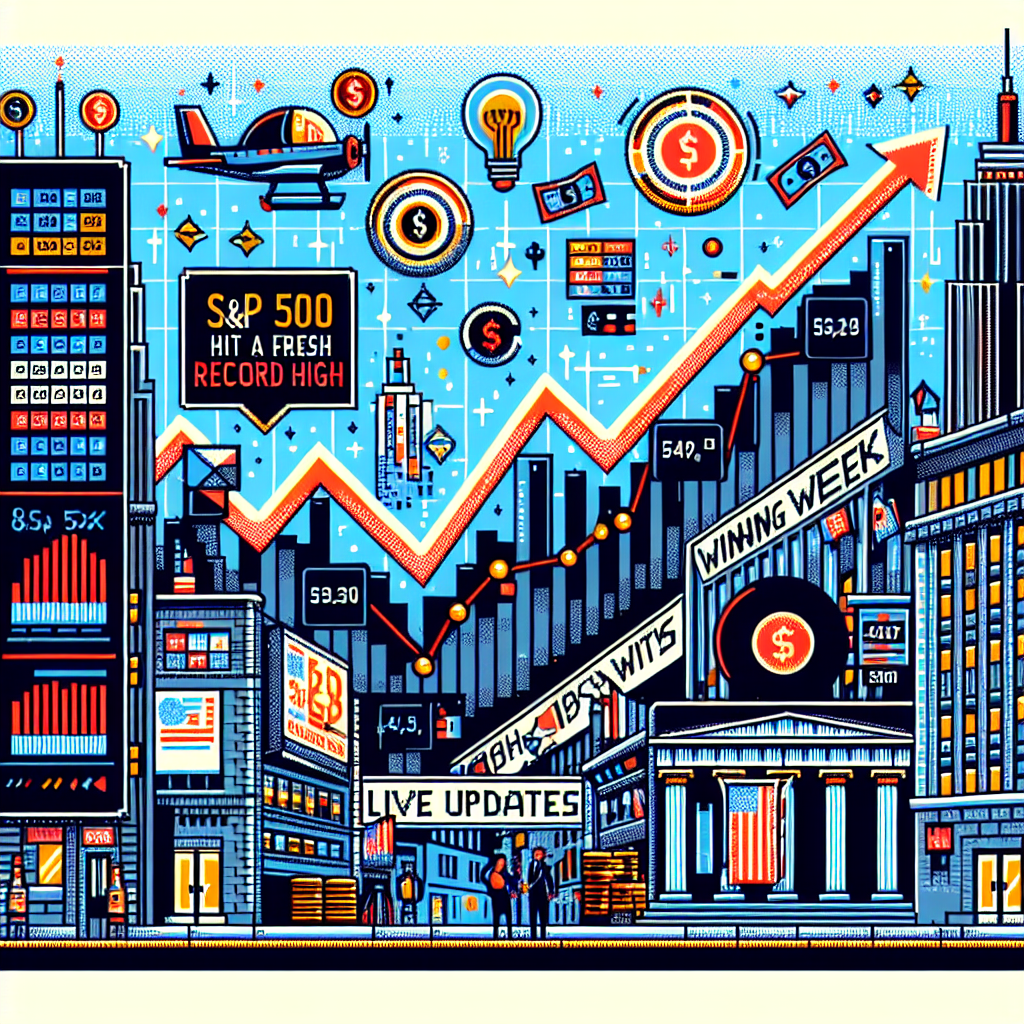
The markets came back from their Christmas break like someone who just remembered they’d left the oven on — brisk, decisive, and not apologetic. On Friday, the S&P 500 notched another fresh record high and put Wall Street on pace for a winning week as traders returned to a thin, year‑end trading tape. The headline is simple; the story under it is a mix of momentum, rotating leadership, and the familiar tug-of-war over Fed policy and valuations.
What happened (quick snapshot)
- The S&P 500 reached a new all‑time high on Friday, extending a year‑end rally that has left major U.S. indices near or at record territory. (Markets had been closed Thursday for the Christmas holiday.)
- The index was pacing for weekly gains and coming off several recent record sessions earlier in the week.
- Traders pointed to continued momentum, sector rotation away from frothy tech names into more moderately valued stocks, and continued investor focus on the Federal Reserve’s path for rate cuts and upcoming Fed minutes.
Why this felt different than a routine rally
- Holiday trading is thin. With many market participants out, moves can look stronger than they are — a small flow of buying can lift indices. But thin volume alone doesn’t explain the recent run: earnings and economic signals have kept conviction alive.
- Rotation, not just rally. While technology and AI leaders have driven much of the longer-term bull market, recent sessions showed money moving into financials, transports, healthcare, and small caps. That breadth matters: it makes a record close feel more durable than one dominated by just a few mega-cap winners.
- The Fed narrative matters. Markets are digesting the timing and size of future rate cuts. Investors have rallied around the idea that easing is coming, but Fed votes and minutes have shown disagreements — which creates both fuel for gains and occasional bumps when expectations shift.
Market forces at play
- Earnings season and corporate guidance: solid reports from large companies can keep the tape moving higher even when macro signals are mixed.
- Rate-cut expectations: every hint that the Fed may ease later or slower than feared nudges valuations higher — particularly for growth names — but also prompts rotation if growth’s premium looks stretched.
- Year-end positioning: portfolio flows, “window dressing,” and tax-related moves (like rebalancing) often amplify moves in late December. Traders returning after the holiday sometimes accelerate those flows.
Where the risks are now
- Valuations: fresh highs make headlines, but they also raise questions about how much good news is already priced in. That’s especially true if earnings growth slows or if inflation proves stickier than hoped.
- Fed uncertainty: minutes and Fed chair nominations are political and market events that can quickly change expectations for rates.
- Thin liquidity: record closes during thin holiday trading can be less reliable indicators of the coming trend; early January often sees more decisive moves as liquidity returns.
Things investors should watch in the coming days
- Fed minutes and any comments from policy makers about timing of cuts.
- Earnings from a handful of market leaders that can either reinforce this rally or undermine it.
- Breadth indicators (how many stocks are making new highs versus lows) — they tell whether the move is broad-based or top-heavy.
- Volume and volatility as the New Year approaches: if volume stays low while prices pop, the chance of a sharper retracement rises.
A few quick takeaways
- The fresh S&P 500 high is real, but context matters: the rally blends genuine earnings/rotation strength with holiday‑thin trading dynamics.
- Broadening participation across sectors matters more than headline highs driven by a handful of megacaps.
- Fed communications are the next big market catalyst; minutes and speeches can tilt the odds of continued gains.
My take
Record highs make for feel‑good headlines, and they deserve that moment of celebration. But markets rarely move in a straight line for long. Right now the picture looks constructive: earnings resilience, some rotation into traditionally undervalued areas, and still‑solid investor appetite. Still, the combination of thin holiday liquidity and an unresolved Fed story suggests prudence — for traders and long-term investors alike. Use the calm to check your exposures and risk tolerances; don’t confuse year‑end cheer with a free pass to ignore valuation and diversification.
Sources
Related update: We recently published an article that expands on this topic: read the latest post.

Morning market pulse: five things investors should know before the bell
The market opens like a morning radio dial: a few headlines, a surprise on the tape, and suddenly portfolio emotions are humming. Today’s mix feels like that—economic growth that surprised, a regulatory pause that eases tech pressure, a fresh S&P milestone, and the usual questions about where bond yields and inflation fit into the picture. Below are the five things investors should keep front of mind as trading starts.
Quick hits for busy investors
- U.S. economic growth came in stronger than many anticipated, giving risk assets a tailwind. (apnews.com)
- Washington pushed back on near-term chip tariffs, a welcome reprieve for technology and manufacturing supply chains. (reuters.com)
- The S&P 500 hit a new record as investors leaned into tech and rate-cut hopes. (reuters.com)
- Bond yields and inflation data remain the variables that could change the narrative quickly. (apnews.com)
- Market breadth matters: record highs driven by a few mega-cap winners can mask underlying fragility. (reuters.com)
1. Growth surprised — but read the fine print
Headline GDP growth beat street expectations, and that’s the kind of number that wakes traders up. Strong consumption and corporate spending pushed the headline higher, which supports the bullish case for equities. But a word of caution: growth beats can be two-edged. They may lift risk assets today while also reinvigorating inflation worries that could impede Fed easing later. Watch incoming inflation gauges and labor data closely; they’ll tell you whether this growth is durable or transitory. (apnews.com)
2. The chip-tariff delay is a tactical win for tech — strategic questions remain
Regulators have delayed implementing higher tariffs on certain semiconductor imports, which eases an immediate cost shock for chip-hungry industries. For firms running supply-constrained production schedules, that delay reduces near-term margin pain and lowers the risk of disrupted product roadmaps. But delaying a tariff is not the same as solving supply-chain fragility or the long-term strategic competition over semiconductors. Expect companies to use the breathing room to update guidance — and watch capex plans for evidence of longer-term reshoring or diversification. (reuters.com)
3. S&P keeps climbing — concentration risk is real
A new S&P 500 record tells us investors are confident, particularly about large-cap tech leaders and AI beneficiaries. Yet records driven by a cluster of mega-cap names raise the question of breadth: are most companies participating, or is market performance concentrated? When indices rally on a handful of stocks, risk is asymmetric — a shock to the leaders can amplify index pain. Portfolio tilt matters: if you’re overweight the rally leaders, consider whether your position sizing and stop-loss rules reflect the elevated correlation risk. (reuters.com)
4. Rates, yields and the Fed calendar still run the show
Even with strong GDP and a tariff pause, markets are sensitive to the path of interest rates. Recent moves show investors pricing in eventual rate cuts, which supports equities and higher multiple expansion for growth stocks. But if inflation re-accelerates or payrolls surprise to the upside, the Fed’s stance could stay firmer for longer — and that would pressure risk assets. Keep an eye on ten-year yields, the upcoming inflation prints, and any Fed commentary for clues on timing and magnitude of policy shifts. (reuters.com)
5. Earnings, guidance and sentiment will determine whether this is a rally or a run-up
Macro headlines move markets intraday, but corporate results and management commentary steer the trend. Better-than-expected revenue and margin outlooks will sustain optimism; cautious guidance could snap momentum. Also watch investor sentiment indicators — flows into and out of equities, options skew, and credit spreads — because they reveal whether participants are buying the rally or hedging against it. (reuters.com)
My take
We’re in a market that rewards conviction but punishes complacency. The mix of stronger growth and a regulatory pause is a constructive backdrop for stocks — especially tech — but it also raises the stakes on inflation and Fed expectations. For investors, that suggests a balanced posture: respect the rally, but keep risk controls in place, diversify across themes that can outperform in both a slower and a faster growth environment, and stay nimble around data releases. Position sizing and active monitoring matter more now than ever.
Sources
Related update: We recently published an article that expands on this topic: read the latest post.
Related update: We recently published an article that expands on this topic: read the latest post.

A quiet wobble after a sprint: Europe opens lower into a short trading week
The bell rang on a new, slightly cooler mood in European markets after a blistering session that pushed the STOXX Europe 600 to fresh heights. Investors who had been riding last week’s momentum found themselves pausing — not out of panic, but because the calendar and a handful of data points demanded caution. With holiday-thinned volumes and a packed macro calendar ahead, markets nudged lower at the open, trading a little more like someone checking their rear‑view mirror than sprinting into the next leg.
Why this matters right now
- The STOXX Europe 600 recently made headlines by touching record intraday levels, a sign of broad-based risk appetite that had been building across sectors.
- That optimism collides with thin liquidity during a holiday-shortened week, and with high-impact U.S. data on the horizon that can reshape expectations for Fed policy and cross‑border capital flows.
- When markets are at or near record highs, small news or low-volume trading can create outsized moves — a recipe for early-session weakness even if the longer-term trend stays intact.
Quick takeaways for traders and observers
-
- Recent market highs don’t eliminate short-term volatility; they often amplify it when trading is light.
-
- A holiday-shortened week typically lowers volumes, increases bid-ask spreads, and makes index moves less reliable as trend signals.
-
- U.S. macro prints (GDP, jobs, inflation) and central-bank commentary are the main event drivers this week; Europe is trading in their shadows.
What drove the record — and why the pullback?
The STOXX Europe 600’s recent peak reflected several overlapping positives: cooling U.S. inflation readings that revived hopes of earlier or larger rate cuts from the Federal Reserve, solid corporate news in parts of the market (notably healthcare and select industrials), and central bank commentary in Europe that’s been interpreted as less hawkish than earlier in the year.
But those tailwinds can be fickle. On the first trading day of the shortened week, market participants pulled back:
- Liquidity effects: Many institutional desks run lighter books around holidays. When fewer players are in the market, even modest sell orders can nudge indices downward.
- Event risk: With major U.S. releases and a slew of central bank-watch headlines imminent, traders often prefer to pare risk rather than add it into potential surprise prints.
- Profit-taking: After record or near-record sessions, some investors lock in gains — a normal reassessment rather than an alarm bell.
These dynamics explain why markets can “open negative” even after an upbeat close: the intra-day rhythm shifted from buying-led momentum to cautious repositioning.
Sector and stock dynamics to watch
- Healthcare: Recent regulatory and earnings wins have powered some of the index’s advance; any reversal here would be notable because healthcare has been a leadership pocket.
- Banks: Banking stocks have been market movers this year. Their direction tends to reflect both macro expectations for rates and deal flow (M&A, capital activity).
- Commodities and miners: Moves in gold, copper and oil continue to bleed into related stocks — and commodity strength can reinforce confidence in cyclicals.
The investor dilemma
Investors face a classic year-end tradeoff: hang on for the potential of more gains (momentum and year-end flows can keep pushing indices up) or step aside until the macro picture — especially U.S. growth and Fed guidance — clears up. Both choices are rational; the right one depends on risk tolerance, time horizon and liquidity needs.
- Short-term traders: Consider tighter stops and smaller sizing because thin markets can quickly exaggerate moves.
- Longer-term investors: Use dips as opportunities to rebalance rather than panic-sell; the underlying macro picture and corporate earnings trends remain the better compass for multi‑month positioning.
Market psychology matters more when volume is thin
When the market is crowded on one side, and liquidity is low, sentiment can swing quickly. That means:
- Headlines around trade, regulation, or a single large stock (for example, big moves in healthcare or energy names) can produce index-level noise.
- Volatility metrics and option-implied skew may be better gauges of market sentiment than plain price action in a holiday week.
My take
A negative open into a short trading week shouldn’t be overinterpreted. Think of it as a market taking a breath — recalibrating after a run and preparing for the next round of news. The record intraday highs tell you that the bull case has traction, but the current environment rewards patience and discipline. If you’re tactical, tighten exposure and keep an eye on macro releases. If you’re strategic, use small pullbacks to rebalance toward long-term themes rather than trying to time every short-term jitter.
Sources
Related update: We recently published an article that expands on this topic: read the latest post.
Related update: We recently published an article that expands on this topic: read the latest post.

November’s market mood: bright leaders, shaky foundation
Monday’s market tape told a familiar — and a little unsettling — story: the Nasdaq and S&P 500 quietly closed higher, lifted by a handful of AI and mega‑cap tech winners, while more than 300 S&P 500 stocks finished the day in the red. That kind of skew — a few names powering headline gains while many constituents lag — is the market’s current frisson: impressive on the surface, fragile underneath.
What happened (the quick read)
- Major AI‑exposed names and cloud/semiconductor plays rallied and helped the indices eke out gains.
- Stock futures slipped slightly the next session as investors digested valuation chatter, profit‑taking and mixed earnings signals.
- Market breadth remained weak: hundreds of S&P 500 components fell even though the cap‑weighted indexes rose, highlighting concentrated leadership.
Why breadth matters
When a market rally is driven by a narrow group of stocks, the headline numbers can mask risk. A cap‑weighted index like the S&P 500 gives outsized influence to the largest companies, so the top handful of megacaps (the “Magnificent Seven” or similar groups) can lift the index even while most companies decline.
- Narrow leadership raises volatility risk: if one or two leaders stumble, index performance can unwind quickly.
- Weak breadth signals potential for rotation: sectors or mid‑caps that haven’t participated may suddenly correct further or rebound sharply if sentiment shifts.
- Valuation sensitivity grows: when gains concentrate in richly valued AI/tech names, any hint of earnings disappointment, regulatory pressure, or slowing adoption can trigger swift re‑pricing.
The context you should keep in mind
- AI enthusiasm has been a strong theme through 2025: big cloud deals, hyperscaler capex and continued demand for AI chips kept investor attention fixed on a small group of winners.
- Many companies are still reporting solid earnings — a reason some strategists argue the rally isn’t just speculative. But even with good results, the market’s recovery is uneven.
- Macro and policy noise (interest‑rate speculation, data delays from the U.S. government shutdown earlier in November, and geopolitical headlines) adds an extra layer of sensitivity to any cracks in leadership performance.
Market signals to watch this week
- Earnings from big tech, chipmakers and cloud providers — these can either reinforce the narrow rally or expose cracks.
- Breadth indicators: the number of advancing vs. declining S&P 500 stocks, and how many are above their 200‑day moving averages.
- Volatility and flows: VIX moves and ETF flows into/out of mega‑cap tech versus broad market funds can show whether investors are rotating or doubling down.
- Macro prints (jobs, Fed commentary) — still decisive for risk appetite and valuation multiples.
What investors can consider (practical framing)
- Check exposure concentration: make sure your portfolio isn’t unknowingly overloaded with a few mega‑cap tech names.
- Think in scenarios, not certainties: prepare for both continued AI momentum and for a re‑rating if sentiment shifts.
- Revisit risk controls: position sizes and stop rules matter more when leadership is narrow and velocity of moves is high.
- Look for quality breadth opportunities: beaten‑down cyclicals or small‑caps with improving fundamentals may offer better risk/reward if rotation arrives.
A snapshot: the narrative versus the reality
Narrative: “AI is lifting markets — buy the leaders.”
Reality: AI‑related leadership is real and powerful — but it hasn’t broadly lifted the market. That divergence means headline gains can be fragile if those leaders catch a cold.
My take
I find this market simultaneously thrilling and unnerving. The technology and AI stories driving gains are compelling — real revenue, real capex, and real productivity use cases — but markets priced on a handful of outcomes are brittle. For investors, nuance matters more than conviction right now: it’s a time to be thoughtful about concentration, to respect strong themes like AI without letting them blind you to poor breadth, and to balance optimism with risk management.
Sources
Related update: We recently published an article that expands on this topic: read the latest post.
Related update: We recently published an article that expands on this topic: read the latest post.
