The Bulls’ latest roster demolition: why trading Ayo Dosunmu hurts and makes sense
There’s a particular sting when a hometown player you’ve watched grow into a reliable pro is packed into a trade bag and sent away before you’ve finished your mid-morning coffee. That’s what happened Thursday when the Chicago Bulls — in the middle of a blitz of deadline moves — shipped Ayo Dosunmu out of town, along with Julian Phillips, while Dalen Terry had already been moved earlier in the day. It felt less like a nudge in a new direction and more like a wholesale teardown.
Below I unpack the context, the logic from both sides, and what this cascade of trades means for the Bulls’ short- and long-term identity.
Why this felt like a gut punch
- Dosunmu is a hometown success story. Drafted in the second round out of Illinois in 2021, he’d steadily built a reputation as a gritty two-way guard who could defend, create shots, and provide energy off the bench or in spot starts. The emotional attachment runs deep for Chicago fans. (chicago.suntimes.com)
- The timing. The Bulls had already moved other recognizable pieces (Kevin Huerter, Nikola Vučević, Coby White in earlier deals reported around the deadline), so Dosunmu’s exit felt like another brick pulled from the house rather than a strategic remodel. The narrative shifted from “retool” to “rebuild.” (chicago.suntimes.com)
- Certainty of departure. Dosunmu was on an expiring deal, meaning the Bulls’ front office faced a classic decision: try to hold onto a fan favorite for a modest chance at a playoff push, or flip him now for longer-term assets. They chose the latter. (foxsports.com)
The trade details (the essentials)
- Minnesota Timberwolves received: Ayo Dosunmu and Julian Phillips. (espn.com)
- Chicago Bulls received: Rob Dillingham, Leonard Miller and four future second-round draft picks (reports vary slightly by outlet on exact package timing but the core pieces are consistent). (espn.com)
Dalen Terry, a former first-round pick who never quite locked a long-term role in Chicago, was moved earlier to New York in a deal that brought back Guerschon Yabusele — a move the Sun‑Times framed as partly bookkeeping and partly an admission of development misfires. (chicago.suntimes.com)
The front-office logic: accelerating a rebuild
- Asset accumulation: The Bulls picked up young prospects and multiple second‑rounders. For a team that’s now clearly pivoting away from the current competitive window, extra picks and young talent are valuable currency. Getting Rob Dillingham (a former lottery pick) and Leonard Miller + draft capital gives Chicago lottery upside and trade chips down the line. (foxsports.com)
- Avoiding forced re-signs: Dosunmu was an expiring salary and likely would test free agency in the summer. Rather than risk losing him for nothing, the Bulls monetized his value now. That’s pragmatic, even if it’s unpopular with the fanbase. (wsls.com)
- Clearing confusion: The Bulls’ roster had a jumble of veterans and young wings — moving several established players creates clarity: this is a reset. Artūras Karnisovas has repeatedly said the roster would change; this is the literal fulfillment of that promise. (chicago.suntimes.com)
What Minnesota gains (and why they made the move)
- Immediate two-way depth: Dosunmu brings energy, defense, and 3‑point shooting that can slide into bench lineups beside Anthony Edwards and boost the Wolves’ perimeter options for a playoff push. He was averaging career-high scoring numbers and shooting efficiently this season — traits playoff teams covet for bench scoring. (foxsports.com)
- Short-term upgrade: For a contender trying to solidify a seed, adding a polished, affordable rotation guard for the stretch run is low-risk, high-return — especially if Dosunmu fills a role and hits free agency as hoped.
The cost: what Chicago might be sacrificing
- Fan goodwill and identity: The Bulls are shedding hometown and popular players in rapid succession. That erodes continuity and makes it harder to sell future rebuilds to a passionate local fanbase. (chicago.suntimes.com)
- Developmental risk: Rob Dillingham and Leonard Miller are young, but neither is a guarantee. Turning proven role players into prospects and picks carries the usual gamble: will those assets become meaningful rotation pieces? (foxsports.com)
- Perception of incompetence vs. intentionality: Critics will point to busts or mis-picks (the Sun‑Times referenced Dalen Terry not meeting expectations) to paint the front office as flawed. But that critique sits beside a competing narrative: smart teams sometimes need to cut losses and gather flexibility. (chicago.suntimes.com)
Quick wins and longer arcs
- Short-term: The Bulls will be worse this season on paper — fewer proven scorers and continuity. That may help draft positioning.
- Medium-term: If Chicago’s evaluators hit on their lottery/later picks and Dillingham/Miller develop, the franchise could swap mid-tier veterans for younger controllable talent and reload cap flexibility.
- Long-term: This is a multi-year bet. The scoreboard pain now could pay out only if the front office nails scouting, player development, and later acquisitions.
What to watch next
- How Rob Dillingham and Leonard Miller are deployed — are they given minutes or flipped for different assets?
- The Bulls’ summer strategy: will they chase a franchise-level swing in free agency, or keep stockpiling picks and hope for a high draft position?
- Dosunmu’s role in Minnesota and whether he re-signs in free agency — his performance there will color how this deadline trade is judged.
Key takeaways for Bulls fans
- This was a decisive, not incremental, pivot: the front office is embracing a rebuild and sacrificing immediate familiarity for future optionality. (chicago.suntimes.com)
- The Bulls gained prospects and picks in exchange for proven role players — a tradeoff between certainty today and upside tomorrow. (foxsports.com)
- How the club executes on development and future draft decisions will determine whether these moves become celebrated or regretted.
My take
I get the frustration. Trading a hometown player like Ayo Dosunmu stings because it’s personal — he represented a connective thread between the team and the city. But the NBA is a market of windows. The Bulls’ leadership appears to have decided that clinging to incremental competitiveness this season was less valuable than clearing a path to a new core. That’s defensible, even if it’s ugly in the moment.
If Chicago’s brain trust can translate those second‑rounders and young pieces into real talent or smart trades, this chapter will read like a necessary reset. If they don’t, this will look like an avoidable demolition. For now, it’s a bold bet — and bold bets are always polarizing.
Sources
Related update: We recently published an article that expands on this topic: read the latest post.
When a Season Tilts: DaRon Bland, the Cowboys’ Corner, and the Fragility of Momentum
A gut-punch moment for Cowboys fans: DaRon Bland — the All-Pro corner who altered games with his ball-hawking instincts — is now a realistic injured‑reserve candidate because of a foot issue that surfaced during preparations for the Week 16 matchup against the Los Angeles Chargers. That single sentence carries ripple effects for Dallas’s defense, roster decisions and the feel of the locker room the rest of the way.
Quick hits you should know
- DaRon Bland was added to the Cowboys’ practice/injury reports Dec. 18, 2025, after a foot problem that sidelined him during midweek practice and made him unlikely to play Sunday versus the Chargers. (dallascowboys.com)
- The team signaled the injury could be serious enough to require placing Bland on season‑ending injured reserve, which would end his 2025 campaign with three games remaining. (dallascowboys.com)
- Bland’s availability has been a recurring storyline since 2024, when a foot stress fracture forced him to miss significant time; durability is becoming a concern for a player on a big contract and with All‑Pro pedigree. (dallasnews.com)
The context: why this matters beyond one roster move
Bland is not just “a corner” for the Cowboys — he’s a playmaker with a history of flipping field position and generating turnovers. In 2023 he exploded onto the national radar, leading the league with nine interceptions and returning an unprecedented five for touchdowns. The Cowboys leaned on that playmaking ability as a cornerstone of their secondary identity.
When a player like Bland becomes unavailable late in the season, several things happen at once:
- Opposing offenses adjust, targeting the side away from the team’s most disruptive defender. That can force the Cowboys to rotate coverages more or rely on less‑proven teammates.
- The coaching staff suddenly faces pressure to retool matchups and potentially increase Trevon Diggs’ snaps (if/when he’s available), or to accelerate the development of younger corners. Reports indicate the Cowboys were already juggling Diggs’ status and other cornerback windows. (dallascowboys.com)
- The front office and medical staff must balance short‑term competitiveness against long‑term health. Putting Bland on IR could protect his recovery and the team’s future investment, but it also concedes immediate defensive continuity.
What the roster implications look like
- If Bland lands on injured reserve: Dallas must hollow out a starting-caliber role across the secondary for the remaining three games, or shuffle Diggs and backups into heavier duty. The team has options — returning players from the practice squad window, flipping nickel personnel, or leaning on coverage schematics that mask inexperience — but none are perfect substitutes for an All‑Pro. (dallascowboys.com)
- If Bland avoids IR and misses only a few games: the Cowboys preserve a matchup advantage for the playoffs (in a healthy scenario), but risk aggravating the injury and possible surgery/longer absence later. Given Bland’s recent foot history, conservative management is a rational path. (dallasnews.com)
What this means for the Chargers game — and the rest of the month
Even if Bland is inactive Sunday, the Cowboys can still defend well on schematic strength and pass rush. Still, his absence compresses margin for error: coverages that rely on tight single‑coverage outside could be more vulnerable, and Dallas may have to trust inexperienced alignments in crucial moments.
For the Chargers game specifically, expect the Cowboys to:
- Mix zone and help over the top to keep receivers away from the sideline where young corners can get isolated.
- Increase safety rotation and safety‑to‑slot matchups to account for mismatches.
- Consider elevating practice‑squad or depth corners to provide fresh legs and special‑teams value.
My take
It’s disappointing on a human level — no player wants to see a season end in a quiet medical room rather than the bright lights of a game. For the Cowboys, this moment reveals two hard truths: elite playmakers are also fragile, and a good roster is built not only with stars but with dependable depth plans. I’d rather see the team make the prudent medical call even if it costs the next three games. Protecting Bland’s long‑term health preserves the investment and gives Dallas a chance to start 2026 with one of its best defenders healthy.
Final thoughts
Injuries are the cruel equalizer of the NFL. The way Dallas responds — schematically and in roster moves — will show whether the organization learned from past seasons about building sustainable depth. Fans should brace for a few imperfect weeks, but also remember that smart, measured decisions now could be the difference between a recovered All‑Pro next fall and a chronic problem that lingers beyond one campaign.
Sources
Related update: We recently published an article that expands on this topic: read the latest post.
Related update: We recently published an article that expands on this topic: read the latest post.
Who’s healthy — and who isn’t — as Georgia readies for the SEC rematch with Alabama
The Bulldogs and Crimson Tide meet again on Saturday, December 6, 2025, at Mercedes‑Benz Stadium — a rematch that already feels like postseason theater. But beyond Xs and Os, the story this week is the injury report: who’s cleared to play, who’s out, and how those absences reshape Georgia’s game plan against an Alabama team that beat them 24–21 earlier this season.
Quick snapshot
- Game: Georgia vs. Alabama — SEC Championship
- Date and time: Saturday, December 6, 2025 — 4:00 p.m. ET
- Stakes: SEC title and positioning for the College Football Playoff
What the injury list looks like for Georgia
Georgia’s initial SEC availability report and subsequent team updates show a handful of notable absences and a couple of question marks. The most consequential headlines:
-
Drew Bobo (center) — Out.
- The absence of Bobo is the biggest single blow to Georgia’s starting personnel. Losing a starting center forces line shuffling and can affect run- and pass‑blocking continuity on both the first- and second-level play calls. Multiple outlets report Bobo ruled out after a foot injury sustained against Georgia Tech. (saturdaydownsouth.com)
-
Bo Walker (running back) — Out.
- Walker, who had flashed big-play ability late in the season, is listed out after a facial fracture. That reduces Georgia’s depth and explosiveness in the backfield. (on3.com)
-
Jordan Hall (defensive tackle) — Out for season.
- Hall’s knee injury cost Georgia interior defensive line depth and rotational pass‑rush ability. That’s meaningful against an Alabama offense that relies on tempo and physicality. (on3.com)
-
Kyron Jones (safety) — Out.
- Jones’ absence forces secondary adjustments; Georgia has leaned on depth and versatility in the back end, so this matters for matchup coverage versus Alabama’s big play threats. (on3.com)
-
Ethan Barbour (tight end) and Colbie Young (wide receiver) — Out.
- Both limit Georgia’s pass-catching options and tight-end rotations, nudging the offense toward more reliance on the healthy pass-catchers and running game. (si.com)
-
Earnest Greene (offensive line) — Questionable.
- If Greene is limited or unavailable, that further strains an offensive line already missing its starting center. (si.com)
Outside of those outs, Georgia listed Zion Branch as questionable at one point; availability updates were expected right up to kickoff. The injury picture has been evolving throughout the week, so final game‑day active rosters will be the ultimate indicator. (si.com)
Why these injuries matter — quick analysis
-
Offensive line continuity is king. Losing Drew Bobo at center is more than one missing starter: center is the anchor of line calls, protections, and the position that often dictates how comfortably a QB operates in the pocket. With Bobo out and Greene banged up, Georgia’s line must be cohesive against Alabama’s well‑coached front. If the Dawgs can’t establish consistent protection, their offense gets one-dimensional. (saturdaydownsouth.com)
-
Depth is being tested. The Bulldogs have historically relied on roster depth, rotation, and physical play. Losing rotational pieces on the line, in the trenches, and in the secondary compresses that advantage. In a rivalry rematch, depth shortages become magnified late in the game. (on3.com)
-
Alabama can exploit specific matchups. With Georgia’s secondary and interior line thinned by injuries, Alabama has incentives to attack inside, use play-action off screens, or lean on quick shots and tempo to force mismatches and fatigue. Conversely, Georgia’s defensive scheme and pass rush must compensate by creating pressure and disguising coverages. (reuters.com)
-
Special teams and situational football rise in importance. Close, low‑scoring rivalry games hinge on field position, penalties, clock management, and one or two swing plays. That’s even truer when injuries cut into starting rosters; coaches often pivot to situational efficiency when their playbooks feel limited. (ajc.com)
Matchup wrinkles to watch on Saturday
-
Who snaps the ball? Watch Georgia’s interior offensive line rotation and how the new center integrates protections and shotgun snaps. A miscue there can create turnovers or negative plays that swing momentum.
-
Short passing to neutralize rush: If Georgia’s line can’t buy time, expect more quick releases and screens to get the ball into playmakers’ hands before Alabama’s pass rush can collapse the pocket.
-
Alabama’s tempo vs. Georgia’s depth: If Alabama pushes pace, Georgia’s depleted depth could suffer late. Conversely, Georgia may try to control the clock with shorter drives and physical runs to blunt UGA’s roster disadvantage.
-
Red-zone and third-down efficiency: With fewer weapons and line changes, Georgia’s ability to sustain drives and convert on third down will be a litmus test for their adapted game plan.
What this means for the playoff picture
This matchup is about more than state bragging rights; the SEC title heavily impacts College Football Playoff positioning. Georgia’s ability to manage injuries and play clean, situational football will determine whether they lock in a top playoff seeding or hand Alabama a résumé-boosting conference championship. The margin for error is thin, and injuries increase variance — meaning special teams, turnovers, and one-break plays could decide the outcome. (reuters.com)
What to expect from Kirby Smart and staff
Based on coach comments and normal postseason posture, expect Smart to:
- Emphasize fundamentals: blocking, tackling, and limiting penalties.
- Simplify certain looks to protect younger linemen and preserve tempo.
- Trust veteran leaders to absorb increased responsibility, especially on defense. (ajc.com)
Closing thoughts
Georgia enters Saturday with talent, tradition, and stakes — but also with some clear holes to plug. The Bobo absence is the clearest structural change; how seamlessly the Dawgs replace him and whether the rest of the roster can stay healthy will shape the game’s narrative. In rivalry rematches like this one, coaching adjustments and mental toughness often make the difference. Expect a chess match where details — not hype — decide the winner.
Final thoughts
Injuries are part of football’s fabric, especially in November and December. Georgia’s depth has been battle-tested before, and the Bulldogs still have multiple weapons and a championship pedigree. But against a disciplined Alabama side that beat them earlier this season, those missing pieces raise the stakes. Saturday should be a tight, strategic game — and the team that adapts best to its personnel realities will likely walk away with the SEC crown.
Sources
Related update: We recently published an article that expands on this topic: read the latest post.
Related update: We recently published an article that expands on this topic: read the latest post.
A night of answers from Karl-Anthony Towns and a resurgent Josh Hart
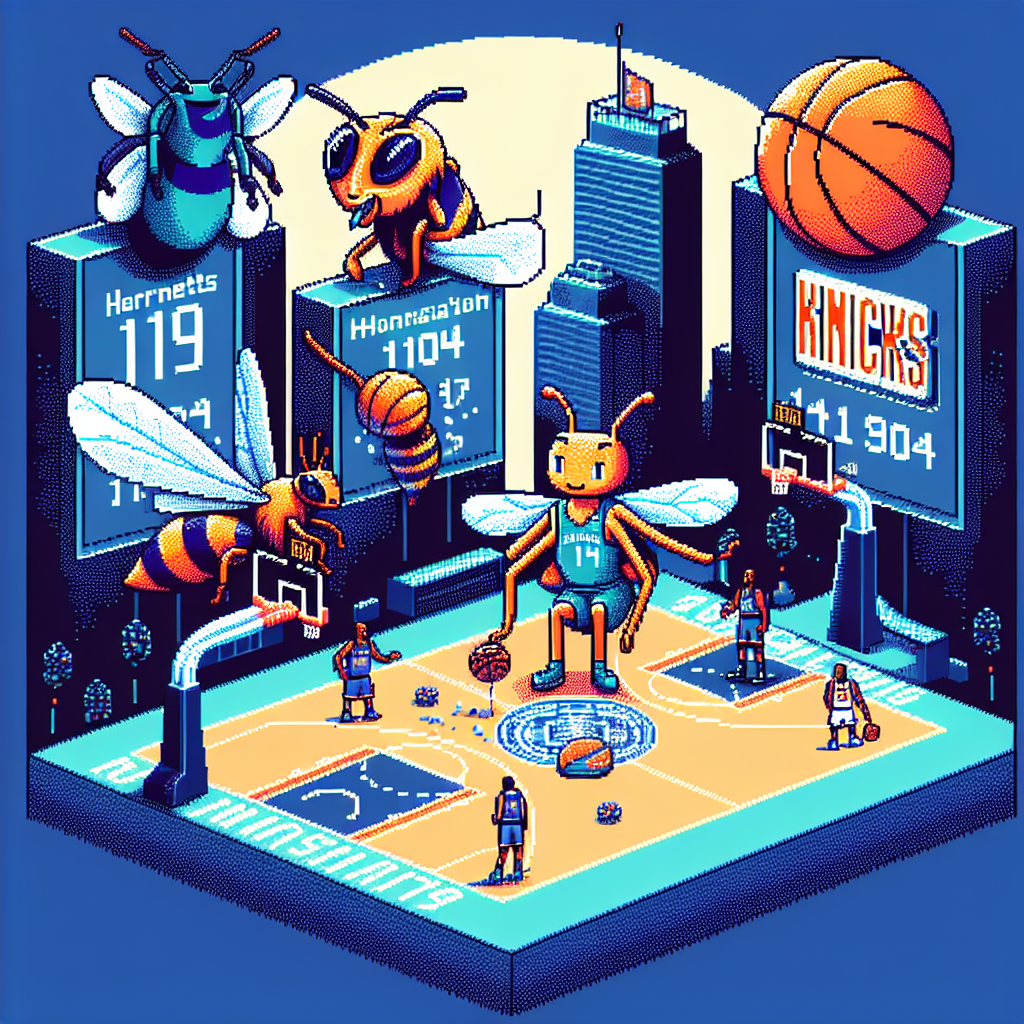
The Garden buzzed with trade-whisper electricity, but when the ball tipped on December 3, 2025 the Knicks handed the rumor mill a shrug and a statement instead: Karl‑Anthony Towns showed up like the franchise cornerstone he can be, and Josh Hart reminded everyone why his intangibles matter as much as his box‑score numbers. New York beat Charlotte 119–104 in a game that read like a quick lesson on prioritizing on‑court clarity over off‑court noise. (nbcsports.com)
What happened — quick snapshot
- Karl‑Anthony Towns: 35 points, 18 rebounds, 5 assists — the kind of dominant, all‑around center night that changes matchups and moods. (nbcsports.com)
- Jalen Brunson: 26 points and the buzzer‑beating triple that staved off a Hornets run before halftime. (espn.com)
- Josh Hart: 15 points, 8 rebounds, 8 assists — near a triple‑double and a reminder that “glue guy” production is real production. (espn.com)
The Knicks led 27–12 after one and controlled big stretches of the middle quarters, even while LaMelo Ball tried to force a late drama with 34 points for Charlotte. The Garden went home happy; the media landscape kept spinning. (reuters.com)
The larger context — why this mattered
-
Trade talk swirled earlier in the night after reports about Giannis Antetokounmpo’s desire to be moved and hypothetical packages that often featured Towns leaving New York. That kind of chatter can destabilize a locker room on paper; in practice, this was Towns’ answer. He shrugged off speculation and produced a matchup‑dominating, physical performance inside the paint rather than living on the perimeter. (nbcsports.com)
-
Towns’ 35/18 was more than a stat line; it was the kind of two‑way presence that forces opponents to change lineups and priorities. On a roster still integrating pieces under Mike Brown, a consistent 48‑minute anchor helps stabilize offensive spacing and rebounding. (reuters.com)
-
Josh Hart’s return to a starting role — and his near‑triple‑double output — feels like the revival of a veteran who complements Towns and Brunson in a way that’s hard to quantify: defensive intensity, loose‑ball instincts, timely creation. His recent run of games had already shifted narratives; Wednesday simply confirmed that the Knicks’ rotation choices can pay off. (nbcsports.com)
Strategic takeaways
-
Towns inside-out: For stretches he abandoned the three and dominated the paint (20 of his 35 points came in the paint), which is an adjustment that keeps defenses guessing and benefits Brunson and Bridges spacing‑wise. It’s a reminder that Towns’ best nights can still come when he leans on inside scoring and offensive rebounding. (nbcsports.com)
-
Rotation chemistry matters more than headlines: When a team with legitimate title aspirations experiences trade conjecture, the easiest casualty is cohesion. New York’s five starters accounted for 107 of the team’s 119 points—evidence that when its core runs together, the outcome looks tidy. (reuters.com)
-
Hart’s role is versatile and undervalued: He contributes across the board and his current run suggests several things teams covet that won’t always show up in highlight reels—defensive ratings, hustle plays, and playmaking at the margins. Coach Mike Brown’s willingness to adjust rotated the narrative and boosted results. (nbcsports.com)
A closer look at the Hornets’ challenge
LaMelo Ball’s fourth‑quarter surge (16 of his 34 points came in the final frame) highlighted one vulnerability: New York’s lapses in closing minutes when opponent tempo spikes. Charlotte clawed back multiple times, and while the Knicks answered, the sequence is a neat preview of how elite scorers can create late drama even when a game feels settled. The Knicks’ ability to weather that and close with stops — aided by bench energy from Miles McBride and solid team free‑throw shooting — kept the W intact. (reuters.com)
Things to watch next
-
Will Towns keep running heavy interior minutes instead of chasing threes? This game suggested a sustainable arthritic approach: pick your spots from deep, but own the paint more nights than not. (nbcsports.com)
-
Can Josh Hart keep this two‑way efficiency while starting? If yes, New York’s depth chart suddenly looks harder for opponents to game‑plan around. (nbcsports.com)
-
How will the organization respond to external trade pressure? One performance doesn’t change the calculus in the front office, but on‑court cohesion can influence future thinking. (nbcsports.com)
My take
Sometimes basketball produces neat narrative symmetry: the louder the rumors, the clearer the performance. Towns answered with elbows‑up paint work and authority; Hart quietly reminded us he’s a two‑way rhythm keeper. The Knicks aren’t perfect — they still have late‑game breakdowns and questions about long‑term ceiling — but nights like this buy time, belief, and a little breathing room around messy trade talk.
Notes from the box
- Knicks improved to 11–1 at Madison Square Garden. (espn.com)
- New York shot 85.2% from the free‑throw line; Charlotte shot 90.5% from the line on fewer attempts. (reuters.com)
Sources
Related update: We recently published an article that expands on this topic: read the latest post.
Related update: We recently published an article that expands on this topic: read the latest post.
A comeback for the ages: Blazers end Thunder’s last unbeaten run
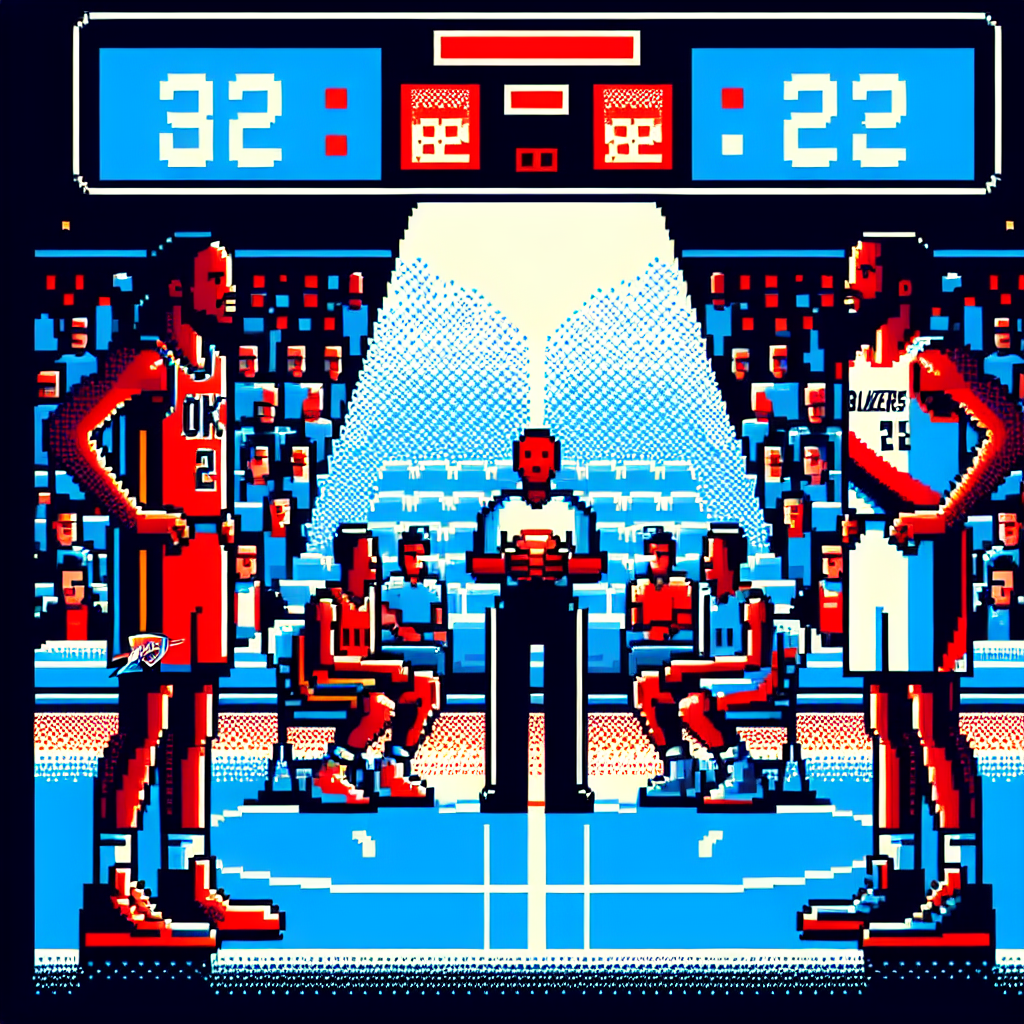
An electric night at the Moda Center turned into a reminder that no lead is truly safe in the modern NBA. On Wednesday, the Portland Trail Blazers erased a 22-point first-quarter deficit to beat the Oklahoma City Thunder 121–119 — and in the process handed the defending champions their first loss of the season. What looked like a runaway game for OKC early became a pulse-pounding finish, and the league’s last unbeaten tag came tumbling down.
Why this game mattered
- The Thunder entered the night as the NBA’s final undefeated team, riding an 8–0 start.
- Portland’s comeback was dramatic — down by 22 in the first quarter and never leading until late in the fourth.
- The win snapped Portland’s long losing stretch to Oklahoma City and injected life into a Blazers squad looking to reestablish itself.
Game snapshot
- Final score: Portland Trail Blazers 121, Oklahoma City Thunder 119.
- Key performers:
- Deni Avdija: 26 points, 10 rebounds, 9 assists (nearly a triple-double).
- Jrue Holiday: 22 points, clutch free throws down the stretch.
- Shai Gilgeous-Alexander: 35 points, 9 rebounds for Oklahoma City.
- Turning point: A decisive 9–0 run by Portland late in the fourth quarter flipped momentum and gave the Blazers their first lead with about six minutes remaining.
- Closing drama: With 0.6 seconds left and trailing by three, Isaiah Joe was fouled on what replay showed to be a three-point attempt; his toe was on the arc, so he shot two free throws, making one and intentionally missing the second. OKC’s last-second tip-in did not connect.
The comeback in context
Comebacks like this are more than just a single-game thrill — they tell you about identity. Portland’s rally showcased:
- Veteran leadership: Jrue Holiday’s late-game poise (and free-throw composure) was textbook.
- Balanced attack: Avdija’s near-triple-double hinted at how Portland can create mismatches without relying on a single superstar.
- Tactical adjustments: After a brutal opening quarter (41–21 in OKC’s favor), Portland tightened rotations, leaned into 3-point shooting and stretched OKC’s defense by mixing lineups.
For Oklahoma City, the result is a harsh reminder that depth, availability and game management matter. OKC was missing several contributors, and while Shai was spectacular (35 points), basketball is a team product — and Portland out-executed them when it mattered.
What this says about both teams
- Portland: This win can be a turning point. Overcoming a 22-point deficit requires belief and execution; if the Blazers can bottle that resilience, they’ll be dangerous in stretches this season. For a young roster still finding its identity, veteran calm and role-player contributions are enormous positives.
- Oklahoma City: The Thunder remain talented and dangerous — the early-season buzz was earned. But this loss highlights potential vulnerability when rotations are thin and key role players are absent. It’s also a reminder that hot starts can be fragile and that game management in the fourth quarter remains crucial.
Moments that will linger
- Avdija’s late surge and efficiency from the line (he finished 15-of-16 at the stripe in the game) — impact beyond the box score.
- Holiday’s late-game shotmaking and free throws that ultimately sealed the win.
- The razor-thin ending where a toe on the arc and an intentional miss determined whether the Thunder would force overtime.
Takeaways worth remembering
- Upsets and comeback wins can reshape a team’s narrative quickly; momentum swings matter in a long season.
- Star scoring (Shai’s 35) is vital, but basketball still rewards depth and situational execution.
- The Thunder’s loss is not a collapse so much as a cautionary note about availability and closing out games; for Portland, it’s evidence they can compete with top teams when everything clicks.
My take
There’s a special electricity when a team erases a massive deficit and wins in dramatic fashion — it glue-s everything: coaching decisions, veteran steadiness, role players stepping up. Portland’s victory wasn’t a fluke; it was a full-team effort with timely shooting and defensive stops. For Oklahoma City, this game will sting, but the core is still elite. Expect both teams to take lessons from this one — Portland for confidence, Oklahoma City for course correction.
Sources
Related update: We recently published an article that expands on this topic: read the latest post.
Related update: We recently published an article that expands on this topic: read the latest post.