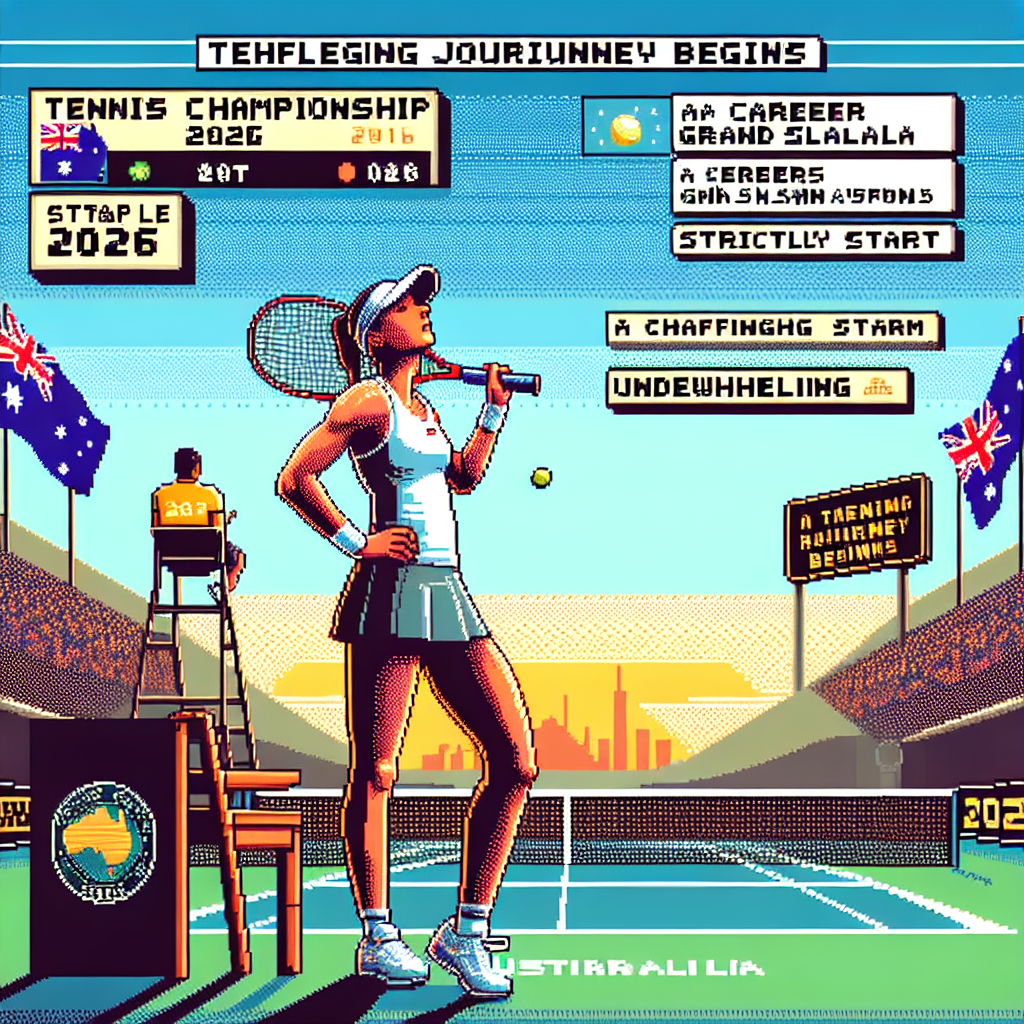
Iga Swiatek’s Melbourne wobble: a career-Grand-Slam bid that started rough, not broken
The first night lights at Rod Laver Arena are rarely kind to favorites who aren’t firing on all cylinders. Iga Swiatek — a player already with six majors on her résumé and the elusive Australian Open waiting to complete a career Grand Slam — survived more than scraped through on Day 2, edging Chinese qualifier Yuan Yue 7-6(5), 6-3 on 19 January 2026. It wasn’t the statement win many expected. But neither was it a collapse. What we saw was a champion reminded that the long road to a title can begin with a bumpy step.
The match, in three telling moments
- Yuan Yue served for the first set at 5-4 and generally played like someone who belonged on the big stage — aggressive, fearless and extending rallies that exposed Swiatek’s early rust.
- Swiatek’s backhand came to the rescue at the key moments: a clutch inside-out winner late in the set and decisive winners in the tiebreak kept Yuan from pulling off a shock.
- After a wobble that included three breaks conceded and a worrying 30+ unforced errors in some reports, Swiatek opened the second set with a 3-0 lead and eventually closed it out — but not without Yuan saving match point and showing grit before finally giving way.
Why this matters beyond a first-round scoreline
- A career Grand Slam is a rare and heavy objective. Winning Roland-Garros, Wimbledon and the US Open already proves Swiatek’s surface versatility; Melbourne, however, has its own demands — different bounce, climate, and a field where early-season form can vary wildly.
- The scoreline (7-6, 6-3) masks the effort required. Qualifiers like Yuan often arrive battle-hardened and low-pressure; they can be dangerous early, especially if a top seed hasn’t yet hit match speed.
- For Swiatek, the match was diagnostic: it revealed issues to tidy up (first-set starts, unforced errors under pressure) but also confirmed strengths to rely on (a heavy, accurate backhand and mental spine in clutch moments).
What the numbers and coverage say
- Match stats reported across outlets show Swiatek finished with a clear winners count but also an unusually high number of unforced errors for her standards — a classic sign of timing problems more than tactical failure.
- Multiple reputable reports (WTA, Reuters, AP and others) highlighted the same narrative: a scare in set one, late composure, and plenty to work on for the weeks ahead. The consistent takeaway across these outlets is that Swiatek did what champions do: find a way to win even on an off night. (wtatennis.com)
What fans and pundits are likely thinking
- Expect patience from the Swiatek camp. She’s beaten top opponents on all surfaces, and an opening match like this at a Grand Slam is not unprecedented even for eventual champions.
- Opponents will notice vulnerabilities they might try to exploit: early momentum swings, timing against deep hitters, and pressure points when Swiatek is not yet in rhythm.
- Yet the clinical backhand under pressure and the ability to close out tight moments remind us that Swiatek still has the tools necessary to go deep in Melbourne.
How this shapes the rest of her Australian Open
- Short term: Swiatek’s second-round draw (Marie Bouzková) offers a chance to sharpen match feet without an immediate return to the furnace of a top-10 heavyweight.
- Medium term: If she tightens up early-set starts and reduces unforced errors, the rest of the draw should be manageable. If not, Melbourne’s long days and varied opponents could create more slips.
- Long term: One scrappy match doesn’t rewrite a career — but patterns can. Coaches and analysts will watch whether this was a one-off rustiness or the beginning of a form dip that needs tactical or physical correction.
A few micro-lessons from Rod Laver Arena
- Qualifiers are dangerous: ranking is context-dependent; match tennis and momentum matter.
- Big-match composure counts: Swiatek’s backhand and ability to play the big point saved her here.
- Early-season tournaments can produce deceptive scorelines: close wins can hide problems, and straight-set losses can mask resurgence.
What I’m watching next
- How Swiatek manages her serve percentage and second-serve points won — improving those would make her much harder to pressure early.
- Whether she cuts down the unforced errors without sacrificing the winners that define her game.
- The timing: does she find a groove quickly against Bouzková, or will we see more scratched paint before she really starts firing?
Final thoughts
This was not the masterclass some expected from a player hunting career completeness, but it was a useful reminder: champions don’t always dominate — sometimes they survive and learn. Swiatek left Melbourne with a win and a highlight reel of clutch backhands. More importantly, she left with a to-do list. If she treats this opening night as a reset rather than a warning bell, her grand-slam ambitions remain alive — and perhaps sharper for having weathered the storm.
Sources
(Note: match played 19 January 2026; cited reports published 19–20 January 2026.)
Related update: We recently published an article that expands on this topic: read the latest post.
Related update: We recently published an article that expands on this topic: read the latest post.

When the calendar says January but the sky says September
The sky over Bank of America Stadium looked like it had missed the memo. On a Saturday that should have felt like the crisp business of playoff football, Charlotte baked and brooded under a midwinter atmosphere more suited to late summer thunderheads. The Rams and Panthers didn’t just play each other — they played the weather, too, with thunderstorms and gusts hovering over kickoff and the NFL’s carefully timed broadcast windows.
Why the weather mattered more than a weather report
- The Rams-Panthers wild-card kickoff was scheduled for 4:30 p.m. ET, with Packers-Bears set to stream at 8:00 p.m. ET. A lightning delay in the early game could push the later streamable game into overlapping territory — something the league can only partially manage (it can shift a kickoff by 10 minutes, per league guidance). (nbcsports.com)
- Forecast models and local meteorologists flagged a solid chance of thunderstorms, gusty winds and sustained precipitation during kickoff and into the second half. That wasn’t just uncomfortable for fans; it changes punt dynamics, the passing game, field footing and coaching calculus in real time. (wral.com)
- Weather narratives aren’t new in football, but they take on outsized importance in the playoffs: a sudden thunder delay can complicate broadcasters’ schedules, strain team routines and turn momentum on its head. NBC Sports flagged the structural issue — two playoff games possibly running at once — as an NFL logistics headache. (nbcsports.com)
Setting the scene: the context that matters
- Playoff stakes: This was Wild Card Weekend — the margin for error is thin and every win, timeout and coaching choice magnifies. Teams plan for wind and rain during the season, but postseason weather can still be a curveball. (nbcsports.com)
- Local forecast consensus: Multiple outlets and meteorologists warned of thunderstorms and gusts up to the mid-30s (mph) with a high probability of precipitation during the afternoon into evening — effectively a recipe for slippery balls and improvised clock management. (wral.com)
- The game’s outcome: Despite the weather tangles and drama, the Rams won a tight one, 34–31, with a last-minute touchdown that ultimately decided the contest. The elements added texture to an already dramatic finish. (reuters.com)
What the weather actually changed on the field
- Quarterback play and play-calling: Rain and wind nudge offenses toward shorter throws, quicker releases and more emphasis on the run game. For teams that rely on timing routes, even slight precipitation can disrupt rhythm — and force mid-drive adjustments. (sports.yahoo.com)
- Special teams volatility: Punting and kicking become lotteries when gusts gust across the stadium. Field position swings and blocked-kick opportunities gain weight in the win probability model. Local forecasts and game-day notes warned fans to watch the punting game. (wral.com)
- Broadcast and scheduling headaches: The NFL’s limited flexibilities — a 10-minute slide for a later kickoff, contingency plans for delays — are blunt instruments when lightning’s involved. If the early game stalls, networks, streaming services and in-stadium operations must improvise, while viewers juggling multiple platforms can miss decisive stretches. (nbcsports.com)
Lessons for fans, teams and broadcasters
- Fans: Pack an umbrella and temper expectations for perfect football weather — and expect possible broadcast delays or overlap. If you’re streaming another game later, be ready for timing shifts. (foxsports.com)
- Teams: Build weather drills into playoff prep. The ability to pivot quickly — shift to quick-game passing, protect against gusts, adjust punt formation — becomes a competitive advantage. (sports.yahoo.com)
- Broadcasters and leagues: This is a reminder that modern scheduling — with linear and streaming rights layered — needs more nimble contingency plans for weather disruptions, especially as extreme-weather patterns become less predictable. The NFL’s 10-minute leeway is useful but limited. (nbcsports.com)
A few memorable in-game moments shaped by the conditions
- Tight finishes feel tighter when a slippery ball makes a contested catch harder, or when a gust sends a kickoff farther than expected. The Rams’ last-minute drive that clinched a 34–31 victory carried extra drama against a backdrop of overcast, wind-swept stands. (reuters.com)
My take
Weather has a way of reminding us that football — even in January’s playoff theater — is played outdoors, subject to the same temperament as any other natural event. The Rams-Panthers game was a small case study in adaptability: teams adjust play-calling, special teams get riskier, and broadcasters juggle time slots. As fans we romanticize the “pure” postseason atmosphere; reality is more interesting. Storms, delays and gusts don’t just change outcomes — they give playoff games their cinematic texture.
Final thoughts
The calendar may say January, but the sky doesn’t check schedules. That mismatch is part of what keeps playoff football compelling. Weather can be an antagonist, an equalizer, and sometimes a plot twist — and this Rams-Panthers wild-card contest had all three. Whether you remember the game for the final drive or the thunderstorms rumbling above, it’s a reminder that in football the elements are always in play.
Sources
Related update: We recently published an article that expands on this topic: read the latest post.
Related update: We recently published an article that expands on this topic: read the latest post.

A quiet wobble after a sprint: Europe opens lower into a short trading week
The bell rang on a new, slightly cooler mood in European markets after a blistering session that pushed the STOXX Europe 600 to fresh heights. Investors who had been riding last week’s momentum found themselves pausing — not out of panic, but because the calendar and a handful of data points demanded caution. With holiday-thinned volumes and a packed macro calendar ahead, markets nudged lower at the open, trading a little more like someone checking their rear‑view mirror than sprinting into the next leg.
Why this matters right now
- The STOXX Europe 600 recently made headlines by touching record intraday levels, a sign of broad-based risk appetite that had been building across sectors.
- That optimism collides with thin liquidity during a holiday-shortened week, and with high-impact U.S. data on the horizon that can reshape expectations for Fed policy and cross‑border capital flows.
- When markets are at or near record highs, small news or low-volume trading can create outsized moves — a recipe for early-session weakness even if the longer-term trend stays intact.
Quick takeaways for traders and observers
-
- Recent market highs don’t eliminate short-term volatility; they often amplify it when trading is light.
-
- A holiday-shortened week typically lowers volumes, increases bid-ask spreads, and makes index moves less reliable as trend signals.
-
- U.S. macro prints (GDP, jobs, inflation) and central-bank commentary are the main event drivers this week; Europe is trading in their shadows.
What drove the record — and why the pullback?
The STOXX Europe 600’s recent peak reflected several overlapping positives: cooling U.S. inflation readings that revived hopes of earlier or larger rate cuts from the Federal Reserve, solid corporate news in parts of the market (notably healthcare and select industrials), and central bank commentary in Europe that’s been interpreted as less hawkish than earlier in the year.
But those tailwinds can be fickle. On the first trading day of the shortened week, market participants pulled back:
- Liquidity effects: Many institutional desks run lighter books around holidays. When fewer players are in the market, even modest sell orders can nudge indices downward.
- Event risk: With major U.S. releases and a slew of central bank-watch headlines imminent, traders often prefer to pare risk rather than add it into potential surprise prints.
- Profit-taking: After record or near-record sessions, some investors lock in gains — a normal reassessment rather than an alarm bell.
These dynamics explain why markets can “open negative” even after an upbeat close: the intra-day rhythm shifted from buying-led momentum to cautious repositioning.
Sector and stock dynamics to watch
- Healthcare: Recent regulatory and earnings wins have powered some of the index’s advance; any reversal here would be notable because healthcare has been a leadership pocket.
- Banks: Banking stocks have been market movers this year. Their direction tends to reflect both macro expectations for rates and deal flow (M&A, capital activity).
- Commodities and miners: Moves in gold, copper and oil continue to bleed into related stocks — and commodity strength can reinforce confidence in cyclicals.
The investor dilemma
Investors face a classic year-end tradeoff: hang on for the potential of more gains (momentum and year-end flows can keep pushing indices up) or step aside until the macro picture — especially U.S. growth and Fed guidance — clears up. Both choices are rational; the right one depends on risk tolerance, time horizon and liquidity needs.
- Short-term traders: Consider tighter stops and smaller sizing because thin markets can quickly exaggerate moves.
- Longer-term investors: Use dips as opportunities to rebalance rather than panic-sell; the underlying macro picture and corporate earnings trends remain the better compass for multi‑month positioning.
Market psychology matters more when volume is thin
When the market is crowded on one side, and liquidity is low, sentiment can swing quickly. That means:
- Headlines around trade, regulation, or a single large stock (for example, big moves in healthcare or energy names) can produce index-level noise.
- Volatility metrics and option-implied skew may be better gauges of market sentiment than plain price action in a holiday week.
My take
A negative open into a short trading week shouldn’t be overinterpreted. Think of it as a market taking a breath — recalibrating after a run and preparing for the next round of news. The record intraday highs tell you that the bull case has traction, but the current environment rewards patience and discipline. If you’re tactical, tighten exposure and keep an eye on macro releases. If you’re strategic, use small pullbacks to rebalance toward long-term themes rather than trying to time every short-term jitter.
Sources
Related update: We recently published an article that expands on this topic: read the latest post.
Related update: We recently published an article that expands on this topic: read the latest post.

When a Single Second Changes Everything
The final horn had barely sounded when one second — 0.8 seconds, to be exact — rewrote the script for the Blackhawks. Connor Bedard, the 20-year-old whirlwind who has been carrying Chicago’s offense, left Friday night’s loss to St. Louis in visible pain after a last‑second faceoff. By the time the Hawks returned home, the team had already announced he would not play Saturday against Detroit. That tiny slice of time suddenly felt enormous.
Why that moment matters
- Bedard isn’t just another young prospect. He’s the face of Chicago’s fast-moving rebuild and the team’s leading point producer this season.
- The injury happened during the final faceoff with 0.8 seconds left — a play that, under normal circumstances, is a desperation attempt to spark something. Instead it produced an immediate and worrying absence.
- Early comments from coach Jeff Blashill called the play a “freak accident,” and the organization pushed updates to Monday. For now it’s a short‑term absence but an ominous, uncertain one.
The scene: what happened
With the Blackhawks trailing late, Bedard tried to win the draw that would give Chicago one last crack at tying the game. As the puck dropped, he and Blues center Brayden Schenn engaged; Bedard fell awkwardly and grabbed at his right shoulder, then skated off escorted by trainers. He had assisted on both Chicago goals earlier in the night, and his loss was felt immediately as the Hawks prepared to face Detroit the next day without their star center. (bleachernation.com)
How teams react to sudden losses of a star
- Short-term lineup moves: expect a forward from Rockford or a depth recall to take Bedard’s spot on the roster sheet. The Hawks will lean on secondary scoring, sheltered minutes for their top wingers, and tactical shifts on faceoffs.
- Tactical escalation: opponents will test Chicago’s depth and defensive structure, particularly in the middle, to exploit a team that’s suddenly missing its primary playdriver.
- Psychological ripple: losing a 20-year-old who sparks energy changes team morale and fan expectation. Games that felt winnable with Bedard on the ice suddenly take on a different feel.
What this means for larger storylines
- Playoff race and standings: Bedard is a key contributor to Chicago’s offensive production; missing him even briefly can impact results and points in a tight race.
- Olympic ambitions: media and fans immediately noted the potential Olympic implications — a serious shoulder injury could jeopardize Bedard’s availability for international play should Canada call. Bleacher Nation flagged that concern in its post‑game notes. (bleachernation.com)
- Player development and durability narrative: Bedard’s early career has been meteoric. How the Hawks handle recovery and load management will shape debate about preserving franchise cornerstones.
Quick reads — what the outlets are saying
- Bleacher Nation reported the moment as a sudden turning point and emphasized the immediate practical impact (he won’t play Detroit; team awaiting further tests). (bleachernation.com)
- Reuters and ESPN provided succinct game‑and‑status updates, quoting coach Jeff Blashill calling it a “freak accident” and noting that the club expects to have more information after further evaluation. (reuters.com)
Three short takeaways
- A single second in hockey can be decisive not just for a play but for a season’s momentum.
- The Hawks will shuffle lines and likely call up depth, but Bedard’s unique impact is not easily replaced.
- The team’s communication timeline matters: cautious wording from coaches and a Monday update window signal prudence — and uncertainty.
My take
I hate that sports conversations sometimes reduce injuries to bullet points, but there’s a deeper thread here about how modern teams protect and manage their young stars. Bedard has been handled carefully as he’s climbed into superstar territory; the immediate priority should be clarity on the injury, prudent medical care, and resisting any rush back that sacrifices long‑term availability for a single game or a short streak of wins. For the Blackhawks, this is a test of organizational depth and temperament — can they steady the ship and keep competing while they wait for news?
Sources
Related update: We recently published an article that expands on this topic: read the latest post.
Related update: We recently published an article that expands on this topic: read the latest post.
When Bond Traders Ignore the Fed: A Dinner-Table Argument for Markets and Democracy
The financial world loves a paradox: the Federal Reserve cuts its policy rate, signaling easier money, yet long-term Treasury yields climb instead of falling. That’s exactly what’s happening now — and it’s touching off a heated debate that’s part market mechanics, part politics, and entirely consequential for anyone who pays a mortgage, runs a business, or watches Washington.
(finance.yahoo.com)
Why this feels like a grab for attention
-
The Fed has been easing from highs set in 2024, cutting the federal funds target by roughly 1.5 percentage points so far. Traders expect more cuts. Yet 10- and 30-year Treasury yields have moved higher, not lower. That mismatch is uncommon outside of certain episodes in the 1990s and has market strategists scratching their heads. (finance.yahoo.com)
-
The timing is politically charged: President Trump will soon be able to nominate Jerome Powell’s replacement, and market participants are already debating what a politically aligned Fed chair could mean for inflation, credibility, and long-term borrowing costs. Fear: a Fed that caves to pressure to ease too far could stoke inflation and push yields even higher. (finance.yahoo.com)
The competing explanations (pick your favorite)
-
A hopeful reading: Rising long-term yields reflect confidence. Investors expect stronger growth and lower recession risk, so they demand less duration protection — higher yields are a payoff for an economy that’s not collapsing. (finance.yahoo.com)
-
A structural adjustment view: Some say this is a return to pre-2008 market norms — less central-bank dominance, markets pricing in real macro variables (growth, fiscal stance, term premium) rather than simply shadowing policy rates. (finance.yahoo.com)
-
The bond vigilante scenario: Creditors are worried about a swelling U.S. debt burden and a politically compromised Fed. If traders think the central bank will prioritize short-term political goals over price stability, they’ll demand higher yields as compensation for future inflation or fiscal risk. That narrative has gained traction as talk of a political appointee to the Fed intensifies. (finance.yahoo.com)
What’s at stake for ordinary people
-
Mortgage rates and car loans are tied to long-term Treasury yields. If 10- and 30-year yields keep rising despite Fed cuts, borrowing costs for consumers may not fall the way policymakers (or politicians) promise. That matters for home affordability, corporate investment, and the pace of the economy. (finance.yahoo.com)
-
Fed credibility is monetary gold. If the public and markets lose faith that the Fed will fight inflation when needed — or that it can resist political pressure — the central bank’s ability to anchor expectations weakens. That can make inflation higher and more volatile over time, which is costlier than short-term stimulus. (reuters.com)
The investor dilemma
-
Short-term returns vs. long-term risks: Traders must choose whether to interpret rising yields as a buying opportunity (if growth stays firm) or a warning sign (if fiscal or political pressures push inflation and rates up). Both choices carry real pain if the signal is wrong. (finance.yahoo.com)
-
Pricing the unknown Fed nominee: Markets are trying to price not only macro data but also political risk — how dovish will the next chair be, and how independent? That uncertainty is adding a term premium to bonds that doesn’t move in lockstep with the Fed’s policy path. (reuters.com)
How policymakers and politicians look from here
-
For the Fed: this is a test of independence. Cuts are a tool; credibility is the asset that makes those tools work predictably. If markets perceive cuts as politically driven rather than data-driven, the policy channel frays. (finance.yahoo.com)
-
For the White House: pushing for lower long-term rates via political influence on the Fed is a high-risk play. Even if the administration succeeds in appointing a friendly chair, markets may still demand a premium for perceived fiscal looseness or higher inflation risk, undermining the intended effects. (finance.yahoo.com)
What to watch next
-
Moves in the 10-year and 30-year Treasury yields relative to Fed fund futures pricing. If yields keep diverging from the expected policy path, risk premia or fiscal concerns are probably doing the heavy lifting. (finance.yahoo.com)
-
Inflation data and the Fed’s language. Concrete signs of sticky inflation together with more politically charged rhetoric around appointments will deepen market uncertainty. (reuters.com)
-
Nomination news. Who the White House nominates and how markets and Treasury investors react will shape the credibility story. Early market pushback — as reported in recent investor outreach to the Treasury — already signals concern. (reuters.com)
Some practical thinking for readers
-
If you have a mortgage or plan to borrow, don’t count on big rate relief simply because the Fed is cutting short-term rates. Long-term yields matter. (finance.yahoo.com)
-
For investors: be mindful of duration risk and the possibility that a rising-term premium could pressure long-duration portfolios even as short-term rates fall. Diversification and scenario planning matter more when political risk enters the monetary policy mix. (finance.yahoo.com)
Final thoughts
We’re watching a classic tug-of-war between central-bank tools and market psychology. When bond traders “defy” the Fed, they’re not staging a conspiracy — they’re signalling uncertainty about growth, inflation, fiscal health, and yes, political influence. If the Fed wants the trust that makes policy moves effective, it needs to prove its independence; if politics tries to bend the central bank into short-term aims, the cost will likely show up where it hurts most: in the price of money for everyday Americans.
(finance.yahoo.com)
Sources
Related update: We recently published an article that expands on this topic: read the latest post.
Related update: We recently published an article that expands on this topic: read the latest post.
Related update: We recently published an article that expands on this topic: read the latest post.

India’s GDP Surprise: Factories, Festivals and a Fed of Optimism
Prime Minister Narendra Modi called the GDP number “very encouraging.” And who wouldn’t be? When official data showed India’s economy growing faster than most forecasters dared to predict, the reaction was equal parts relief and recalibration — for businesses, policymakers and investors trying to read what comes next.
Why this quarter felt different
- India’s GDP surged 8.2% year‑on‑year in the July–September 2025 quarter, well above Bloomberg and consensus forecasts and the strongest pace in six quarters. (fortune.com)
- The upswing was broad-based: private consumption jumped ahead of the festival season, manufacturing posted a sharp gain, and services remained resilient. Policy moves — tax cuts in September and a series of earlier rate reductions — helped juice demand. (fortune.com)
- All of this happened while a strained trade backdrop loomed: a 50% U.S. tariff on many Indian imports complicates export prospects and adds uncertainty to the near term. Yet firms appear to have front‑loaded shipments and inventory activity, muting the immediate bite of tariffs. (fortune.com)
What the numbers really tell us
- Short-term momentum: The combination of festive-season spending, tax cuts and prior interest‑rate easing produced a powerful near‑term boost. Manufacturing growth (9.1%) and a near‑8% jump in private consumption are the headline engines of the quarter. (fortune.com)
- Not necessarily durable: Several economists warn the gains may fade once the one‑off effects — stockpiling before tariffs, festival demand, and statistical quirks like a lower GDP deflator — wash out. Forecasts for next fiscal year were nudged up, but multilateral institutions and rating agencies still flag downside risks if trade frictions persist. (fortune.com)
- Policy implications: Strong growth reduces the urgency for an immediate rate cut by the Reserve Bank of India, though low inflation keeps room for easing open. Markets reacted by pricing a lower probability of an imminent cut. (fortune.com)
A closer look at the Trump tariffs effect
- Timing matters: Many exporters shipped ahead of August’s tariff implementation, which created a temporary volume bump. That front‑loading shows up in the data, helping manufacturing and export‑related activity this quarter. (fortune.com)
- Structural risk remains: If high U.S. tariffs endure, exporters will face sustained price and market‑access penalties. Multilateral forecasts (IMF WEO and Article IV assessments) reduced long‑run growth projections slightly under a scenario of prolonged tariffs. India’s domestic demand cushion can blunt but not fully negate export pain. (imf.org)
- Winners and losers: Sectors with strong domestic market exposure (consumer goods, some services, domestic manufacturing) benefit most from the current setup. Labor‑intensive export sectors — textiles, gems and jewelry, seafood — are more exposed to tariff damage. (forbes.com)
When numbers and politics collide
- Messaging matters: Modi’s “very encouraging” post on X is more than cheerleading. Strong quarterly prints bolster the government’s reform story (tax cuts, Make in India push) and strengthen negotiating leverage in trade talks. But politics also raises the bar for sustaining results; the state wants growth to look both robust and inclusive. (fortune.com)
- External perceptions: International agencies still see India as one of the few bright spots in a slower world economy, even if they temper longer-term forecasts because of protectionist shocks. That positioning attracts capital and attention — until and unless trade barriers start redirecting supply chains away from India. (imf.org)
Practical implications for readers
- For consumers: Strong demand helped by tax cuts means fresher buying power now, especially in urban centers during festival cycles. But keep an eye on inflation and employment signals over the next two quarters.
- For business leaders: Don’t over‑interpret one robust quarter. Use the breathing room to invest in productivity, diversify export markets, and avoid over‑reliance on short‑term stockpiling gains.
- For investors: Macro momentum and lower inflation create a constructive backdrop, but tariff‑driven export risk and potential capital flow swings mean selective exposure and active risk management make sense.
A few smart caveats
- Some part of the headline jump may reflect statistical effects (lower GDP deflator and other discrepancy adjustments), so analysts are rightly cautious about extrapolating this pace forward. (fortune.com)
- Forecasts vary: While the IMF projects India to remain a top growth performer in 2025–26 under its baseline, it also warns that sustained high tariffs shave projected growth thereafter. (imf.org)
My take
This quarter feels like a tactical win for India: policy levers and private consumption combined to outpace expectations, and manufacturing showed welcome life. But the strategic contest is just beginning. If India wants manufacturing-led, export‑driven growth to be durable, it needs two things: (1) trade diplomacy and adaptation to reclaim lost market access, and (2) faster local value‑chain deepening so that front‑loaded shipments don’t become the main growth story. Short of that, domestic resilience will keep India growing, but the trajectory will be bumpier than a single headline number suggests.
The bottom line
An 8.2% print is newsworthy and politically powerful. It buys space for reforms and investment. But read it as a strong quarter, not a guarantee of uninterrupted acceleration. The next few quarters — how tariffs play out, whether festival demand normalizes, and whether investment follows consumption — will tell us whether this was a steppingstone or a spike.
Sources
Related update: We recently published an article that expands on this topic: read the latest post.
Related update: We recently published an article that expands on this topic: read the latest post.
Related update: We recently published an article that expands on this topic: read the latest post.