
Georgia Injury Report: Who’s Game Ready | Analysis by Brian Moineau

Who’s healthy — and who isn’t — as Georgia readies for the SEC rematch with Alabama

The Bulldogs and Crimson Tide meet again on Saturday, December 6, 2025, at Mercedes‑Benz Stadium — a rematch that already feels like postseason theater. But beyond Xs and Os, the story this week is the injury report: who’s cleared to play, who’s out, and how those absences reshape Georgia’s game plan against an Alabama team that beat them 24–21 earlier this season.

Quick snapshot

  • Game: Georgia vs. Alabama — SEC Championship
  • Date and time: Saturday, December 6, 2025 — 4:00 p.m. ET
  • Stakes: SEC title and positioning for the College Football Playoff

What the injury list looks like for Georgia

Georgia’s initial SEC availability report and subsequent team updates show a handful of notable absences and a couple of question marks. The most consequential headlines:

  • Drew Bobo (center) — Out.

    • The absence of Bobo is the biggest single blow to Georgia’s starting personnel. Losing a starting center forces line shuffling and can affect run- and pass‑blocking continuity on both the first- and second-level play calls. Multiple outlets report Bobo ruled out after a foot injury sustained against Georgia Tech. (saturdaydownsouth.com)
  • Bo Walker (running back) — Out.

    • Walker, who had flashed big-play ability late in the season, is listed out after a facial fracture. That reduces Georgia’s depth and explosiveness in the backfield. (on3.com)
  • Jordan Hall (defensive tackle) — Out for season.

    • Hall’s knee injury cost Georgia interior defensive line depth and rotational pass‑rush ability. That’s meaningful against an Alabama offense that relies on tempo and physicality. (on3.com)
  • Kyron Jones (safety) — Out.

    • Jones’ absence forces secondary adjustments; Georgia has leaned on depth and versatility in the back end, so this matters for matchup coverage versus Alabama’s big play threats. (on3.com)
  • Ethan Barbour (tight end) and Colbie Young (wide receiver) — Out.

    • Both limit Georgia’s pass-catching options and tight-end rotations, nudging the offense toward more reliance on the healthy pass-catchers and running game. (si.com)
  • Earnest Greene (offensive line) — Questionable.

    • If Greene is limited or unavailable, that further strains an offensive line already missing its starting center. (si.com)

Outside of those outs, Georgia listed Zion Branch as questionable at one point; availability updates were expected right up to kickoff. The injury picture has been evolving throughout the week, so final game‑day active rosters will be the ultimate indicator. (si.com)

Why these injuries matter — quick analysis

  • Offensive line continuity is king. Losing Drew Bobo at center is more than one missing starter: center is the anchor of line calls, protections, and the position that often dictates how comfortably a QB operates in the pocket. With Bobo out and Greene banged up, Georgia’s line must be cohesive against Alabama’s well‑coached front. If the Dawgs can’t establish consistent protection, their offense gets one-dimensional. (saturdaydownsouth.com)

  • Depth is being tested. The Bulldogs have historically relied on roster depth, rotation, and physical play. Losing rotational pieces on the line, in the trenches, and in the secondary compresses that advantage. In a rivalry rematch, depth shortages become magnified late in the game. (on3.com)

  • Alabama can exploit specific matchups. With Georgia’s secondary and interior line thinned by injuries, Alabama has incentives to attack inside, use play-action off screens, or lean on quick shots and tempo to force mismatches and fatigue. Conversely, Georgia’s defensive scheme and pass rush must compensate by creating pressure and disguising coverages. (reuters.com)

  • Special teams and situational football rise in importance. Close, low‑scoring rivalry games hinge on field position, penalties, clock management, and one or two swing plays. That’s even truer when injuries cut into starting rosters; coaches often pivot to situational efficiency when their playbooks feel limited. (ajc.com)

Matchup wrinkles to watch on Saturday

  • Who snaps the ball? Watch Georgia’s interior offensive line rotation and how the new center integrates protections and shotgun snaps. A miscue there can create turnovers or negative plays that swing momentum.

  • Short passing to neutralize rush: If Georgia’s line can’t buy time, expect more quick releases and screens to get the ball into playmakers’ hands before Alabama’s pass rush can collapse the pocket.

  • Alabama’s tempo vs. Georgia’s depth: If Alabama pushes pace, Georgia’s depleted depth could suffer late. Conversely, Georgia may try to control the clock with shorter drives and physical runs to blunt UGA’s roster disadvantage.

  • Red-zone and third-down efficiency: With fewer weapons and line changes, Georgia’s ability to sustain drives and convert on third down will be a litmus test for their adapted game plan.

What this means for the playoff picture

This matchup is about more than state bragging rights; the SEC title heavily impacts College Football Playoff positioning. Georgia’s ability to manage injuries and play clean, situational football will determine whether they lock in a top playoff seeding or hand Alabama a résumé-boosting conference championship. The margin for error is thin, and injuries increase variance — meaning special teams, turnovers, and one-break plays could decide the outcome. (reuters.com)

What to expect from Kirby Smart and staff

Based on coach comments and normal postseason posture, expect Smart to:

  • Emphasize fundamentals: blocking, tackling, and limiting penalties.
  • Simplify certain looks to protect younger linemen and preserve tempo.
  • Trust veteran leaders to absorb increased responsibility, especially on defense. (ajc.com)

Closing thoughts

Georgia enters Saturday with talent, tradition, and stakes — but also with some clear holes to plug. The Bobo absence is the clearest structural change; how seamlessly the Dawgs replace him and whether the rest of the roster can stay healthy will shape the game’s narrative. In rivalry rematches like this one, coaching adjustments and mental toughness often make the difference. Expect a chess match where details — not hype — decide the winner.

Final thoughts

Injuries are part of football’s fabric, especially in November and December. Georgia’s depth has been battle-tested before, and the Bulldogs still have multiple weapons and a championship pedigree. But against a disciplined Alabama side that beat them earlier this season, those missing pieces raise the stakes. Saturday should be a tight, strategic game — and the team that adapts best to its personnel realities will likely walk away with the SEC crown.

Sources


Related update: We recently published an article that expands on this topic: read the latest post.

Related update: We recently published an article that expands on this topic: read the latest post.

Siew Mai | Made by Meaghan Moineau

Siew Mai: A Delightful Dim Sum Classic

Intro

Growing up, dim sum Sundays were a cherished tradition in my family. We would gather around a bustling table, eagerly anticipating the arrival of steaming bamboo baskets filled with an assortment of dumplings. Among my favorites was siew mai, a delectable pork and shrimp dumpling that quickly won my heart with its savory filling and delightful textures. Today, I’m excited to share my family’s recipe for siew mai, a dish that brings back fond memories and continues to be a beloved part of our dining experience.

Why You’ll Love It

Siew mai is a timeless dish that has captivated taste buds for generations. Here’s why you’ll love making and eating these delicious dumplings:

  • Flavorful Filling: The combination of pork, shrimp, and Chinese sausages creates a savory and satisfying flavor profile.
  • Texture Delight: The tender pork is complemented by the crunch of water chestnuts and the chewy texture of glutinous rice.
  • Customizable: Easily adapt the recipe to suit your taste preferences with variations and substitutions.
  • Perfect for Sharing: These bite-sized delights are perfect for gatherings and will surely impress your guests.

Ingredients

  • Wonton wrappers
  • 700g fatty pork
  • 2 tablespoons corn starch
  • 1 teaspoon salt
  • 1 teaspoon white ground pepper
  • 1/2 teaspoon sugar
  • 1 teaspoon Worcestershire sauce or Maggie Seasoning Sauce
  • 2 tablespoons Shaoxing Huatiao wine
  • 2 tablespoons sesame oil
  • 80g canned water chestnuts
  • 4 large Chinese mushrooms
  • Cooked whole shrimp
  • Carrot
  • 2 lap cheongs (Chinese sausages)
  • Raw glutinous rice
  • Shallots
  • Ginger
  • Cooking oil
  • Dried shrimps
  • Cooked dried scallops
  • Light soy sauce
  • Oyster sauce

Instructions

  1. To prepare the pork filling, mince 700g of pork and place it in a large mixing bowl.
  2. Add 2 tablespoons of corn starch, 1 teaspoon of salt, 1 teaspoon of ground white pepper, 1/2 teaspoon of sugar, 1 teaspoon of Worcestershire sauce, 2 tablespoons of Shaoxing Huatiao wine, and 2 tablespoons of sesame oil. Mix well.
  3. Roughly chop 80g of canned water chestnuts and 4 large Chinese mushrooms into fine pieces. Add to the pork mixture and combine thoroughly.
  4. Finely dice a small carrot to garnish the siew mai later. Set aside.
  5. For the glutinous rice filling, soak 2 lap cheongs in boiling water until the skin separates. Remove the skin and dice the sausages.
  6. In a large saucepan over medium-high heat, pan fry the diced lap cheong until they are golden. Follow the instructions for glutinous rice preparation and stir-fry until fragrant. Add the fried lap cheong pieces and set aside to cool.
  7. Prepare the wonton wrappers by placing a sheet on a flat surface. Place a teaspoon of filling in the center of each wrapper.
  8. Dampen your finger with water and wet the edges of the wonton wrapper. Gather the wrapper around the filling and squeeze gently to seal.
  9. Top each pork siew mai with a shrimp and garnish with chopped carrot.
  10. Place the dumplings in a steamer lined with perforated baking paper. Steam over boiling water for 14-15 minutes or until cooked through.
  11. Serve hot, or freeze uncooked dumplings for later use.

Tips

To ensure the best results when making siew mai, keep these tips in mind:

  • Keep it Tight: Make sure the dumplings are tightly wrapped to prevent them from falling apart while steaming.
  • Use Fresh Ingredients: Fresh shrimp and quality pork make a significant difference in taste.
  • Steam Properly: Ensure steam can circulate by cutting holes in the baking paper lining the steamer.

Variations & Substitutions

Feel free to experiment with these variations to suit your preferences:

  • Vegetarian Siew Mai: Replace meat with chopped vegetables such as mushrooms, carrots, and bamboo shoots.
  • Spicy Twist: Add a dash of chili oil or finely chopped fresh chili for a spicy kick.
  • Flavor Enhancers: Add a touch of grated ginger or garlic for additional depth of flavor.

Storage

Siew mai is best enjoyed fresh, but if you have leftovers, store them in an airtight container in the refrigerator for up to 2 days. To freeze uncooked siew mai, place them on a baking sheet lined with parchment paper, freeze until solid, and then transfer to a freezer-safe container. They can be steamed directly from frozen.

FAQ

Can I make siew mai without shrimp?

Yes, you can omit the shrimp if desired. The pork filling is flavorful enough on its own, or you could increase the amount of pork or add other ingredients like mushrooms for added texture and taste.

What can I use instead of wonton wrappers?

If you don’t have wonton wrappers, you can use dumpling wrappers or even make your own from scratch using flour and water. The texture may vary slightly, but they’ll still be delicious.

Nutrition

While exact nutritional values can vary, siew mai is a protein-rich dish thanks to the pork and shrimp. The inclusion of vegetables like mushrooms and water chestnuts adds fiber and vitamins. Opt for leaner pork cuts to reduce fat content if desired.

Conclusion

Siew mai is more than just a dish; it’s a culinary tradition that brings people together. Whether you’re enjoying it as part of a dim sum spread or making it the star of your meal, siew mai is sure to delight with its savory flavors and satisfying textures. I hope this recipe brings joy to your kitchen and adds a touch of nostalgia to your dining table. Happy cooking!

Related update: Siew Mai

Related update: Red, White, and Blue Fruit Salsa

Related update: Lamb Tagine Stew

Glasses-Free AI 3D: Light-Steered Vision | Analysis by Brian Moineau

A future where 3D doesn’t come with glasses (for real this time)

Imagine sitting on your couch, a movie begins, and the characters step out of the screen—no clunky glasses, no parallax barriers, no weird double-images. That vision of true, comfortable glasses-free 3D has long been teased by prototypes and niche devices. This week a team from Shanghai AI Lab and Fudan University published a Nature paper describing EyeReal, a system that gets remarkably close to that dream by using AI to steer light exactly where your eyes are.

Why this feels like a turning point

  • Glasses-free (autostereoscopic) 3D has always faced a brutal physical constraint: the space-bandwidth product (SBP). In short, you can’t simultaneously have a very large, high-quality display and a wide viewing angle without paying an impossible information cost.
  • EyeReal doesn’t break physics. It sidesteps waste. Instead of broadcasting a complete, full-angle light field into the room, the system uses fast eye-tracking and a neural network to compute and emit the specific light needed for the viewer’s eyes in real time.
  • The result: a desktop-sized display prototype that achieves a viewing angle north of 100°, with full-parallax 3D rendering and dynamic content that adapts as you move and look around.

What EyeReal actually does (in plain language)

  • Hardware that’s surprisingly ordinary: EyeReal uses a stack of three LCD panels (not exotic holographic optics) plus a front-facing sensor for tracking.
  • Software that’s the secret sauce: a deep-learning model predicts the optimal light-field patterns to display on those panels so the correct rays reach each eye as they move.
  • Efficiency by focus: rather than trying to create every possible light ray in all directions, the system only generates what’s perceptually necessary for the viewer’s current gaze and head pose. That’s computation compensating for limited optical “bandwidth.”

Why that matters beyond neat demos

  • Practical manufacturing: because EyeReal leans on layered LCDs and computation, it’s potentially compatible with existing panel-making ecosystems—easier to scale than some entirely new optical technology.
  • Comfort and realism: prototype tests reportedly show smooth transitions, accurate depth cues as eyes change focus, and no notable motion sickness—one of the long-standing complaints about many 3D approaches.
  • Path to new applications: education, telepresence, product visualization, and gaming all benefit when realistic depth comes without extra wearables. Imagine museum exhibits or online shopping where a product truly “sits” in front of you.

What still needs work

  • Multi-viewer support: EyeReal currently targets a single viewer; scaling to multiple simultaneous viewers requires heavier sensing and more complex light routing.
  • Latency and reliability: the AI system must track and render at high speed to avoid perceptible lag. Real-world lighting, reflective environments, and unpredictable head motion will stress robustness.
  • Content pipeline and standards: filmmakers, game studios, and app creators will need accessible tools to produce light-field or depth-aware content that matches the system’s assumptions.
  • Commercial cost and power: stacked panels and continuous eye-tracking/compute come with cost, power draw, and heat considerations that affect consumer deployment.

A brief tech context

  • This effort is part of a larger trend where computation (especially deep learning) compensates for optical limits. We’ve seen similar shifts in computational photography and camera sensor design—where algorithms let modest hardware produce stunning results.
  • Autostereoscopic displays have taken many forms: lenticular lenses, parallax barriers, metagratings, time-multiplexed backlights, and holographic techniques. EyeReal’s contribution is marrying inexpensive layered displays with gaze-aware AI to maximize the effective use of available optical information.
  • Related research lines include foveated and gaze-driven light-field displays and recent industry demos of autostereoscopic handhelds and large-format displays—showing both industrial interest and technical convergence.

A few scenarios to imagine

  • A virtual product preview that you can walk around at your kitchen table, with correct depth and focus, without strapping on headgear.
  • Remote meetings where participants appear as volumetric, depth-correct images—more like being in the same room.
  • Games that use true, view-dependent parallax and depth, giving level designers a new palette for immersion.

My take

EyeReal isn’t magic glue that erases all engineering trade-offs. But it’s a smart, pragmatic pivot: use intelligence to reduce the optical “waste” that’s dogged glasses-free 3D for decades. The prototype’s reported 100°+ viewing angle on a desktop-scale display is impressive because it signals practical progress—this is the kind of advance that could migrate into real products faster than approaches that demand totally new manufacturing processes. If the team (or industry partners) can extend support to multiple viewers and make the system robust under everyday conditions, this could be the year glasses-free 3D stops being a novelty and becomes a real feature.

What to watch next

  • Progress on multi-user implementations and whether eye-tracking can be done discretely and cheaply.
  • Demonstrations of consumer-level prototypes (or licensing/partnership deals with panel makers).
  • Software toolchains for creators: depth capture, conversion to view-dependent assets, and runtime integrations for games and media players.

Sources

Final thought: the combination of modest optics plus smart computation keeps paying off. If EyeReal’s ideas scale, the next time you reach for 3D glasses, they might only be for nostalgia.


Related update: We recently published an article that expands on this topic: read the latest post.

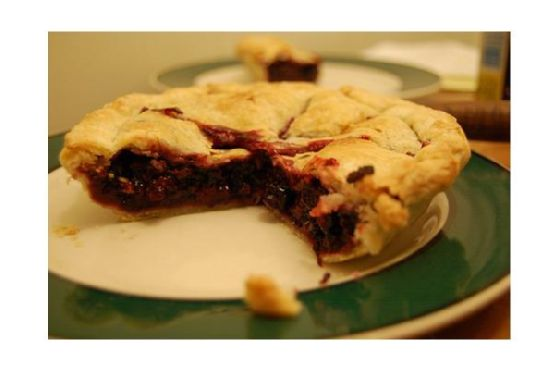
Blackberry Pie With Lemon Verbena Whip Cream | Made by Meaghan Moineau

Blackberry Pie With Lemon Verbena Whip Cream

Intro

There’s something magical about the scent of a freshly baked pie wafting through the house. It brings back memories of summer afternoons spent at my grandmother’s kitchen, where the air was always filled with the sweet aroma of baked fruits and spices. Her blackberry pie was a family favorite, and over the years, I’ve added my own twist to it: a delightfully refreshing lemon verbena whip cream. This combination creates a delicious harmony of flavors, celebrating the tartness of blackberries with the gentle citrus notes of lemon verbena.

Why You’ll Love It

This blackberry pie with lemon verbena whip cream is a perfect dessert for any occasion, whether it’s a family gathering or a cozy weekend treat. Here’s why you’ll love it:

  • Flavorful Harmony: The tartness of blackberries complements the sweet and fragrant lemon verbena whip cream, creating a perfect balance of flavors.
  • Easy to Make: With simple, straightforward steps, this pie is accessible to both novice and experienced bakers.
  • Versatile: This pie is perfect for any occasion, from summer picnics to holiday dinners.
  • Nostalgic: It evokes the warmth and comfort of homemade desserts, bringing back cherished memories of family and tradition.

Ingredients

  • Fresh defrosted blackberries
  • Butter
  • Cinnamon
  • Pastry
  • Flour
  • Lemon verbena leaves
  • Nutmeg
  • Sugar
  • Fresh whipping cream

Instructions

  1. Preheat your oven to 450°F (232°C). Chill a mixing bowl in the freezer to prepare for the whip cream.
  2. Line a 9-inch pie pan with half of the pastry. Cover it and place it in the refrigerator to chill while you prepare the filling.
  3. In another mixing bowl, combine the blackberries, flour, cinnamon, nutmeg, and sugar. Stir gently until the blackberries are evenly coated.
  4. Spoon the blackberry mixture into the chilled pie shell. Cover it with the remaining pastry, crimping the edges to seal.
  5. Cut steam vents in the top crust to allow steam to escape during baking.
  6. Bake the pie in the preheated oven for 15 minutes, then reduce the oven temperature to 350°F (177°C) and continue baking for an additional 34 to 40 minutes, or until the crust is golden brown.
  7. While the pie is baking, prepare the lemon verbena whip cream. In a small saucepan, combine the cream and three lemon verbena leaves. Heat over medium-high heat until the cream is just simmering, then remove from heat and let steep for 5 minutes.
  8. Pour the cream and verbena leaves into a glass container and chill in the refrigerator for 20 minutes. Remove the verbena leaves from the cream.
  9. Pour the chilled cream into the mixing bowl you prepared earlier. Whip using an electric mixer until soft peaks form, adding sugar to taste.
  10. Once the pie has cooled slightly, serve slices with a generous dollop of lemon verbena-infused whip cream on the side.

Tips

  • Ensure your blackberries are fully defrosted and drained to prevent excess moisture in the pie.
  • Chill your pastry before baking to help maintain its shape and avoid a soggy crust.
  • Taste your whipped cream as you add sugar to achieve your preferred level of sweetness.

Variations & Substitutions

If you want to experiment with this recipe, here are some variations and substitutions you can try:

  • Fruits: Swap blackberries with raspberries or a mix of berries for a different flavor profile.
  • Herbs: If lemon verbena is unavailable, try using lemon zest or mint for a refreshing twist.
  • Crust: Use a graham cracker crust for a different texture and flavor.

Storage

Store any leftover pie in an airtight container in the refrigerator for up to three days. The lemon verbena whip cream should be stored separately in the refrigerator and is best used within two days. For longer storage, you can freeze the pie (without the whip cream) for up to two months. Thaw it in the refrigerator before serving.

FAQ

Can I use frozen blackberries?

Yes, you can use frozen blackberries if fresh ones are not available. Just make sure to defrost and drain them thoroughly to avoid excess moisture in your pie.

What can I use instead of lemon verbena?

If lemon verbena is hard to find, you can substitute it with lemon zest or a few mint leaves to infuse a similar refreshing flavor into your whipped cream.

How do I know when the pie is done?

The pie is done when the crust is golden brown and the filling is bubbling. If you’re unsure, insert a skewer to test if the filling has thickened.

Nutrition

This recipe is a delightful treat, but remember to enjoy it in moderation. The nutritional value will vary based on the size of the slices and the amount of whipped cream used. A typical serving with a dollop of whip cream contains approximately:

  • Calories: 350
  • Fat: 18g
  • Carbohydrates: 45g
  • Protein: 4g

Conclusion

This blackberry pie with lemon verbena whip cream is not just a dessert; it’s a celebration of flavors and memories. Whether you’re reliving the nostalgia of family gatherings or creating new traditions, this pie is sure to bring joy and warmth to your table. The balance of tart berries and fragrant whipped cream is a delightful treat for any palate. So gather your loved ones, serve up a slice, and enjoy the sweet taste of cherished memories and new beginnings.

Related update: Blackberry Pie With Lemon Verbena Whip Cream

Related update: Vanilla Pound Cake

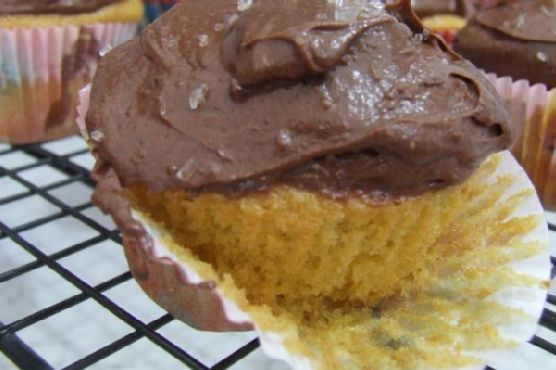
Gluten Free Yellow Cake And Cupcakes | Made by Meaghan Moineau

Gluten Free Yellow Cake And Cupcakes

Intro

There’s something magical about the aroma of freshly baked cake wafting through the kitchen, a scent that has the power to transport us back to cherished childhood memories. I remember helping my grandmother in her kitchen, eagerly awaiting the moment when I could lick the spoon and taste the sweetness of her yellow cake batter. Her secret ingredient was always love, and today, I’m excited to share a gluten-free version of this classic treat. Whether you’re making a cake for a special occasion or whipping up cupcakes for a casual get-together, this recipe is sure to bring a smile to your face and warmth to your heart.

Why You’ll Love It

This gluten-free yellow cake and cupcake recipe is a delightful twist on a traditional favorite. Whether you’re gluten intolerant or simply looking to try something new, you’ll appreciate the moist, fluffy texture of this cake. The use of coconut and tapioca flours creates a delicate crumb, while the dairy-free ingredients ensure that everyone can enjoy a slice. Best of all, this recipe is versatile enough to adapt to any occasion, from birthday parties to afternoon tea.

Ingredients

  • 1/2 cup coconut flour
  • 1/2 cup tapioca flour (plus extra for dusting)
  • 1/4 teaspoon salt
  • 1/2 teaspoon baking soda
  • 1 teaspoon baking powder
  • 1/2 teaspoon xanthan gum
  • 4 whole eggs
  • 1 cup sugar
  • 1/2 cup veganaise
  • 3/4 cup milk alternative (just under)
  • 2 teaspoons vanilla extract
  • 1/2 cup Earth Balance butter (softened)
  • 1 cup dairy-free chocolate chips (optional)
  • Pinch of salt
  • 1 cup powdered sugar (for icing)

Instructions

  1. Preheat oven to 350 degrees Fahrenheit.
  2. Grease two 8 or 9-inch round cake pans and sprinkle with tapioca flour if making a layer cake, or line a muffin tin with baking cups for cupcakes.
  3. In a large bowl, mix together the coconut flour, tapioca flour, salt, xanthan gum, baking soda, and baking powder. Set aside.
  4. In another bowl, beat the eggs, sugar, and veganaise until the mixture is fluffy and well combined.
  5. Slowly add the vanilla extract, flour mixture, and milk alternative to the egg mixture, alternating between the dry ingredients and milk to ensure a smooth, fluffy batter.
  6. Pour the batter into the prepared cake pans or fill the baking cups 3/4 full. This recipe makes 24 cupcakes.
  7. Bake for 20-25 minutes for cakes or 12-15 minutes for cupcakes. The cakes are done when they are nicely browned and spring back when lightly touched, or when a toothpick inserted in the center comes out clean.
  8. Let the cakes or cupcakes cool completely before icing.

Tips

For best results, make sure all your ingredients are at room temperature before you begin. This will help the batter mix more evenly and ensure a uniform texture. Also, if you’re using the cake pans, be sure to tap them gently on the counter to release any air bubbles before baking. And remember, patience is key! Allowing the cakes to cool completely before icing will prevent the icing from melting and sliding off.

Variations & Substitutions

Feel free to get creative with this recipe! If you’d like to add a pop of flavor, consider incorporating lemon or almond extract in place of the vanilla. For a chocolatey twist, fold in dairy-free chocolate chips before pouring the batter into the pans. Additionally, if you’re not a fan of veganaise, you can substitute it with applesauce or mashed bananas for a fruity undertone.

Storage

Store your gluten-free yellow cake or cupcakes in an airtight container at room temperature for up to three days. If you’ve made a layered cake, it’s best to store it in the refrigerator to keep the icing fresh. Simply bring the cake to room temperature before serving for optimal flavor and texture.

FAQ

Can I freeze this cake?

Absolutely! You can freeze the unfrosted cake layers for up to two months. Wrap them tightly in plastic wrap and aluminum foil before placing them in the freezer. When you’re ready to enjoy, simply thaw the layers at room temperature and frost as desired.

What is a good milk alternative to use?

There are several milk alternatives that work well in this recipe. Almond milk, coconut milk, and oat milk are all excellent choices. Just make sure to use unsweetened varieties to maintain the right balance of flavors.

Nutrition

This recipe is gluten-free and dairy-free, making it suitable for those with specific dietary restrictions. However, it’s important to note that the cake is still a treat and should be enjoyed in moderation. Each serving of this cake is approximately 200 calories, depending on the size and any additional toppings or fillings.

Conclusion

Baking is a love language that connects us to each other and to our past. This gluten-free yellow cake and cupcake recipe is a testament to that connection, offering a delicious and inclusive option for everyone to enjoy. Whether you’re a seasoned baker or just starting out, I hope this recipe brings joy and sweetness to your table, just as it has to mine. Happy baking!

Related update: Gluten Free Yellow Cake And Cupcakes

Parsons Trade That Broke Dallas Season | Analysis by Brian Moineau

How a Late-August Trade Echoed All Season Long

The Cowboys lost in Detroit on a Thursday night and suddenly playoff math felt brutal. But if you peel back the immediate mistakes and misfortunes — fumbles, a concussion to CeeDee Lamb, an ugly defensive night — there’s a single, avoidable pivot that shaped Dallas’s 2025 arc: the Micah Parsons trade. That move didn’t just change a roster; it rewired a defensive plan, forced tactical improvisation, and turned a Week 4 overtime tie into a season-long scar.

Why one tie matters more than it should

  • Week 4: Cowboys vs. Packers ended 40–40 in overtime. Micah Parsons, traded to Green Bay just before the season, sacked Dak Prescott in overtime at the goal line. That play ended a drive that could’ve produced a Cowboys win and instead produced a tie. A single half-win became half a loss in the standings.
  • Fast-forward to December: Dallas sits on the knife edge of the wild-card chase. That Week 4 tie — and the lost chance to convert it into a win — looms because margins in the NFC were razor-thin. A win there would have changed seedings, tiebreakers and the feel of late-season matchups.

The Sports Illustrated piece that sparked this post frames the trade as the turning point: Detroit may have delivered the final blow, but Jerry Jones’s decision to move Parsons set the Cowboys back months before the Lions ever took the field. (si.com)

The tactical ripple: scheme, pressure and personnel

  • Micah Parsons wasn’t just a pass rusher; he was the fulcrum of the defensive game plan Matt Eberflus had been installing. When Dallas sent Parsons to Green Bay, Eberflus had to rethink pressure packages and cover responsibilities on the fly.
  • Dallas tried to plug the hole with later trades — adding Quinnen Williams and Logan Wilson — but those reinforcements arrived after several early losses and a 3–5–1 stretch that left the Cowboys scrambling. The defense improved with the additions, but the deficit had already been built. (inkl.com)
  • The Packers game is a neat microcosm: Parsons’s presence in Green Bay’s scheme allowed him to impact that overtime drive directly. That single sack in OT stands out as a tangible moment where the trade changed an outcome. The Packers’ own writeup of the Week 4 matchup highlights Parsons’ return-to-Dallas narrative and his late pressures. (packers.com)

The human element: timing, leverage and clubhouse dynamics

Trades don’t happen in a vacuum. The Parsons saga involved contract negotiations, public friction, and optics that mattered inside the locker room. Dallas’ leadership chose a path — prioritize long-term flexibility and move a star — and the timing (weeks before the opener) compounded the fallout.

  • A star departing days before the season forces schematic changes in real time.
  • A defense built around one player must either reinvent itself or suffer early growing pains.
  • Even when new pieces arrive, they need time to integrate; Dallas’ midseason reinforcements helped but couldn’t erase the lost ground. (profootballrumors.com)

What the box score doesn’t show

  • The Parsons trade’s real damage wasn’t just the stat sheet when examining that one sack. It was the lost continuity — game plans practiced with Parsons in mind, instincts tuned to his blitzes and containments that no longer existed.
  • Every defensive call thereafter had to account for absence: fewer obvious rushers, altered blitz timing, and more pressure on the secondary. Those intangible changes yielded points against Dallas in games that, in a different world, might have been wins.

Near-term implications and path forward

  • Dallas still has talent and, with four games left, could mount a late run. But the margin for error is small and the NFC is deep.
  • The franchise faces questions about decision-making cadence: trade timing, negotiating posture with stars, and whether midseason fixes can realistically erase early-season strategic deficits.
  • If the Cowboys want to avoid similar self-inflicted wounds, patience and clearer internal communication in contract talks might be as important as the next trade. Sports franchises win and lose on the margins — and on the choices made when time is short. (si.com)

Quick points to remember

  • The Week 4 tie vs. Green Bay (40–40) was pivotal; Parsons’ OT sack ended a potential game-winning drive for Dallas. (packers.com)
  • Trading Parsons weeks before the opener forced schematic changes that left Dallas vulnerable early in the year. (si.com)
  • Midseason additions (Quinnen Williams, Logan Wilson) helped, but they arrived too late to fully reverse the early damage. (inkl.com)

Final thoughts

Fans love neat narratives — the Lions knocked the Cowboys out, or Jerry Jones made the wrong move. Reality is messier: the Parsons trade wasn’t a single act that destroyed a season, but it was a strategic choice whose timing amplified other problems. When a season is decided by a few plays, those early choices matter more than headlines suggest. For Dallas, this year should be a lesson that roster moves are chess pieces, not quick fixes, and that the cost of haste can be measured in ties that become the difference between contention and collapse.

Sources


Related update: We recently published an article that expands on this topic: read the latest post.


Related update: We recently published an article that expands on this topic: read the latest post.