Hush Puppies | Made by Meaghan Moineau

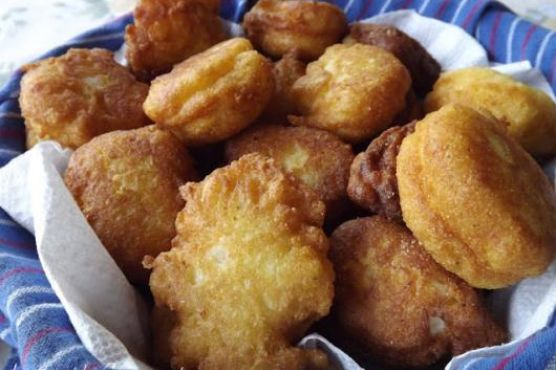
Imagine this: it’s a rainy Tuesday evening, and I’m staring into my pantry like it’s going to magically whip up dinner for me. You know those days when the fridge is playing hard to get and the clock is laughing in your face? Well, that’s when I turn to my trusty Hush Puppies recipe. These little golden nuggets save the day every time — they’re crispy, comforting, and the kind of simple that feels like a win even when everything else is chaos. Plus, they come together in a flash, which is exactly what you need when the hangry hits.

Jump to Recipe

What You’ll Need

There’s a good chance you’ve already got most of these on standby. That’s the beauty of this dish: minimal ingredients with maximum flavor payoff. Check out what you’ll need:

  • 1 small onion, finely chopped
  • 1 cup cornmeal
  • 1/4 cup flour
  • 1 tablespoon baking powder
  • 1 teaspoon salt
  • 1 egg
  • 1/2 cup milk
  • Oil for frying (vegetable or canola works best!)

How to Make Hush Puppies

  1. Start by grabbing a large mixing bowl and toss in your cornmeal, flour, baking powder, and salt. Give it a good stir until everything is well combined.
  2. In a separate medium bowl, crack in the egg and beat it with a fork until it’s all mixed up. Add in the chopped onion and milk, then stir until it’s nice and smooth.
  3. Pour the eggy onion mixture into the dry ingredients. Stir until it’s all combined into a thick, slightly lumpy batter. You’re aiming for a texture that holds its shape.
  4. Heat up about 2-3 inches of oil in your deep-fat fryer or a heavy skillet over medium-high heat. You want it to shimmer but not smoke — that’s your cue it’s hot enough.
  5. Once the oil is ready, drop heaping teaspoons of batter into the pan. They’ll plummet to the bottom but magically rise to the top as they cook. Fry about 5-6 at a time without overcrowding.
  6. Keep an eye out — after 1-2 minutes, the puppies should be a gorgeous golden brown. That’s when you’ll know they’re done. Use a slotted spoon to fish them out and let them drain on paper towels.

Cook’s Notes

Don’t overmix the batter; a few lumps are perfectly fine and keep the texture just right. The oil needs to be hot enough to ensure the hush puppies cook quickly and don’t soak up excess oil. If you’re making them ahead, you can fry them lightly and finish them off in a hot oven just before serving. They’re best enjoyed fresh but keep well in an airtight container for a day or two. Reheat them in the oven to maintain that crunch.

Make It Your Own

Here’s where you can get creative:

  • Spice it up: Add a pinch of cayenne pepper or a chopped jalapeño for a kick.
  • Cheesy twist: Stir in a handful of shredded cheddar cheese to the batter for some gooey goodness.
  • Herbal accents: Mix in some chopped chives or parsley for a fresh pop of flavor.
  • Sweet spin: Swap out the onion for corn kernels and add a teaspoon of sugar for a sweet-savory combo.

If you try this, I’d love to hear how it turns out — drop a comment or tag me! Remember, the best recipes are the ones you make your own. Enjoy your hush puppies and all the cozy vibes they bring.

Related update: Hush Puppies

Surface Laptop Ultra: Nvidia‑Powered AI | Analysis by Brian Moineau

TL;DR

  • Microsoft’s Surface Laptop Ultra is the first flagship Windows laptop built around Nvidia’s RTX Spark SoC, advertising up to 1 PFLOP of local AI compute and 128GB unified memory, but a 110W design target signals “desktop-class” throughput will hit battery walls in mobile use [2][3][5].
  • The story is stack control in 2026: Microsoft and Nvidia are bringing CUDA and Blackwell‑class GPU tech to Windows on Arm, a strategic end‑run around Intel and AMD and a direct challenge to Apple’s MacBook Pro line [2][5].
  • If RTX Spark laptops ship in volume and key ISVs optimize Windows‑on‑Arm CUDA paths, 2026–2027 could echo Apple’s 2020 M1 inflection—only with Nvidia setting the cadence for PC “AI laptops” [5][6].

What the source said

ZDNET’s hands‑on from Taipei at Computex 2026 calls Surface Laptop Ultra the standout RTX Spark device, noting a 15‑inch 3:2 PixelSense Ultra mini‑LED panel rated at 2000 nits HDR and 262 ppi, plus creator‑friendly I/O (2×USB‑C, USB‑A, HDMI, SD, 3.5 mm) in a metal chassis [1]. It reports Nvidia’s ARM‑based RTX Spark pairing a 20‑core CPU with GPU performance “roughly equivalent” to a GeForce RTX 5070, and configurations up to 128GB unified memory aimed at local AI [1]. Thermal changes include a dual‑fan, dual‑heat‑pipe layout and a slightly raised base to improve airflow in the 15‑inch form factor [1]. Open items include price tiers, RAM options, measured battery life, and preorder timing signaled as “late summer/early fall” 2026 [1].

Why it matters

For Microsoft in 2026, Surface Laptop Ultra is public proof that Windows on Arm can lead the “AI PC” story with CUDA, fifth‑gen‑class Tensor Cores, and unified memory, rather than trailing x86 laptops on battery life alone [2][5]. The device provides a credible counter to Apple’s MacBook Pro narrative in creative and on‑device inference workloads just as developers decide where to target Stable Diffusion, Llama‑3, and NeRF pipelines for client compute [2][5].

For Nvidia, Spark PCs extend its data‑center CUDA dominance into client devices on Windows, which could bind independent software vendors to CUDA toolchains across 2026–2027 [3][5]. If the bet pays off, Intel and AMD face a squeeze from an Arm+Blackwell package while Apple maintains its integrated stack; studios and consumers win on local LLMs and video tools—if battery life and price don’t dull the pitch [3][6].

Original analysis

Surface Laptop Ultra is a stack play masquerading as a laptop

The spec sheet grabs attention—1 PFLOP AI, 20 Arm CPU cores, and up to 128GB unified memory—but the strategic move is CUDA on Windows on Arm delivered via a Blackwell‑class GPU in a unified‑memory SoC [2][4][5]. That gives Microsoft a first‑party flagship where ISVs can ship the same CUDA kernels across workstation, data center, and laptop without re‑architecting for disparate memory models [2][5].

Consensus take: “Surface Laptop Ultra is a MacBook Pro killer because it matches performance with AI flair” [1]. Contrarian read: this is a CUDA land grab on Windows, not a copy‑paste of Apple’s 16‑inch formula [2][5].

Apple’s edge remains vertically integrated silicon, hardware media engines, and battery efficiency proven since the M1 in 2020; Microsoft’s counter is a developer‑first path where Stable Diffusion XL, Llama‑3 variants, NeRFs, and video upscaling run on familiar CUDA code in 2026 [2][5]. For teams already standardized on CUDA for training and inference, developer gravity favors Spark even if Metal and Core ML perform well in Apple’s ecosystem [2][5].

Back‑of‑envelope: battery reality check

Assume an 84 Wh battery; display at ~350 nits draws ~7 W; platform idle ~5 W; sustained AI/video averages ~55 W on a 110 W‑TDP Spark SoC under creator workloads [3].

  • Total draw ≈ 5 + 7 + 55 = ~67 W.
  • Heavy AI runtime ≈ 84 Wh / 67 W ≈ 1.25 hours.
  • Mixed creator session (35 W average) ≈ 84 / (5 + 7 + 35) ≈ 1.9 hours.
    Takeaway: expect “AI at the desk” performance and short unplugged runs in 2026 unless workloads throttle or displays dim aggressively [3].
2×2: Where Surface Laptop Ultra sits

Axes: Y = AI throughput; X = mobility/endurance.

  • High throughput, low endurance: Surface Laptop Ultra (RTX Spark, 110 W target) and creator rigs like Razer Blade 15 with H‑class CPUs/GPUs [3].
  • High throughput, high endurance: MacBook Pro with M3 Max‑class efficiency and media engines for ProRes/HEVC/AV1 workflows [1].
  • Low throughput, high endurance: Snapdragon X‑class ultrabooks tuned for office tasks and light copilots at <20 W sustained.
  • Low throughput, low endurance: Legacy thin‑and‑lights with small dGPUs that throttle under sustained loads.

The trade: Ultra prioritizes CUDA‑grade throughput on Windows over battery endurance, which fits desk‑bound creator sessions in 2026 [3][6].

Historical analogue: 2020’s M1 reset

In 2020, Apple’s M1 unified CPU+GPU+NPU and memory architecture shifted laptop performance‑per‑watt, but the win crystallized when Final Cut Pro, Logic Pro, and Metal‑optimized Adobe/Blender updates arrived in the same year [2020][1]. Spark laptops echo that pattern in 2026: silicon is newsworthy, yet success hinges on ISVs shipping Windows‑on‑Arm CUDA builds and model toolchains that “just work” [2][5]. Nvidia’s advantage is portability from DGX/GeForce to client via CUDA and Blackwell Tensor Cores, while Microsoft supplies Windows compatibility and Surface industrial design [2][5].

Named‑stakeholder breakdown
  • Microsoft: Gains a flagship to anchor Windows on Arm for creators; must defend pricing and battery optics in 2026 channel reviews [1][2].
  • Nvidia: Extends CUDA from DGX and GeForce into “AI PCs,” setting de facto client inference standards during the 2026–2027 cycle [5].
  • Apple: Retains endurance and media‑engine leadership on MacBook Pro, but faces CUDA gravity nudging cross‑platform studios toward Windows.
  • Intel/AMD: Risk losing high‑margin creator tiers if OEMs adopt Arm+Blackwell; need clear x86 AI acceleration roadmaps before CES 2027.
  • Qualcomm: Remains vital for mainstream Arm laptops, but Spark grabs the performance spotlight at Computex 2026 [6].
  • ISVs (Adobe, Blackmagic, Topaz, Autodesk): Biggest upside is one CUDA pipeline scaling from RTX desktop to Spark laptops; challenge is engineering Windows‑on‑Arm releases on 2026 timelines [2][5].

What others are missing

Unified memory at “up to 128GB” is not a vanity spec; it eliminates costly PCIe host‑to‑device copies for multi‑gigabyte KV caches and tiles in LLM/VLM and 4K–8K video pipelines that blow past VRAM limits on split‑memory designs [2][5]. Diffusion models with long context windows, multi‑stream color‑managed timelines, and 16‑bit float buffers gain when CPU and GPU share a coherent pool in 2026 workflows [2][5]. Nvidia’s messaging highlights a coherent CPU‑GPU memory model with full CUDA on Windows on Arm; Microsoft echoes this in its Surface Ultra post [2][5]. If ISVs expose that coherency in their schedulers, Spark laptops can outperform similar‑TFLOP rivals on memory‑bound tasks even at the same wattage [2][5].

What to watch next

  1. By Q4 2026, independent reviews will record under‑2‑hour battery life for sustained local AI video upscaling on Surface Laptop Ultra at default panel brightness, using repeatable benchmarks [3][6].
  2. By December 31, 2026, at least two top creative ISVs (for example, Adobe or Blackmagic) will ship Windows‑on‑Arm CUDA builds that beat their own x86 Windows versions on identical workloads at matched power settings by a statistically significant margin [2][5].
  3. By CES 2027 (January 2027), three or more major OEMs beyond Microsoft will announce second‑wave RTX Spark laptops with ≤80 W TDP bins aimed at all‑day assistant and light‑creator use cases [6].

My take

Surface Laptop Ultra aims to be the CUDA laptop you can carry to a 2026 shoot, not the longest‑lasting notebook in a 12‑hour flight [2][5]. If I’m editing 6K ProRes, iterating Gen‑2 diffusion shots, and fine‑tuning a 13B LLM locally, identical CUDA code paths on a premium Windows machine beat two extra hours of battery for my workflow [2][5]. Microsoft and Nvidia are betting creators will plug in at the desk and want accelerated local inference at home and studio [3][5]. If ISVs deliver Arm‑CUDA builds this year, the “AI PC” label graduates from marketing to measurable gains in 2026 [2][5].

Sources

  1. ZDNET — Hands‑on with Microsoft Surface Laptop Ultra at Computex 2026 — What this contributes: concrete display specs (2000‑nit HDR, 262 ppi), ports, thermal layout, and open questions on pricing and battery.

  2. Microsoft Devices Blog — Introducing Surface Laptop Ultra (May 2026) — What this contributes: official confirmation of RTX Spark on Windows on Arm, Blackwell‑class GPU, CUDA support, and up to 128GB unified memory.

  3. Tom’s Hardware — Surface Laptop Ultra targets 110W TDP for RTX Spark Superchip (2026) — What this contributes: reported 110 W design target and realistic performance/power trade‑offs for the 15‑inch chassis.

  4. TechSpot — Microsoft unveils Surface Laptop Ultra with Nvidia RTX Spark and up to 128GB RAM (2026) — What this contributes: launch summary including 20‑core Arm CPU and 15‑inch form factor context.

  5. NVIDIA Newsroom — NVIDIA and Microsoft bring RTX Spark PCs with up to 1 PFLOP AI and unified memory (2026) — What this contributes: Nvidia’s framing of CUDA, Blackwell‑class Tensor Cores, and the Windows client stack.

  6. Tom’s Guide — I tested Microsoft Surface Laptop Ultra at Computex 2026 — What this contributes: independent hands‑on and confirmation that multiple Spark laptops debuted at the Taipei show.
Chimichurri Skirt Steak with Grilled Asparagus | Made by Meaghan Moineau

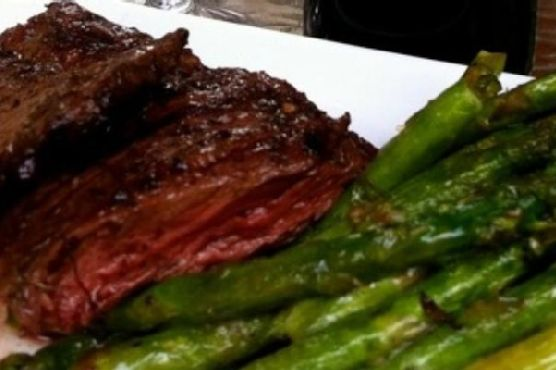
Last Tuesday, I found myself standing in front of the fridge, aimlessly scrolling through takeout options on my phone. It was one of those evenings, you know? The kind where the day just takes a toll, and the thought of cooking seems exhausting. But as I eyed a bunch of asparagus that was just on the brink of wilting, I decided to make something quick yet comforting. Chimichurri Skirt Steak with Grilled Asparagus it was! This dish is a flavor bomb — the kind of meal that feels like a mini celebration, but really comes together with minimal fuss. Plus, the chimichurri sauce? It’s like a magic potion that instantly elevates anything you drizzle it on.

Jump to Recipe

What You’ll Need

The beauty of this dish is in its simplicity. Chances are, you already have most of what you’ll need in your kitchen. Here’s what you’ll be grabbing:

  • Skirt steaks – about 1.5 pounds
  • Flat leaf parsley – a generous handful
  • Fresh mint leaves – a small handful
  • Fresh oregano leaves – a small handful
  • Garlic cloves – 4 to 5, because more is more
  • Shallot – 1 medium-sized
  • Red wine vinegar – a splash for that tangy kick
  • Olive oil – enough to get things silky
  • Lemon juice – a squeeze
  • Kosher salt
  • Black freshly cracked pepper
  • Chili pepper flakes – optional, for a bit of heat
  • Green or white asparagus – a bundle, ready for grilling

How to Make Chimichurri Skirt Steak with Grilled Asparagus

  1. First, let’s tackle the chimichurri sauce. Place all the ingredients except for the olive oil — parsley, mint, oregano, garlic, shallot, red wine vinegar, lemon juice, salt, pepper, and a pinch of chili flakes — in a food processor. Pulse until everything is well chopped.
  2. With the processor running, slowly drizzle in the olive oil until you have a smooth, vibrant green sauce. Remember to reserve half of this for serving.
  3. Season both sides of the skirt steaks with salt and pepper. Generously spoon the remaining chimichurri sauce over the steaks, making sure they’re well coated. Let them marinate for at least 30 minutes or even overnight in the fridge if you have the time.
  4. While your steaks are soaking in all that flavor, pre-heat your grill to a cozy 350-400°F.
  5. In a large resealable plastic bag, toss your asparagus with a glug of olive oil, a clove of minced garlic, and a sprinkle of salt and pepper. Shake it like you’re in a dance-off to ensure everything’s coated, then place the asparagus in a grill basket.
  6. When the grill is hot, place the steak and the basket of asparagus directly over the flames. Turn the asparagus occasionally, basting with the garlic oil for about 10 minutes, until tender.
  7. Grill the steaks to your liking — about 5 to 8 minutes per side should do it for medium-rare. Let them rest for 10 minutes before slicing against the grain into long, juicy strips.
  8. Finally, spoon the reserved chimichurri sauce over the steak slices and serve with the beautifully grilled asparagus. Enjoy the symphony of flavors!

Cook’s Notes

This dish is seriously forgiving. If you don’t have a food processor, no worries — a blender or some good knife skills will get you there. Just chop everything finely and mix. Resting the steak after grilling is key — it lets the juices redistribute, so your meat isn’t dry.

  • If you’re marinating overnight, let the steaks come to room temperature before grilling for even cooking.
  • Leftover chimichurri can be stored in the fridge for up to a week and is perfect for drizzling over roasted veggies or mixing into scrambled eggs.

Make It Your Own

  • Swap the skirt steak with a flank steak for a slightly leaner option. Just keep an eye on the cooking time.
  • If mint isn’t your thing, use cilantro instead — it adds a nice, fresh twist.
  • For a vegetarian version, use thick slices of portobello mushrooms in place of the steak.
  • Mix it up with rainbow carrots instead of asparagus for a colorful plate.

If you try this, I’d love to hear how it turns out — drop a comment or tag me in your photos! Cooking is all about sharing the love, and I can’t wait to see your take on this dish. Happy grilling!

Related update: Chimichurri Skirt Steak with Grilled Asparagus

Beef, Poblano & Cheese Tamales | Made by Meaghan Moineau

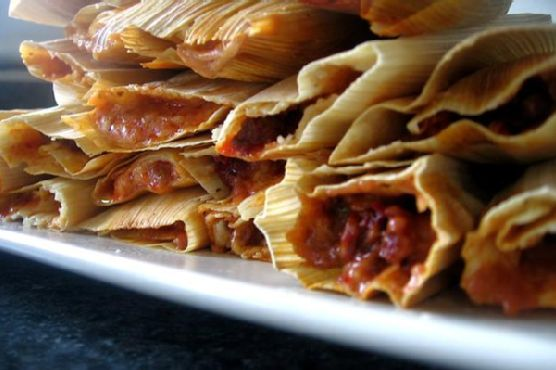
The first time I attempted to make tamales, it was a classic case of my eyes being bigger than my expertise. I had this craving for something hearty yet comforting, and tamales seemed like the perfect challenge. Spoiler alert: the kitchen looked like a masa massacre by the end of it. But with a little patience and practice, these Beef, Poblano & Cheese Tamales have become my go-to for impressing friends without losing my mind in the process. They’re just the right mix of savory and spicy, with a cheesy twist that keeps you coming back for more. Plus, the aroma that fills your kitchen is like a warm hug from a friend you haven’t seen in ages.

Jump to Recipe

What You’ll Need

You might already have most of these staples in your pantry. And if you don’t, trust me, it’ll be worth the grocery run.

  • Dried corn husks
  • Dried California chili pods
  • Ground beef
  • Shredded mozzarella cheese
  • Diced poblano pepper
  • Garlic, minced
  • Olive oil
  • Goya seasoning
  • Salt
  • Chili powder

How to Make Beef, Poblano & Cheese Tamales

  1. Start by soaking the corn husks in hot water in a large bowl. They need to be pliable, so give them at least 20 minutes.
  2. In a large saucepan, bring 4 cups of water to a boil. Remove any string-like bits from the chili pods and throw them into the boiling water with half a packet of Goya seasoning. Cover it up and let it all simmer for about 20 minutes.
  3. Once the chili pods have softened, blend them with 2 cups of the chili stock until you get a smooth sauce. Drain the rest of the stock from the saucepan, but keep it handy.
  4. Put the saucepan back on medium heat. When any leftover stock evaporates, add a splash of olive oil, then toss in the onion and beef. Break apart the beef as it cooks.
  5. Season the beef with a packet of Goya seasoning and chili powder, then let it cook for about 5 minutes until it gets a bit brown.
  6. Pour in the chili sauce, followed by the garlic and about 2 teaspoons of salt. Add the diced poblano pepper now for the best flavor. Turn the heat down to medium-low, partially cover the pan, and let it simmer for an hour. The sauce should thicken nicely.
  7. While the beef is simmering, make the corn masa mix. In a large bowl, combine the instant corn masa mix, water, baking powder, salt, and olive oil. Mix until it’s spongy.
  8. Now for assembly: spread the masa mix thinly on the right side of a corn husk, leaving about 2 inches at the left edge clear. Spoon about 2 tablespoons of the meat mixture and a sprinkle of cheese onto the masa. Roll it up starting with the right-hand side, and fold the left flap over.
  9. If you’ve got a double boiler, great! If not, a metal colander in a large pot will do. Arrange the tamales so they’re snug but not squashed.
  10. Boil 2 cups of water in the pot (or about 1 inch high), then reduce the heat and add the tamales. Place a towel between the colander and lid to keep the steam in. Let them steam for 30 minutes.

Cook’s Notes

Soaking the corn husks longer is better than less, so patience pays off here. When blending the chili pods, you might have to stop and scrape the sides of the blender to get a smooth sauce. And hey, don’t stress if your masa isn’t perfectly even when you spread it — it’s homemade charm we’re going for, not factory precision.

Leftovers? Store them in an airtight container in the fridge; they’ll last up to a week. Reheat them by steaming again or even in the microwave wrapped in a damp paper towel to keep them from drying out. You can also freeze them for up to three months, just make sure they’re cool before you pack them up.

Make It Your Own

  • Swap the ground beef for shredded chicken or even pulled pork for a different protein punch.
  • Try smoked gouda or Monterey Jack instead of mozzarella for a unique cheesy twist.
  • If you’re a veggie lover, add in some sautéed mushrooms or zucchini with the poblano for extra texture.
  • For a spicy kick, mix in some diced jalapeños or serrano peppers when you add the poblano.

And there you have it! If you try this, I’d love to hear how it turns out — drop a comment or tag me! These tamales are a labor of love, but trust me, they are totally worth it. Enjoy every bite!

Related update: Beef, Poblano & Cheese Tamales

Related update: Chimichurri Skirt Steak with Grilled Asparagus