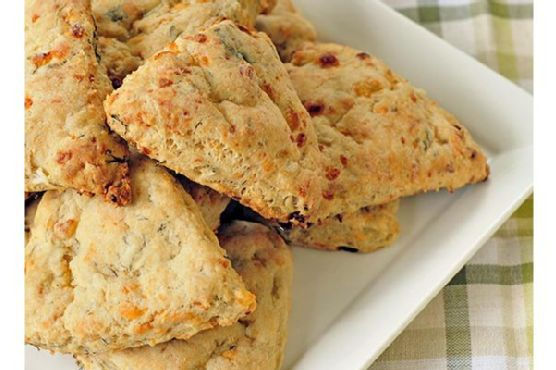
The other day, I found myself on a typical Wednesday evening with a sudden, fierce craving for something warm, cheesy, and a little herby. The kind of comfort food you can savor with a cup of tea while staring out the window on a rainy day. As my pantry was a bit sparse, I knew I needed something quick and easy, yet utterly satisfying. That’s when Savory Cheese Dill Scones came to mind. They’re those magical little bites that feel fancy enough for company but are secretively easy to pull together. The kind of bake that makes you feel like a kitchen genius with minimal effort. So, let’s get scone-ing!
Jump to Recipe
What You’ll Need
You might be surprised how many of these you already have in your kitchen! The usual suspects of baking are here, alongside the stars of the show: cheese and dill. Here’s what you’ll need:
- 2 cups unbleached flour
- 1/2 cup whole wheat flour
- 1 tablespoon baking powder
- 1/4 teaspoon baking soda
- 1/2 teaspoon black pepper
- 1 tablespoon sugar
- 1/2 cup cold butter, cut into small pieces
- 3/4 cup buttermilk
- 1/2 cup coarsely shredded cheddar cheese
- 1/2 cup cottage cheese
- 3 tablespoons chopped fresh dill
- 1 small shallot, finely chopped
How to Make Savory Cheese Dill Scones
- Preheat your oven to 375°F, placing the rack in the middle position. This gives your scones the perfect balance of heat, making them rise nicely while staying tender and light.
- In a large bowl, whisk together the unbleached flour, whole wheat flour, baking powder, baking soda, black pepper, and sugar. This dry mix is your scone foundation.
- Add the chopped butter into the flour mixture. Use your fingers or a pastry cutter to blend until the mix resembles coarse crumbs. You want to see little bits of butter peeking through.
- Stir in both the cheddar and cottage cheese, followed by the fresh dill and shallot. The aroma will start making promises your taste buds will thank you for later.
- Pour in the buttermilk and gently fold the mixture with a spatula until just combined. Avoid overmixing; a rough dough will yield tender scones.
- Turn the dough out onto a floured surface and knead gently, just enough to bring it together — about 4 or 5 times.
- Pat the dough into a circle, approximately 1 inch thick. Cut into 8 wedges and place them on a baking sheet lined with parchment paper.
- Bake in your preheated oven for 20-25 minutes, until the scones are golden and the kitchen smells like heaven. Serve warm and swoon.
Cook’s Notes
These scones are best on the day they’re made, but if you have leftovers (lucky you!), store them in an airtight container for a day or two. They make a delightful breakfast, slightly warmed with a pat of butter. You can also freeze the unbaked scones on a tray, then transfer them to a bag once they’re solid. Bake them from frozen, adding a few extra minutes to the cooking time. Common pitfalls? Overworking the dough or letting the butter soften too much. Keep it chill for the chillest scones!
Make It Your Own
Here are some delicious twists to customize your scones:
- Swap the dill for chopped chives if you’re in a more oniony mood.
- Use gruyere instead of cheddar for a rich, nutty take.
- Add a handful of crispy bacon bits for a savory delight.
- Mix in some sun-dried tomatoes for a Mediterranean vibe.
If you try this, I’d love to hear how it turns out — drop a comment or tag me! Remember, cooking is just like life: best when shared and savored. Enjoy your baking adventure!
Related update: Savory Cheese Dill Scones

TL;DR
- ESPN’s 2026 ranking of NFL offensive tackles crowns a new No. 1 in Detroit’s Penei Sewell and includes two Philadelphia Eagles (Jordan Mailata, Lane Johnson) in the top 10; that two-tackle clustering is the season’s biggest structural edge. [1]
- With the 2026 salary cap set at $301.2 million, elite tackle deals have converged near $28 million AAV, forcing front offices to abandon automatic left-over-right premiums. [3][6]
- Darnell Wright landing sixth—and as the highest-ranked right tackle—signals a right-side reprice has started; clubs that don’t plan before Halloween 2026 will overpay by March 2027. [1][2][3][8]
What the source said
ESPN’s 2026 panel—executives, coaches, and scouts—ranked Penei Sewell as the “new No. 1,” with Philadelphia placing Jordan Mailata and Lane Johnson in the same top-10 list. That concentration by the Eagles is unusual in a 32-team league and highlights a roster-building outlier. The top names include Tristan Wirfs and Darnell Wright, blending veterans and ascenders based on composite voting rather than a single metric, reflecting who decision-makers trust this year. [1]
Why it matters
The NFL’s $301.2 million cap for 2026 meets a tackle apex price clustered at $28–$28.5 million AAV, putting elite OTs near 9–9.5% of team budgets—close to second-tier quarterback territory. Those shares harden tradeoffs on fifth blockers, chip help, and receiver routes. [3][6]
Decision-makers have to choose: pay dual bookends like Philadelphia’s Mailata/Johnson or concentrate spend on one edge and scheme the other. Agents for right tackles now have a clean comp sheet: ESPN put Darnell Wright sixth overall and first among RTs, which normalizes an ask within 5–10% of LT money in 2026. [1][2][3][8]
Original analysis
A named typology for 2026 NFL offensive tackles
- The Sledgehammer (power/angle control): Penei Sewell erases edges and compresses pockets; PFF graded him the league’s best tackle for 2025. [5]
- The Fencer (mirror-and-match pass pro): Tristan Wirfs wins on set points and stingy losses; his 2025 PFF overall grade was 92.7, second among 89 OTs. [7]
- The Island Veteran (technique + processing): Lane Johnson and Trent Williams survive on angles and hands; Johnson’s $25M AAV at age 36 shows teams still pay for “no-chip” reliability. [3]
- The Riser (toolsy OT on a sharp curve): Darnell Wright sits sixth overall and first among right tackles in ESPN’s poll, entering extension talks from a position of strength. [1][8]
Consensus says the left side remains singularly premium. Contrarian read: the true apex has flattened—Rashawn Slater ($28.5M AAV), Tristan Wirfs ($28.125M), and Penei Sewell ($28.0M) sit on the same shelf, while Lane Johnson trails only slightly at $25M despite his 1990 birth year. The practical question isn’t blind side vs. strong side anymore; it’s whether a tackle can live on an island for 2.7 seconds against a Myles Garrett-type rush without help. [3][5][6][7][9][10]
Back-of-the-envelope math: What these rankings cost (and save)
- Detroit (Sewell): $28.0M ÷ $301.2M = 9.3% of cap. The Lions are paying Sewell as a franchise piece, and his 2025 PFF grades matched that billing. [3][5][6]
- Tampa Bay (Wirfs): $28.125M ÷ $301.2M = 9.34%. If Wirfs holds a top-3 PFF grade again, five-out protection looks recoup the premium via freed routes and fewer chip assignments. [3][6][7]
- Chicago (Wright, looming extension): Assume $27.0M AAV; $27.0M ÷ $301.2M = 9.0% of cap. As the No. 6 overall OT and top RT, Wright can credibly ask near the LT apex now. [1][3][6][8]
These ratios become roster rules. Above roughly 9% of cap, a tackle must cut chip help to near-zero or you’re double-paying in dollars and in targets diverted from receivers. [3][6]
Historical analogue: When one team has two top-10 tackles
The 2019–2020 Ravens ran Ronnie Stanley and Orlando Brown Jr. as dual anchors before trading Brown to Kansas City in April 2021 for a package headlined by a Round 1 pick (No. 31). That move reset Baltimore’s spend profile and produced draft capital without collapsing protection quality. [11][12][13]
Philadelphia’s 2026 mirror—two ESPN top-10 tackles in Mailata and Johnson—points to the same fork: keep expensive bookends as identity, or convert one before age and AAV converge. The Ravens chose the latter in 2021 and remained competitive; the Eagles can ride both this year, but the Stanley/Brown precedent implies a decision window inside 12–18 months. [1][4][11]
Named-stakeholder breakdown
- Detroit Lions (Brad Holmes, Dan Campbell): You secured the Sledgehammer in Sewell; maintain his “no-help” truth by investing in guard communication and cadence variety so true pass sets stay clean in 2026. [5]
- Philadelphia Eagles (Howie Roseman): Two top-10 tackles enable five-out and heavier play-action; prepare a 2027 pivot as Johnson’s $25M AAV meets age-37 season risk. [1][3][4]
- Tampa Bay Buccaneers (Jason Licht): Wirfs is the pass-pro floor; fortify the B-gap with interior depth so you don’t waste a 9.34% cap spend on edge protection that’s undone inside. [3][7]
- Chicago Bears (Ryan Poles): Wright’s No. 6 ranking and RT-first status are contract ammo; move early to land near $27M AAV instead of chasing $28M in 2027 free agency. [1][3][8]
What others are missing
Two top-10 tackles force pressure to migrate inside, which tilts value toward interior rushers and games. Next Gen and PFF data from 2025 spotlighted simulated pressures and mug looks as rising tools, putting a premium on centers and guards who can pass off stunts in 2.5–3.0 seconds. That’s the hidden market link: a $28M OT plateau reprices defensive tackles and hybrid edges who win on inside counters, not just the classic bendy 7-techs. [9][10][6][3]
What to watch next
- By Week 9 of 2026, Chicago finalizes a Darnell Wright extension at ≥$26.5M AAV, placing him within 10% of the LT apex. [1][3][6][8]
- By the 2026 trade deadline, at least one contender trades a top-60 pick for a starting-caliber tackle, citing injury and “island” scarcity consistent with the 2021 Ravens–Chiefs Brown deal. [11][12][13]
- By January 2027, AP first-team All-Pro tackle selections include at least one right tackle, reflecting a narrowed LT–RT gap at the elite tier. [3][5][7]
My take
I’m buying the 2026 hierarchy: Sewell first, Wirfs adjacent, and a healthy Rashawn Slater within striking distance by AAV and recent form. The headline is price parity at the top—Darnell Wright’s sixth-place finish, above several decorated LTs, shows RT is no longer discounted. If I’m running a roster without a top-8 quarterback, I’d rather commit ~18% of cap to two island tackles and manufacture efficient throws than pay WR2 money to chip my way through protection. That spend-and-call pairing will define who’s still playing meaningful football in January 2027. [1][2][3][6]
Sources
- Execs, coaches, scouts rank top NFL offensive tackles for 2026 — ESPN (https://www.espn.com/nfl/story/_/id/49248530/ranking-nfl-top-10-offensive-tackles-2026-execs-coaches-scouts) — The ranking itself: Sewell at No. 1, two Eagles in the top 10, Wright at No. 6 per the panel.
- Penei Sewell listed as best OT in NFL by executives, coaches — Pride of Detroit (https://www.prideofdetroit.com/detroit-lions-analysis/166885/penei-sewell-best-ot-nfl-execs-coaches) — Independent recap confirming Sewell’s No. 1 status in ESPN’s poll.
- Offensive Line Contracts and Salaries — Over The Cap (https://server.overthecap.com/position/offensive-line) — Current AAVs show the $28–$28.5M elite tier (Slater, Wirfs, Sewell) and Lane Johnson at $25M with ages.
- Eagles place both starters on ESPN’s top-10 tackles list — Athlon Sports (https://athlonsports.com/nfl/philadelphia-eagles/eagles-place-both-starters-on-top-10-list-of-nfls-best-tackles) — Confirms Jordan Mailata and Lane Johnson both made ESPN’s 2026 top-10.
- Highest-graded tackles from the 2025 NFL season: Penei Sewell leads the pack — PFF (https://www.pff.com/news/highest-graded-tackles-from-the-2025-nfl-season-penei-sewell-leads-the-pack) — Establishes Sewell’s 2025 performance baseline as best-in-league by grade.
- NFL announces 2026 salary cap set at $301.2 million — NFL.com (https://www.nfl.com/news/nfl-announces-2026-salary-cap-set-at-301-2-million-per-team) — Official cap context for 2026 and % of cap calculations.
- Tristan Wirfs — PFF player page (https://www.pff.com/nfl/players/tristan-wirfs/64818) — 2025 overall grade (92.7) underpinning Wirfs’ inclusion near the top.
- Darnell Wright ranked No. 6 overall and top right tackle in ESPN poll — A to Z Sports (https://atozsports.com/nfl/chicago-bears-news/bears-darnell-wright-top-ranked-right-tackle-contract-extension-negotiations-leverage-espn/) — Details Wright’s specific slotting and contract leverage implications.
- PFF Offensive Tackle Rankings: Top 32 ahead of the 2025 NFL season — PFF (https://www.pff.com/news/nfl-offensive-tackle-rankings-top-32-ahead-of-2025-nfl-season) — Independent slate that also rated both Eagles tackles highly entering 2025.
- Next Gen Stats: Introduction to pressure probability — NFL.com (https://www.nfl.com/news/next-gen-stats-introduction-to-pressure-probability) — Explains pressure metrics and time-to-pressure assumptions for island protection.
- Chiefs acquire OT Orlando Brown in trade with Ravens — NFL.com (https://www.nfl.com/news/chiefs-acquire-lt-orlando-brown-in-trade-with-ravens) — Trade precedent for converting surplus tackle talent into picks.
- 2021 NFL Draft trade tracker — NFL.com (https://www.nfl.com/news/2021-nfl-draft-trade-tracker-full-details-of-every-move) — Full compensation details for the Orlando Brown deal, including the first-rounder.
- Ravens press release: Orlando Brown Jr. trade — Baltimore Ravens (https://www.baltimoreravens.com/news/press-release-ravens-chiefs-trade) — Team confirmation of the trade framework and context.
Related update: We recently published an article that expands on this topic: read the latest post.
Related update: We recently published an article that expands on this topic: read the latest post.
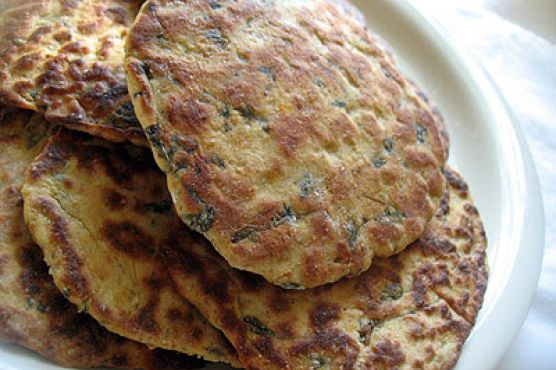
Picture this: It’s a gloomy Wednesday evening, and the rain has been tapping on the windows since noon. I’m scouring the pantry for something interesting but comforting, and there it is—an unopened bag of dried fenugreek leaves. This is the perfect excuse to whip up a batch of warm, aromatic Fenugreek Roti. It’s one of those recipes that’s a total lifesaver when you want something homemade but don’t feel like spending hours in the kitchen. The subtle bitterness of the fenugreek combined with the spices makes this dish irresistibly flavorful and oh-so-satisfying. You’ll be hooked at the first bite, I promise.
Jump to Recipe
What You’ll Need
I bet you’ve got most of these goodies stashed away in your spice cabinet. Here’s what you’ll need:
- 1 cup whole wheat flour
- 1/2 cup chickpea flour
- 1/2 teaspoon baking soda
- 1 teaspoon sea salt
- 1/2 teaspoon chili powder
- 1/4 teaspoon cayenne
- 1/2 teaspoon ground cumin
- 1/2 teaspoon ground coriander
- 1 teaspoon ajwain seeds
- 1/4 teaspoon asafetida
- 1 cup dried fenugreek leaves
- 1/2 cup plain yogurt
- Ghee or oil for cooking
How to Make Fenugreek Roti
- Start by soaking the dried fenugreek leaves in some warm water for about 5 to 10 minutes. This will soften them up a bit. Once they’re ready, drain and give them a good squeeze to get rid of excess water.
- In a medium bowl, sift together the whole wheat flour, chickpea flour, and baking soda. This helps keep the batter smooth and lump-free.
- Stir in the sea salt, chili powder, cayenne, cumin, coriander, ajwain seeds, and asafetida. The aroma at this point is already promising!
- Add the soaked fenugreek leaves and plain yogurt to the dry ingredients. Mix everything up nicely.
- Gradually add about 1/4 cup of water to the mixture to form a semi-hard batter. Cover the bowl and let it sit at room temperature for an hour. The rest is crucial for the flavors to meld together.
- After the resting period, dust your hands with some flour and divide the dough into 10 to 12 small balls.
- Roll out each ball into a roughly 3-inch circle. It doesn’t have to be perfect—think rustic charm!
- Heat a non-stick pan over medium heat and brush it lightly with ghee or oil. When it’s hot, place a rolled-out roti on the pan.
- Cook for about 4 minutes or until the bottom is beautifully browned. You’ll start to see some bubbles forming on the surface.
- Sprinkle a little more oil or ghee, flip, and fry for another 2 to 3 minutes until both sides are nicely browned.
- Transfer the cooked roti to a plate and keep it warm in a 150°F oven. Repeat with the remaining dough.
Cook’s Notes
Don’t skip the rest time! It’s tempting to rush, but allowing the dough to rest lets the flavors deepen. You can keep leftovers wrapped in foil and stored in an airtight container in the fridge for up to 3 days. When reheating, a quick toss on a hot pan will bring them back to life. Avoid using too much flour when rolling out, or it might mess with the taste. If you’re making these ahead, par-cook them and finish them off just before serving for the freshest taste.
Make It Your Own
- Spice it up: Add a teaspoon of garam masala for an extra kick.
- Herby twist: Swap fenugreek for freshly chopped cilantro if you want a less bitter flavor.
- Gluten-free option: Use a gluten-free flour blend instead of whole wheat flour, and you’re good to go.
- Cheesy love: Add some grated paneer or cheddar to the dough for a cheesy delight!
If you try this, I’d love to hear how it turns out—drop a comment or tag me! Your kitchen adventures inspire me, and I hope this cozy dish becomes a new favorite in your home. Happy cooking!
Related update: Fenugreek Roti
Related update: Flemish Style Asparagus Side Dish
Related update: Whole Wheat Dinner Rolls
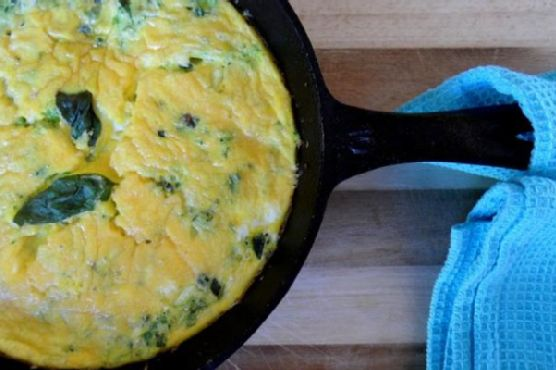
It was one of those Tuesday nights when the fridge was looking scarily empty, and yet, the thought of braving the grocery store felt like too much. That’s when I spotted the lone zucchini in the crisper drawer, looking like it might be the hero of dinner. With some eggs, a handful of basil, and a bit of cheese, this Zucchini & Basil Frittata came to life. It’s like an Italian hug in a skillet, perfect for a weeknight when you need something cozy but also have about 20 minutes of energy left in you. The beauty of this frittata is how it transforms humble ingredients into something that feels a bit more special.
Jump to Recipe
What You’ll Need
You probably have most of these on hand, which makes this recipe a lifesaver when you need a quick meal. Here’s what you’ll gather:
- Zucchini
- Salt
- Green onions
- Basil
- Cheddar cheese
- Eggs
- Grapeseed oil (or olive oil)
How to Make Zucchini & Basil Frittata
- First, shred your zucchini using a box grater or food processor. Place the shredded zucchini into a colander set over a bowl. Sprinkle with a little salt and let it sit for about 20 minutes to draw out the water. If you’re short on time, give it a squeeze with your hands to speed up the process.
- In a large mixing bowl, combine the shredded zucchini, chopped green onions, fresh basil, and grated cheddar cheese. Season with a bit more salt and stir everything until it’s well mixed.
- Crack the eggs into a separate bowl and beat them until smooth. Pour the beaten eggs into the vegetable mixture and stir until everything is happily combined.
- Preheat your oven to 350°F (175°C). While it’s warming up, heat 1 to 2 tablespoons of grapeseed oil in a 10-inch cast iron skillet over medium heat, ensuring the bottom and sides are well-coated.
- Pour the egg and veggie mixture into the skillet, spreading it out evenly. Let it cook for about 3 to 5 minutes, until the edges start to set and cook.
- Carefully transfer the skillet to the preheated oven. Bake for 12 to 15 minutes, or until the center is set and a toothpick comes out clean.
Cook’s Notes
Let’s talk about getting the most out of your frittata. It’s crucial to get rid of excess water from the zucchini; otherwise, the frittata might end up watery. If you’re planning ahead, you can shred the zucchini the night before, which makes assembling the dish a breeze the next day. Leftovers can be stored in an airtight container in the fridge for up to three days. Reheat gently in a skillet or microwave when ready to enjoy again.
Make It Your Own
Feel free to get creative with this recipe! Here are some swap ideas:
- Switch out the cheddar cheese for feta for a tangy twist.
- Substitute basil with fresh dill or parsley for a different herbal note.
- Add sliced cherry tomatoes for a burst of color and sweetness.
- Replace the zucchini with shredded carrots or thinly sliced bell peppers if you’re out of zucchini.
If you try this, I’d love to hear how it turns out — drop a comment or tag me! Can’t wait to see your delicious frittatas!
Related update: Zucchini & Basil Frittata