Change the address, keep the files: Gmail may finally let you rename yourself online
You created that cringe-worthy Gmail handle in middle school. Maybe it was "cooldude123" or "princess_of_pop". For years the only fix was brutal: create a new account, forward mail, rebuild subscriptions, and slowly migrate your life. Now Google appears to be rolling out a long-requested escape hatch — the ability to change your @gmail.com address while keeping the same account and all the files tied to it.
What to know right away
- Google’s help documentation (first seen in a Hindi-language support page) indicates users will be able to replace their existing @gmail.com address with a new @gmail.com address without losing emails, Drive files, Photos, purchases, subscriptions or YouTube channels. (techcrunch.com)
- The old address becomes an alias that continues to receive mail and can still be used to sign in — so you don't lose continuity. (nasdaq.com)
- There are limits and caveats: you can change the address only once every 12 months and at most three times (i.e., up to four addresses in total). Some managed (work/school) accounts will need admin approval. (nasdaq.com)
Why this matters more than it sounds
An email address is more than a username — it’s your digital identity across services. For most people the original Gmail handle is used as:
- The login for Google services (Drive, Photos, YouTube, Play Store, Android devices).
- The account recovery and notification contact.
- The primary identifier in countless third‑party services that use “Sign in with Google.”
Until now, changing that identity forced a painful migration: new account, lost history, broken linkages. Letting users rename their primary address while keeping everything in place reduces friction and preserves years of digital baggage (the good and the awkward). It’s the kind of small-but-impactful quality-of-life change that consumers ask for for years but companies often resist because of identity, security and technical complexity.
How it looks to work (based on leaked/updated help docs and reporting)
- Go to Google Account > Personal info > Email > Google Account email (once the feature reaches your account).
- Choose a new @gmail.com address; Google verifies availability and confirms the change.
- Your old address is retained as an alias; mail to either address lands in the same inbox.
- You can sign in with either address, and all your existing data remains attached to your account. (techcrunch.com)
The catches and potential pitfalls
- Limit frequency: only one change per 12 months and a maximum of three changes. That protects against abuse but also means you should pick carefully.
- Third‑party logins: sites that use “Sign in with Google” may still reference the old email. You may need to update the email on those services manually, and in some cases, re-link accounts if they don’t recognize the new address. (forbes.com)
- Device quirks: Chromebooks and some Android integrations tied to a specific Google account could require re‑signing or manual fixes (back up local data first if you use a managed Chromebook). Google’s documentation and early reporting specifically warn about possible device sign‑in loops. (nasdaq.com)
- Alias permanence: Google’s docs suggest the old address remains tied to your account as an alias and can’t be released for reuse by others — good for continuity, less ideal if you wanted the address freed up. (nasdaq.com)
- Rolling rollout: the change was initially spotted on a Hindi support page and is being rolled out gradually; not everyone will see it yet and Google had not published a broad announcement at the time of reporting. Expect regional and phased availability. (techcrunch.com)
A short timeline and context
- For years, Google’s policy was simple: personal @gmail.com addresses could not be changed. Workspace (business/education) accounts have had more flexible options, but personal accounts were effectively permanent.
- In late December 2025, tech reporters spotted updated Google help documentation — initially in Hindi — stating the company is “gradually rolling out” the ability to change a Gmail address. That triggered widespread reporting across outlets including The Verge, TechCrunch and Mashable. (theverge.com)
Who should (and shouldn’t) consider changing their address
-
Good candidates:
- People with visibly unprofessional or embarrassing handles who want a cleaner public identity.
- Users who want to update names after marriage, transition, or other life changes.
- Anyone who wants to consolidate fewer accounts without losing history.
-
Be cautious if:
- You rely heavily on "Sign in with Google" across many third‑party services and can’t afford temporary access issues.
- You have Chromebooks or devices with complex enterprise profiles; test and back up first.
- You expect to reclaim the old address for a new account — Google appears to keep the alias tied to your account.
My take
This is the kind of user-first tweak that should’ve arrived years ago. It scratches an itch we all felt when our teenage selves created forever addresses. Google is doing the sensible thing: preserving data continuity and minimizing friction while adding reasonable guardrails to prevent abuse. The phased rollout is expected — the underlying complexity of reassigning the account identity across product surfaces is significant. If you’re tempted to rename your account, wait until the option appears, read Google’s in‑product guidance carefully, and back up any device data that’s locally stored before you commit.
What to watch next
- Google’s official English support pages and blog for a formal rollout notice and detailed step‑by‑step instructions.
- Reports from early adopters about real‑world behavior on Chromebooks and third‑party sign‑ins.
- Clarifications on whether aliases can ever be released for reuse and precise behavior for Workspace-managed accounts.
Sources
Final thought
If this rolls out to everyone as described, millions will finally be able to retire their old internet personas without losing the stuff that matters — the photos, receipts, and weird long‑forgotten email threads we all cling to. Pick a new name you won’t regret, because Google’s watchful guardrails mean this won't be something you can do every month.
Related update: We recently published an article that expands on this topic: read the latest post.
Related update: We recently published an article that expands on this topic: read the latest post.
Banged up and bracing for the playoffs: what the Packers should do in Week 18
Introduction
The last game of the regular season usually carries either celebration or heartbreak. For the 2025 Green Bay Packers, Week 18 is instead a logistical puzzle: their playoff fate is set (No. 7 seed), but the roster looks like it’s been through a war. Do you rest stars and prioritize health, or play enough to fix glaring problems before a hostile playoff road trip? That tension — between protection and preparation — will shape the next seven days in Green Bay.
Where we are and why it matters
- The Packers clinched a playoff berth but will enter as the NFC’s No. 7 seed, which means an immediate road game in the wild-card round.
- A string of recent injuries and a three-game slide have left the roster thin: season-ending injuries (including Achilles and ankle losses), concussions, and multiple players exiting the most recent game. That makes the Week 18 decision more complicated than a simple “rest everyone” approach.
- Coach Matt LaFleur and staff have signaled discussions are ongoing; nothing is decided. The memory of last season’s finale — when starters suffered injuries that affected postseason availability — is very much on the staff’s mind.
What the practical choices look like
-
Rest the primary starters who are healthy enough to sit.
- Pros: Reduces risk of new injuries to top contributors (QB, key defenders, lead RB), gives time to recover nagging issues.
- Cons: With a 53-man roster and many hurt players already, resting too many starters could force inexperienced backups into key roles and upset team rhythm heading into a hostile playoff matchup.
-
Play to correct schematic and assignment issues.
- Pros: Fixes mental mistakes and alignment problems that showed up recently — especially on run defense — and helps build game-time sharpness before a road playoff game.
- Cons: Increased injury risk; may not be worth it for players with obvious long-term value.
-
A hybrid approach: rest the most injury-prone or fragile starters, play others to keep timing intact.
- Pros: Balances health management with necessary prep; allows coaches to evaluate depth and tweak assignments.
- Cons: Hard to pull off cleanly on a shorthanded roster; some “rested” players may still need limited reps to stay in rhythm.
Key factors the Packers must weigh
- Medical clearance and concussion protocol timelines for Jordan Love and other injured starters.
- The severity and timing of season-ending injuries already sustained — those change what the team can realistically rest.
- Depth chart reality: the Packers are not a 90-man roster in Week 18; they have limited active bodies. If backups would be thrown into critical snaps, the risk shifts.
- The opponent and matchup context: Minnesota’s tendencies and whether Week 18 looks like a realistic dress rehearsal for the likely playoff matchup.
- Psychological and momentum considerations: a team that plays crisp, confident football can carry that energy. Conversely, resting everyone can leave players cold or disrupt continuity.
What I’d expect the Packers to do
- Protect the most critical long-term assets (e.g., starters with lingering injuries or concussion concerns) — let them rest if medical staff advises.
- Keep enough veterans on the field to work out schematic breakdowns and get the defense’s fundamentals — especially to shore up run defense and assignment discipline.
- Use targeted reps for players who need timing (quarterback-room backups practicing with starters in situ, special-teams drills for core units).
- Lean on the depth chart to give younger players meaningful snaps, but avoid risking premium players for vanity reps.
A few smart management moves
- Turn Week 18 into a prioritized rehearsal: run the basic, high-frequency plays the team will rely on in the playoffs rather than trying to invent or fix everything at once.
- Emphasize communication and assignment fundamentals in walkthroughs and practice — many of the recent problems were mental errors, not lack of effort.
- Schedule minute-by-minute medical evaluations and clear communication with players so decisions are transparent going into gameday.
- Prepare contingency plans for short yardage, red zone and special teams scenarios so backups aren’t surprised if thrust into the game.
Things to watch during Week 18
- Official injury reports and any updates to Jordan Love’s concussion status.
- Who actually gets a game-day rest designation and who plays limited snaps.
- Whether the coaching staff simplifies play-calls to protect players from overthinking and reduce the chance of mistakes.
- How the run defense responds if starters play — that was an acute problem recently and could decide whether the unit feels playoff-ready.
What this means for playoff outlook
- Resting judiciously could preserve the roster’s top talents for the wild-card game, but doing too much may leave the team ill-prepared for an aggressive, physical playoff opponent.
- Conversely, playing too many starters in a bid to “fix” problems risks new injuries that would be much costlier in a single-elimination setting.
- The ideal result is a middle path: maintain health while fixing the most glaring, fixable issues and giving key backups a chance to prove they can handle emergency roles.
A few quick takeaways
- The Packers are stuck between risk and reward: protecting star players versus maintaining competitive sharpness.
- Medical clearance — especially for the quarterback — will drive much of the Week 18 plan.
- Given a thin roster, expect a blended strategy: rest where necessary, but play enough veterans to clean up assignment mistakes and stabilize the team’s identity heading into the playoffs.
Final thoughts
This is one of those coaching dilemmas that reveals organizational priorities. Do you prioritize long-term availability over short-term readiness? The smart move is rarely binary. With memories of last season’s finale still fresh and key players banged up, Green Bay’s staff should optimize for availability of their top contributors while using Week 18 as a focused rehearsal: address the defensive misalignments, shore up the run defense principles, and give select backups meaningful reps. If they can find that balance, the Packers will have increased their odds of surviving the first road hurdle — and that’s what matters when you’re the No. 7 seed.
Sources
Related update: We recently published an article that expands on this topic: read the latest post.
Related update: We recently published an article that expands on this topic: read the latest post.

Don’t forget: T‑Mobile’s “Apple TV On Us” will cost $3 a month starting January 1, 2026
You might have assumed your carrier perk would quietly stay free forever. If you’re on certain T‑Mobile postpaid plans and have been enjoying Apple TV “On Us,” don’t be surprised to see a new line on your bill next year: the benefit will no longer be entirely free — it becomes a $3/month charge on January 1, 2026.
Here’s what’s changing, why it matters, and what you can do about it.
What’s happening (quick snapshot)
- T‑Mobile is ending the fully free Apple TV “On Us” benefit for most eligible plans. Effective January 1, 2026, customers who previously received Apple TV at no charge will see a $3/month fee.
- T‑Mobile will continue to apply a $9.99/month discount toward Apple TV for qualifying plans; after Apple raised Apple TV+ to $12.99/month, subscribers will pay the remaining $3.
- The change affects customers on plans such as Experience More, Experience Beyond, Go5G Plus / Next, Magenta MAX, Magenta Plus, ONE Plus, and similar tiers.
- T‑Mobile still appears to offer a six‑month trial for some customers, and subscribers can manage or cancel the add‑on in T‑Life or via their T‑Mobile account. (t-mobile.com)
Why T‑Mobile is doing this
- Apple increased Apple TV+’s price from $9.99 to $12.99 (U.S.) in 2025. That $3 hike is the direct reason the “On Us” perk can’t remain truly free unless T‑Mobile absorbs the full increase. (reuters.com)
- Carriers regularly reassess bundled perks to protect margins as third‑party services raise prices or as promotional windows end. T‑Mobile is keeping a substantial discount — it’s just passing some of the recent Apple price increase through to customers. (appleinsider.com)
Who this affects
- Current T‑Mobile postpaid customers on qualifying plans who redeemed Apple TV “On Us” or receive it as a plan benefit.
- Customers billed for Apple TV through T‑Mobile (not via Apple directly): their bill will reflect the $12.99 price or the $9.99 discount plus the $3 customer share starting Jan 1, 2026.
- People who have the Apple TV subscription through Apple directly aren’t managed by T‑Mobile’s billing unless they choose to redeem the carrier offer. If you redeem T‑Mobile’s $3 offer, your Apple‑billed subscription may be paused and T‑Mobile’s billing will take over. (t-mobile.com)
Practical steps to avoid surprises
- Check your T‑Mobile messages and the T‑Life app for account notices that mention “Apple TV just $3/month” or a price‑change notification. T‑Mobile has been sending texts to affected customers. (androidauthority.com)
- If you don’t want to pay $3/month, cancel the T‑Mobile–managed Apple TV subscription before January 1, 2026. Manage it in T‑Life or via your T‑Mobile ID. (t-mobile.com)
- Compare alternatives: Apple still offers free trials (often three months for device purchases), Apple One bundles may make sense if you use multiple Apple services, and Apple’s new Apple TV + Peacock bundle (or other streaming bundles) can be more economical depending on which services you use. (tomsguide.com)
The bigger picture for carrier perks
- This is part of a wider pattern: carriers trim or restructure perks when content partners raise prices or change promotional strategies. What felt like a permanent “freebie” can be temporary. (mactrast.com)
- For customers, it’s a reminder to treat carrier‑bundled streaming perks like subscriptions: set a calendar reminder before the trial or promotional period ends, and review whether the perk still delivers value.
My take
T‑Mobile’s move is pragmatic — it preserves a meaningful discount ($9.99 off the new $12.99 price) while shifting a small portion of the cost to customers. For users who casually watch Apple TV originals, $3/month is a modest fee to keep the service. But for budget‑minded subscribers who only used the perk because it was free, that three dollars is an inflection point: keep it, switch to a trial, or cancel and reallocate that money to another streaming option.
If you’ve forgotten you had the perk, treat this as a friendly billing nudge: check your account, decide whether you want Apple TV after January 1, 2026, and act before the charge appears.
Sources
Related update: We recently published an article that expands on this topic: read the latest post.
Related update: We recently published an article that expands on this topic: read the latest post.

Night of the Purdy Party: How Brock Put the 49ers One Win From the 1-Seed
There are nights when a quarterback doesn’t just play — he takes over the script. On Sunday Night Football, Brock Purdy did exactly that. After a shaky first throw, he rallied to account for five touchdowns (three passing, two rushing) and guided the San Francisco 49ers to a 42-38 win over the Chicago Bears, setting up a winner-take-all Week 18 clash with the Seattle Seahawks for the NFC’s top seed.
This wasn’t tidy. It wasn’t pretty. It was electric, messy, and magnificent — the kind of primetime game that reminds you why football is an emotional sport. Purdy’s performance didn’t just win a game; it extended momentum, ratcheted expectations, and made the 49ers’ late-season narrative impossible to ignore.
Why this game matters beyond the scoreboard
- The 49ers improved to 12-4 and now control the path to the NFC’s No. 1 seed — beat Seattle in Week 18 and they finish with home-field advantage and a first-round bye.
- Purdy’s five-touchdown output marked his second straight game with that many TDs, a rare streak that puts him in historical company.
- The game showcased both San Francisco’s offensive fireworks and defensive vulnerabilities — a reminder that the 49ers’ ceiling is sky-high but not without risk.
What Purdy showed under pressure
Early in the game Purdy’s first pass went the wrong way — a pick-six — and it felt like a potential saboteur for the night. Instead, he flipped the script.
- Poise: Purdy repeatedly converted third downs and escaped from pressure to keep drives alive. Those off-schedule plays defined the late-game push.
- Dual-threat explosiveness: He finished with 303 passing yards and two rushing TDs, becoming the first 49ers QB to have 300+ yards, three pass TDs and two rushing TDs in a single game (team research highlighted after the win). That versatility turns play-calling from a plan into a problem for defenses.
- Clutch: The decisive 38-yard touchdown to Jauan Jennings with 2:15 left was a clean, aggressive strike — the kind of throw that separates good games from signature wins.
Head coach Kyle Shanahan’s postgame praise calling Purdy an “assassin” and saying he was “playing as good as it gets” wasn’t hyperbole. The game mattered in context: it followed a stretch where Purdy had elevated his play and now heads into a season-deciding showdown carrying real momentum.
The big-picture 49ers: offense humming, defense raising questions
This was a team win, but it wasn’t without blemishes.
- Offense: Christian McCaffrey returned with a huge night (140 rushing yards and a TD), the receiving corps made key plays, and even backup tight end Jake Tonges stepped up in George Kittle’s absence. The attack looked balanced and explosive.
- Defense: Allowing 38 points to a Bears team led by rookie quarterback Caleb Williams spotlighted persistent coverage and pressure issues. San Francisco’s defense made enough key plays late, but this unit will need steadier work against Seattle’s attack next week.
- Health and toughness: The 49ers took hits in the trenches and showed resilience; Purdy escaped a few dangerous moments that could have swung the game had things gone differently.
In short: an offense capable of torching any defense, paired with a defense that can be flaky in stretches. That combination makes them thrilling but also fragile.
Moments that mattered
- The pick-six early could have derailed the Niners; instead Purdy’s response set the tone for the rest of the night.
- Purdy’s 3rd-and-long completions and late scramble to keep the final drive alive were game-defining.
- The 38-yard TD to Jennings with 2:15 left — the dagger that ultimately separated the two clubs.
A look ahead: what the Week 18 showdown will decide
- If the 49ers beat the Seahawks in Week 18 (Saturday night), they clinch the NFC West, snag the No. 1 seed, secure a first-round bye, and earn home-field advantage — potentially all the way to the Super Bowl if they keep winning.
- The margin for error is razor-thin: Purdy’s recent run gives San Francisco offensive confidence, but the defense must clean up mismatches against Seattle’s weapons.
A few quick stat nuggets
- Purdy: 24-of-33, 303 passing yards, 3 passing TDs, 1 INT, plus 6 rushes for 28 yards and 2 rushing TDs (game totals as reported after the matchup).
- The 49ers reached 12-4 and have the opportunity to clinch the NFC’s top seed with a win next week.
- Purdy became one of the few quarterbacks in the Super Bowl era to record five offensive TDs in back-to-back games, a feat last done by Russell Wilson in 2020.
My take
This was a defining primetime moment for Brock Purdy and the 49ers’ offense. Purdy’s growth from mid-round prospect to an elite manager-of-chaos has been rapid and intoxicating to watch. The offense is dialed in; the defense is worrisome but still capable of clutch plays. If San Francisco can patch the defensive holes and Purdy keeps producing at this level, they won’t be a one-week wonder — they’ll be the team everyone has to beat in January.
If you’re a 49ers fan, savor the Purdy magic but don’t get complacent. If you’re watching the NFC playoff picture, keep an eye on Levi’s Stadium — the 49ers controlling the 1-seed would completely reshape postseason paths.
Sources
Related update: We recently published an article that expands on this topic: read the latest post.
Related update: We recently published an article that expands on this topic: read the latest post.

Mikaela Shiffrin’s night in Semmering: five-from-five and a reminder that dominance still has edges
There are performances that look effortless on paper and fights that reveal a champion’s guts. Sunday night in Semmering gave us both. Mikaela Shiffrin — the skier who has made technical alpine racing look like a science — added another headline to an already absurd résumé, but this win came with grit, complaint and a reminder that even the best can be pushed to the limit. (fis-ski.com)
Why this race mattered
- Shiffrin won the Semmering slalom to make it five wins from five slalom starts this 2025–26 season — a perfect start in the discipline that keeps the “Mother of Slalom” label feeling earned. (fis-ski.com)
- It was career World Cup victory number 106 for Shiffrin, and her sixth consecutive slalom win counting the final race of last season — milestones that stack up into historical territory. (reuters.com)
- The race was not a stroll: tricky snow, course debates and a razor-thin margin of 0.09 seconds to Camille Rast made this one of the tougher tests she’s faced this season. (fis-ski.com)
The night unfolded like this
The first run felt chaotic. Softer, breaking snow left the lower section especially treacherous and the field visibly frustrated; many racers struggled and race officials even tweaked the course before the second run after skier input. Shiffrin herself called the piste “pretty rotten” and later said parts of the course were “past the limit.” (fis-ski.com)
Shiffrin came out for run two with a different tone — more urgency, fresher aggression. Where the first descent left her fourth and 0.54 seconds behind the leader, her second run was a strategic, full‑throttle masterclass: crisp, snappy turns and one fewer mistake than her nearest rival. That was enough to claw back the deficit and edge ahead by 0.09 seconds for the win. (fis-ski.com)
Camille Rast pushed hard all night and nearly nudged Shiffrin off the top; Lara Colturi continued her breakout season with another podium for Albania, and the race felt like a microcosm of the shifting slalom guard — brilliance from Shiffrin, but not uncontested. (fis-ski.com)
What this says about Shiffrin right now
- Consistency and adaptability: Winning five slaloms from five starts is about more than speed — it’s judgment, recovery and the ability to read conditions and opponents. This Semmering win highlighted all three when it counted. (fis-ski.com)
- Experience under pressure: Several rivals matched or even outskied her at points, but Shiffrin’s race management and capacity to deliver when it mattered turned a tense night into another victory. (reuters.com)
- The narrative is changing around the field: younger names like Lara Colturi are no longer surprises but real threats; Camille Rast’s form shows that margins are getting thinner. That’s good for the sport and makes future matchups more compelling. (fis-ski.com)
The controversy and safety question
This wasn’t just a drama about timing. Skiers criticized the condition of the piste — Shiffrin included — saying parts of the course were beyond acceptable limits and that the snow was breaking down early in the start list. Officials adjusted the course, but the episode revived conversation about athlete safety, course setting and how organizers should respond in night races when temperature swings can wreck the surface. Those debates will likely follow into the next events. (fis-ski.com)
What to watch next
- Kranjska Gora on 4 January will be the first slalom after the New Year and the next chance to measure whether this perfect slalom run continues. The pressure is accumulating on competitors to find a way past Shiffrin — and on organisers to deliver fair, safe racing. (fis-ski.com)
- The duel between established dominance (Shiffrin) and rising stars (Colturi, Rast) will be the storyline to follow; the slalom podium is tightening into a true battlefield. (snowindustrynews.com)
My take
Shiffrin’s win in Semmering felt like a hallmark of greatness: not the effortless triumph that becomes a comfortable stat, but a teeth‑gritted, high‑stakes reply to adversity. That’s compelling sport. The race also underlined an important tension for alpine skiing in 2025–26 — the thrill of elite performance versus the real need for consistent, athlete‑first course management. If we get more nights like Semmering, we’ll get drama and historic numbers, but we’ll also have to keep asking where the safety line is drawn.
Sources
Related update: We recently published an article that expands on this topic: read the latest post.
Related update: We recently published an article that expands on this topic: read the latest post.

End of an era: the Star Tribune shuts its Minneapolis printing plant
There’s a particular sound and smell to a morning newspaper — the whirr of presses, the crinkle of fresh pages, the ink-scented air in a loading bay. This December, that sensory thread that tied generations of Minneapolis readers to their daily paper was cut. The Minnesota Star Tribune announced it will close its Heritage printing facility in Minneapolis and move production to a Gannett-operated plant in Des Moines, ending local printing that traces back 158 years.
Why this matters
- The closure is more than a cost-cutting move; it marks a shifting relationship between newsrooms and their communities.
- About 125 workers face layoffs, and the change reshapes how and when news physically reaches readers.
- The decision reflects long-term declines in print circulation and the economics of modern news publishing, but it also raises questions about local control, local jobs, and the symbolism of a city losing a part of its media infrastructure.
What happened
- In September 2025 the Star Tribune announced the Heritage printing plant in Minneapolis would close at year’s end and that printing would be outsourced to Des Moines. (startribune.com)
- The company said the plant was operating at roughly 18% capacity, that moving production would save “several million dollars” annually, and that print subscribers should not experience delivery interruptions. (startribune.com)
- State filings and later local reporting indicated the number of affected workers may be higher than early estimates, with updated WARN notices showing additional job losses tied to the closure. (patch.com)
The human side: workers and rituals
There’s a reason these stories hit hardest when they’re about presses and parking lots. Printing plants are workplaces with long memories — multi-generational jobs, early-morning rituals, a culture all their own. Workers laid off from specialized roles like press operators and maintenance technicians face an uncertain market; their skills don’t always transfer easily to other industries.
Local reporters who’ve covered the plant described the closure as “an end of an era” — not just an operational change but the loss of a neighborhood landmark where the city’s news was literally produced. Editors and production staff will also adapt: earlier deadlines, different workflows, and the psychological shift of no longer seeing the physical paper roll off the presses down the street. (startribune.com)
The broader context: why newspapers outsource printing
- Print circulation has been declining for decades; production facilities increasingly run well below capacity.
- Outsourcing to shared-print facilities is a common consolidation strategy to reduce overhead while preserving print editions.
- The tradeoff is local jobs and control over production timing; outsourcing often means earlier editorial deadlines and potential delays for late-breaking coverage in print. (startribune.com)
What this means for readers and local journalism
- Readers may see digital-first delivery for late-night developments, since physical production will be farther away and print deadlines earlier.
- Cost savings can free money for digital investments — but only if savings are actually reinvested in reporting capacity rather than serving short-term financial targets.
- The symbolic loss — a physical newsroom and press in the city — can weaken civic ties. Local infrastructure matters: producing news in a community strengthens accountability and presence in ways remote production does not.
Lessons from other closures
- Other newspapers that consolidated printing often preserved daily print availability while shrinking local staffing and logistics. The result frequently includes a leaner local footprint and increased reliance on digital platforms for breaking coverage. (gxpress.net)
- Labor and community responses vary. Some communities mobilize to demand reinvestment in local journalism; others accept the shift as inevitable and work to preserve coverage via nonprofit or alternative news models.
Things to watch next
- How the Star Tribune allocates the projected savings: staffing, reporting budgets, or only operational balance sheets.
- Whether delivery times or print quality change and how subscribers react.
- Local economic ripple effects from job losses and the future use (or sale) of the Heritage plant property.
Key takeaways
- The Star Tribune’s printing shift ends 158 years of locally printed newspapers in the Twin Cities and closes a long-standing Minneapolis facility. (startribune.com)
- About 125 workers were initially reported affected; state filings later suggested higher figures as the timeline for layoffs became clearer. (patch.com)
- The move is financially driven by steep capacity underuse and declining print readership; it saves money but costs local jobs and local production presence. (startribune.com)
My take
Change in the news business has long been incremental; this felt abrupt because it carries visible, local consequences. Outsourcing printing makes economic sense in an industry under pressure, yet each consolidation chips away at the ecosystem that supports robust local reporting. If savings result in stronger investigative work, more local beats, and better digital storytelling, the decision could be framed as pragmatic reinvention. If the savings simply shore up short-term balance sheets while newsroom capacity erodes, the community loses twice: jobs now, and scrutiny later.
A city loses more than a building when its presses stop rolling — it loses a place where stories were made tangible. That makes it all the more important for news organizations, civic leaders, and residents to pay attention to whether the next chapter strengthens the local journalism the community still needs.
Sources
Related update: We recently published an article that expands on this topic: read the latest post.
Watch the full 90 minutes: Arsenal’s win over Brighton replayed and why it matters
There’s something quietly addictive about watching a full match replay — the little patterns, the substitutions that change momentum, the missed chances that keep you gritting your teeth. Arsenal’s recent 2-1 victory over Brighton at the Emirates is one of those games worth soaking up in full. If you missed it live or just want to relive the tension from start to finish, the club has published the full 90 minutes — and it’s a great way to understand how Arteta’s team are shaping up this season.
What to look for in the full match replay
- Team shape and control
- Early passages show Arsenal’s intent to dominate possession and pin Brighton back through quick transitions and wide overloads.
- Key moments that decided the match
- Martin Ødegaard’s opener and a second-half own goal that ultimately separated the sides are best appreciated in context — the build-up play, pressing triggers and delivery into the box.
- Defensive resilience and goalkeeper saves
- Arsenal’s defending under pressure late on and the intervention from David Raya highlight how small margins mattered.
- Substitute impact and game management
- Watching substitutions unfold in real time reveals how Arteta managed the game clock and personnel to close out the win.
Why this match matters for Arsenal’s season
- Momentum and league position
- The win pushed Arsenal back to the top of the Premier League table, reinforcing their title credentials and providing a confidence boost at a demanding stage of the campaign. (See match coverage.) (reuters.com)
- Squad depth and resilience
- With injuries and hectic scheduling, full-match replays let you see which squad players can step up and how the core starters are coping when forced to do more of the heavy lifting. (arsenal.com)
- Tactical lessons
- Watching every minute helps fans and analysts spot recurring patterns — pressing triggers, how Arsenal create overloads on the flanks, and how they deal with counter-attacks — which are often lost in highlights packages.
Highlights that don’t feel like highlights when you watch them live
- Ødegaard’s finish
- The strike that opened the scoring is cleaner and more clinical when you see the space he was afforded and the movement that created it.
- The own goal off a corner
- An own goal can feel like a fluke on replay, but the replay shows the pressure from the corner routine and why Brighton’s defender ended up turning it into his own net.
- Brighton’s late reply
- Diego Gómez’s goal and the tense final minutes are best appreciated in sequence — how Arsenal reacted, what chances Brighton worked and how the tempo shifted.
A fan’s checklist for watching the replay
- Watch the opening 15 minutes twice: first for general flow, then to study movement and pressing.
- Note player combinations (e.g., Saka/Ødegaard interplay) in different phases: build-up, final third, and transition.
- Time substitutions and their immediate effects — who changes the rhythm?
- Observe set-piece defending and attacking: corners and free-kicks often decide tight games.
Things the replay quietly confirms
- Arsenal’s attacking ideas are producing chances consistently, but finishing still requires ruthlessness.
- Defensive discipline matters: small lapses invite Brighton’s dangerous counters.
- Game management from the bench is evolving; substitutes are becoming a strategic tool, not just fresh legs.
A few takeaways from watching everything
- Winning tight games is a hallmark of title contenders; Arsenal showed the composure to do that here.
- Individual quality (like Ødegaard) plus collective structure (pressing, set-piece routines) makes the difference.
- Full-match replays remain one of the best learning tools for fans who want more than highlight reels.
Final thoughts
If you want to really understand how Arsenal are building their season, skip the 30-second clips for 90 minutes of context. The full replay doesn’t just show the goals — it reveals the patterns, the stresses and the little moments of craft that add up to a result. Whether you’re studying tactics or just savouring the feels of a home win, press play and enjoy the kind of granular storytelling only a full match replay can provide.
Sources
Related update: We recently published an article that expands on this topic: read the latest post.
Related update: We recently published an article that expands on this topic: read the latest post.
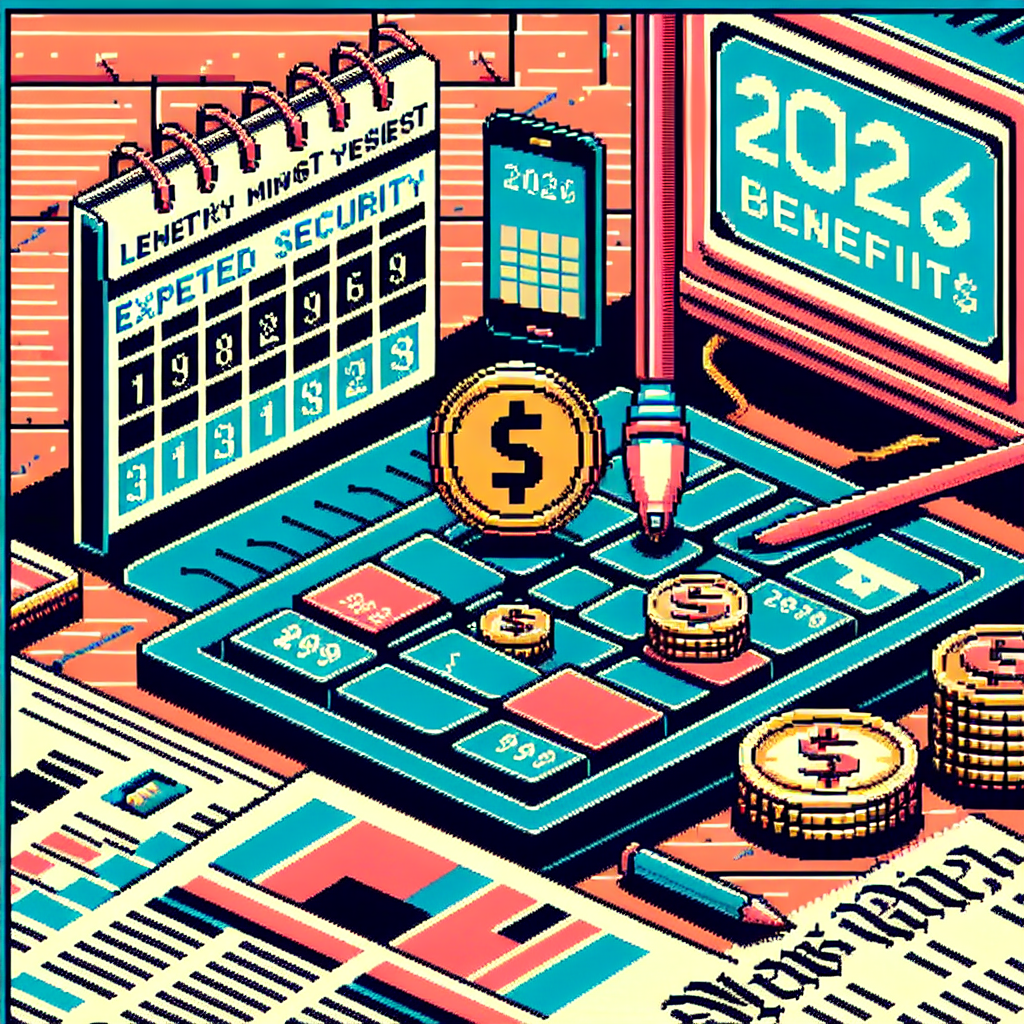
When your 2026 Social Security check will hit your account — and why the dates matter
You open your bank app, hold your breath, and wait for that familiar deposit. For millions of Americans, Social Security checks aren’t just a convenience — they’re a predictable, often essential part of monthly budgeting. Good news: the Social Security Administration (SSA) has a steady, predictable schedule for 2026. If you were born on the 1st through the 10th of any month, your benefit will arrive on the second Wednesday of every month.
Below I’ll unpack the calendar, why some people get paid on different days, and a few practical tips to make the schedule work for you.
Quick snapshot you can remember
- Those born on the 1st–10th: payment arrives the second Wednesday of each month.
- Those born on the 11th–20th: payment arrives the third Wednesday of each month.
- Those born on the 21st–31st: payment arrives the fourth Wednesday of each month.
- Exceptions: people who first received Social Security before May 1997 (and some who receive both Social Security and SSI) generally get Social Security on the 3rd of the month; SSI benefits are typically paid on the 1st (or the prior business day if the 1st falls on a weekend/holiday).
(These are the official rules the SSA uses for the 2026 calendar.) (ssa.gov)
Why the schedule looks like this
- Historically, Social Security payments were issued on the 1st of each month. In 1997 the SSA changed the schedule to spread deposits across the month and reduce processing and banking congestion.
- The birthday-based Wednesday schedule simplifies processing: three main payment windows each month (second, third, fourth Wednesday) cover nearly all retirement, disability, and survivor beneficiaries. (ssa.gov)
What to watch for in January 2026 and holidays
- Because of the COLA timing and New Year’s Day, some SSI and early-January payments are adjusted. For example, SSI’s January payment is often issued at the end of December when January 1 falls on a holiday. The SSA also applies the 2026 cost-of-living adjustment (COLA) starting with January 2026 benefits. (ssa.gov)
Practical tips for beneficiaries
- Check your birth-date group and mark the corresponding Wednesday each month on your calendar so you know when to expect funds.
- If you get both Social Security and SSI, note that SSI usually arrives on the 1st and Social Security may follow the 3rd-of-the-month rule if you started benefits before May 1997. Plan for those separate dates. (archive.ph)
- Sign up for a my Social Security account at ssa.gov/myaccount to see personalized notices, COLA letters, and to confirm direct deposit info — especially useful if you travel or worry about mailed notices. (ssa.gov)
- If a scheduled date falls on a weekend or federal holiday, payments are generally issued on the prior business day. That means you may sometimes see your money a day or two earlier. (money.com)
A few calendar specifics (examples from 2026)
- January 2026 deposits (typical pattern): Jan. 14 (born 1–10), Jan. 21 (born 11–20), Jan. 28 (born 21–31). SSI payments tied to January may appear Dec. 31, 2025, because Jan. 1 is a holiday. (archive.ph)
Why this still matters beyond convenience
- For many retirees, survivors, and disabled beneficiaries, Social Security is a primary income source. Knowing exact deposit timing helps with rent/mortgage planning, prescription and medical bills, and avoiding late fees.
- The 2026 2.8% COLA gives beneficiaries a modest bump, but timing matters: if a payment date shifts because of holidays you may need short-term adjustments to cash flow even with the increase. (ssa.gov)
My take
The SSA’s schedule may sound bureaucratic, but it’s quietly practical: spreading payments across three Wednesdays reduces bottlenecks and keeps deposits predictable. If you rely on these funds, a little calendar work now — marking your “your Wednesday” and setting up online alerts — can remove a lot of month-to-month stress.
Sources
Related update: We recently published an article that expands on this topic: read the latest post.
Sam Darnold Goes Back to Carolina — and It Feels Different This Time
There’s something poetic about a quarterback walking back into a stadium where he once had to re-find himself. For Sam Darnold, returning to Bank of America Stadium isn’t a trip down memory lane so much as a checkpoint on a journey that’s gone from “what if” to “why not.” Once the Panthers’ stop on a rocky early-career path, Carolina helped reshape him into the player who’s now a two-time Pro Bowler and a legitimate NFC contender with the Seattle Seahawks.
Why this visit matters
- It’s more than nostalgia. It’s a concrete example of how short chapters can change a career arc.
- Darnold’s story reframes the “bust-to-breakout” narrative into something cleaner: development, patience, and context.
- The contrast between his two stints in Carolina (a starter-in-waiting role in 2021–22) and his current form shows what coaching, learning behind a veteran, and a little momentum can do for a quarterback’s confidence.
A quick timeline that matters
- 2018: Darnold is drafted No. 3 overall by the New York Jets and struggles early in his career.
- 2021–2022: Traded to the Carolina Panthers. He starts games, battles injuries, and finishes strong late in 2022 — a small stretch that mattered more than it looked at the time.
- 2023: Spends a season in San Francisco as Brock Purdy’s backup, learning in a strong offensive system.
- 2024: Breakout year with the Minnesota Vikings — strong statistics, a Pro Bowl nod, and widespread recognition as an improved quarterback.
- 2025: Signs with the Seahawks and returns to Carolina as an established starter, playoff-bound and riding the momentum built over the previous seasons.
How Carolina “paved the way”
Darnold’s comments before the Seahawks’ December 26, 2025 game capture the essence of what those Carolina years meant to him: being around good teammates, weathering adversity, learning the offense, and coming through injury to finish the season on an upswing. That late-2022 stretch — where he helped the Panthers go 4-2 down the stretch and posted multiple games with a passer rating over 100 — became a kind of quiet audition. It didn’t solve everything overnight, but it seeded belief.
Three practical ways Carolina helped:
- Rebuilding mental resilience: The Panthers stint forced Darnold to cope with setbacks and rebuild confidence in-game.
- Learning from teammates and coaches: Exposure to different systems and veteran players gave him new tools to add to his repertoire.
- Creating momentum: Playing well late in the 2022 season opened the door for the next steps — a learning season in San Francisco and the breakout year in Minnesota.
The bigger picture: player development and second chances
Darnold’s arc is a useful case study about NFL careers that aren’t linear. Talent alone rarely tells the whole story; context, coaching, scheme fit, health, and timing all matter. Teams (and players) who are patient and intentional about development can turn perceived “busts” into reliable starters. For Darnold, the time in Carolina didn’t instantly rewrite his narrative — it supplied the pieces he later used to build it.
- Players can rebrand their careers with incremental wins and learning opportunities.
- Backup years (like his time in San Francisco) can be less about sitting on the bench and more about refining decision-making.
- Short hot stretches — the kind Darnold had in Carolina — matter because they provide evidence that a player can win when given the right support.
What to watch when Darnold plays in Carolina
- Poise under pressure: Does he show the same command and decisiveness that powered his 2024 season?
- Pocket movement and quick reads: Those were hallmarks of his improvement in Minnesota and will be critical against Carolina’s schemes.
- Leadership cues: How he interacts with teammates on and off the field shows whether the growth is sustained beyond stats.
Things that make this narrative compelling for Seahawks fans
- Darnold’s success is also a win for Seattle’s offensive staff and the broader rebuild: they signed a quarterback who’s earned momentum and now must prove it again in a new environment.
- If the Seahawks keep winning with Darnold at the helm, his road through Carolina will look less like a detour and more like a necessary milepost.
- The human element — friendships, locker room lessons, and hard-earned confidence — is what converts raw talent into consistent performance.
My take
Sam Darnold’s return to Carolina reads like one of those sports stories you don’t notice until it’s fully formed: a player who kept working, learned from imperfect opportunities, and used them as leverage for a genuine career revival. The Seahawks’ decision to bank on him wasn’t just about stats from one breakout year — it was betting on a player who’s shown the capacity to grow. Whether he cements a long-term legacy in Seattle or continues evolving, that trip back to Bank of America Stadium is a reminder that development often happens in unexpected places.
Sources
Related update: We recently published an article that expands on this topic: read the latest post.
Related update: We recently published an article that expands on this topic: read the latest post.

Bears enter Sunday night in San Francisco with question marks on defense
The Bears are headed to Levi's Stadium under a cloud of uncertainty. With playoff seeding on the line and a primetime national audience watching, Chicago’s defensive corps — normally one of the unit’s strengths this season — looks shakier than you’d like the week before the postseason push. Injuries and an illness bug have left multiple starters listed as questionable or out, forcing the Bears to lean on depth and coaching ingenuity against a 49ers offense that can punish hesitation.
What’s going on (short version)
- Multiple defensive contributors are either ruled out or questionable because of injuries and illness.
- Key concerns include cornerback availability, the status of veteran playmakers in the secondary, and whether linebackers can play at full strength.
- The timing — late December, with seeding implications — makes these absences feel more urgent than they might earlier in the year.
Snapshot of the injury picture
- Nick McCloud: ruled out due to illness.
- Nahshon Wright: hamstring/illness and did not practice late in the week; questionable.
- Josh Blackwell: missed late practices; questionable.
- C.J. Gardner-Johnson: knee but practiced full; questionable.
- T.J. Edwards: dealing with a glute issue; limited in practice and listed as questionable.
- Rome Odunze (offense): ruled out (foot) — not a defensive player, but his absence affects game flow and offensive matchups.
(These notes reflect the team injury report and local media coverage released in the days leading into the Bears–49ers Sunday night game.)
Why this matters — more than just names on a sheet
- Cornerback instability against a pass-heavy 49ers offense is a matchup problem: San Francisco’s route concepts and tight-end usage create high-demand coverage assignments. When your nickel and boundary corners are banged up or sick, you can expect the opponent to attack the seams and force the defense into matchup-based substitutions that invite communication errors.
- Linebacker questions change fit and run-defense responsibilities: If T.J. Edwards is limited or unavailable, the Bears must shuffle reps and responsibility for middle-of-field coverage and run-gap integrity. That can open lanes for playmakers like Christian McCaffrey and force safeties into awkward run-support vs. coverage choices.
- Depth and special teams get tested: Late-week illnesses frequently force elevation of practice-squad players and increased snaps for rotational guys. That’s not inherently bad, but it compresses the margin for error in a game where every possession matters.
How the Bears can cope (practical angles)
- Lean on communication and simplify assignments: When bodies are limited, fewer moving parts helps reduce blown coverages. Expect play calls designed to keep the defense on its heels without relying on complex rotations.
- Prioritize situational football: Limit third-and-long exposure and make the offense earn points. Winning field position and converting turnovers become even more valuable when personnel is stressed.
- Trust experienced depth and scout-prep replacements: The Bears will look to backup corners and special teams standouts who already know the system. Coaching that prepares specific matchups for those replacements can blunt an opposing offense’s best plans.
- Offense must stay on the field: Time of possession becomes a weapon when your defense is undermanned. A ball-control, methodical approach reduces the number of times the defense is forced to make game-altering plays.
Moments to watch on Sunday night
- Early third-down plays: If the Bears struggle to get off the field, that will expose the thin spots in the secondary right away.
- Matchups versus tight ends and slot receivers: How the Bears handle intermediate routes and seams will indicate whether Gardner-Johnson (if active) and the nickel package can hold up.
- Substitution and communication penalties: Pre-snap confusion or repeated personnel errors often reflect last-minute lineup changes due to illness/injury.
A tempered optimism
This team has weathered stretches of adversity before. Coaching adjustments, veteran leadership, and a strong offensive identity can mitigate losses on the other side of the ball — at least to a degree. The 49ers present a stiff test, but football is still decided one play at a time; the Bears’ ability to slog through the ugly sequences and capitalize on turnovers will be decisive.
My take
Injuries and illnesses are part of NFL life, but timing is everything. Facing an elite offense in a primetime setting with multiple defensive starters uncertain elevates the stakes. I expect the Bears to simplify and play disciplined football — they don’t have the luxury of improvisation on defense. If the backups can hold the seams and the offense controls the clock, Chicago can make this a competitive game. If not, the 49ers will likely exploit matchup advantages and put the Bears on their heels.
Sources
Related update: We recently published an article that expands on this topic: read the latest post.
Related update: We recently published an article that expands on this topic: read the latest post.
A holiday-market high: Why the S&P 500 kept climbing after Christmas
The markets came back from their Christmas break like someone who just remembered they’d left the oven on — brisk, decisive, and not apologetic. On Friday, the S&P 500 notched another fresh record high and put Wall Street on pace for a winning week as traders returned to a thin, year‑end trading tape. The headline is simple; the story under it is a mix of momentum, rotating leadership, and the familiar tug-of-war over Fed policy and valuations.
What happened (quick snapshot)
- The S&P 500 reached a new all‑time high on Friday, extending a year‑end rally that has left major U.S. indices near or at record territory. (Markets had been closed Thursday for the Christmas holiday.)
- The index was pacing for weekly gains and coming off several recent record sessions earlier in the week.
- Traders pointed to continued momentum, sector rotation away from frothy tech names into more moderately valued stocks, and continued investor focus on the Federal Reserve’s path for rate cuts and upcoming Fed minutes.
Why this felt different than a routine rally
- Holiday trading is thin. With many market participants out, moves can look stronger than they are — a small flow of buying can lift indices. But thin volume alone doesn’t explain the recent run: earnings and economic signals have kept conviction alive.
- Rotation, not just rally. While technology and AI leaders have driven much of the longer-term bull market, recent sessions showed money moving into financials, transports, healthcare, and small caps. That breadth matters: it makes a record close feel more durable than one dominated by just a few mega-cap winners.
- The Fed narrative matters. Markets are digesting the timing and size of future rate cuts. Investors have rallied around the idea that easing is coming, but Fed votes and minutes have shown disagreements — which creates both fuel for gains and occasional bumps when expectations shift.
Market forces at play
- Earnings season and corporate guidance: solid reports from large companies can keep the tape moving higher even when macro signals are mixed.
- Rate-cut expectations: every hint that the Fed may ease later or slower than feared nudges valuations higher — particularly for growth names — but also prompts rotation if growth’s premium looks stretched.
- Year-end positioning: portfolio flows, “window dressing,” and tax-related moves (like rebalancing) often amplify moves in late December. Traders returning after the holiday sometimes accelerate those flows.
Where the risks are now
- Valuations: fresh highs make headlines, but they also raise questions about how much good news is already priced in. That’s especially true if earnings growth slows or if inflation proves stickier than hoped.
- Fed uncertainty: minutes and Fed chair nominations are political and market events that can quickly change expectations for rates.
- Thin liquidity: record closes during thin holiday trading can be less reliable indicators of the coming trend; early January often sees more decisive moves as liquidity returns.
Things investors should watch in the coming days
- Fed minutes and any comments from policy makers about timing of cuts.
- Earnings from a handful of market leaders that can either reinforce this rally or undermine it.
- Breadth indicators (how many stocks are making new highs versus lows) — they tell whether the move is broad-based or top-heavy.
- Volume and volatility as the New Year approaches: if volume stays low while prices pop, the chance of a sharper retracement rises.
A few quick takeaways
- The fresh S&P 500 high is real, but context matters: the rally blends genuine earnings/rotation strength with holiday‑thin trading dynamics.
- Broadening participation across sectors matters more than headline highs driven by a handful of megacaps.
- Fed communications are the next big market catalyst; minutes and speeches can tilt the odds of continued gains.
My take
Record highs make for feel‑good headlines, and they deserve that moment of celebration. But markets rarely move in a straight line for long. Right now the picture looks constructive: earnings resilience, some rotation into traditionally undervalued areas, and still‑solid investor appetite. Still, the combination of thin holiday liquidity and an unresolved Fed story suggests prudence — for traders and long-term investors alike. Use the calm to check your exposures and risk tolerances; don’t confuse year‑end cheer with a free pass to ignore valuation and diversification.
Sources
Related update: We recently published an article that expands on this topic: read the latest post.

NHL ramps up before the Milan Olympics — a midseason sprint with big storylines
The holiday lull is over and the NHL hits the gas. Between a first-ever Winter Classic in Florida, milestone chases, the World Juniors and the long-awaited return of NHL players to the Olympics, the next six weeks feel like the sport’s own sprint to the finish before Milan. If you love narratives — comebacks, records, outdoor theatrics and international stakes — this stretch is a confection of them all.
What to watch now that play resumes
-
The league begins a concentrated run of games that ends with NHL players heading to the Milano Cortina 2026 Winter Olympics (Feb 6–24, 2026). Expect coaches to juggle short-term playoff pushes with managing minutes for guys bound for the Italian ice. (Dec 25, 2025). (nhl.com)
-
The 2026 Discover NHL Winter Classic lands in Miami on Jan. 2, 2026 — the first NHL outdoor game in Florida. The New York Rangers meet the Florida Panthers at loanDepot park (with the retractable roof planned to be open), and the event brings with it big fan programming and a docuseries look behind the scenes. It’s a sea change in venue thinking and a test of outdoor hockey in a warm-weather market. (nhl.com)
-
Olympic rosters are being finalized (rosters due Dec. 31, 2025). The NHL’s decision to permit its players back into the Olympics for the first time since 2014 reintroduces the high-stakes international element to the season. Watch how teams manage travel, rest and risk. (nhl.com)
-
Keep an eye on milestone chases: Patrick Kane is within striking distance of 500 career goals and a U.S.-born scoring record; Auston Matthews and Steven Stamkos are closing in on franchise and historical goal marks; Anze Kopitar is on track for his 1,500th game. Those narratives deliver emotional moments and shift midseason storylines. (nhl.com)
-
The 2026 IIHF World Junior Championship — hosted partly in Minnesota — features returning U.S. talent and top draft prospects. That tournament can reshape futures and introduce new names to watch as teams plan for both short- and long-term roster construction. (nhl.com)
Why the Winter Classic in Miami matters
This isn’t just another outdoor game. Staging the Winter Classic at loanDepot park does several things at once:
- Expands the NHL’s brand experiment with non-traditional markets, testing how outdoor spectacle performs in a warm-weather media market.
- Lets the Panthers showcase a franchise narrative: from recent contenders to an outdoor-stage experiment — a symbolic “arrival” for the club.
- Offers broadcast and fan-festival opportunities (including Stanley Cup appearances and concerts) that turn a regular-season game into a multi-day event for casual and die-hard fans alike. (nhl.com)
There are operational challenges, too — ice quality, logistics with a retractable roof and late-December weather — but the NHL has leaned into spectacle before and will treat this as a marquee TV moment.
The Olympic wildcard: ice safety and logistics
The NHL’s return to the Olympics carries baggage: organizers must deliver safe, NHL-caliber rinks. Media reports and league statements in December 2025 raised concern about construction timelines for the main Milan arena; the NHL has made participation conditional on safe, playable ice. That dynamic adds an edge to the next two months — teams and players are preparing for Olympic travel, but final assurances are still being watched closely. (nhl.com)
Teams to watch (who might change the narrative)
- Florida Panthers: Hosting the Winter Classic and balancing superstar returns (e.g., Matthew Tkachuk’s recovery timeline) while sustaining a long playoff window.
- New York Rangers: A franchise comfortable on outdoor stages and positioned to use the Winter Classic momentum.
- Detroit Red Wings (Patrick Kane): A veteran chase that draws attention whenever it nears a historic plateau.
- Toronto Maple Leafs (Auston Matthews): Potential franchise record chase that spikes local and national interest.
- U.S. World Junior team: A chance to keep winning streaks and cement futures for prospects.
Headlines that can swing momentum
- Major milestones achieved (500th goal, 1,500th game) become national news and can help teams ride emotional momentum.
- Olympic roster announcements and any late changes will prompt strategic NHL responses (resting players, minute-management).
- Outdoor-game weather/ice stories — anything from pure spectacle to operational headaches — will dominate sports media cycles the week of Jan. 2 and Feb. 1.
What fans should expect at home and in the stands
- Big TV windows with cross-platform coverage and event-style production around the Winter Classic and Stadium Series.
- Narrative-rich broadcasts: expect heavy features on milestone chase stories and human-interest pieces leading into Olympic rosters.
- For the casual fan, these events are accessible hooks; for die-hards, they matter for playoff positioning and international bragging rights.
Quick takeaways
- The NHL’s pre-Olympic stretch is part spectacle (Winter Classic in Miami) and part consequence (Olympic roster and arena readiness).
- Individual milestones (Kane, Matthews, Kopitar, Stamkos) will punctuate the calendar and shape headlines.
- The international element — returning NHL players to the Olympics — creates both excitement and logistical uncertainty centered on ice safety in Milan. (nhl.com)
My take
This next block of the season feels like a compressed version of why we love hockey: high-stakes individual stories, team pageantry, and national pride all folded into the same calendar. The Winter Classic in Miami is ambitious and symbolic of the NHL’s appetite to push boundaries. The Olympic return adds real drama — it’s a welcome risk, but only if organizers deliver safe, fair ice. If they do, fans get a rare midseason festival: outdoor glamour, milestone theatrics, and an Olympic curtain call.
Sources
Related update: We recently published an article that expands on this topic: read the latest post.
Related update: We recently published an article that expands on this topic: read the latest post.

The knight that wouldn’t stop: Knuth’s 2025 detour into Knight’s Tours
If you’ve ever watched a knight dance across a chessboard and felt a little shiver of delight, Donald Knuth’s 2025 Christmas lecture was made for you. In early December he stepped away (briefly) from his life’s work and treated a packed Stanford auditorium to a warm, wide-ranging romp through the mathematics and art of Knight’s Tours — and announced new computational censuses that pin down long-standing curiosities about how a knight can visit every square exactly once. (thenewstack.io)
Why this matters (and why it’s beautiful)
- The Knight’s Tour is both an ancient puzzle and a modern graph‑theory problem: trace a path that visits each of an 8×8 board’s 64 squares exactly once using the knight’s L-shaped move.
- Beyond recreational math, studying Knight’s Tours touches combinatorics, symmetry, algorithm design, and the kinds of exhaustive enumeration problems that test both theory and computing power.
- Knuth’s framing emphasizes aesthetics: these tours aren’t just numbers — many are visually striking “snowflakes” or spirals with deep symmetry, and classifying them helps us see structure inside apparent chaos. (thenewstack.io)
Fresh results from the lecture
- Knuth described how dividing tours by the “wedges” formed at the four central squares reduces the search space (roughly by a factor of eight), letting him classify and count tours more systematically. (thenewstack.io)
- Using modern census programs and clusters of machines, he presented counts for very specific constrained families of tours — for example, 103,361,771,080 tours with a particular slope distribution among middle moves. (thenewstack.io)
- He highlighted the total number of Knight’s Tours often quoted in the literature: about 13,267,364,410,532 on an 8×8 board (a result first computed by Brendan McKay in 1997), and explained how the new censuses reveal fine-grained maxima and unique extremal tours (e.g., the only tour with exactly four obtuse angles). (thenewstack.io)
- Knuth also discussed constructions and surprising extrema: tours maximizing or minimizing certain angle counts, tours with many or few path crossings, and “whirling” tours with coil-like structure (including results on larger boards). (thenewstack.io)
How Knuth’s approach blends old and new
- Classic intuition: take symmetries, invariants, and small structural observations (like the wedge idea) that mathematicians have used for centuries.
- Modern tooling: write efficient enumerators, exploit data structures and symmetry reductions, and run massively parallel jobs on clusters to exhaustively search constrained families. Knuth described borrowing a 26‑machine cluster (832 cores) to crank through long runs — a modern echo of the “man vs. machine” era, where mathematical insight guides computation and computation finds structures intuition missed. (thenewstack.io)
Patterns, extremes, and human taste
- Some of the lecture’s most charming moments weren’t the big counts but the anecdotal extremes: the tours with the most straight lines, the ones with unusually many 37-degree wedges, those with minimal obtuse angles, or the single tour with exactly four obtuse angles.
- Knuth repeatedly returned to the notion that mathematical work, at its best, looks for beauty. He compared favorite tours to favorite pieces of music — patterns that please both left- and right‑brain sensibilities. (thenewstack.io)
Things this work nudges forward
- Enumeration practice: Knuth’s censuses are a reminder that clever classification plus raw compute still yields discoveries in classical problems.
- Visualization and design: the knight’s routes are fertile ground for “geek art” — architectural installations, prints, or teaching aids that make abstract combinatorics tangible (Knuth collaborated on decorations for Case Western’s reopened CS building). (thenewstack.io)
- New questions: now that many maxima/minima and specific census classes are known, attention can shift to provable constructions, asymptotic behavior on larger boards, and generalizations (3‑D boards, other piece-move graphs, or different topologies). (thenewstack.io)
A few technical highlights
- Wedge-based classification: analyzing the angles made at the four central squares cuts the enumeration problem into manageable families.
- Winding-number and darkness/lightness patterns: representing tours by black/white patterns (based on winding parity) gives a helpful invariant for classification and visualization.
- Parallel census runs: some calculations that would take many months on a desktop were completed in days using dozens of modern cores. Knuth noted running over 800 concurrent jobs for certain searches. (thenewstack.io)
What I find most striking
- It’s rare to see a living legend like Knuth combine playful curiosity, deep technical craft, and the joy of sharing results that are simultaneously rigorous and whimsical. The Knight’s Tour, an 1891‑era puzzle, remains a testing ground for fresh ideas about enumeration, symmetry, and what we call “beauty” in mathematics. (thenewstack.io)
My take
- This lecture is a small manifesto for computationally aided mathematics: human insight reduces the problem; machines exhaust the reduced space; both supply new stories and new questions.
- The work also reminds us that not all important progress looks like earth‑shattering theorems. Sometimes it’s counting, classifying, and revealing hidden patterns in well-worn territory — and that matters. Knuth’s delight in the tours is also an invitation: curiosity plus craft still pays dividends.
Final thoughts
Knuth’s Knight’s Tours lecture is equal parts computation, combinatorics, and gallery show. It’s a pragmatic lesson for researchers and hobbyists alike: embrace constraints that reveal structure, write clean code to enumerate wisely, and don’t forget to enjoy the images your work makes. After all, a solved count is more satisfying when it comes wrapped in symmetry, surprise, and a good story. (thenewstack.io)
Further reading
- Knuth’s Pre‑Fascicle on Hamiltonian Paths and Cycles (parts referenced in the talk).
- Historical background on Knight’s Tours and McKay’s 1997 total count.
Sources
Related update: We recently published an article that expands on this topic: read the latest post.
Related update: We recently published an article that expands on this topic: read the latest post.
From bat boy to Winter Classic: how Bill Zito’s Brewers memories shaped a Stanley Cup-winning GM
There’s something deliciously cinematic about a kid who once chased foul balls behind an outfield chain-link turning up decades later to stack fresh ice where grass once grew. Bill Zito’s path—from a Milwaukee Brewers clubhouse attendant in the early 1980s to the general manager of the Florida Panthers—feels less like a straight line and more like a braided rope: different experiences woven together until the tensile strength is unmistakable. With the Panthers scheduled to play the 2026 Winter Classic at loanDepot park (the Marlins’ ballpark) on January 2, 2026, that braid has been brought vividly into focus.
A hook you can picture
Imagine a 16-year-old kid getting ambushed by a laser throw from Reggie Jackson and blowing the return over the outfielder’s head—three times. Rather than dinging his confidence, Jackson stayed, played catch, and mentored him through it. That moment, which Zito still recalls with emotion, is small and human — and it’s the kind of moment that seeds a leadership philosophy more than any playbook ever could.
How a baseball summer taught hockey leadership lessons
- Attention to standards matters.
- As a clubhouse attendant Zito learned the “first-class” routine: keep uniforms clean, supplies stocked, and the environment professional. Those operational standards are the connective tissue of winning franchises.
- Preparation and contingency are everything.
- Baseball’s long seasons teach you to plan for wear-and-tear and surprise problems. Zito credits that mentality for helping the Panthers withstand early-season injuries and other curveballs.
- Culture isn’t loud; it’s consistent.
- Zito watched Brewers players balance irreverence with dignity. The lesson: build a team where chemistry exists under pressure, not just in highlight clips.
- Mentorship turns embarrassment into growth.
- Reggie Jackson’s patience with a nervous kid became a blueprint for how leaders can teach competence without crushing confidence.
These are practical, almost tactile lessons — how to run a room, how to keep things professional under chaos, and how to treat people so they can become their best. Zito didn’t learn them from a seminar; he learned them hauling jerseys, firing up laundry machines at odd hours, and watching pros behave when the lights were brightest.
The Winter Classic as a narrative fulcrum
- Full-circle symbolism.
- The game is literally being played in a ballpark, the same kind of place where Zito once worked. Bringing the Stanley Cup to Milwaukee in 2024 and now hosting an outdoor game in a baseball stadium ties personal history to franchise achievement.
- Cross-sport learning is underrated.
- Front offices in hockey borrow from baseball, basketball and soccer all the time — in scouting, analytics, and operations. Zito’s story makes that borrowing explicit and human.
- Events of this scale reward organizational polish.
- Building an outdoor rink at an MLB venue requires meticulous logistics. The Panthers’ ability to deliver reflects the same operational mindset Zito spent summers cultivating.
Why this matters beyond a feel-good backstory
This isn’t only nostalgia. Zito’s arc is a case study in transferable leadership. Sports organizations frequently fetishize “hockey people,” but the best leaders synthesize culture, systems, and people-smarts from many sources. Zito’s Brewers lessons are evidence that humility, attention to detail, and mentorship are portable assets — whether you’re handing out cleats or negotiating contracts.
- For fans: it reframes the Winter Classic. It’s not just spectacle; it’s a stage that reveals how organizations operate.
- For team executives: Zito’s story underscores investing in operations and culture as competitive edges.
- For young staffers: starting low doesn’t mean staying small; early, close-up exposure to pros can shape future leadership.
Lessons you can apply in any team or workplace
- Do the small things well — they compound.
- Create rituals that standardize quality (prep, cleanliness, readiness).
- Teach patiently when someone falters; mentorship builds capacity.
- Treat contingency planning as a core function, not a checkbox.
Those lessons are easy to summarize and harder to execute consistently. Zito’s advantage is that he learned them in the daily grind, not in theory — and that makes them durable.
My take
There’s a romantic thread here — a kid humbled by Reggie Jackson, later welcomed back with the Stanley Cup — but the romance isn’t what matters most. What matters is how ordinary experiences shape extraordinary leadership. The Winter Classic at loanDepot park is a neat backdrop for that arc: a visible, public symbol of the overlapping seasons of Zito’s career. If you watch the game thinking only about the score, you’ll miss the other victory line: the institutional craftsmanship that makes such moments possible.
Notes for readers tracking the event
- The game is scheduled for January 2, 2026, at 8 p.m. ET.
- Broadcasters and streaming partners include HBO Max, truTV, TNT and regional networks listed in coverage. (Check local listings for final channels.)
Sources
Related update: We recently published an article that expands on this topic: read the latest post.
Related update: We recently published an article that expands on this topic: read the latest post.
Nintendo’s nostalgia trick: old icons, new buzz for 2025 releases
Nintendo quietly knows how to tug at our nostalgia strings. This fall it rolled out a promotion for Nintendo Switch Online that brings back a stack of profile icons tied to big 2025 releases — including waves inspired by Super Mario Galaxy + Super Mario Galaxy 2, F‑Zero 99, and Kirby and the Forgotten Land. It’s a small feature on paper, but it tells a bigger story about how Nintendo keeps fans engaged between game drops.
Why icons matter more than you think
- Icons are tiny, but they’re social: your profile avatar is how you present yourself in friends lists, lobbies, and party chats.
- Tying icons to game releases turns a low‑friction cosmetic into a micro‑marketing channel: collectible waves, limited availability and the Missions & Rewards system push both attention and playtime.
- For Nintendo, this is a light, low‑cost way to refresh interest in older IP (Super Mario Galaxy), support live services (F‑Zero 99) and spotlight newer hits (Kirby and the Forgotten Land).
What Nintendo brought back in 2025
- Super Mario Galaxy + Super Mario Galaxy 2: multiple waves of character and background icons launched around September–October to coincide with the remastered bundle’s release, offering Mario, Rosalina, Lumas and other Galaxy staples via the Switch Online Missions & Rewards system.
- F‑Zero 99: classic F‑Zero visuals resurfaced as icons alongside renewed interest in the franchise (and the battle royale spin).
- Kirby and the Forgotten Land (and other Kirby games): icons tied to Kirby’s 3D comeback were rotated through Nintendo’s rewards lineup.
These icon drops are typically split into waves and cost small amounts of Platinum Points (the My Nintendo currency) — usually 10 points per character icon and smaller prices for frames or backgrounds. Availability tends to be limited, with each wave active for a week or so before rotating out. (See Sources for specific coverage and dates.)
Context: a pattern, not a one‑off
Nintendo has been leaning into collectible, limited‑time cosmetics across its ecosystem:
- The Switch Online Missions & Rewards overhaul made profile icons a recurring reward that can be scheduled around releases.
- Reissues and remasters like Super Mario Galaxy + Super Mario Galaxy 2 are natural anchors for nostalgia-driven drops.
- The GameCube library and other retro pushes for Switch 2 also created opportunities to repurpose classic art into modern social cosmetics.
This is consistent with Nintendo’s broader strategy: marry premium releases with small, free/cheap engagement hooks that keep subscribers logging in and talking about their ecosystem.
The user experience side
- It’s friendly to casual players: icons are cheap in My Nintendo points and don’t gate gameplay.
- Collectors get a chase: limited windows create urgency and social bragging rights (“I grabbed the Rosalina icon”).
- It nudges play: some icons require “Play and Redeem” style tasks (play a linked game X times) — that’s clever cross‑promotion.
For many fans, these small touches deepen fandom. For others, it can feel like manufactured scarcity — but compared to paid cosmetics in other platforms, Nintendo’s implementation leans light and community‑focused.
My take
Nintendo’s icon drops are a deceptively effective tool. They’re inexpensive to produce, resonate strongly with long‑time fans, and slot neatly into a subscription model where retention is king. By pairing iconic assets (literally) with marquee releases like Super Mario Galaxy + Super Mario Galaxy 2, Nintendo gets free social marketing and a steady trickle of engagement without heavy investment.
If you care about profiles and collector status, keep an eye on Switch Online’s Missions & Rewards during major release windows — these small items are often the most fun, smashable pieces of nostalgia Nintendo hands out between big game announcements.
Things to watch next
- Will Nintendo expand rare icon drops to paid DLC-style bundles, or keep them mostly in My Nintendo’s Platinum economy?
- How often will Nintendo synchronize icons with remasters and live‑service releases (e.g., F‑Zero 99)? Regular cadence could make these drops predictable — and predictable can be both comforting and stale.
- As Switch 2 evolves, will higher‑resolution consoles get upgraded icon art (animated avatars, for instance)?
Sources
Related update: We recently published an article that expands on this topic: read the latest post.

Kickoff on Christmas: Vikings vs. Lions — How to Watch, Stream and Listen (Week 17, 2025)
Holiday football has a special vibe — family, food, and that one game that somehow becomes the soundtrack to your afternoon. This year the Minnesota Vikings host the Detroit Lions on Thursday, December 25, 2025, and the matchup comes with an extra twist: it’s part of the Christmas Day triple-header and streams on Netflix. Below is everything you need to know to watch, stream or listen — plus a few pro tips so you don’t miss a single drive.
Quick snapshot
- When: Thursday, December 25, 2025
- Kickoff: 4:30 p.m. ET (3:30 p.m. CT)
- Where: U.S. Bank Stadium, Minneapolis
- Main streamer: Netflix (national streaming rights for the game)
- Local TV: Twin Cities and Detroit viewers may have local over-the-air options
- Radio: Vikings and Lions radio networks; national radio and SiriusXM feeds
Why this one matters
A late-December divisional tilt in Minneapolis on Christmas Day is more than just a regular-season game — it’s the kind of matchup with playoff implications and emotional weight. Even if one or both teams have seen an up-and-down season, Week 17 games can reshape seeding or end hopes before the postseason. Plus, the novelty of a football game on Netflix (and added halftime entertainment for this broadcast) makes this one a must-follow even for casual fans.
Where to watch (video)
-
Netflix (national streaming): This Vikings–Lions game is part of Netflix’s 2025 NFL inventory for Christmas Day. If you have a Netflix subscription and a compatible device (smart TV, streaming stick, gaming console, phone/tablet), you can stream the live broadcast there. Make sure your Netflix app is updated before kickoff. (decider.com)
-
Local over-the-air affiliates: In many NFL windows where a streaming service has national rights, local broadcast affiliates in the home markets still carry the game. If you are in the Twin Cities (Minnesota) or in Detroit, check your local station listings (Vikings and Lions team pages and local TV guides will show the affiliate). If you’re near Minneapolis or Detroit, an antenna or local channel app may be a free option. (detroitlions.com)
-
NFL+ and team apps: For highlights, condensed replays and possibly mobile viewing of local prime-time games, NFL+ (and NFL+ Premium) often supplements fans’ options — though availability depends on the rights rules for that specific broadcast window (mobile restrictions apply). Team apps also typically provide highlights and live local radio audio. (vikings.com)
How to listen (radio and audio streaming)
-
Local radio networks:
- Minnesota: Vikings radio network (KFAN 100.3 FM flagship in Twin Cities; check local affiliates).
- Detroit: Lions radio network (97.1 The Ticket / WXYT-FM and affiliates). (sports.yahoo.com)
-
National and satellite radio:
- SiriusXM typically carries home and away team audio feeds and a national broadcast feed; for this game, SiriusXM lists channels for both team broadcasts and NFL Radio. Streaming through the SiriusXM app is a solid national option. (siriusxm.com)
-
Team and league apps: The Vikings and Lions apps, plus the NFL app (via NFL+), often stream live game audio for local and national listeners on mobile devices. If you travel, this is a convenient backup. (vikings.com)
Local blackout and access notes
-
Streaming exclusivity vs. local blackouts: Even though Netflix holds the national streaming rights for this broadcast window, local over-the-air stations in the teams’ markets typically carry the game for viewers without Netflix. If you live in the Twin Cities or Detroit metro, check local listings ahead of kickoff to confirm the affiliate channel. Out-of-market viewers relying on traditional cable/satellite often need the streaming service carrying the game. (decider.com)
-
Device readiness: Streaming on Christmas Day means higher-than-usual traffic. Update your Netflix app, sign in early, and if you can use a wired connection or strong Wi‑Fi, do so to reduce buffering risk.
Announcers, halftime and extra flavor
- Broadcasters and production: With the NFL expanding partnerships with streamers, expect a production that blends traditional play-by-play with some streamer-style enhancements (camera angles, special features). Some outlets reported a halftime entertainment segment tied to the Netflix presentation in 2025, which points to a more spectacle-driven broadcast than a standard linear TV telecast. (decider.com)
Fan tips and pregame checklist
- Tune in early: Pregame coverage tends to start at least 30 minutes before kickoff on major platforms; being early avoids login or update issues.
- If you travel on holiday: Use the SiriusXM app or local radio stream if you can’t get the Netflix stream.
- Watch the DVR/rewatch options: Netflix or NFL+ may post condensed replays or highlights after the game — great if dinner runs long or you miss part of the action.
- Keep an eye on injury reports and inactives: Week 17 often comes with last-minute roster changes; local beat reporters and the teams’ official pages post the inactives early on game day. (prideofdetroit.com)
What to expect competitively
- Stakes and storylines: Even if one team has had an inconsistent season, Week 17 games can swing playoff positioning or momentum heading into the postseason. Expect both teams to treat this as more than just a holiday showcase. Recent reporting before the game highlighted key injuries and inactives, and both teams’ radio/beat coverage will be useful for late-breaking intel. (prideofdetroit.com)
A few streaming caveats
- Netflix account limits: Make sure your account supports simultaneous streams needed for your household. If multiple people will stream something else in the house on Christmas, that could affect availability.
- Platform compatibility: Netflix supports a wide array of devices, but if you plan to cast from a mobile device, ensure casting is supported and tested beforehand.
- Off-network viewing: If you’re outside the U.S. or traveling, international rights differ — Netflix availability can vary by region. Use local listings or team pages for clarity. (detroitlions.com)
My take
This Vikings vs. Lions Week 17 game arrives with classic holiday energy: family, stakes, and a quirky — but increasingly modern — broadcast arrangement. The Netflix partnership signals how the NFL is reshaping where we watch games, while local radio and team networks preserve the traditional flavors fans love. Whether you’re tuning in for playoff implications or just enjoying a football-filled Christmas, plan your tech, pick your snack, and let the game be the centerpiece of your afternoon.
Sources
Related update: We recently published an article that expands on this topic: read the latest post.

Morning market pulse: five things investors should know before the bell
The market opens like a morning radio dial: a few headlines, a surprise on the tape, and suddenly portfolio emotions are humming. Today’s mix feels like that—economic growth that surprised, a regulatory pause that eases tech pressure, a fresh S&P milestone, and the usual questions about where bond yields and inflation fit into the picture. Below are the five things investors should keep front of mind as trading starts.
Quick hits for busy investors
- U.S. economic growth came in stronger than many anticipated, giving risk assets a tailwind. (apnews.com)
- Washington pushed back on near-term chip tariffs, a welcome reprieve for technology and manufacturing supply chains. (reuters.com)
- The S&P 500 hit a new record as investors leaned into tech and rate-cut hopes. (reuters.com)
- Bond yields and inflation data remain the variables that could change the narrative quickly. (apnews.com)
- Market breadth matters: record highs driven by a few mega-cap winners can mask underlying fragility. (reuters.com)
1. Growth surprised — but read the fine print
Headline GDP growth beat street expectations, and that’s the kind of number that wakes traders up. Strong consumption and corporate spending pushed the headline higher, which supports the bullish case for equities. But a word of caution: growth beats can be two-edged. They may lift risk assets today while also reinvigorating inflation worries that could impede Fed easing later. Watch incoming inflation gauges and labor data closely; they’ll tell you whether this growth is durable or transitory. (apnews.com)
2. The chip-tariff delay is a tactical win for tech — strategic questions remain
Regulators have delayed implementing higher tariffs on certain semiconductor imports, which eases an immediate cost shock for chip-hungry industries. For firms running supply-constrained production schedules, that delay reduces near-term margin pain and lowers the risk of disrupted product roadmaps. But delaying a tariff is not the same as solving supply-chain fragility or the long-term strategic competition over semiconductors. Expect companies to use the breathing room to update guidance — and watch capex plans for evidence of longer-term reshoring or diversification. (reuters.com)
3. S&P keeps climbing — concentration risk is real
A new S&P 500 record tells us investors are confident, particularly about large-cap tech leaders and AI beneficiaries. Yet records driven by a cluster of mega-cap names raise the question of breadth: are most companies participating, or is market performance concentrated? When indices rally on a handful of stocks, risk is asymmetric — a shock to the leaders can amplify index pain. Portfolio tilt matters: if you’re overweight the rally leaders, consider whether your position sizing and stop-loss rules reflect the elevated correlation risk. (reuters.com)
4. Rates, yields and the Fed calendar still run the show
Even with strong GDP and a tariff pause, markets are sensitive to the path of interest rates. Recent moves show investors pricing in eventual rate cuts, which supports equities and higher multiple expansion for growth stocks. But if inflation re-accelerates or payrolls surprise to the upside, the Fed’s stance could stay firmer for longer — and that would pressure risk assets. Keep an eye on ten-year yields, the upcoming inflation prints, and any Fed commentary for clues on timing and magnitude of policy shifts. (reuters.com)
5. Earnings, guidance and sentiment will determine whether this is a rally or a run-up
Macro headlines move markets intraday, but corporate results and management commentary steer the trend. Better-than-expected revenue and margin outlooks will sustain optimism; cautious guidance could snap momentum. Also watch investor sentiment indicators — flows into and out of equities, options skew, and credit spreads — because they reveal whether participants are buying the rally or hedging against it. (reuters.com)
My take
We’re in a market that rewards conviction but punishes complacency. The mix of stronger growth and a regulatory pause is a constructive backdrop for stocks — especially tech — but it also raises the stakes on inflation and Fed expectations. For investors, that suggests a balanced posture: respect the rally, but keep risk controls in place, diversify across themes that can outperform in both a slower and a faster growth environment, and stay nimble around data releases. Position sizing and active monitoring matter more now than ever.
Sources
Related update: We recently published an article that expands on this topic: read the latest post.
Related update: We recently published an article that expands on this topic: read the latest post.