Nvidias $2B Bet to Build AI Data Centers | Analysis by Brian Moineau

Hook: When the chipmaker becomes the cloud-builder

Nvidia Invests $2 Billion in Nebius for New Data Center Deal – Bloomberg — those eight words landed like an industry earthquake: Nvidia is once again writing huge checks, this time committing $2 billion to Nebius to build out AI data centers. The move signals more than a capital infusion; it’s a bet on an ecosystem where chip vendors, cloud operators, and hyperscalers lock arms to control not just the silicon but the stacks that run the AI revolution.

Why this matters now

Nvidia’s investment in Nebius arrives after a year in which demand for large-scale GPU capacity has exploded. Training and running modern generative AI models require specialized hardware and dense, power-hungry data centers. By taking an ownership stake and forming a strategic partnership, Nvidia reduces friction between chip supply and infrastructure deployment — and positions itself to capture value at multiple layers of the stack.

Transitioning from chips to compute services is a natural evolution. Nvidia has already invested in or partnered with several infrastructure players; this deal underscores how the company is shifting from a parts supplier to an architect of AI ecosystems.

What the deal actually is

  • Nvidia will invest $2 billion in Nebius through a strategic placement tied to a partnership to develop AI-focused data centers.
  • Nebius is a cloud and data center operator that has been scaling GPU capacity and signing multibillion-dollar contracts with large cloud consumers.
  • The partnership ties Nebius’ data center deployments closely to Nvidia’s accelerated computing platforms, including next-generation GPUs and networking.

This combination gives Nebius access to capital and prioritized tech, while giving Nvidia a more direct channel to monetize increased GPU demand and to influence the design of future data-center offerings.

A closer look: the industry choreography

First, the supply-side squeeze. GPU manufacturing is capital-intensive and capacity is limited. Companies that can promise committed demand and long-term partnerships often get preferential access to the newest hardware. By investing in Nebius, Nvidia helps ensure there’s a motivated buyer for its next-gen chips — and it helps shape how those chips are configured in real-world data centers.

Second, the margin story. Selling chips is lucrative. Selling whole racks, networking, and managed AI services is potentially even more lucrative and sticky. Nvidia’s move resembles vertical integration: it doesn’t replace cloud providers, but it creates third-party “neoclouds” that lock in workload demand for Nvidia hardware.

Third, the competition. Hyperscalers (Amazon, Microsoft, Google) still dominate the cloud market, but specialized neoclouds like Nebius — and peers such as CoreWeave and Lambda — have carved niches delivering high-density GPU capacity and specialized services. Large chipmakers investing in these operators accelerates their growth and changes competitive dynamics.

Implications for customers, partners, and markets

  • Customers could see faster availability of cutting-edge GPU-backed services and more turnkey AI infrastructure options.
  • Cloud incumbents may face sharper competition on price and specialized configurations tailored to AI training and inference.
  • Investors will watch Nebius’ valuation and stock volatility closely; strategic capital from Nvidia usually carries both a growth premium and questions about control and dilution.

Moreover, when an upstream supplier takes a stake in a downstream operator, governance and commercial tensions can appear. Expect close scrutiny from customers and regulators about preferential access to hardware, pricing, and whether such deals tilt markets.

A quick historical context

Nvidia has been increasingly active beyond GPU sales — investing in software, partnerships, and infrastructure deals that push adoption of its architecture. Nebius itself has recently announced major contracts (including large deals with hyperscalers) and has been rapidly expanding data-center footprints in North America and Europe.

This isn’t the first time Nvidia placed big bets: earlier investments in infrastructure providers and strategic collaborations have aimed at securing demand for its chips while shaping the cloud ecosystems that run modern AI.

Key takeaways

  • Nvidia’s $2 billion investment accelerates a trend: chipmakers moving downstream into infrastructure to capture more value.
  • The partnership reduces friction between GPU supply and large-scale deployments, potentially speeding time-to-market for advanced AI services.
  • The deal strengthens Nebius financially and technologically but raises competitive and governance questions for customers and rivals.
  • For the market, look for faster hardware rollouts, tighter chip-to-data-center integration, and renewed attention from regulators and large cloud customers.

My take

This deal feels like a logical — and inevitable — next step. The economics of modern AI favor vertical cooperation: companies that design chips want those chips to be used at scale, and companies that build data centers need reliable access to the latest silicon and the capital to deploy it. Nvidia’s move into Nebius stitches those needs together.

That said, the long-term winners will be the organizations that translate raw compute into differentiated services and tightly controlled cost structures. Capital plus silicon doesn’t guarantee superior software, platform adoption, or customer trust. Nebius now has resources and a preferred vendor; success depends on execution, customer relationships, and the ability to scale sustainably.

Looking ahead

Expect to see:

  • Rapid deployments of next-gen Nvidia hardware inside Nebius facilities.
  • More strategic investments by chipmakers into infrastructure players.
  • Increased scrutiny — both commercial and regulatory — over preferential supply arrangements.

These shifts will reshape how enterprises procure AI infrastructure. The convenience of dedicated, optimized AI clouds may win many customers, but hyperscalers won’t cede ground easily.

Final thoughts

Nvidia’s $2 billion leap into Nebius is less an isolated headline than a signpost: the AI value chain is consolidating around a few powerful alliances between silicon designers and infrastructure builders. For businesses, that could mean faster access to world-class compute. For the industry, it raises the stakes for competition, governance, and who ultimately controls the architecture of tomorrow’s intelligence.

Sources


Related update: We recently published an article that expands on this topic: read the latest post.


Bailey’s Irish Cream Crepes With Creme | Made by Meaghan Moineau

Bailey’s Irish Cream Crepes With Creme

Intro

There’s something magical about crepes that transports me back to Sunday mornings at my grandmother’s house. As a child, I would eagerly watch her expertly flip those delicate pancakes, the smell of butter and sugar wafting through the air. Today, I’m excited to share a twist on that nostalgic favorite with a recipe that infuses the classic crepe with the rich, indulgent flavors of Bailey’s Irish Cream, bananas, and a hint of brown sugar. These Bailey’s Irish Cream Crepes With Creme are perfect for a leisurely breakfast or a sophisticated brunch with friends. Let’s dive into the recipe and create new memories around the table.

Why You’ll Love It

This recipe is not just about delicious crepes; it’s about creating an experience. You’ll love the warm, nutty aroma of browned butter combined with the creamy, smooth notes of Bailey’s Irish Cream. The addition of fresh bananas and creme fraiche elevates these crepes to a new level of indulgence. Whether you’re a seasoned cook or a beginner, this recipe is approachable and guaranteed to impress your family and friends. Plus, these crepes are versatile and can be dressed up or down depending on the occasion.

Ingredients

  • Bananas
  • Brown sugar
  • Browned butter
  • Sour creme fraiche
  • Eggs
  • Bailey’s Irish Cream
  • Milk
  • Salt
  • Sugar

Instructions

  1. Brown your butter by adding slices of butter to a heavy-bottomed saucepan. Once melted, whisk it frequently until you see small brown specks begin to form at the bottom of the pan. The butter should have a nutty aroma. Remove it from the pan to prevent further cooking.
  2. Mix the browned butter with the flour, salt, sugar, eggs, milk, and Bailey’s Irish Cream. Using an immersion blender, blend the mixture until completely smooth.
  3. Let the mixture rest for 1/2 hour to allow the flavors to meld and the batter to thicken slightly.
  4. Butter a non-stick frying pan and heat over medium heat.
  5. Using a ladle, spoon in the batter and quickly pick up the pan and swish it around so that the entire pan bottom is covered with a very thin layer of batter.
  6. When the underside is golden, use your fingers or a spatula to flip the crepe over to cook the other side.
  7. Serve with sliced bananas, creme fraiche (or sour cream), and brown sugar. For an extra treat, have Dulce de Leche on the table!

Tips

Here are some tips to ensure your crepes turn out perfectly:

  • Letting the batter rest is crucial for a smooth texture. It allows the flour to fully absorb the liquid and results in more tender crepes.
  • Use a non-stick pan to make flipping the crepes easier. If you don’t have one, ensure your pan is well-buttered.
  • Keep your pan at a medium heat to prevent burning. If the crepes are cooking too quickly or slowly, adjust the heat accordingly.

Variations & Substitutions

Feel free to get creative with this recipe. Here are some variations and substitutions you can try:

  • Filling: Swap out the bananas for strawberries or raspberries for a different fruity flavor.
  • Alcohol: If you prefer a non-alcoholic version, replace the Bailey’s Irish Cream with vanilla extract and a bit more milk.
  • Dairy-Free: Use coconut cream instead of creme fraiche and almond milk in place of regular milk for a dairy-free option.

Storage

These crepes are best enjoyed fresh, but if you have leftovers, here’s how to store them:

  • Let the crepes cool completely before stacking them with parchment paper in between each crepe.
  • Wrap the stack tightly in plastic wrap or store them in an airtight container.
  • They can be refrigerated for up to 3 days. To reheat, gently warm them in a non-stick pan over low heat.

FAQ

Can I make the batter ahead of time?

Yes, you can prepare the batter up to 24 hours in advance. Store it in the refrigerator and give it a good stir before cooking the crepes.

How do I prevent my crepes from tearing?

Ensure your pan is properly heated and buttered before adding the batter. Also, handle the crepes gently when flipping. If they’re tearing, they may be too thick; try using less batter for each crepe.

Can I freeze the crepes?

Yes, you can freeze the crepes. Allow them to cool completely, then stack them with parchment paper in between each crepe, and store them in a freezer-safe bag. They can be frozen for up to 2 months. Thaw in the refrigerator before reheating.

Nutrition

This recipe is a delightful indulgence, perfect for special occasions. While it’s not low in calories, it offers a good balance of carbohydrates, fats, and proteins. The addition of bananas provides potassium and a natural sweetness, while the Bailey’s Irish Cream adds a unique flavor profile without the need for additional sugars.

Conclusion

Bailey’s Irish Cream Crepes With Creme are a delightful way to elevate any breakfast or brunch occasion. With their rich, nutty flavor and creamy toppings, they are sure to become a new family favorite. Whether you’re making them for a special celebration or simply to indulge yourself, these crepes will fill your home with warmth and delicious aromas. Try them out and create lasting memories around the table, just like I did all those years ago. Enjoy!

Related update: Bailey’s Irish Cream Crepes With Creme

Related update: Ginger Snap and Pumpkin Ice Cream Sandwiches

Related update: Chia Seed Pudding

Related update: Mini Spinach and Feta Quiches

Asylum Reversal Sparks Urgent Team | Analysis by Brian Moineau

A small crack that turned into a scramble

The headline — "Member of Iranian soccer team granted asylum in Australia changes her mind" — landed like a twist you don't see coming. Within hours that single change of heart forced Australian officials to move six other women into a new safe location after the player reportedly divulged their whereabouts to the Iranian embassy. The scene exposed how fragile sanctuary can be, how quickly protection plans must adapt, and how political pressure and personal ties collide around people simply trying to be safe. (yahoo.com)

What happened, in plain terms

  • The Iran women's national team was in Australia for the 2026 AFC Women’s Asian Cup when concerns about their safety escalated after a silent protest during the national anthem and threatening coverage from Iranian state media. (en.wikipedia.org)
  • Several members sought refuge in Australia; the government granted humanitarian protection visas to a number of players and staff. (abcnews.com)
  • On March 11, 2026, Home Affairs Minister Tony Burke told parliament one of the seven members who had been granted asylum changed her mind after speaking with teammates who had left Australia. That contact reportedly revealed the safe-house location to the Iranian embassy, prompting immediate moves for the remaining women. (abc.net.au)

This is not just a story about soccer players — it’s a human-rights moment that unfolded live, messy and public, across political lines and international relations.

Member of Iranian soccer team granted asylum in Australia changes her mind

Why does that line matter? Because asylum is not a one-time stamp on paper; it is an ongoing promise of safety that depends on secrecy, logistics, and trust. When someone granted protection reverses course — whether from fear, pressure, family ties, or persuasion — the consequences ripple outward fast. In this case, Australian officials described a rapid response: move the remaining players, tighten security, and manage diplomatic fallout. (abc.net.au)

The reports suggest the player’s contact with people who had left — and possibly with the Iranian embassy — unintentionally revealed where the others were sheltered. That disclosure changed a carefully controlled variable: the secrecy that helps keep people safe in transit and while claims are processed. The government then had to act immediately to mitigate risk. (yahoo.com)

The human layer: why some players might choose to go back

Decisions about asylum are rarely purely legal. They are entangled with family, community, and fear. Iranian authorities and state media branded the players "wartime traitors" after the anthem incident, and relatives back home can face pressure or retribution. Some players reportedly wanted to return to Iran for the safety and support of their families. Others accepted refuge, perhaps deciding the threat to themselves or their loved ones was too great. Those private dynamics explain why asylum choices can reverse — even under international scrutiny. (apnews.com)

Why the story escalated politically

The episode quickly attracted global attention — and political statements. International figures publicly urged protections; U.S. commentary added pressure on Australia. Iran’s own officials and media accused Australia of interfering with football and domestic affairs. That mix of media amplification and official statements makes what should be a discreet protection operation into a public diplomatic problem. When safe locations become public knowledge, the duty to shield people intensifies and the stakes rise for the host country. (time.com)

Immediate operational lessons

  • Secrecy matters: emergency relocation plans must assume contacts (digital or in-person) can leak safe locations.
  • Rapid response is essential: authorities need playbooks for moving people without drawing further attention.
  • Communication with asylum seekers has to be trauma-informed and family-aware, recognizing that contact with home can mean pressure or coercion. (espn.com)

Broader context beyond the headlines

This incident sits at the intersection of sport, protest, and geopolitics. The women's Asian Cup became a stage for dissent and visibility. The team’s silent act during the anthem triggered a cascade: state media backlash, fear for players, offers of refuge, and international debate about the responsibilities of host nations during crises. It’s a reminder that athletes are public figures but also vulnerable people whose choices can have immediate safety implications. (en.wikipedia.org)

Moreover, the story underscores how asylum systems and protective measures must adapt to the modern reality of instant communication. A text, call, or social-media message can undo days of careful planning.

Takeaways worth holding onto

  • Protection is fragile: physical relocation and visa grants matter, but so does maintaining secure lines and minimizing leaks.
  • People make hard choices for complex reasons; reversals are human, not simply bureaucratic problems.
  • Publicity helps awareness but can complicate safety; balancing transparency and confidentiality is crucial.
  • Host countries must prepare for rapid operational, legal, and diplomatic consequences in high-profile asylum cases.

My take

Watching this play out, the clearest impression is how unsentimental real-world protection must be. Good intentions — and even international applause — aren’t substitutes for meticulous processes that anticipate human behavior and information leaks. If democratic governments want to stand behind dissidents and those at risk, they need both compassion and cold logistics: secure housing, communications plans, family outreach strategies, and a recognition that decisions about safety are never one-and-done.

Sources


Related update: We recently published an article that expands on this topic: read the latest post.



Related update: We recently published an article that expands on this topic: read the latest post.
Cajun Seafood and Andouille Sausage Gumbo | Made by Meaghan Moineau

Cajun Seafood and Andouille Sausage Gumbo

Intro

Ah, gumbo. Just the word brings a flood of memories from my childhood visits to Louisiana, where the streets are alive with jazz and the air is thick with the aroma of spices. I remember sitting at my grandmother’s table, eagerly awaiting the moment when the pot of gumbo would be ready. Each spoonful was a blend of rich flavors that danced on my tongue, a testament to the culinary magic of the bayou. Today, I’m excited to share with you a recipe that captures that enchanting experience: Cajun Seafood and Andouille Sausage Gumbo. This dish is more than just a meal; it’s a celebration of culture, tradition, and love.

Why You’ll Love It

This gumbo is a symphony of flavors, featuring a harmonious blend of spices, fresh seafood, and savory sausage. The dark roux adds a rich depth to the dish, while the combination of shrimp, crab, and oysters gives it a fresh, oceanic touch. Whether you’re a fan of Cajun cuisine or just looking to try something new, this gumbo will warm your soul and tantalize your taste buds.

Ingredients

  • 1 pound andouille sausage, sliced into rounds
  • 3 whole bay leaves
  • 1 teaspoon white pepper
  • 1 teaspoon black pepper
  • 1/2 teaspoon cayenne pepper
  • 1 cup chopped celery
  • 2 cups clam juice
  • 4 cups cooked white rice
  • 1 cup canned fresh crab meat
  • 1/2 teaspoon dried thyme
  • 4 cloves garlic, minced
  • 1 jalapeno pepper, diced
  • 1 red bell pepper, chopped
  • 1 orange bell pepper, chopped
  • 1 teaspoon dried oregano
  • 1 cup oysters, with liquid
  • 1/2 cup peanut oil
  • 1 pound shrimp, peeled and deveined
  • 1 cup white flour

Instructions

  1. In a small bowl, combine the seasoning ingredients (bay leaves, white pepper, black pepper, cayenne pepper, thyme, and oregano) and set aside.
  2. In a medium bowl, combine the onions, peppers (jalapeno, red, and orange), and celery, and set aside.
  3. In a lightly oiled 5-quart Dutch oven, brown the sausage rounds over medium-high heat and set aside.
  4. Add the peanut oil to the pot, and when it starts to smoke, slowly whisk in the flour to create a roux. Cook, while whisking, until the roux reaches a dark reddish-brown color.
  5. Immediately add half of the vegetable mixture and stir for 1 minute. Then add the remaining vegetables, mix thoroughly, and cook for 2 more minutes.
  6. Add the seasoning mix, stir well, and cook for an additional 2 minutes.
  7. Add the garlic, stir in, and cook for another minute.
  8. Add the clam juice, mix well, bring to a boil, and then reduce to a simmer. Cover and simmer for about 30 minutes.
  9. Add the reserved browned sausage rounds, the crab, shrimp, and oysters with their liquid. Cook over medium heat for about 10 minutes, stirring occasionally.
  10. Serve hot over cooked white rice, and enjoy!

Tips

Creating a perfect roux is the heart of any good gumbo. Be patient and keep stirring continuously to avoid burning. If you’re new to making roux, aim for a chocolate-brown color for a deep, nutty flavor. Also, be sure to use a heavy-bottomed pot like a Dutch oven to maintain even heat distribution.

Variations & Substitutions

If you’re not a fan of oysters, you can substitute them with more shrimp or even scallops for a different texture. For those who prefer a milder gumbo, reduce the amount of cayenne pepper. And if andouille sausage is hard to find, smoked sausage or kielbasa can be a great alternative.

Storage

Leftover gumbo can be stored in an airtight container in the refrigerator for up to three days. For longer storage, freeze the gumbo in individual portions for up to three months. Reheat gently on the stove, adding a splash of water or broth if needed to restore its original consistency.

FAQ

Can I make gumbo in advance?

Yes, gumbo often tastes even better the next day as the flavors have more time to meld together. Simply store it in the refrigerator and reheat it before serving.

How can I make this gumbo gluten-free?

You can substitute the white flour with a gluten-free flour blend to create the roux. Be sure to choose a blend that can withstand high heat without burning.

Nutrition

While gumbo is a rich and hearty dish, it’s also packed with protein and nutrients from the seafood and vegetables. Each serving provides a good balance of carbohydrates, protein, and fats, making it a satisfying meal that can be part of a balanced diet.

Conclusion

Cajun Seafood and Andouille Sausage Gumbo is more than just a dish; it’s a journey to the heart of Louisiana. Whether you’re recreating cherished memories or crafting new ones, this gumbo is sure to become a favorite in your home. As you savor each bite, may you find warmth, comfort, and a touch of the vibrant spirit of the bayou. Enjoy!

Related update: Cajun Seafood and Andouille Sausage Gumbo

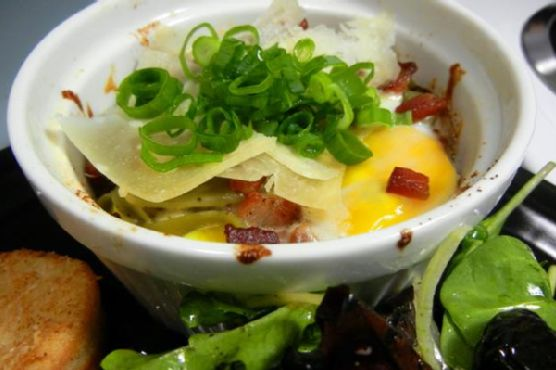
Baked Eggs and Bacon Cream In Spinach Fettuccine Nests | Made by Meaghan Moineau

Baked Eggs and Bacon Cream In Spinach Fettuccine Nests

Intro

There’s something incredibly comforting about a dish that combines the richness of cream, the salty crispiness of bacon, and the smooth, silky texture of perfectly cooked pasta. This recipe for Baked Eggs and Bacon Cream in Spinach Fettuccine Nests is one that I hold dear to my heart. It reminds me of lazy Sunday mornings in my grandmother’s kitchen, where the aroma of sizzling bacon and freshly baked bread filled the air. My grandmother, with her gentle hands and warm smile, would let me help with the pasta, showing me how to shape the nests just right. It’s a memory I cherish, and every time I make this dish, I feel like I’m back in her cozy kitchen, enveloped in her love.

Why You’ll Love It

This dish is a celebration of flavors and textures. The creamy sauce, enriched with Parmigiano-Reggiano, wraps around the spinach fettuccine like a warm hug, while the crisp bacon adds a delightful crunch. The pièce de résistance is the whole egg nestled in the center, its yolk just waiting to be broken and mixed into the pasta. It’s elegant enough for a dinner party yet comforting enough for a quiet night in. Plus, it’s a one-dish wonder that’s easy to prepare and sure to impress!

Ingredients

  • Bacon
  • Butter
  • Parmigiano-Reggiano
  • Heavy cream
  • Fresh eggs
  • Nests of spinach fettuccine
  • Salt and pepper
  • Scallions

Instructions

  1. Chop the bacon into small cubes and fry until crispy. Set aside 3/4 of the bacon for the sauce, reserving a few pieces for garnish.
  2. Boil the spinach fettuccine nests in salted water for 10 minutes until slightly undercooked. Reserve a tablespoon of pasta water.
  3. Melt butter in a wok over high heat. Add the heavy cream and bring to a simmer.
  4. Stir in 3/4 of the shredded Parmigiano-Reggiano, salt, and pepper. Simmer until the sauce thickens and is smooth.
  5. Add 3/4 of the cooked bacon to the sauce and blend well.
  6. Transfer the pasta to the sauce using tongs and a meshed spoon. Toss well, adding a bit of reserved pasta water to keep the sauce wet.
  7. Divide the pasta and sauce evenly into two buttered ceramic ramekins.
  8. Sprinkle the remaining bacon over the pasta and nestle a whole egg in the center of each dish.
  9. Bake in a preheated oven at 350°F for 15 minutes, until the egg whites are set but the yolks remain runny.
  10. Garnish with the reserved bacon and shaved Parmigiano-Reggiano before serving.

Tips

For the best results, use fresh eggs and high-quality bacon. If you prefer a spicier kick, add a pinch of red pepper flakes to the sauce. Also, make sure to keep an eye on the eggs while baking to achieve the perfect runny yolk.

Variations & Substitutions

If you’re looking for a lighter version, you can substitute half-and-half for the heavy cream. For a vegetarian option, replace the bacon with sautéed mushrooms or sun-dried tomatoes. You could also use whole wheat fettuccine instead of spinach for a different flavor profile.

Storage

While this dish is best enjoyed fresh, you can store leftovers in an airtight container in the fridge for up to two days. To reheat, place the nests in a preheated oven at 350°F until warmed through.

FAQ

Can I make this dish ahead of time?

Yes, you can prepare the pasta and sauce ahead of time and assemble the nests just before baking. Keep the components separate in the fridge and bring them to room temperature before assembling and baking.

What can I serve with this dish?

A simple green salad with a light vinaigrette complements the rich flavors of the pasta nests beautifully. Additionally, you can serve some crusty bread on the side to soak up the delicious sauce.

Conclusion

Baked Eggs and Bacon Cream in Spinach Fettuccine Nests is more than just a meal; it’s an experience. It combines the best of comfort food with an elegant presentation, making it perfect for both casual and special occasions. With each bite, you’re transported to a place of warmth and satisfaction, much like the cherished memories of my grandmother’s kitchen. I hope this recipe brings the same joy to your home as it does to mine, and that it becomes a favorite in your culinary repertoire. Enjoy!

Related update: Baked Eggs and Bacon Cream In Spinach Fettuccine Nests

Related update: Cajun Seafood and Andouille Sausage Gumbo

Kornet vs. Magic City: Atlanta’s Meme | Analysis by Brian Moineau

A night that became a meme: Luke Kornet vs. Magic City Night

It started as a quirky local promotion and quickly ballooned into a national talking point — Luke Kornet vs. Magic City Night became the most unexpectedly absurd NBA beef of the year. What was supposed to be a tongue-in-cheek tribute to an Atlanta institution turned into a controversy involving players, former Hawks legends, and ultimately a decision from Adam Silver’s office to cancel the event. The whole thing feels equal parts cultural wrestling match and late-night internet theater.

How a local idea went nuclear

The Atlanta Hawks announced "Magic City Night" for their March 16 game against the Orlando Magic: limited-edition merch, the club’s famous lemon-pepper wings (Lou Williams has a history there), and a halftime performance by T.I. The team framed it as celebrating an “iconic cultural institution” in Atlanta. On paper it read like another city-night promotion — until it didn’t. (theringer.com)

A few days later, Spurs center Luke Kornet posted an open letter asking the Hawks to cancel the promotion. Kornet argued that putting a strip club on the same program as an NBA game “reflects poorly” and risks objectifying women, asking the league and team to rethink the optics. His missive spread fast: social feeds, sports sites, and opinion columns picked it up, and even Hawks favorite Al Horford publicly agreed. (theringer.com)

Luke Kornet vs. Magic City Night: why this mattered

  • It wasn’t just about a themed night. It was about what the NBA and teams choose to elevate in public spaces where families, sponsors, and broadcast partners intersect.
  • The incident exposed splits in perception: some saw Magic City as an authentic cultural touchstone — tied to hip-hop and Atlanta lore — while others saw it as an inappropriate arena partnership.
  • Players speaking up about non-game matters have become louder and more consequential. Kornet’s blog was an example of a role player using his platform to push the league to act. (theringer.com)

These factors converged into a high-drama, low-stakes spectacle: a single player's essay, a team promotion, and a commissioner’s decision that landed on the national news cycle.

What the league did and why

The NBA said it was responding to “concerns from many across the league” and informed Hawks leadership that the Magic City promotion would be canceled. That statement — handed down from the commissioner’s office — effectively shut down the planned in-arena branding, though some elements (like the halftime performance and wings for sale) were stated to remain in other forms. The cancellation underscored how the league balances local marketing with national brand stewardship and corporate relationships. (apnews.com)

Some observers noted the irony: the NBA acted decisively here while it has been more circumspect on other, arguably bigger controversies in recent seasons. Critics argued the move rang a bit performative; defenders said the league has to be mindful of public optics and player concerns. Either way, the decision revealed how quickly governance, public relations, and social values can collide in pro sports.

The cultural tug-of-war underneath

Magic City isn’t just a strip club to many Atlantans — it’s woven into the city’s music, nightlife, and celebrity lore. For decades, the club has been referenced in rap songs and visited by major artists and players, making it an authentic local emblem to celebrate. Yet, that very embeddedness raises the question: does celebrating a venue with adult entertainment at a family-oriented sporting event cross a line? The split answers show why the debate landed where it did. (theringer.com)

Additionally, the episode highlighted tensions about who gets to define “city culture” publicly. Teams often curate local pride nights (restaurants, musicians, neighborhoods). When the celebrated institution is a strip club, it tests assumptions about normalization, worker dignity, and the messages teams send to fans and partners.

The players, the PR, and the punchlines

The spectacle had all the trappings of an internet-age controversy: a thoughtful blog post, celebrity endorsements or pushback on social media, ticket-price swings, and jokes about booing Kornet at future Hawks games. The Ringer framed it as both ridiculous and revealing — a tiny blog escalating to a commissioner’s office. Humor and skepticism abounded online: some cheered Kornet’s stance; others mocked the whole charade as performative or prudish. (theringer.com)

Yet beneath the memes and hot takes, real people and businesses were affected. Magic City staff, arena workers, and local vendors suddenly found themselves in headlines and apologies. The conversation wasn’t purely theoretical for those with livelihoods tied to the event.

What this says about modern sports culture

  • Teams are cultural curators now. Their promotions are statements about identity and audience.
  • Player platforms are powerful beyond the court. A single well-placed opinion can shape league action.
  • The league must balance local authenticity with national brand and sponsor responsibilities.

This incident acts as a small case study in how sports organizations navigate cultural complexity in a media-saturated moment. It also shows that what seems like a harmless promo can become a proxy for larger social debates.

My take

There’s something funny and a bit sad about the whole saga. It’s funny because the path from Medium post to commissioner statement is so emblematic of modern outrage cycles. It’s sad because real people — performers, venue staff, local small businesses — were collateral in a PR drama where the loudest voices were often outside the immediate community. The Hawks’ intent to celebrate Atlanta made sense in isolation; the league’s choice to step in made sense in context. Both truths can coexist.

At the end of the day, the Kornet vs. Magic City Night episode tells us more about how modern sports, media, and moral optics interact than it does about any one person or place. It will join the season’s strange highlights: equal parts headline, punchline, and cultural conversation starter. (theringer.com)

Final thoughts

This wasn’t a decisive moral victory or a demonstration of unified values. It was a reminder: sports franchises don’t operate in a vacuum. Their promotions are signals — to fans, to sponsors, to players — and sometimes those signals land poorly. The scramble that followed shows how quickly intentions can be reframed, and how small actions can illuminate much larger questions about culture, commerce, and community.

Sources


Related update: We recently published an article that expands on this topic: read the latest post.


Related update: We recently published an article that expands on this topic: read the latest post.