Laser-Sealed Paper: Glue-Free Packaging | Analysis by Brian Moineau

A stitch in time: lasers to seal paper packaging — why PAPURE matters

Imagine unwrapping a packet of crisps and knowing the bag can go straight into the paper recycling stream — no plastic film, no sticky glue residue, no guilty pause. That future just moved closer: German researchers working on the PAPURE project have developed a technique that uses lasers to seal paper packaging instead of glue or plastic. It’s a neat piece of industrial alchemy — a laser alters the paper’s surface so it can be heat-sealed, producing joints strong enough for many consumer packages while keeping the whole thing monomaterial and recyclable.

The idea is simple in pitch and complicated in practice. But the implications are wide: less contamination in paper recycling, fewer multi-material wrappers, and another plausible pathway away from single-use plastics. Let’s unpack how it works, why companies care, and what still needs to happen before you see laser-sealed bags on store shelves.

How the laser trick works

Researchers at several Fraunhofer institutes are collaborating on PAPURE, combining laser systems, polymer chemistry, packaging engineering, and production machinery design. The core technique uses focused laser radiation (a carbon monoxide laser is mentioned in project materials) to thermally modify the topmost fibers of a continuous paper web.

  • The laser breaks down or transforms long-chain cellulose and surface-bound components in a thin layer.
  • That transformation creates a tacky, sealable surface (think of it acting like an in‑situ adhesive) that can bond with pressure and heat.
  • After laser treatment, standard converting equipment — rollers, heat bars, or hot-seal stations — forms a seam that meets mechanical and leak-resistance requirements.

Fraunhofer’s demonstrations report promising seal strengths (benchmarks like a 20 mm × 3 mm seam supporting substantial loads have been cited in coverage) and emphasize that the resulting packaging contains no added plastics or glue that would foul recycling streams.

Why this matters now

The packaging industry is under pressure from regulators, brands, and consumers to reduce plastic waste and improve recyclability. A large share of so-called “paper” packaging today is actually composite: paper for stiffness and printability, plus thin plastic films or adhesives for moisture and sealability. Those mixed structures are hard to recycle: they require delamination or end up downgrading fibre streams.

Laser-based sealing addresses a very specific but persistent problem — the seal. If the sealing step can be done without foreign materials, you get closer to truly monomaterial, paper-based packaging. That in turn:

  • Improves the economics of fibre recycling.
  • Reduces contamination that can reduce recycled-paper quality.
  • Helps brands claim meaningful reductions in plastic content rather than superficial swaps.

Also, the PAPURE work arrives amid other paper-focused advances (heat-sealable papers from commercial mills, plasma coatings for barrier properties, and research into biodegradable lacquers), so the laser approach could plug into a broader industry shift.

Lasers to seal paper packaging: opportunities and limits

This section looks at the trade-offs — because no technology is a drop-in miracle.

  • Speed and scale. Packaging lines operate at high speeds. Fraunhofer’s project includes an industrial demonstrator and quality-control sensors, indicating an eye toward integrating lasers into continuous production. But retrofitting existing machines will take engineering and expense.
  • Energy and cost. Lasers and their beam delivery systems consume energy and require maintenance. Cost per meter of sealed web needs to be competitive with existing adhesives and plastic films to win wide adoption.
  • Product scope. Not every paper package has the same demands. Dry snack bags or pouches may be straightforward; high-moisture or aseptic food packaging still requires reliable barrier performance. Laser sealing is one piece — barrier coating solutions or laminates (ideally recyclable ones) must match product needs.
  • Aesthetic and tactile effects. Laser modification can change surface appearance or crease behavior. Packaging designers and brands will care how those changed finishes affect shelf appeal.
  • Safety and regulation. Food contact approvals and industrial safety standards will need to be navigated before end-use in sensitive products.

In short: promising, but selective. The technology looks ready for pilot use in some applications; full-scale migration across all packaging types will be phased and product-specific.

The industry angle: how brands and converters will react

Packaging converters (the people who turn paper reels into finished pouches or cartons) are pragmatic. They adopt when equipment cost, throughput, and waste-reduction benefits line up. Early adopters are likely to be:

  • Brands under regulatory or consumer pressure to minimize plastic.
  • Premium brands that can amortize conversion costs and market recyclability as a brand value.
  • Niche food and non-food makers whose sealing needs aren’t extreme.

Meanwhile, paper mills and material suppliers are already developing heat-sealable paper grades. If a laser-sealing module can be integrated into converting lines, it could be marketed as a green retrofit: keep your printing and creasing steps, add a laser cell, and produce adhesive-free seams.

Fraunhofer is showing a demonstrator at trade venues (Interpack in Düsseldorf is cited for May 2026), which signals that vendors and machine builders are being courted. If equipment suppliers standardize modules, adoption will accelerate.

Moving from lab to bin: what to watch next

Here are short indicators that laser sealing is moving from research demos into everyday packaging:

  • Demonstrations at major trade shows with running machines and real reels.
  • Pilot runs with established converters and packaging brands.
  • Independent testing of seal integrity, shelf life, and recyclability at scale.
  • Commercial partnerships between Fraunhofer teams (or spinouts) and machine-makers.

If those items appear in the next 12–24 months, PAPURE-style seals could start showing up in market pilots and limited product lines.

My take

This feels like one of those targeted innovations that quietly solves a stubborn systems problem. It doesn’t make paper magically waterproof or give it an oxygen barrier, but it addresses the ugly, overlooked issue of adhesives and mixed-material seals — an obstacle to clean recycling. Combined with advances in barrier coatings and heat-sealable base papers, laser sealing could be the missing link that lets paper genuinely replace more plastic in many everyday packages.

Expect gradual, pragmatic uptake. The winners will be companies that combine material choices, smart machine integration, and transparent claims. For consumers, the payoff is simple: fewer stickers and films to worry about and a cleaner recycling stream.

Sources


Related update: We recently published an article that expands on this topic: read the latest post.


Related update: We recently published an article that expands on this topic: read the latest post.

Valentine’s Day Potted Plant Ice-Cream Desserts | Made by Meaghan Moineau

It was a seemingly ordinary Tuesday evening, and I found myself staring at the contents of my freezer, feeling a bit uninspired. A pint of vanilla bean ice cream caught my eye, and suddenly, I was reminded of a cute dessert idea I’d seen earlier — those adorable potted plant ice cream treats. I mean, who wouldn’t want to dig their spoon into what looks like a tiny pot of dirt, only to find a luscious, creamy surprise underneath? Perfect for Valentine’s Day or just because, these desserts are delightfully simple to make and never fail to impress with their whimsical presentation. They come together quickly and are the kind of thing you can whip up on a whim, which, as a busy home cook, is exactly the kind of recipe I adore.

Jump to Recipe

What You’ll Need

Chances are you already have most of this hanging around, but the way these flavors and textures come together is just magical.

  • Vanilla bean ice-cream
  • Diced palm seeds
  • Mixed nuts
  • Blueberries
  • Oreo cookies
  • Parsley

How to Make Valentine’s Day Potted Plant Ice-Cream Desserts

  1. Start by separating the Oreo cookies; remove the cream filling and set it aside (or snack on it, no judgment here!). Pound the cookies until they transform into fine crumbs that resemble rich, dark soil.
  2. In a mixing bowl, combine the vanilla bean ice-cream with the diced palm seeds, mixed nuts, and a handful of blueberries. The idea is to get a balanced mix of creaminess, crunch, and bursts of fruity freshness.
  3. Divide this heavenly mixture into your serving cups. It doesn’t have to be perfect — a little messiness adds to the charm. Place these in the freezer for a good chill.
  4. Once your ice-cream cups are well-frozen, generously top each one with the Oreo cookie crumbs to create that authentic “soil” look.
  5. Just before serving, insert a sprig of parsley into each cup. Voilà! You’ve got yourself some delightful potted plant ice-cream desserts that are sure to wow anyone lucky enough to dig in.

Cook’s Notes

Making these desserts is almost as fun as eating them. Remember, the less perfect they look, the better — we’re aiming for a natural, earthy vibe. If you’re prepping ahead, keep the ice-cream mix in the freezer until just before serving, then add the cookie crumbs and parsley. Leftovers (if you have any!) can stay in the freezer for a few days, but be sure to add fresh parsley right before serving again to keep that vibrant green pop.

Make It Your Own

  • Swap the vanilla bean ice-cream for chocolate if you want that extra chocolatey punch — it’s a game-changer!
  • Try using mint leaves instead of parsley for a refreshing twist and a subtle hint of minty fragrance.
  • For a tropical vibe, substitute the blueberries with chunks of pineapple or mango.
  • If you’re nuts about nuts, add a sprinkle of crushed pistachios on top of the “soil” for extra crunch and color.

If you try this, I’d love to hear how it turns out — drop a comment or tag me in your potted plant creations! Trust me, these little delightful desserts will grow on you just as they have on me. Happy cooking!

Related update: Valentine’s Day Potted Plant Ice-Cream Desserts

Related update: Banana Pudding Cake

Powell’s Warning: Gas Spike Clouds Fed | Analysis by Brian Moineau

When Jerome Powell Says “Could Go Lower or Higher,” Wall Street Listens — Especially as Gas Prices Rise

The markets are watching Jerome Powell closely, and the conversation has a new, prickly edge: Wall Street grows more worried about growth impact from higher gas prices. Powell’s recent comments — that risks to the economy make it plausible rates could move either lower or higher — didn’t come from a policy meeting note; they came from a central banker trying to square a stubbornly uncertain map. Against that backdrop, a surge in energy costs is doing more than pinching consumers at the pump: it’s making investors rethink the odds on growth, inflation, and what the Fed will do next.

Powell’s framing is important because it acknowledges a two-way street. The Fed must weigh inflation upside from an energy shock against downside risks from a cooling labor market or slowing demand. For markets, that ambiguity is often worse than a clear signal: uncertainty breeds volatility and forces rapid repricing when new data — like crude spikes or consumer spending slumps — arrive.

Why Powell’s “lower or higher” phrasing matters

  • It signals uncertainty instead of commitment. The Fed is not telegraphing an imminent easing cycle — nor is it promising to hike. That keeps markets guessing.
  • It acknowledges asymmetric risks. A supply shock (say, geopolitically driven oil jumps) can lift inflation quickly; a labor slowdown or credit squeeze can weaken growth just as fast.
  • It elevates the role of incoming data. Markets will now hang on each energy report, payroll print, and inflation snapshot because those data points tilt the “lower vs. higher” balance.

That dynamic is especially potent now because oil and gasoline prices have shown renewed volatility. Recent supply disruptions and geopolitical tensions have pushed Brent and WTI prices higher, and U.S. pump prices have edged up — not a small matter for an economy where consumer spending still carries a lot of weight.

Wall Street grows more worried about growth impact from higher gas prices

Higher gas prices do three immediate things: they reduce real household income at the margin, raise the cost of transporting goods, and feed into headline inflation. All three bite into corporate earnings, consumer confidence, and the Fed’s calculus.

  • Consumers: Pump pain reduces discretionary spending. Families with tighter budgets tend to delay large purchases and cut back on restaurants, travel, and other services — the very sectors many investors lean on for cyclical growth.
  • Producers and supply chains: Diesel and transport costs filter into grocery bills and retail margins, pressuring companies that can’t pass the full cost to customers.
  • Monetary policy: If energy-driven inflation expectations take hold, the Fed could need to act to prevent a second-round wage-price spiral. Conversely, if high gas prices choke demand enough, the Fed might hesitate to tighten further or even consider easing sooner.

The result is a tricky feedback loop: rising energy prices can raise inflation and interest-rate expectations at the same time they weaken growth — a classic stagflation risk that terrifies equity markets and complicates policy.

What markets are pricing now — and why that matters

Since the uptick in oil, markets have repriced several things quickly:

  • Treasury yields rose as investors demanded compensation for higher expected inflation and possibly steeper policy paths.
  • Equity valuations shifted, with broad selling pressure on growth stocks sensitive to higher discount rates, and rotation into energy and defensive sectors.
  • Probability models for Fed rate changes were scrambled: futures and options markets began reflecting a wider distribution of outcomes, echoing Powell’s “lower or higher” language.

When markets price in both higher inflation and slower growth, portfolio managers face hard allocation choices. Short-term, that often means de-risking and favoring cash-flow-stable businesses. Over longer horizons, it can mean re-evaluating earnings projections across sectors if sustained energy costs are assumed.

A few scenarios to watch

  • Short-lived energy spike: If oil and gas bounce up quickly but then retreat, the Fed likely stays data-dependent, and the markets might calm once inflation peaks and the growth hit proves shallow.
  • Persistent high energy prices: That raises the chance of a policy response to curb inflation — potentially higher rates for longer — even as growth slows. This is the worst-case outcome for stocks and consumer confidence.
  • Demand-driven slowdown: If high energy costs trigger a spending pullback large enough to weaken labor markets, the Fed could pivot toward easing, which would boost risk assets but potentially widen long-term inflation expectations.

Each scenario lands differently for investors and households; the common thread is that energy prices amplify uncertainty.

The investor dilemma

Transitioning between sections, the question for investors becomes: hedge or hold? Short-term traders will trade volatility. Longer-term investors must decide whether the energy shock is a cyclical blip or a structural change to margins and consumer behavior.

  • Defensive posture: Increase exposure to sectors that historically outperform in stagflation-like environments — energy producers, consumer staples, and select industrials with pricing power.
  • Selective offense: Look for companies with strong balance sheets and pricing power that can protect margins or pass on higher costs.
  • Liquidity and duration: Reduce exposure to long-duration assets if the probability of higher-for-longer rates rises.

My take

Powell’s candor — that rates “could go lower or higher” — is honest central banking in a noisy world. It’s a reminder that modern monetary policy operates in a landscape of shocks, not certainties. The immediate worry on Wall Street about the growth impact from higher gas prices is well-grounded: energy is a lever that moves inflation and demand simultaneously.

Investors should respect the ambiguity by emphasizing flexibility. Short timelines matter now: monitor energy markets, CPI and PCE prints, and payrolls closely. Over longer horizons, focus on businesses with durable cash flows and pricing power. Policymakers will do their job; your portfolio needs to do yours.

Sources


Related update: We recently published an article that expands on this topic: read the latest post.

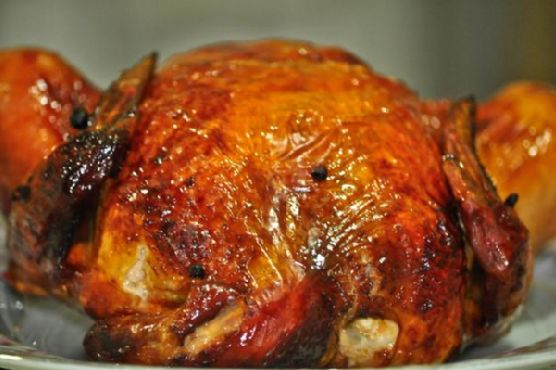
Turbo Chicken | Made by Meaghan Moineau

The other night, I found myself staring into my pantry, that familiar feeling of “what on earth can I make for dinner?” creeping in. It was one of those long days where you’re just too exhausted to whip up anything too complicated. That’s when I remembered Turbo Chicken. It’s the perfect mix of comforting and impressive, with just the right amount of effort to make you feel like a kitchen hero without breaking a sweat. The best part? The crispy skin and juicy meat are practically a hug on a plate. So, let’s dive in together!

Jump to Recipe

What You’ll Need

The beauty of this dish lies in its simplicity. Chances are you already have most of these on hand, so no need for a last-minute grocery run. Here’s what you’ll gather:

  • Whole chicken
  • Soy sauce
  • Salt
  • Calamansi (or lemon/lime if you can’t find it)
  • Baking flour dissolved in water
  • Gravy from the turbo broiler drippings
  • Bell pepper

How to Make Turbo Chicken

  1. Start by giving that chicken a loving rubdown with soy sauce, salt, and calamansi. Don’t be shy—massage it inside and out as if you’re making it the most relaxed chicken ever.
  2. Let the chicken marinate for about 10-20 minutes on each side. This is the perfect time to set up your turbo broiler and perhaps sip on a glass of something refreshing.
  3. Place a small baking pan at the bottom of the turbo broiler to catch all those wonderful drippings. Trust me, you’ll want this later for the gravy magic.
  4. Set the chicken in the turbo broiler, crank up the heat to 250 degrees, and let it work its magic for 30 minutes.
  5. After 30 minutes, turn the chicken over. Give it another 10 minutes to achieve the crispiest golden brown skin you’ve ever seen.
  6. While the chicken finishes up, grab those drippings and pour them into a small pan over low heat. Stir in the flour dissolved in water until silky smooth, then add salt, pepper, and a splash of calamansi to taste.
  7. Once your chicken is done and rested, carve it up and drizzle it with that beautiful gravy. Voilà! Dinner is served.

Cook’s Notes

Let me just say, the turbo broiler can be your best friend in the kitchen if you let it. It cooks everything evenly and gives you that crispy skin we all crave. Just be sure to watch your chicken closely after flipping it—those last 10 minutes can make all the difference between perfect and a tad too crispy.

Got leftovers? Lucky you! Store them in an airtight container in the fridge, and they’ll keep beautifully for up to three days. Reheat gently to keep all those juices locked in.

Make It Your Own

Feel like getting creative? Here are a few fun twists:

  • Swap the chicken for some crispy tofu for a vegetarian-friendly version. Just adjust the cooking time accordingly.
  • Add a hint of heat by including some chili flakes in your marinade.
  • Throw in some garlic cloves inside the chicken cavity for an aromatic twist.
  • Mix in a tablespoon of honey with your soy sauce marinade for a sweet and savory combo.

If you try this, I’d love to hear how it turns out — drop a comment or tag me! Can’t wait to see how you make Turbo Chicken your own. Happy cooking, friends! 🐔

Related update: Turbo Chicken

Related update: Tasty Easy Meatloaf

Linefish Simmered In A Spiced Coconut Gravy | Made by Meaghan Moineau

It was one of those evenings where the day just didn’t stop. You know the kind—I spent too long in traffic, the grocery store was packed, and let’s not even talk about the email avalanche. As I finally stepped into the kitchen, I was craving something that’s both comforting and invigorating. I remembered a recipe tucked away for a rainy day, one that combines creamy coconut with warming spices and fresh fish—Linefish Simmered In A Spiced Coconut Gravy. It’s the kind of dish that feels like a warm hug but also has a playful kick to it. The real beauty? Once you’ve got everything prepped, it practically cooks on its own, allowing you to sip a glass of your favorite white wine as the magic happens.

Jump to Recipe

What You’ll Need

I promise, most of these ingredients are pantry staples, lurking in the back of your cupboard just waiting for their time to shine. And those that aren’t, well, they’re totally worth the trip.

  • Garlic
  • Fresh thumb-sized piece of ginger
  • Red chilli powder
  • Turmeric
  • Salt
  • Tamarind pulp
  • Vegetable oil
  • Brown mustard seeds
  • Fenugreek seeds
  • Whole cloves
  • White whole cardamom pods
  • Thumb-length quill of cinnamon
  • Onions
  • Coconut milk
  • Powdered cumin
  • Black freshly milled pepper
  • Fresh cilantro
  • White fresh firm-fleshed fish fillets
  • White fresh kilograms (assuming this means the right quantity for your crowd!)

How to Make Linefish Simmered In A Spiced Coconut Gravy

  1. Start by cutting the fish into large, hearty chunks. Toss them into a bowl, sneaking in half of that aromatic garlic and ginger while you’re at it. Sprinkle generously with chilli powder, turmeric, and a bit of salt. Give it all a good mix and let it chill in the fridge for a cool 30 minutes.
  2. While your fish is taking a breather, soften that tamarind pulp in a cup of warm water. It’s like giving it a little spa treatment for 20 minutes.
  3. Heat the vegetable oil in a large saucepan over a high flame. As soon as it’s shimmering, in go the mustard seeds, fenugreek, cloves, cardamom, and cinnamon. Let them sizzle and pop — this is when your kitchen starts to smell divine.
  4. Add the onions along with the reserved ginger and garlic to the party. Fry them briskly for about 10 minutes until they’re golden brown and fragrant.
  5. Mash the softened tamarind pulp into its soaking water with your fingers. Strain this tangy liquid over the onions and discard the leftover pulp.
  6. Pour in the creamy coconut milk and sprinkle the cumin powder. Give it a good stir and let it simmer for about 15 minutes, letting the flavors meld into a fragrant gravy.
  7. Gently tip the marinated fish cubes into the sauce. Stir them in with care and let them simmer until just cooked, about 7 minutes. You’re aiming for tender, not tough!
  8. Finish with a flourish of fresh cilantro sprinkled on top. Serve your creation hot with a side of Basmati rice, and enjoy the bliss that follows.

Cook’s Notes

Here’s the deal: fresh ingredients are non-negotiable here. They make all the difference. Also, when cooking the spices, keep an ear out for the mustard seeds popping. It’s their way of telling you they’re ready. This dish is best enjoyed fresh, but if you need to make it ahead, do the prep steps and store the marinated fish and sauce separately in the fridge. Just combine and simmer when you’re ready to serve. Leftovers? They’re even better the next day, as the flavors deepen. Just keep them in an airtight container in the fridge for up to two days.

Make It Your Own

  • Not a fan of fish? Swap it out for crispy tofu chunks for a vegetarian twist. Just adjust the marinating time to let those flavors soak in.
  • If you’re feeling adventurous, substitute the white fish with shrimp. Just be mindful; shrimp cooks a lot faster, so adjust the simmering time accordingly.
  • Add a handful of baby spinach at the end for a pop of color and nutrients. It wilts beautifully into the sauce.
  • For a richer texture, throw in a handful of cashew nuts while simmering the sauce. They’ll soften up and add a lovely creaminess.

If you try this, I’d love to hear how it turns out—drop a comment or tag me! Whether it’s your first taste or a comforting regular, this dish is a keeper. Enjoy every spoonful!

Related update: Linefish Simmered In A Spiced Coconut Gravy

Related update: Turbo Chicken

Markets Jitter as War Risks Lift Oil | Analysis by Brian Moineau

Investor Unease Builds Entering War’s Fifth Week

The phrase "Investor Unease Builds Entering War’s Fifth Week" isn't just a headline — it's the mood across markets as traders wrestle with how a protracted Middle East conflict could ripple through oil, inflation and interest-rate expectations. Treasuries rose, Brent crude hit roughly $115 a barrel, and US stock futures bounced, all while the market recalibrated bets on future Fed moves. (uk.finance.yahoo.com)

The immediate snapshot

  • Treasuries: Yields slipped as investors sought safe-haven paper, pushing prices up amid growing worries about slower growth if the conflict intensifies. (finance.yahoo.com)
  • Oil: Brent moved into the mid‑triple digits — near $115 a barrel in some sessions — on fears supply could be disrupted or that regional escalation will spur a pricing premium. (uk.finance.yahoo.com)
  • Equities: Futures bounced as risk sentiment oscillated; markets are trying to separate short-term shock from the longer-term earnings picture. (apnews.com)

These moves reflect a market caught between two narratives: one that the conflict will be contained and another that it will trigger broad inflationary pressure and slower growth.

Why bond and oil moves matter to everyday investors

Bond yields and oil prices are market barometers with real effects. Higher oil feeds into headline inflation via fuel and transport costs. If oil stays elevated for months, central banks may hesitate to cut rates and could even consider hikes — a dynamic that pushes bond yields up and raises borrowing costs across the economy. Conversely, if investors fear a sharp growth slowdown, they pile into Treasuries, lowering yields.

Over the past weeks, we’ve seen that tug-of-war. Some sessions show yields sliding as flight-to-quality dominates; others show yields rising when traders price in the inflation risk from costly oil. That whiplash is why volatility feels so high right now. (uk.finance.yahoo.com)

Markets are testing scenarios, not certainties

Investors are running through scenarios out loud: a short, localized flare-up; a prolonged regional war; or a broader escalation drawing in more actors and supply chokepoints. Each scenario produces different market outcomes:

  • Short, contained conflict: modest oil spike, transient volatility, central banks stay on hold.
  • Protracted conflict: sustained oil premium, upward pressure on inflation, central banks less likely to ease — or potentially forced to tighten — which hurts growth.
  • Major escalation: supply shocks, stagflation risk, deep equity drawdowns and safe-haven rallies in bonds and gold.

Right now, pricing indicates markets are no longer confidently betting on easing from central banks soon — in fact, at times they’ve shifted toward pricing later or fewer rate cuts. That’s a major pivot from just a few months ago. (finance.yahoo.com)

The investor dilemma

Investors face a classic policy-risk vs. growth-risk dilemma. Higher oil and energy costs push up inflation expectations; that makes central banks look hawkish and bond yields rise. But if the conflict chokes demand (tourism, trade, risk appetite), growth assumptions fall and equities suffer.

Add to that the practical issue of hedges: options and volatility products may be expensive, gold pays no yield, and owning long-duration bonds is risky if yields climb. That narrows straightforward protection choices, which amplifies unease. (investing.com)

What to watch next

  • Oil price trajectory. If Brent stays elevated above $100–115 for several weeks, inflation pressures will firm and rate expectations will adjust. (uk.finance.yahoo.com)
  • Treasury yields across the curve. Sharp moves higher in short-term yields would signal the market is pricing a more hawkish Fed. (finance.yahoo.com)
  • Risk sentiment in equities and credit spreads. Widening spreads often precede tougher economic outcomes. (investing.com)

Short-term traders will react to headlines; longer-term investors should focus on the directional persistence of these indicators rather than day-to-day noise.

What this means for portfolio posture

  • Flexibility over rigidity. In volatile geopolitics, strategies that allow rebalancing and liquidity tend to outperform rigid bets.
  • Diversify sources of carry and protection. Cash-like instruments, tactical exposure to inflation assets, and carefully sized hedges can help.
  • Avoid binary thinking. Neither “markets will always recover quickly” nor “everything’s collapsing” is a reliable base case; plan for multiple paths.

Markets are pricing uncertainty, not certainties — and that requires humility in positioning.

My take

We’re living through a market that’s oscillating between protective reflexes and risk-seeking rebounds. The headline "Investor Unease Builds Entering War’s Fifth Week" captures the tenor: investors are unsettled because the outcome is wide open and the economic pathways diverge sharply depending on how the conflict unfolds. Expect more chop, and let persistence in macro indicators — not daily headlines — guide bigger allocation moves. (uk.finance.yahoo.com)

Final thoughts

Uncertainty begets re-pricing. In the coming weeks, watch oil, yields and credit spreads for signals about which narrative is gaining traction. For now, prudence, diversification and clarity about your time horizon remain the investor’s best allies.

Sources


Related update: We recently published an article that expands on this topic: read the latest post.


Related update: We recently published an article that expands on this topic: read the latest post.