Safety First? Anthropic’s Claude Leak | Analysis by Brian Moineau

When a safety-first AI shop accidentally opens the hood: Anthropic accidentally exposes system behind Claude Code

Anthropic accidentally exposes system behind Claude Code — a headline that landed like a splash of cold water across the AI world this week. The company that built its brand around safety and careful deployment inadvertently shipped an npm package that included a 59.8 MB source map, which in turn pointed to a Cloudflare archive containing nearly 2,000 internal TypeScript files and roughly half a million lines of code. Within hours, the code was copied, mirrored and dissected across developer platforms. The fallout is still unfolding, but the implications are clear: operational security matters as much as model safety.

What happened, in plain terms

  • On March 31, 2026, Anthropic released an update to the @anthropic-ai/claude-code npm package.
  • The package mistakenly included a debug/source map file that referenced a publicly accessible archive containing the project’s internal source.
  • Researchers and developers quickly found the archive, reconstructed the TypeScript, and mirrored it across GitHub and other sites.
  • Anthropic characterized the incident as “human error” in packaging, said no customer data or credentials were exposed, and issued takedown requests.

This wasn’t a mysterious, targeted breach. Still, mistakes like packaging errors are precisely the kind of operational slip that can leak not just code but strategy, internal feature flags and development roadmaps.

Why the leak matters beyond the drama

First, the leak makes Anthropic’s internal engineering choices visible. Competitors, security researchers, and curious developers now have a free engineering course on how Anthropic built an agentic coding assistant: tool architecture, permission gating for subroutines, plans for persistent assistants and background tasks, and other features that the company may have intended to keep private for now.

Second, the incident amplifies the paradox in AI safety: a company may design models to be cautious and controllable, yet still be vulnerable to mundane operational mistakes. Safety isn’t just about model alignment and guardrails; it’s also about release processes, packaging automation, cloud permissions and supply-chain hygiene.

Third, there’s regulatory and political fallout. Lawmakers who’ve been watching Anthropic’s relationship with the U.S. government — including a recent supply-chain designation and tensions over defense contracts — will use this as a case study. Representative Josh Gottheimer publicly pressed Anthropic for explanations about recent leaks and internal policy changes, underscoring national security concerns when advanced AI tooling enters government workflows. (For context, Gottheimer’s letter and reporting came in early April 2026.)

What the leaked files revealed (high level)

  • A rich map of internal features and unfinished work: flags for persistent background assistants, session “thinkback” memory consolidations, and remote control features.
  • Fun and oddities: Easter-egg like systems such as an ASCII “buddy” pet and other internal tools that humanize the engineering culture — and reveal how feature flags get baked into real product code.
  • Architecture and tooling details that could accelerate cloning attempts or inform how adversaries craft attacks against agentic features.

Importantly, Anthropic and several reports emphasized that no customer credentials or direct user data were present in what leaked. Nevertheless, the leak exposes technical approaches that a motivated competitor could try to replicate, and it gives security researchers a lot to investigate.

Lessons for AI labs and enterprise users

  • Operational security is safety. Model safety without robust release engineering and cloud hygiene is an incomplete program.
  • Source maps and debug artifacts are dangerous in public releases. Automate packaging and add CI checks that fail builds when debug artifacts or pointers to private storage are present.
  • Enterprises should assume secrets and roadmaps can leak. Contracts, SLAs and security reviews must account for accidental disclosures, not just hostile breaches.
  • Transparency must be intentional. There’s value in open research, but accidental openness is different: it can expose internal access patterns, nonpublic APIs and future product plans in ways that damage trust.

The investor and policy angle

Because Anthropic positions itself as safety-first and competes for both enterprise customers and government work, this event complicates narratives in three ways.

  • For customers, the practical question is risk management: can Anthropic demonstrate stronger operational controls quickly enough to reassure enterprise buyers?
  • For investors, the worry is reputational damage and execution risk — leaks like this can slow enterprise adoption and invite additional regulatory scrutiny.
  • For policymakers, the incident sharpens the focus on how AI companies manage supply chains and internal safeguards; congressional and executive actors will likely demand clearer operational standards for labs that work with sensitive users.

Moving forward: realistic expectations

Fixing the immediate issue is straightforward: revoke the public archive, tighten packaging rules, audit CI/CD pipelines and rotate any impacted keys (if any existed). The longer fix is cultural and process-driven: better automation, mandatory pre-release checks, and a renewed focus on operational security engineering.

Yet even with remediation, public trust is an asymmetric commodity. It takes time and consistent calm performance to reestablish confidence, especially for a company whose brand promise hinges on safety.

Final thoughts

Leaks like this strip away the glamour around AI and force a practical reckoning. The technology’s potential is immense, but so are the mundane vectors for failure. Anthropic’s mistake is a useful reminder that building safe AI is both a model-design problem and an engineering problem — the latter often less glamorous but equally essential.

If there’s one clear takeaway, it’s that “safety-first” needs to mean safety-first everywhere: in research, in product, and in the gritty details of release plumbing. Until that alignment is complete, even the most cautious model can be undone by an ordinary developer workflow.

What others reported

Sources listed above are non-paywalled where available and provide additional reporting and technical context.

Hard-Boiled Egg Gratin In A Bechamel Sauce | Made by Meaghan Moineau

It was one of those rainy Tuesday evenings when the thought of another takeout meal just didn’t appeal. You know those nights, right? When you crave something warm and comforting that feels like a hug on a plate? That’s when this Hard-Boiled Egg Gratin in a Béchamel Sauce came to life in my kitchen. It’s the kind of dish that’s deceptively simple yet incredibly satisfying, with a creamy sauce and a crispy, cheesy top. It’s perfect for when you want something a bit special but don’t want to spend hours in the kitchen. Plus, chances are, you already have most of the ingredients lurking in your pantry or fridge.

Jump to Recipe

What You’ll Need

Imagine pulling together a dish without a last-minute grocery run. That’s the beauty of this recipe. Here’s what you’ll need:

  • Eggs – the stars of the show, of course!
  • Butter – for that rich, comforting flavor.
  • Flour – to thicken up our luscious sauce.
  • Gruyère cheese – because what’s a gratin without a cheesy top?
  • Milk – to create the creamy béchamel.
  • Nutmeg – just a dash for warmth.
  • Onion – adds a subtle sweetness.
  • White salt and pepper – to season everything just right.

How to Make Hard-Boiled Egg Gratin In A Bechamel Sauce

Ready to dive in? Here’s how to bring this cozy dish to life:

  1. Start by hard-boiling the eggs. Bring a saucepan of salted water to a rolling boil, then gently add the eggs. Lower the heat and let them simmer for 10 minutes.
  2. Once the eggs are done, place them into cold water until they’re just cool enough to handle. Here’s a little trick: roll them with your palm on a hard surface to crack the shell, then peel under a slow stream of running water. It works like a charm!
  3. In a small frying pan, melt some butter over low heat. Add the onion and cook, stirring frequently, until they’re tender but not browned. Set aside.
  4. Next, let’s make the béchamel sauce. In a medium heavy-bottomed saucepan, melt more butter over low heat. Stir in the flour and whisk for around 2 minutes without letting it color.
  5. Whisk in the milk, bringing it to a boil while whisking constantly to avoid lumps. Season with nutmeg, salt, and pepper, then reduce the heat and let it simmer for 10 minutes. Keep whisking and scraping the pan to ensure nothing sticks.
  6. Stir the cooked onions into the béchamel and let it all cook together for an additional 5 minutes.
  7. Preheat your grill. Slice the eggs into 1 cm (0.4 inch) slices and start assembling. Spread a thin layer of the béchamel sauce at the bottom of your gratin dish.
  8. Layer the egg slices over this sauce, covering them with the remaining béchamel. Sprinkle generously with grated Gruyère cheese.
  9. Place the dish under the grill. Keep an eye on it and turn the dish if necessary to ensure an evenly golden, bubbly top. Serve immediately and enjoy the deliciousness!

Cook’s Notes

Let’s talk practical tips. First, don’t rush the béchamel sauce; whisk it patiently to avoid lumps. If you find the bechamel is too thick, a splash more milk can help loosen it up. This dish is best served right away when the cheese is melty and gooey, but if you do have leftovers, they can be stored in an airtight container in the fridge for up to two days. Reheat gently in the oven or microwave until warmed through.

Make It Your Own

This recipe is delicious as is, but here are a few ways to make it your own:

  • Swap the Gruyère cheese for sharp cheddar for a more pronounced flavor.
  • Add a layer of sautéed spinach between the eggs and the sauce for some greens.
  • Substitute half of the milk with cream for an even richer béchamel.
  • Sprinkle some crispy bacon bits on top before grilling for a smoky kick.

If you try this, I’d love to hear how it turns out — drop a comment or tag me! Whether it’s your first time making a gratin or you’re an old pro, I hope this becomes a comforting staple in your kitchen. Happy cooking!

Related update: Hard-Boiled Egg Gratin In A Bechamel Sauce

Related update: Caramelised Onion and Mushroom Quiche

Kia’s EV3 Poised to Dominate Compact EVs | Analysis by Brian Moineau

One boxy EV goes down, and another rises in its place

Kia's fast-selling EV3 SUV/hatchback is finally coming to the US later this year, and the timing could not be better for shoppers who wanted a compact, boxy EV with real interior space and strong range. After a period where a few small, desirable EVs either never reached or scaled back in the U.S., the EV3 arrives ready to claim the practical, affordable corner of the market that a rival like Volvo only partially filled.

Kia’s announcement of a U.S.-spec EV3—revealed at the New York International Auto Show and confirmed in Kia’s press materials—feels like a finishing move in a game of musical chairs for compact EV buyers. It’s compact outside, generous inside, and built on the well-regarded E-GMP architecture, which already underpins Kia’s EV6 and EV9. Buyers looking for everyday usability and strong range may finally have an attractive, mainstream alternative that isn’t a lifted hatch or a luxury badge in disguise. (prnewswire.com)

Why the EV3 matters now

There are a few converging reasons the EV3’s U.S. arrival is noteworthy:

  • The EV3 has already proven itself overseas. Kia has moved sizable volumes in other markets—helping the model mature before its U.S. introduction. That track record gives U.S. buyers more confidence in product readiness. (greencars.com)
  • The compact, boxy EV segment is in demand. Cars like the Volvo EX30 showed consumers want efficient footprints without sacrificing interior room. When manufacturers shift plans for the U.S. (or limit models), gaps open—gaps the EV3 can fill. Electrek framed Kia’s move as “picking up the ball Volvo dropped,” pointing to this market opportunity. (electrek.co)
  • Practical specs. Kia offers two battery sizes globally (about 58 kWh and 81 kWh) and an expected U.S. long-range variant that should clear 300 miles in real-world EPA terms—numbers that match buyer expectations for daily usability and road-trip capability. Kia also optimized charging and interior features for North America. (prnewswire.com)

Together, those points explain why Kia chose to bring a familiar, sales-proven package here now rather than wait.

Kia's US-spec EV3 SUV/hatchback is finally coming to the US later this year

Kia has shown a U.S.-spec version of the EV3 and set a late‑2026 on-sale window in North America. The company hasn’t published final U.S. pricing or EPA numbers yet, but published specs indicate the vehicle will use the E‑GMP platform, offer two battery capacities, and include EV-focused convenience tech like an enhanced i-Pedal, advanced driver-assist options, and plentiful interior packaging. Expect trim stratification (Light/Wind/Land/GT-Line/GT in other markets) to be simplified for U.S. tastes and regulations. (prnewswire.com)

A few practical caveats matter for shoppers:

  • Kia’s initial U.S. launch timing (late 2026) puts it just after recent federal EV tax-credit rule changes and other policy shifts, so final pricing and incentives could influence how competitive the EV3 proves. (newsbytesapp.com)
  • Some higher-performance GT variants revealed at European shows may not come to the U.S., so enthusiasts might be limited to the mainstream trims here. Kia has historically tailored its U.S. lineup to demand and regulation, and expect the automaker to do the same with EV3. (autoblog.com)

Moving from the big picture to specifics: early reports suggest a long-range EV3 with the larger battery could target an EPA-equivalent range north of 300 miles, while the smaller battery will offer a lower, city-friendly range suitable for daily commuters. Charging speeds appear reasonable for a 400‑volt architecture, with rapid 10–80% times that make day-to-day ownership convenient. (caranddriver.com)

How this slot in the U.S. market shifts the map

Transitioning from speculation to impact, here’s what the EV3 could change:

  • More accessible EV choices. If Kia prices the EV3 competitively (industry whispers and overseas pricing suggest a starting point close to $35,000 in equivalent markets), that could pressure rivals to sharpen their small-EV offers. (greencars.com)
  • A boost for practical boxy designs. Consumers increasingly appreciate packaging efficiency—small exterior, big interior—and Kia’s execution might normalize the square-shouldered aesthetic beyond niche buyers. The EV3’s success abroad indicates appetite. (electrek.co)
  • Dealer and service dynamics. Adding another high-volume EV to showrooms matters for service training, charging availability at dealer lots, and residual values—factors that influence buying decisions beyond specs alone.

What to watch between now and launch

There are a few things to keep an eye on as Kia preps U.S. deliveries:

  • Final EPA range and official U.S. pricing announcements from Kia. Those two numbers will define value versus competition. (caranddriver.com)
  • Trim and option structure for the U.S. market. Which driver-assist features are standard? Will Kia include heat pumps and cold‑weather options in all trims? Those choices affect regional appeal. (kia.com)
  • Availability of performance or AWD variants stateside. Enthusiasts will want to know whether Kia will send the GT or AWD versions to the U.S., or hold them for other markets. Early signs suggest some GTs may not make it here. (autoblog.com)

Notes for shoppers and fans

  • If you’re shopping now and need an EV immediately, existing compact EVs still make sense. But if you can wait until late 2026, the EV3 looks worth adding to test-drive lists.
  • For fleet buyers or buyers who prioritize interior space per footprint, the EV3’s packaging may offer a compelling total-cost-of-ownership story.

Final thoughts

Kia is playing the long, smart game: bring a compact EV that’s proven in other markets, tune it for the U.S., and price it to steal hearts and sales. The EV3 won’t be flashy like a halo supercar; it’s pragmatic and sharply executed—exactly the kind of car that can move EV adoption from early adopters toward everyday drivers. Whether it becomes the compact-EV champion here depends on final price, tax-credit eligibility, and Kia’s choices about trims and availability. For now, the EV3’s stateside arrival feels like a welcome bit of momentum for practical, affordable electrification.

Further reading

  • Kia press release: The all-new 2027 Kia EV3 debuts at New York International Auto Show. (prnewswire.com)
  • Electrek first-drive and commentary on the EV3’s potential in the U.S. market. (electrek.co)
  • Car and Driver coverage of the EV3 and expected U.S. timing and specs. (caranddriver.com)

Sources


Related update: We recently published an article that expands on this topic: read the latest post.

Crispy Rhubarb Pockets | Made by Meaghan Moineau

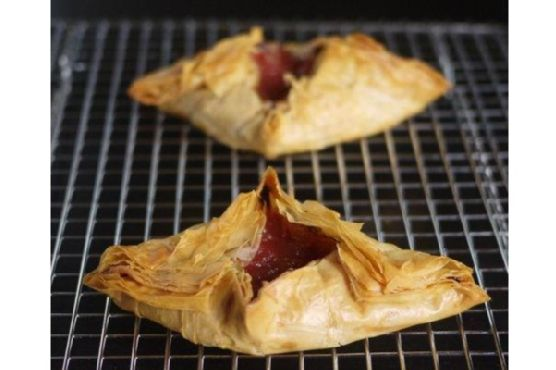
It was one of those drizzly, stay-inside afternoons when a sudden craving hit me — something sweet but tangy, with a satisfying crunch. My pantry didn’t offer much in the way of excitement, but there was rhubarb in the fridge and an untouched packet of phyllo dough languishing in the freezer. That’s when the idea for Crispy Rhubarb Pockets was born. Trust me, this dish is worth making not just because it’s the perfect balance of tart and sweet, but also because it’s beautifully rustic and so very satisfying. It’s the kind of dessert that looks like you’ve put in a lot of effort when really, it’s just a clever little trick. Plus, who doesn’t love a crispy bite-sized treat?

Jump to Recipe

What You’ll Need

Honestly, you probably have most of these ingredients at home. It’s a grab-and-go situation, making it perfect for those spontaneous baking whims.

  • Diced rhubarb – the heart of our pockets, bringing the tangy goodness
  • Granulated sugar – to sweeten the deal
  • Cornstarch – our trusty thickener
  • Salt – just a pinch to balance flavors
  • Vanilla extract – a splash for that warm, comforting aroma
  • Phyllo sheets – the secret to crispy, flaky pockets
  • Melted butter – for brushing, because butter makes everything better
  • Water – to help seal those delicious pockets

How to Make Crispy Rhubarb Pockets

  1. In a medium saucepan, toss in the diced rhubarb, sugar, cornstarch, and salt. Set it over medium-low heat. As it warms up, stir occasionally. You’ll know it’s ready when the rhubarb releases its liquid and starts breaking down into a thick, chunky sauce — give it about 10 minutes.
  2. Take the pan off the heat and stir in the vanilla extract. Let this mixture cool to room temperature. The vanilla will mingle with the rhubarb, creating a divine aroma that fills the kitchen.
  3. Grab your phyllo sheets and layer four of them, brushing each layer with melted butter. Phyllo is delicate, so handle with care, and don’t skimp on the butter — it’s key to that golden crunch.
  4. Preheat your oven to 350 degrees F. While it warms up, cut four 4-inch squares from your buttered phyllo stack. Precision isn’t necessary; rustic is charming.
  5. Spoon 2 teaspoons of the rhubarb filling into the center of each square. Now, brush from the edge of the filling to each point of the square lightly with water. This is the part where you channel your inner artist.
  6. Gather the points of the square and pinch them together just above the filling, forming a little pouch. Brush it all over with more butter. Repeat this artistic process for all four pouches.
  7. Arrange the pouches on an ungreased cookie sheet or baking pan, spacing them at least an inch apart. Into the preheated oven they go for 12 to 15 minutes, or until they’re golden brown and begging to be devoured.
  8. Remove the pouches from the oven and let them cool on a wire rack for about 5 minutes. They’re equally delightful warm or at room temperature, so serve according to your patience level!

Cook’s Notes

So, a few things to keep in mind: first, don’t rush the rhubarb cooking process; it needs time to release its magic. Phyllo can be a bit tricky since it dries out quickly, so keep it covered with a damp cloth while you work. If you make these ahead of time, you can store them in an airtight container for up to two days. Just pop them back in a warmed oven to re-crisp them. Leftovers (if there are any) are wonderful with a dollop of vanilla ice cream.

Make It Your Own

There’s plenty of room to play around with this recipe:

  • Swap the rhubarb for diced apples and add a sprinkle of cinnamon for a fall vibe.
  • If you’re a fan of berries, mix in some strawberries with the rhubarb for a sweeter, juicier filling.
  • Try adding a handful of chopped nuts to the filling for some extra crunch and depth.
  • If vanilla isn’t your thing, lemon zest can add a zesty twist to the filling.

If you try this, I’d love to hear how it turns out — drop a comment or tag me! Whether you stick to the original recipe or venture into variations, these little pockets are sure to delight. Happy baking!

Related update: Crispy Rhubarb Pockets

Related update: 10 Minute Brownies

Sourdough Stuffing with Sage Sausage and Apples | Made by Meaghan Moineau

I found myself in a bit of a culinary pickle last Wednesday. You know those days when you’re just craving something hearty and flavorful, but the thought of spending hours in the kitchen makes you want to order takeout instead? Well, I was there — staring at my pantry with determination to whip up something that screams fall comfort but doesn’t require half my day. Enter the Sourdough Stuffing with Sage Sausage and Apples. This dish checks all the boxes: rich flavors from the sausage, a hint of sweetness from the apples, and earthy herbs that make your kitchen smell like an autumn hug. It’s surprisingly simple to make and perfect for a cozy weeknight dinner or an impressive side for a festive gathering.

Jump to Recipe

What You’ll Need

This dish is all about layers of flavor with ingredients you might already have around. The key players? Let’s just say **sourdough bread** and **sage sausage** are ready to steal the show.

  • 1 pound of **sage sausage**
  • 3 tablespoons of **butter**, divided
  • 2 shallots, finely chopped
  • 2 cloves of garlic, minced
  • 3 stalks of celery, diced
  • 1 **apple**, diced
  • 6 ounces of **portobello mushrooms**, diced
  • 1 teaspoon of **fresh thyme**
  • 1 tablespoon of **fresh sage**, chopped
  • 1/2 cup of **dry white wine**
  • 1 loaf of whole wheat sourdough bread, diced
  • 2 cups of **chicken broth**
  • Salt and pepper, to taste

How to Make Sourdough Stuffing with Sage Sausage and Apples

  1. In a large skillet over medium heat, cook the sausage until it’s no longer pink, breaking it up with a spoon as it cooks; this should take about 10 minutes. Once cooked, drain the fat and set the sausage aside.
  2. In the same skillet, melt 1 tablespoon of butter. Add the shallots, garlic, celery, apple, and mushrooms. Sauté until the veggies are tender and the mixture is fragrant, about 8 minutes. Sprinkle with thyme and sage, stirring to combine.
  3. Pour the wine over the vegetable mix, using a wooden spoon to scrape up any browned bits from the bottom of the pan. Let it simmer for about 2 minutes, allowing the alcohol to evaporate.
  4. In a large bowl, combine the cooked sausage with the vegetable mixture. Add the diced sourdough bread and 2 tablespoons of butter. Pour the chicken broth over everything, stirring well so the bread absorbs the broth evenly. You’ll want the bread to be moist but not overly soggy.
  5. Transfer the stuffing into a 9×13 inch casserole dish, spreading it out evenly. Cover with foil and bake in a preheated oven at 350°F (175°C) for 20 minutes.
  6. Remove the foil, dot the top of the stuffing with the remaining tablespoon of butter, and return to the oven. Bake uncovered for an additional 10 minutes, or until the top is golden and slightly crispy. Serve immediately for maximum coziness.

Cook’s Notes

Here’s the thing with stuffing — it’s forgiving. Just remember, dry bread is your friend, as it’ll soak up all those delicious juices. If your bread isn’t dry enough, you can pop it in the oven at a low temperature to dry it out before starting.

Leftovers? Absolutely! Store them in an airtight container in the fridge for up to three days. You can reheat in the oven or microwave, but add a splash of broth to avoid drying it out. This stuffing can also be made a day ahead; just assemble it as directed, cover, and keep it in the fridge. Pop it in the oven when you’re ready to serve.

Make It Your Own

  • Vegetarian Twist: Swap out the sausage for a plant-based alternative or use crispy cubes of tofu for a veggie-friendly option.
  • Gluten-Free Version: Use your favorite gluten-free bread instead of sourdough. The texture will be slightly different, but it’ll still taste amazing.
  • Nuts About Nuts: Add a handful of chopped walnuts or pecans for a bit of crunch and extra flavor depth.
  • Cheese Please: Sprinkle some grated Parmesan or Gruyère over the top just before the final bake for a cheesy crust.

If you try this, I’d love to hear how it turns out — drop a comment or tag me! Whether you’re serving it up for a holiday spread or just wanting to turn a regular dinner into something special, this stuffing is bound to become a favorite. Enjoy every bite!

Related update: Sourdough Stuffing with Sage Sausage and Apples

Related update: Cheesy Spinach Stuffed Shells

Miyamoto’s Push to Make Pikmin Ubiquitous | Analysis by Brian Moineau

Somebody get this man a Pikmin

Somebody get this man a Pikmin — and maybe a whole crate. Shigeru Miyamoto saying he's "on a mission" to include Pikmin in any kind of Nintendo product he can is equal parts delightful and revealing. It tells us more than fandom wishful thinking; it signals how Nintendo’s creative strategy quietly shifts when one of its architects becomes personally invested in an IP’s expansion.

Pikmin started as a quirky GameCube experiment in 2001 and quietly grew into one of Nintendo’s most distinctive franchises. Miyamoto treating Pikmin like a “talent” in an agency roster — a character set that can be dropped into diverse experiences — reframes how we might expect Nintendo to deploy its lesser-seen icons going forward.

Why Miyamoto's mission matters

Miyamoto isn’t just the creator of Mario and Zelda — he’s one of Nintendo’s chief narrative stewards. When he says he wants Pikmin to appear “in any kind of Nintendo product,” that’s not a CEO marketing edict; it’s a creative nudge that can ripple through development teams, theme-park designers, and film producers.

  • It reflects a broader Nintendo trend: cross-medium storytelling and brand placement beyond the core console ecosystem (apps, theme parks, short films, and movies).
  • It acknowledges Pikmin’s unusual flexibility: tiny, nonverbal creatures that are cute enough to charm children but also odd and fascinating enough to capture adults’ imaginations.
  • It puts Pikmin on the shortlist for cameo culture — not just Easter eggs, but meaningful appearances that help grow an audience.

Put simply: when Miyamoto wants something, people listen. That makes his affection for Pikmin a practical roadmap for more Pikmin in the wild.

Pikmin: the perfect cameo characters

There’s a reason Pikmin make natural crossovers. They’re visually distinct, emotionally accessible, and — crucially — they don’t need long backstories to work. A Pikmin can pop into a park scene, a movie background, or a game HUD and instantly read as “cute helper creature” without stealing the spotlight.

Contrast that with a heavyweight IP like Mario or Zelda. Those characters carry expectations and story baggage. Dropping Mario into anything risks recontextualizing the host product. Pikmin, by design, blend.

  • They add texture without dominating.
  • They appeal across ages: kids see friends; older fans see a beloved franchise getting love.
  • They can be merch, in-park gags, or narrative devices in animation.

That blend makes Miyamoto’s push more than fandom nostalgia — it’s a smart brand play.

Where we've already seen Pikmin pop up

Pikmin have been creeping into the broader Nintendo ecosystem for a while. Recent years saw:

  • Theme-park nods and hidden Pikmin in Super Nintendo World installations.
  • Short animated pieces and the Pikmin Bloom mobile experiment that played with AR and location-based play.
  • Easter eggs in modern Nintendo titles and, as Miyamoto noted, even flavors of cameo in the Super Mario Galaxy movie.

Those placements weren’t accidental. They were tests: small experiments to measure reaction and see how Pikmin function outside their core games. Miyamoto’s renewed insistence suggests Nintendo could scale those experiments into bigger bets — more shorts, more merch, and potentially standalone media. (nintendolife.com)

The practical upsides for Nintendo

If you look past the cuddly appeal, Miyamoto’s mission offers Nintendo measurable benefits.

  • Audience growth: Cameos and cross-media presence bring Pikmin to people who don’t play Nintendo games.
  • Low-risk experimentation: Pikmin appearances can be tiny and incremental — a poster in a movie, park animatronics, or short-form content — so the company can test before investing heavily.
  • Merchandise and IP value: Small characters scale well into plushes, collectibles, and AR filters that monetize fandom without the production costs of a full game.

In short: Pikmin are low-friction ambassadors for Nintendo’s larger brand.

What this could — and probably won’t — mean

Miyamoto’s enthusiasm doesn’t automatically mean Pikmin will become the next cinematic flagship. He’s been careful in interviews to avoid promising feature films or large-scale projects without context. Instead, expect a pattern:

  • More deliberate Easter eggs and meaningful cameos.
  • Expanded short-form content from Nintendo Pictures and collaborations (animated shorts, maybe serialized micro-content).
  • Continued experiments in AR/mobile spaces and theme-park integration.

What’s less likely: an immediate, massive standalone Pikmin cinematic universe. Nintendo tends to be conservative with big budget IP plays, preferring gradual audience building. Miyamoto’s mission is a push, not a shove — it primes the pipeline rather than detonating it. (gamesradar.com)

Pikmin in any product: what fans should hope for

Fans shouldn't just ask for more games. Here are smaller, practical wins that fit Miyamoto’s vision and benefit fans:

  • Thoughtful cameos in upcoming Nintendo movies and series that let Pikmin contribute mood or humor.
  • Expanded short films or a collection of shorts that explore Pikmin life—bite-sized stories that build lore and audience.
  • Interactive park experiences and AR tie-ins that let audiences “lead” Pikmin without needing a console.

These kinds of additions expand the franchise’s footprint and invite new fans without forcing a mainstream blockbuster.

My take

Miyamoto being “on a mission” to sprinkle Pikmin across Nintendo feels both adorably personal and strategically smart. The idea of those tiny, industrious creatures popping up in different corners of Nintendo’s world is a perfect fit for a company that thrives on playful surprises.

If Nintendo listens — and they usually listen when Miyamoto nudges — we should expect more micro-moments rather than an immediate Pikmin takeover. That’s fine. A handful of well-placed moments can do more for awareness and affection than a single headline-grabbing project.

Final thoughts: the best part of this mission is how naturally Pikmin fit as cross-over characters. They’re subtle ambassadors for Nintendo’s creativity — and if Miyamoto is calling for them, then somebody should definitely get him a Pikmin. Preferably several.

Notes for the curious

  • The quote about Miyamoto being “on a mission” comes from recent interviews covered by Nintendo Life and reflected in coverage by outlets like Kotaku and GamesRadar. These pieces capture Miyamoto’s view of Pikmin as characters that can appear across media and products. (nintendolife.com)

Sources


Related update: We recently published an article that expands on this topic: read the latest post.