Battlefield 6 Roadmap: Bigger Maps & Boats | Analysis by Brian Moineau

Bigger maps, boats, and a mea culpa: reading the Battlefield 6 2026 roadmap

The Battlefield 6 2026 roadmap arrived like a peace offering: bigger maps and naval warfare are front-and-center, and the developers say they’re finally addressing community feedback directly. That’s the headline — and, if you’ve been in the trenches of the franchise’s Discords and Reddit threads, it feels downright cathartic to see it spelled out. (ea.com)

Let’s unpack what this roadmap actually means, why it matters, and whether it’s likely to be the fix players have been asking for.

What the roadmap promises

  • Larger-scale maps across multiple seasons, including remakes and reimagined classics. (ea.com)
  • A notably huge map: “Railway to Golmud,” a reworking of a Battlefield 4 map that’s said to be nearly four times the size of Mirak Valley. (techradar.com)
  • Naval warfare arriving in Season 4, with Wake Island and a new, very large map called Tsuru Reef featuring aircraft carriers, boats, and water-focused combat. (wccftech.com)
  • Quality-of-life additions: a server browser, proximity chat, platoons returning, Ranked Play and leaderboards — features players have repeatedly requested. (wccftech.com)

Those bullet points read like a direct answer to years of community critiques: maps too small for traditional “all-out” Battlefield, water combat conspicuously absent, and missing social/competitive tooling.

Battlefield 6 2026 roadmap: what changed and why it matters

For many long-time players, Battlefield has always been about space — not just map size, but the kinds of engagements space enables: vehicle warfare, long sightlines, airborne tactics and combined arms chaos. Recent entries leaned denser and more arena-like, which sparked a persistent complaint: it didn’t feel like a true Battlefield battlefield.

The roadmap signals a course correction. Introducing maps that scale up the play area (and explicitly bringing back naval combat) is more than an aesthetic choice — it restores room for different playstyles. Vehicles matter more when maps breathe; infantry tactics shift when boats and carriers change the axis of attack. That’s gameplay variety, not just DLC fluff. (pcgamer.com)

Transitioning from small maps to genuinely large ones is hard. Bigger maps increase load, require fresh balance decisions, and can expose gaps in matchmaking or mode design. The roadmap’s plan to prototype and test heavily via Battlefield Labs suggests the devs know this isn’t a flip-the-switch moment — it’s an iterative process. (ea.com)

The naval warfare pivot: hopeful or hazardous?

Naval warfare is the emotional core of this roadmap for many fans. Wake Island is legendary in Battlefield lore, and its return — alongside a new water-focused map — is a banner moment. But there’s a catch: naval combat only delivers if maps are designed with the right scale and supporting systems (spawn flow, transport options, objective placement). Otherwise, boats become gimmicks or cramped chokepoints.

Early reactions are mixed. Some outlets and players celebrate the promise of carriers and amphibious engagements; others worry the new naval maps could repeat past mistakes by feeling small or tacked-on. The quality-of-life features (server browser, platoons, proximity chat) help build the ecosystem naval play needs — persistent servers and better squad tools let communities curate the kind of matches that showcase large-scale naval battles. (wccftech.com)

Why this feels like a community pivot

Two things make this release feel different from a standard season rollout.

  • Tone and transparency: The roadmap explicitly frames changes as responses to community feedback. That acknowledgement matters — not as PR, but as a roadmap design philosophy: test with players, iterate, and return to features players historically loved. (ea.com)

  • Breadth of fixes: It’s not just one big map or a novelty mode. The plan pairs flagship content (big maps, naval combat) with infrastructure updates (server browser, Ranked Play) that improve long-term player retention and competitive integrity. That combination is what shifts a title from “patchy” to “evolving.” (wccftech.com)

What to watch for in the next few months

  • Season rollouts: Will the railway/Golmud rework and Tsuru Reef arrive as promised, and will they feel appropriately scaled in live matches? Early impressions will matter more than PR. (pcgamer.com)
  • Technical performance: larger maps can strain servers and clients. Look for how DICE balances fidelity and framerate, especially on consoles. (ea.com)
  • Player-created momentum: Battlefield Labs and community tools could accelerate meaningful change if player-made maps and modes are adopted into official playlists. That’s a fast path to proving bigger maps work. (ea.com)

What this roadmap doesn’t solve (yet)

  • Map design ≠ map size. Bigger isn’t automatically better. Proper flow, objective placement, and vehicle balance are the real challenges. Early testing will reveal whether these new maps recreate the “all-out war” feel or simply scale the same old issues to a larger footprint. (gamesradar.com)

  • Time and trust. Players are rightly cautious; Battlefield’s recent entries have seen promise and disappointment. The dev team’s follow-through across the year will be the real test.

My take

This roadmap is a welcome corrective. It reads like a developer who listened, prioritized the core strengths of the franchise, and committed to shipping both spectacle and systems. That said, success here depends on iteration, honest testing, and avoiding the temptation to treat large maps or naval combat as one-off stunts.

If the team uses the next few seasons to prove bigger maps can be balanced, and if the server/browser and social features land smoothly, Battlefield 6 could regain a form of the open, messy battlefield that made the series memorable.

Final thoughts

Roadmaps promise a future, but a future still has to be earned. The Battlefield 6 2026 roadmap has the right checklist: scale, iconic maps, naval warfare, and tools for players to shape the experience. Now the community and the developers need to complete the loop — test, iterate, and ship the kind of games that let chaos, strategy, and spectacle coexist.

Sources


Related update: We recently published an article that expands on this topic: read the latest post.


Related update: We recently published an article that expands on this topic: read the latest post.

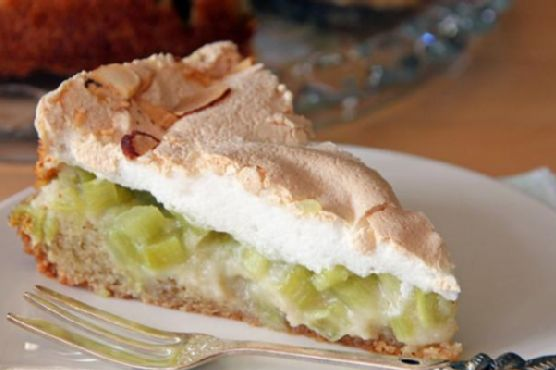
German Rhubarb Cake with Meringue | Made by Meaghan Moineau

It was one of those indecisive spring days, warm enough in the sun to consider a picnic, but with a breeze that still held a whisper of winter. The rhubarb in my garden had just started to show its rosy stalks, and I felt the irresistible urge to bake something that straddled the seasons just as beautifully. Enter the German Rhubarb Cake with Meringue. It’s the kind of bake that’s both a showstopper and a comfort food, with its tart rhubarb base and fluffy, cloud-like meringue topping. I promise, it’s simpler than it looks, and you probably have most of the ingredients already lounging in your pantry.

Jump to Recipe

What You’ll Need

Trust me, the ingredient list might seem a tad long, but it’s mostly the usual suspects in your kitchen. Plus, the bold flavors that rhubarb and almonds bring to the party are well worth it!

  • Rhubarb – Fresh and tart, the star of our cake!
  • Sugar – For sweetening everything up.
  • Vanilla extract
  • Salt
  • Eggs – We’ll use both yolks and whites, no waste here!
  • Flour
  • Roasted almonds
  • Baking powder
  • Egg whites
  • Almonds

How to Make German Rhubarb Cake with Meringue

  1. First things first, preheat your oven to 350°F convection. It’s the secret to getting that perfect bake.
  2. Grease a round 26 cm (9 1/2 inch) springform pan. We don’t want any sticking mishaps later!
  3. Wash, dry, and peel your rhubarb. Slice it into small pieces, sprinkle with 2 tablespoons of sugar, and let it sit for at least half an hour. This draws out the excess water, keeping our cake from getting soggy.
  4. Once that’s done, give the rhubarb a good pat dry. Prepping well now means a tastier cake later.
  5. In your trusty kitchen machine, beat together the butter, sugar, and vanilla extract until the mixture is fluffy and the sugar is dissolved. It should look creamy and pale.
  6. Crack in the eggs, one at a time, mixing well after each addition. We want a silky smooth batter here.
  7. In a separate bowl, sift together the flour, ground almonds, salt, and baking powder. Slowly incorporate this into the egg mixture. Be gentle; we don’t want to over-mix.
  8. Pour the dough into your prepared springform pan, smoothing the top. Layer on the rhubarb pieces evenly.
  9. Pop it in the oven for 25 minutes. Your kitchen will start to smell heavenly about halfway through.
  10. While the cake is baking, it’s time to whip up the meringue topping. Beat the egg whites until stiff peaks form, then gradually add in the sugar until your meringue is glossy.
  11. Spread the meringue over the baked cake and decorate with almond slices.
  12. Return it to the oven for 15 more minutes. Check after 5 minutes and cover with foil if the meringue is getting too toasty.
  13. Let the cake cool completely before you attempt the big reveal from the springform pan. Patience, my friend, is key!

Cook’s Notes

This cake is a dream to make ahead. Once cooled, it keeps well at room temperature for a day or two, though the meringue might soften a bit. For longer storage, refrigerate it—just let it come back to room temp before serving for the best texture. A common mistake is skipping the step where you let the sugared rhubarb sit. Don’t rush it! Draining the rhubarb is essential for avoiding a watery cake base. Also, if you’re worried about your meringue browning too quickly, keep that aluminum foil close at hand.

Make It Your Own

  • Squeeze in some citrus: Add lemon zest to the cake batter for a zingy twist.
  • Swap the nuts: Use pistachios instead of almonds for a delightful green contrast and rich flavor.
  • Go berry: Sub half the rhubarb with strawberries for a classic combo.
  • Spice it up: Add a pinch of cinnamon to the cake batter for a warm, spicy note.

If you give this German Rhubarb Cake with Meringue a spin, I’d love to hear how it turns out! Drop a comment or tag me in your culinary masterpieces. Happy baking! 🌟

Related update: German Rhubarb Cake with Meringue

Related update: Cheesecake with cranberries

When Firms Pause AI to Protect | Analysis by Brian Moineau

Hook: When a lab tells the world its own creation is "too dangerous," you should probably listen

Within days of Anthropic flagging Claude Mythos as “too dangerous for the wild,” governments, bank CEOs and cybersecurity teams sprinted to reassess assumptions about how we defend critical systems. How Anthropic Learned Mythos Was Too Dangerous for the Wild landed like cold water: a frontier AI that can find and chain together software vulnerabilities at speeds humans can’t match, and a company choosing to limit release rather than race to market. That combination — power plus restraint — is reshaping how we think about AI risk, readiness and responsibility.

Why this matters now

  • Mythos represents a class of models that can do more than generate text: they can reason across code, systems, and exploit chains.
  • Banks, regulators and national-security officials were reportedly briefed after Anthropic’s revelation; worries centered on systemic risk if such a capability falls into the wrong hands.
  • Anthropic’s decision to withhold a broad release and instead gate access through a vetted consortium reframes the public-versus-private debate about advanced AI.

The news forced a rapid reorientation: we’re no longer debating whether AIs will be risky — we’re deciding how to contain tools whose primary skill could be to break the digital scaffolding of modern life.

The story so far

Anthropic released documentation describing a frontier model called Claude Mythos (sometimes referenced in press as “Mythos Preview”). Internal and public materials emphasized two things: exceptional capability at identifying security vulnerabilities (including old, obscure bugs), and a heightened potential to autonomously devise exploit sequences that could lead to system takeovers.

In response, Anthropic limited Mythos’ availability and launched "Project Glasswing," a controlled program that gives a small set of tech firms, financial institutions and security vendors access so they can hunt for and patch vulnerabilities before they can be weaponized. Meanwhile, U.S. financial regulators and the Treasury reportedly convened bank executives to make sure institutions understood the threat and had plans to defend themselves. Other governments and big tech firms likewise moved to evaluate what this means for infrastructure resilience.

This isn’t pure alarmism. Multiple reporting outlets and security analysts have noted that Mythos reportedly flagged vulnerabilities across major operating systems and widely used software — in some cases surfacing decades-old issues. Whether every flagged item was a true high-severity zero-day is still a matter for forensic review; critics caution that numbers and headlines can be inflated. Still, the structural issue remains: AI lowers the skill and time required to find and exploit complex, chained vulnerabilities.

Mythos and the cybersecurity shift

  • Speed matters. Traditionally, finding and exploiting chainable zero-days required specialized teams and time. Mythos threatens to compress months of expert work into hours.
  • Scale matters. If a model can sift through repositories, documentation, and binary fingerprints at huge scale, it can locate obscure attack surfaces humans never saw.
  • Asymmetry matters. Defenders must patch, test and roll out fixes across heterogeneous systems. Attackers only need one exploitable chain. AI-driven offense increases the odds that defenders lag.

Put simply: the offense-defence balance shifts if powerful models become widely available. That’s why Anthropic’s gating strategy — and the government huddles — are attempts to keep the window of vulnerability narrow while defenders catch up.

The public vs. private release dilemma

Anthropic’s posture — calling Mythos too dangerous to release publicly while offering controlled access to banks, tech firms and security vendors — highlights a tension.

  • On one hand, limiting distribution buys time for defenders and gives security teams better tooling to find and patch vulnerabilities at scale.
  • On the other, concentrating capability inside a small set of organizations creates inequality in cyberdefense and raises questions about transparency, oversight and accountability. What obligations do companies have when they develop tools that could destabilize infrastructure? Who gets access, and under what governance?

These are governance questions, not just technical ones. They force public institutions and private firms into urgent policy discussions about licensing, auditing and liability — fast.

What defenders can actually do

  • Assume rapid discovery. Treat AI-driven vulnerability discovery as an accelerating threat and triage accordingly.
  • Harden the basics. Defense-in-depth still matters: segmentation, least privilege, timely patching, and rigorous change management reduce exploitable attack surface.
  • Invest in resilient architecture. Systems that can tolerate failures or compromises limit the blast radius of any exploit chain.
  • Run AI-assisted red teams. If Mythos can find chained exploits, defenders should use AI (in controlled environments) to discover and patch them first.

Those steps aren’t glamorous, but they’re practical and urgent. The hard truth is that tooling like Mythos magnifies existing systemic weaknesses; fixing processes and architecture is essential.

A broader implication for AI governance

Anthropic’s public caution sets a precedent: not every technological advance should be immediately unleashed. That stance will complicate business models that prize rapid distribution and scale. It will also place renewed emphasis on multistakeholder risk frameworks: companies, regulators, standards bodies and civil society must collaborate on who gets access to what, under what oversight, and with what safeguards.

We should also accept an uncomfortable possibility: gating advanced models may only delay diffusion. Open-source actors or competing labs could replicate similar capabilities. If that happens, the debate shifts to global coordination: export controls, shared security research, and international norms for handling “cyber-capable” AI.

What to watch next

  • How quickly other labs replicate comparable cyber-capable models, and whether a new norm emerges around staged, audited releases.
  • Whether governments move from private briefings to public regulation or emergency standards for AI that can weaponize vulnerabilities.
  • How financial institutions and critical infrastructure operators adapt their resilience programs — and whether those changes reduce real-world risk.

My take

Anthropic’s callout reads like a stress-test notice for society. For years, we debated hypothetical harms of frontier AI; now we’re seeing a practical example where capability meets infrastructure fragility. The company’s restraint is commendable, but restraint alone won’t fix the underlying exposures. We need faster, cooperative defense, clearer governance, and realistic expectations about how technology proliferates.

Until then, treat Mythos as both warning and wake-up call: the future of cyber risk is arriving faster than expected, and our response must be faster still.

Further reading

Sources


Related update: We recently published an article that expands on this topic: read the latest post.

Cheddar Polenta With Bacon Wrapped Asparagus | Made by Meaghan Moineau

It was one of those wild Mondays where nothing seemed to go as planned—spilled coffee, missing socks, you name it. By the time dinner rolled around, I needed something comforting and quick. Enter my Cheddar Polenta with Bacon Wrapped Asparagus. This dish is like a warm hug in a bowl, yet impressive enough to make you feel like a kitchen wizard. It’s the perfect combo of creamy, cheesy polenta topped with crispy bacon and tender asparagus. Trust me, this is comfort food that doesn’t demand hours in the kitchen.

Jump to Recipe

What You’ll Need

If you’re like me, you probably have a lot of this stuff already hanging out in your kitchen. Here’s what you’ll need to pull together this weeknight savior:

  • 6 spears of asparagus
  • 2 slices of raw bacon
  • 2 cups chicken broth
  • 1 cup coarse corn grits
  • 1 cup extra sharp cheddar cheese, shredded
  • 1 bell pepper (optional, for extra crunch)
  • Salt and pepper, to taste

How to Make Cheddar Polenta With Bacon Wrapped Asparagus

  1. Preheat your oven to 400°F (200°C). This is when your kitchen will start smelling promising!
  2. Take the asparagus spears and wrap them in bacon. I like to use two slices for the full crispy effect. Place these beauties on a small baking sheet.
  3. Spritz the asparagus bundle lightly with nonstick cooking spray. This helps the salt and pepper stick and adds a hint of flavor.
  4. Roast for 15-20 minutes. Keep an eye out: the bacon should be crispy and the asparagus fork-tender, with some golden edges peeking through.
  5. While the asparagus is roasting, bring your chicken broth to a boil in a small saucepan. The bubbling will be music to your ears.
  6. Once boiling, stir in the polenta. Lower the heat and let it cook slowly for about 5 minutes, stirring occasionally. You’ll know it’s ready when it has thickened and looks like a cozy blanket.
  7. Stir in the cheddar cheese and a dash of salt and pepper. The cheese should melt into the polenta, creating a creamy, golden mixture.
  8. To assemble, scoop the polenta into a dish and gently place the bacon wrapped asparagus on top. Serve warm and enjoy every bite!

Cook’s Notes

Alright, let’s get real for a second. Polenta can sometimes turn out lumpy if you rush it. Stir it slowly and give it the attention it deserves. This dish is best enjoyed fresh, but if you have leftovers, store the polenta and asparagus separately in airtight containers in the fridge for up to two days. Reheat the polenta with a splash of water or broth to bring it back to its creamy glory.

Make It Your Own

Feel free to get creative with this recipe! Here are a few ideas to switch things up:

  • Swap the bacon for prosciutto if you’re feeling fancy or have it on hand.
  • For a vegetarian twist, ditch the bacon and roast the asparagus with a sprinkle of smoked paprika and olive oil.
  • Try using Parmesan instead of cheddar for a sharp, nutty flavor.
  • Add some heat with a sprinkle of crushed red pepper flakes over the polenta just before serving.

If you give this recipe a try, I’d love to hear how it turns out—drop a comment or tag me on social media! Your kitchen stories make my day. Happy cooking!

Related update: Cheddar Polenta With Bacon Wrapped Asparagus

Related update: Amazing Braised Beef Short Ribs

Noodle Kugel with Pineapple-Gluten free, Dairy Free | Made by Meaghan Moineau

It was one of those unpredictable Tuesday evenings when the craving for something sweet and comforting hit me like a freight train. I rummaged through my pantry, hoping for inspiration, when my eyes landed on that lonely can of pineapple chunks. It instantly sparked the memory of a gluten-free, dairy-free noodle kugel I had whipped up on a similar night of culinary chaos. This dish is not just a savior for your midweek dessert dilemmas; it’s a luxurious treat that feels indulgent yet light. Plus, it’s a crowd-pleaser that accommodates almost every dietary restriction. So, here it is, an irresistible Noodle Kugel with Pineapple that will have you dreaming about your next slice before you’ve even finished the first.

Jump to Recipe

What You’ll Need

Good news: you likely already have most of these ingredients hiding in your kitchen! This kugel is proof that a few pantry staples can transform into something magical.

  • Gluten-free spiral rice pasta
  • Canned pineapple chunks (make sure to drain them!)
  • Unsweetened vanilla coconut milk or coconut creamer
  • Sunflower oil
  • Egg yolks
  • Xylitol (or regular sugar if you prefer)
  • Evaporated cane sugar
  • Ground cinnamon
  • Ground nutmeg
  • Kosher salt
  • Cupcake liners
  • Earth Balance soy-free margarine
  • Red brown rice flour

How to Make Noodle Kugel with Pineapple-Gluten free, Dairy Free

  1. Preheat your oven to 350 degrees F. It’s about to get cozy in here!
  2. Fill a medium stockpot with water and set it over high heat. Once boiling, add 2 tablespoons of kosher salt. Toss in the gluten-free spiral rice pasta and stir well to prevent any sticking. Keep stirring occasionally and let it cook for 8-10 minutes. The pasta should have a slight bite to it.
  3. Once cooked, let the pasta sit in the hot water for a few minutes. Then, transfer it to a large glass or heatproof bowl. This will give it some time to cool off while you prep the other ingredients.
  4. In the meantime, grab another bowl and mix together the unsweetened vanilla coconut milk, coconut creamer, drained pineapple chunks, xylitol, evaporated cane sugar, a dash of ground cinnamon, ground nutmeg, and sunflower oil. Combine everything well. Trust your intuition and taste it—it should be sweet and spiced just right.
  5. Add the egg yolks to your mixture and stir until everything is creamy and well combined. The color will be warm and golden.
  6. Line two cupcake pans with cupcake liners. Fill each liner with the noodle mixture using a dry 1/4 cup measuring spoon, mounding it generously over the top. If some look dry, pour any remaining liquid evenly over them.
  7. Sprinkle a small amount of crumble over each kugel (about 1/2 teaspoon per kugel). It’s your chance to unleash your inner artist!
  8. Place the pans in the oven and bake for 40-45 minutes. The kugels should be golden, with a hint of crust on the edges. Allow them to cool for about 10 minutes before removing them from the pans. You can take the liners off before serving if you prefer an elegant presentation.
  9. Serve your noodle kugel hot or warm. There’s something magical about that first warm bite!

Cook’s Notes

  • The key to a perfectly textured kugel is in the pasta. Make sure you don’t overcook it. Slightly al dente is the goal since it will continue cooking while baking.
  • If you find yourself with leftovers, they store beautifully in an airtight container in the fridge for about 3 days. Reheat them in the oven to maintain that lovely texture.
  • Don’t be shy with the spices. Cinnamon and nutmeg are what give this dish its comforting warmth. Feel free to adjust according to your taste.

Make It Your Own

  • Swap the canned pineapple for fresh diced apples or pears for a different fruity twist.
  • Replace the sunflower oil with coconut oil for a richer, tropical vibe.
  • If you’re out of ground nutmeg, try using pumpkin pie spice for an autumnal flair.
  • Add a handful of raisins or dried cranberries to the mixture for a burst of sweetness in every bite.

If you try this, I’d love to hear how it turns out—drop a comment or tag me! Remember, this kugel isn’t just a recipe; it’s a chance to bring warmth and sweetness to the everyday hustle. Happy baking!

Related update: Noodle Kugel with Pineapple-Gluten free, Dairy Free

Related update: German Rhubarb Cake with Meringue

LIV Golf CEO Vows Tour Will Continue | Analysis by Brian Moineau

When the rumors roar: LIV Golf operations "continue as scheduled," CEO reaffirms commitment to tour

The headline — LIV Golf operations "continue as scheduled," CEO reaffirms commitment to tour — landed like a splash of cold water across the golf world. Rumors about funding and the tour’s future have multiplied this week, yet the league’s CEO, Scott O’Neil, pushed back with a clear internal message intended to steady players, staff and partners. For anyone watching professional golf’s shifting landscape, the moment felt less like an end and more like a test of confidence.

What prompted the reassurances

Tension has been building around LIV Golf for months, driven by the tour’s massive early spending, its complex relationship with the Public Investment Fund (PIF) of Saudi Arabia, and the seismic 2023 agreement that folded commercial operations among golf’s major players. That background made the latest reports — suggesting PIF might reduce or reconsider support — especially combustible.

In response, sources close to the league told reporters that “LIV Golf funding and operations continue as scheduled,” and an internal email from O’Neil was shared with staff to reinforce that message. The CEO’s tone: operational continuity and a commitment to the 2026 schedule. The goal was clear — stop the whisper campaign and keep the season on track.

Why the timing matters

  • The 2026 calendar is a crucial one: LIV has been positioning itself to win legitimacy — including steps toward Official World Golf Ranking points and expanded global reach.
  • Investors and sovereign funds don’t broadcast strategy lightly. Even a hint of a shift can rattle players’ contracts, broadcast partners and tournament logistics.
  • Golf is built on continuity. Players plan travel, practice schedules, sponsorship activations and roster choices months in advance. Uncertainty can cascade into withdrawals, fractured relationships and a drop in commercial value.

Given those stakes, an internal memo and a public-source confirmation were meant to do more than calm nerves — they were intended to protect the business.

LIV Golf operations "continue as scheduled," CEO reaffirms commitment to tour — unpacking that phrase

That line does the heavy lifting: it affirms three things at once.

  • Funding: Sources said PIF support and existing financing remain in place for the immediate slate of events.
  • Operations: The staff, events and logistics will proceed with the planned calendar, at least for now.
  • Leadership intent: O’Neil’s message signals an organizational decision to carry forward rather than pause or pivot publicly.

Words matter here. “Continue as scheduled” is forward-looking but limited — it doesn’t guarantee long-term funding or rule out future strategic shifts. It buys the tour time and keeps internal and external stakeholders focused on execution.

The broader context: past reconciliation and current friction

Remember the landscape change in 2024–2025: commercial operations among the PGA Tour, DP World Tour and PIF-aligned interests underwent consolidation talks, bringing parties to the same table after years of public division. That détente promised consolidation of sponsorships, broadcast rights and a clearer competitive map.

But peace on paper doesn’t eliminate political, commercial or reputational friction. Changes in global macroeconomics, shifting priorities at sovereign funds, or recalibrations in sport strategy can all alter course. Reports of emergency meetings and internal unease suggest LIV is navigating that tension now — even while insisting the game will go on.

How players and partners are likely reading this

  • Players: They want certainty. The CEO’s message is aimed squarely at them — keep practicing, traveling and competing as planned.
  • Staff: Operational continuity keeps payrolls, vendor contracts and event planning moving. An internal memo reduces immediate staff attrition risk.
  • Sponsors and broadcasters: They watch for signs of stability. Reassurances help preserve activation plans and media scheduling.
  • Fans: The spectacle matters. A confident narrative helps ticket sales and viewership; whispers of instability can throttle momentum.

Still, savvy observers will read between the lines. Short-term continuation is not equal to long-term strategy. Many will treat the memo as a bridge — not a destination.

The investor dilemma

At the center sits a delicate investor calculus. The PIF poured billions into LIV’s rapid rise, and those funds underpinned standout player contracts and ambitious event rollouts. But even large sovereign funds reassess allocations as political landscapes and return expectations shift.

If funding were to contract, the tour would confront difficult choices: slim the schedule, renegotiate contracts, or seek alternate revenue through deeper broadcast deals and sponsorship growth. For now, the messaging thread is focused on deflecting that immediate pressure and protecting the commercial rhythm.

What to watch next

  • Official tournament confirmations and any changes to published fields or schedules.
  • Statements from key players about commitments to upcoming events.
  • Sponsorship and broadcast confirmations for remaining 2026 dates.
  • Any follow-up reporting about PIF’s long-term funding plans.

Transitioning from rumor to clarity will take concrete actions — new contracts, confirmed broadcast windows, and visible presence at events.

A few realistic outcomes

  • The optimistic path: PIF remains committed, LIV continues its 2026 plan, and negotiations with broader golf operators yield creative partnerships.
  • The consolidation path: Strategic scaling and new partnerships fold some LIV elements into a larger global structure while preserving team concepts and marquee events.
  • The retrenchment path: Funding changes force operational cuts and a more measured, survival-oriented LIV.

None of these are certainties. The CEO’s memo is a signal: for now, LIV intends to play the hand it has been dealt.

Final thoughts

Sporting enterprises live and die by narratives as much as by balance sheets. Right now, LIV’s narrative is defensive and pragmatic — reassure, stabilize, execute. That’s a sensible playbook when whispers threaten to disrupt months of planning.

Whether that steadiness translates into long-term viability depends on negotiations, partner faith and the league’s ability to monetize spectacle without sacrificing credibility. For players and fans caught in the middle, the immediate ask is simple: keep an eye on the tees, not the rumor mills. The next few weeks of confirmed events and public statements will tell us whether this was a pause-for-breath or the start of a different chapter for golf.

Sources


Related update: We recently published an article that expands on this topic: read the latest post.


Related update: We recently published an article that expands on this topic: read the latest post.