
It was one of those cool, breezy evenings when the only thing I craved was a steaming bowl of something comforting yet invigorating. You know, the kind of dish that fills your kitchen with warm, aromatic spices and makes you feel like you’re wrapped in a cozy blanket. That’s when I stumbled into the delightful world of Vietnamese Beef-Noodle Soup with Asian Greens. This recipe is my go-to for those nights when you’re short on time but still want to treat yourself to something genuinely indulgent. The best part? It’s surprisingly easy to pull together, with a depth of flavor that will have everyone thinking you spent hours crafting it. Trust me, this is one for the books.
Jump to Recipe
What You’ll Need
Chances are, you already have many of these ingredients hiding in your pantry or fridge. Here’s what you’ll need to create this magical soup:
- Sirloin steak, frozen for easier slicing
- Wide rice stick noodles
- Yellow onion
- Fresh ginger
- Garlic cloves
- Cardamom pods
- Star anise
- Fat-free less-sodium beef broth
- Water
- Less-sodium soy sauce
- Brown sugar
- Fish sauce
- Sesame oil
- Baby bok choy leaves
- Trimmed snow peas
- Light miso
- Fresh Thai chile
- Fresh bean sprouts
- Fresh basil leaves
- Fresh mint leaves
- Lime wedges for serving
How to Make Vietnamese Beef-Noodle Soup With Asian Greens, Okay Vietnamese/japanese
- Start by popping the sirloin steak into the freezer for about 10 minutes. This little trick makes it a breeze to slice into those thin, perfect 1/8-inch slices.
- While the beef is chilling, cook the wide rice stick noodles according to the package instructions. Once they’re done, drain them, rinse under cold water, and set aside.
- In a large saucepan, toss in the sliced onion, fresh ginger, garlic cloves, cardamom pods, and star anise. Cook over medium-high heat for about 5 minutes, stirring frequently until everything is beautifully fragrant.
- Add the beef broth and 2 cups of water to the saucepan. Bring it all to a boil, and then strain the broth mixture through a fine sieve over a large bowl, discarding all the solids.
- Pour the strained broth back into the pan, and stir in the soy sauce, brown sugar, fish sauce, and sesame oil. Bring this to a gentle boil, filling your kitchen with an enticing aroma.
- Add the baby bok choy leaves and trimmed snow peas to the broth. Let them simmer for about 4 minutes until the snow peas are crisp-tender and the bok choy has wilted beautifully.
- At the last minute, stir in the light miso until well combined.
- Now, divide 1/2 cup of the cooked noodles into each of 4 large serving bowls.
- Arrange the raw beef slices and Thai chile slices evenly among the bowls.
- Ladle about 1 2/3 cups of the hot soup over each serving. The heat of the broth will cook the beef to tender perfection.
- Top each bowl with a hearty 1/4 cup of fresh bean sprouts, 1 tablespoon of basil, and 1 tablespoon of mint.
- Serve with lime wedges on the side for an extra zing. Voilà, dinner is served!
Cook’s Notes
This soup is pretty forgiving, which is part of its charm. If you find yourself short on time, you can easily prepare elements in advance: chop the veggies and freeze the beef slices the night before, or even cook the noodles ahead of time. Just make sure everything’s ready to go when the broth is done, as the magic lies in the timing. Be mindful not to overcook the snow peas and bok choy; they should remain vibrant and slightly crisp. Leftovers can be stored in the fridge for up to 2 days — just keep the noodles and broth separate to avoid mushiness.
Make It Your Own
- Swap the beef for crispy tofu if you’re aiming for a vegetarian twist. Just make sure to use veggie broth!
- If you like it spicy, add an extra Thai chile or a dollop of sambal oelek on top.
- Feel free to throw in additional veggies like sliced mushrooms or baby corn to bulk it up.
- Prefer shrimp over beef? Go for it! Just add them in the last few minutes of simmering.
If you try this, I’d love to hear how it turns out — drop a comment or tag me! Your kitchen adventures always make my day, and who knows, maybe you’ll inspire a new twist on this classic recipe. Happy cooking!
Related update: Vietnamese Beef-Noodle Soup With Asian Greens, Okay Vietnamese/japanese
Related update: Best Potato Cheese Soup in a bread bowl

TL;DR
- The latest GT3 evolution—race-first cars reverse-homologated for the road from Mercedes-AMG and Toyota—exists as a 2024–2026 development trend, and SRO’s Stéphane Ratel says the sky isn’t falling as long as prices stay compatible with customer racing [1].
- Expect sticker sensitivity: if these cars land materially above Porsche’s 911 GT3 R (992) 2023 list of €511,000 before VAT, the privateer math breaks; if they don’t, Balance of Performance (BoP) and FIA/SRO production rules moderate any “arms race” [2][3][4][7].
- The real shift isn’t just aero and carbon—it’s industrialized GT3 by factory units (e.g., AMG Customer Racing in Affalterbach, Germany) and data-rich development loops tuned to BoP-era racing, with Toyota GAZOO Racing’s GR GT3 program following a similar template [1][6][7].
What the source said
Sportscar365 reported in 2024 that SRO’s Stéphane Ratel is “not concerned” by the newest GT3 generation being developed as race cars first and then homologated as road cars—specifically the upcoming Mercedes-AMG GT3 and Toyota GR GT3—and he tied category health to customer pricing, not headline performance [1]. He rejected a slide toward GTE’s fate, reiterating that GT3’s core is customer racing rather than factory-only budgets, a stance forged during SRO’s stewardship since the 2000s [1]. Ratel also observed that modern road cars keep getting larger and heavier, which nudges manufacturers toward track-first GT3 solutions that can later be road-legalized in small runs to satisfy homologation [1].
Why it matters
- Privateer teams and series organizers absorb the biggest risk in 2024–2027: teams fund GT3 via paid seats and sponsorship within a defined cost envelope, so a sudden step-change in base price or lifecycle costs jeopardizes entries at anchor events like the CrowdStrike 24 Hours of Spa in Belgium and LMGT3 at the 24 Hours of Le Mans in France (first run under LMGT3 rules in 2024) [3].
- OEMs such as Mercedes-AMG and Toyota can gain packaging headroom with race-first designs while maintaining presence across WEC, IMSA, and GT World Challenge, but overpricing chokes their customer base and invites BoP clawbacks that erase outright performance gains anyway [1][7].
Original analysis
The latest GT3 evolution, defined
Two programs epitomize the “race-first, road-second” playbook in 2024–2026: Mercedes-AMG’s next GT3 (signaled by SRO and team chatter) and Toyota’s GR GT3, positioned to replace the Lexus RC F GT3 by mid-decade [1][6]. AMG develops and supports customer cars from Affalterbach in Baden-Württemberg, while Toyota GAZOO Racing has publicly shown GR GT3 concept hardware since the Tokyo Auto Salon 2022 and continued track testing in Japan [6][1].
- Historical analogue with a lesson: Maserati’s MC12 (2004–2006) and Ford’s GT (2016) were race-first homologation projects that won at the top level, but their categories (GT1, GTE) inflated and fractured under cost and factory-centric logic; Autosport’s 2024 analysis warns that trendlines can repeat without guardrails, which GT3 now has via customer focus and BoP [5][3].
A quick 2×2: Where the new cars sit
- X-axis: Development order (Road-first ↔ Race-first)
- Y-axis: Program posture (Customer-led ↔ Factory-led)
| Quadrant |
Traits |
Examples |
Strategic tell |
| Road-first / Customer-led |
Heavier roots, broad parts supply |
BMW M4 GT3 |
Predictable cost, big customer base |
| Road-first / Factory-led |
Halo-flavored, selective customers |
Ferrari 296 GT3 |
Premium pricing, curated support |
| Race-first / Customer-led |
Lean homologation, customer scale aim |
Toyota GR GT3 (targeting Lexus RC F GT3 replacement) |
Needs aggressive price discipline |
| Race-first / Factory-led |
Bespoke hardware, tight factory loop |
Next Mercedes-AMG GT3 |
Highest risk of sticker creep |
Evidence in 2024: Sportscar365 explicitly named the upcoming Mercedes-AMG GT3 and Toyota GR GT3 as race-first programs and reported Ratel’s focus on customer pricing as the gating factor, which signals strong factory posture and scale ambitions for both [1].
Back-of-envelope: where the price pain starts
- Benchmark: Porsche’s 911 GT3 R (992) announced for the 2023 season carried a €511,000 list price before VAT/options per Porsche Motorsport’s 2022 release [2].
- Hypothesis: If a race-first homologation premium of +10–12% appears, base list hits about €562,000–€573,000 (calc: €511,000 × 1.10 = €562,100; × 1.12 = €572,320).
- Implication: For a two-car privateer that replaces chassis every four seasons, a €51,000–€62,000 per-car delta adds roughly €25,500–€31,000 per year across the pair (math shown: €51,000 ÷ 4 = €12,750; × 2 cars = €25,500; €62,000 ÷ 4 = €15,500; × 2 cars = €31,000). That excludes spare kits, crash damage, and inflation.
This rough cut explains why Ratel fixates on price over raw performance, because BoP will trim laptime deltas while invoices remain untouched [1][7].
A contrarian read
- Consensus: Race-first GT3s will out-tech the class and force an arms race, repeating GTE’s collapse.
- Counter: The guardrails are stronger this time.
- Production hurdles: FIA Appendix J (Article 257A) sets minimum GT3 production cadence—commonly cited as 10 cars in 12 months and 20 in 24—which demands real customer scale rather than unicorn specials, pressuring OEMs to price within reach [4].
- BoP realities: WEC/SRO compress cars into a performance window with weight, restrictors, ride heights, and power maps based on homologation data and in-race telemetry, which sands down track-first advantages within a few events [7].
- Institutional memory: The ACO/FIA ended GTE and launched LMGT3 in 2024 precisely to re-center on customer cars and curb factory cost inflation, signaling low appetite for a repeat arms race at Le Mans or elsewhere [3].
If prices land inside the Porsche/Ferrari band from 2023–2024, race-first GT3s will be fine-tuned, not class-breaking [2][3].
What others are missing
The software-and-data stack is the quiet separator in 2024–2026 development, not just carbon layups and kinematics; FIA WEC’s BoP process ingests homologation and live sensor data, so OEMs that build robust calibration pipelines will converge faster inside the BoP box and hand privateers better setup baselines and tire management over 60–90 minute stints [7]. AMG’s Customer Racing operation in Affalterbach and Toyota GAZOO Racing’s GR GT3 program can centralize aero maps, cooling packages, and power delivery updates across customer fleets via standardized data schemas, which shortens iteration cycles between Spa-Francorchamps and Fuji Speedway test loops [1][6][7]. The brands that treat GT3 as software-defined racing—iterating dash maps, torque shaping, and cooling strategies within BoP limits—will compound gains that customers can feel in stint stability and reduced parts burn [7].
What to watch next
- By December 31, 2026, Mercedes-AMG publicly lists or communicates to series organizers a base customer price for its new GT3 at or above €600,000 ex-VAT, confirming whether a race-first premium materialized.
- By June 30, 2027, either the new AMG GT3 or Toyota GR GT3 wins at least one LMGT3-class race in the FIA WEC, demonstrating that track-first packaging converts to results under BoP.
- By March 31, 2027, Toyota announces GR GT3 customer deliveries with an initial production plan consistent with the FIA/SRO “10 in 12 months/20 in 24 months” cadence, indicating genuine customer scale.
My take
I’m with Ratel—cautiously—because 2024’s GT3 guardrails (BoP and production rules) create a ceiling on runaway performance but not on costs [1][4][7]. If AMG and Toyota keep base pricing within shouting distance of Porsche’s €511,000 2023 benchmark, this evolution looks like healthy modernization rather than a 2000s GT1 relapse [2]. The real risk is sticker shock that hollows the privateer middle by 2027; if that happens, GT4 absorbs refugees and LMGT3 grids thin, starting with non-factory blue-chip entries at Le Mans and Spa [3]. My call: factory-run data programs will decide winners more than exotic hardware, and customer economics will decide whether those winners have anyone to race against.
Sources
- Sportscar365 — “Ratel Not Concerned About Latest GT3 ‘Evolution’” (2024) — Interview/report with Stéphane Ratel tying GT3 health to customer pricing and flagging Mercedes-AMG/Toyota programs.
- Porsche Newsroom — “New Porsche 911 GT3 R to race from 2023” (2022) — Establishes the €511,000 pre-VAT list price benchmark for the 992 GT3 R.
- FIA WEC — “What’s new to the WEC in 2024?” (2024) — Documents LMGT3 replacing GTE and sets grid context for customer GT racing.
- FIA — “Appendix J to the International Sporting Code — Article 257A (GT3), 2024” — Provides GT3 homologation and production cadence requirements used by FIA/SRO.
- Autosport — “The threat the new Toyota GR and Mercedes GT3s pose to the category” (2024) — Independent analysis of race-first GT3 risks and historical echoes from GT1/GTE.
- Toyota Global Newsroom — “TOYOTA GAZOO Racing unveils GR GT3 Concept at Tokyo Auto Salon 2022” (2022) — Confirms GR GT3 concept hardware and intent for a race-first program.
- FIA WEC — “Sporting Regulations 2024” — Explains LMGT3 BoP mechanisms (data inputs, weight, restrictors, ride height, power maps) and update cadence.
Related update: We recently published an article that expands on this topic: read the latest post.
Related update: We recently published an article that expands on this topic: read the latest post.
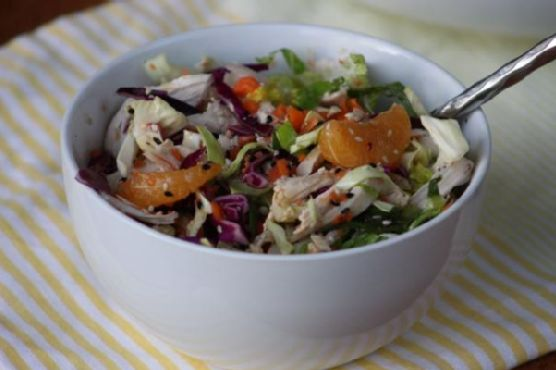
Picture this: it’s a chilly Tuesday evening, and I’m rummaging through my pantry, hoping to conjure up something light yet filling for dinner. The usual suspects—pasta, rice, potatoes—just weren’t cutting it. I craved something crunchy, vibrant, and tangy, but with one big catch: it had to fit in with my gluten-free, dairy-free, and sugar-free lifestyle. That’s when the idea struck! A Chinese Chicken Salad, but not just any salad—one packed with flavors, textures, and a zing that makes your taste buds do a happy dance. This salad is a savior for those nights when you need something quick to whip up yet impressive enough to make you feel like a gourmet chef. Plus, all you need is a handful of ingredients you probably already have lurking in your fridge and pantry. Trust me, this is not your average salad—it’s a celebration in a bowl!
Jump to Recipe
What You’ll Need
Chances are you already have most of this. Here’s what you’ll need to gather:
- Green cabbage
- Red cabbage
- Romaine lettuce hearts
- Scallions
- Carrots
- Fresh satsuma mandarins
- 1 mandarin (cut crosswise then tablespoon into jar over a strainer) (juice)
- Bone-in shredded chicken breasts, roasted
- Sesame oil
- Extra virgin olive oil
- Apple cider vinegar
- White sesame seeds
- Black sesame seeds
- Kosher salt
- Black pepper
- Xylitol
How to Make Gluten Free Dairy Free Sugar Free Chinese Chicken Salad
- Start by prepping the veggies. Finely slice the red and green cabbage and the romaine lettuce hearts. You want them to be thin and delicate, so they soak up all the dressing goodness.
- Trim the ends off the scallions, then finely slice both the white and green parts. This will add a lovely sharpness to the salad.
- Peel and grate the carrots. If you’ve got a mini food processor, throw them in there for a quick chop.
- Peel the satsuma mandarins, then carefully remove the pith from the slices. This step is key to ensure that you don’t get any bitter bites in your salad.
- In a large bowl, combine all your prepped veggies and the shredded chicken. Toss them together to mix it up nicely.
- For the dressing, whisk together the mandarin juice, sesame oil, apple cider vinegar, extra virgin olive oil, and a touch of xylitol for sweetness. Add a pinch of kosher salt and a crack of black pepper for seasoning.
- Drizzle the dressing over your salad and give it a thorough toss, ensuring every piece is coated beautifully.
- Sprinkle the white and black sesame seeds over the top for that perfect finishing touch.
Cook’s Notes
One thing I’ve learned with this salad is that the fresher your ingredients, the better it will taste. If you’re making it ahead of time, keep the dressing and the salad separate until you’re ready to serve; this will keep everything crunchy and fresh. Leftovers can be stored in an airtight container in the fridge for up to two days, but trust me, it’s so delicious it might not last that long! Common mistakes include over-dressing or not balancing the flavors, so taste as you go. If you’re not a fan of xylitol, feel free to adjust the sweetness with another sugar substitute of your choice.
Make It Your Own
- Swap the chicken for crispy tofu to make it vegetarian and just as satisfying.
- Use napa cabbage instead of romaine for a different take on texture.
- Add a sprinkle of roasted almonds for a nutty crunch.
- For a spicier kick, toss in some thinly sliced jalapeños.
If you try this, I’d love to hear how it turns out—drop a comment or tag me! This salad is a little bowl of joy that can brighten any day, and I can’t wait for you to experience it. Enjoy!
Related update: Gluten Free Dairy Free Sugar Free Chinese Chicken Salad
Related update: Middle Eastern Chopped Salad

Picture this: it’s the peak of summer, and I’m standing in my kitchen, trying to figure out a way to cool off and use up the abundance of strawberries I overzealously picked at the farm last weekend. That was the moment when the idea of roasted strawberry coconut milk ice cream popped into my head. This recipe is a savior when the sun is relentless, with its creamy texture and the lush, roasted notes of strawberries and vanilla that take me to a blissful place. Plus, it’s a dairy-free treat that doesn’t skimp on flavor. One bite, and it’s like a mini-vacation!
Jump to Recipe
What You’ll Need
Chances are you already have most of this in your pantry or fridge. We’re keeping it simple, yet the flavors are anything but.
- 1 pound fresh strawberries
- 1/2 cup raw cane sugar, divided
- 1 can full-fat coconut milk
- 1 teaspoon ground cardamom
- 1 vanilla bean
How to Make Roasted Strawberry Coconut Milk Ice Cream
- Preheat your oven to 350°F (175°C). Hull and halve the strawberries, then toss them with 1/4 cup of the raw cane sugar. Spread them out on a baking sheet lined with parchment paper. Roast in the oven for about 25 minutes, until they’re soft, syrupy, and a little caramelized around the edges.
- In a saucepan over medium heat, combine the full can of coconut milk, the remaining 1/4 cup of raw cane sugar, and the cardamom. Using a small knife, split the vanilla bean lengthwise and scrape the seeds into the coconut milk mixture. Toss in the vanilla pod too, because why not? Let it heat gently until it’s steaming and the sugar dissolves completely.
- Remove the saucepan from the heat and let the mixture steep for about 10 minutes, allowing the vanilla to infuse through the coconut milk. Remove the vanilla bean pod after steeping.
- Once the strawberries have cooled slightly, blend them until smooth (a few chunky bits are fine if you like texture). Stir the strawberry puree into the coconut milk mixture, giving it a pretty pink hue.
- Transfer the mixture to a bowl and refrigerate until thoroughly chilled, at least a couple of hours. If you’re impatient like me, you can speed this up by placing the bowl in the freezer and stirring every 15 minutes.
- Pour the chilled mixture into an ice cream maker and churn according to the manufacturer’s instructions until it reaches a soft-serve consistency.
- Transfer to an airtight container and freeze for at least four hours or until firm enough to scoop.
Cook’s Notes
This ice cream is best made a day in advance to allow the flavors to meld and develop. If you find yourself without an ice cream maker, no worries! You can pour the chilled mixture into a loaf pan, freeze it, and stir every 30 minutes for a few hours until it starts to freeze evenly. Just keep in mind that the texture won’t be as creamy as churned. Store leftovers (if there are any!) in the freezer for up to two weeks, but it’s so good, I doubt it’ll last that long.
Make It Your Own
- Swap the strawberries for raspberries or blackberries for a tangy twist.
- Add a tablespoon of balsamic vinegar with the strawberries before roasting for a sophisticated touch.
- Stir in some chopped dark chocolate right before the ice cream sets for a delightful crunch.
- Boost the flavor with a tablespoon of rum or bourbon in the coconut milk mixture before chilling.
If you try this, I’d love to hear how it turns out — drop a comment or tag me! Making this ice cream is like hitting pause on summer’s heat, and I hope it brings you as much joy as it does me. Enjoy! 🍓🌴
Related update: Roasted Strawberry Coconut Milk Ice Cream
Related update: Vanilla Cream Cakes, Easy and Fluffy Holiday Cakes